
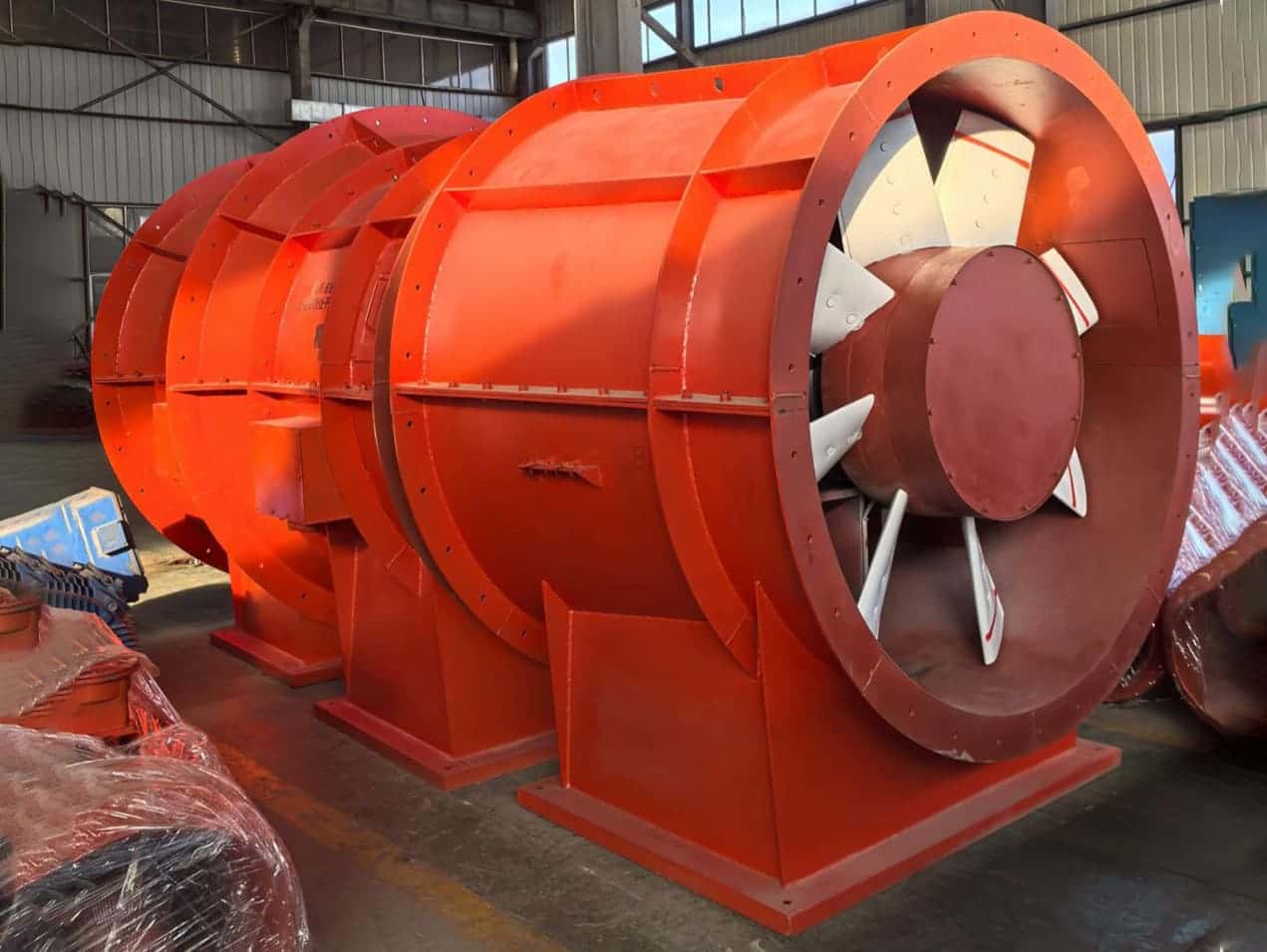
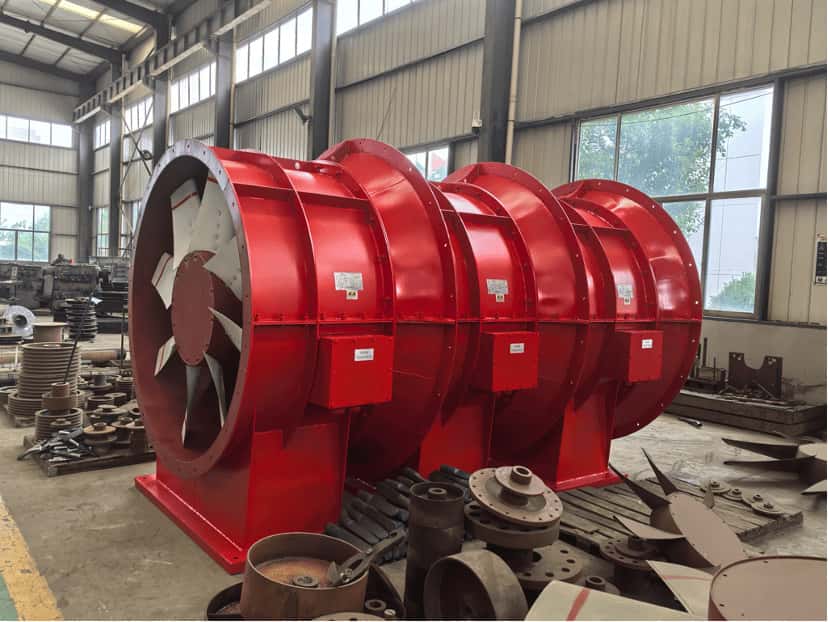
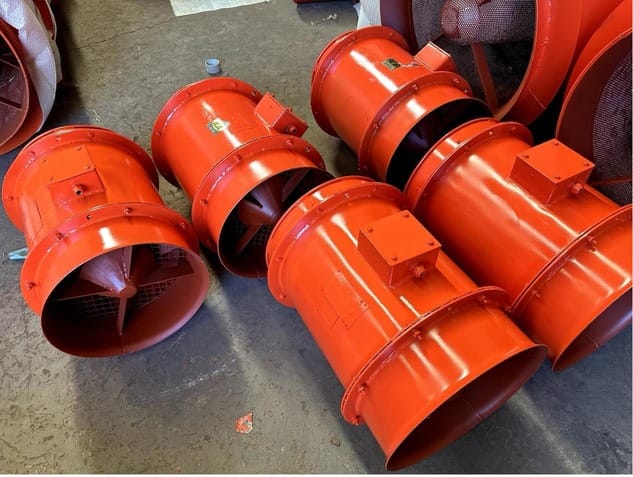
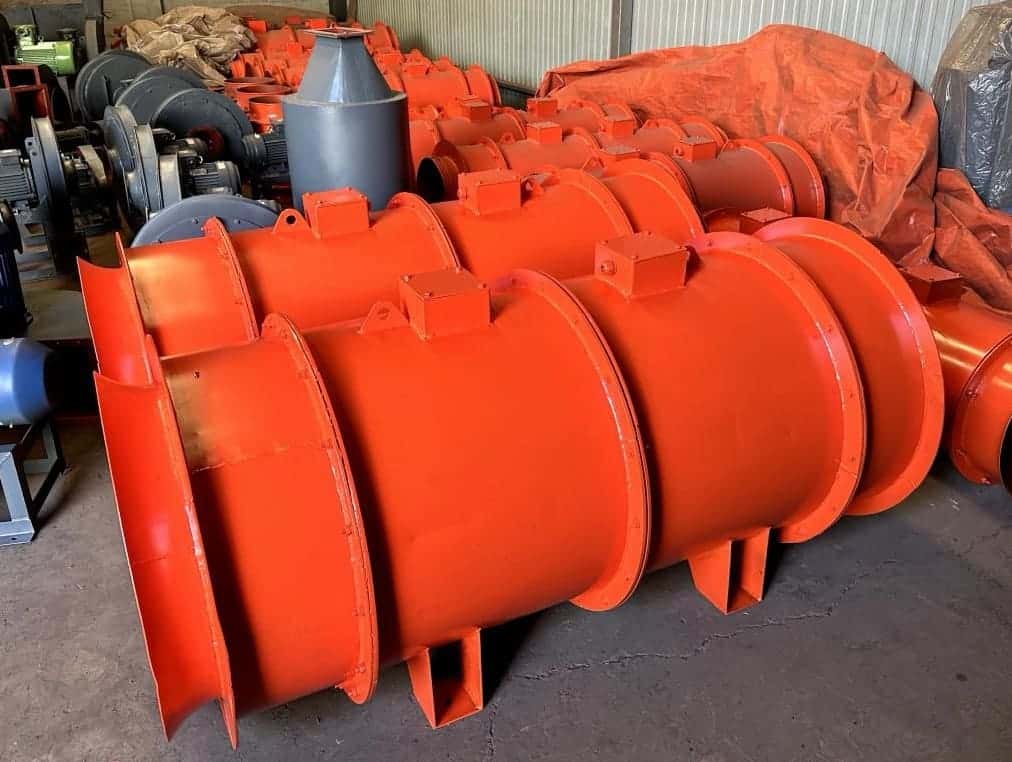
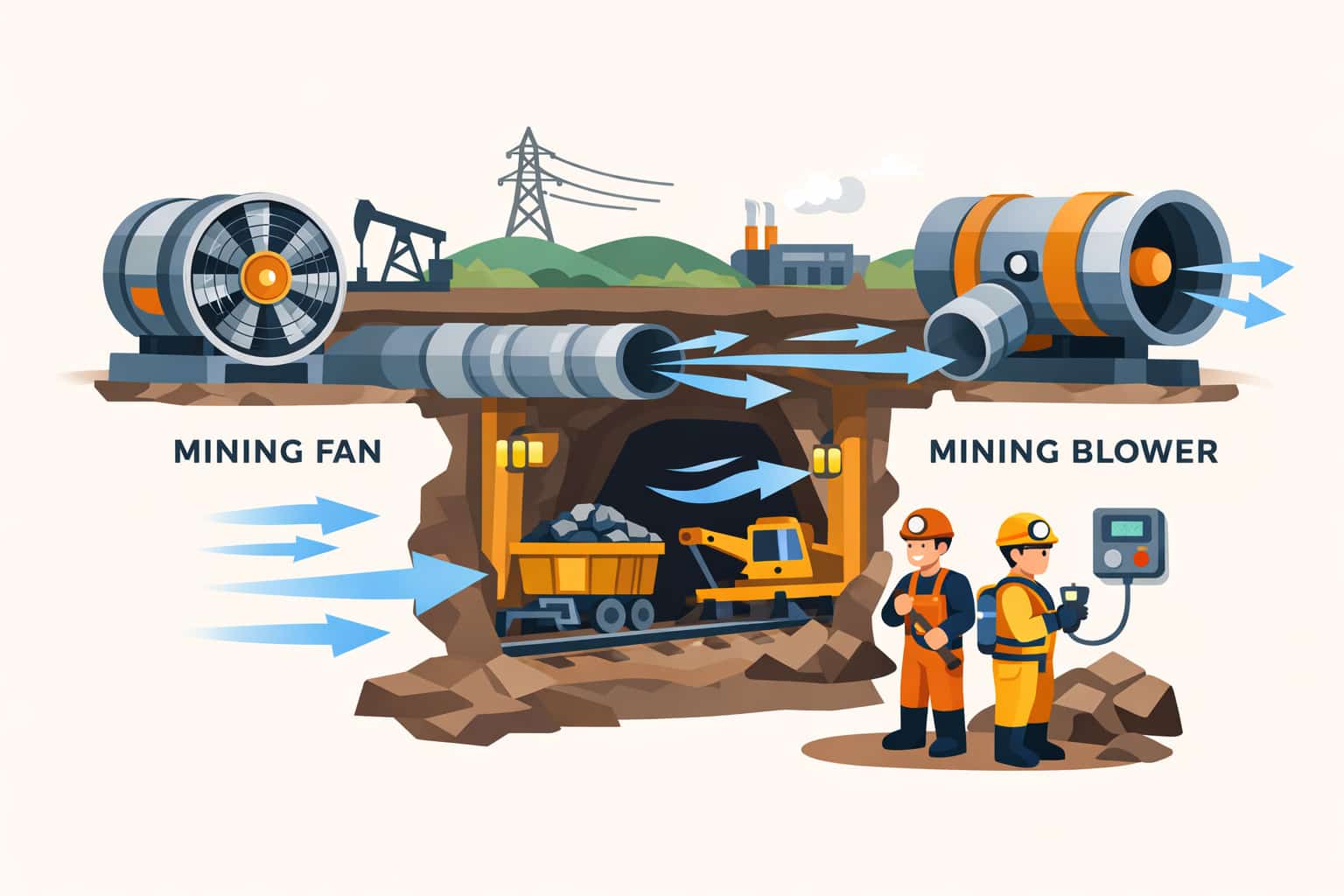
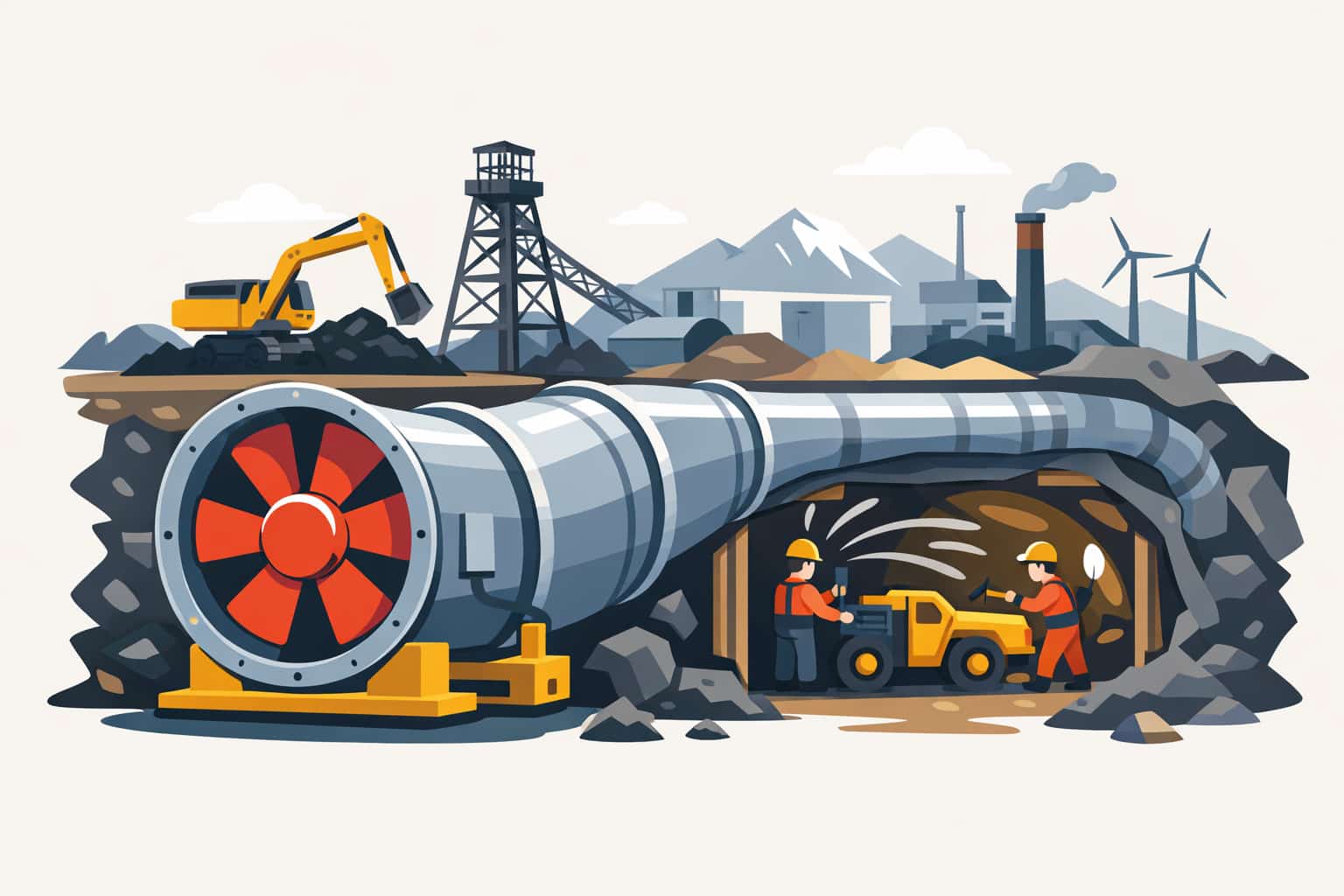
In mine ventilation, intake fans and exhaust fans describe how main ventilation fans are arranged relative to the mine airways and what direction they move air. The difference between them is fundamental, because it determines whether the system primarily pushes fresh air into the mine or pulls air out of it, and how pressure and airflow patterns behave throughout the underground workings.
An intake fan configuration is often called a forcing system. In this arrangement, the fan is placed so that it pressurizes the intake airways and pushes fresh air into the mine. Air flows from the surface, through the fan, into intake drifts and shafts, and then across the workings to the return airways. The return air then leaves the mine through separate openings that may discharge naturally or through additional exhaust fans. Forcing systems tend to produce higher pressures in intake routes, which can reduce the risk of contaminated air leaking into them from adjacent areas.
An exhaust fan configuration is known as an exhaust system. Here, the main fan is connected to the return airways and pulls air out of the mine, creating a slight negative pressure underground relative to the surface. Fresh air enters through intake shafts, portals, or raises and is drawn through the workings toward the fan. Exhaust systems can be advantageous in gassy mines because they help ensure that any leakage tends to flow from surface into the mine rather than the other way around, and gases are strongly drawn towards the exhaust routes.
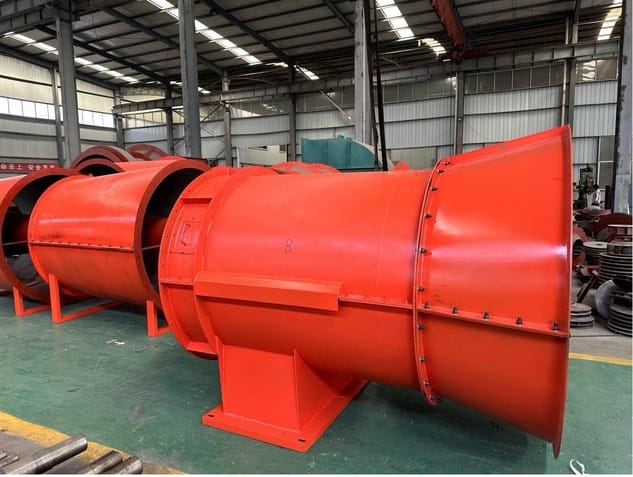
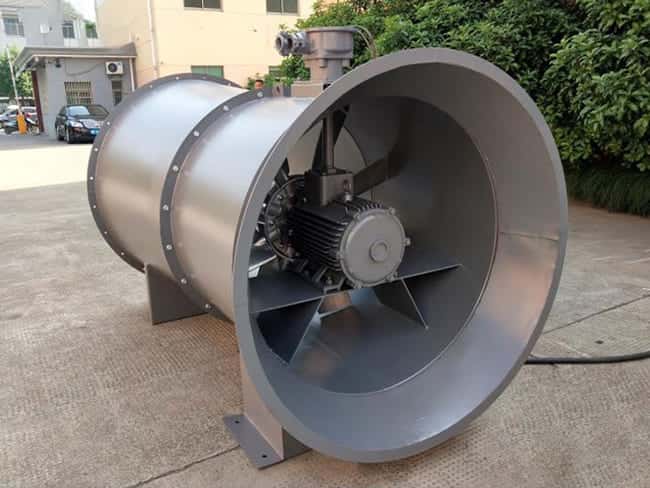
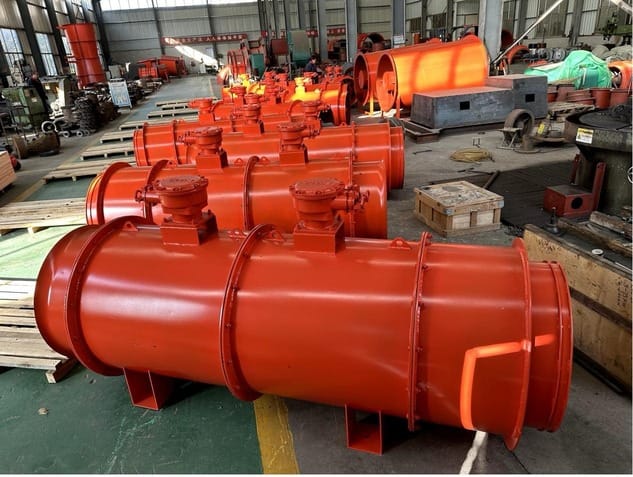
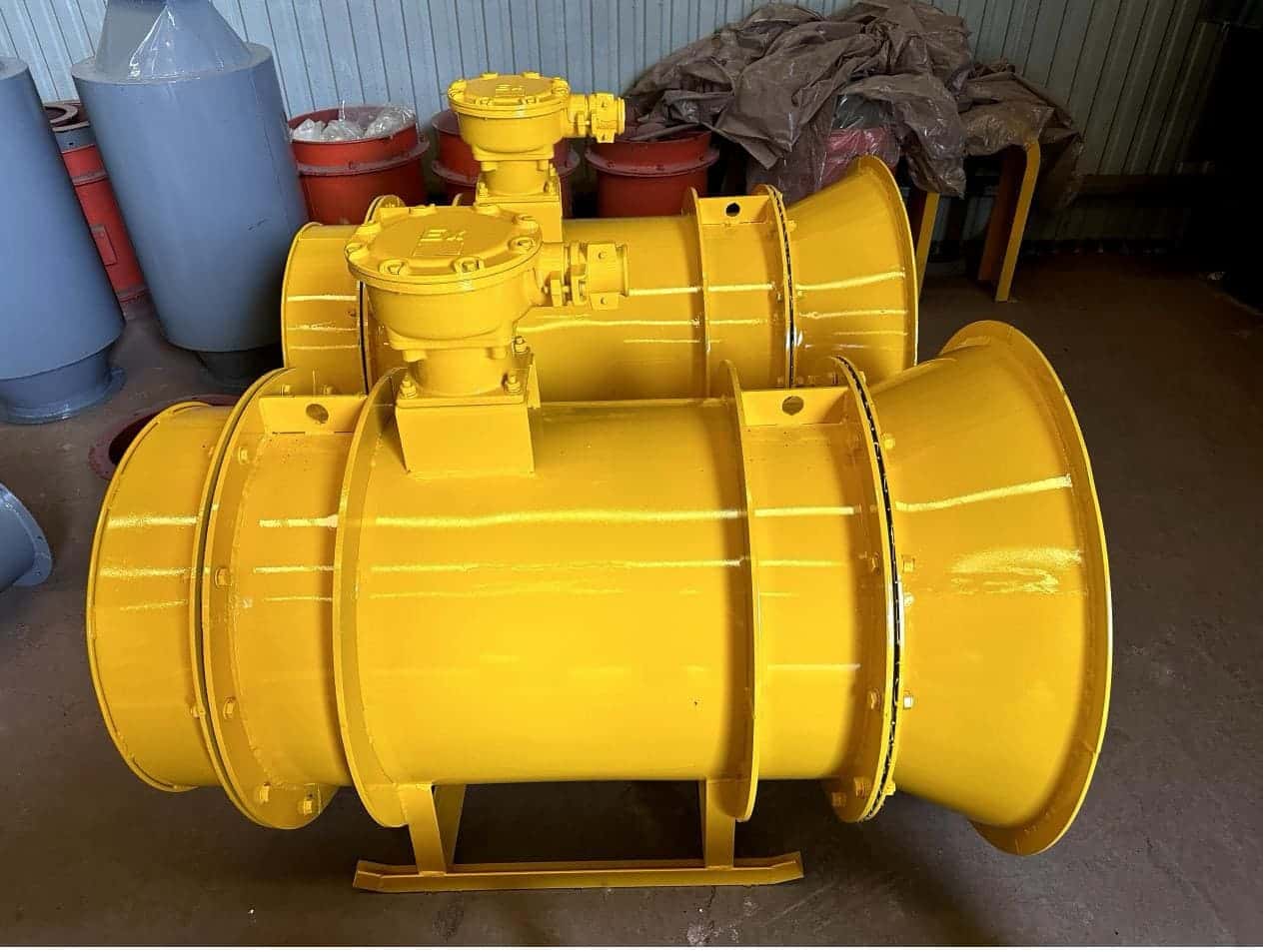
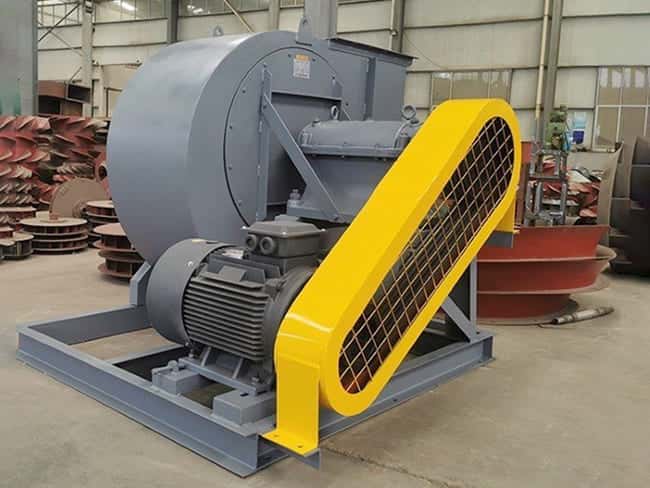
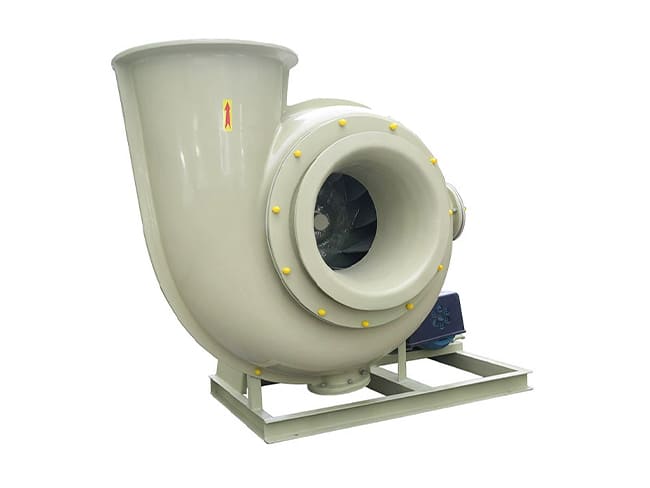
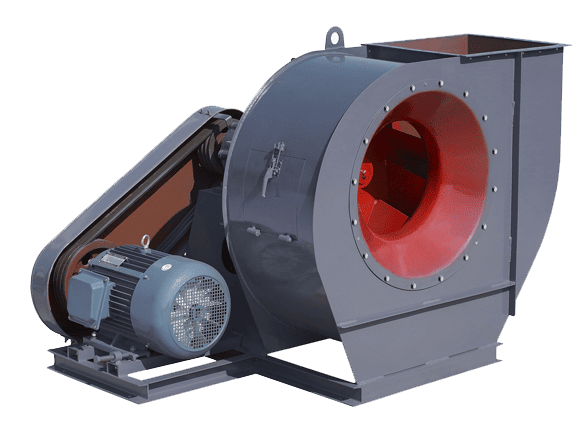
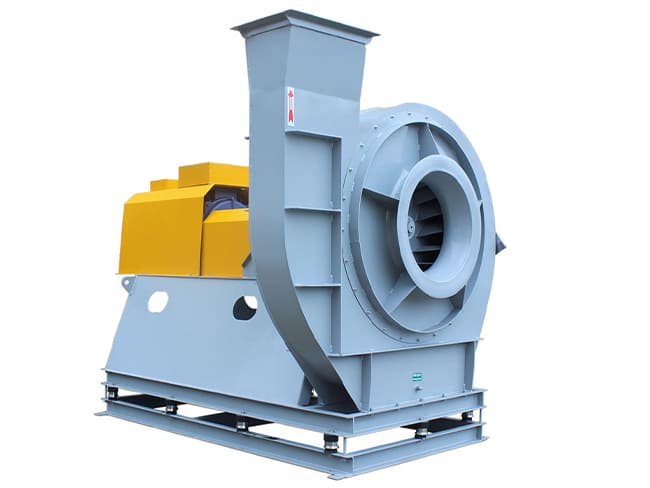
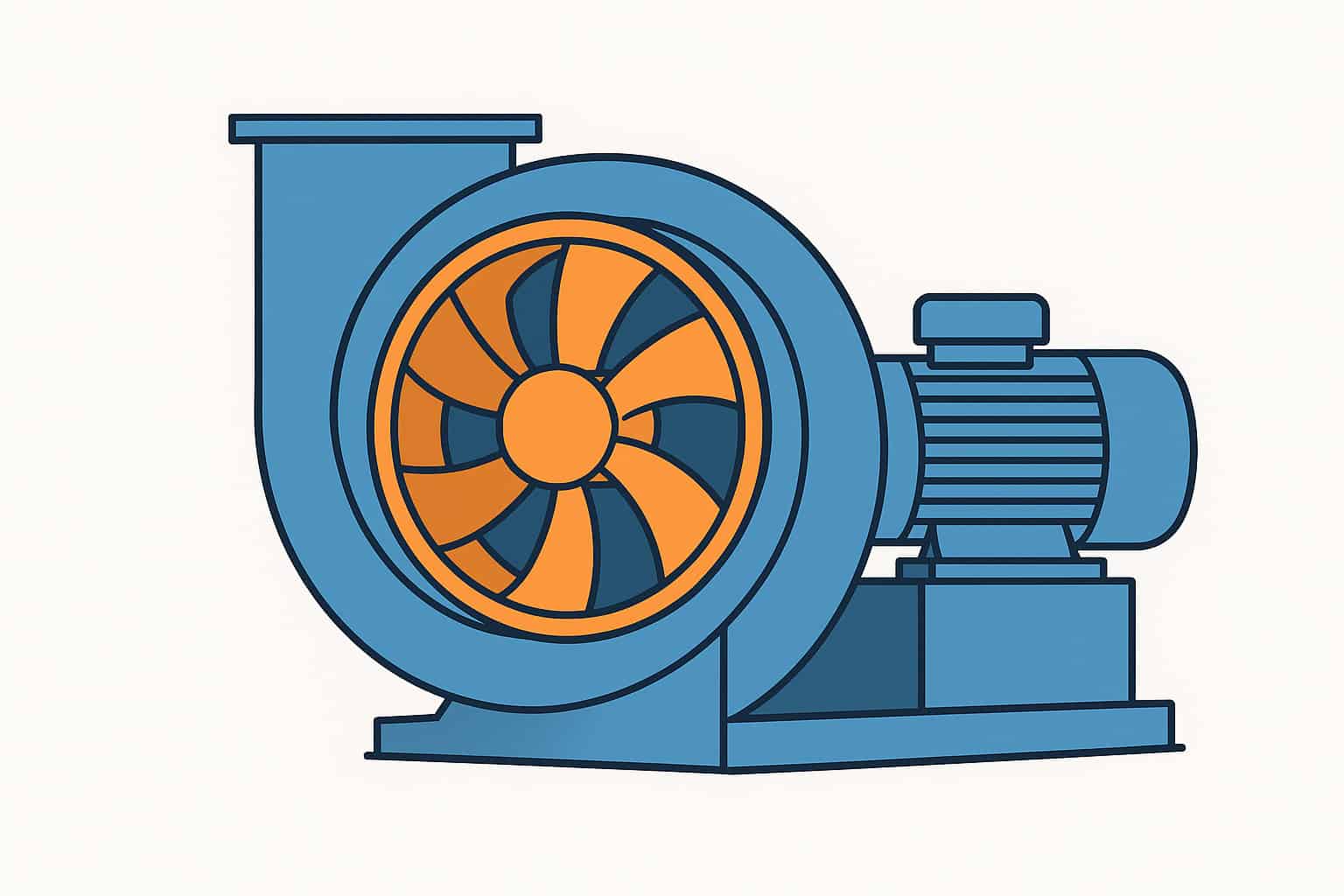
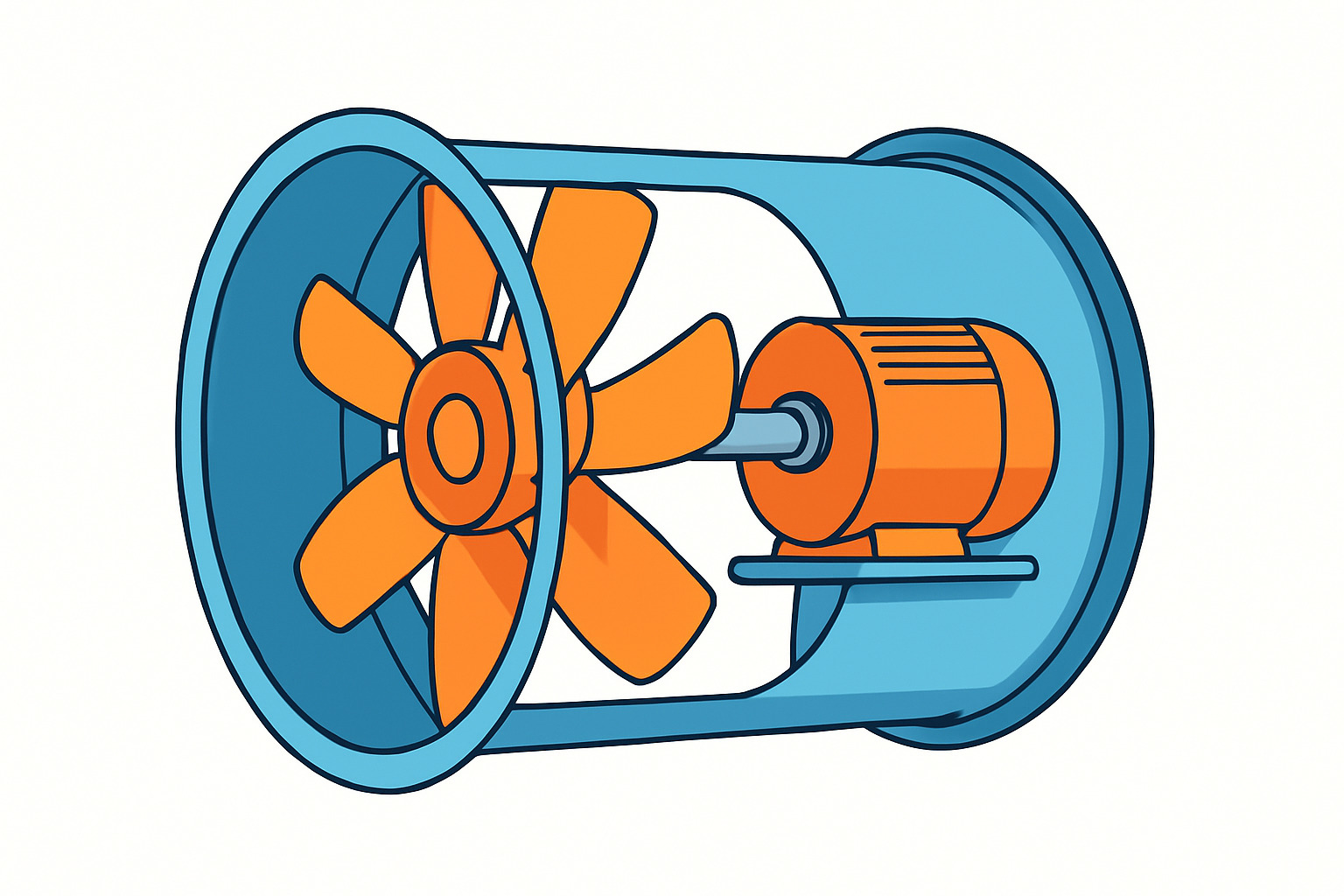
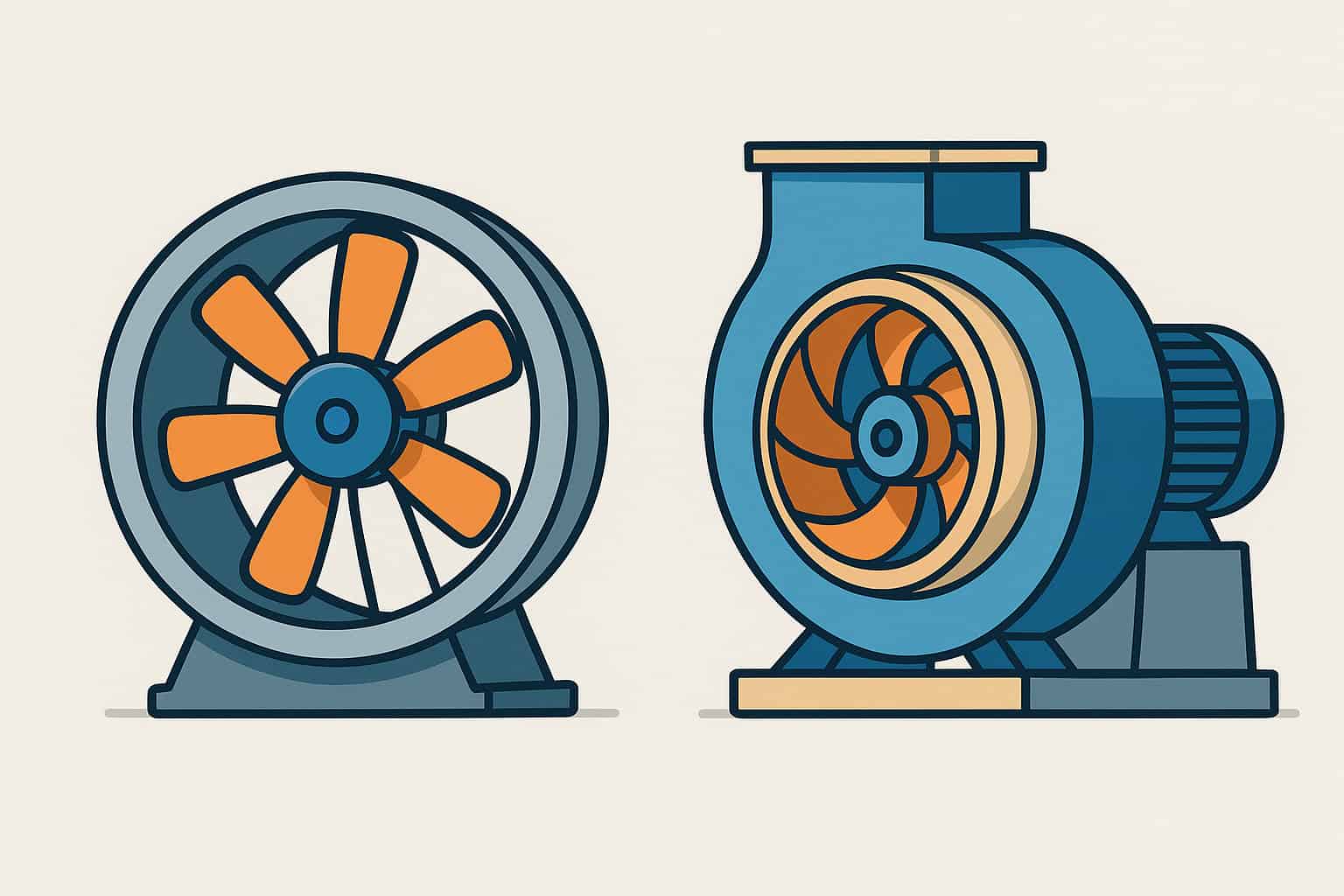
Both intake and exhaust fans use the same basic types of axial or centrifugal mining fans, but the duct connections and pressure relationships are different. In some mines, a mixed system is used, with one shaft operating in forcing mode and another in exhaust mode, or with combinations of main and booster fans creating tailored pressure distributions. The choice depends on geology, gas behavior, existing openings, and local regulations.
The difference between intake and exhaust arrangements affects ventilation control devices as well. Stoppings, regulators, and doors must be designed to handle the pressure differentials produced by the chosen system. For example, in a forcing system, more attention may be needed to prevent intake air from leaking into returns through imperfect stoppings, while in an exhaust system, structures must withstand negative pressure without allowing uncontrolled inflow from surface or old workings.
From an operational point of view, the decision between intake and exhaust configurations is driven by safety, energy efficiency, and practicality. Forcing systems can simplify some aspects of dust and temperature control in intakes, whereas exhaust systems may provide advantages in gas management and control of smoke during fires. Many modern mines use detailed modelling and regulatory guidance to evaluate both options before choosing the best arrangement or combination for their specific conditions.
In summary, intake fans push fresh air into the mine (forcing ventilation), while exhaust fans pull air out (exhaust ventilation). Both use similar mining fan hardware, but they create different pressure and airflow patterns, which must be carefully considered when designing a safe and efficient mine ventilation system.