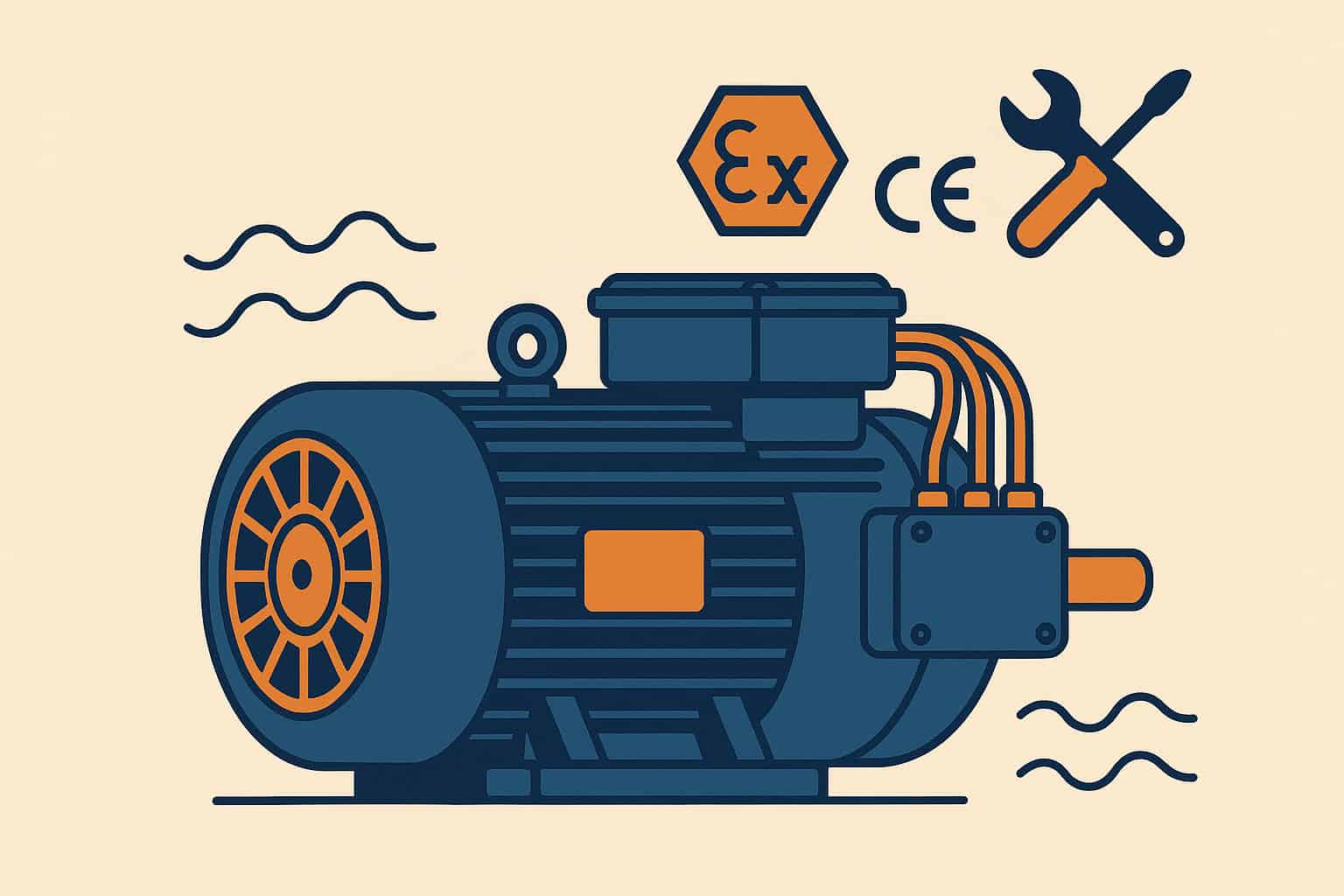
1500 RPM can be a perfectly good speed for a fan, but the number alone does not tell you if the fan is correctly selected. The suitability of 1500 RPM depends on the fan diameter, type, duty point and the electrical supply frequency. In many countries with 50 Hz power, 1500 RPM is the typical full-load speed of a 4-pole induction motor and is widely used in industrial and mining fans.
The airflow and pressure a fan produces are determined by its size and speed together, not by speed alone. A large-diameter fan running at 1500 RPM can move a great deal of air, while a very small fan at the same speed moves much less. Fan laws show that airflow is proportional to speed and diameter, and that pressure is roughly proportional to the square of speed. This means that if you take the same fan and increase its speed from 1000 RPM to 1500 RPM, both airflow and pressure will rise significantly, but so will noise and power consumption.
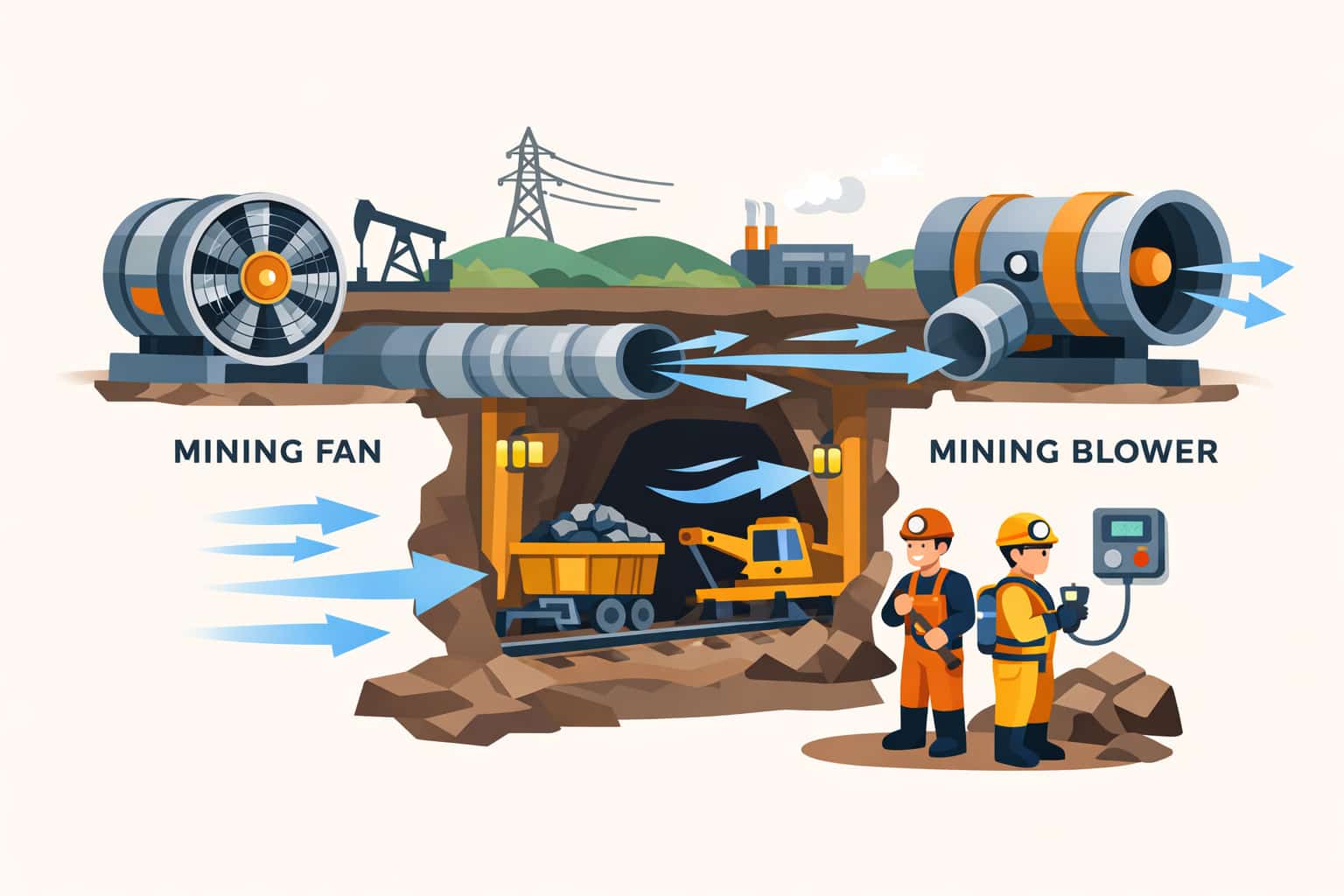
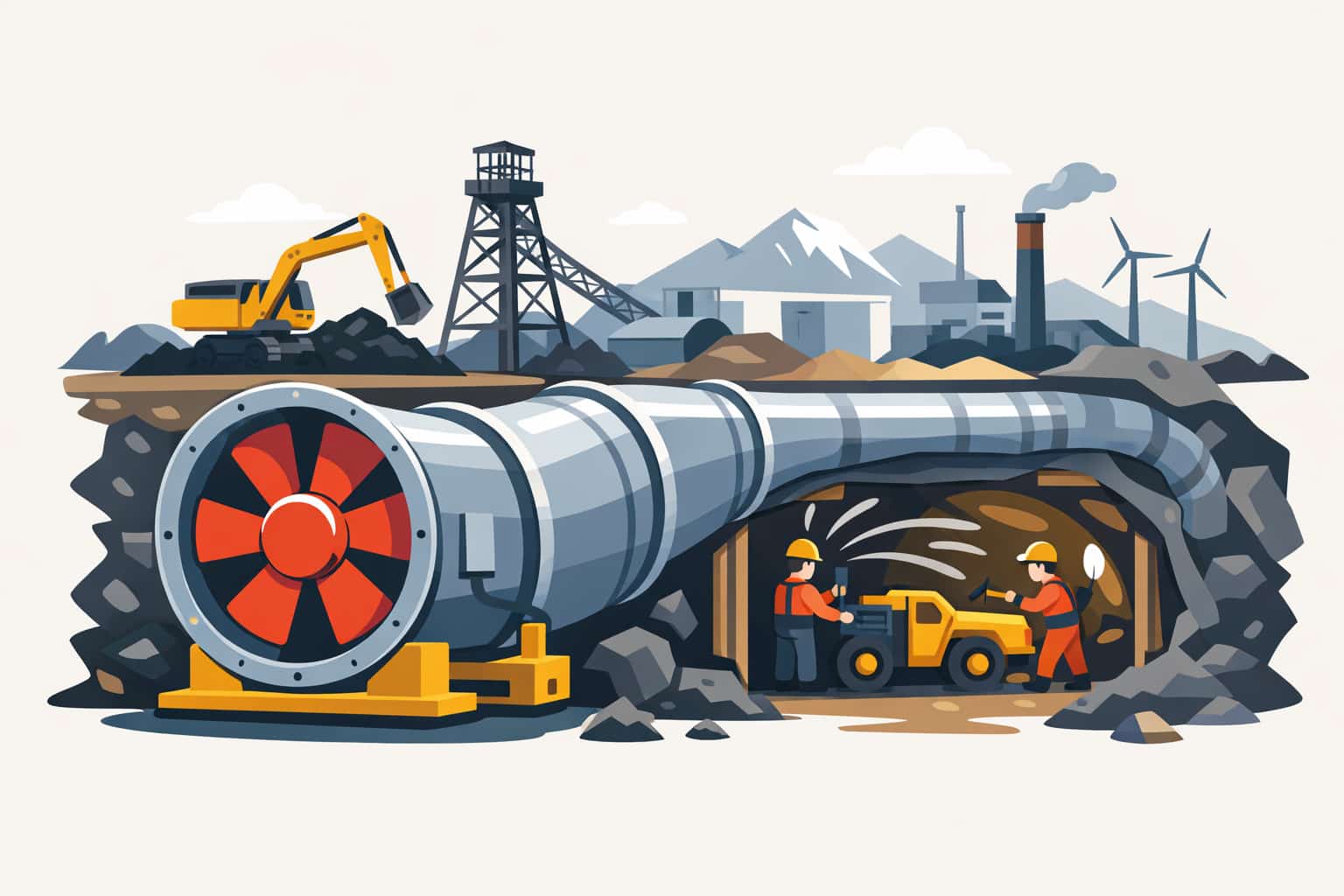
In industrial and mining ventilation, 1500 RPM is a common compromise. Many main and auxiliary fans use 4-pole motors because they offer a good balance among size, efficiency, noise and mechanical stress. Higher speeds such as 3000 RPM (2-pole motors) can make machines more compact but also noisier and more demanding in terms of balancing and bearing loads. Lower speeds (for example 750 RPM) require larger diameters for the same duty and are used where very low noise or specific aerodynamic performance is needed.
Whether 1500 RPM is good for your fan also depends on noise and structural limits. Higher tip speeds increase aerodynamic noise, which may be a concern in some plants or near populated areas. Blade strength, hub design and critical speeds must be checked so that resonance and excessive vibration are avoided. Manufacturers design their impellers and motors so that 1500 RPM operation stays within safe and efficient limits for the intended size range.
Finally, in systems with variable-frequency drives, 1500 RPM is only one operating point. The fan can run slower when demand is low, saving energy and reducing noise, and only approach 1500 RPM when maximum ventilation is required. In such cases, the question is not whether 1500 RPM is good or bad, but whether the whole speed range is appropriate for the fan and system.
In summary, 1500 RPM is a very common and generally suitable speed for many industrial and mining fans on 50 Hz power systems, but its suitability must be judged in the context of fan size, duty, noise limits and mechanical design.