
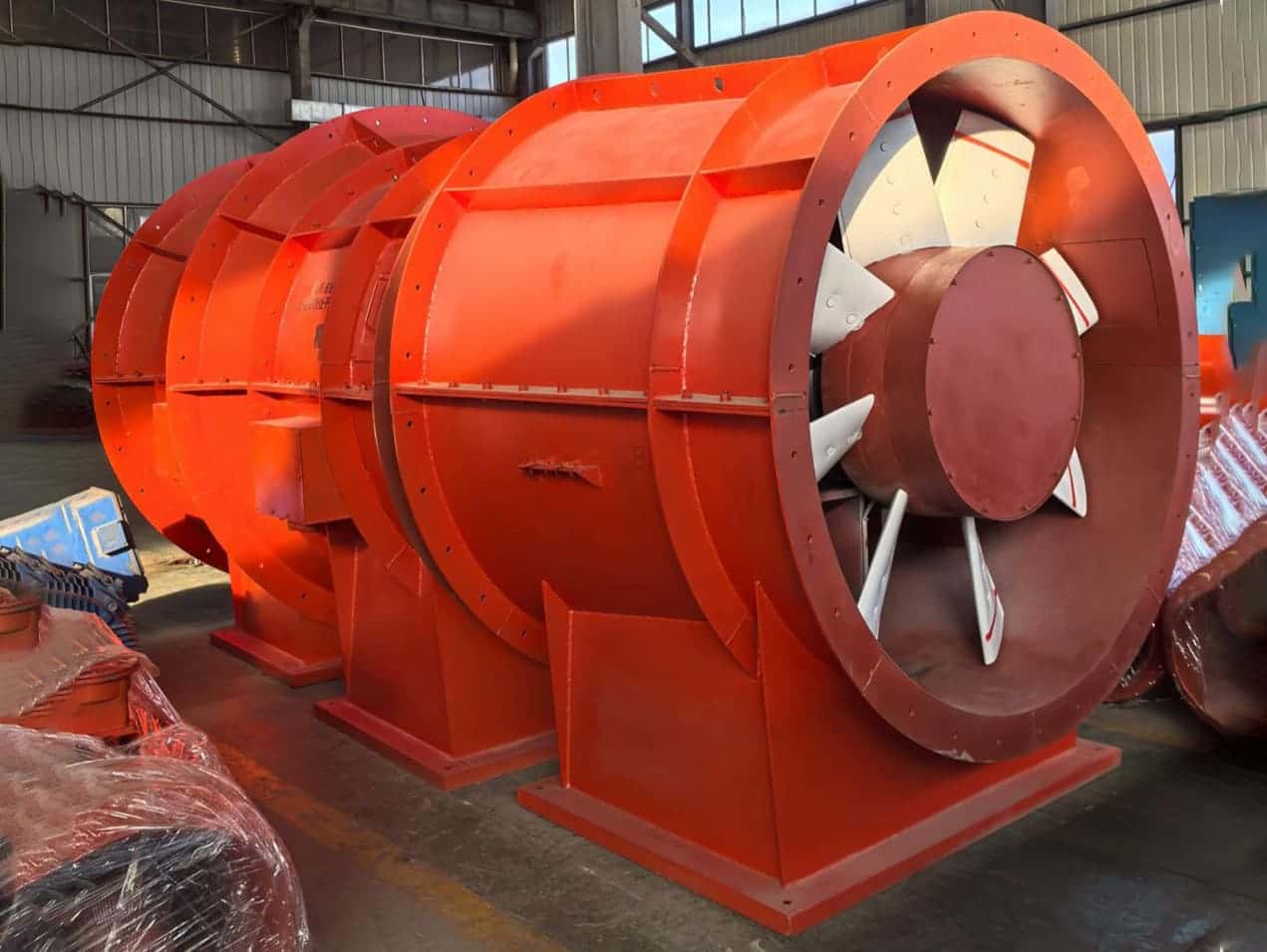
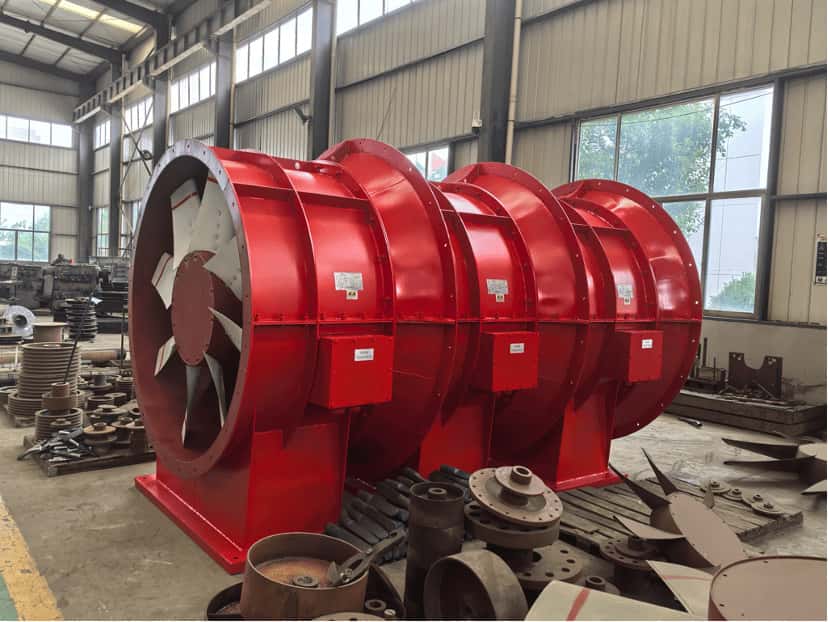
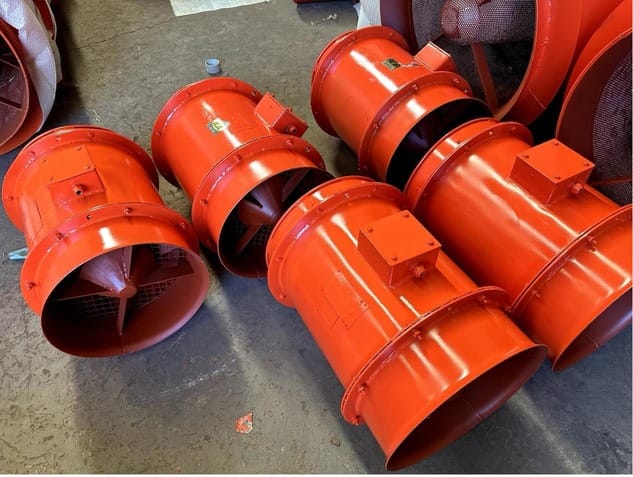
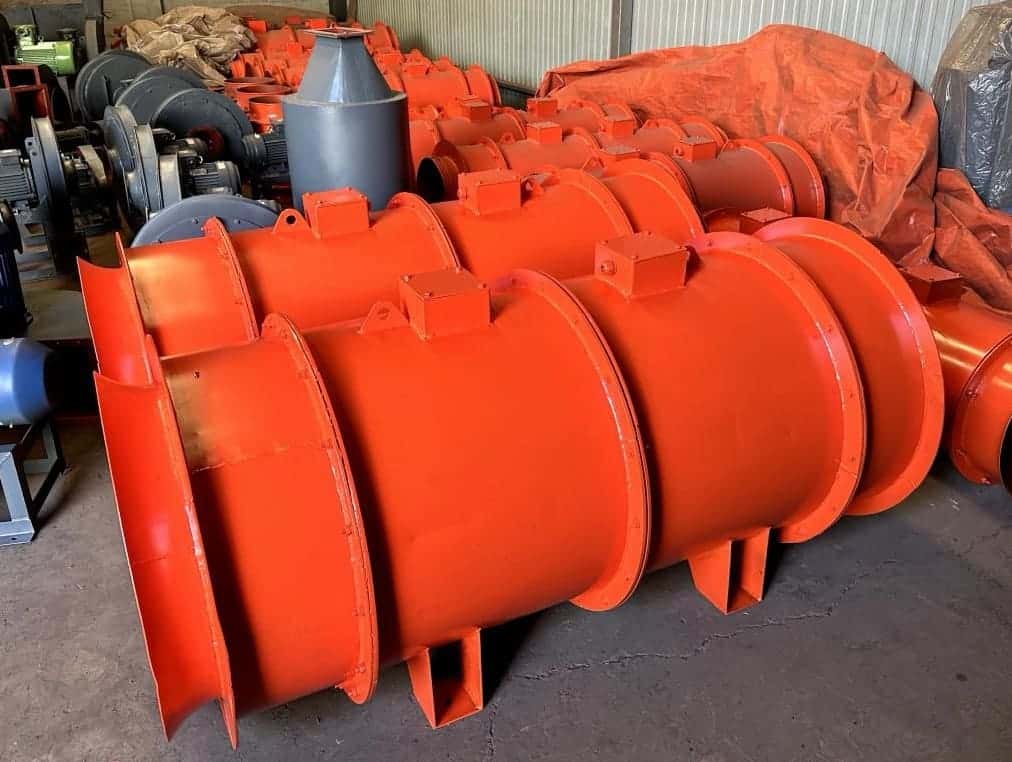
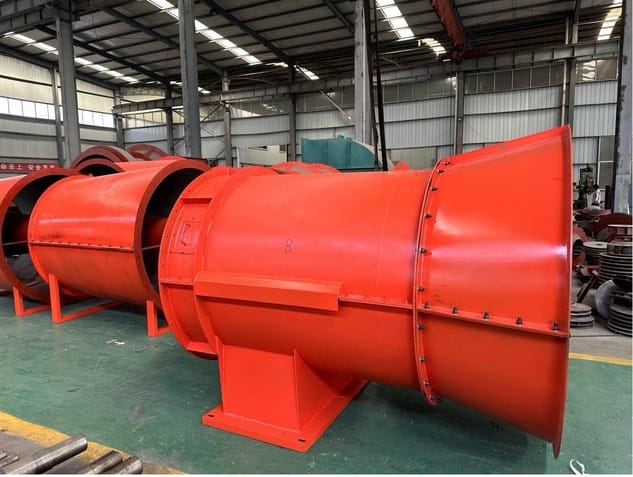
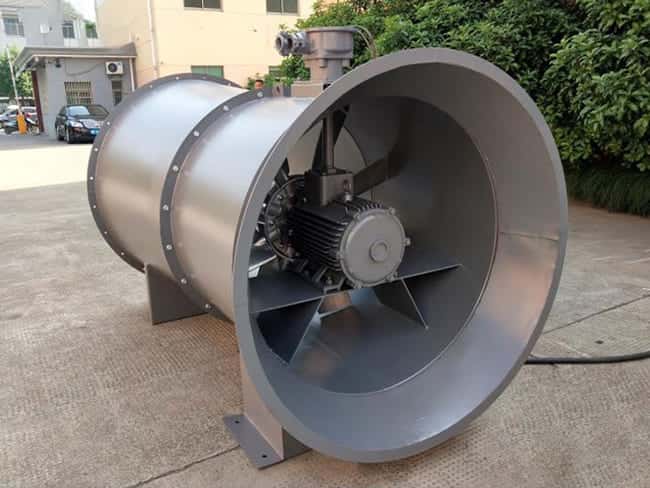
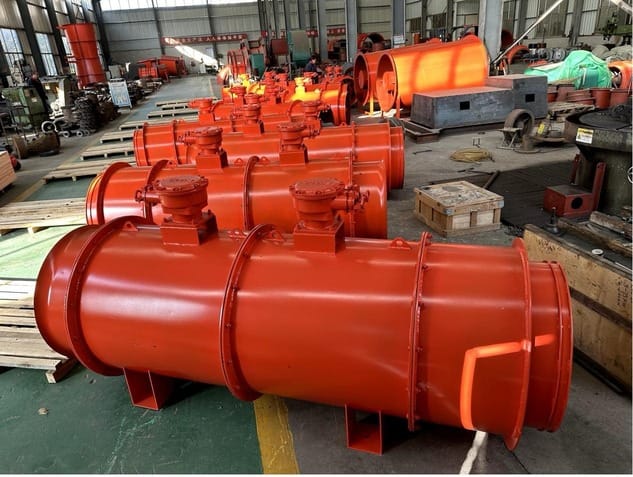
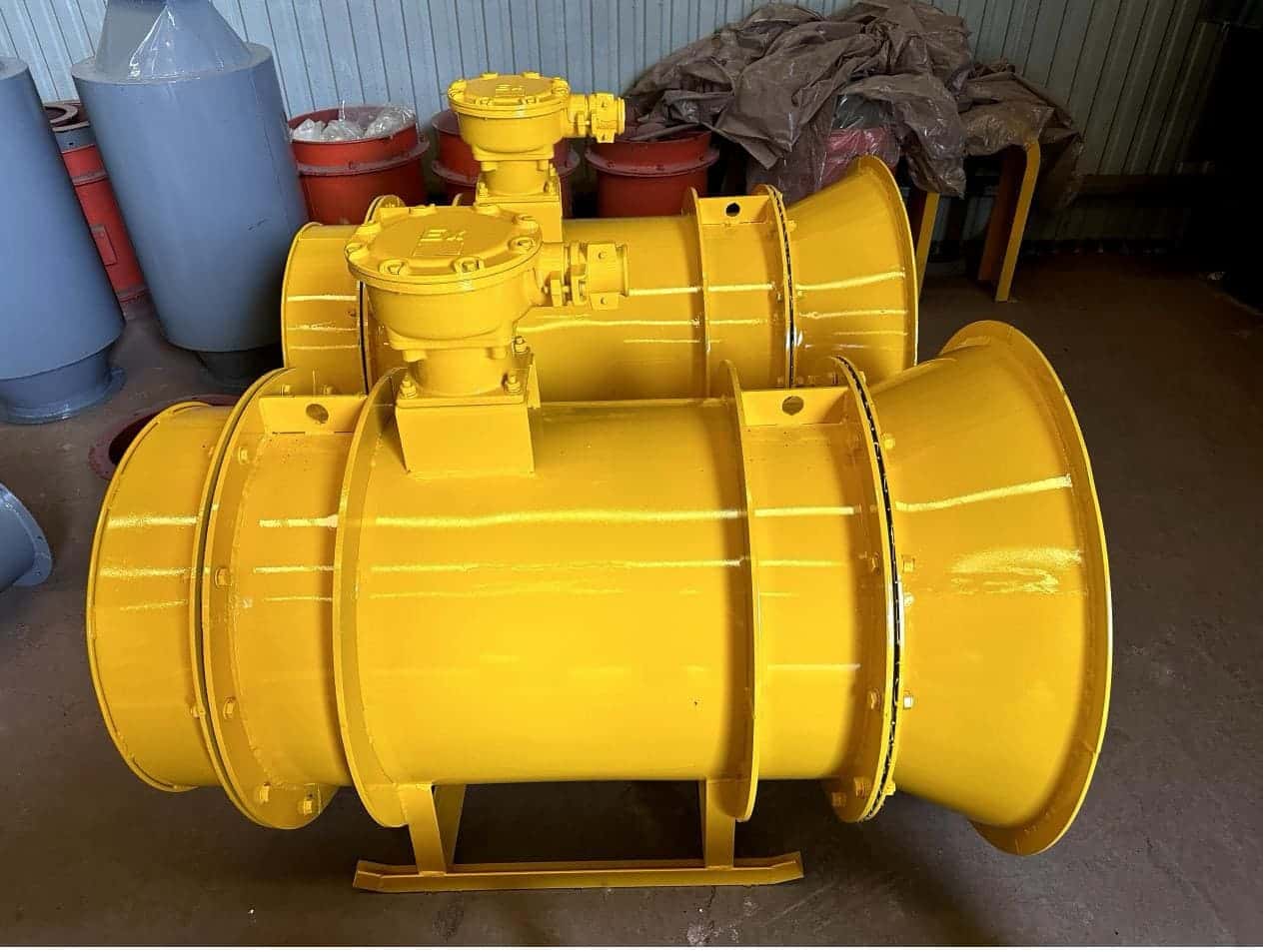

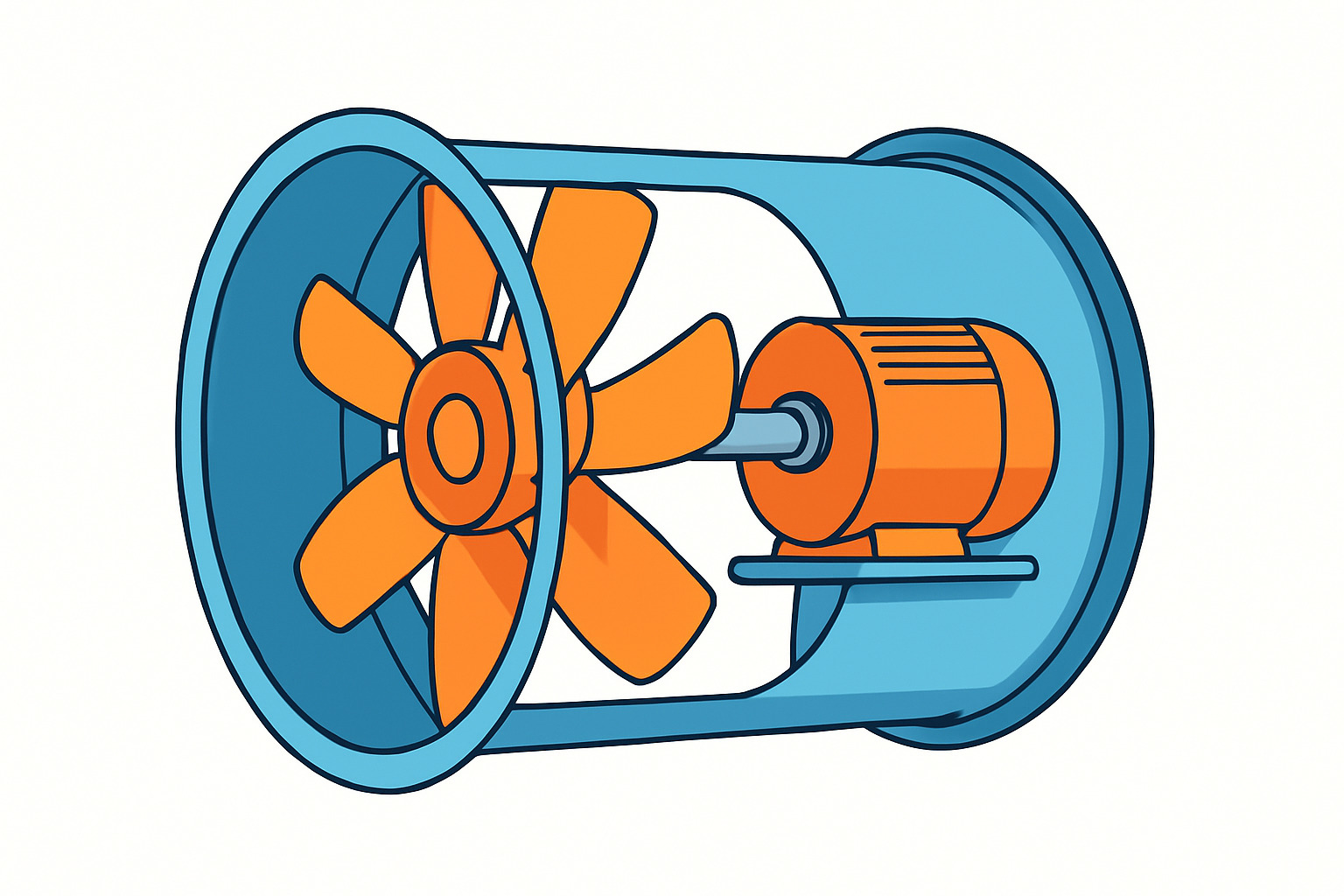
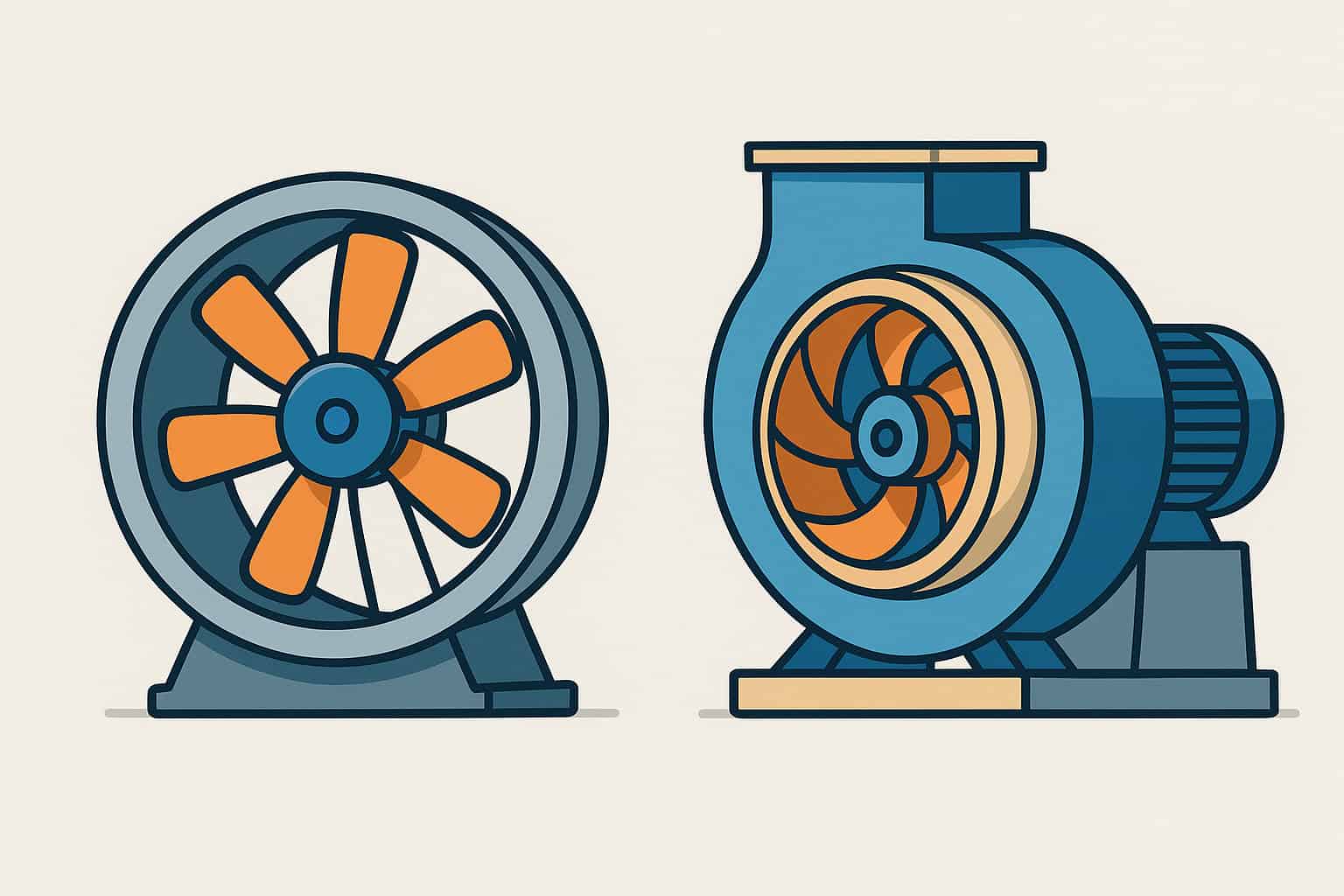
It is tempting to think that a higher RPM fan is always better because it seems more powerful or “faster”. In reality, fan speed is only one part of the design. A higher RPM fan can move more air and generate more pressure, but it can also be noisier, less efficient and more stressed if not properly matched to its impeller size, duty point and ventilation system. For mining and industrial ventilation, the “better” fan is the one that delivers the required air quantity and pressure efficiently and reliably, not simply the one with the highest speed.
According to the fan laws, for a given fan geometry:
- Airflow is roughly proportional to speed (Q ∝ N).
- Pressure is proportional to the square of speed (ΔP ∝ N²).
- Power is proportional to the cube of speed (P ∝ N³).
This means that if you increase fan speed modestly, airflow goes up linearly, pressure rises faster, and power demand rises very quickly. A higher RPM fan can therefore deliver more duty, but the energy cost and potential motor loading increase sharply. Without careful selection, you may waste power or overload equipment.
Higher RPM generally means higher tip speed at the outer edge of the blades. High tip speeds can increase noise, vibration and mechanical stress. In dusty or abrasive mining environments, blade erosion may be worse at high speeds. For this reason, some heavy-duty mine fans and large industrial fans are designed to run at relatively moderate RPM, using larger diameters to achieve the required duty with lower tip speeds and better efficiency.
On the other hand, high-speed fans with smaller diameters can be compact and cost-effective, especially for ducted systems with moderate flows and pressures. Many auxiliary fans, booster fans and process fans run at higher RPM and are well suited to their tasks, provided they are selected using accurate fan curves and installed correctly. What matters is that the selected speed places the fan’s operating point near its best efficiency region and within acceptable noise and structural limits.
In practice, the choice between higher and lower RPM is part of an overall fan selection and system design. Engineers compare different combinations of diameter, speed and fan type to meet the required airflow and pressure. They also consider motor availability, variable-speed control, noise regulations and maintenance capability. Sometimes a slightly lower-speed fan with a larger diameter provides the same duty with better efficiency and longer life, which is especially important for main mine fans that run continuously.
So, a higher RPM fan is not automatically better. The best fan is the one whose speed, diameter and design are correctly matched to the ventilation requirements, giving safe, efficient and reliable performance in your industrial plant or mine.
