
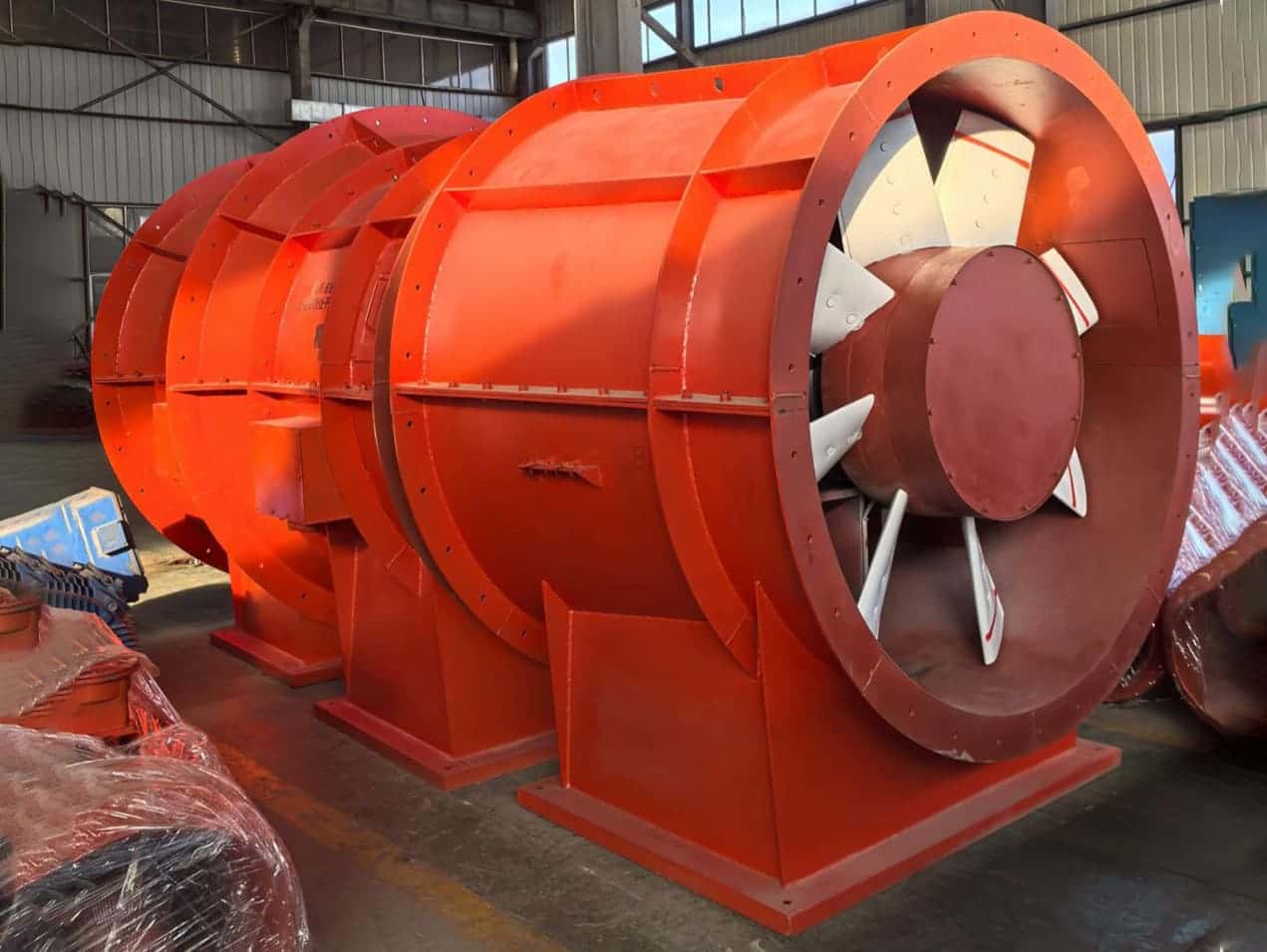
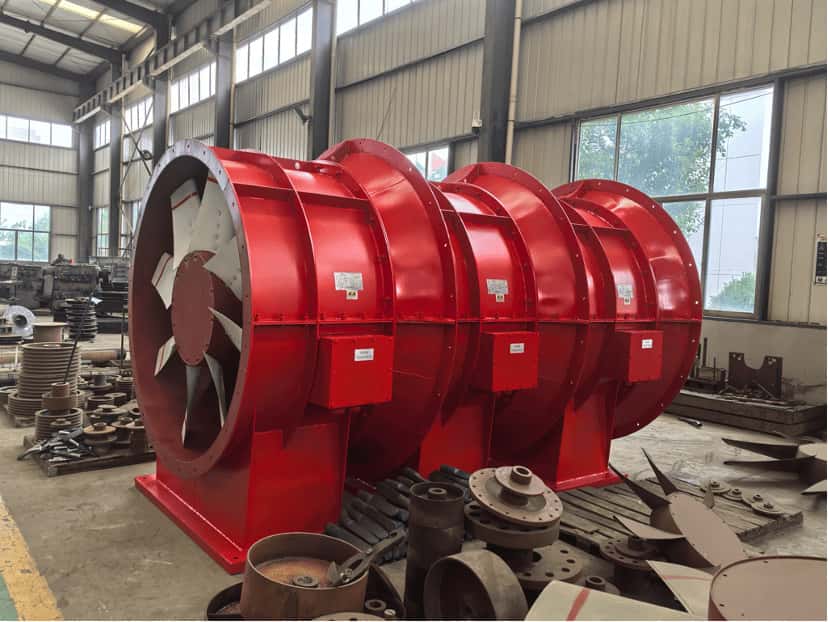
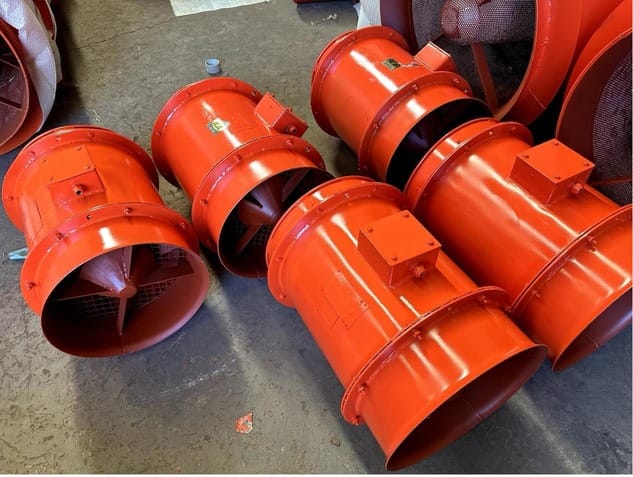
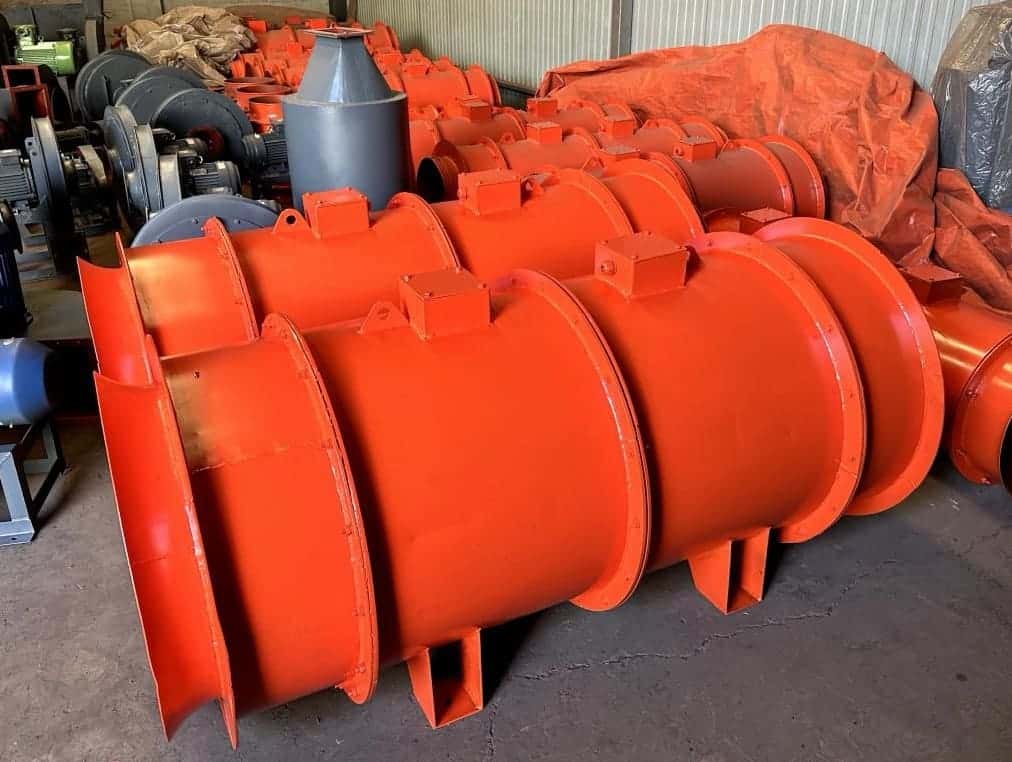
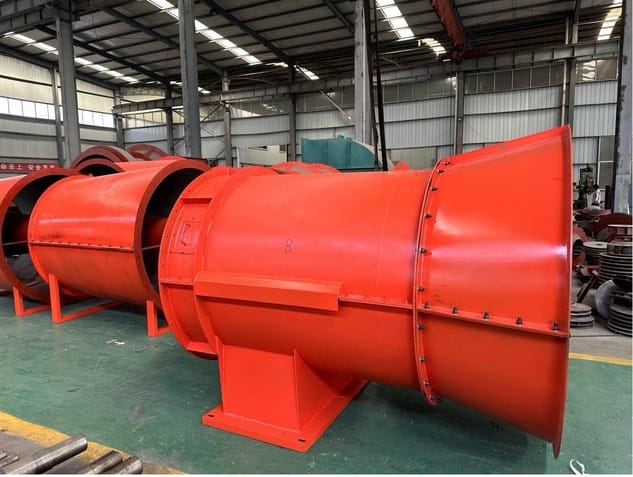
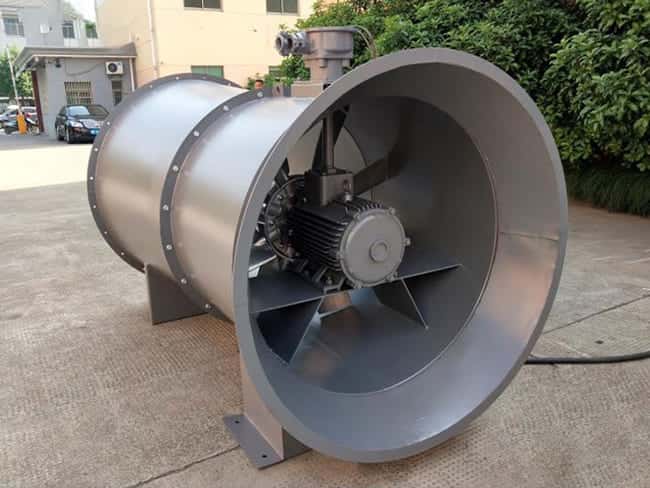
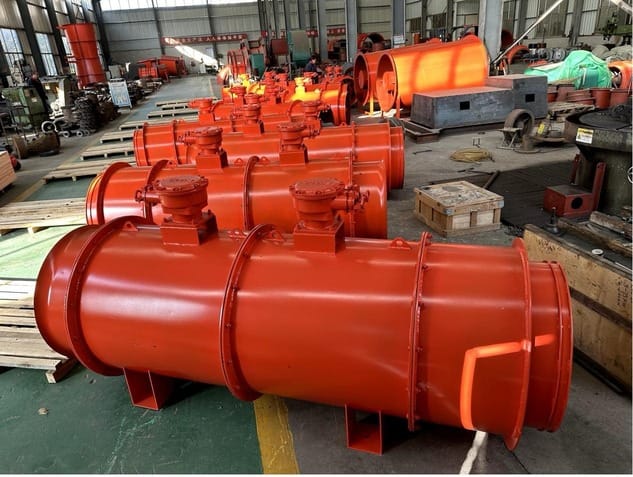
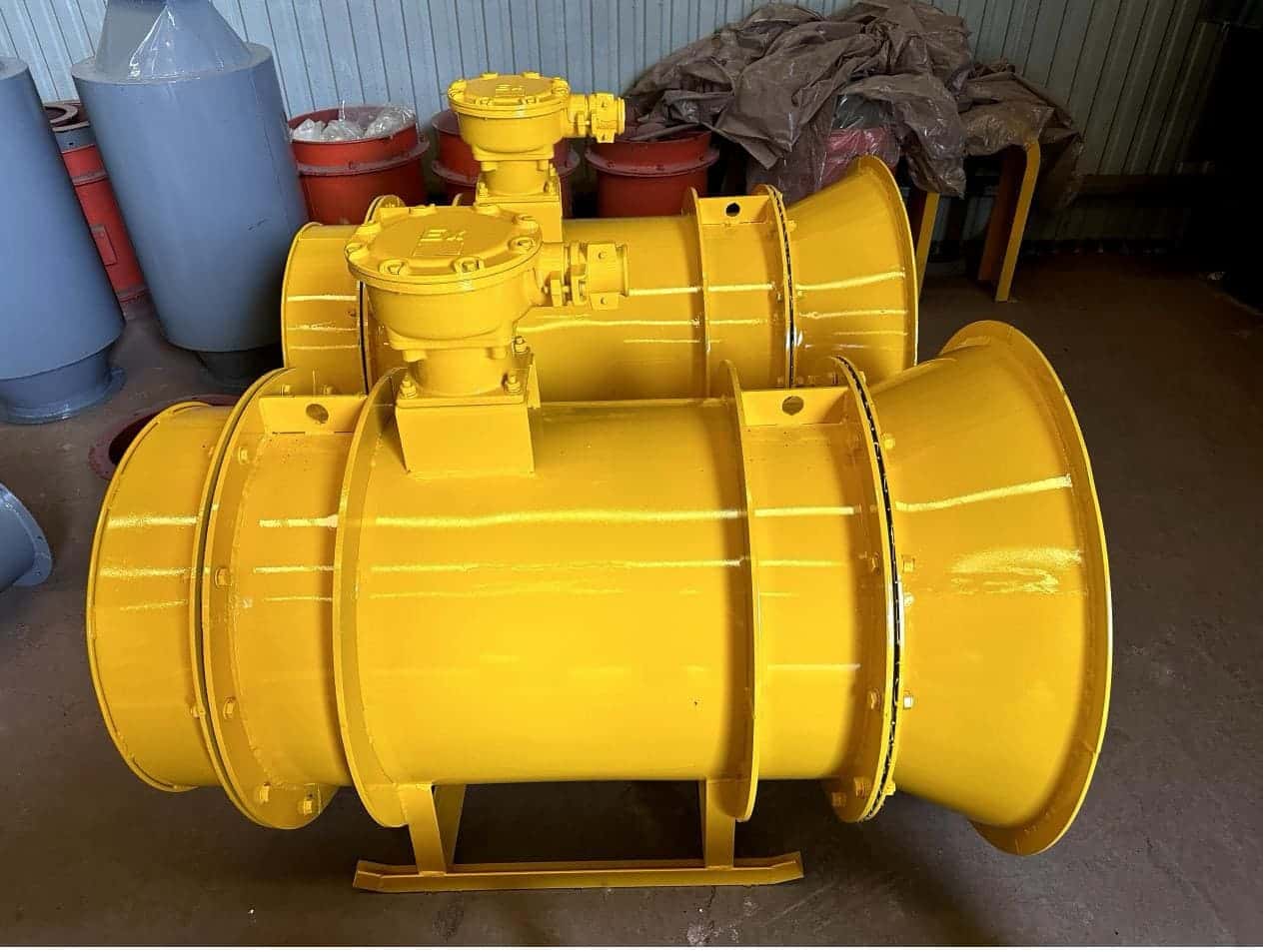




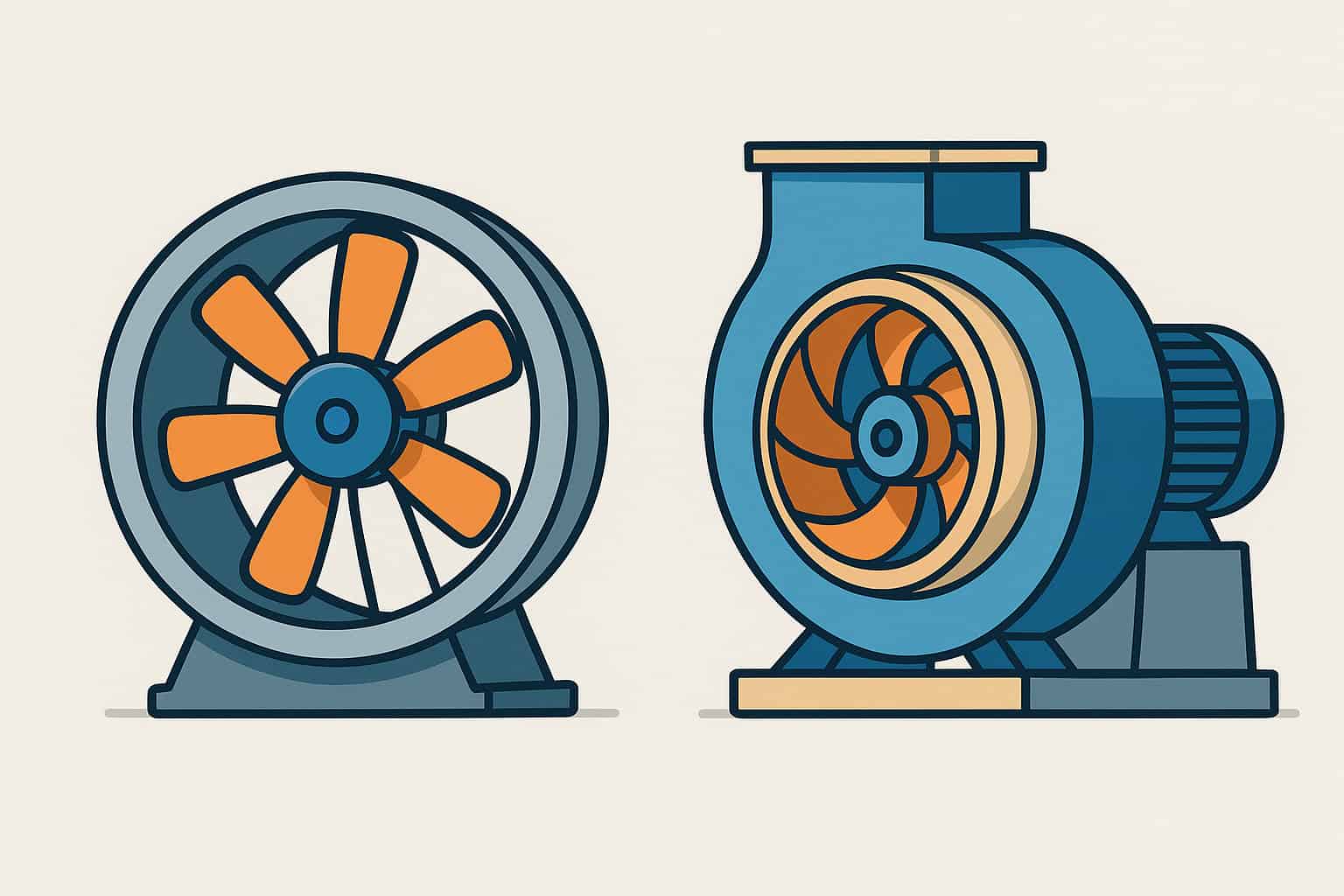
An inline fan is not automatically an axial fan. The term “inline” describes how the fan is installed in a duct system, not the exact impeller type inside. An inline fan is designed so that ducts connect directly to both the inlet and outlet, creating a straight-through flow path along the duct line. Inside that housing, the impeller may be axial, mixed-flow or even centrifugal.
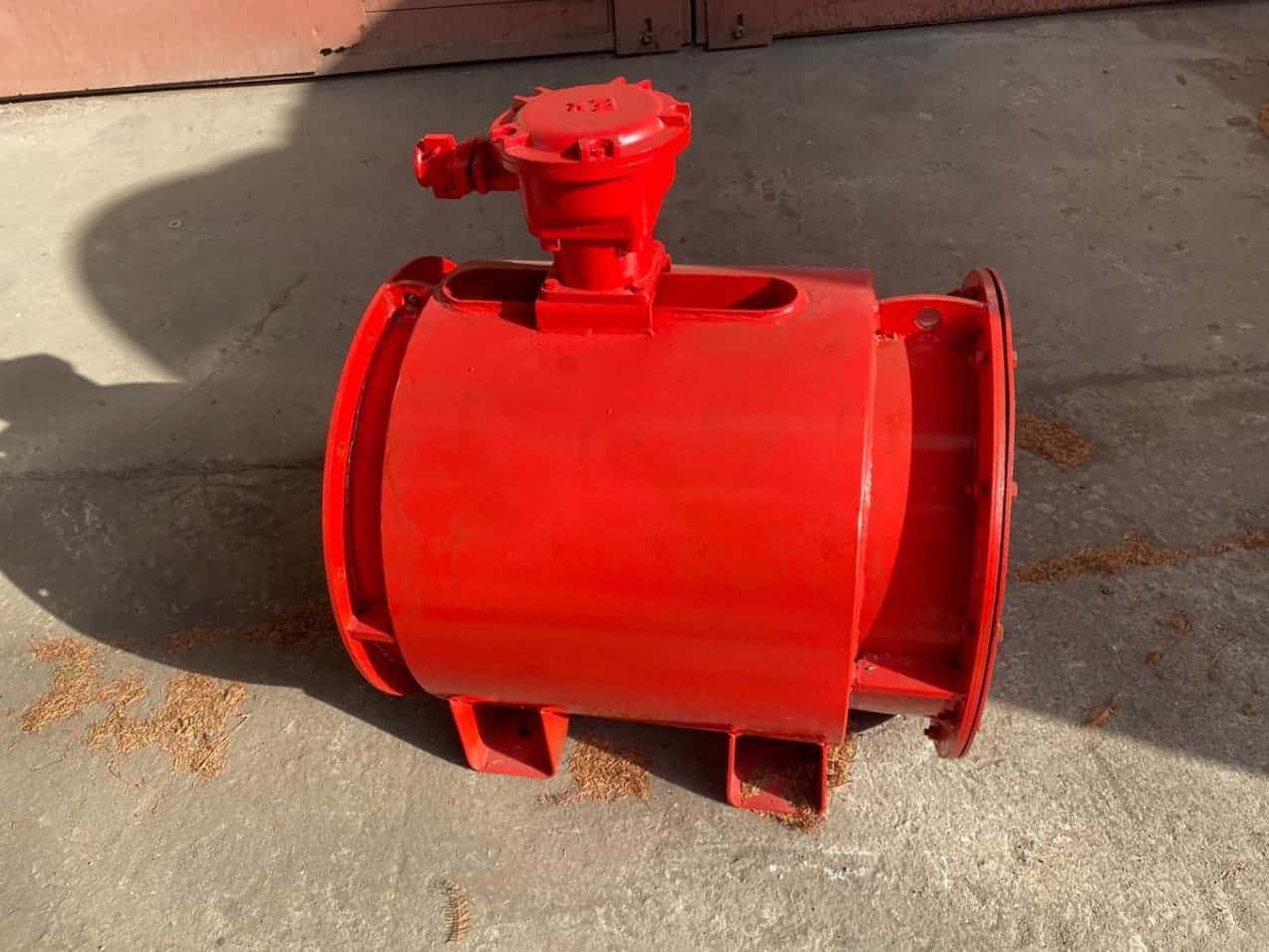
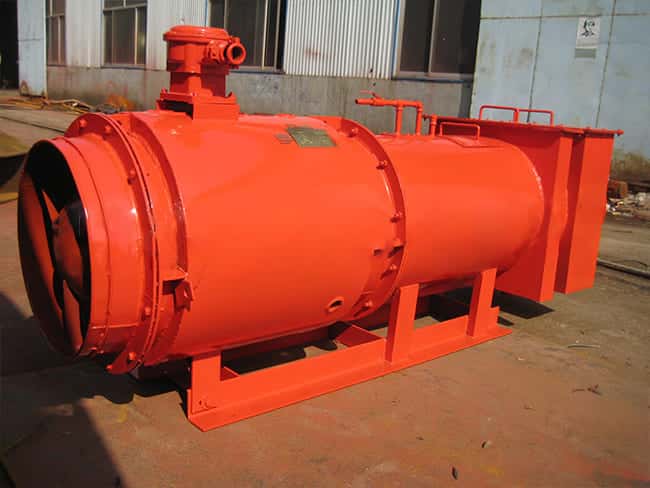
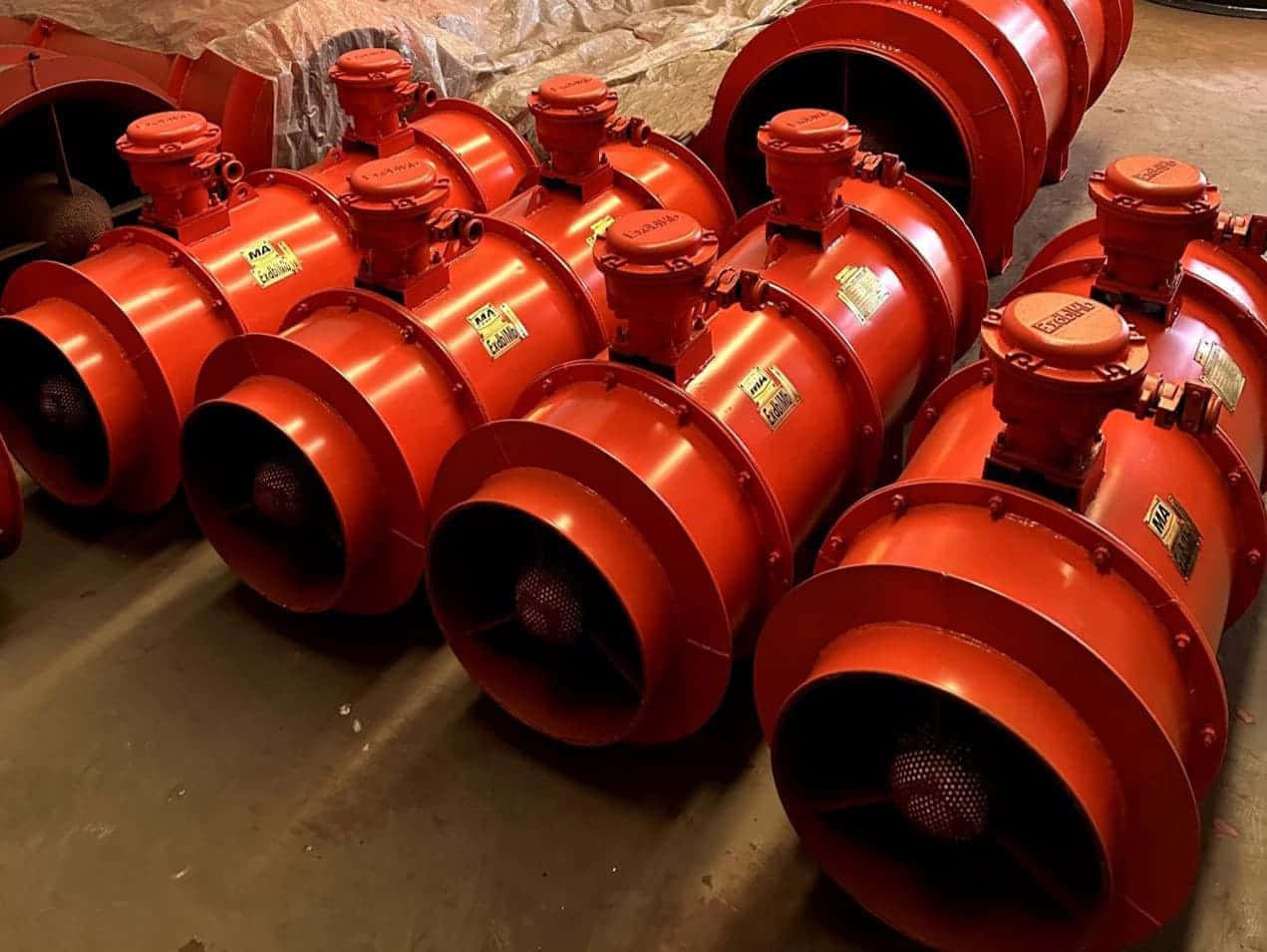
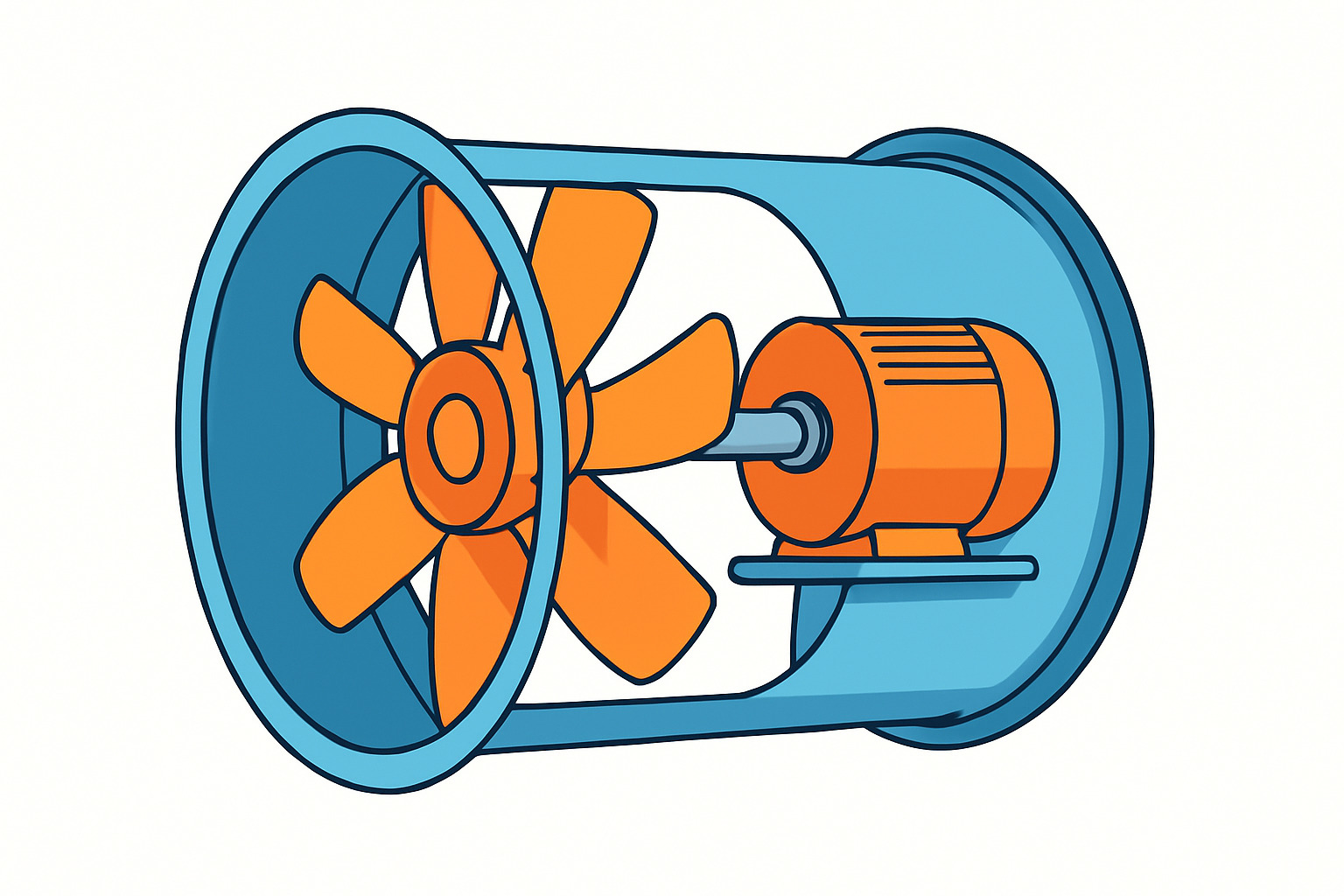
Many inline fans do use axial impellers. In this case, the fan is often called an inline axial fan. Air enters and leaves parallel to the shaft, just as in any axial fan, but the impeller is enclosed in a cylindrical or rectangular duct casing with flanges for easy connection. Inline axial fans are common in HVAC systems, industrial exhaust lines and some mining ventilation ducts where the system requires high airflow at relatively low pressure.
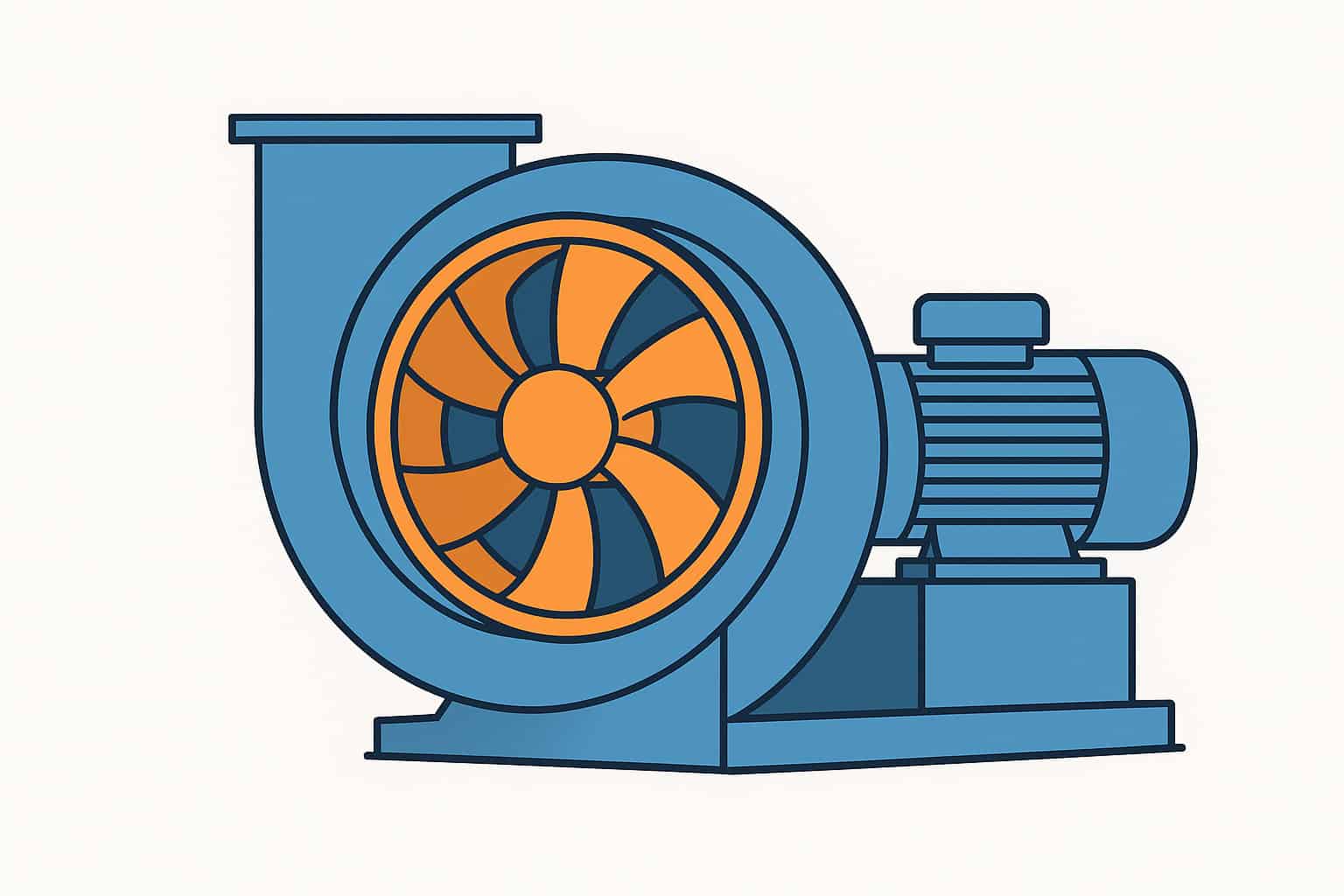
However, there are also inline mixed-flow fans and compact inline centrifugal designs. Mixed-flow impellers combine axial and radial flow components, providing higher pressure capability than a pure axial impeller while still fitting into an inline housing. These fans are often used where duct runs are longer, resistance is higher or more compact equipment is needed. Some small centrifugal blowers are packaged in housings that connect inline with ductwork even though the internal airflow turns radially.
In industrial and mining ventilation, engineers choose between axial, mixed-flow and centrifugal inline fans based on airflow, pressure and space constraints. For example, a short branch duct with low resistance might use a simple inline axial fan, while a longer or more complex duct system with filters or silencers might benefit from an inline mixed-flow fan that can deliver higher static pressure.
When reading a specification, it is important not to assume that “inline fan” means “axial fan”. You should always check the fan type, performance curves and construction details provided by the manufacturer. This ensures that the selected fan can deliver the required airflow and pressure, handle the air quality and fit within the available installation space.
In summary, an inline fan is defined by its duct-mounted, in-line housing, while an axial fan is defined by airflow direction through the blades. Many inline fans are axial, but inline fans can also be mixed-flow or centrifugal. Understanding this distinction helps you choose the right fan configuration for your ventilation system.