
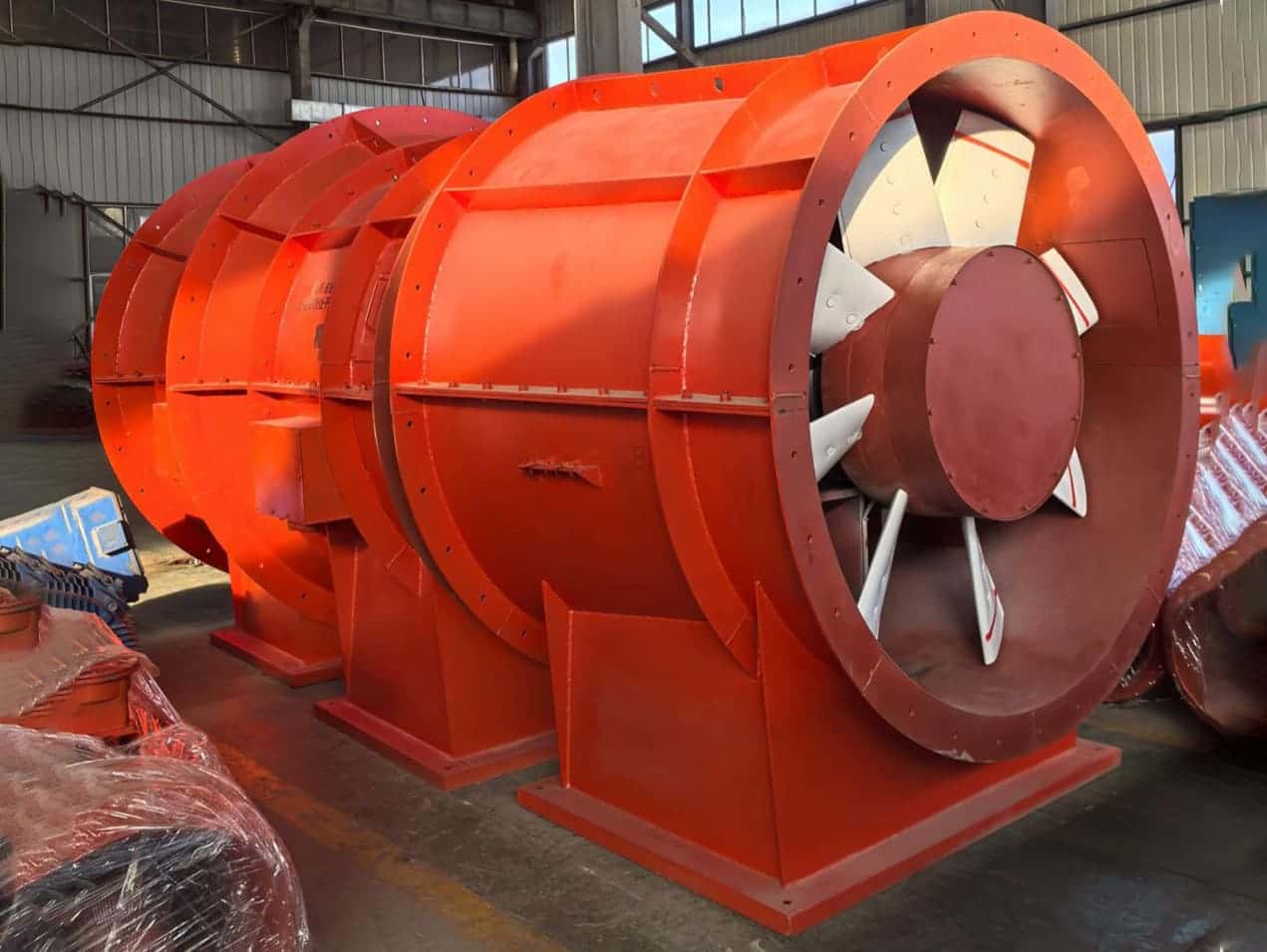
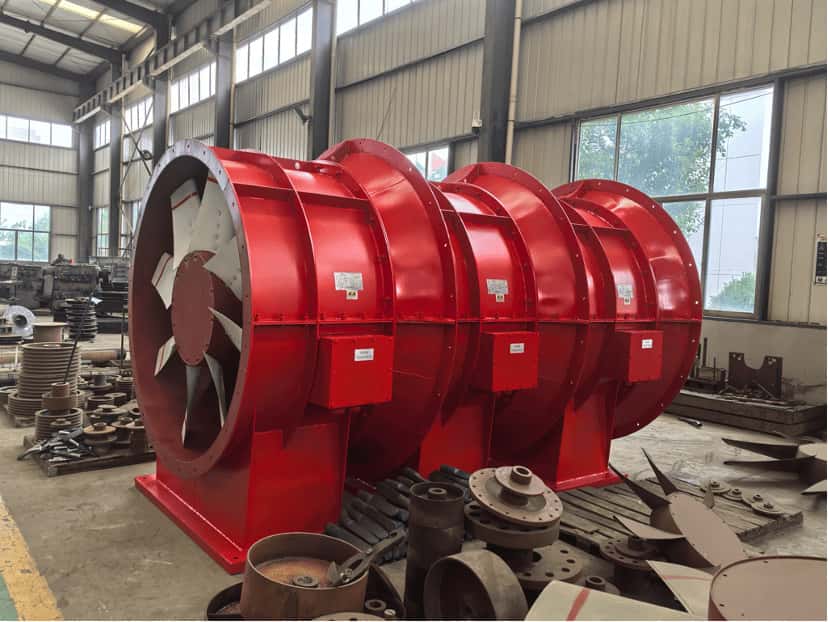
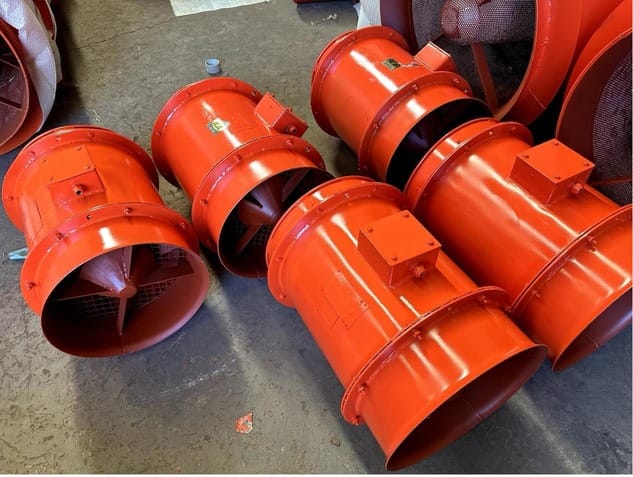
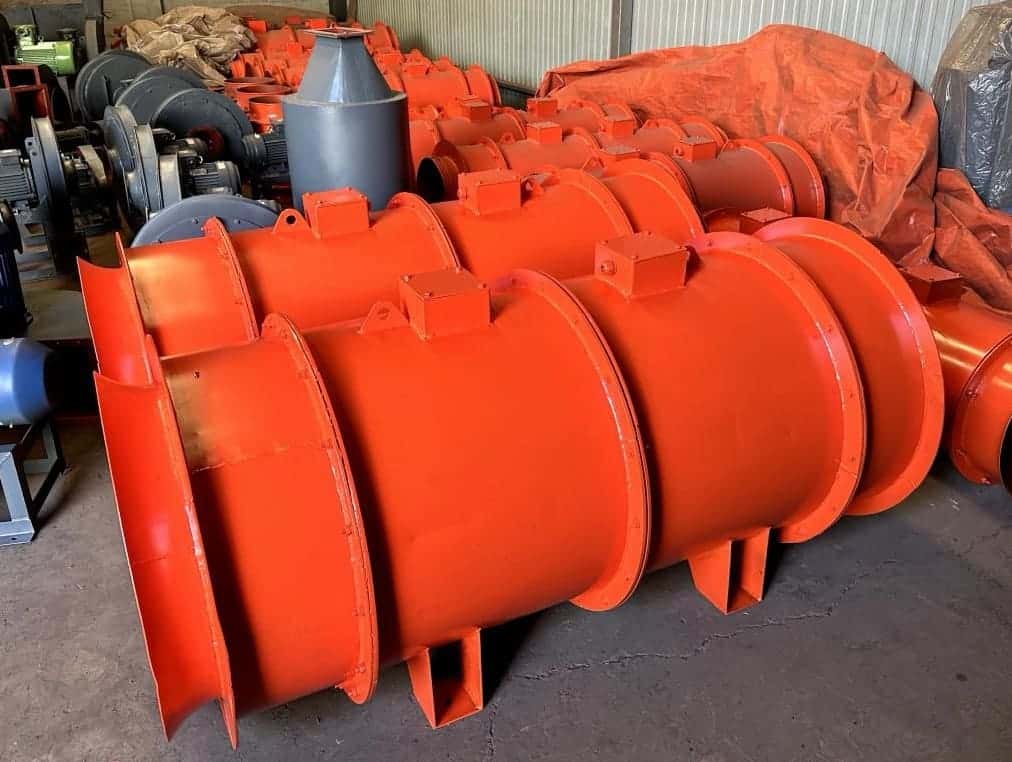
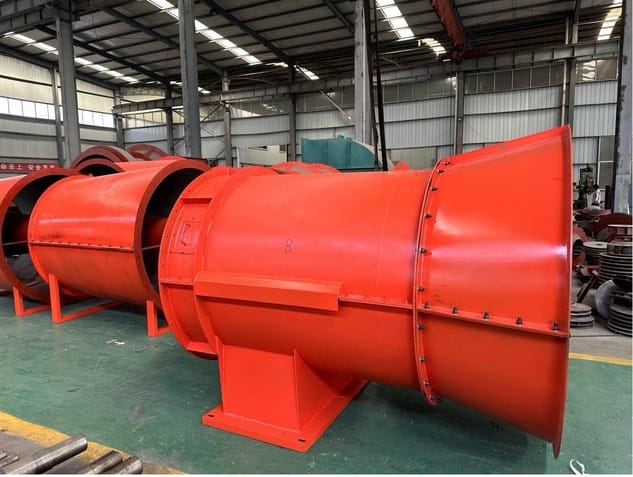
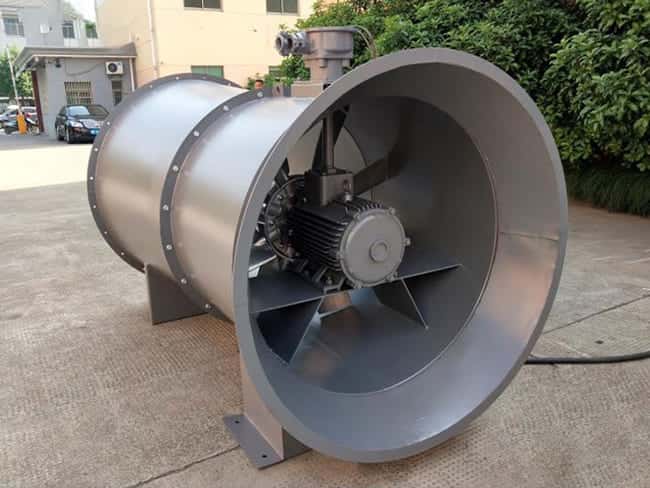
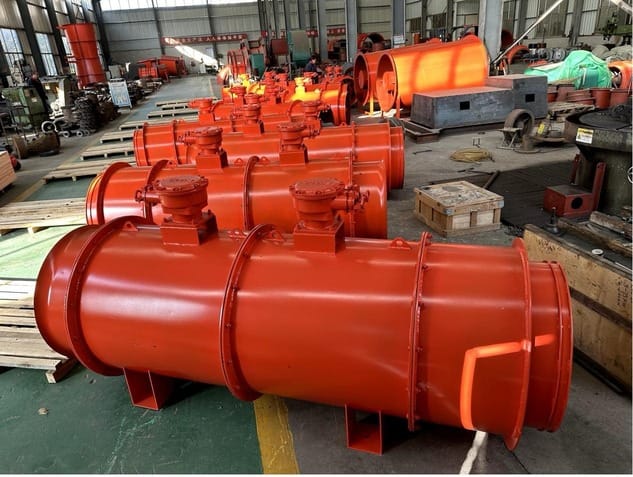
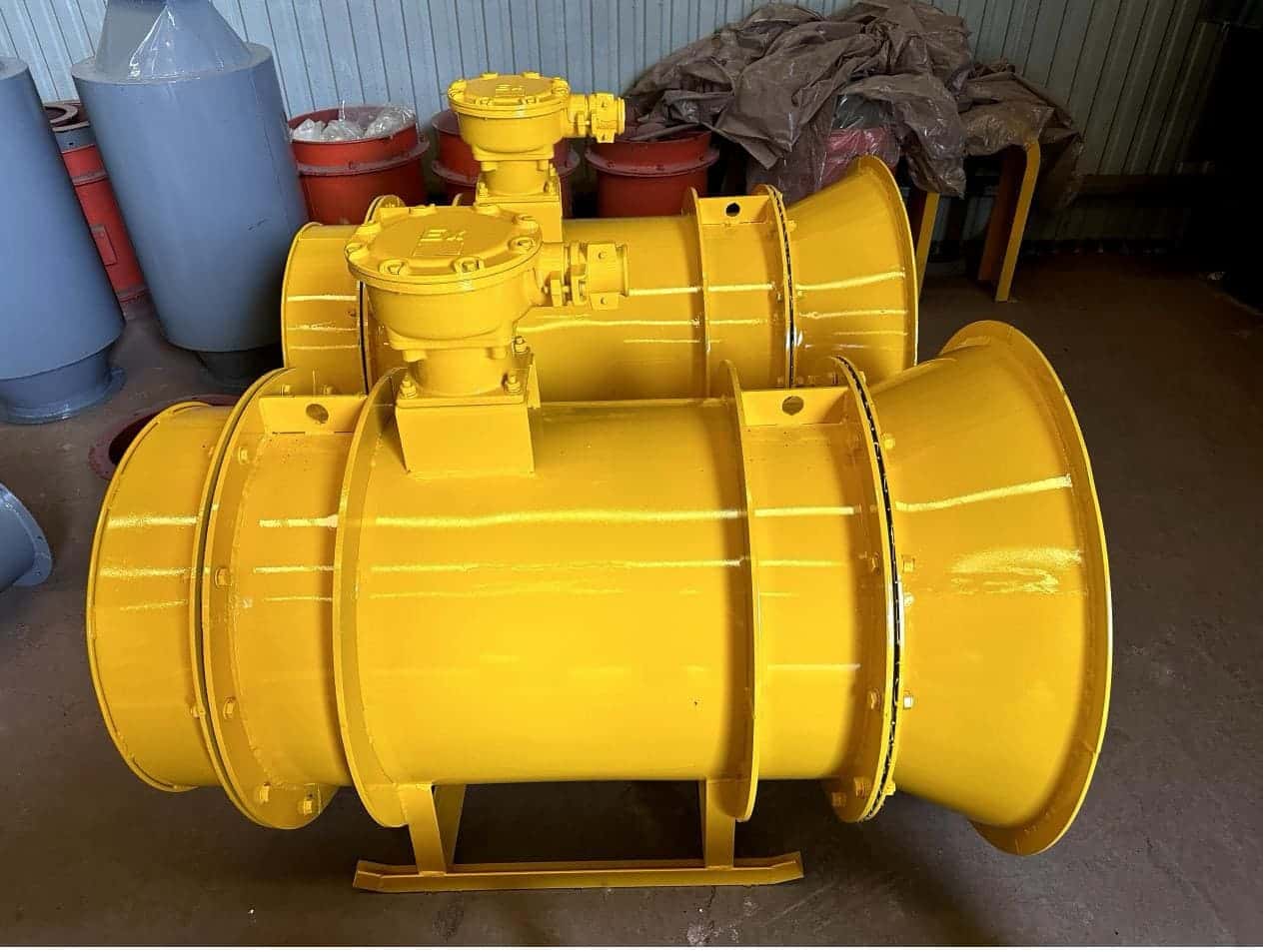
Deciding whether it is worth repairing an industrial ventilation fan or replacing it is a common challenge for plant and mine operators. Fans are critical for safety and production, so downtime is expensive, but they are also long-lived assets that can sometimes be refurbished at a lower cost than buying new. The right decision depends on technical condition, age, energy efficiency, downtime costs and safety requirements.
A good starting point is to assess the extent and nature of the damage. If the problem is limited to wear parts such as bearings, seals, belts, small cracks or minor corrosion, repair is often economical. Replacing bearings, rebalancing the impeller and cleaning the casing can restore performance at a fraction of the cost of a new fan. Many heavy-duty axial and centrifugal fans used in mines and plants are designed with maintenance in mind, and routine overhauls are part of their lifecycle.
However, if the fan has serious structural damage—such as heavily eroded or cracked blades, severely corroded casings, a bent shaft, repeated weld failures or motor winding breakdown—the cost of repair can approach or exceed the price of a replacement, especially when engineering and testing are included. In such cases, a new fan may offer better reliability, improved efficiency and updated safety certifications, making replacement more attractive.
Age and efficiency are also important factors. Older fans may have lower aerodynamic and motor efficiency compared with modern designs. Even if they can be repaired, they may continue to consume more energy. For large fans that run many hours per year, upgrading to a high-efficiency model with a suitable control system (for example, variable speed drives) can yield significant energy savings that quickly offset the higher initial cost of replacement.
Downtime and safety must be considered as well. If the fan is part of a critical mining ventilation system or a key industrial exhaust line, extended outages while waiting for complex repairs may not be acceptable. A new fan may be supplied faster or installed in parallel, reducing risk. Furthermore, if the existing fan no longer meets current safety or explosion-protection standards, replacement is usually the only responsible option.
In practice, the best approach is to perform a lifecycle cost comparison: estimate the cost of repair (including future risk and downtime), compare it with the cost of a new fan and factor in energy consumption, expected remaining life and compliance requirements. For relatively young fans with moderate damage, repair is often worth it. For very old, inefficient or heavily damaged fans in critical service, replacement is usually the better long-term decision.
In summary, whether it is worth repairing or replacing an industrial ventilation fan depends on technical condition, age, efficiency, downtime impact and safety standards. A structured lifecycle cost analysis helps identify the most economical and reliable option.