
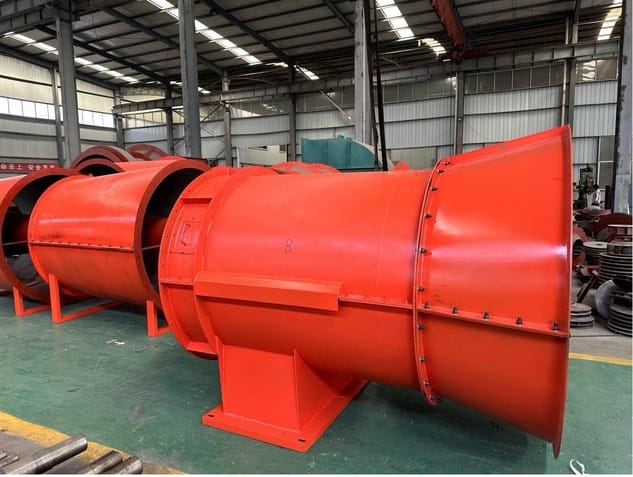
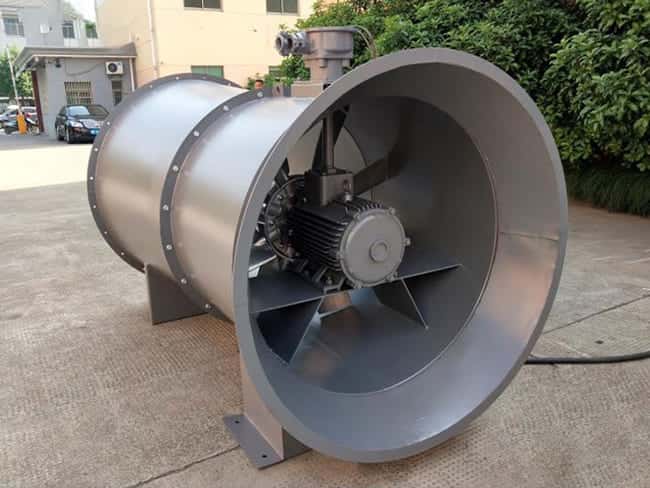
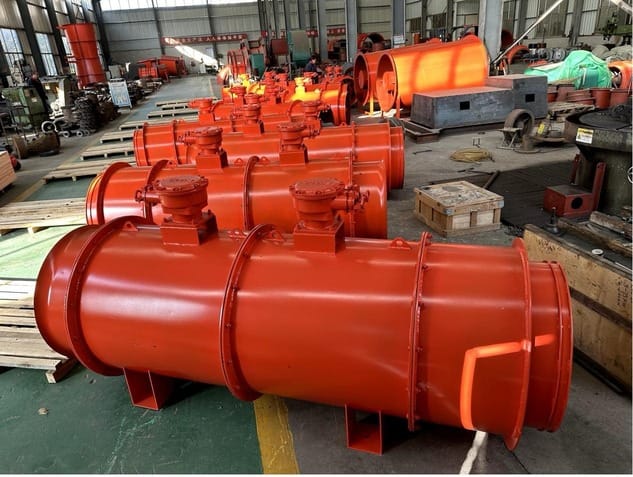
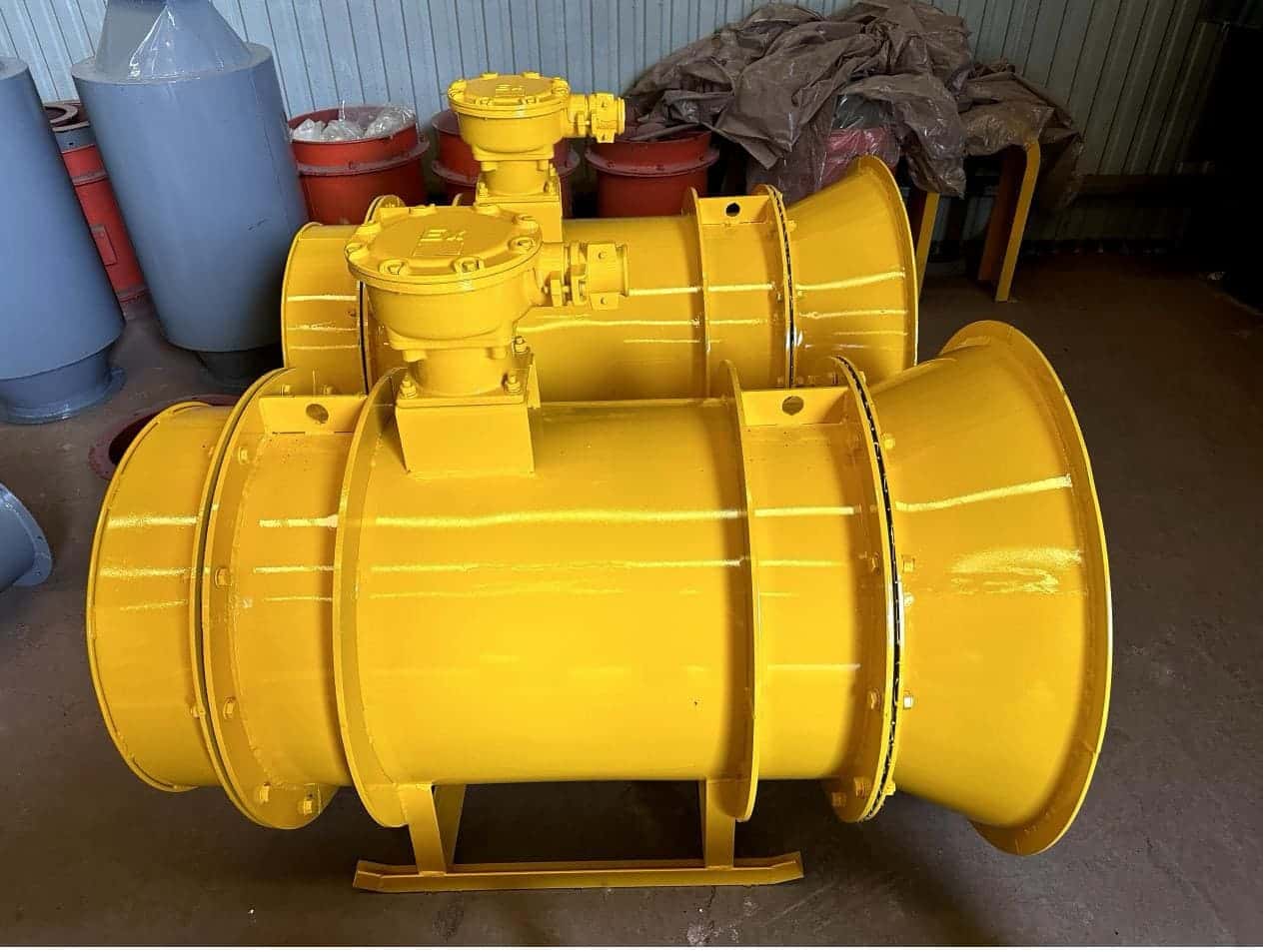
Whether mine booster fans should run continuously or be staged depends on how the ventilation system is designed, the safety requirements of the operation and the mine’s energy management strategy. There is no single rule for all mines, but there are clear principles: airflow to critical areas must always meet or exceed regulatory requirements, and any staging or intermittent operation must never compromise gas, dust or temperature control.
In many underground mines, especially those with significant gas or diesel emissions, continuous operation of booster fans on key branches is preferred. Running the booster fan all the time at a set duty provides stable airflow, minimizes the risk of unexpected gas build-up and simplifies operating procedures. This approach is common in deep level or high-production districts where ventilation demand is consistently high and large variations in airflow are not desirable.
However, continuous operation at full speed can be energy intensive. As a result, some mines adopt staged or controlled operation using variable speed drives and ventilation-on-demand concepts. In this approach, the booster fan may still run continuously, but its speed (and therefore airflow) is adjusted in stages based on time of day, production schedule or real-time monitoring of gas levels and equipment activity. For example, airflow might be increased when multiple diesel machines are operating in the district and reduced when the area is idle.
In smaller or less gassy operations, there may be opportunities to shut booster fans down during non-production periods, such as weekends or extended maintenance stops, provided that minimum legal airflow and gas control conditions are still met. This kind of staged operation must be carefully analysed and approved through risk assessments and ventilation modelling, and clear procedures must be in place to verify conditions before people enter the area after a fan restart.
Safety and regulation are always the determining factors. In some jurisdictions, regulators explicitly restrict or disallow intermittent operation of booster fans in certain types of mines, particularly gassy coal mines, because changing ventilation patterns can increase the risk of methane layering or unexpected flows. Even where staging is allowed, automatic monitoring of gas, airflow and fan status is highly recommended, and alarms should alert operators if conditions drift outside safe limits.
From an energy perspective, combining continuous base operation with staged control often offers the best compromise. A booster fan can run continuously at a reduced base speed to maintain minimum airflow, and then be automatically ramped up in stages when production or gas conditions demand additional air. This strategy ensures safety, improves comfort and reduces the overall power consumption of the ventilation system.
In summary, mine booster fans may run continuously or be staged depending on safety requirements, regulatory constraints and energy goals. Many operations use continuous operation with variable speed or staged control to guarantee minimum ventilation while optimizing power usage, always ensuring that airflow in critical areas remains within safe and compliant limits.