
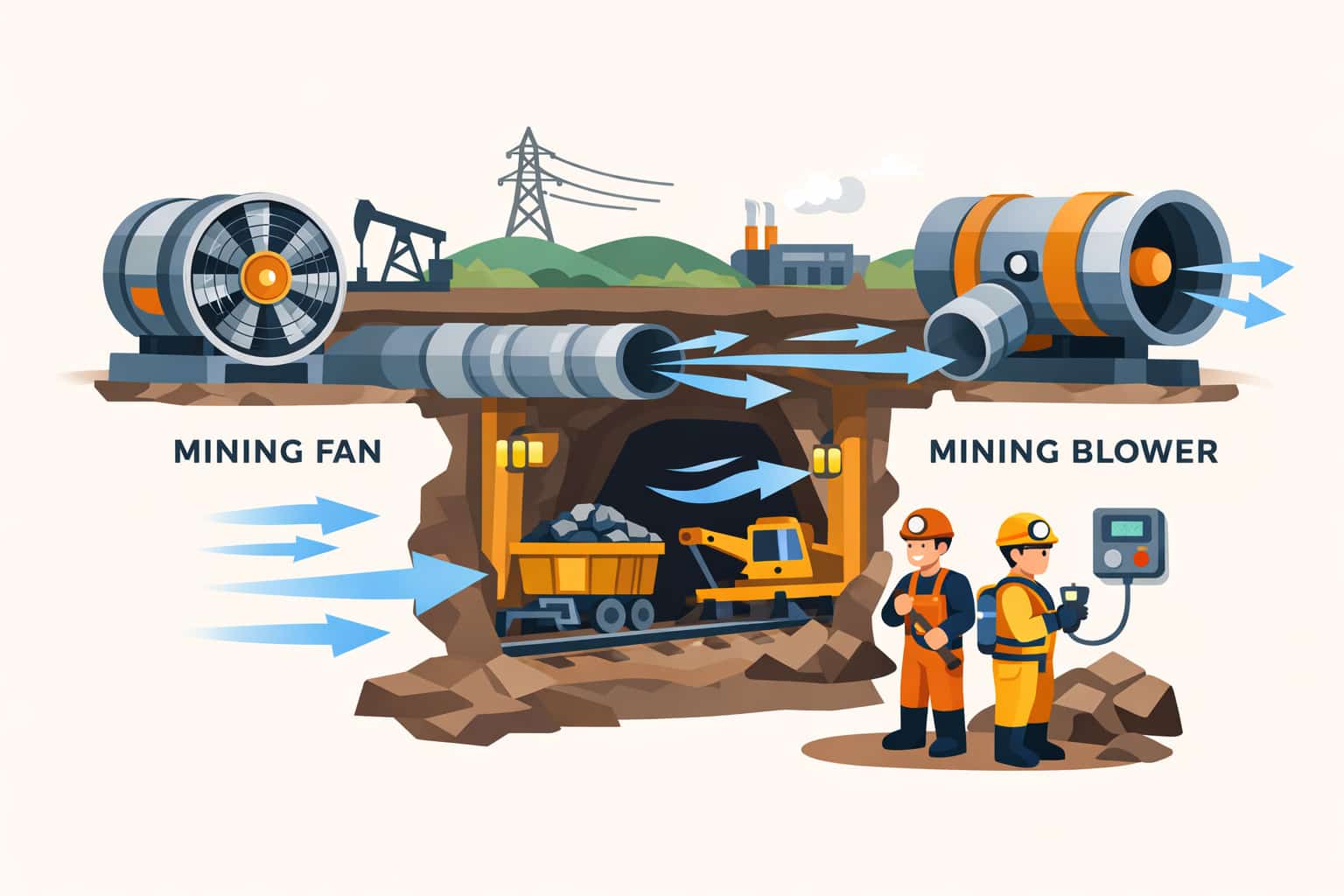
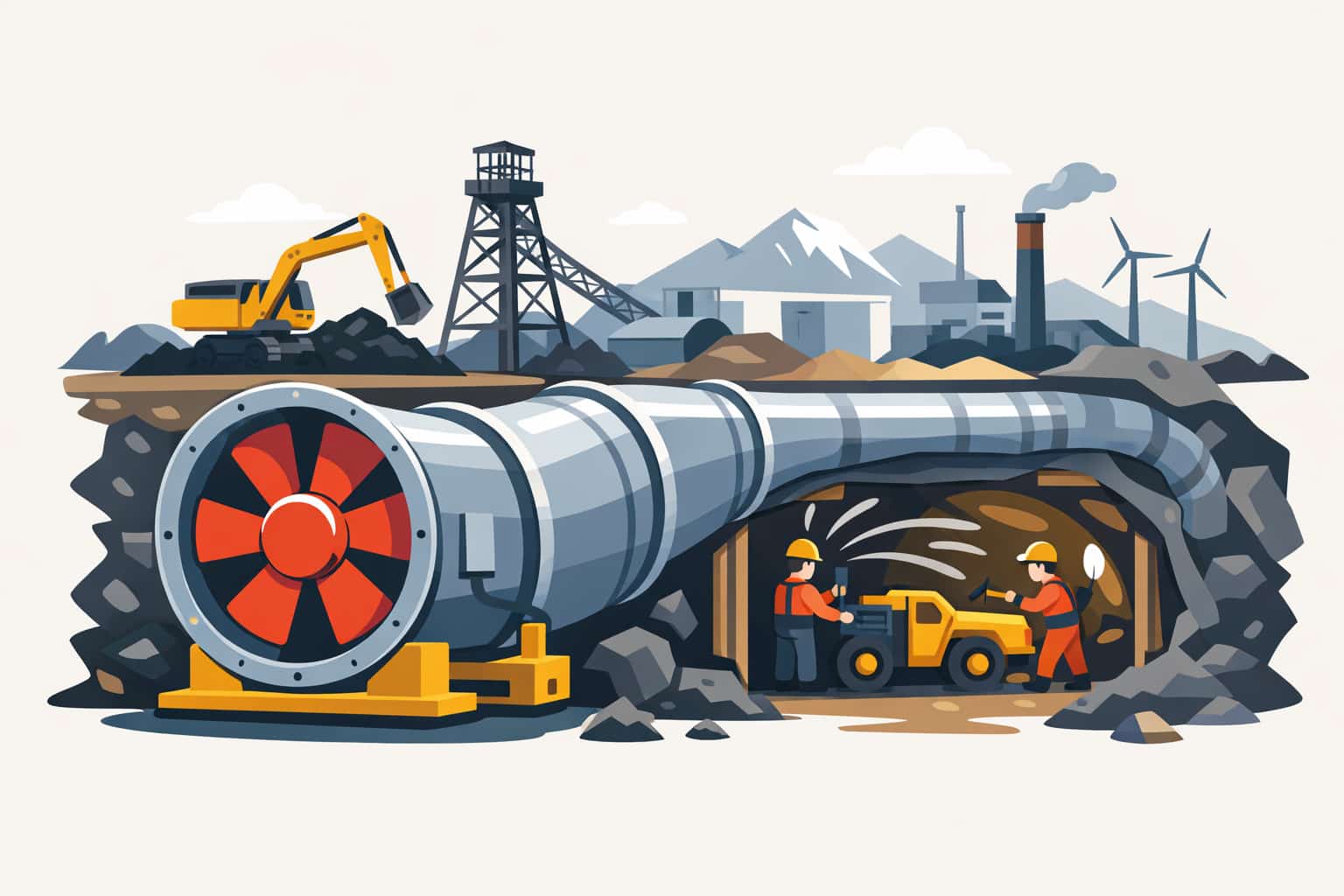
The best airflow for underground mine cooling ventilation is not a single number that suits every operation, but a value calculated from the mine’s heat load, layout, regulations and production plan. Cooling ventilation must deliver enough air to dilute heat from rock, machinery and oxidation so that workplace temperatures remain within safe and comfortable limits. At the same time, airflow must control gases and dust and work in harmony with any refrigeration plants, bulk air coolers or localized cooling units.
The starting point is to estimate the total heat load in the mine or in a particular district. This includes natural rock heat (which increases with depth), heat from diesel and electric equipment, heat from compressed air systems and pumps, and heat released by blasting or oxidation of ore and coal. Engineers convert these heat loads into a required cooling capacity and then determine how much of that load can be removed by ventilation air and how much must be handled by mechanical cooling.
Ventilation airflow for cooling is often expressed as a required air quantity per kilowatt of heat or per workstation. In some cases, regulations or guidelines provide minimum airflow rates per worker or per unit of diesel power, which also contribute to the final airflow requirement. Where rock temperatures are high, additional airflow may be needed to limit air temperature rise between intake and working face. All of these constraints are combined in a ventilation and cooling model to define the best airflow range for each level and heading.
The “best” airflow is therefore a balance between thermal comfort, safety and energy efficiency. Very high airflow may cool effectively but can be expensive to produce, because fan power increases roughly with the cube of air volume when pressure is constant. Excessive airflow can also create high velocities, noise and dust re-entrainment. Too little airflow, on the other hand, leads to unacceptable temperatures, poor gas and dust control and reduced productivity. The optimal value is usually the lowest airflow that still satisfies all safety and comfort criteria with an acceptable margin.
To achieve this, ventilation engineers use network and heat simulation software to test different airflow scenarios. They adjust main, booster and auxiliary fan duties, duct sizes and airway configurations until air quantities, temperatures and gas levels in critical areas all meet design targets. In deep or hot mines, bulk air coolers and chilled water systems are integrated with ventilation to reduce the amount of airflow required purely for cooling.
In summary, the best airflow for underground mine cooling ventilation is the air quantity that keeps temperatures, gases and dust under control in each working area while minimizing fan power and operating cost. It is calculated from a detailed assessment of heat load, legal requirements and mine geometry rather than chosen as a fixed rule-of-thumb value.