
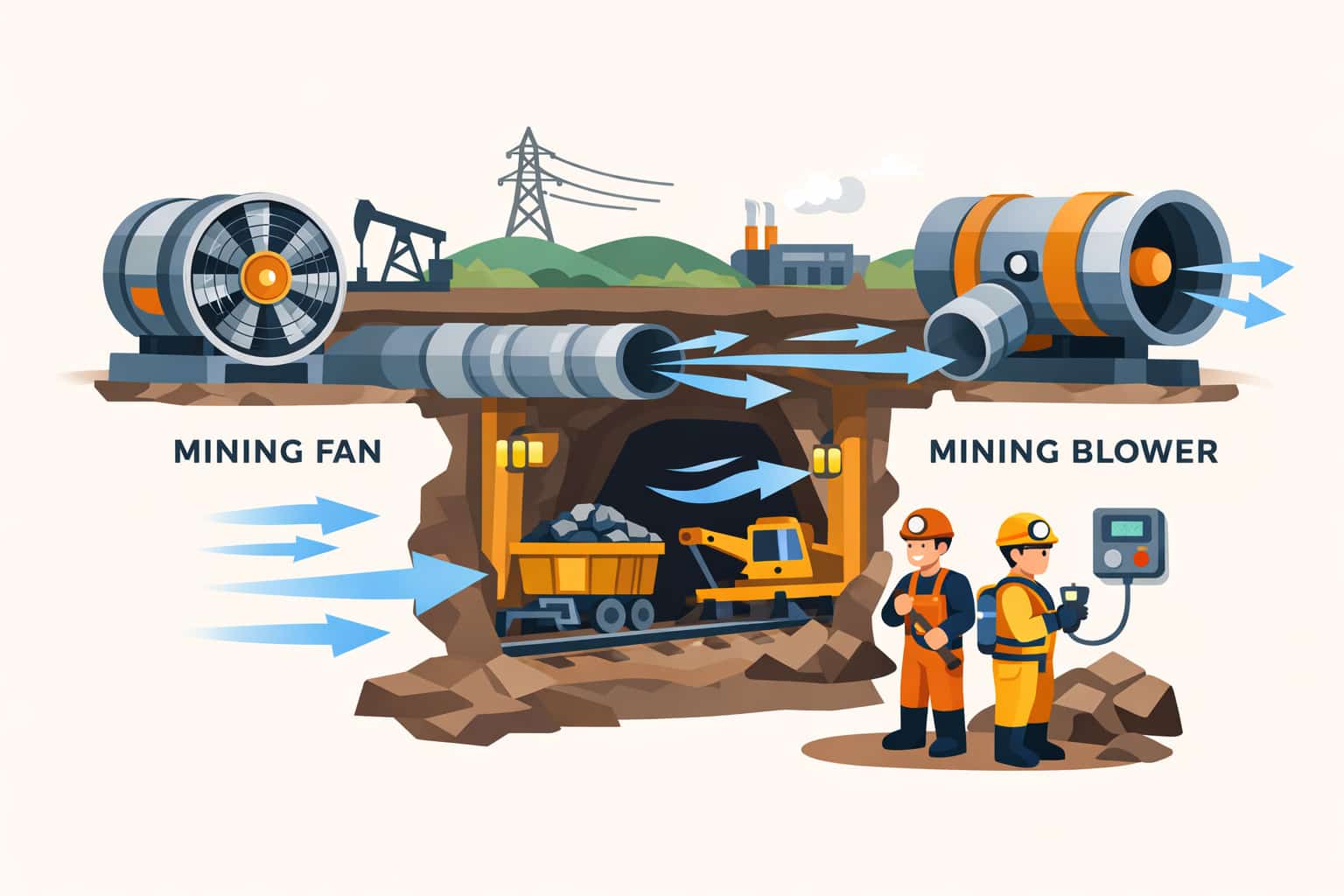
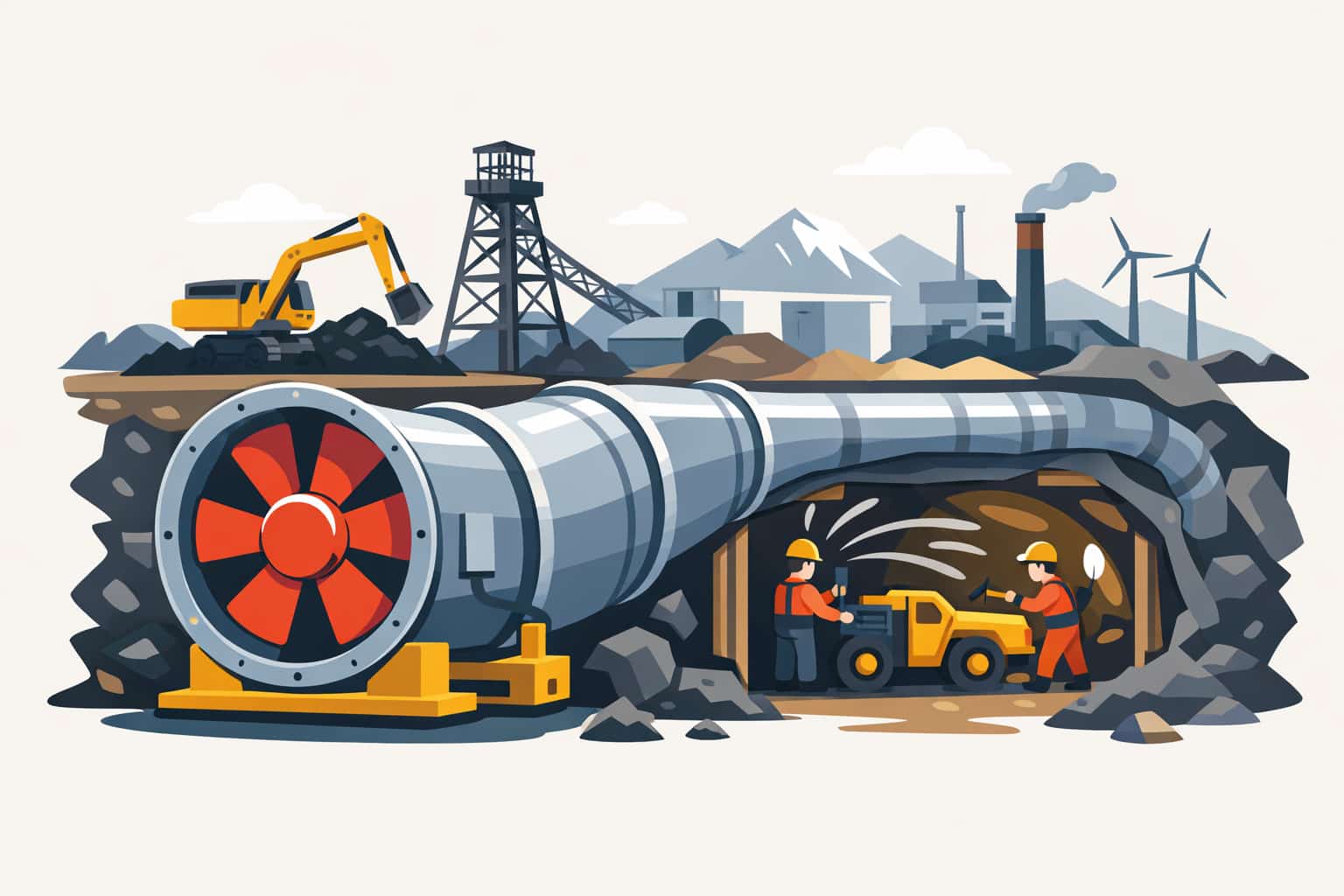
Recognising the signs of poor air ventilation is essential for maintaining safe and comfortable conditions in buildings, factories and underground mines. Many problems show up first as simple discomfort or visible dust, but in industrial and mining environments they can also indicate serious health and safety risks related to gases, fumes and heat.
One obvious sign is stale or lingering odours. If smells from processes, chemicals, diesel engines or people remain in the air for a long time, it often means that contaminated air is not being removed and replaced with fresh air quickly enough. In offices this may just be uncomfortable; in workshops and mines it can signal inadequate removal of potentially harmful substances.
Another visible sign is dust accumulation and haze. If dust clouds remain in the air around workstations, conveyor transfer points or underground headings, the local exhaust or general ventilation is not capturing and diluting particles effectively. Over time, surfaces may become heavily coated with dust, and light beams may reveal a permanent haze in the air. In mines and heavy industry, this can directly increase the risk of respiratory disease and explosions.
Condensation, damp patches and mould on walls and ceilings also indicate poor ventilation. When moisture generated by people, processes or groundwater is not removed, relative humidity rises and condensation appears on cold surfaces. In buildings this can lead to mould growth and structural damage; in underground workings it can increase corrosion and create slippery conditions.
Human symptoms are another important warning. People working in poorly ventilated areas often report headaches, fatigue, drowsiness or a feeling of stuffy air. Elevated concentrations of carbon dioxide, carbon monoxide, NOx, SO₂ or other gases, as well as high temperatures and humidity, reduce comfort and concentration. In mining environments, instruments may show rising gas or dust levels, and alarms may trigger more frequently, all pointing to insufficient airflow.
From an equipment perspective, poor ventilation may show up as overheating of motors, switchgear and electronics. If electrical rooms or control cabinets run hotter than their design temperature, this can shorten component life and cause nuisance trips or failures. Hot air that is not properly removed is often a ventilation problem rather than a purely electrical one.
In summary, signs of poor air ventilation include lingering odours, visible dust and haze, condensation and mould, worker discomfort and fatigue, high temperatures and humidity, overheating equipment and, in mines, measured gas or dust levels approaching or exceeding limits. When these signs appear, the ventilation system should be reviewed and upgraded to restore safe, healthy conditions.