
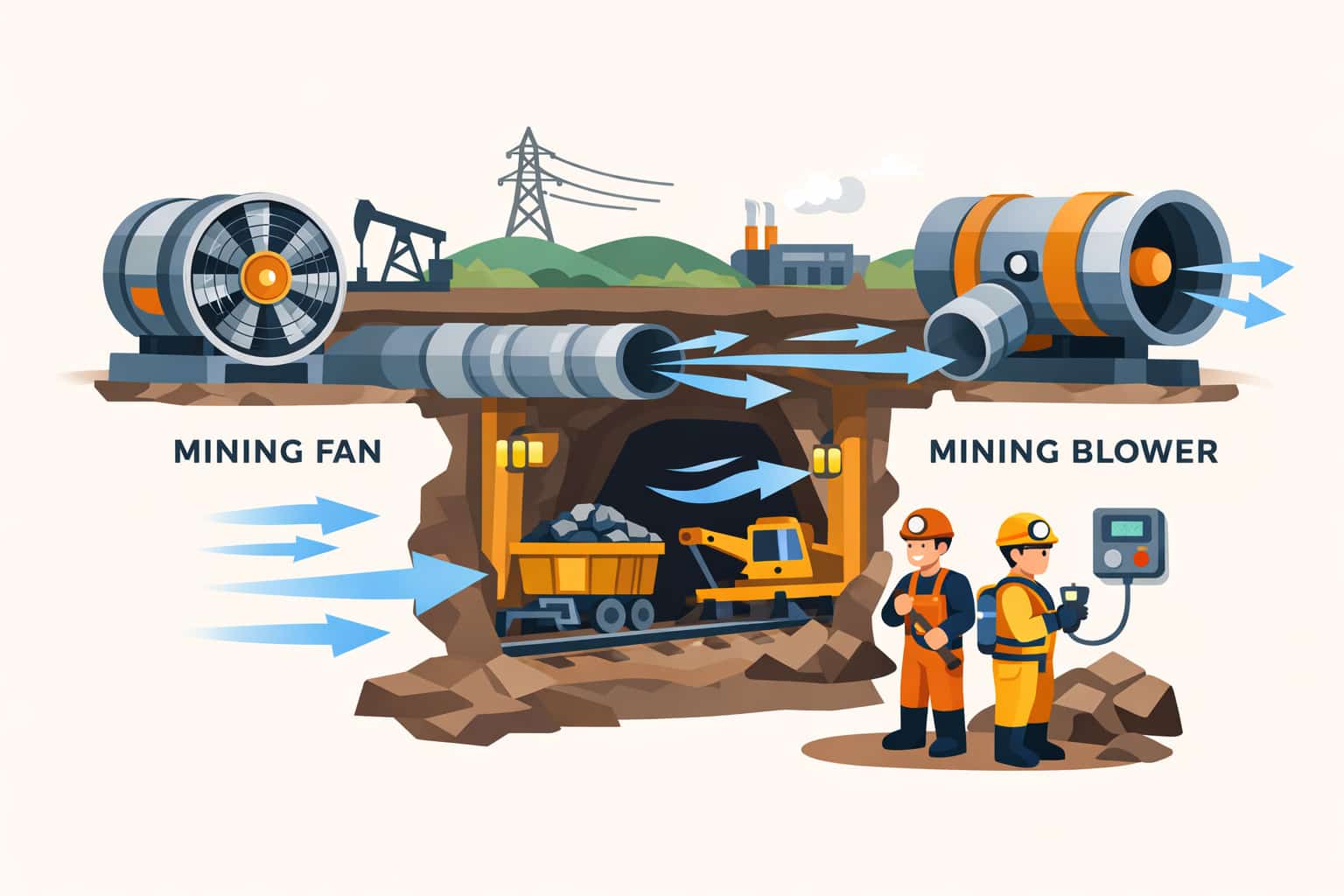

Recognising the signs of poor ventilation is important for safety, health and productivity in any workplace, especially in industrial plants and underground mines where contaminants and heat can build up quickly. Some warning signs are obvious, while others are more subtle and appear gradually. Paying attention to these signals helps operators take action before conditions become unsafe or equipment is damaged.
One of the first signs is often stale or lingering odours. If smells from welding, fuel, solvents, blasting or process chemicals hang in the air long after work has stopped, it indicates that fresh air is not replacing contaminated air fast enough. In offices and control rooms, persistent stuffy smells or body odours can also point to inadequate airflow.
Visible dust and haze are another clear warning. If you can see dust clouds around conveyor transfer points, crushers, loaders or underground headings, or if light beams reveal haze in the air, the ventilation system may not be capturing or diluting particles properly. Dust settling in thick layers on equipment, cable trays and beams is also a sign that local exhaust or general ventilation is insufficient.
Thermal symptoms are common. Hot, stuffy areas where workers feel overheated, sweat excessively or complain of heavy, still air suggest that cooling and airflow are inadequate. In mines, hot spots may develop in long headings where auxiliary fans and ducts have not been extended close enough to the face. In buildings, large temperature differences between areas or strong thermal stratification under high roofs can indicate poor air distribution.
Moisture-related issues such as condensation on windows, walls or equipment, mould growth and damp smells are also signs of poor ventilation, particularly in spaces where moisture is generated by processes or people. Without enough ventilation to remove moist air, relative humidity rises and condensation forms on cooler surfaces, damaging structures and creating health concerns.
Human symptoms should never be ignored. Frequent headaches, drowsiness, eye and throat irritation, dizziness or shortness of breath among workers can be linked to elevated levels of dust, fumes, carbon dioxide or other contaminants. In underground mining, elevated gas readings, frequent alarms from gas monitors, or increasing diesel exhaust levels are serious indicators that main fans, booster fans or auxiliary fans are not providing sufficient air.
Finally, equipment behaviour can reveal ventilation problems. Overheating of motors, control panels and electronic equipment, as well as accelerated corrosion and dust ingress, may result from hot, polluted air and inadequate cooling airflow. If ventilation fans themselves are running loudly, vibrating excessively or operating at unusual conditions, the system resistance may have changed due to blocked filters, damaged ducting or misplaced stoppings.
In summary, signs of poor ventilation include stale odours, visible dust and haze, condensation and dampness, hot and stuffy zones, worker discomfort and health complaints, abnormal gas readings and equipment overheating. When these signs appear, it is important to review the ventilation system, inspect fans and ducts and adjust airflow before more serious problems arise.
