












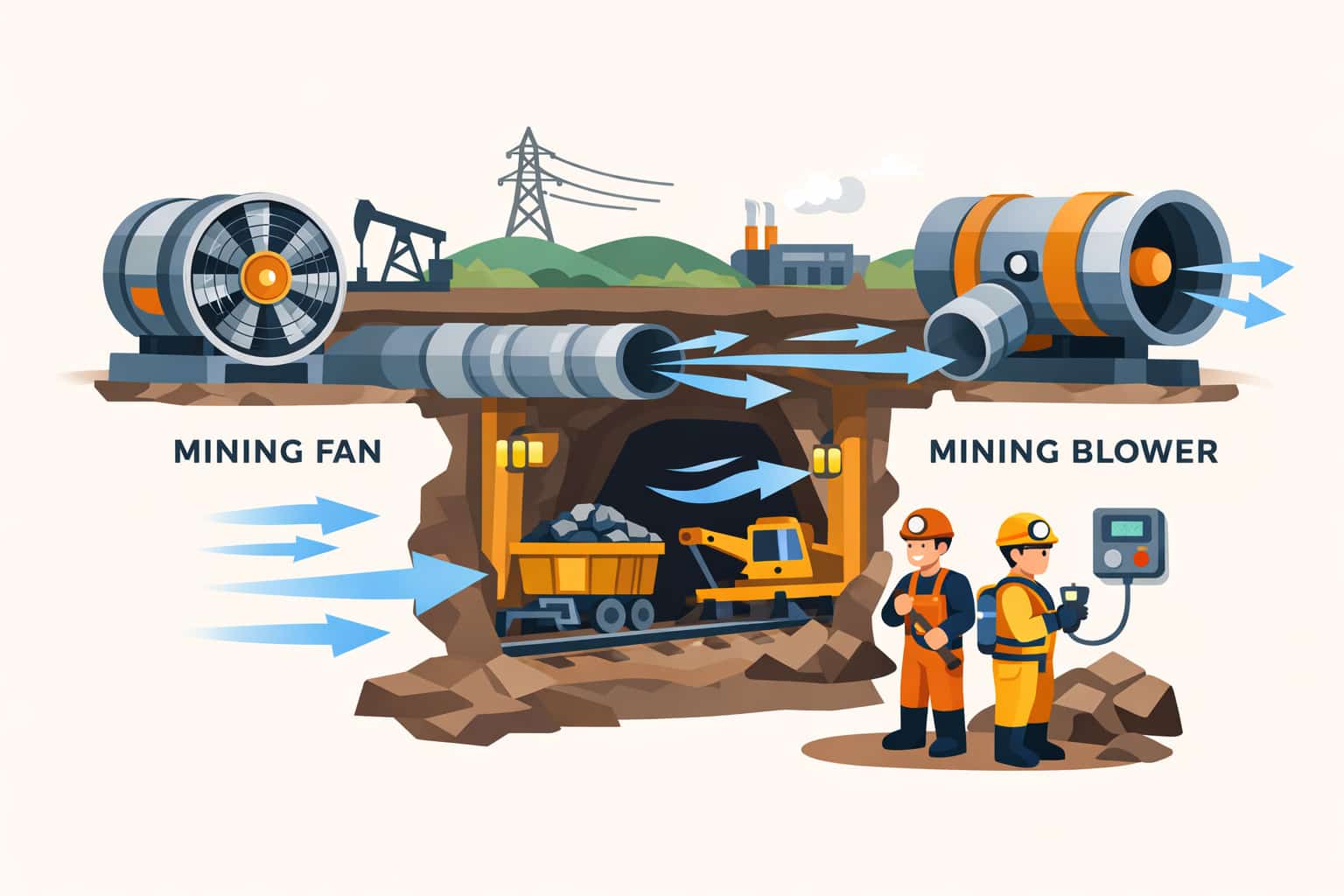
When people talk about the 3 C's of ventilation, they are usually referring to three simple goals that every ventilation system should achieve: Clean air, Contaminant control and Comfort. Whether you are designing ventilation for an office, an industrial workshop or an underground mine, these three C's provide a practical checklist for how fans, ducts and airways should be arranged and operated.
Clean air means supplying enough fresh air to dilute normal human emissions (carbon dioxide, moisture and body odours) as well as by-products of equipment and processes. In industrial plants and mines this includes diesel exhaust, blasting fumes, welding smoke and heat from motors and rock. Main ventilation fans, booster fans and auxiliary fans are selected so that clean intake air can reach every workplace in sufficient quantity.
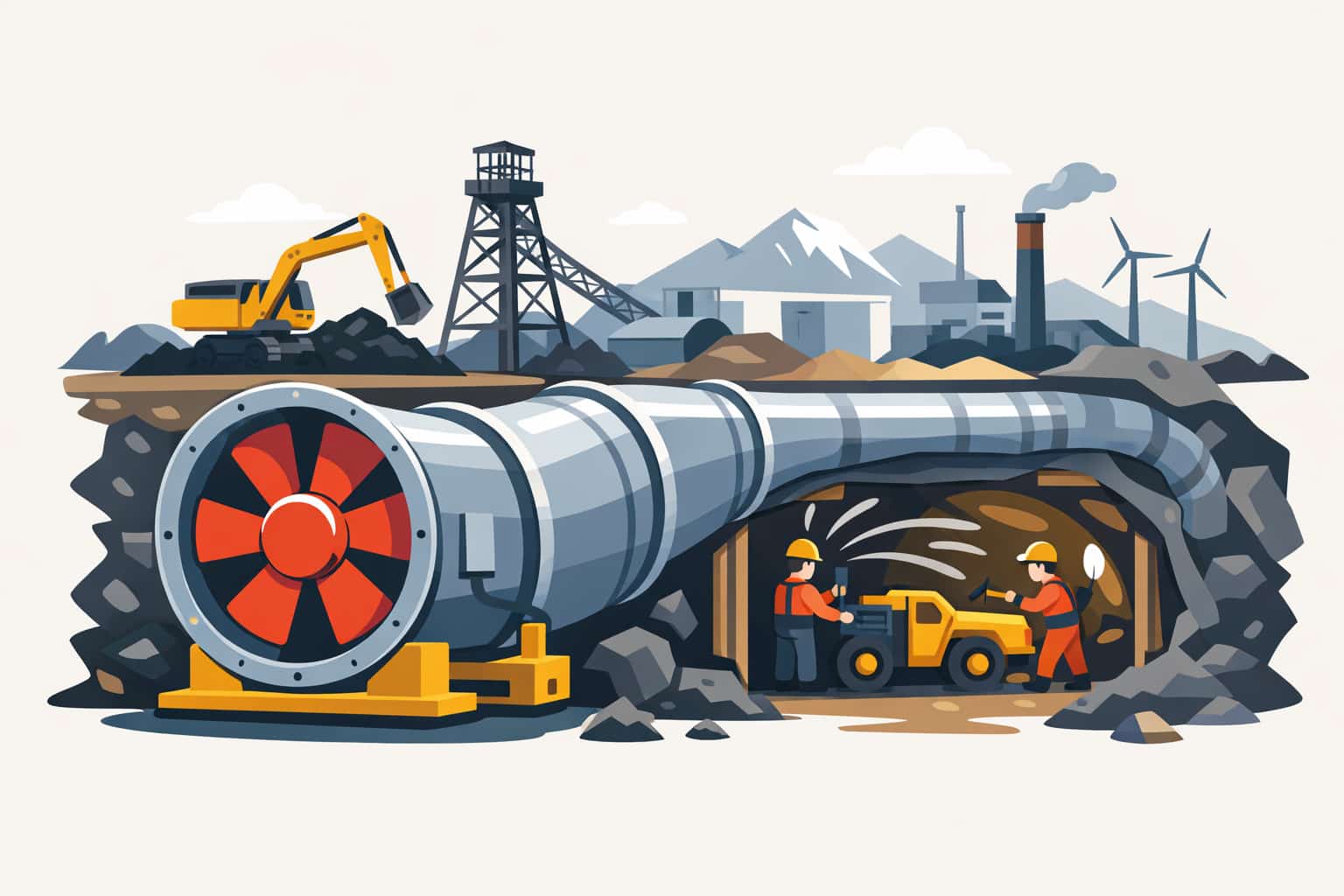
Contaminant control is the second C. It is not enough simply to bring in fresh air; the system must also capture and remove contaminants at or near their source. Local exhaust hoods, dust collection systems and ducted auxiliary fans in headings follow this principle. By extracting fumes and dust before they spread through the whole space, ventilation systems reduce overall airflow requirements and keep exposure levels well below regulatory limits. In underground mines, this may mean ventilating headings with auxiliary fans and ducts, while main mine fans handle return air from the entire network.
Comfort is the third C, and it covers temperature, humidity, air movement and noise. Even if air is technically safe to breathe, it may still be uncomfortably hot, humid or stagnant. Good ventilation should keep workplaces within acceptable temperature and humidity ranges, avoid drafts that cause discomfort and limit fan noise. In deep mines and hot process areas, this often requires combining ventilation fans with cooling systems, using correctly sized axial or centrifugal fans to move air over cool routes and away from hot equipment.
These 3 C's are closely linked. A system that focuses only on comfort but ignores contaminant control will not be safe. A system that meets minimum contaminant limits but neglects temperature and humidity will be difficult to work in for long periods. By designing ventilation around clean air, contaminant control and comfort together, engineers can select the right industrial and mining ventilation fans and lay out ducts, shafts and airways to support both safety and productivity.
