
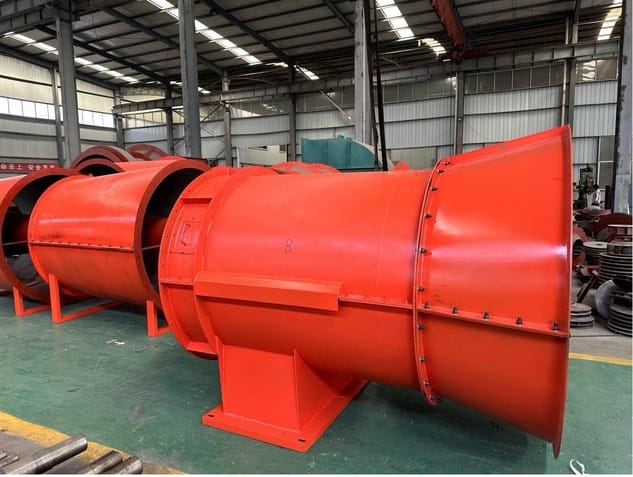
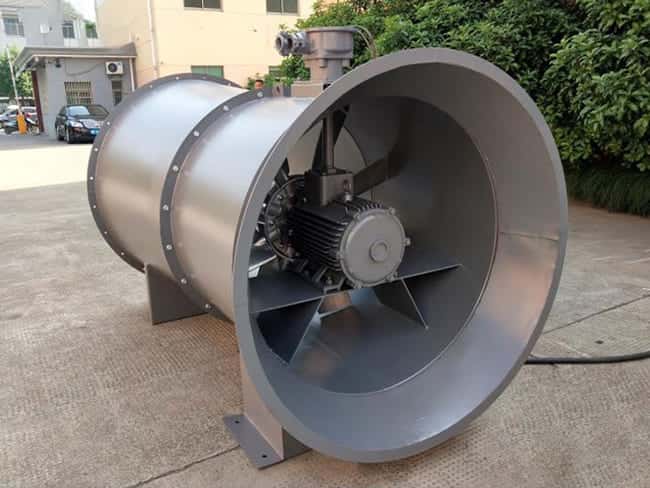
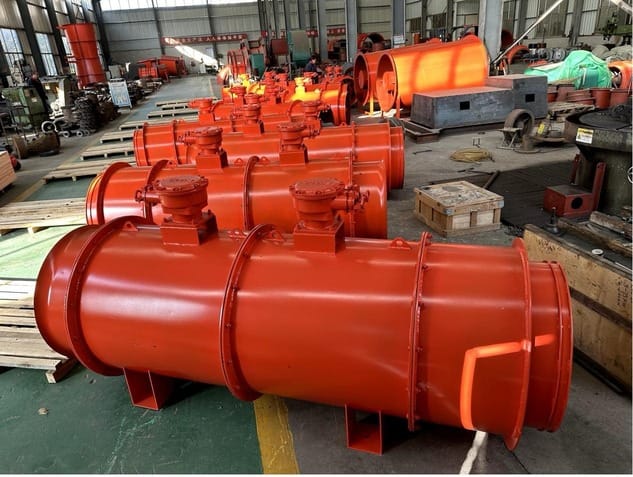
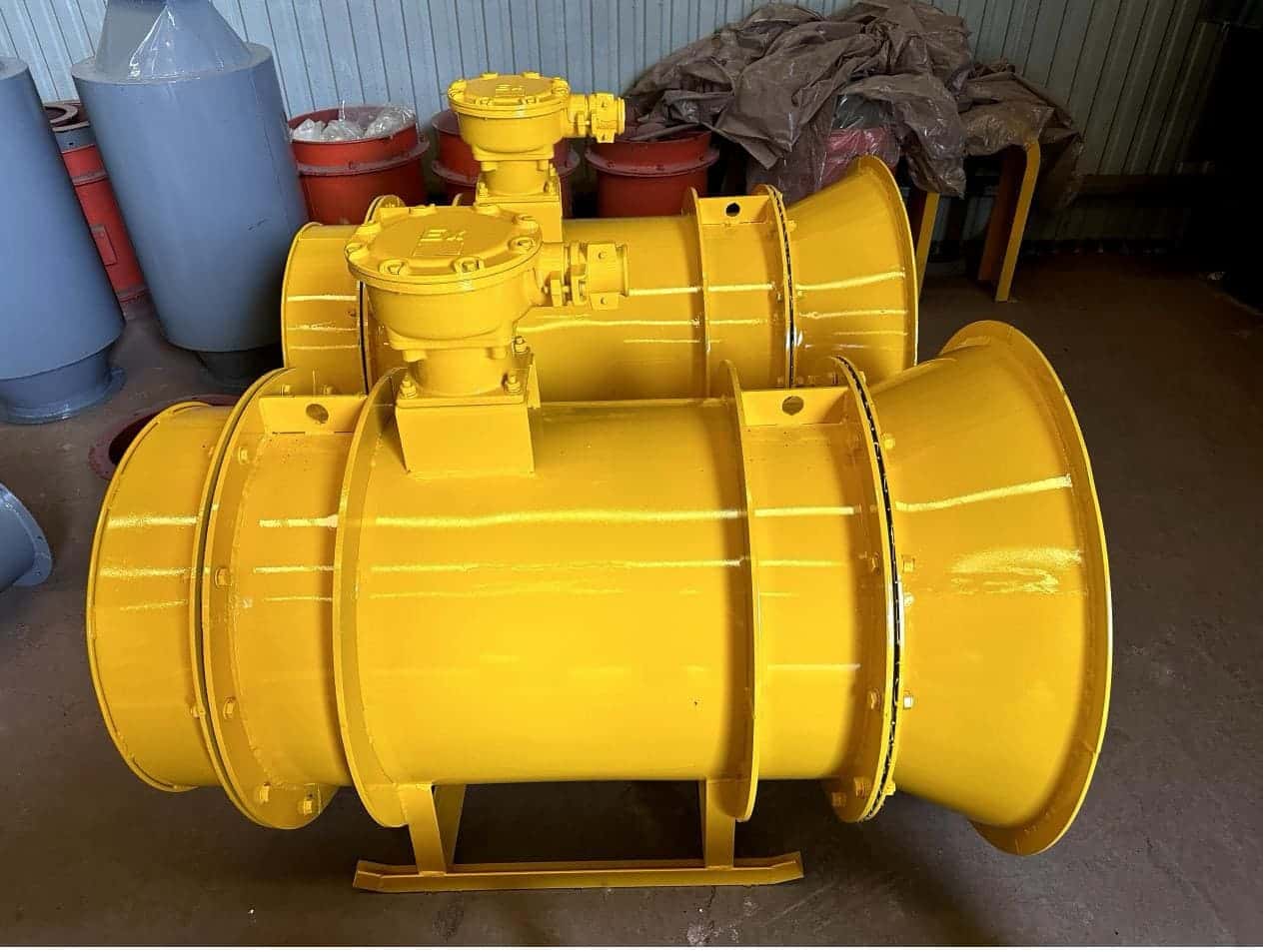
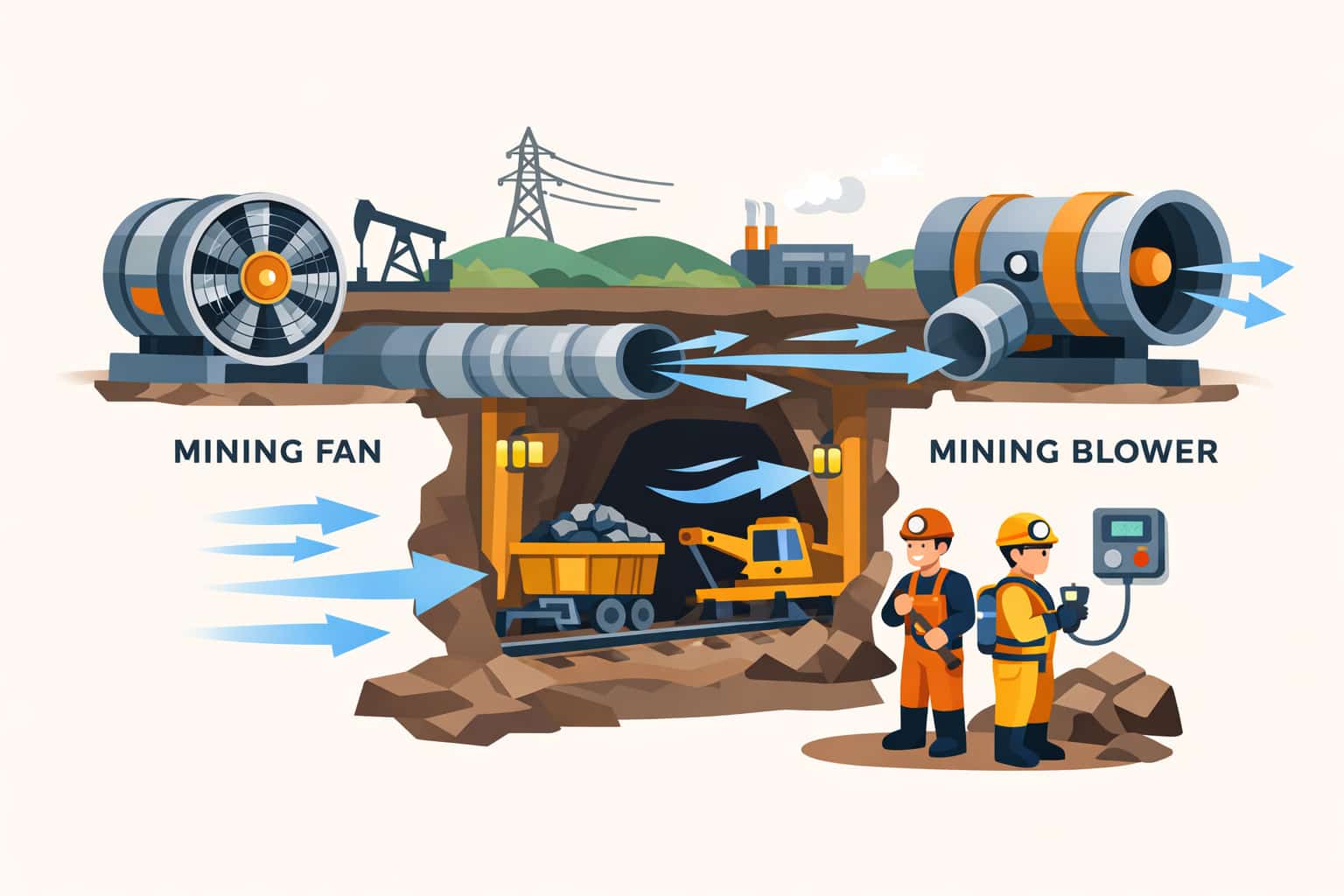
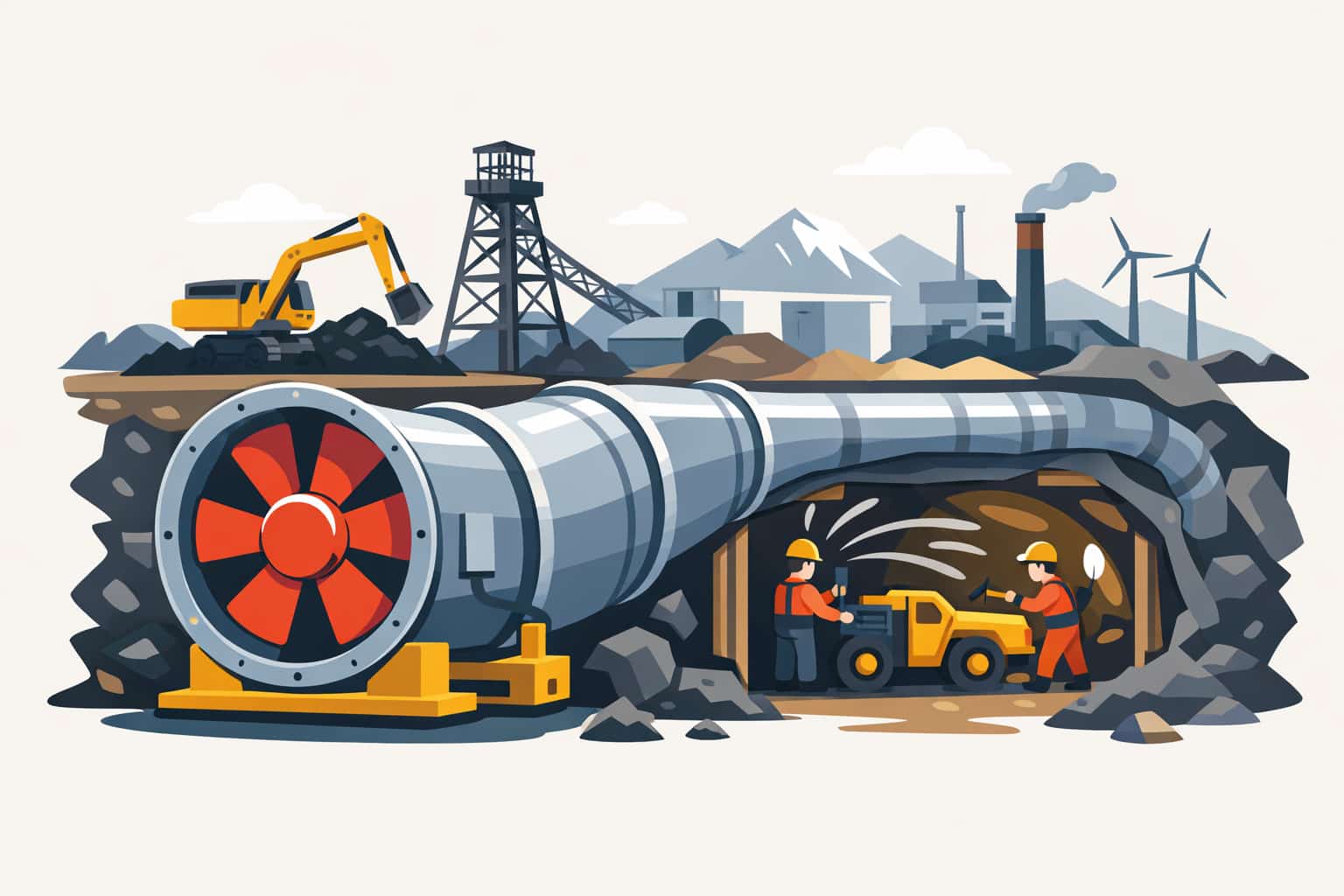
In building, industrial and mining applications, mechanical ventilation can be described in four practical stages: intake, treatment, distribution and exhaust. Seeing the system as these stages helps you design and maintain fans, ducts and controls so the whole ventilation process works as intended.
The first stage is air intake. In this stage, outdoor air enters the system through louvers, roof inlets, intake shafts or portals. Mechanical fans create the pressure difference that pulls or pushes fresh air inside. At the intake, the air may pass through weather hoods, bird screens and coarse filters to keep out rain, debris and insects. In underground mines, the intake stage corresponds to fresh air entering the mine via shafts and drifts under the influence of main fans.
The second stage is air treatment. Once inside, the air often passes through equipment that changes its condition before it reaches the workspace. In industrial plants this can include fine filters, heating coils, cooling coils, dehumidifiers, humidifiers and sound attenuators. In hot mines, refrigeration plants and air coolers are part of the treatment stage, reducing air temperature to workable levels. The duty of the mechanical ventilation fans must be selected so they can overcome the added resistance of this treatment equipment.
The third stage is distribution. Fans push or pull the conditioned air through ductwork, plenums and airways to deliver it where it is needed. In buildings, supply ducts route air to diffusers in each zone. In mines and tunnels, main intakes and auxiliary ducts carry air to headings and faces. Dampers, regulators and balancing devices are part of the distribution stage, making sure the correct quantity of air reaches each area without starving or over-supplying any particular branch.
The fourth stage is exhaust and return. After the air has swept through work areas, it must be removed and discharged. Exhaust fans, return ducts, return airways and shafts collect the used air and carry it back to the outside. Depending on the process, this stage may include dust collectors, scrubbers, filters or heat recovery units. In a mine, return airways, raises and exhaust shafts connected to main fans complete the loop by discharging contaminated air to atmosphere at controlled locations.
Across all four stages, control and monitoring are continuous. Sensors measure temperature, gas levels, pressure and flow; fan speed and damper positions are adjusted accordingly. In modern mechanical ventilation systems, programmable controllers or mine ventilation control systems coordinate all stages so that intake, treatment, distribution and exhaust stay in balance while energy use is minimised.
In summary, the four stages of mechanical ventilation are: bringing in fresh air (intake), conditioning it (treatment), moving it through the workspace (distribution) and removing it safely (exhaust). Well-designed industrial and mining ventilation systems treat these stages as one integrated process driven by properly selected fans.