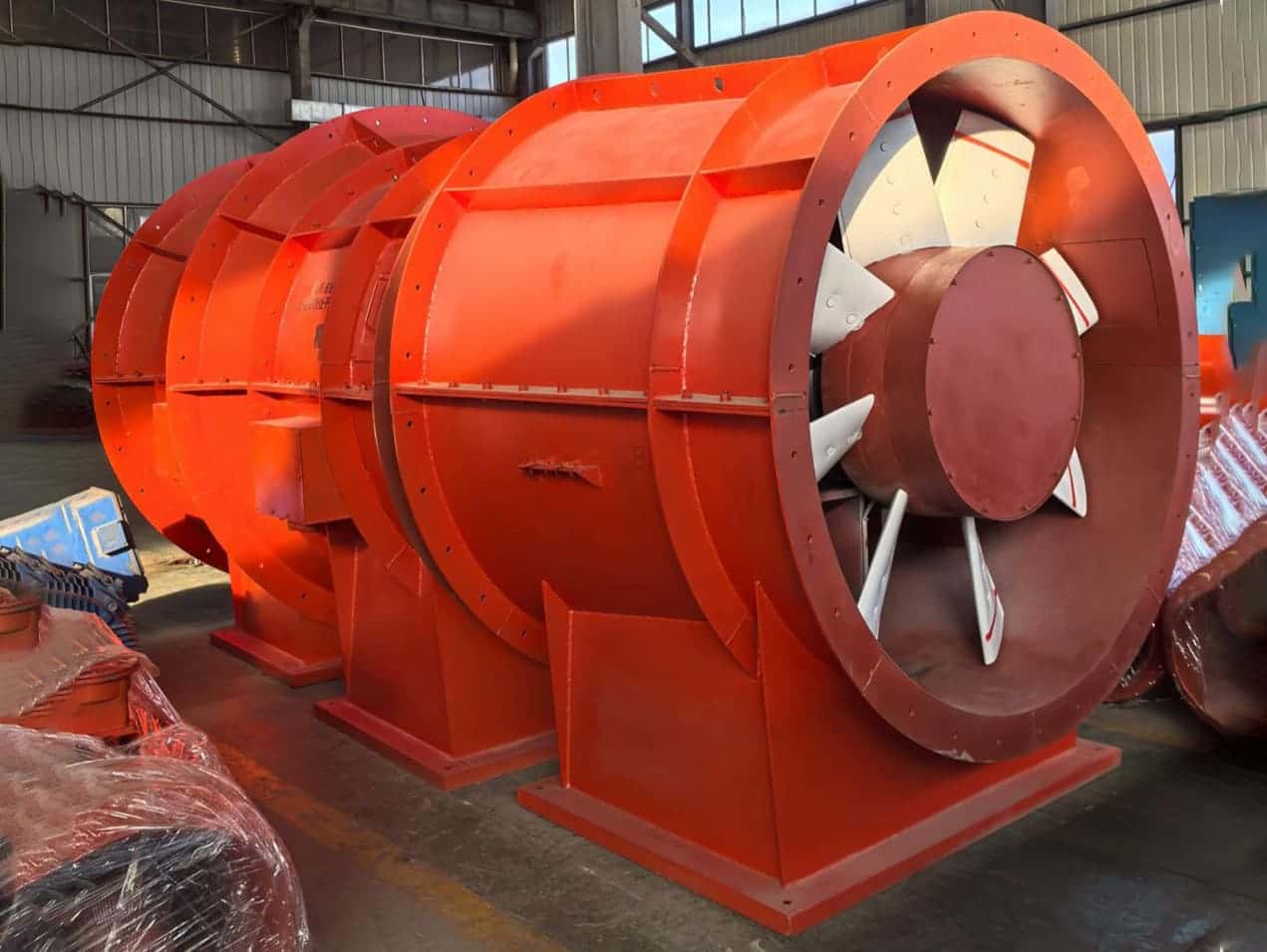
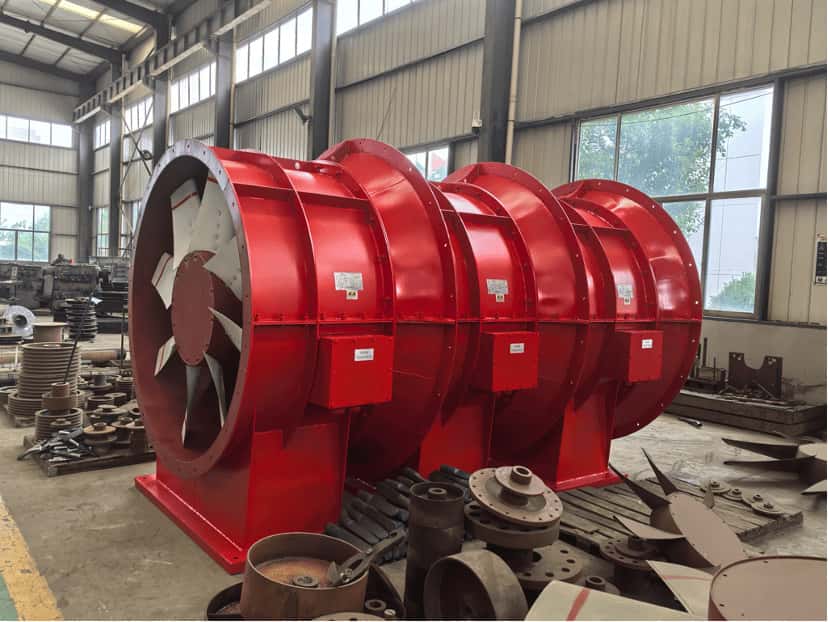
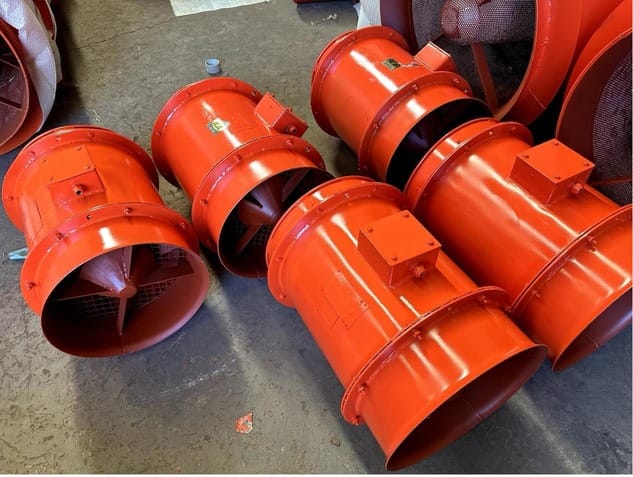
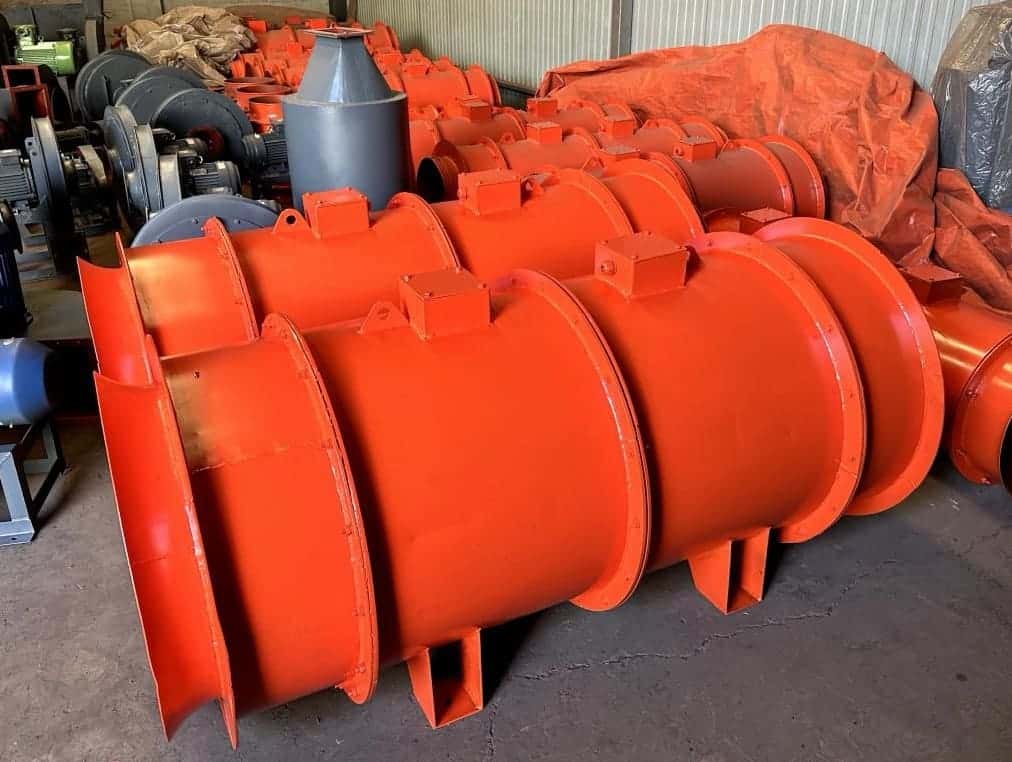
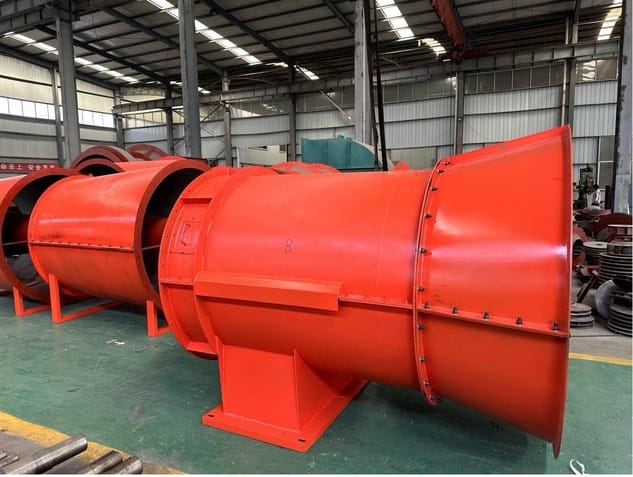
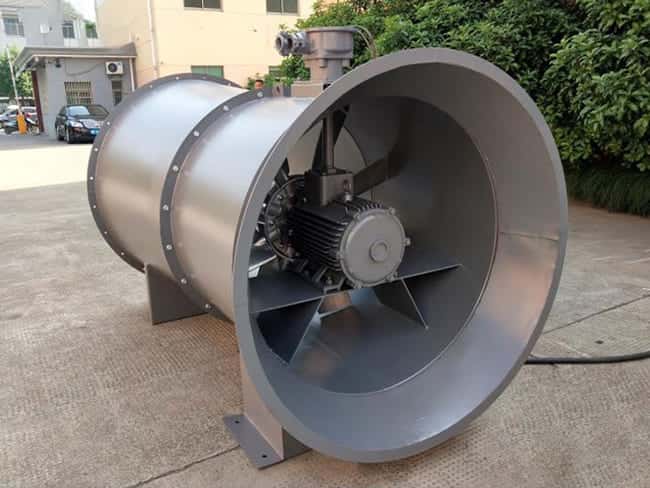
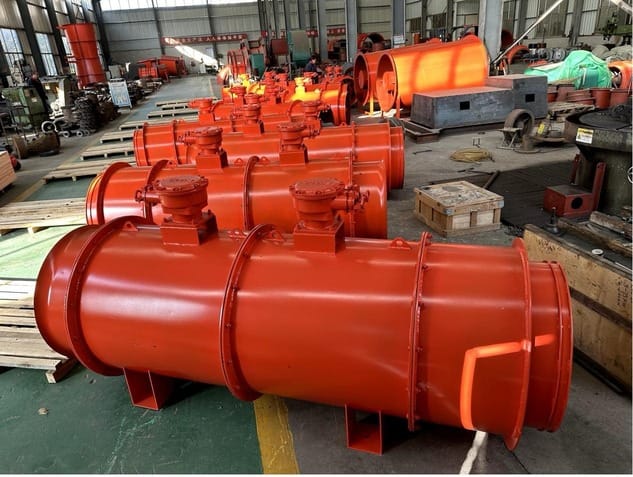
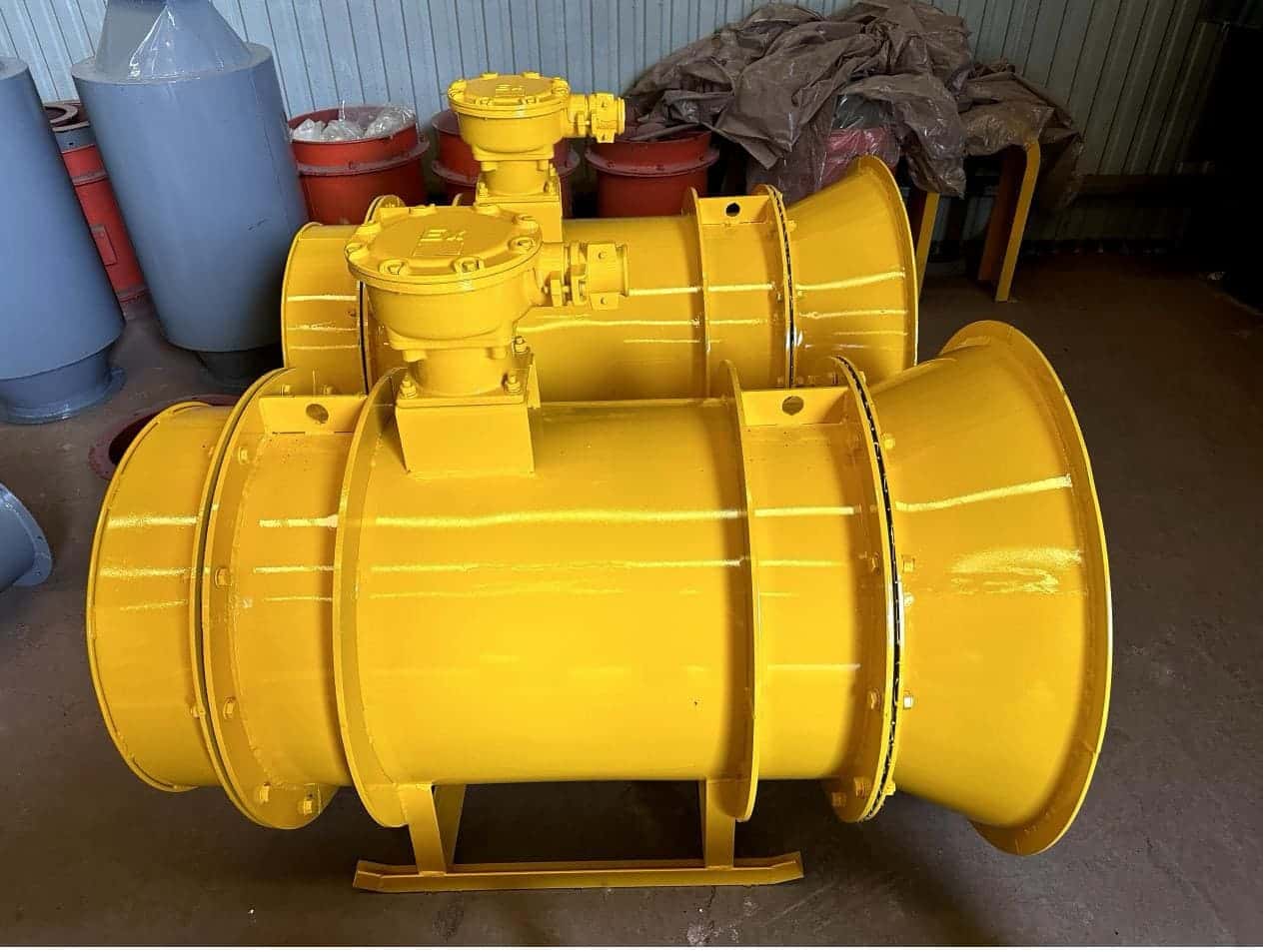
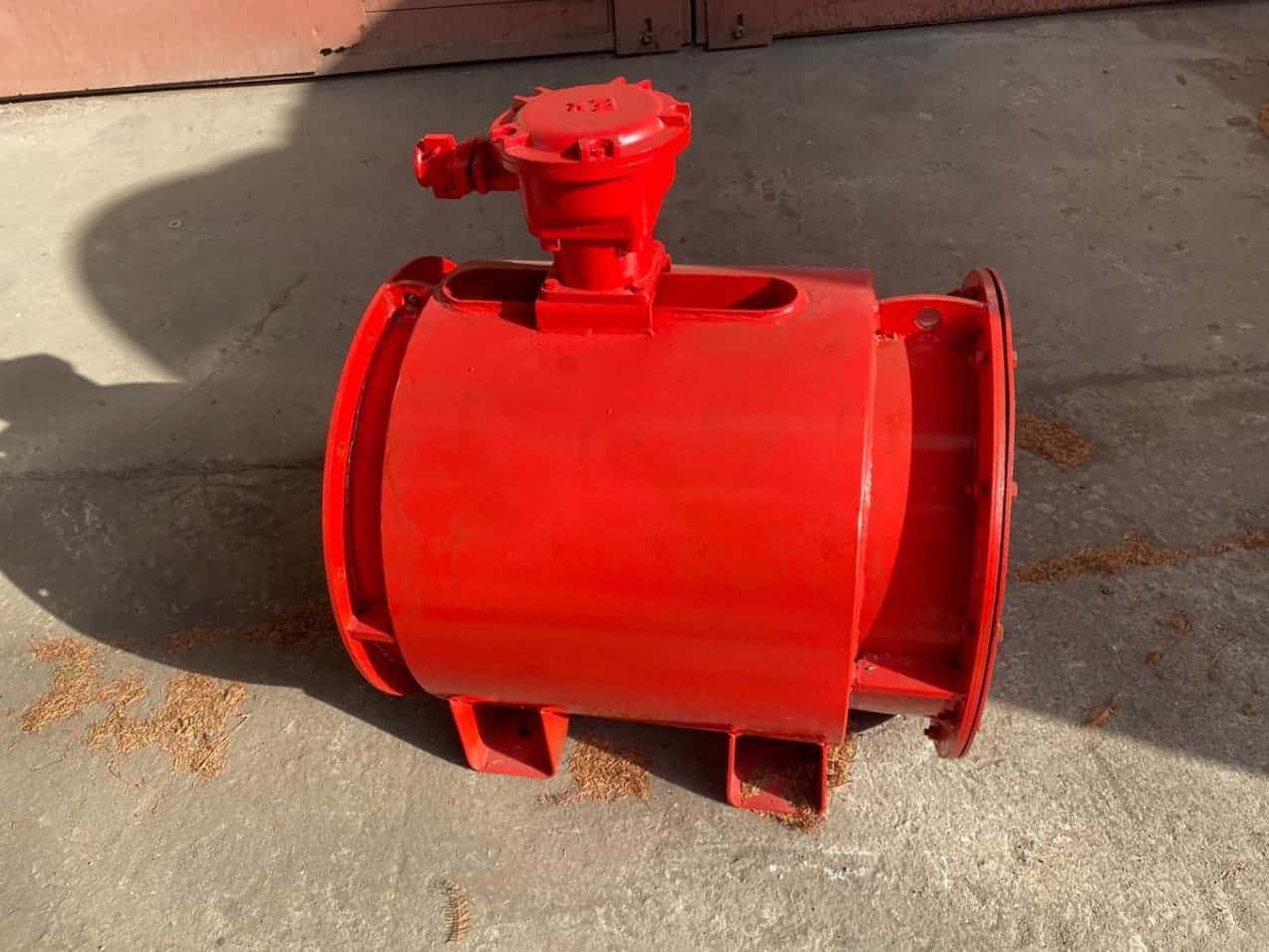
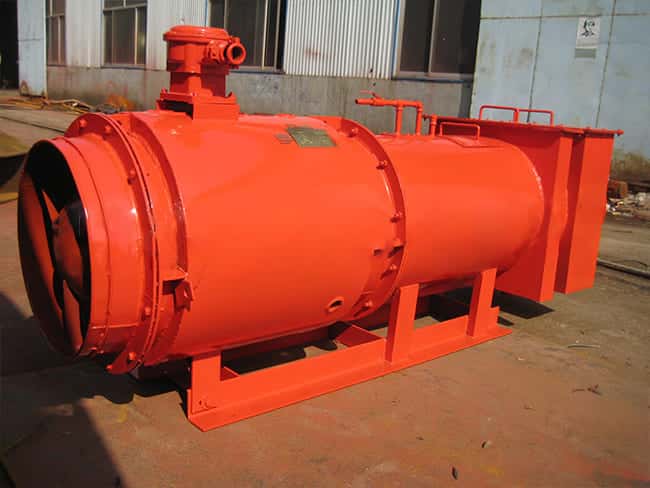
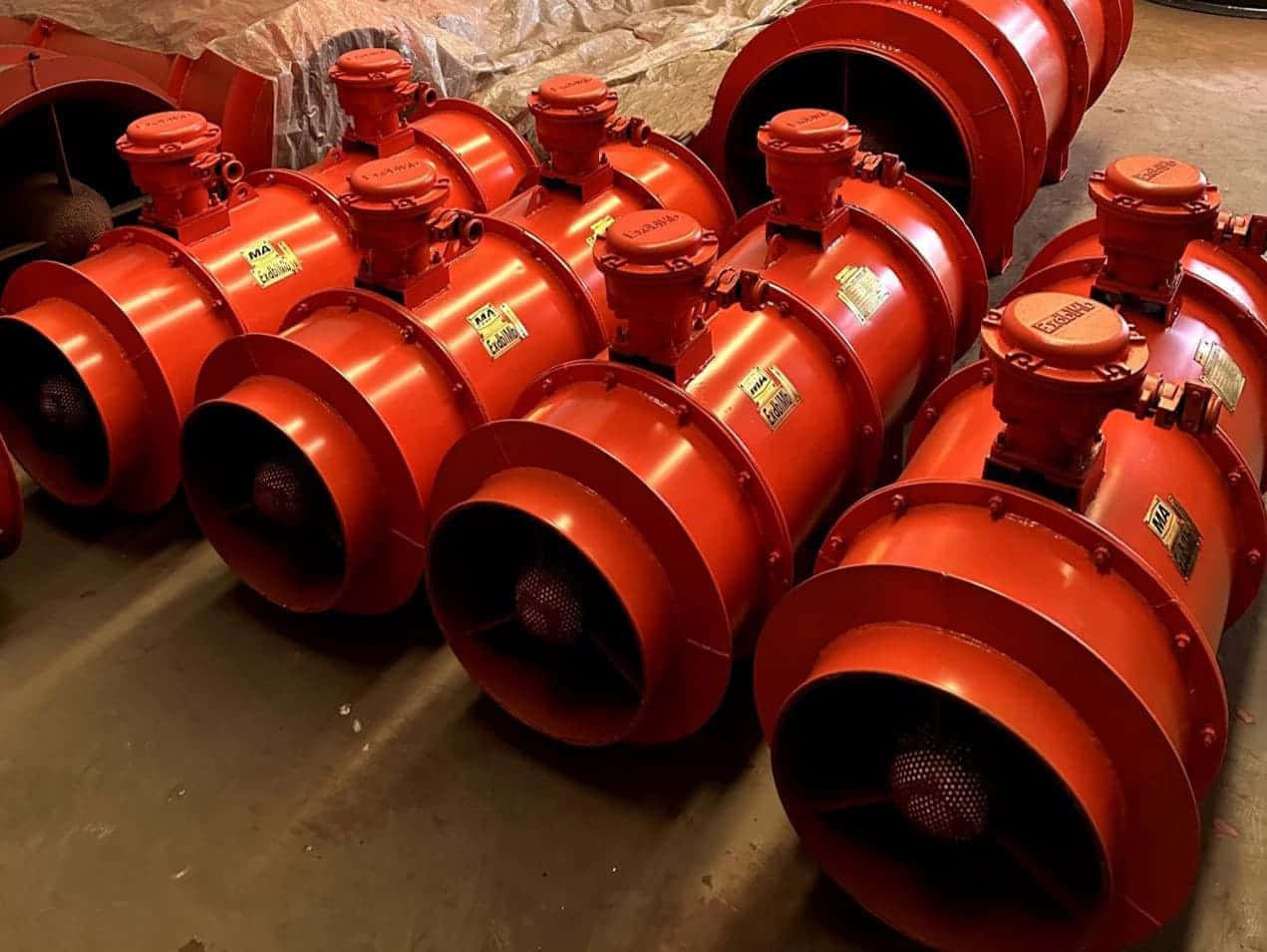
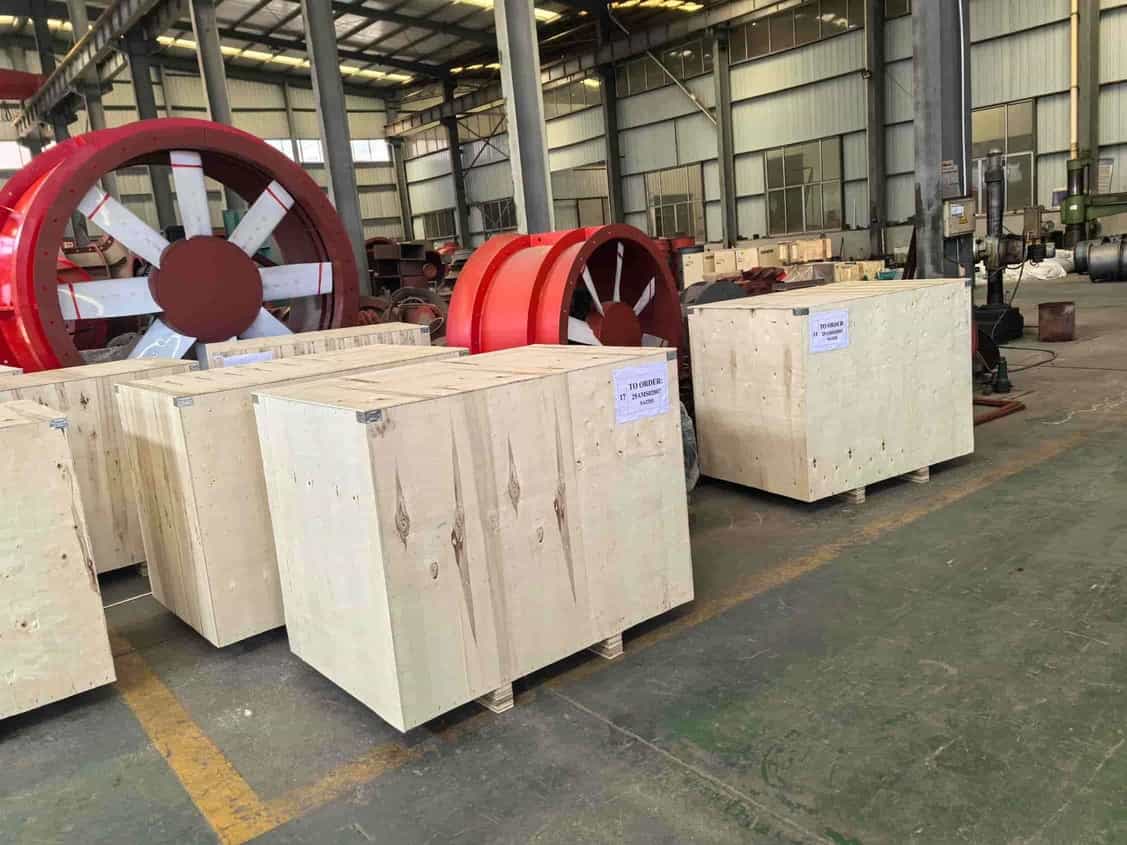
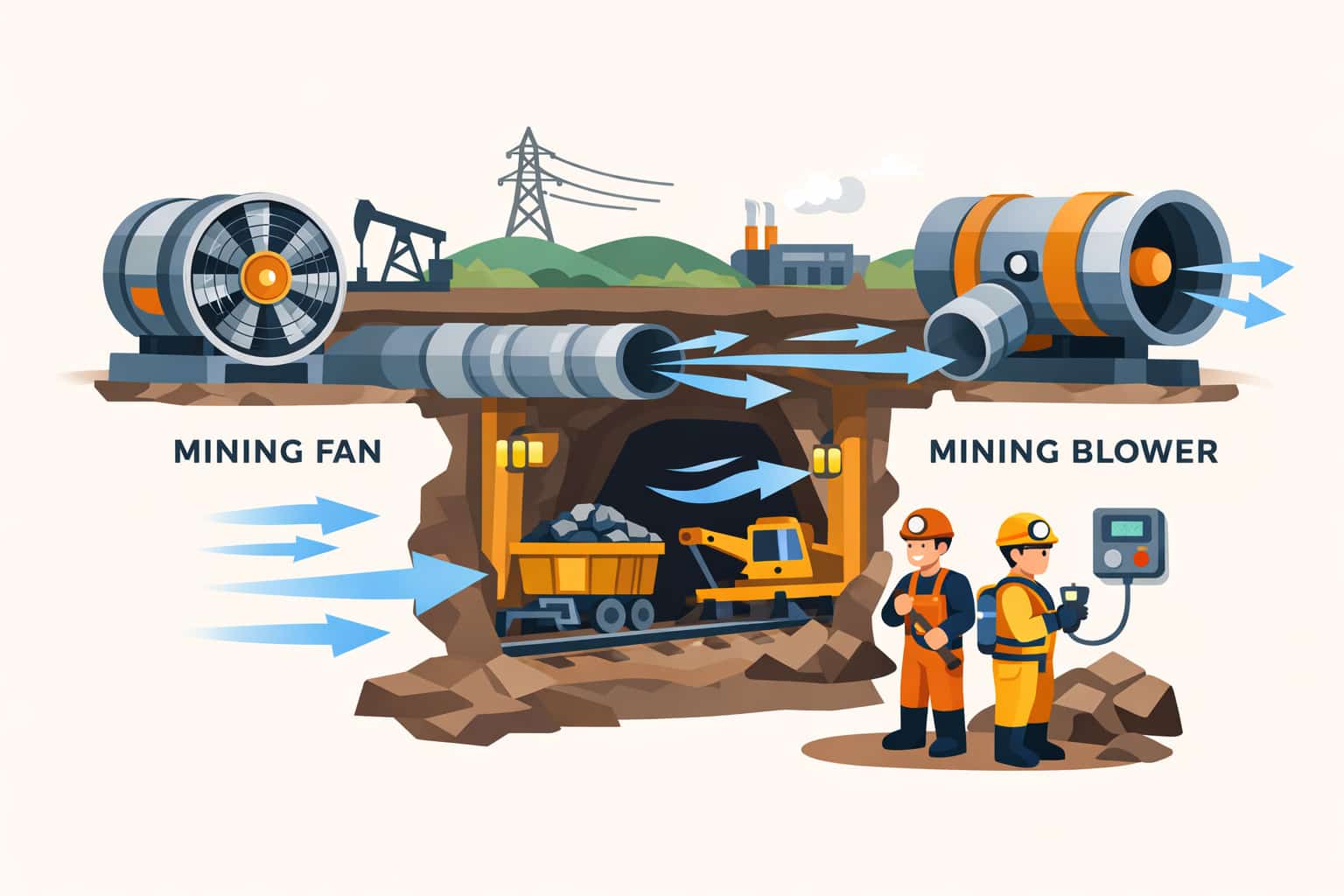
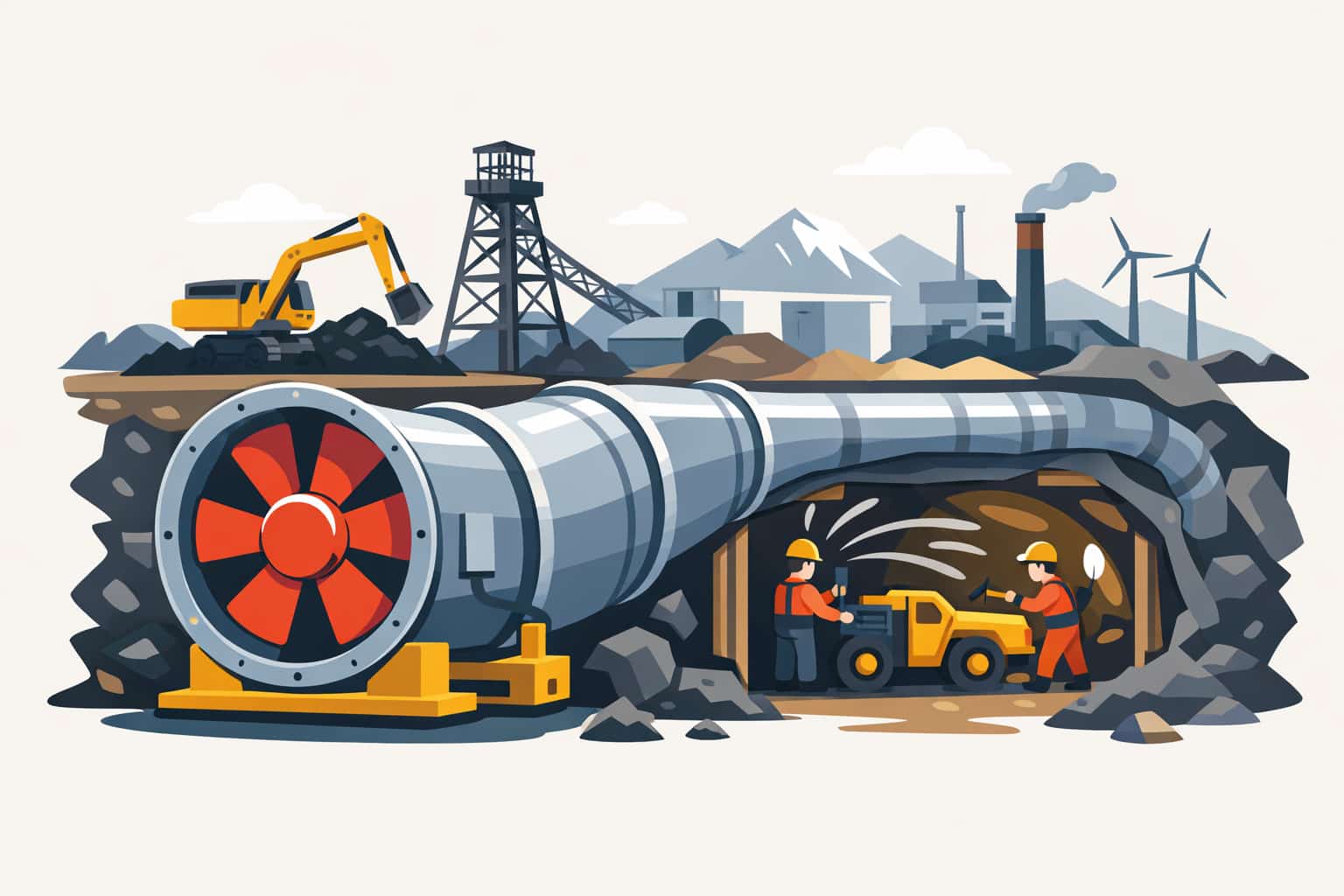

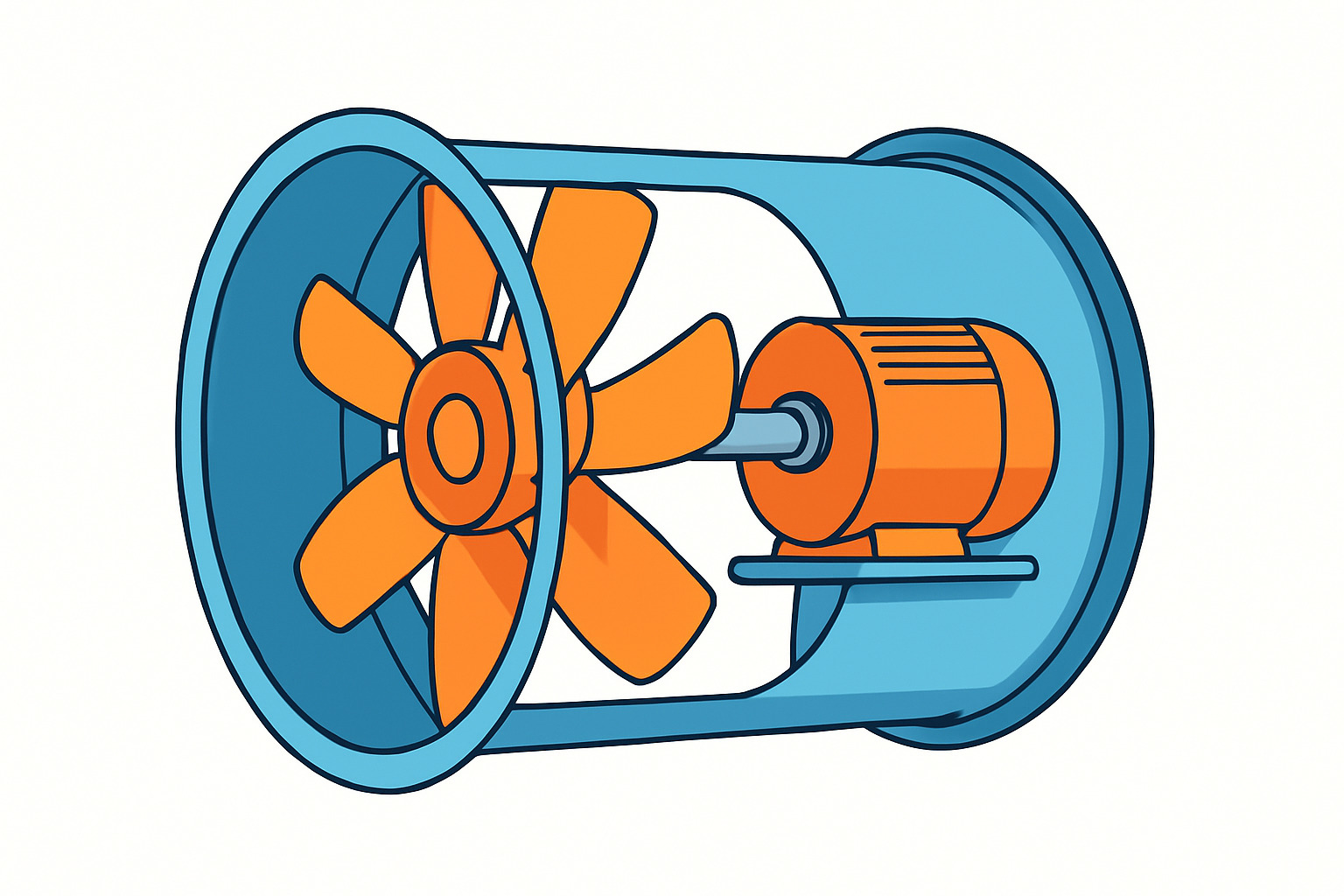
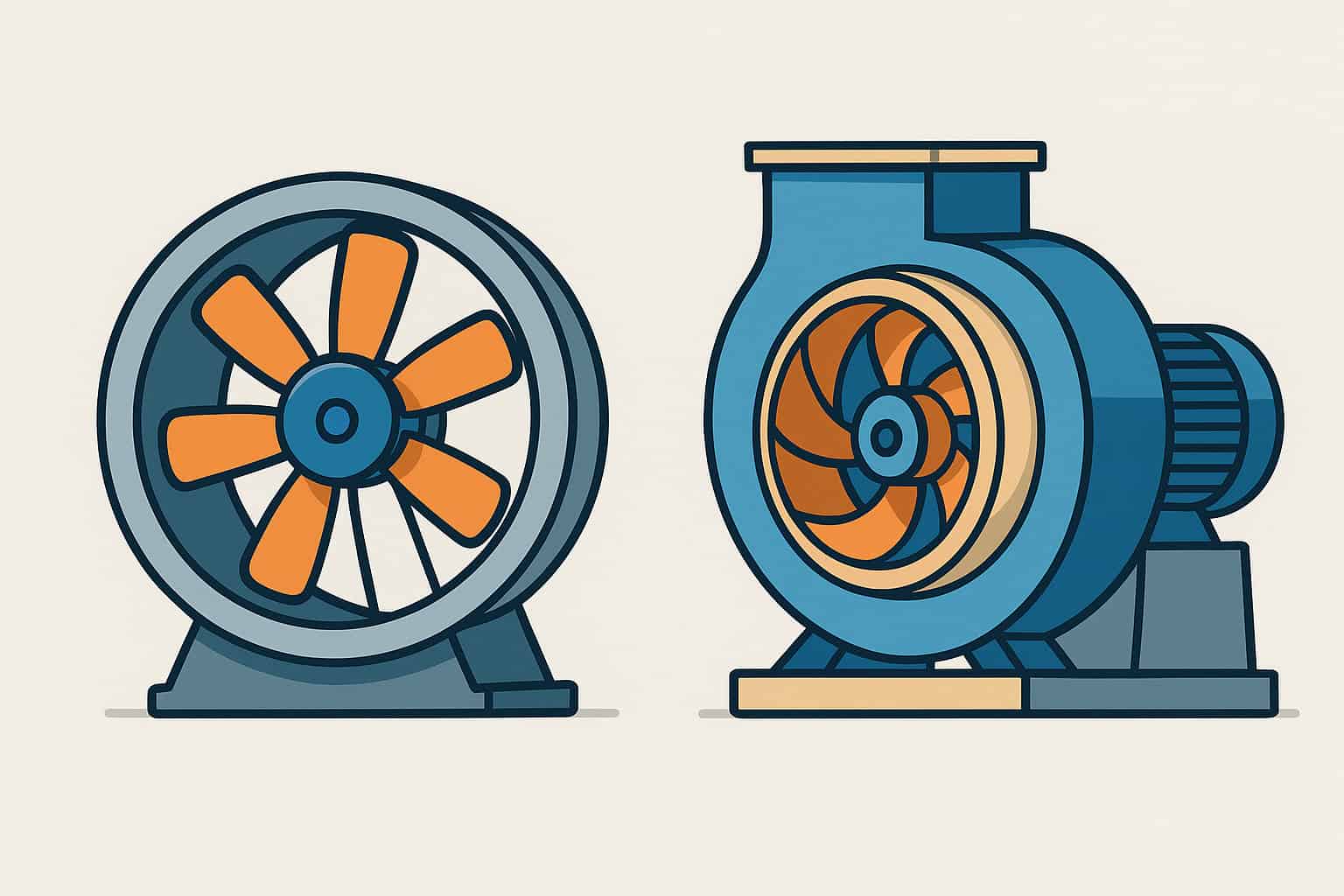
Axial fans have several important advantages that make them the preferred choice for many high-volume, low-pressure ventilation applications. In tunnels, mines, power plants and large buildings, axial fans are widely used because of their ability to move large quantities of air efficiently in a compact form.
The first major advantage is high airflow at low to moderate pressure. Because air flows parallel to the shaft like a propeller, axial fans are very effective at moving large volumes of air with relatively small pressure increases. This is ideal for main tunnel and shaft ventilation, general building exhaust, cooling towers and condenser fans where system resistance is modest.
Axial fans also offer a compact, in-line layout. They can be installed directly in ducts or tunnels without needing a large scroll housing or turning the airflow 90 degrees. This saves space and simplifies duct design. In underground mines and tunnels, large axial fans are often installed in-line with the airway or duct, making use of limited space and minimising structural modifications.
Another advantage is good efficiency for suitable duties. For high-volume, low-pressure applications, a well-designed axial fan can achieve high efficiency and low power consumption per unit of airflow. When combined with variable-frequency drives, axial fans can be speed-controlled to adjust ventilation according to demand, further improving energy performance.
Cost and weight are often lower for axial fans than for centrifugal fans providing similar airflow. The simpler housing and in-line configuration can reduce material, fabrication and installation costs. This is particularly advantageous for large-diameter fans used in tunnels and mining, where transporting and installing heavy equipment can be challenging.
Axial fans also provide flexible control of flow direction. Reversible axial fans can change airflow direction by adjusting blade pitch or reversing rotation, allowing operators to switch between intake and exhaust modes. This is useful in tunnels and some mining scenarios where ventilation direction may need to change during construction or emergency conditions.
However, axial fans are not ideal for very high-pressure or very dusty systems, where centrifugal fans may perform better. Their advantages are strongest when system resistance is relatively low and the goal is to move a lot of air along a straight path.
In summary, the advantages of axial fans include high airflow at low to moderate pressure, compact in-line installation, good efficiency for suitable duties, relatively low cost and the possibility of reversible operation. These benefits explain why axial fans are so common in tunnels, mines, power plants and large industrial and commercial buildings.