
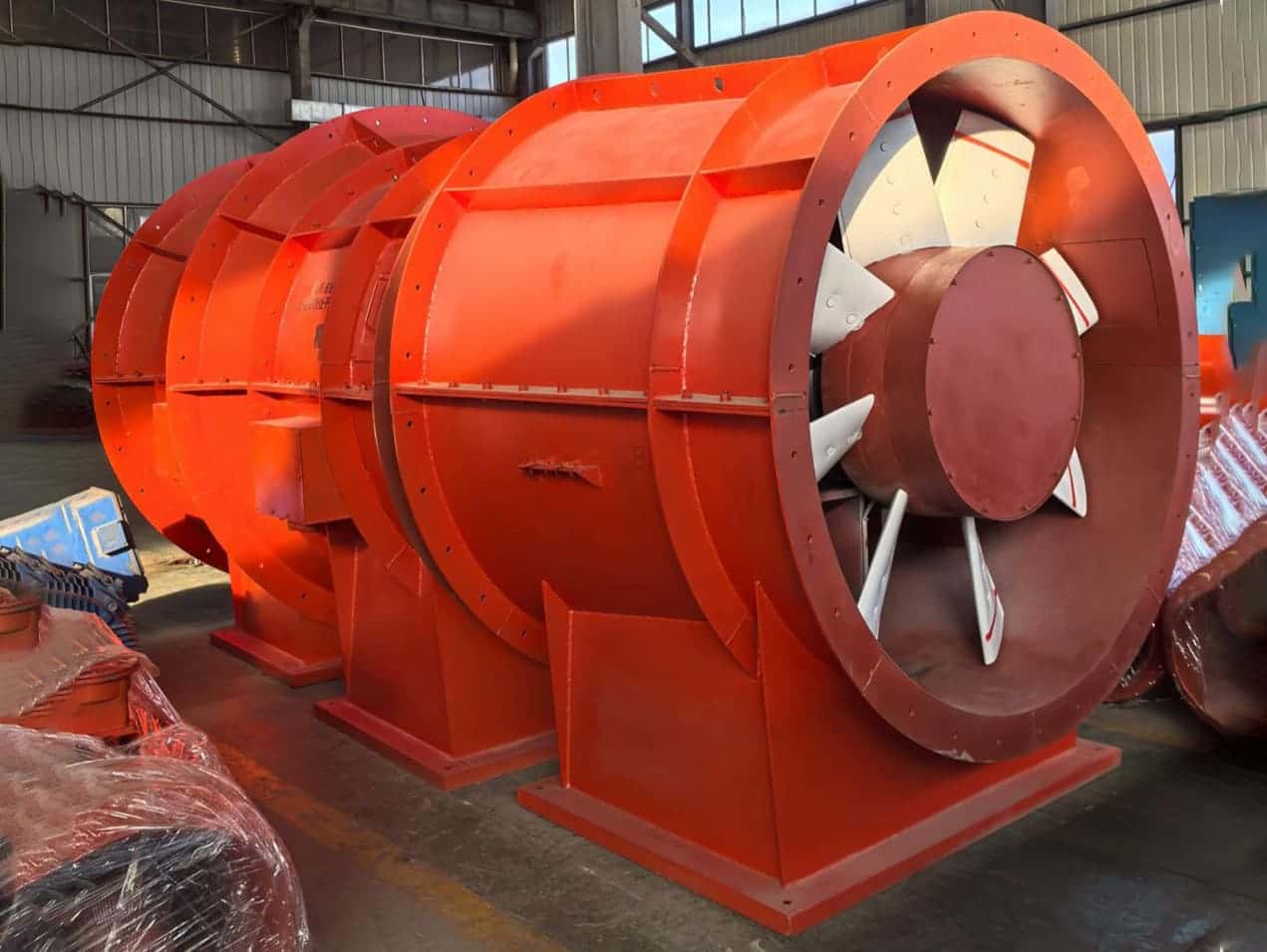
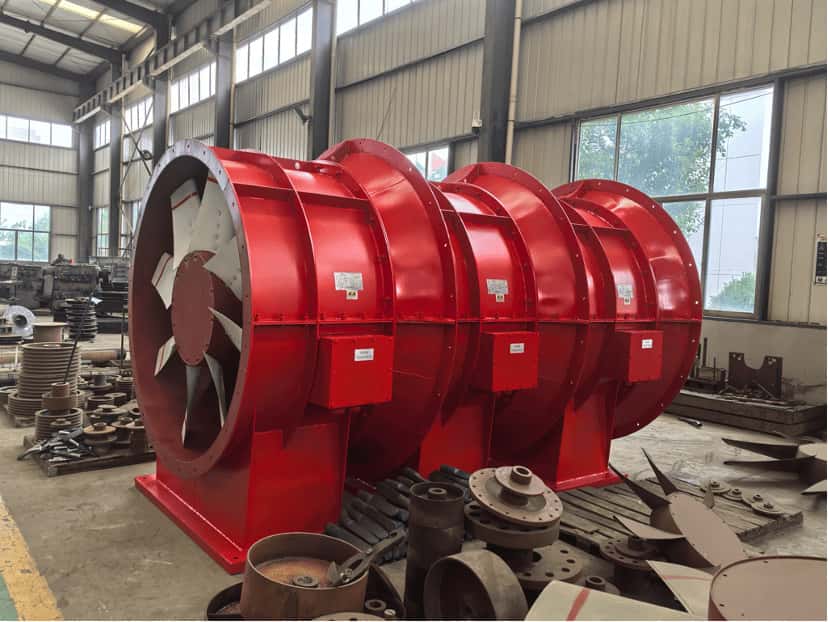
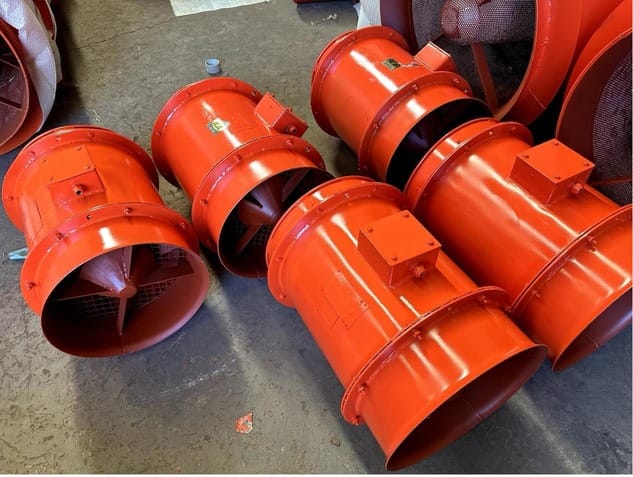
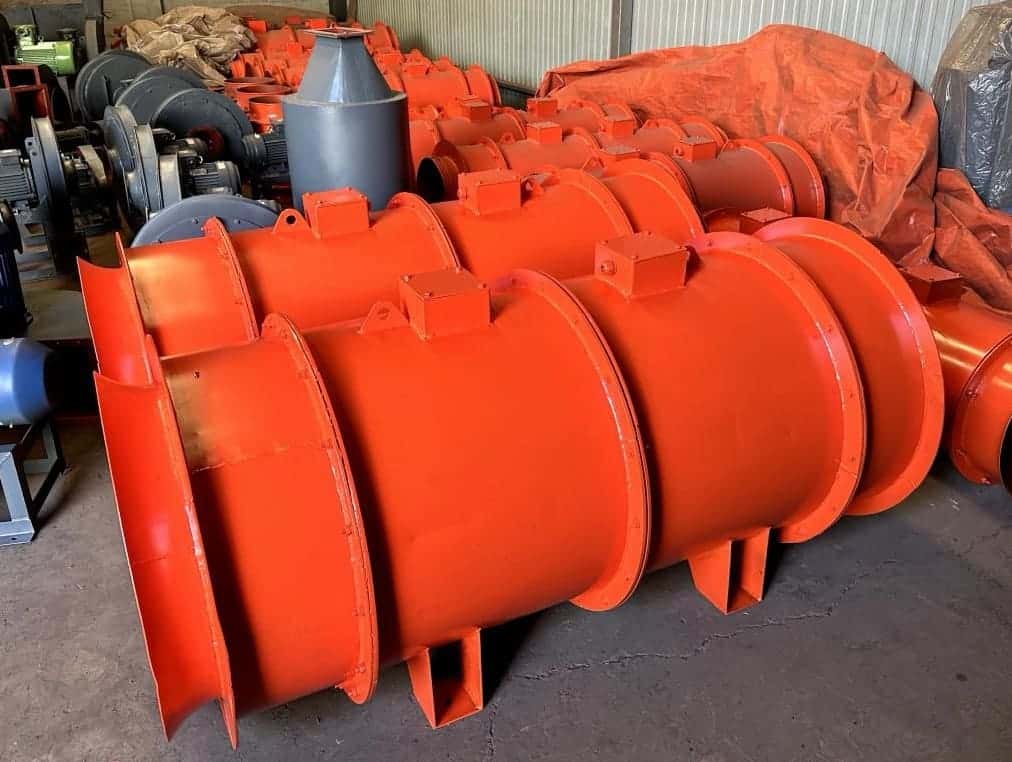
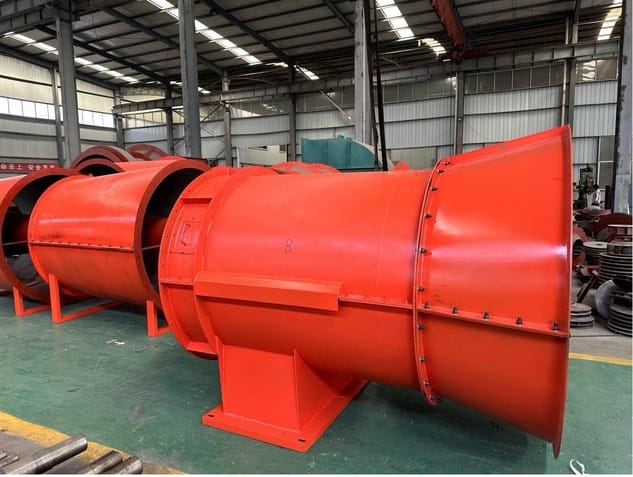
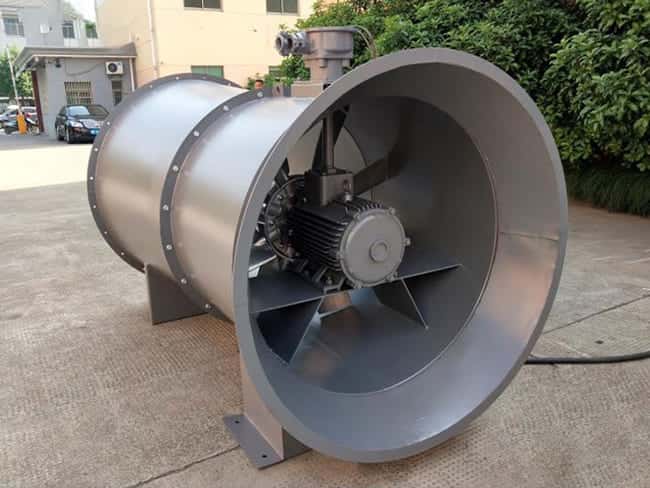
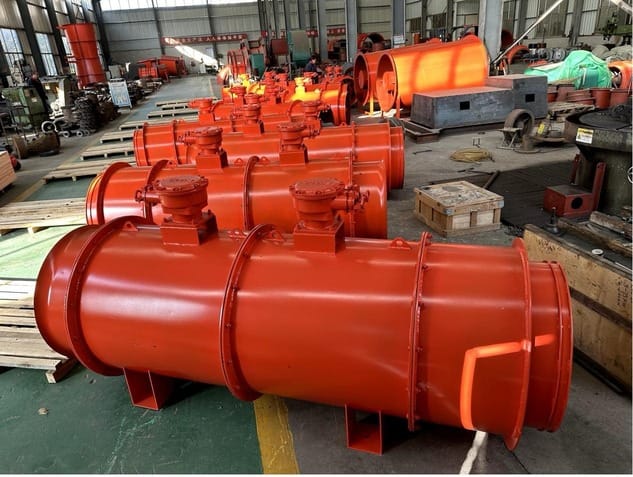
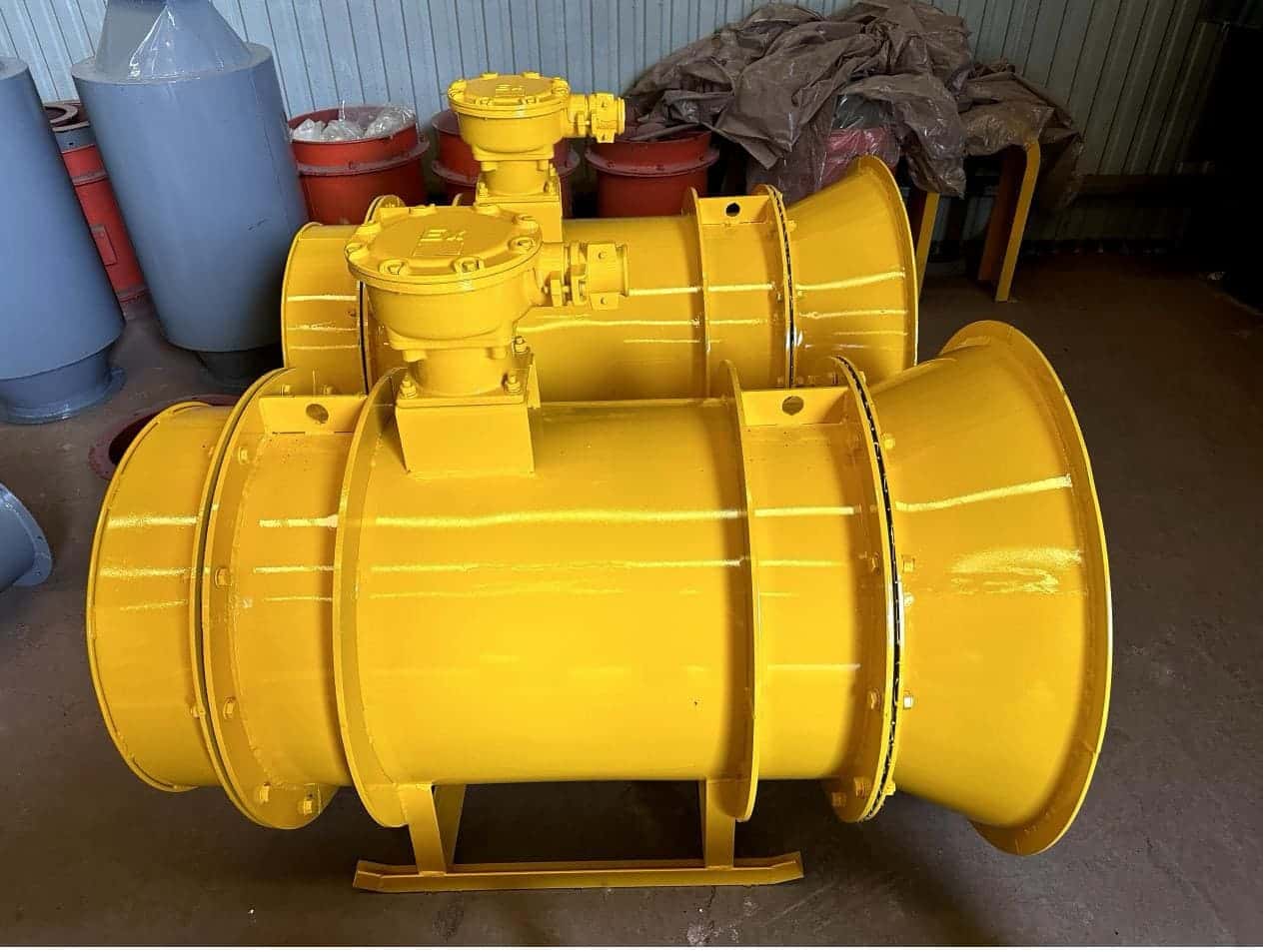
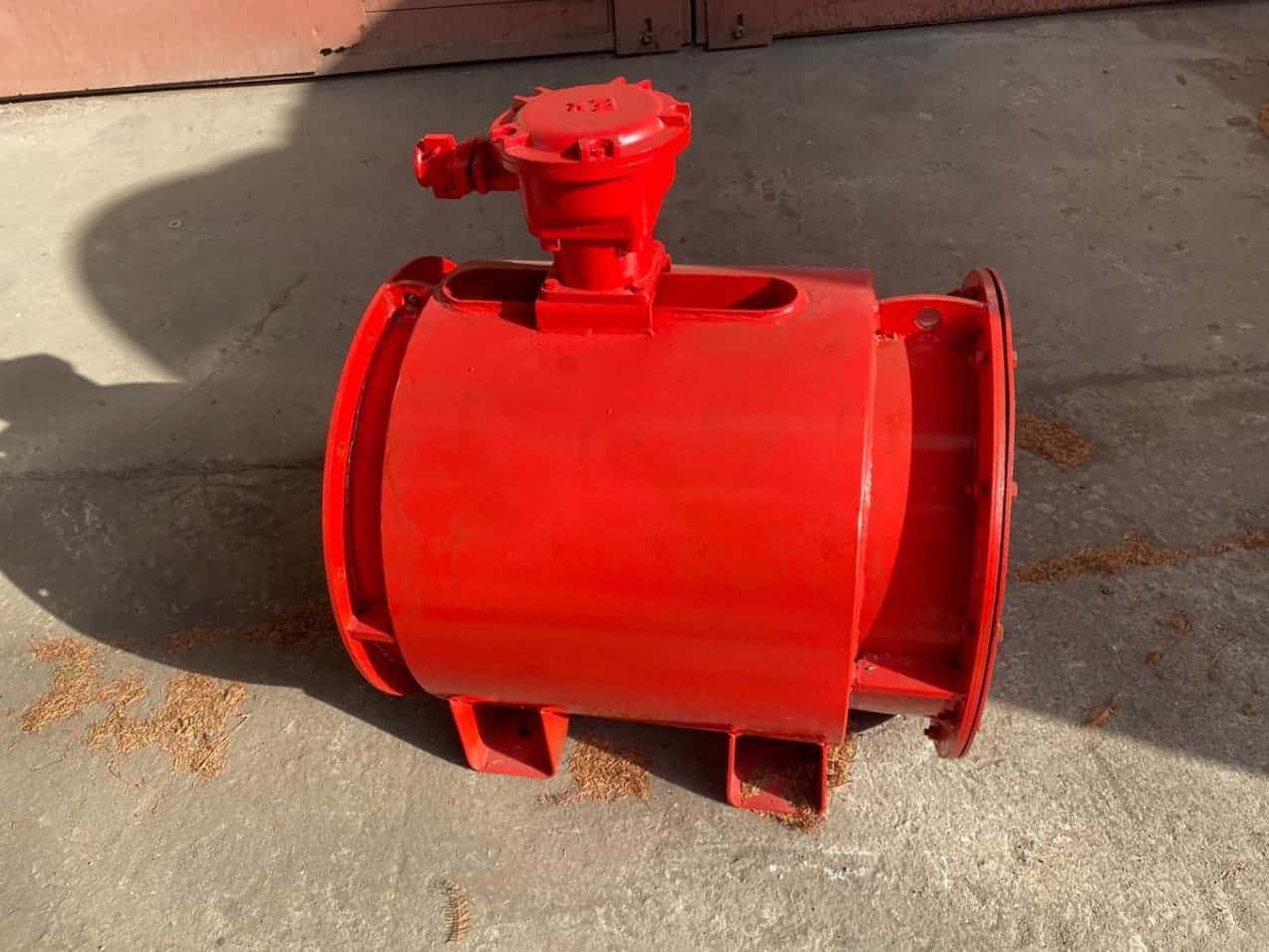
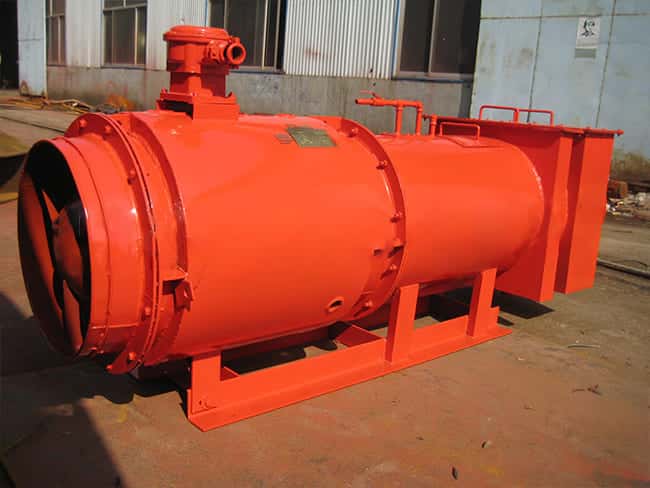
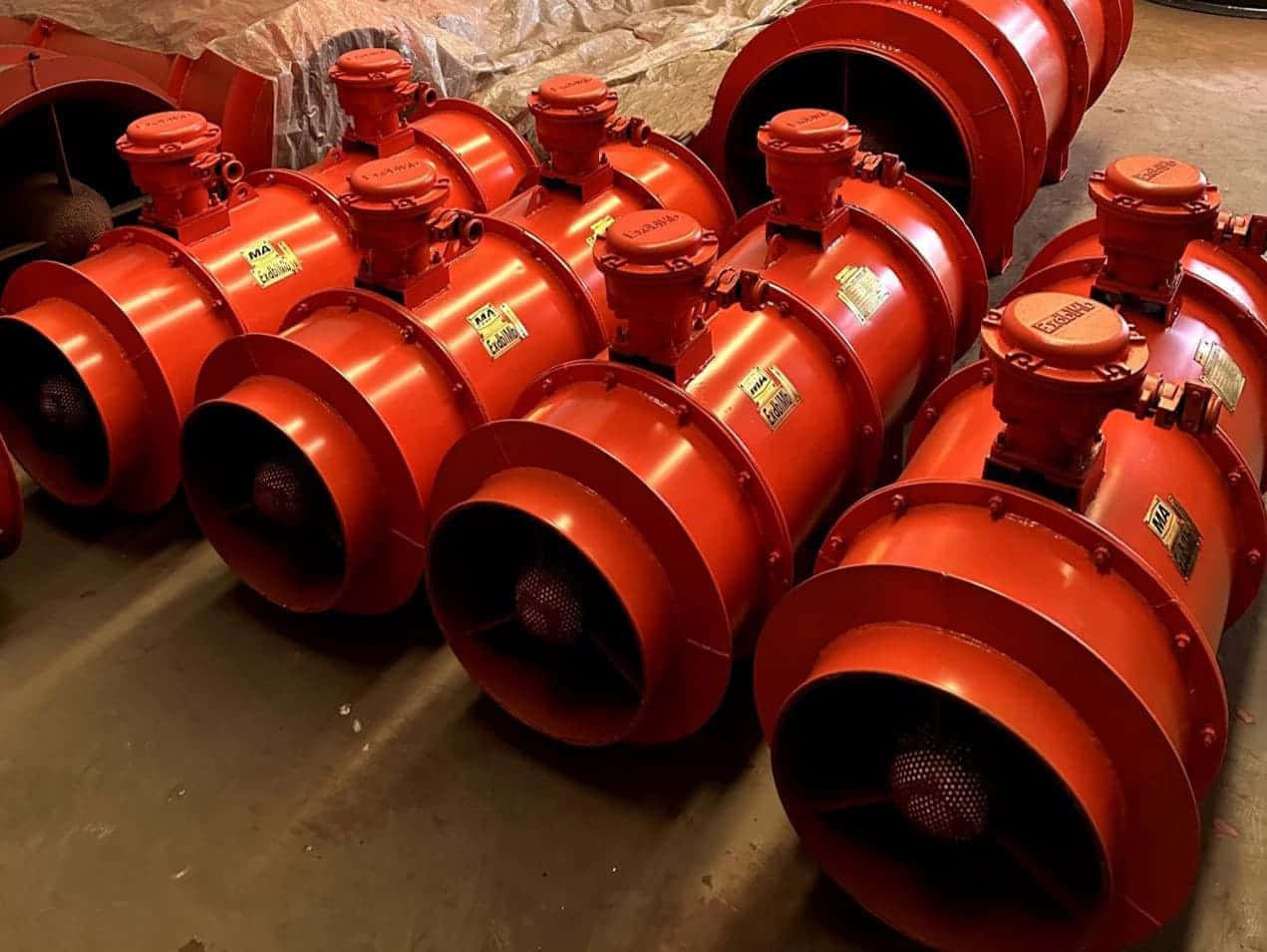
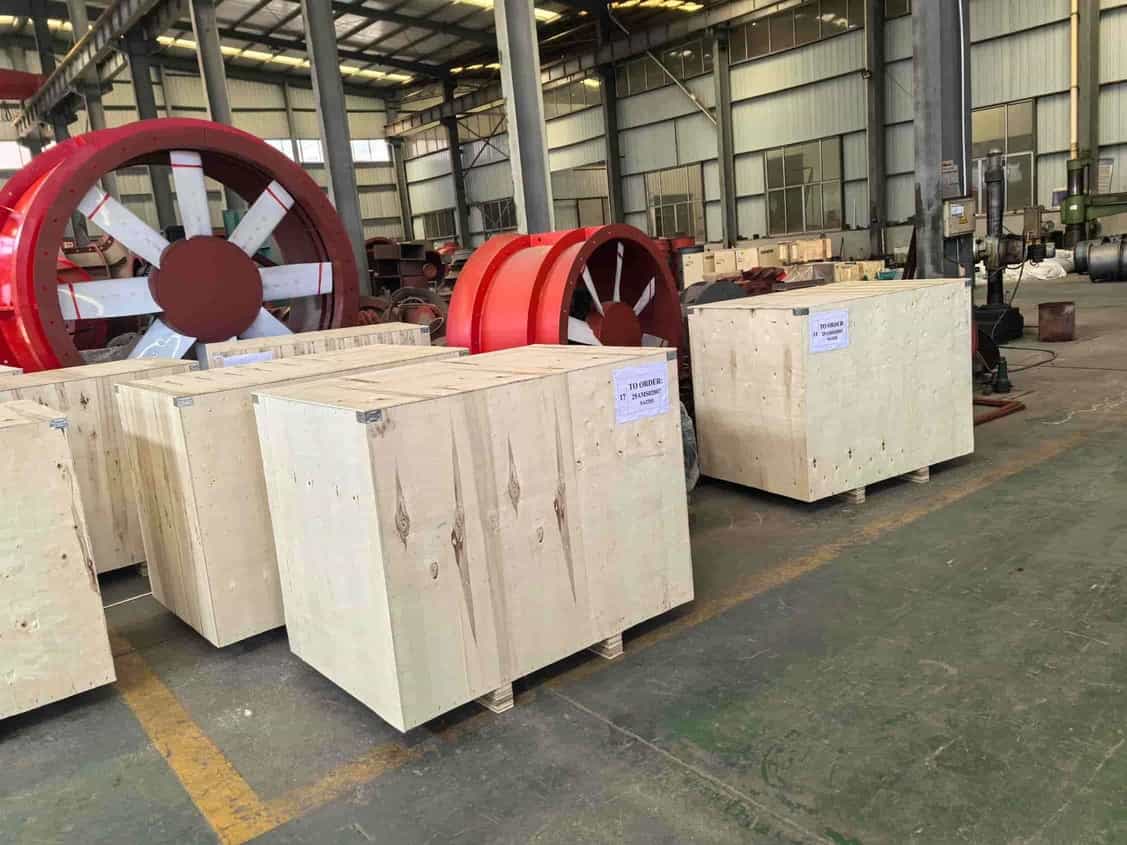
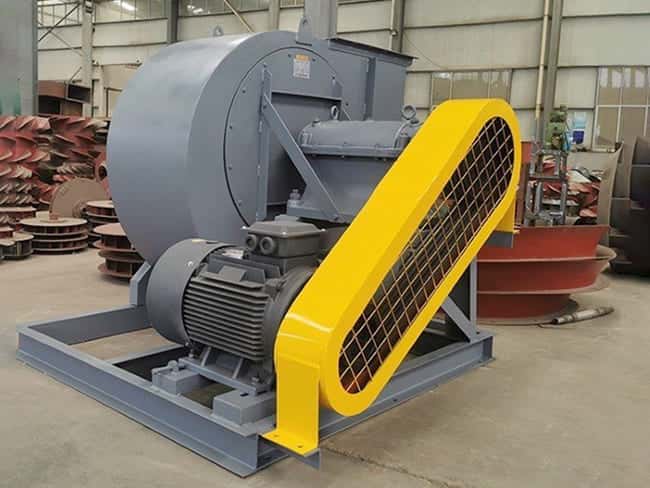
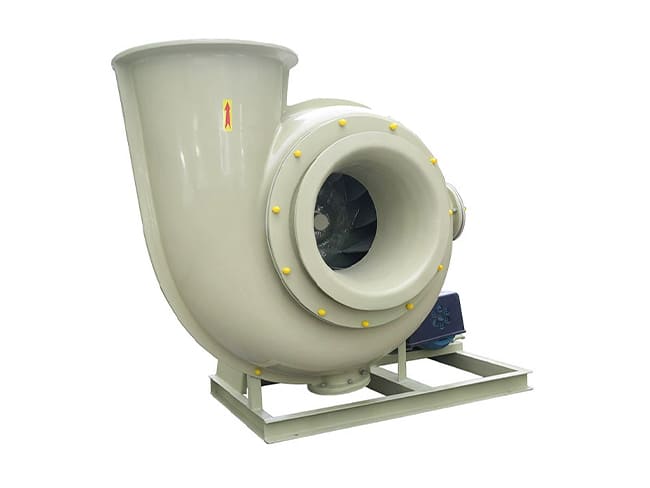
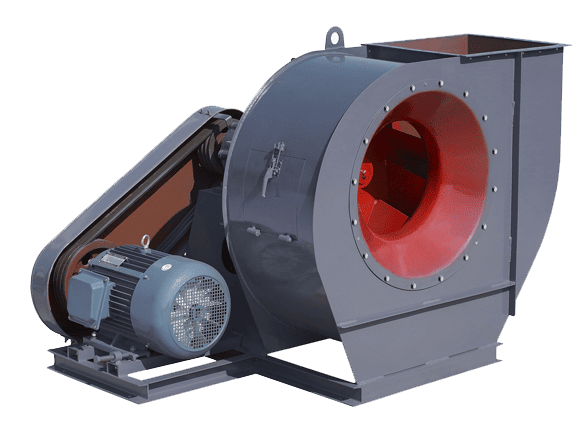
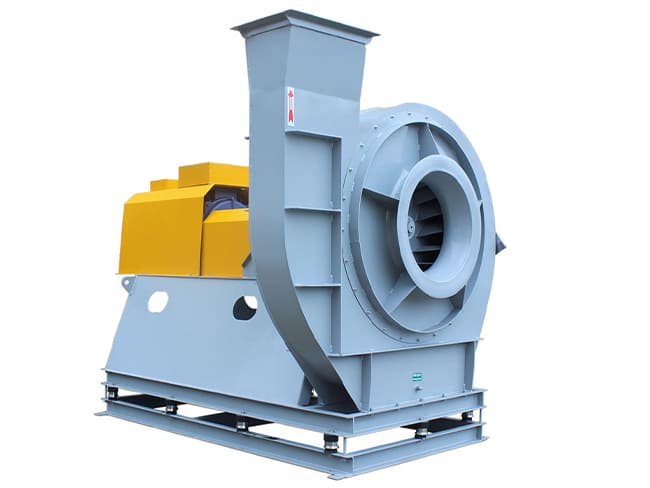
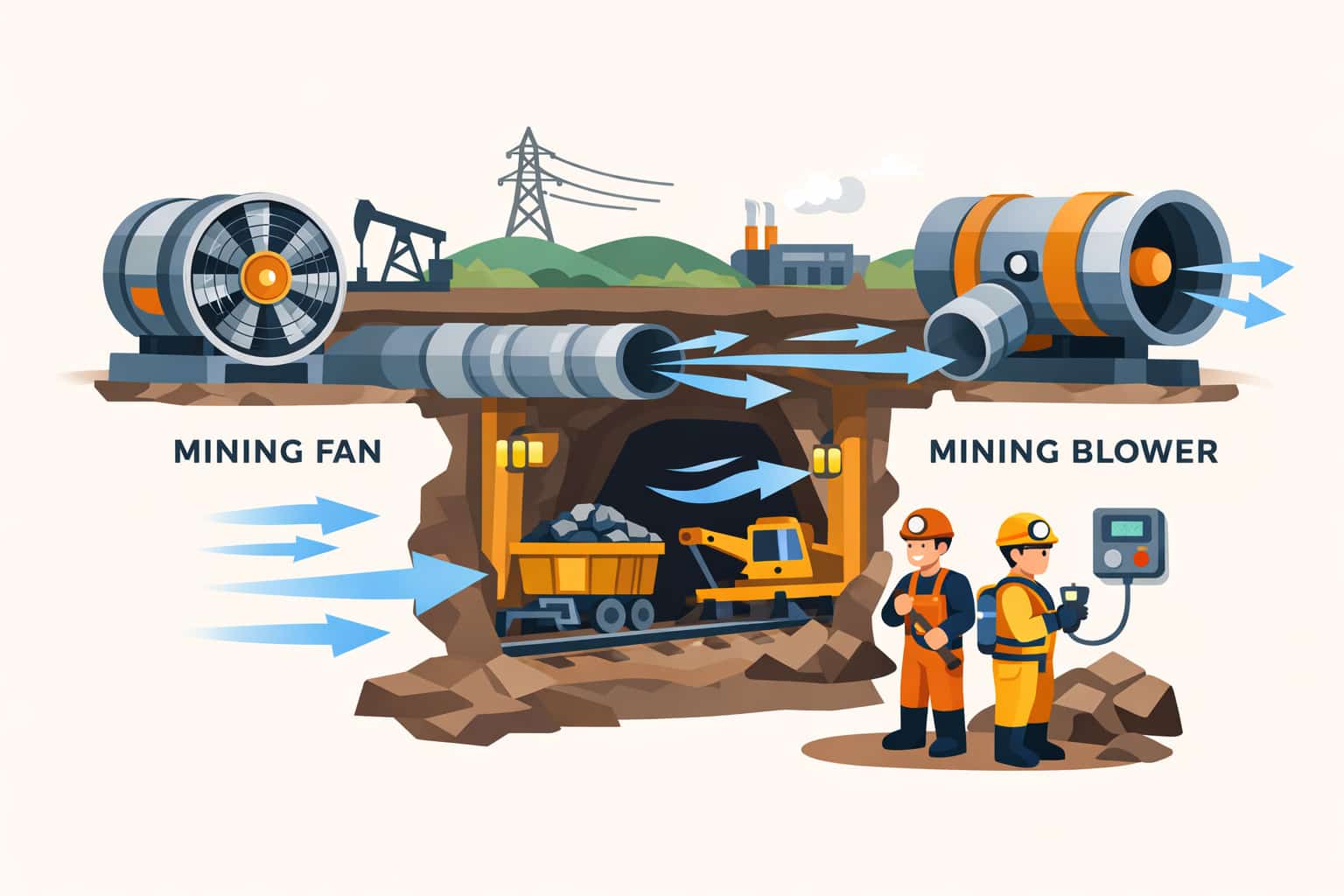
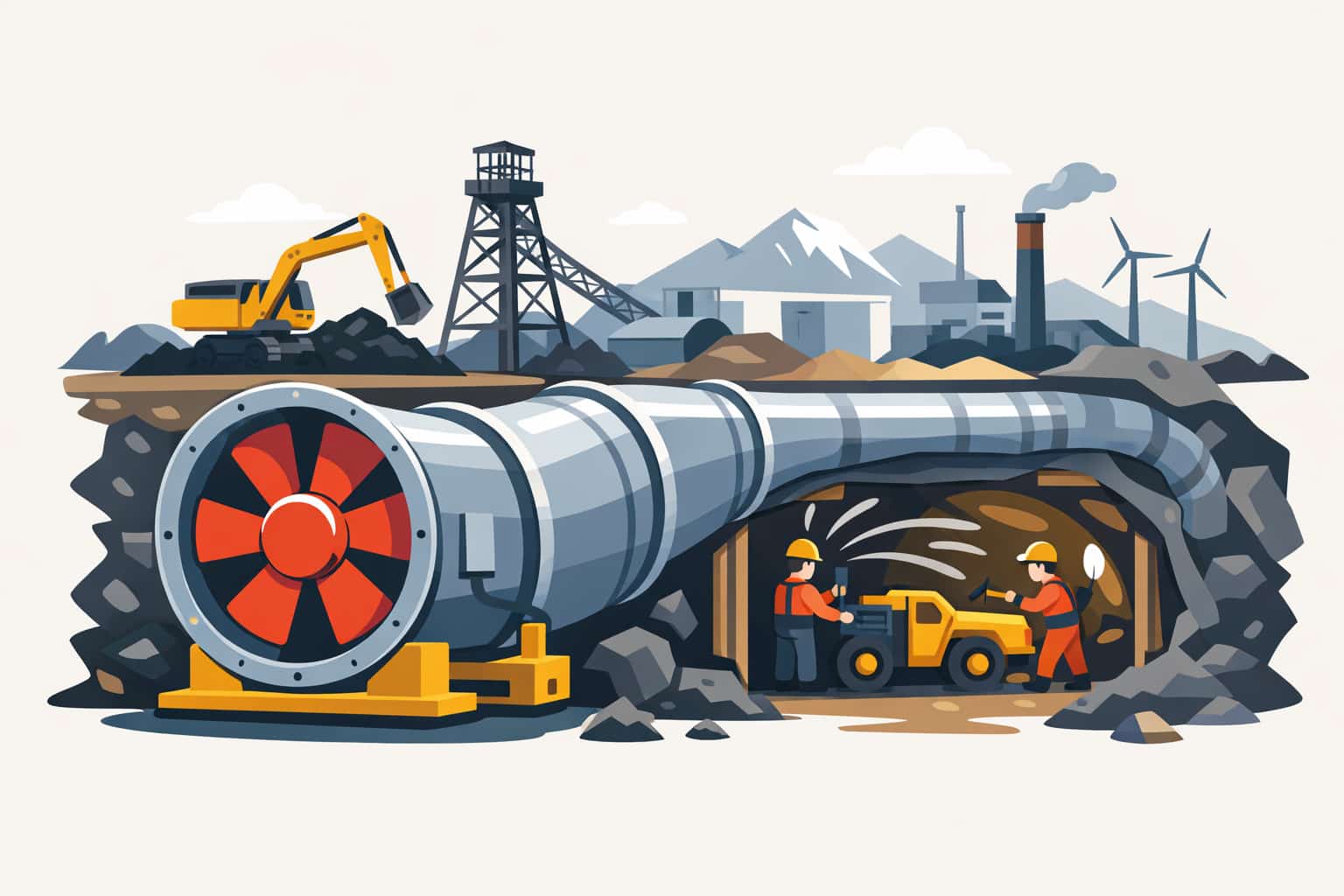
Ventilation fans provide many important benefits in buildings, factories, tunnels and underground mines. By actively moving air, they help control contaminants, temperature, humidity and pressure, all of which directly affect safety, health, comfort and equipment reliability. Without mechanical ventilation fans, many industrial and mining environments would quickly become unsafe or impossible to work in.
One major benefit is improved air quality. Ventilation fans dilute and remove dust, fumes, gases and odours generated by people, vehicles and industrial processes. In workshops and plants, exhaust fans capture welding smoke, solvent vapours and process emissions; in mines, main and auxiliary fans dilute methane, diesel exhaust and blasting fumes. Keeping contaminant levels below regulatory limits reduces health risks and helps companies comply with occupational safety laws.
A second key benefit is heat and moisture control. Many industrial processes and underground operations generate significant heat. Ventilation fans remove hot air and bring in cooler outside air, helping to keep workplaces within acceptable temperature ranges. By exhausting moist air from washing plants, cooling towers, kitchens and bathrooms, fans also reduce condensation and mould growth, protecting both structures and equipment from damage.
Ventilation fans also contribute to worker comfort and productivity. Even when conditions are technically safe, still, hot or stuffy air makes it difficult to work for long periods. Fans that increase air movement and maintain reasonable temperatures help workers feel more alert and comfortable, which in turn supports higher productivity and fewer heat-related incidents. In deep mines and hot process areas, proper ventilation can be the difference between a workable environment and one that is regularly shut down by heat stress.
Another benefit is controlled airflow and pressure. By adjusting the size and operation of supply and exhaust fans, engineers can create slight positive or negative pressures in different zones. This allows them to keep clean areas, such as control rooms, slightly pressurised to keep dust out, or to maintain negative pressure in hazardous areas so contaminants do not spread. In mines, careful control of airflow paths using fans, stoppings and regulators ensures that fresh air reaches faces first and contaminated air is directed to returns.
Finally, modern ventilation fans, especially when combined with variable speed drives and ventilation-on-demand strategies, offer significant energy-saving benefits. Fans can be slowed when full airflow is not needed, reducing power consumption dramatically, because fan power varies roughly with the cube of speed. This allows mines and industrial plants to maintain safe conditions while optimising energy use.
In summary, the benefits of a ventilation fan include better air quality, reduced heat and moisture, safer gas and dust levels, improved comfort and productivity, controlled airflow and pressure, and the potential for significant energy savings when systems are properly designed and controlled.