
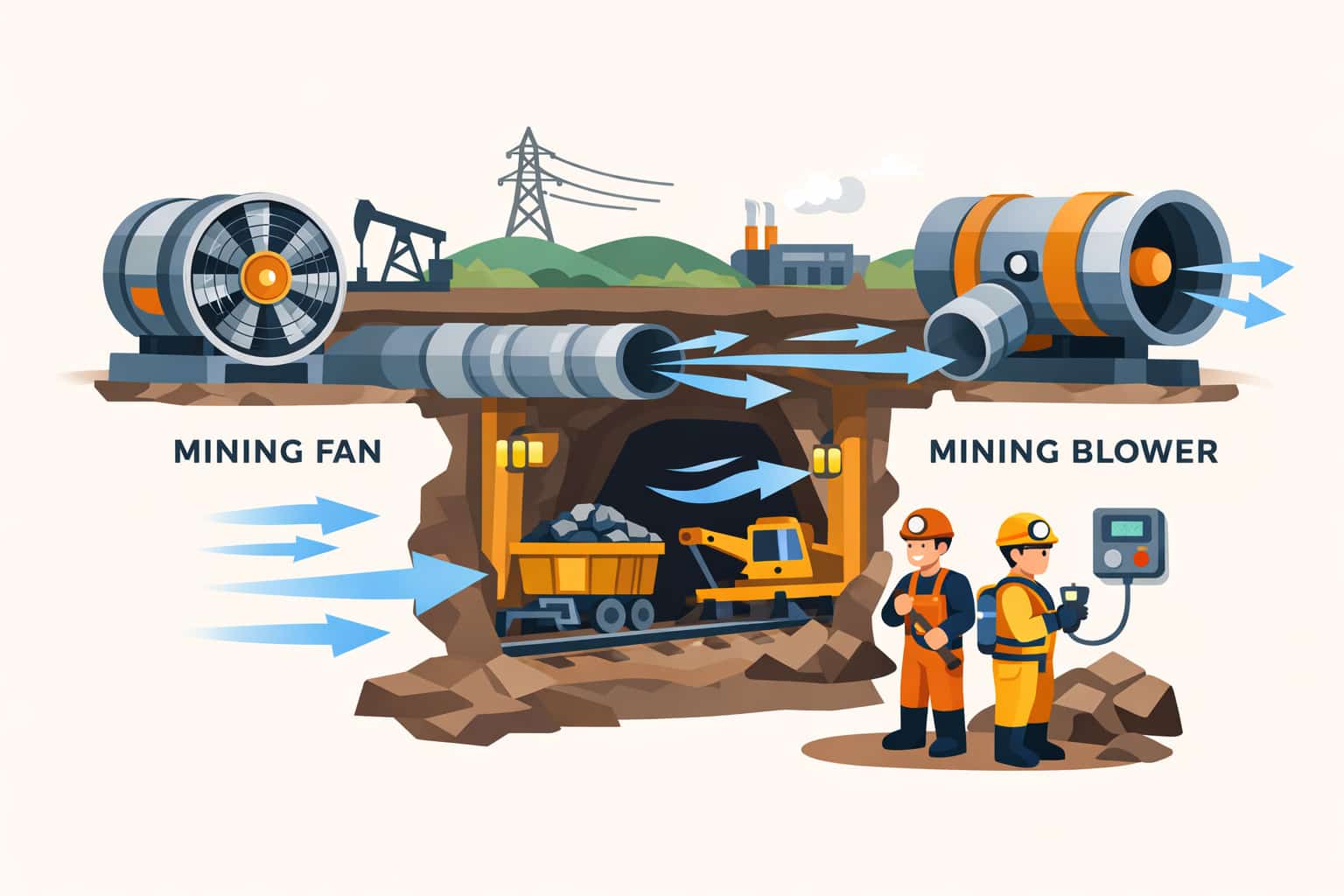
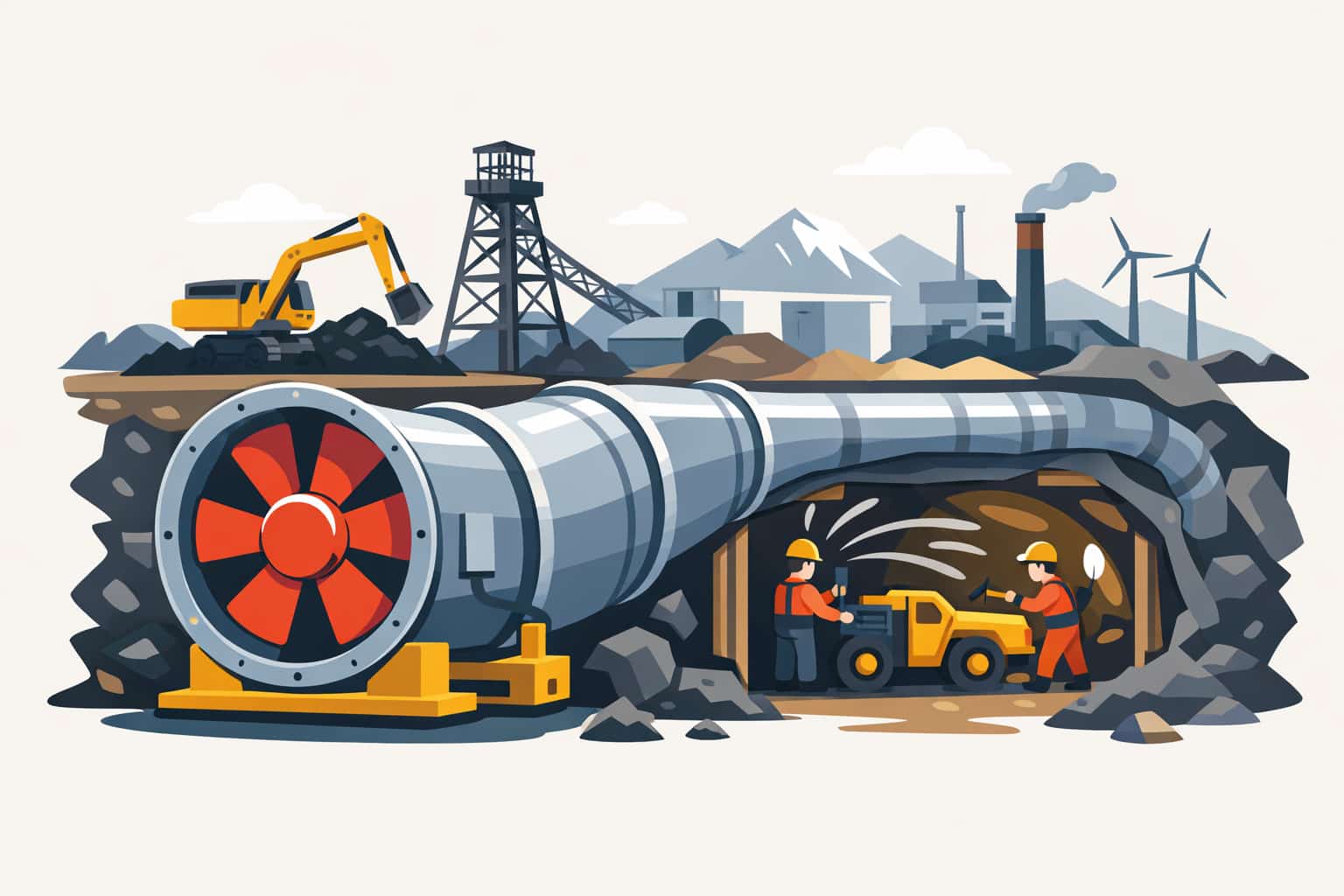
Different kinds of fans are used in buildings, factories and underground mines because each design is suited to a particular combination of airflow, pressure, space and air quality. When you understand the main families of fans, it becomes easier to choose the right machine for general ventilation, mine main fans, auxiliary fans, dust control or process exhaust.
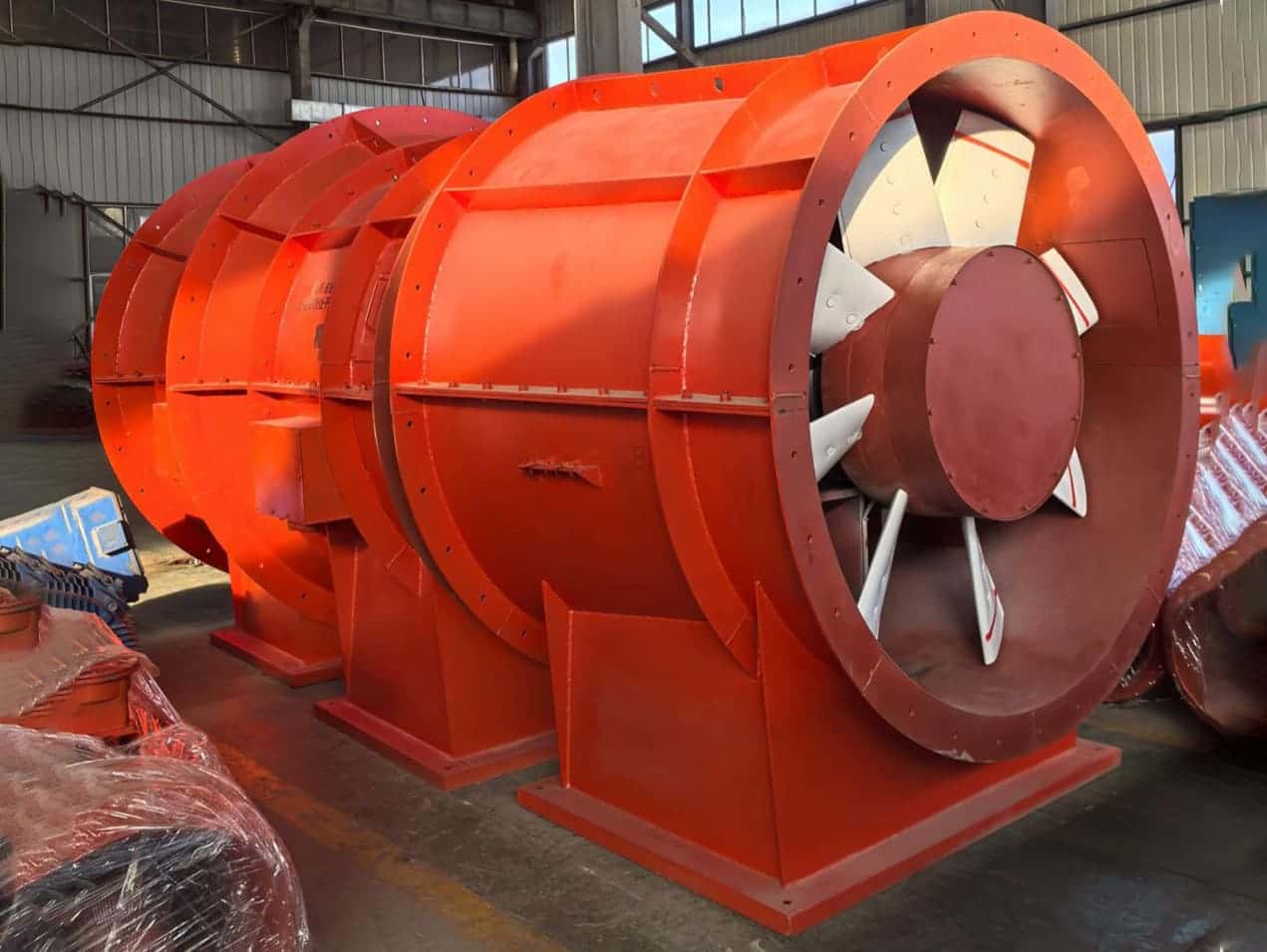
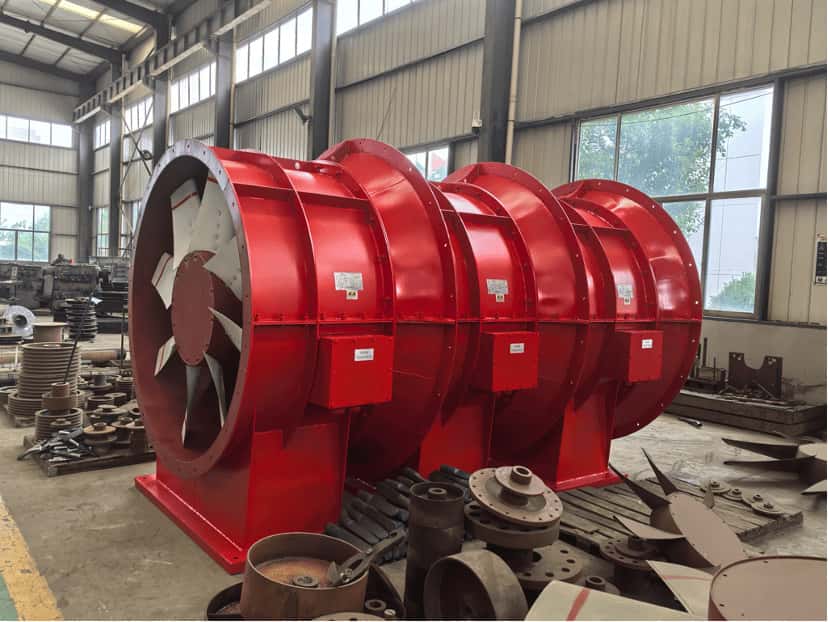
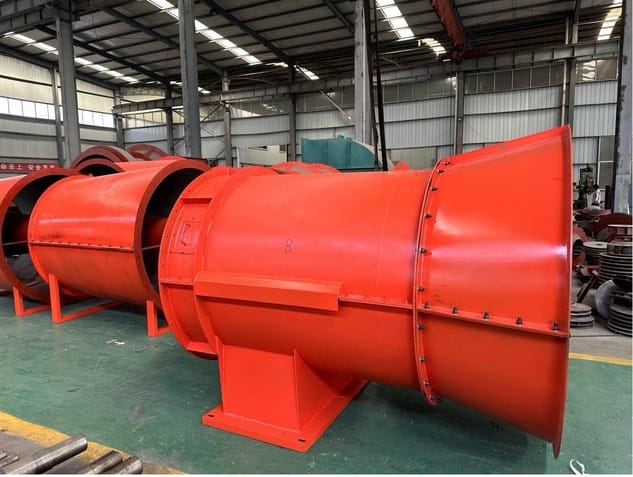
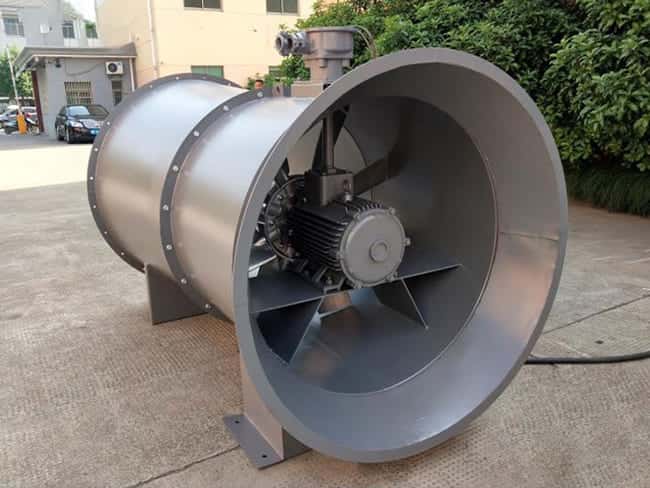
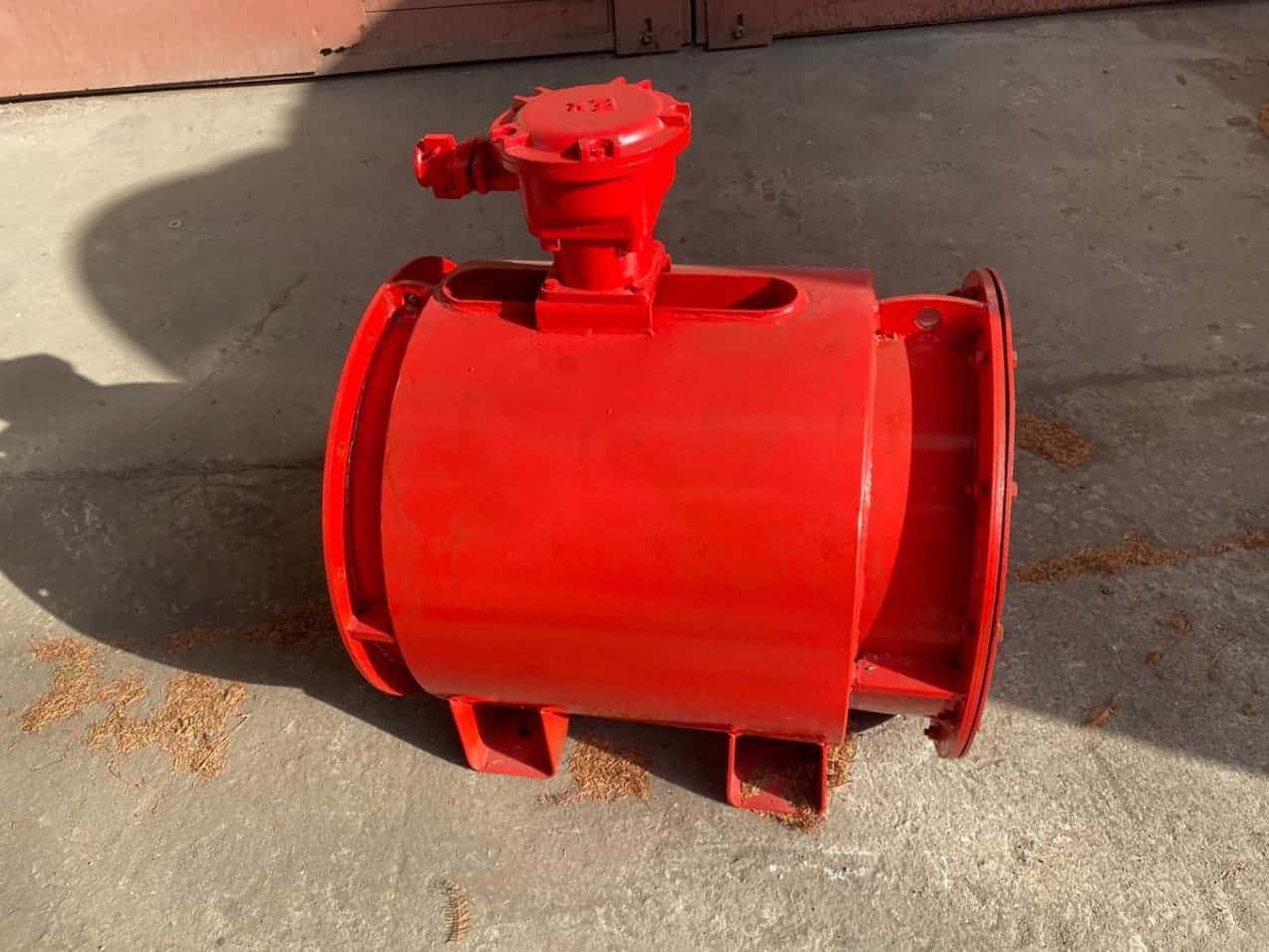
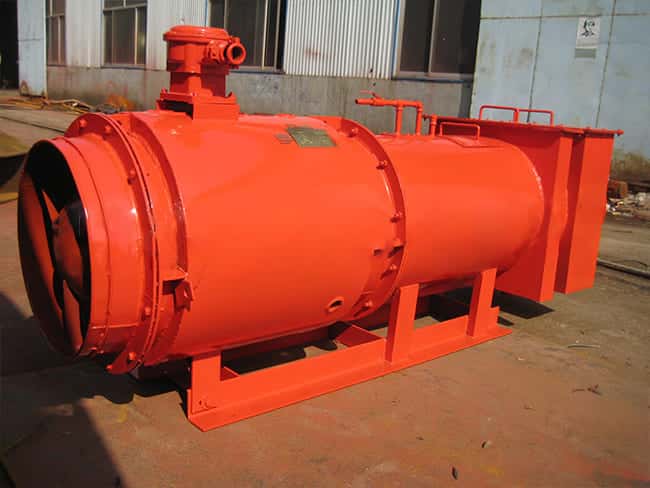
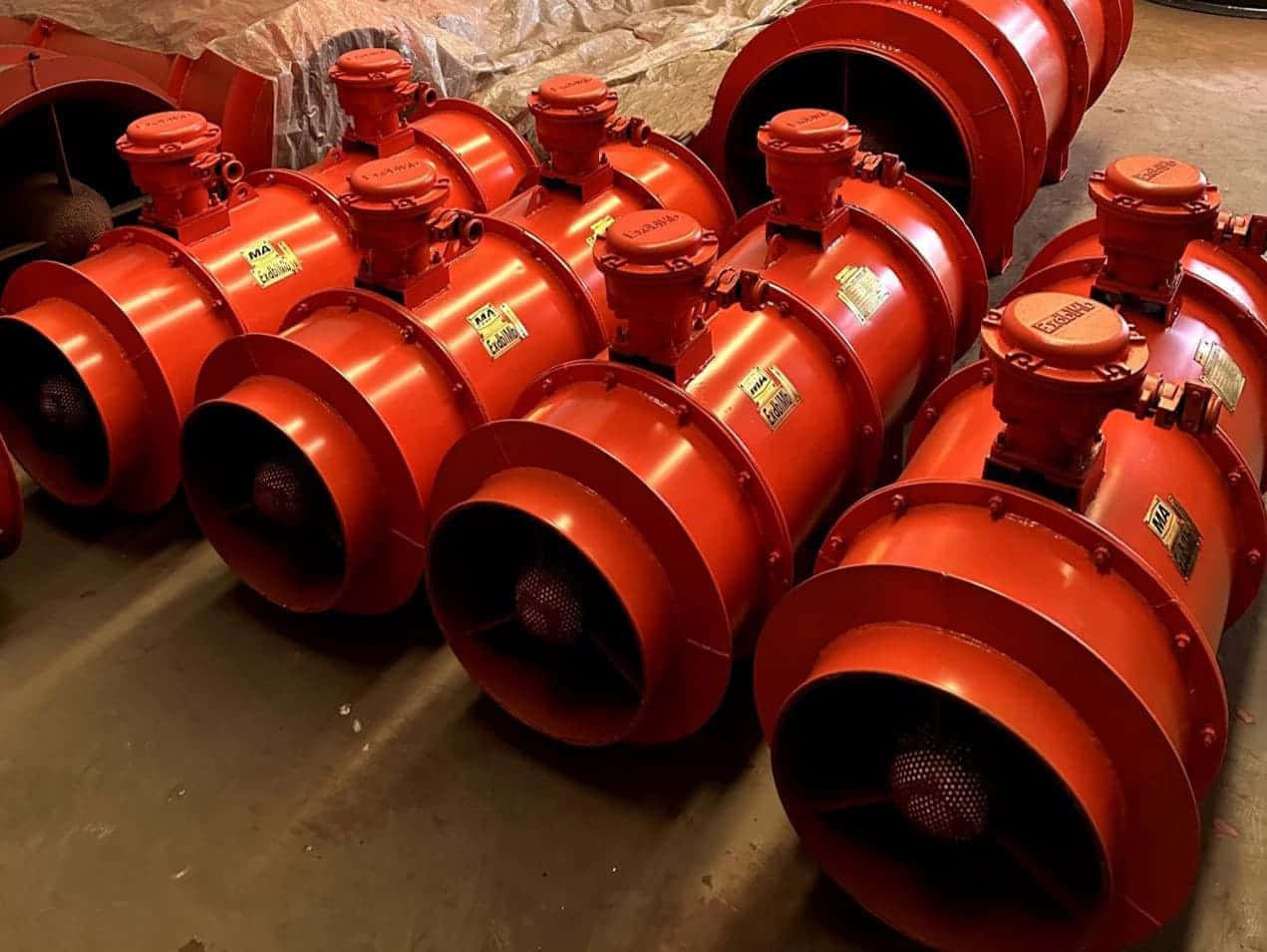
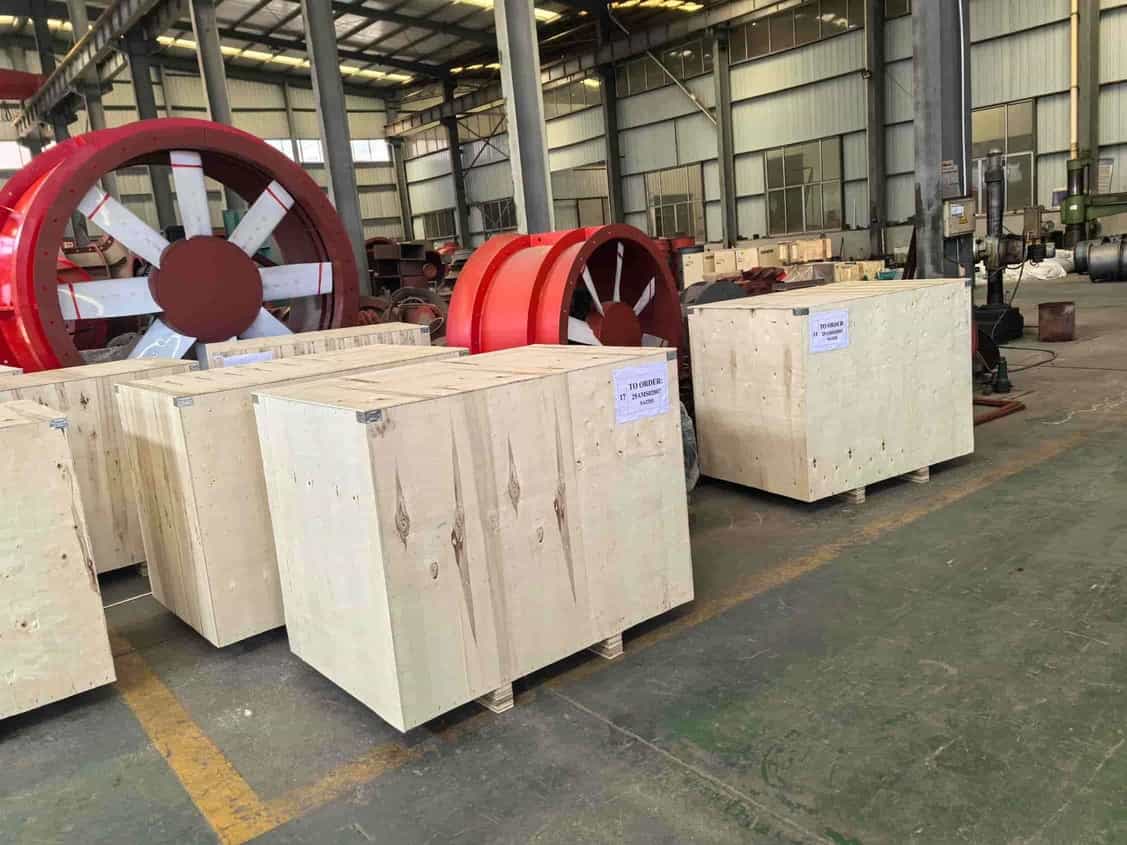
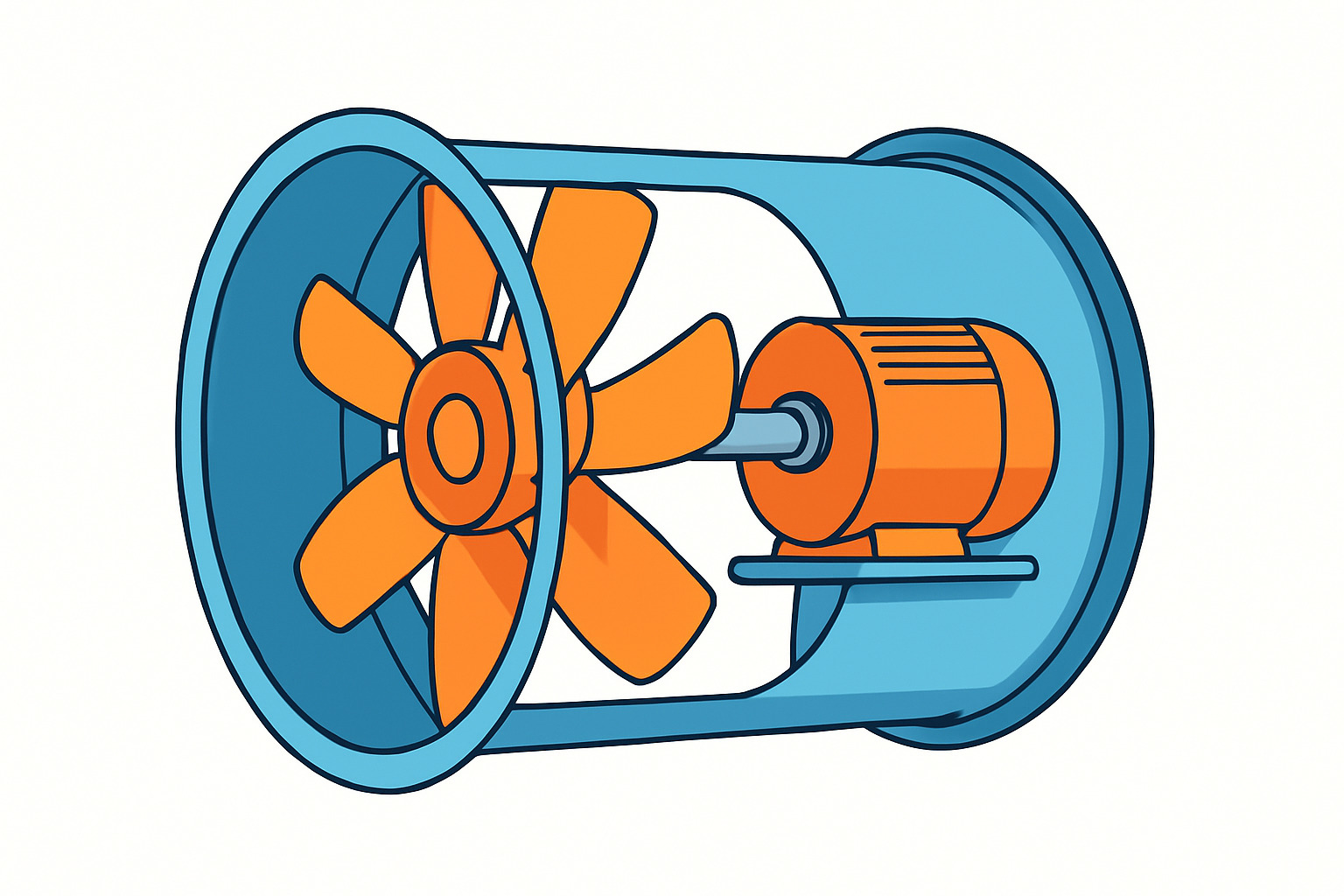
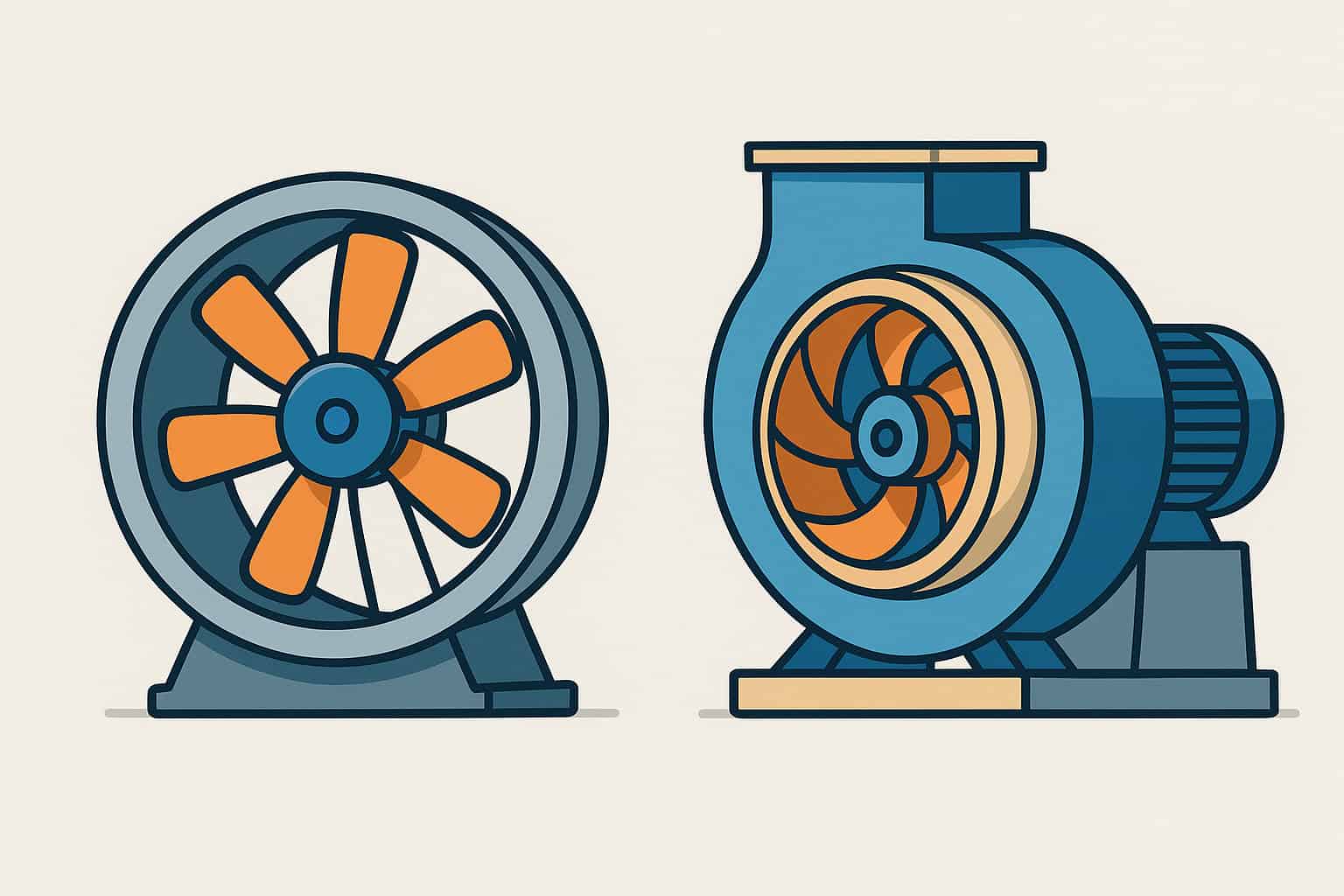
The first major family is the axial fan, which moves air parallel to the shaft like a propeller. Within axial fans there are several subtypes. Tube-axial fans have a propeller inside a cylindrical casing and are used for ducted supply or exhaust where pressure is modest. Vane-axial fans add guide vanes before or after the impeller to straighten the flow and increase pressure and efficiency; they are widely used as main fans in mines and tunnels. HVLS (high-volume low-speed) fans are large-diameter axial fans that turn slowly but move huge volumes of air in warehouses and industrial halls.
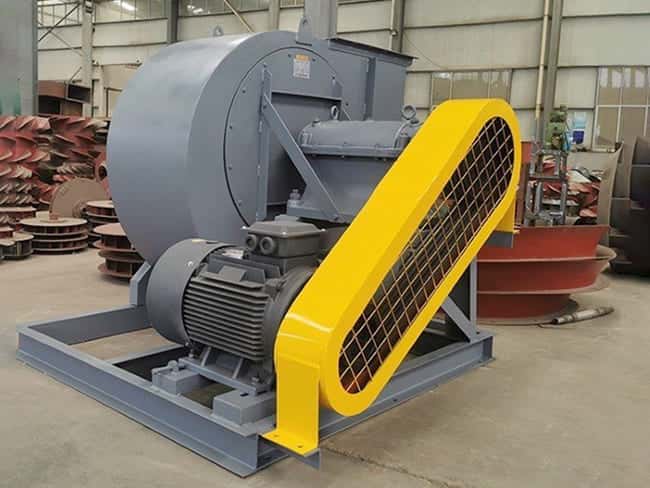
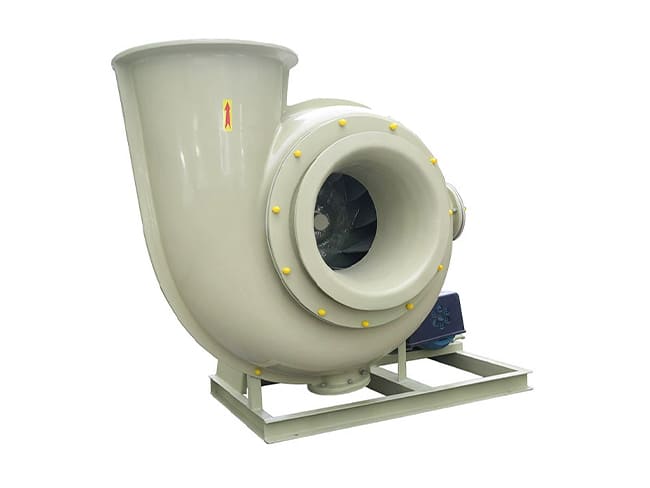
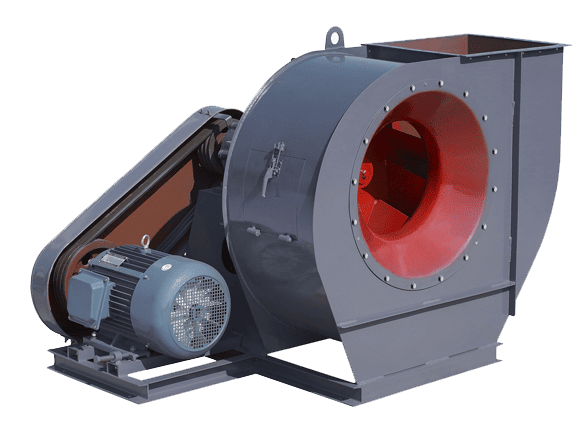
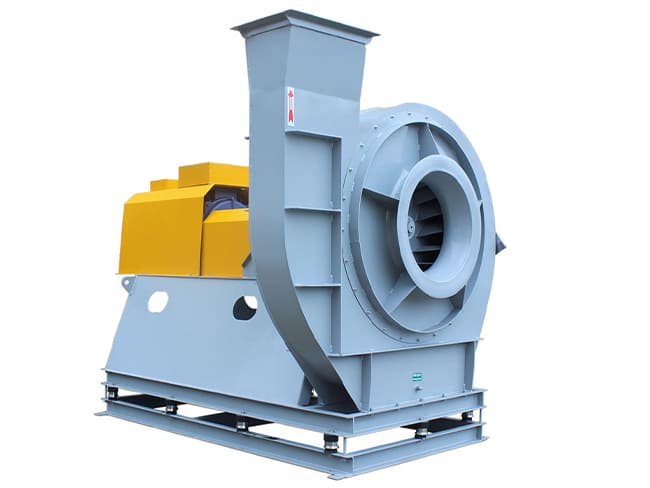
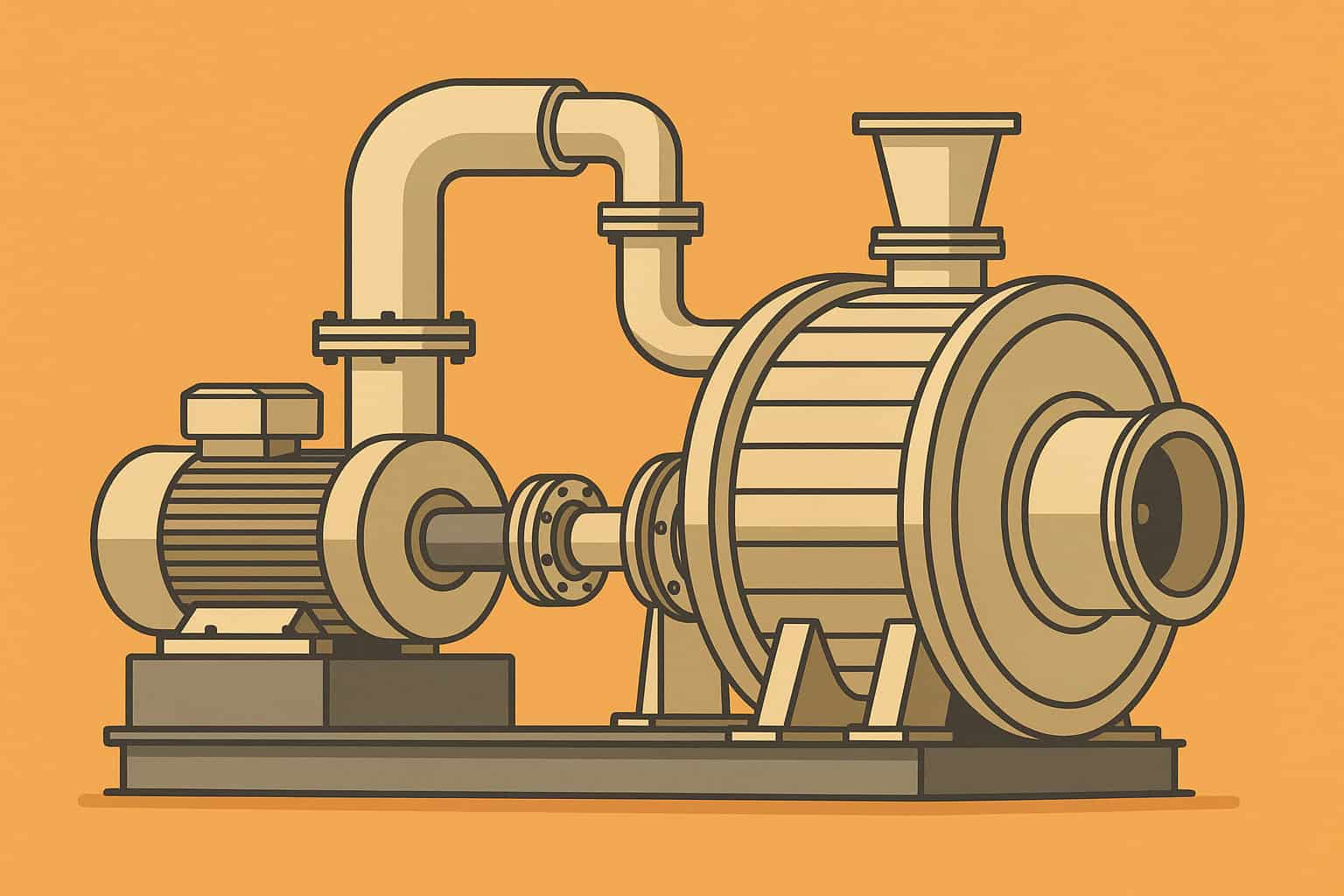
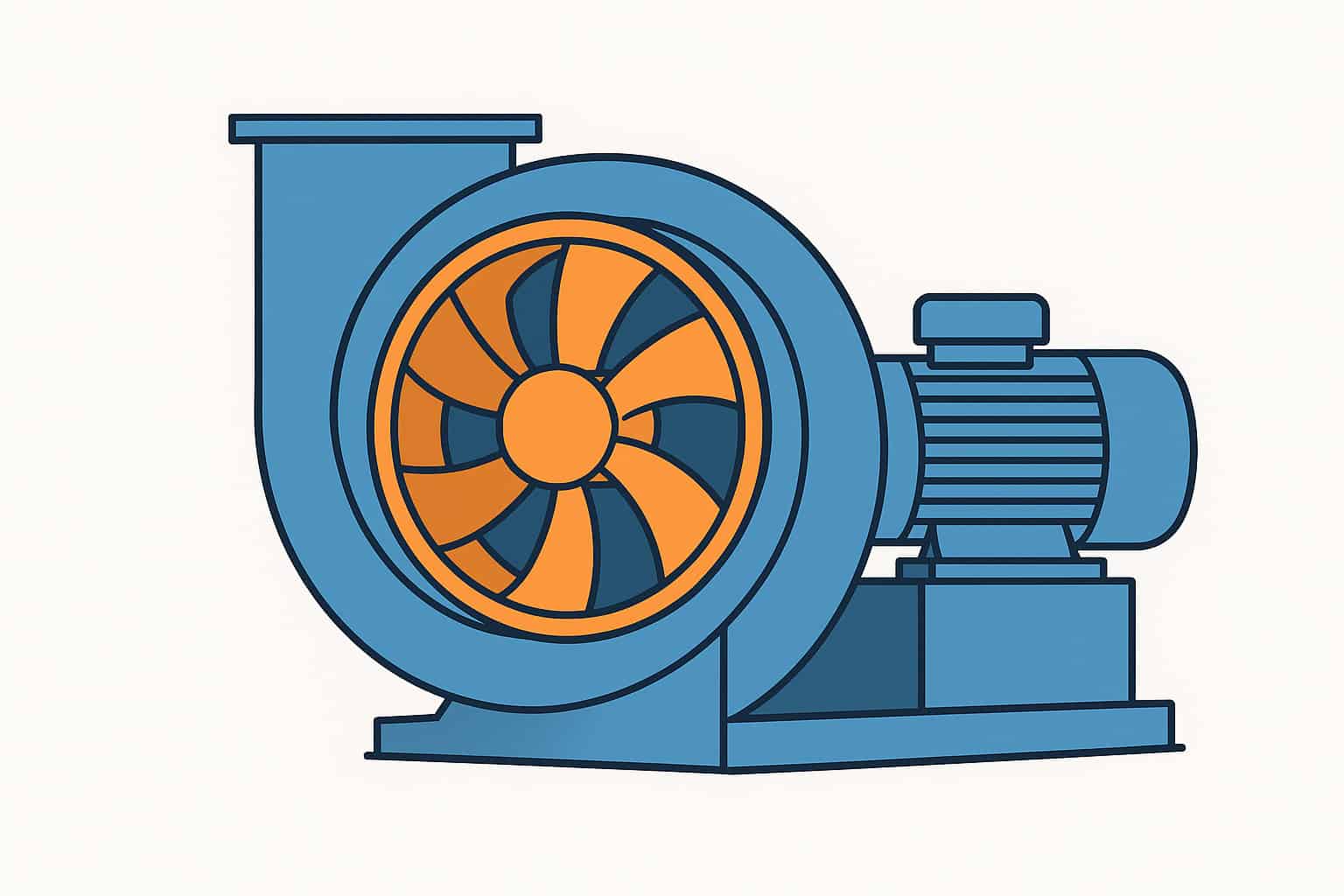
The second major family is the centrifugal fan. Air enters the eye of the impeller and is thrown radially outward into a scroll housing, creating higher pressure than a comparable axial fan. Within this group, forward-curved fans are compact and common in HVAC units, while backward-curved or backward-inclined fans offer higher efficiency for industrial exhaust. Radial-blade fans, sometimes called paddle-wheel fans, are robust designs that handle dust, chips and abrasive fumes; they are often used for dust collection and rough industrial service.
There are also special industrial fans and blowers that serve particular niches. Positive displacement blowers (such as Roots blowers) move air at higher pressures for pneumatic conveying and aeration. Regenerative blowers or side-channel blowers provide medium pressure for small process and vacuum duties. Mixed-flow fans combine features of axial and centrifugal fans, giving higher pressure than a pure axial design in a relatively compact casing.
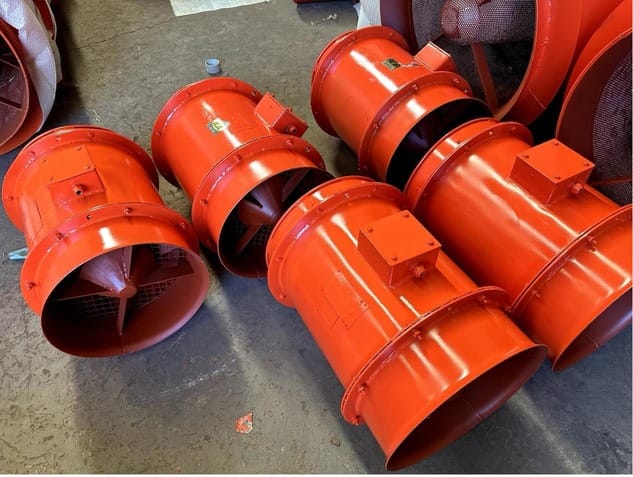
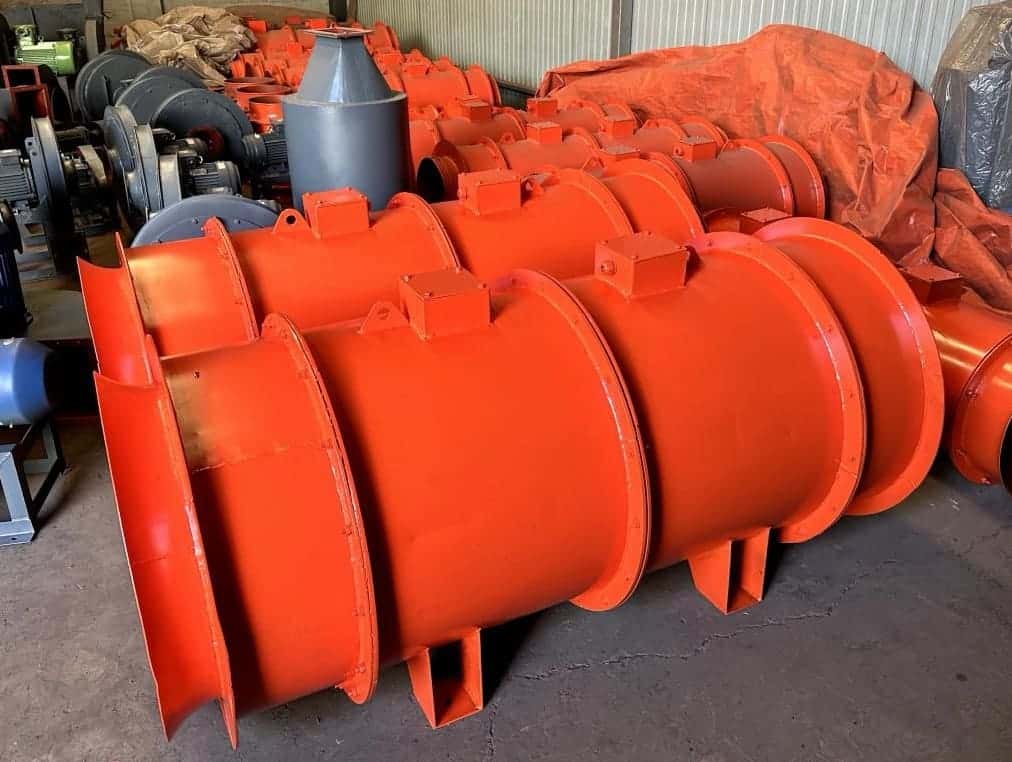
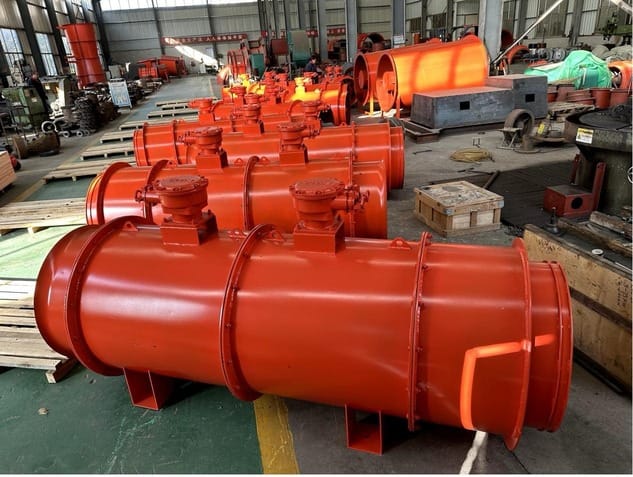
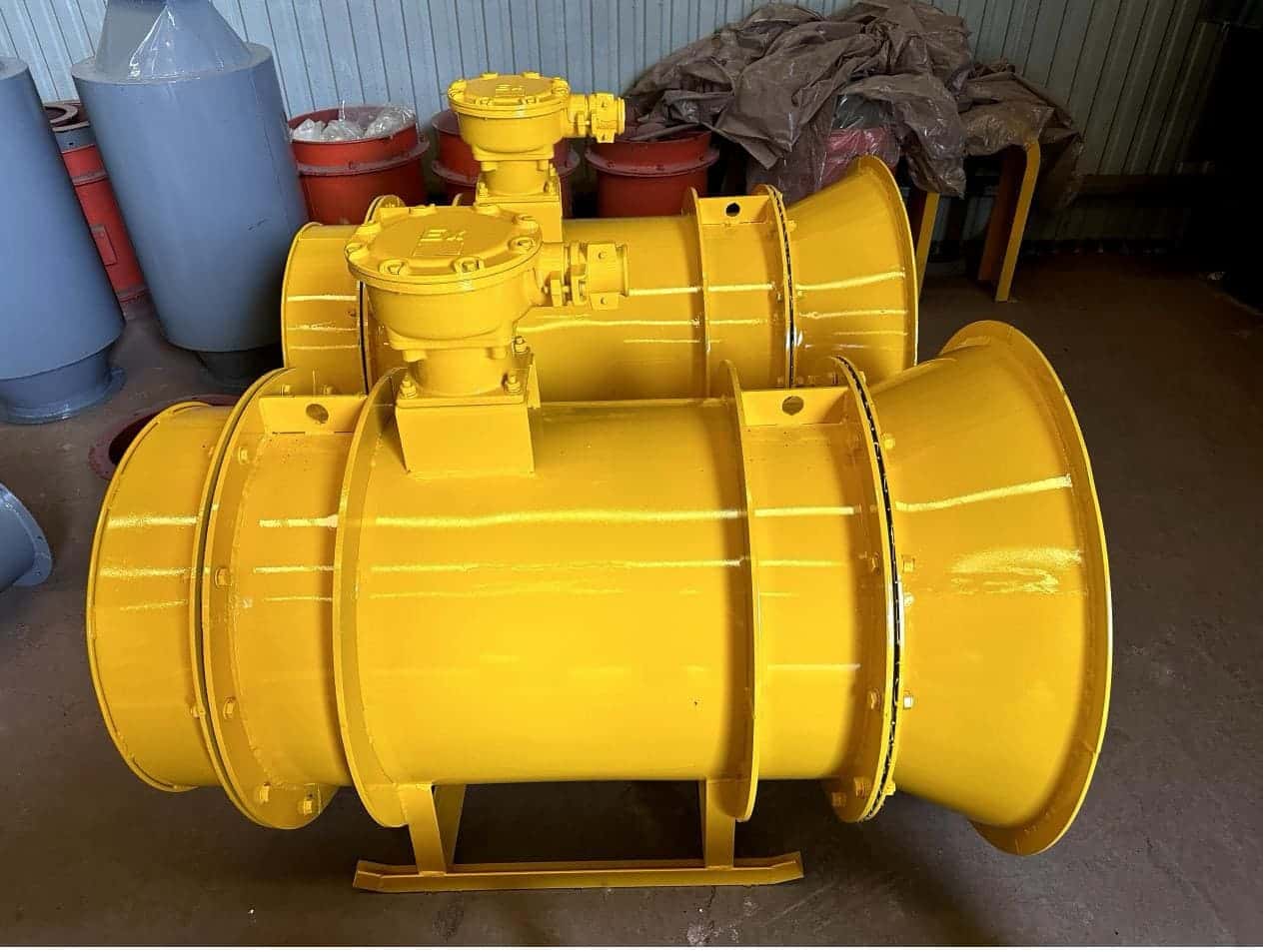
For mining and heavy industrial ventilation, we often classify fans by their duty rather than just by shape. Main fans on the surface or portal provide the primary airflow for the entire mine. Booster fans raise pressure in long districts or shafts. Auxiliary fans are smaller units connected to flexible ducts for headings and blind workings. In plants and workshops, you will also see roof exhaust fans, wall-mounted exhaust fans, cooling tower fans and process ID/FD fans on boilers and kilns.
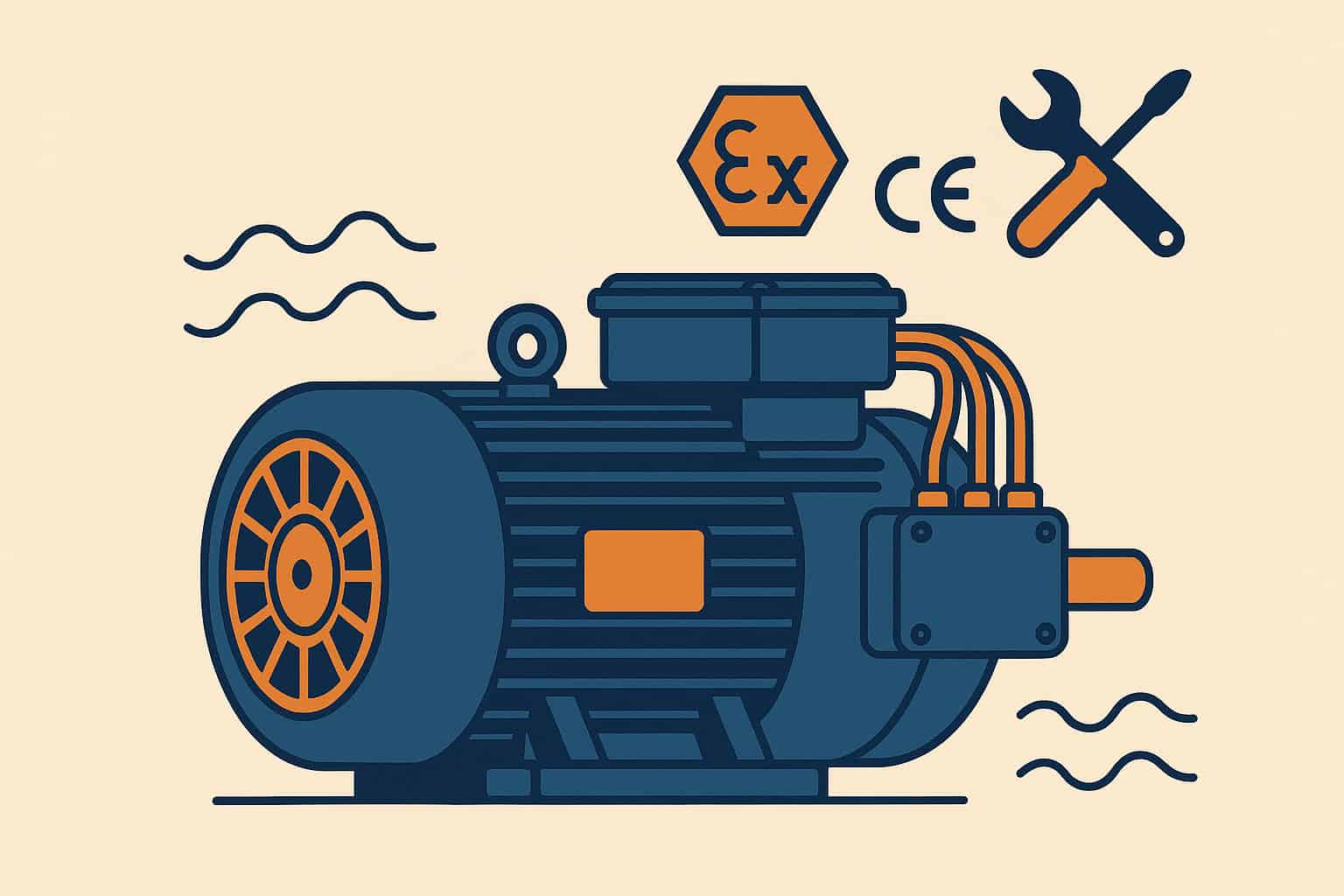
Across all these kinds of fans, key technical choices include airflow, pressure, efficiency, noise level, materials, explosion protection and suitability for dusty or corrosive air. By matching the type of fan to the real ventilation or process requirement, engineers ensure that mines and industrial facilities get safe, reliable and energy-efficient air movement instead of simply spinning a propeller in the wrong application.