
Blowers come in several main types, each designed to move air or gas at higher pressure than a simple low-pressure fan. In industrial plants and mines, understanding the different types of blowers helps you choose the right machine for dust collection, process air, combustion air or auxiliary ventilation.
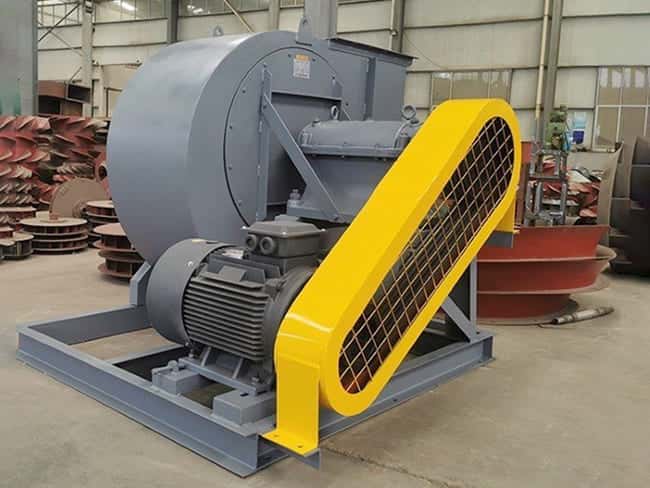
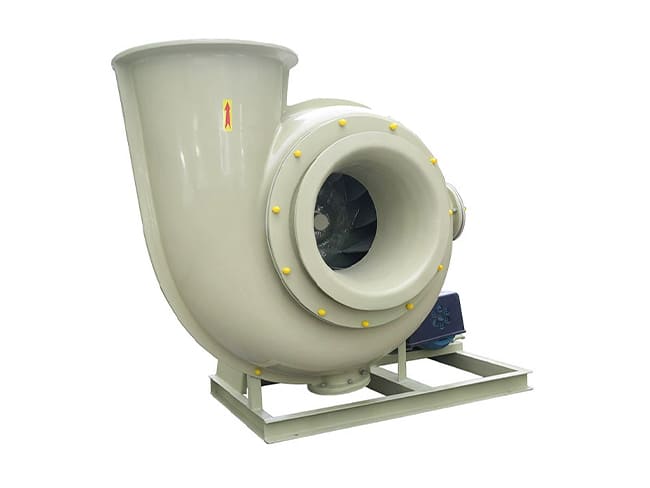
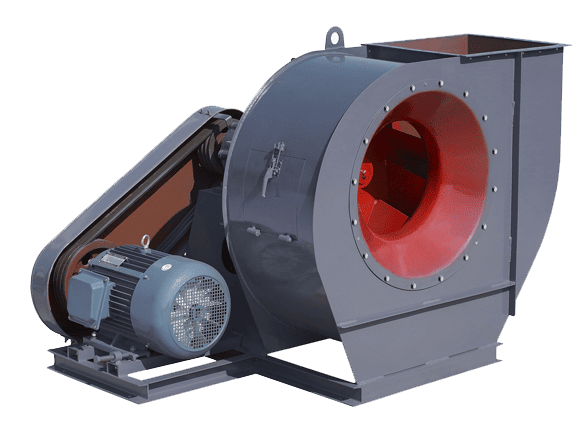
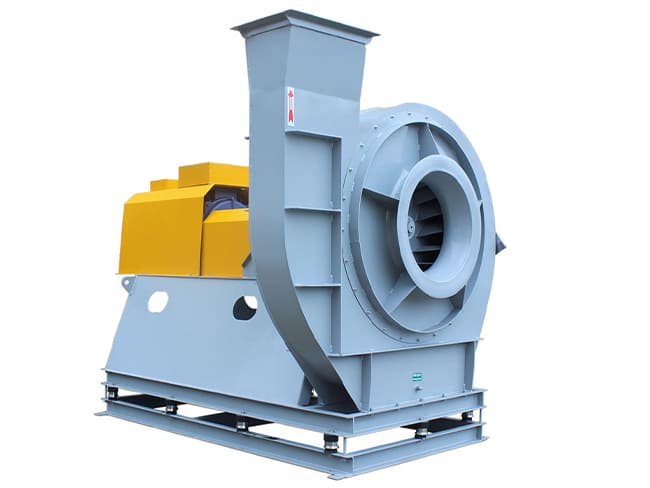
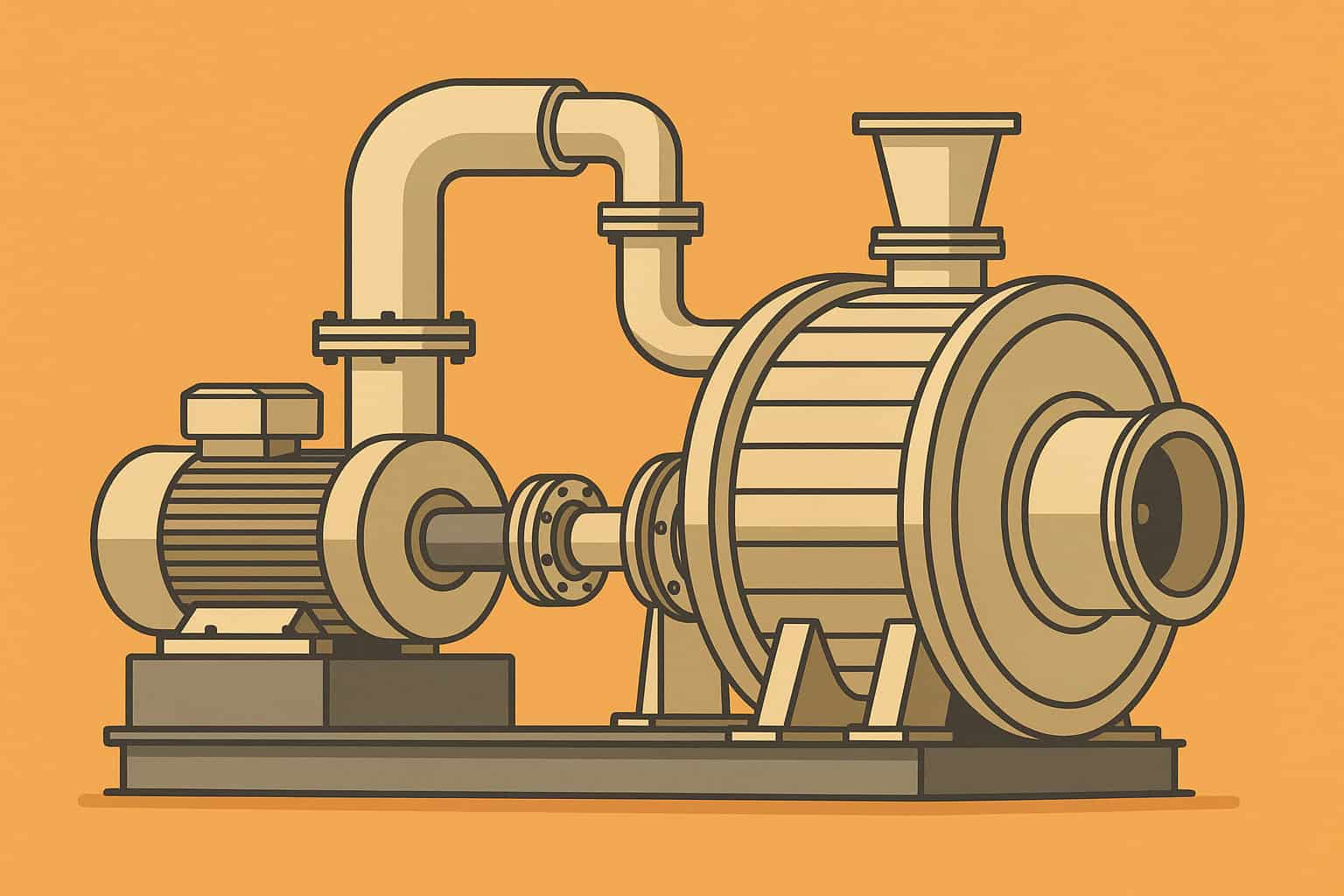
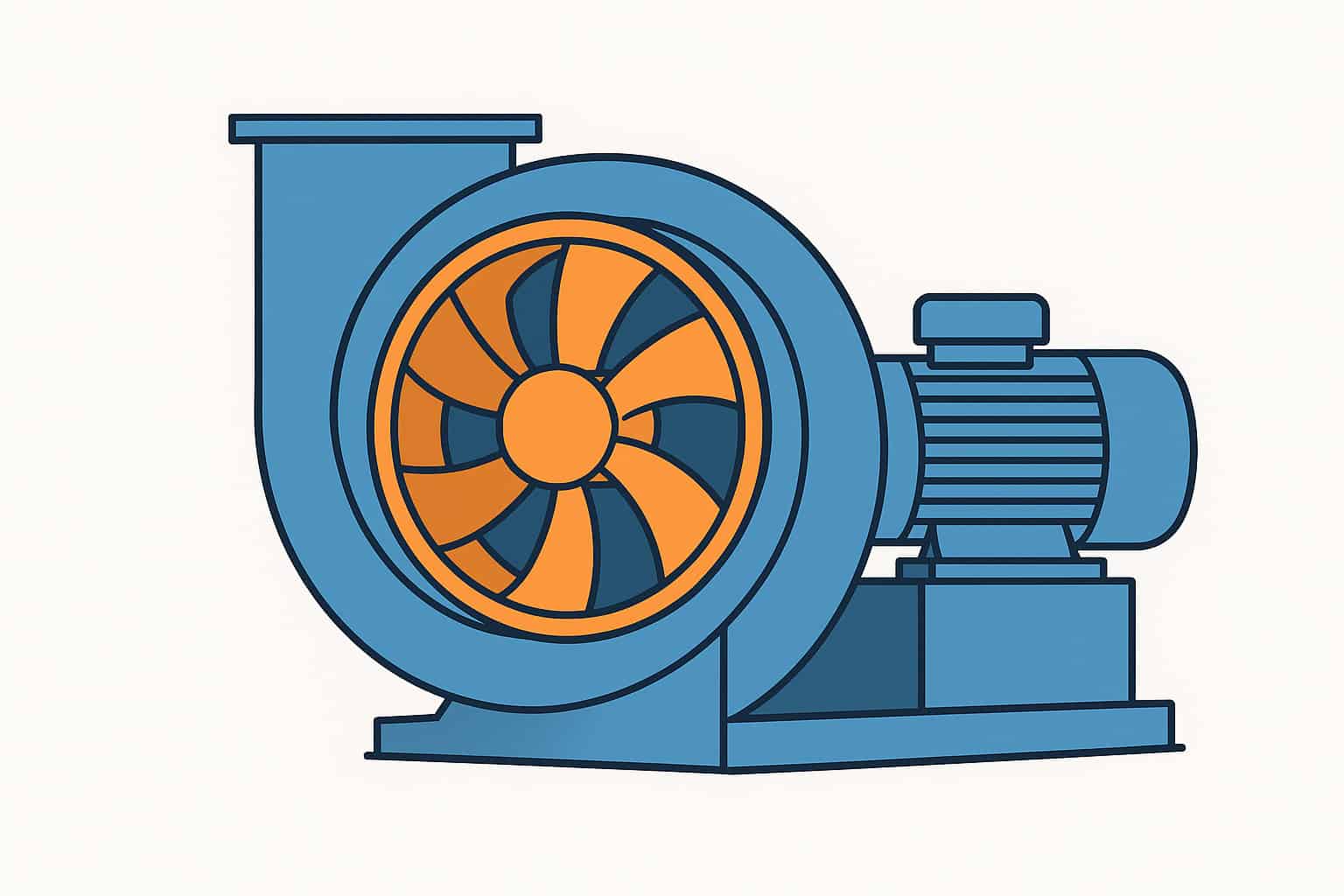
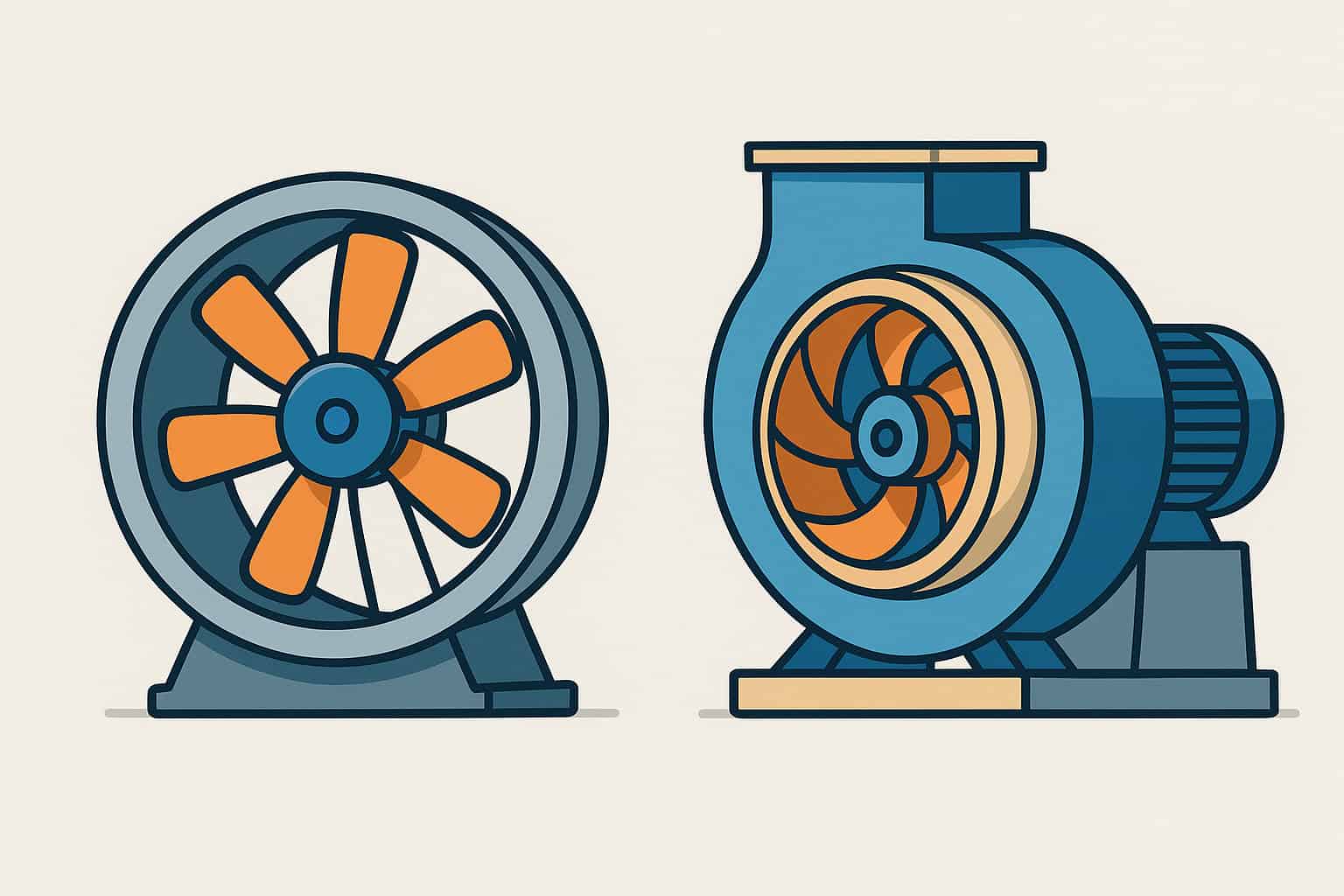
The most common group is the centrifugal blower. Air enters near the centre of a rotating impeller and is thrown outward into a scroll-shaped housing that converts velocity into pressure. Within centrifugal blowers, there are several important subtypes:
- Forward-curved (forward-blade) blowers – compact, relatively quiet units often used in HVAC and light industrial applications for moderate pressures and flows.
- Backward-curved or backward-inclined blowers – higher-efficiency designs that can deliver greater pressure and are common in dust collection, process exhaust and high-performance ventilation systems.
- Radial blade (paddle wheel) blowers – rugged blowers with straight blades, well suited to handling dust, chips and abrasive particles in mining, cement and steel applications.
Another major category is the positive displacement blower. Rather than relying on centrifugal force, these machines trap fixed volumes of air and carry them from inlet to outlet. Common examples include:
- Roots blowers (lobe blowers) – two or three lobed rotors rotate in opposite directions, moving air in discrete pockets. They provide relatively constant flow over a range of pressures and are widely used for pneumatic conveying and aeration.
- Screw blowers – twin screw rotors compress and move air, offering higher efficiency and lower noise than some traditional roots designs in certain ranges.
Regenerative blowers, sometimes called side-channel blowers, form a third group. Air circulates repeatedly within a specially shaped channel around an impeller, gaining pressure with each pass. These blowers are compact and can deliver moderate flows at higher pressures than typical fans, making them useful for small vacuum systems, aeration and specialized process duties.
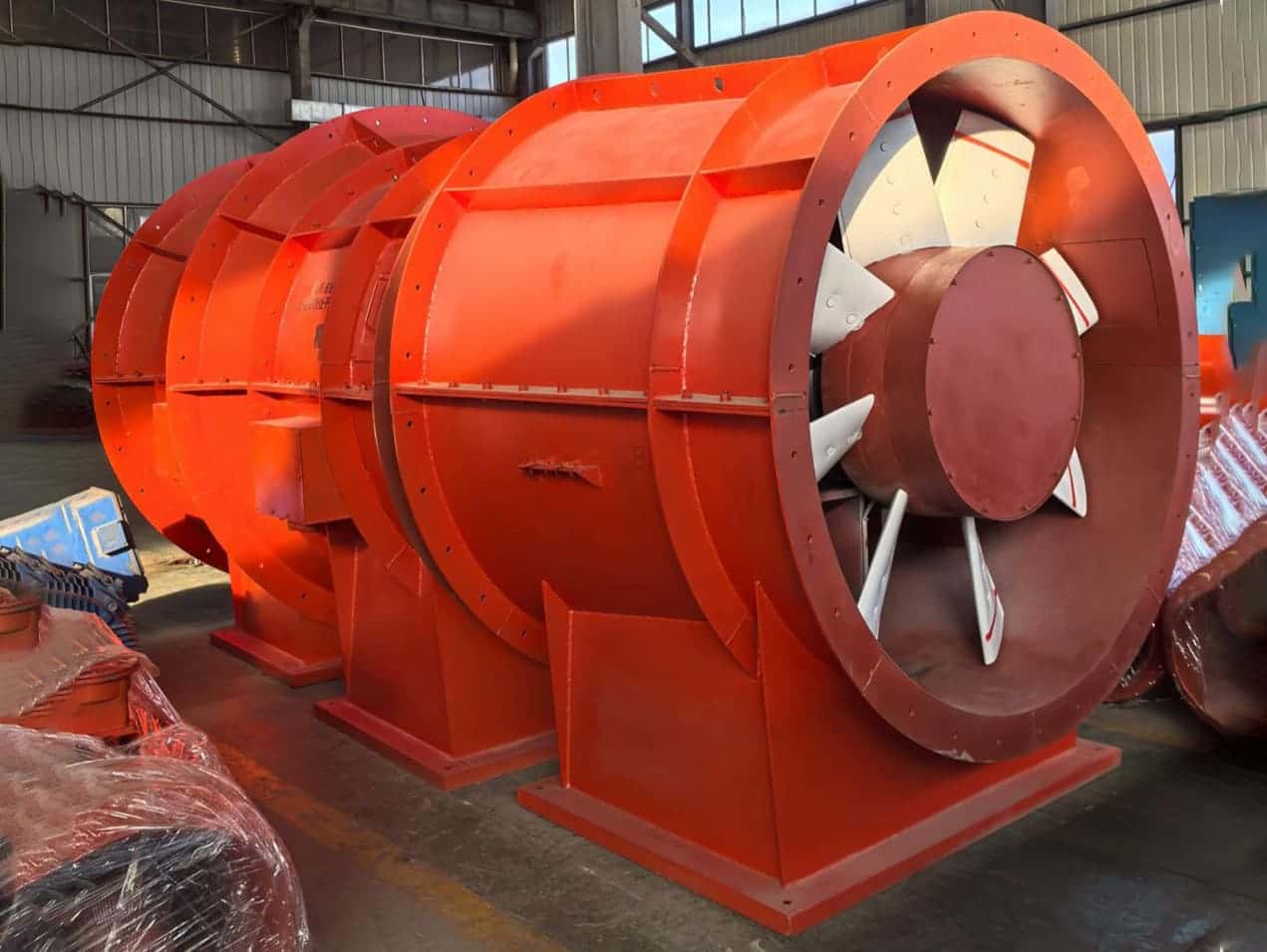
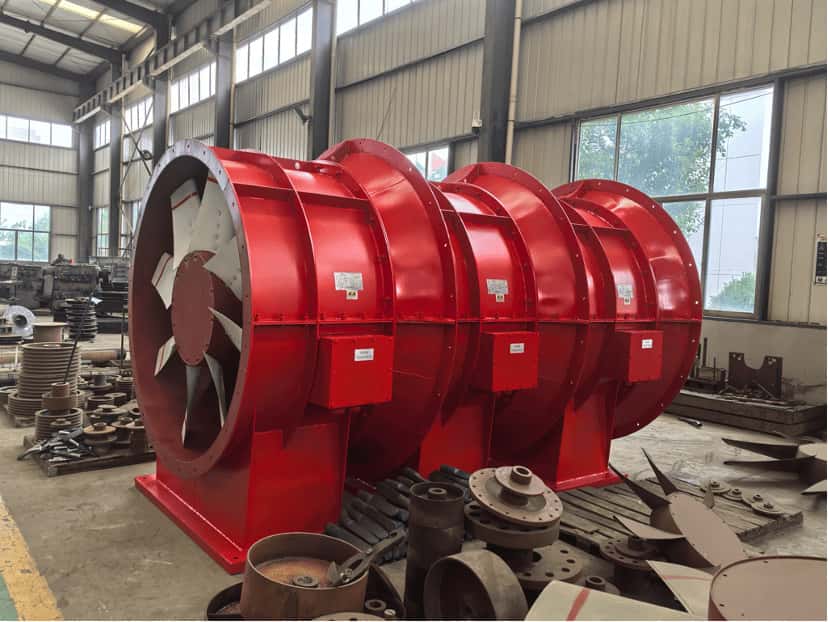
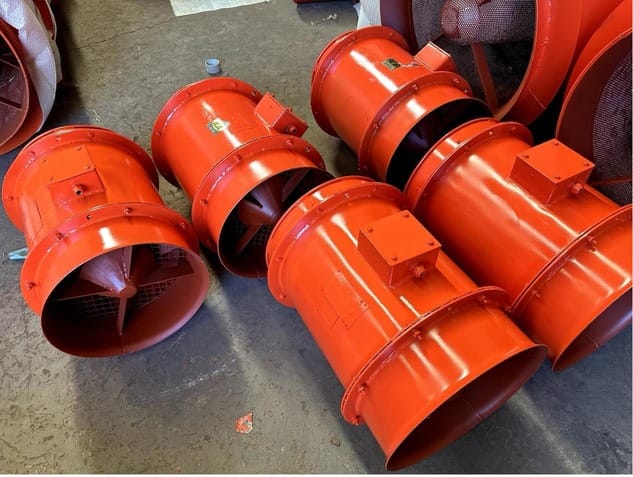
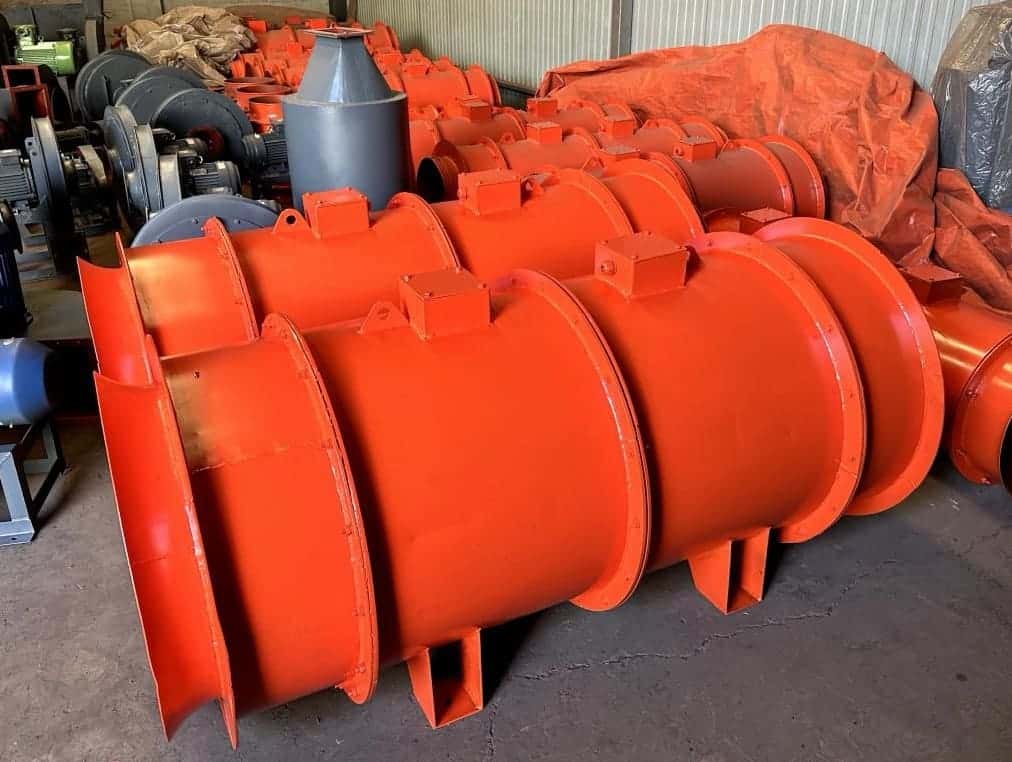
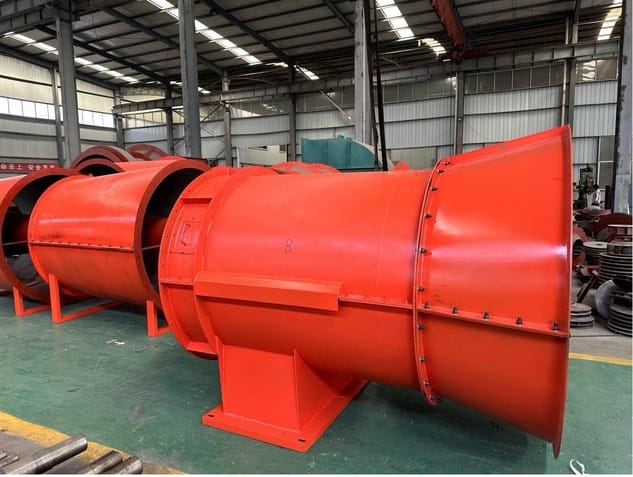
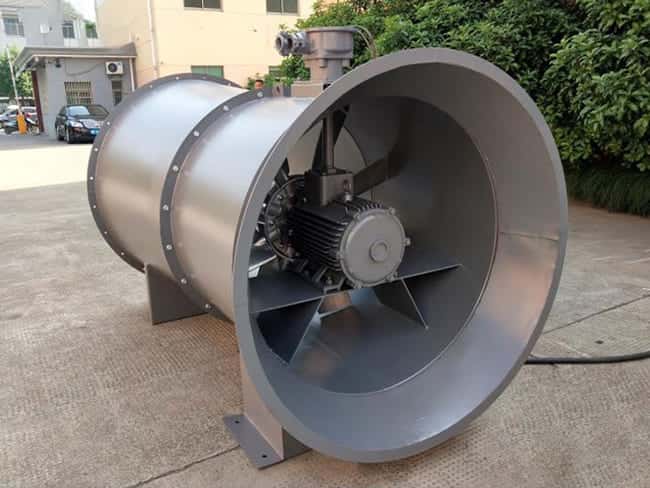
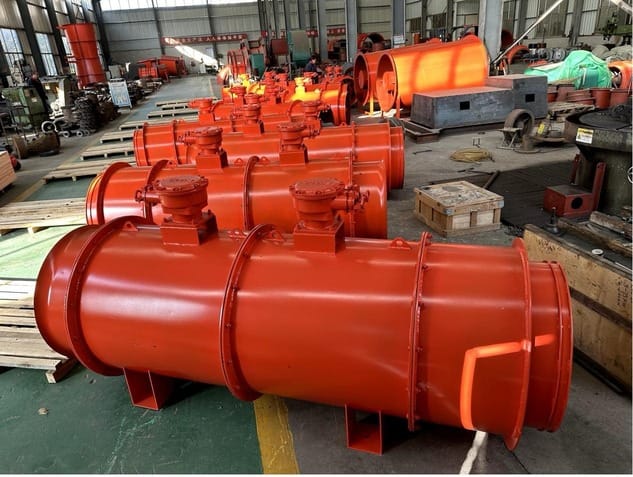
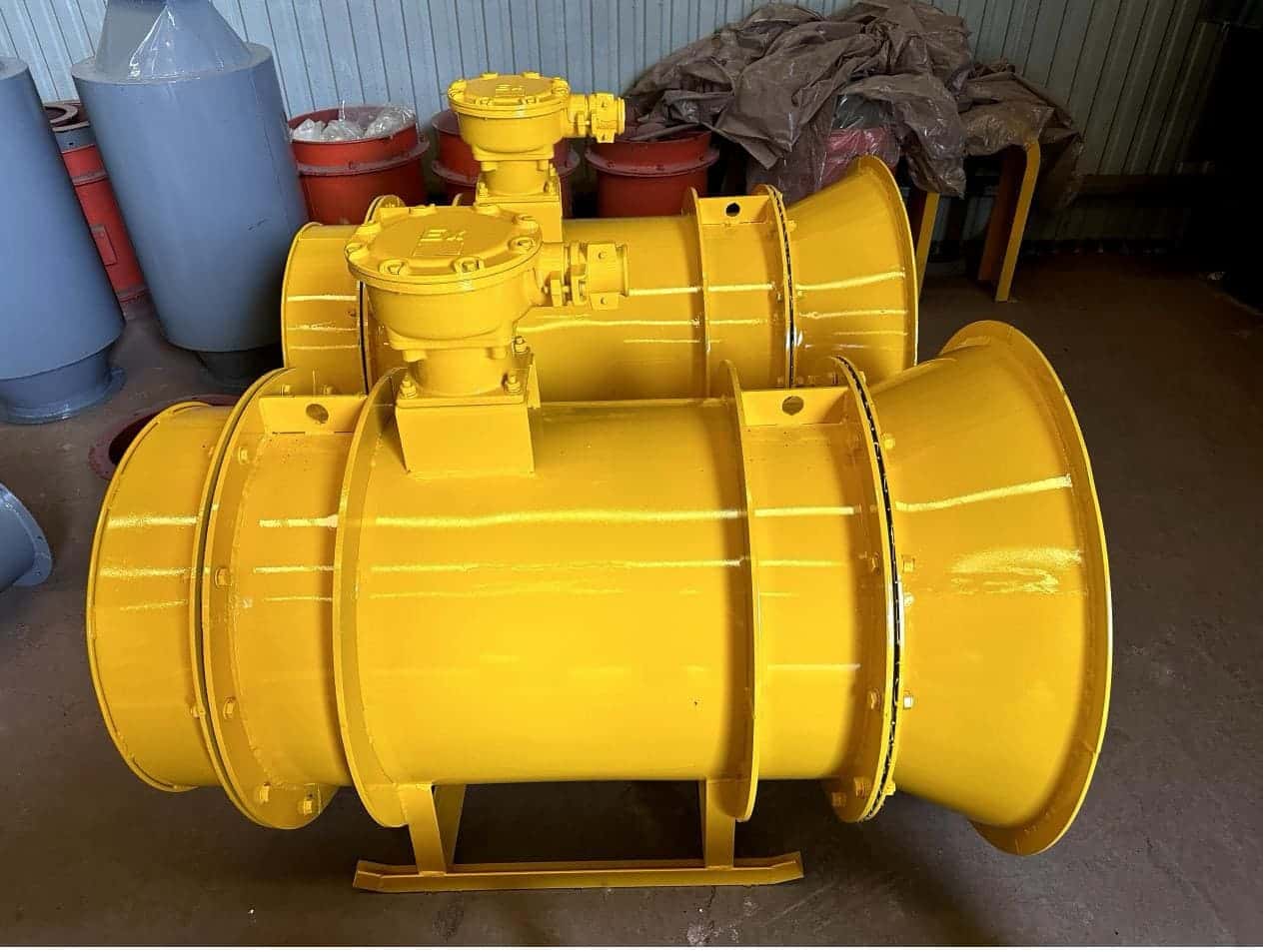
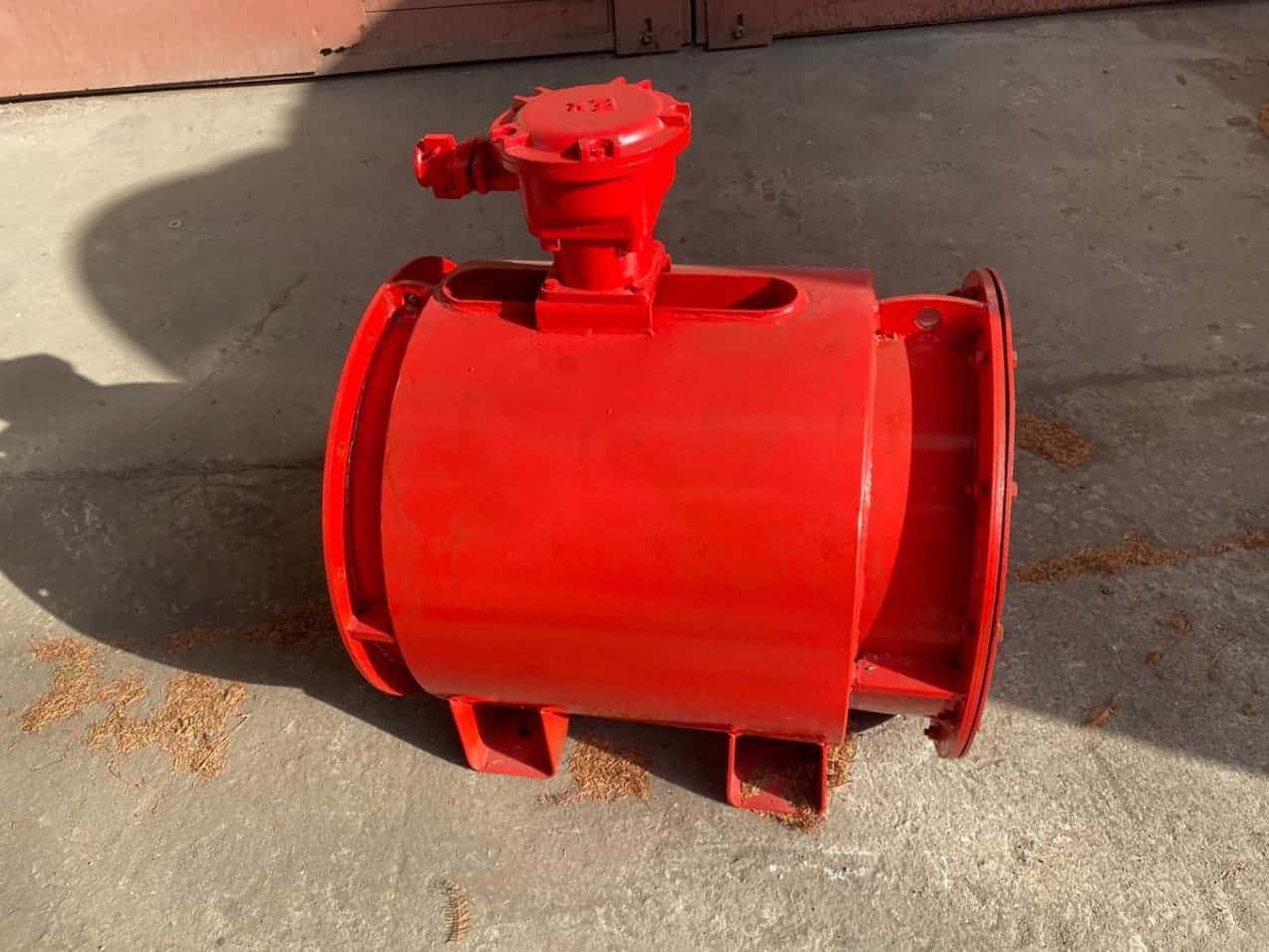
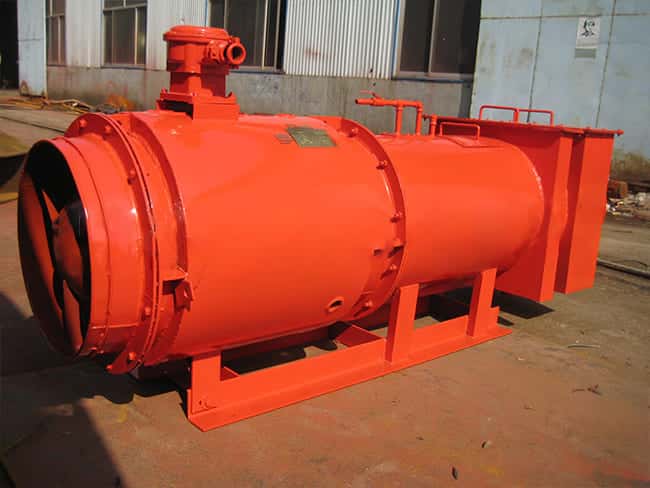
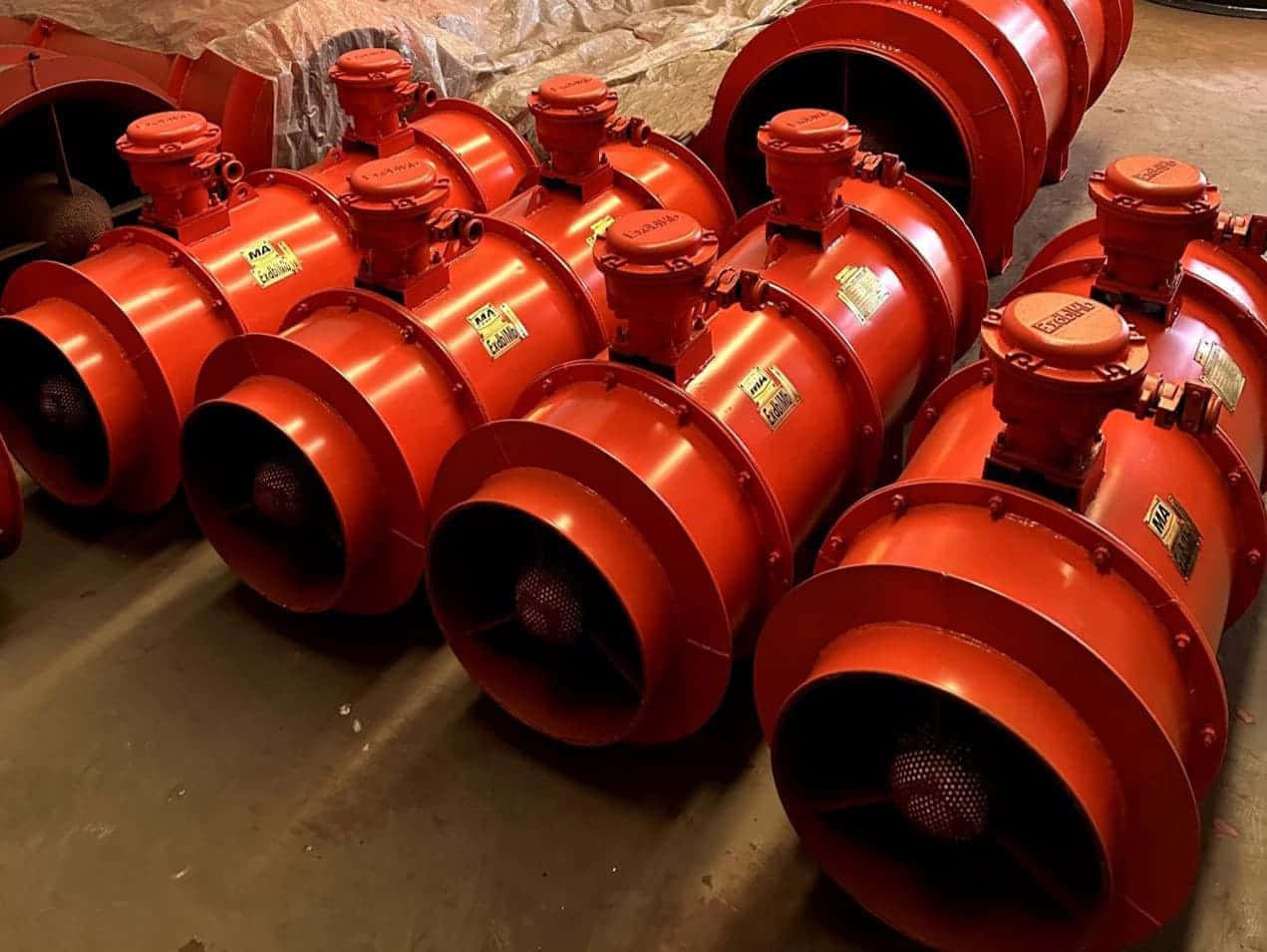
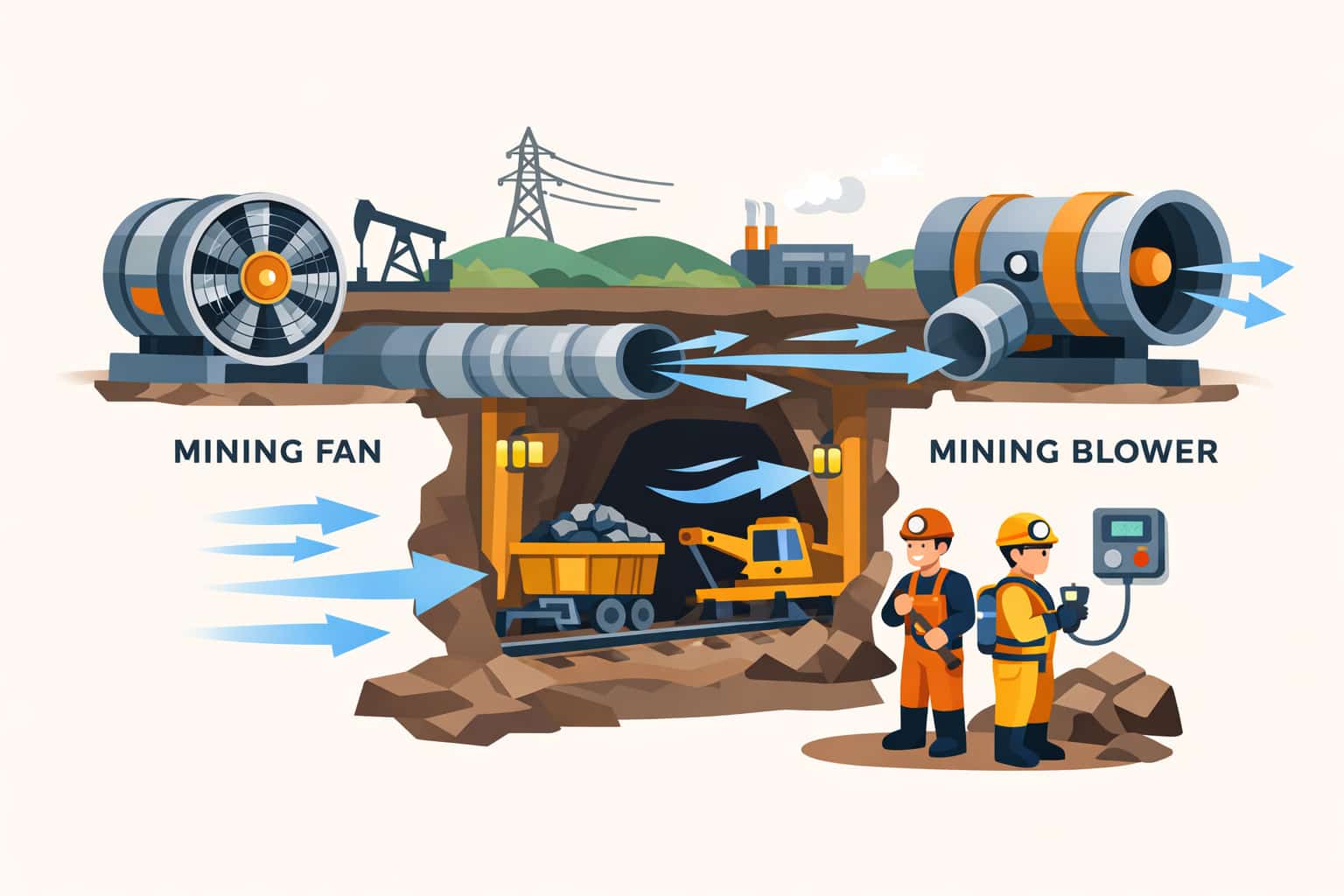
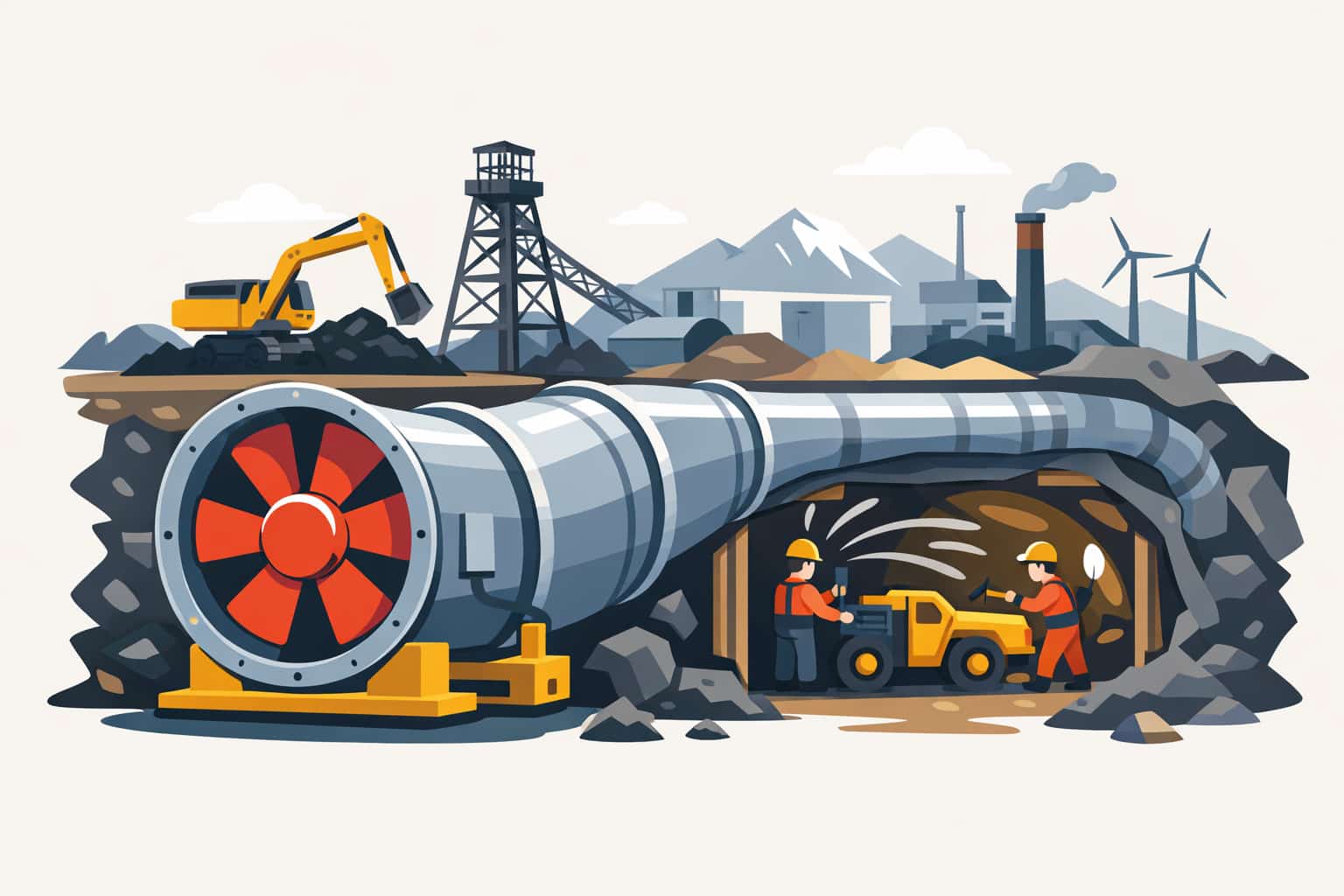
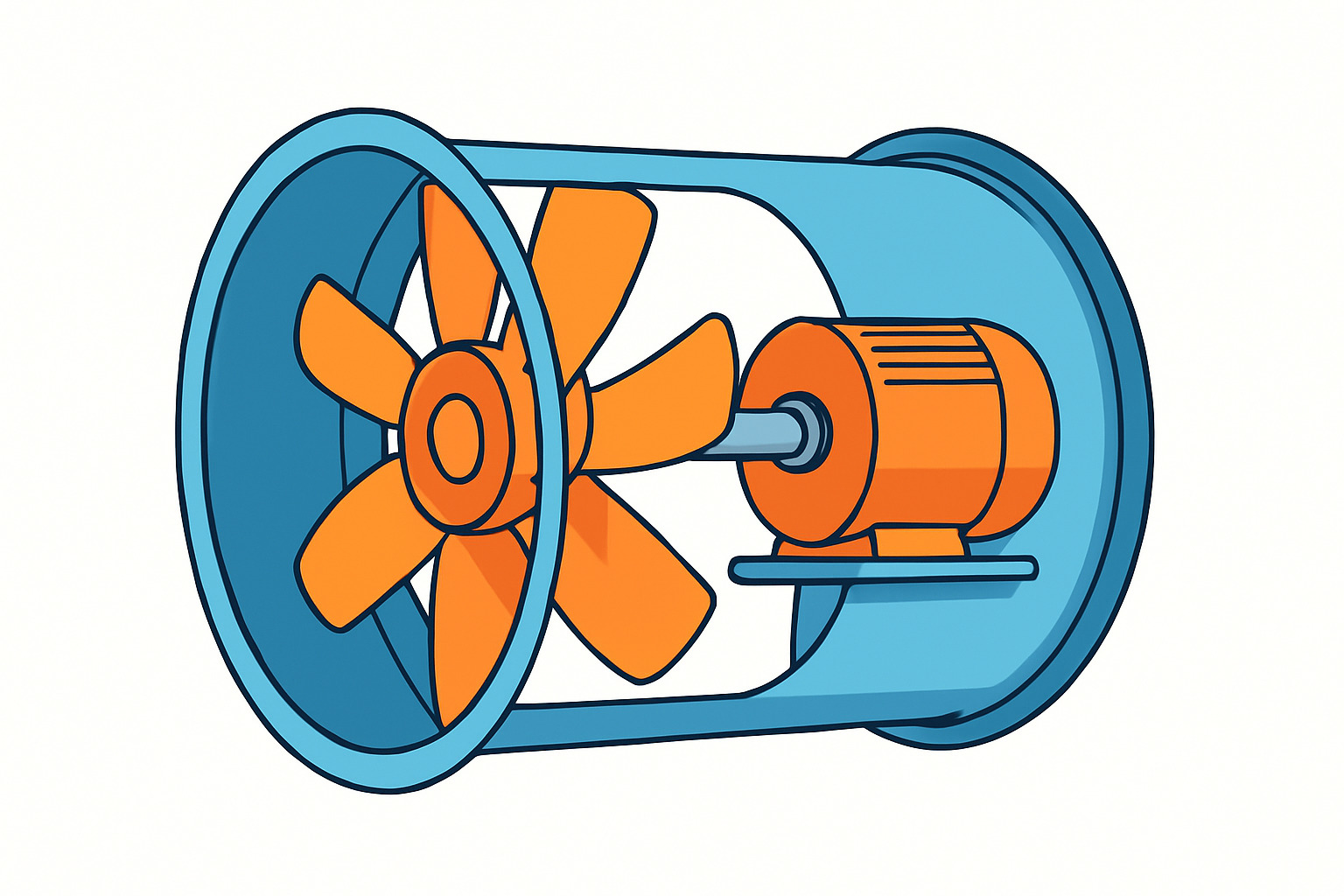
Finally, there are axial blowers, which look more like conventional fans but are designed for ducted service and higher pressure than comfort fans. Portable axial blowers are often used for confined-space ventilation and temporary mine headings, where flexible ducting is attached to the blower outlet or inlet.
In mining and heavy industry, engineers select between centrifugal, positive displacement, regenerative and axial blowers based on required pressure, flow, gas composition, dust loading and energy efficiency. Knowing the different types of blowers ensures that each application—from mine headings to filter plants and combustion systems—gets the most suitable and reliable air mover.
