
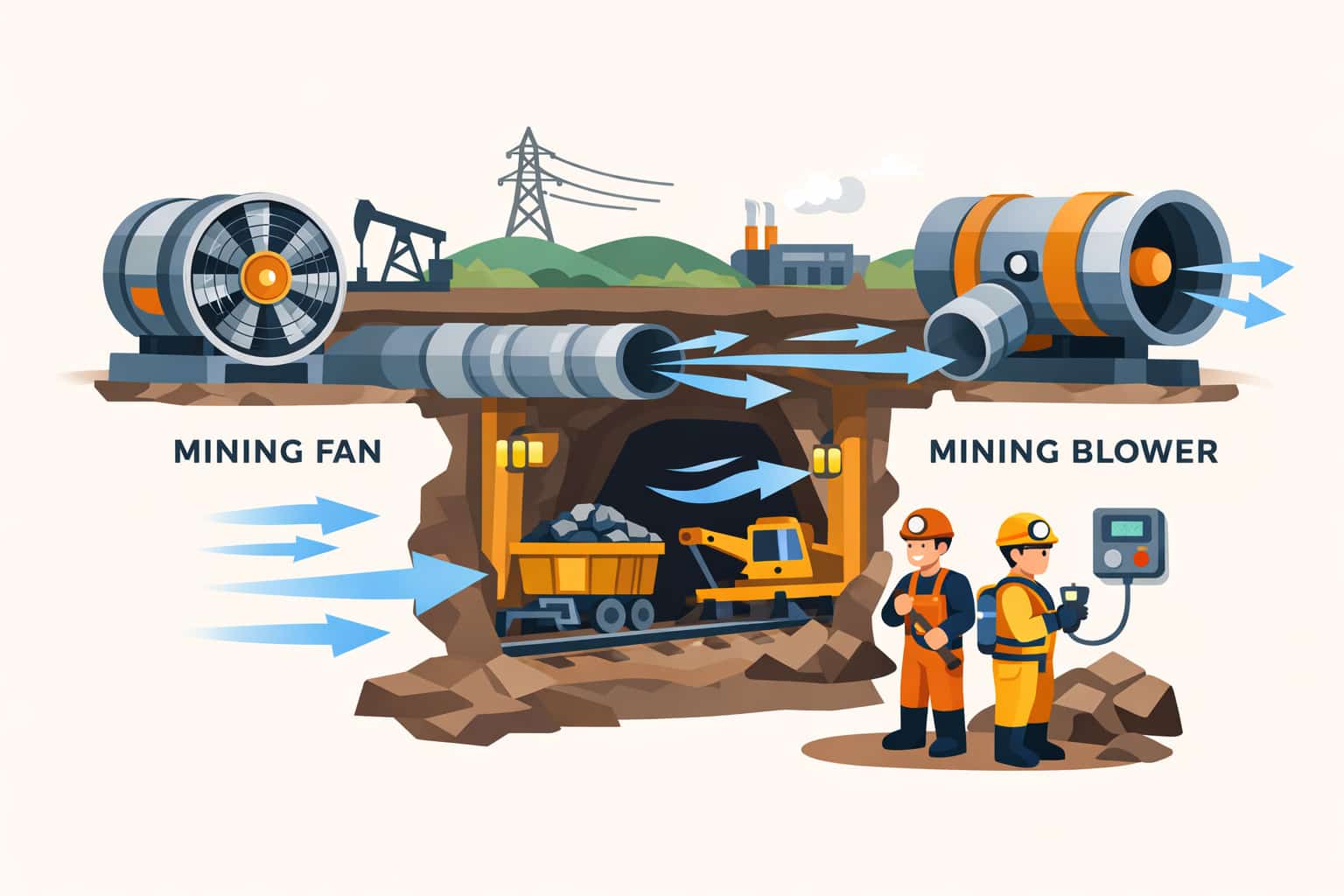
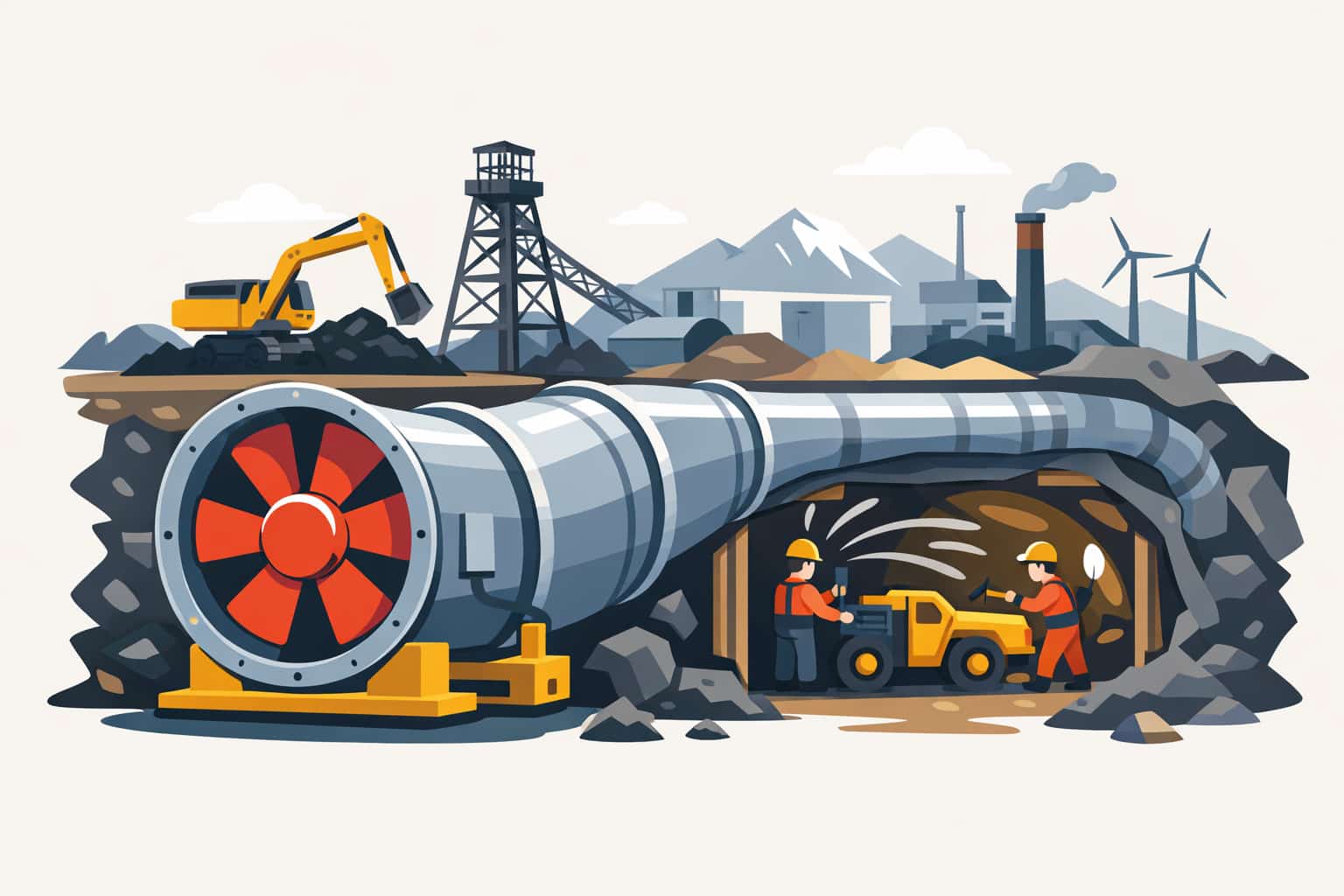
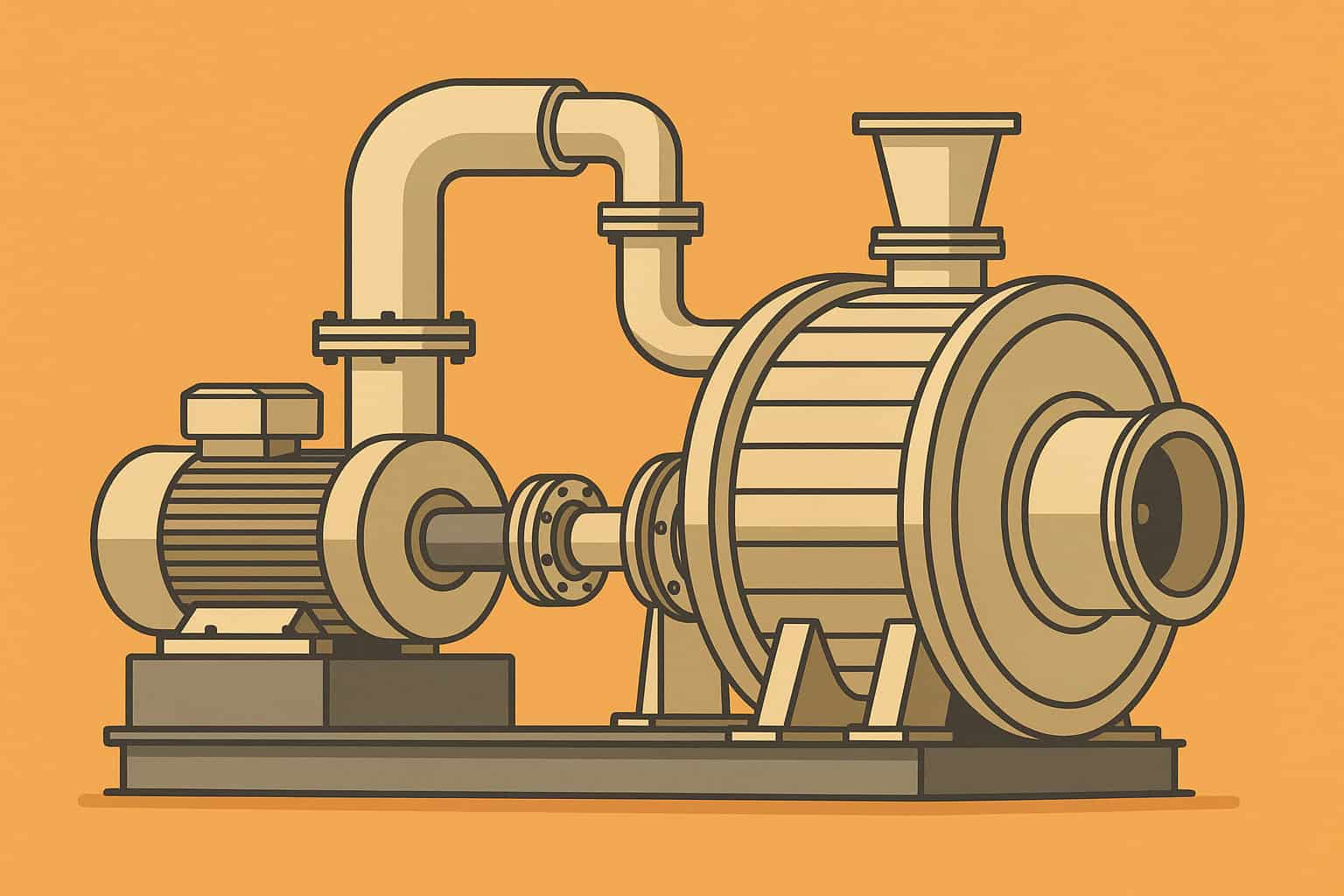

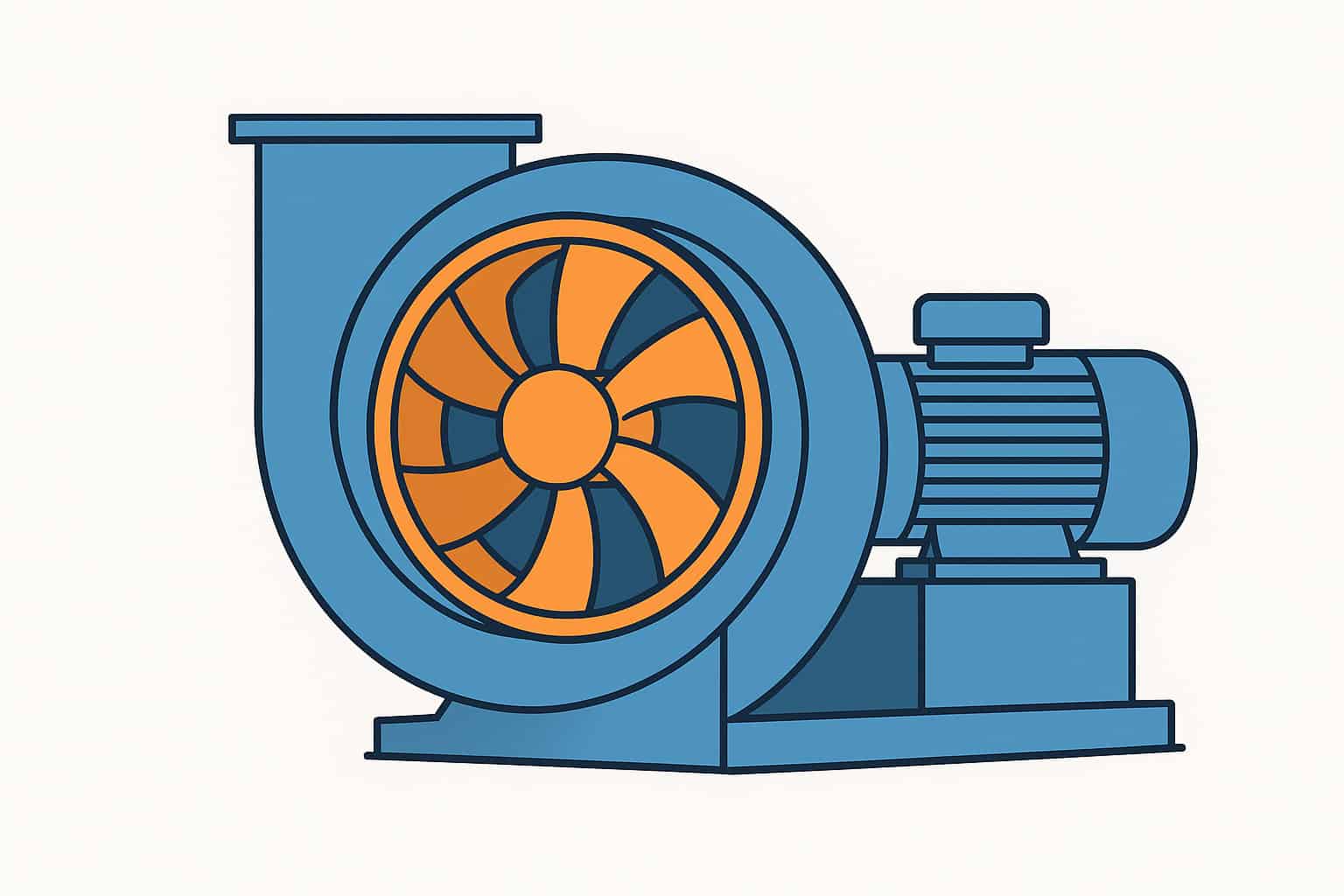
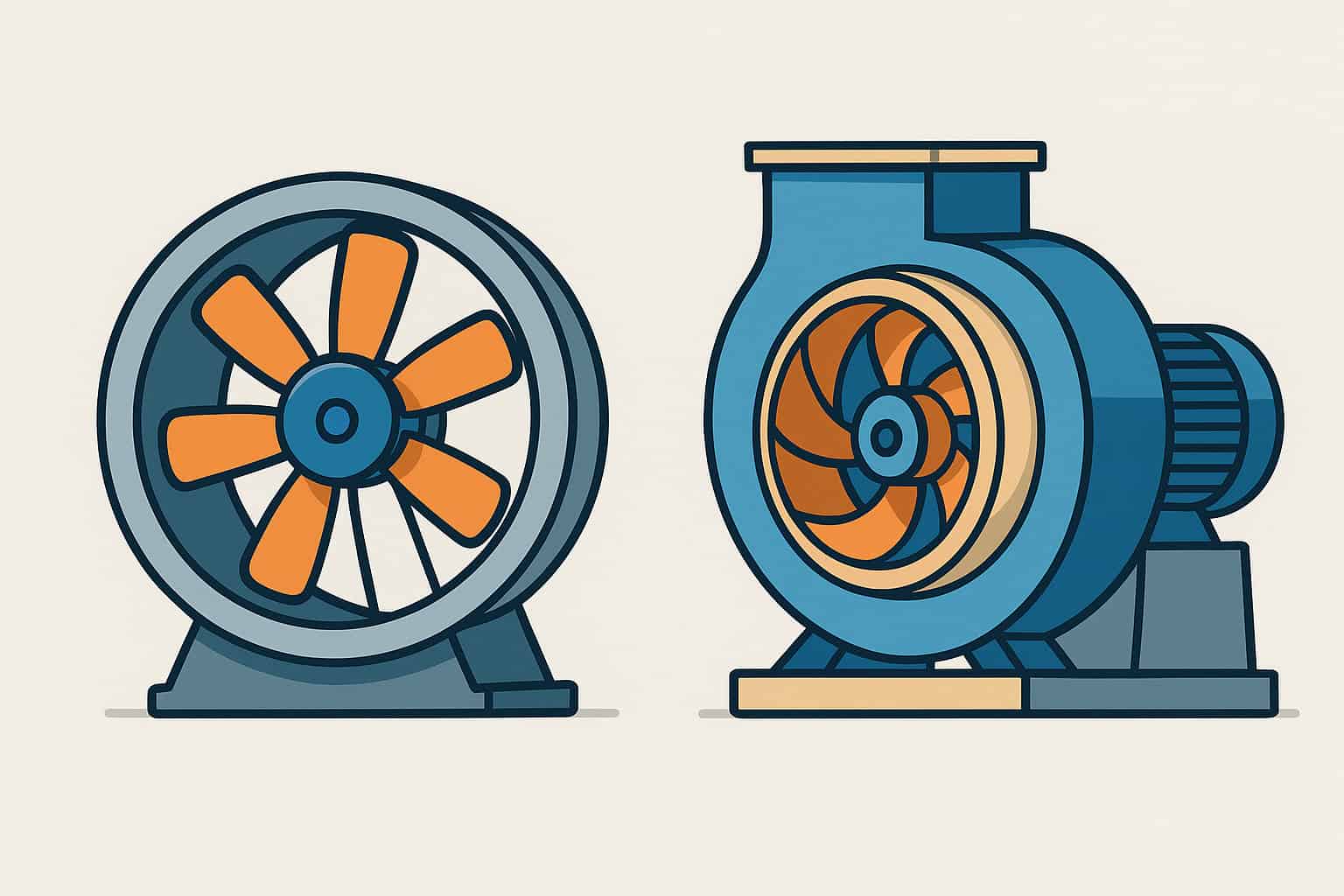
There are many different types of fans used in industrial plants, tunnels and mines, but most of them can be grouped into a few key aerodynamic families and functional categories. From a fluid-dynamics point of view, the three main fan designs are axial fans, centrifugal fans and mixed-flow fans. From a system perspective, these designs are configured as main fans, booster fans and auxiliary fans to create complete ventilation systems for mining and industry.
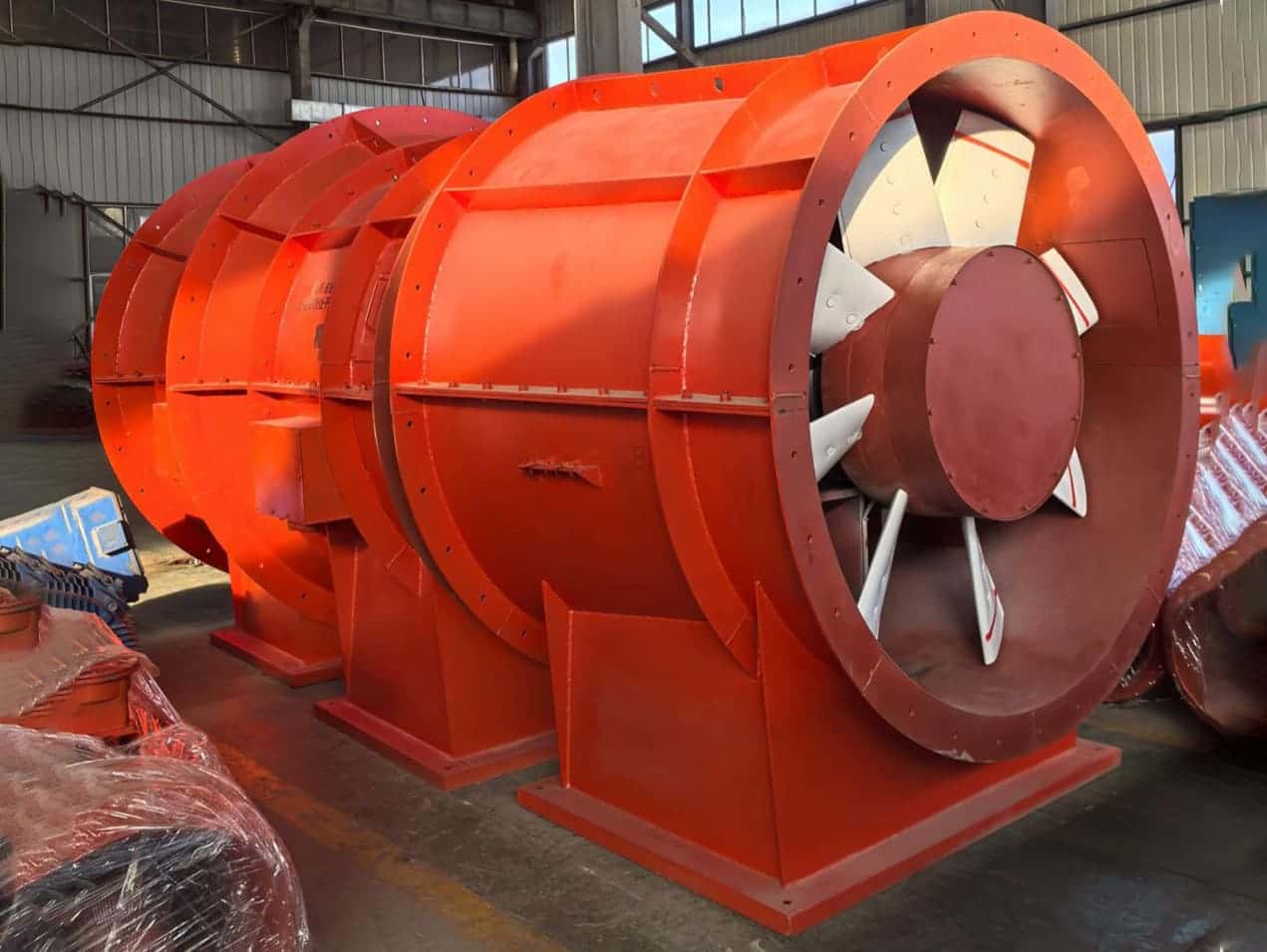
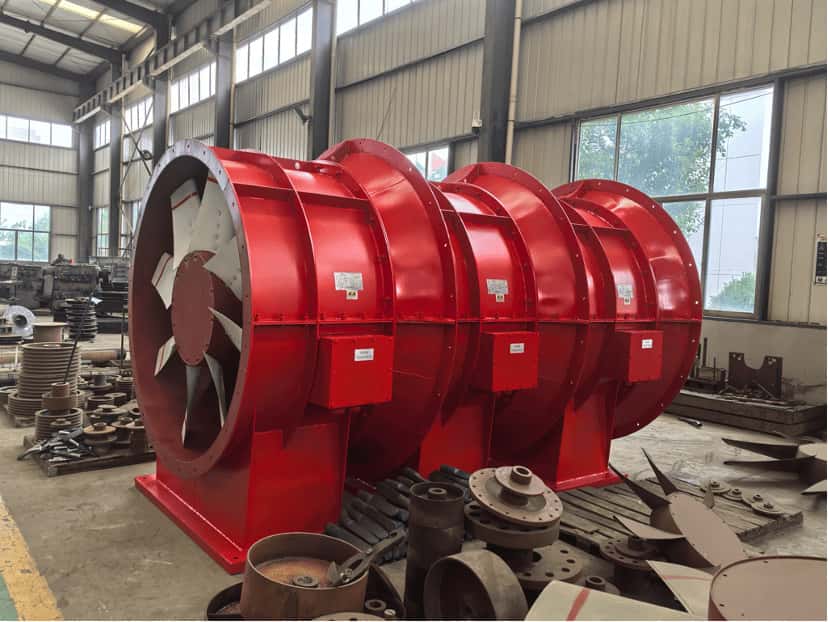
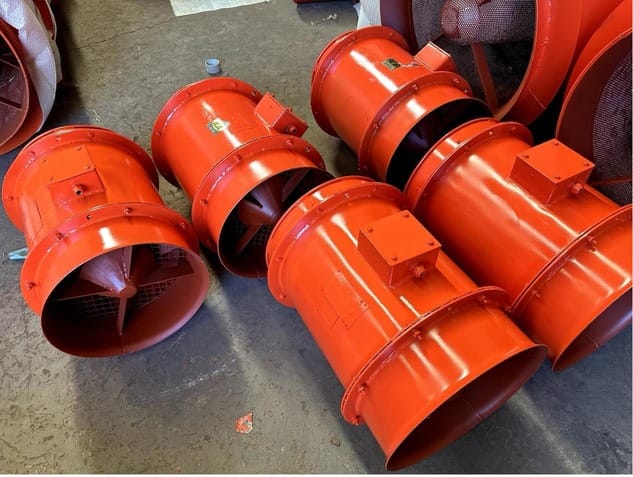
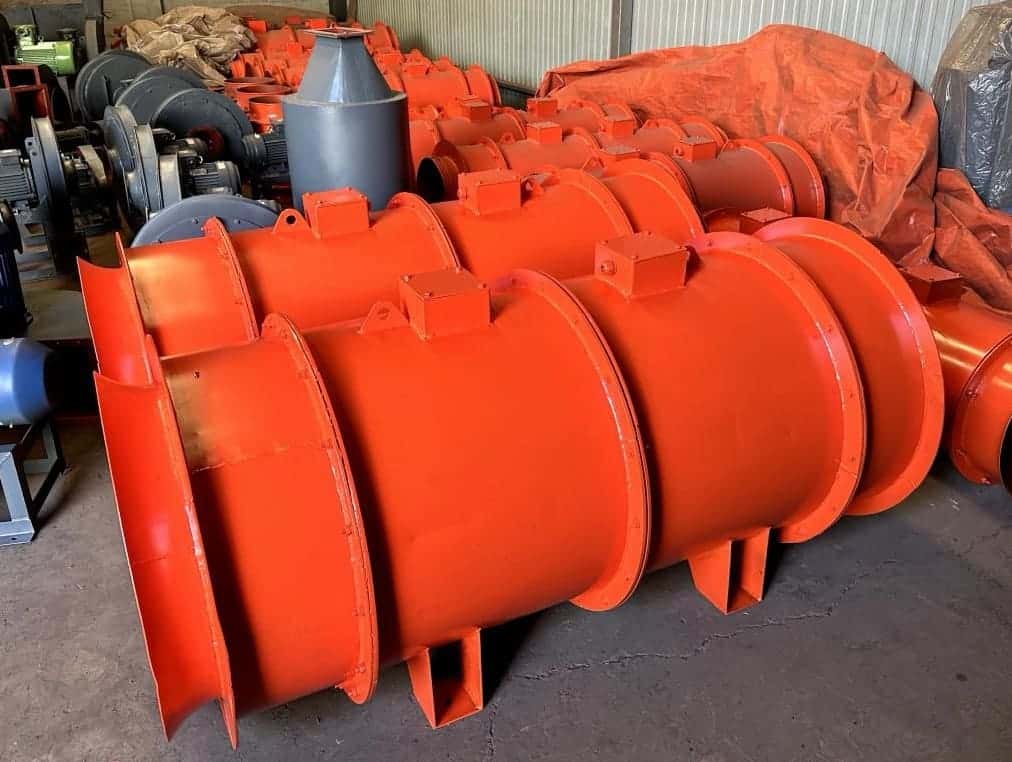
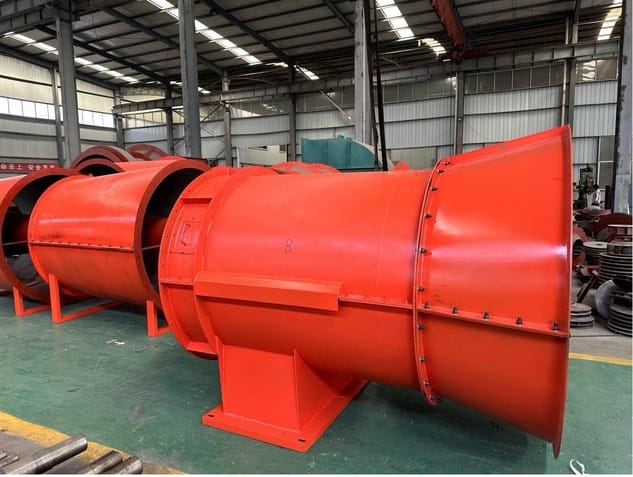
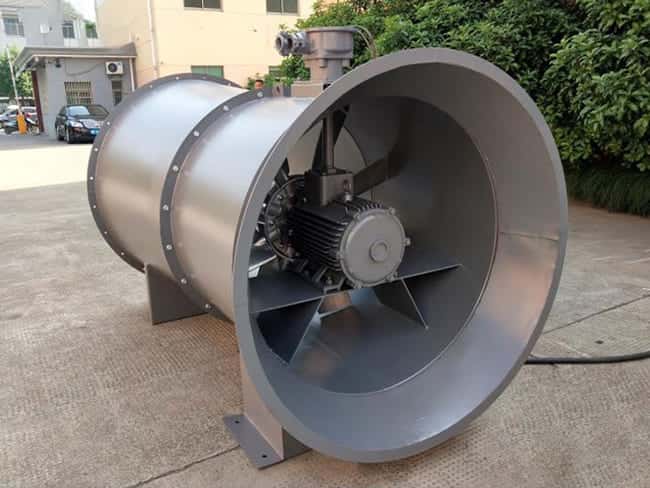
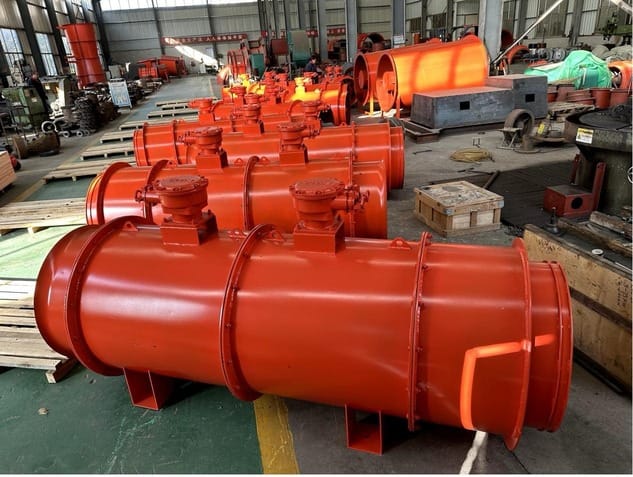
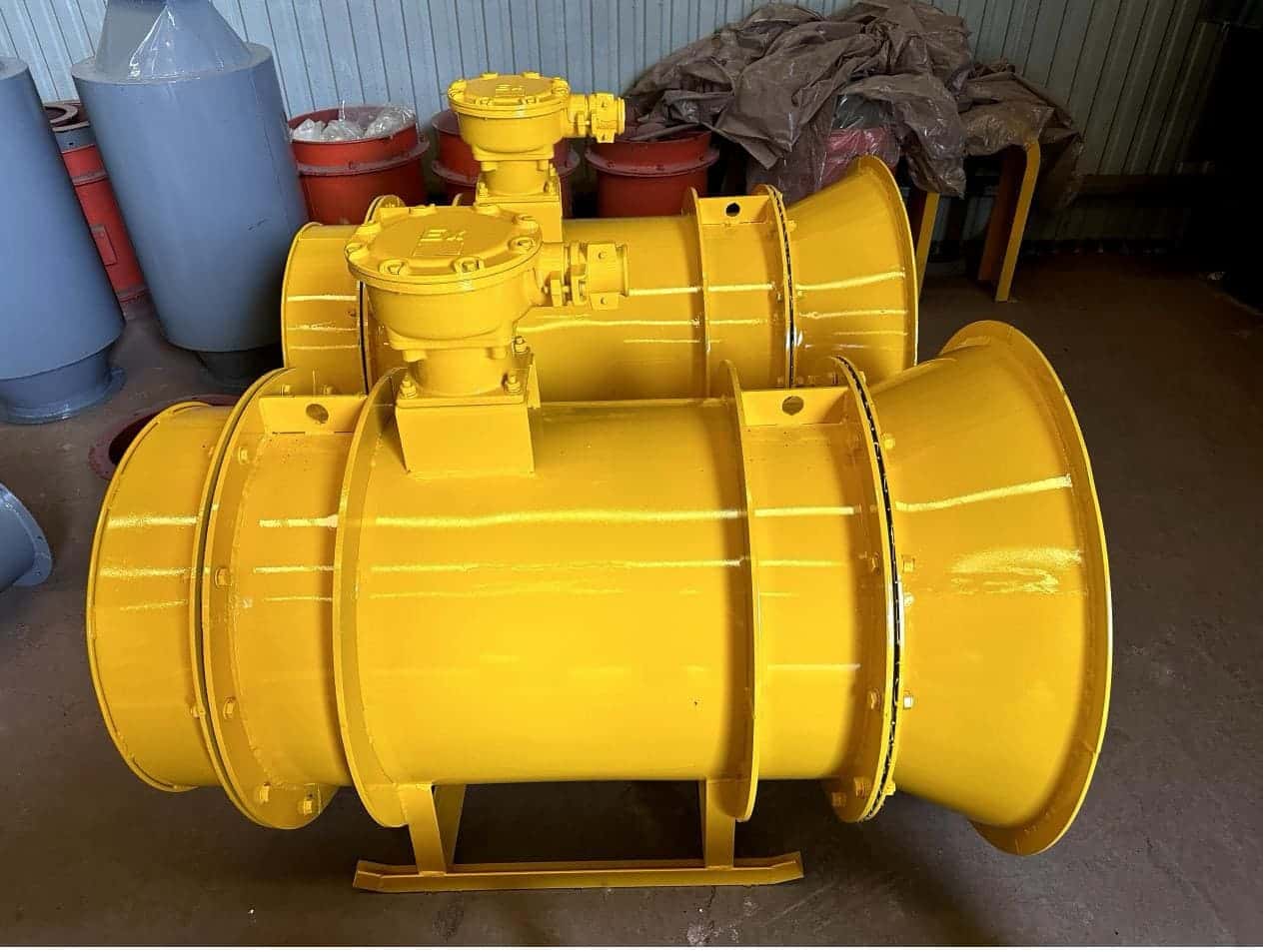
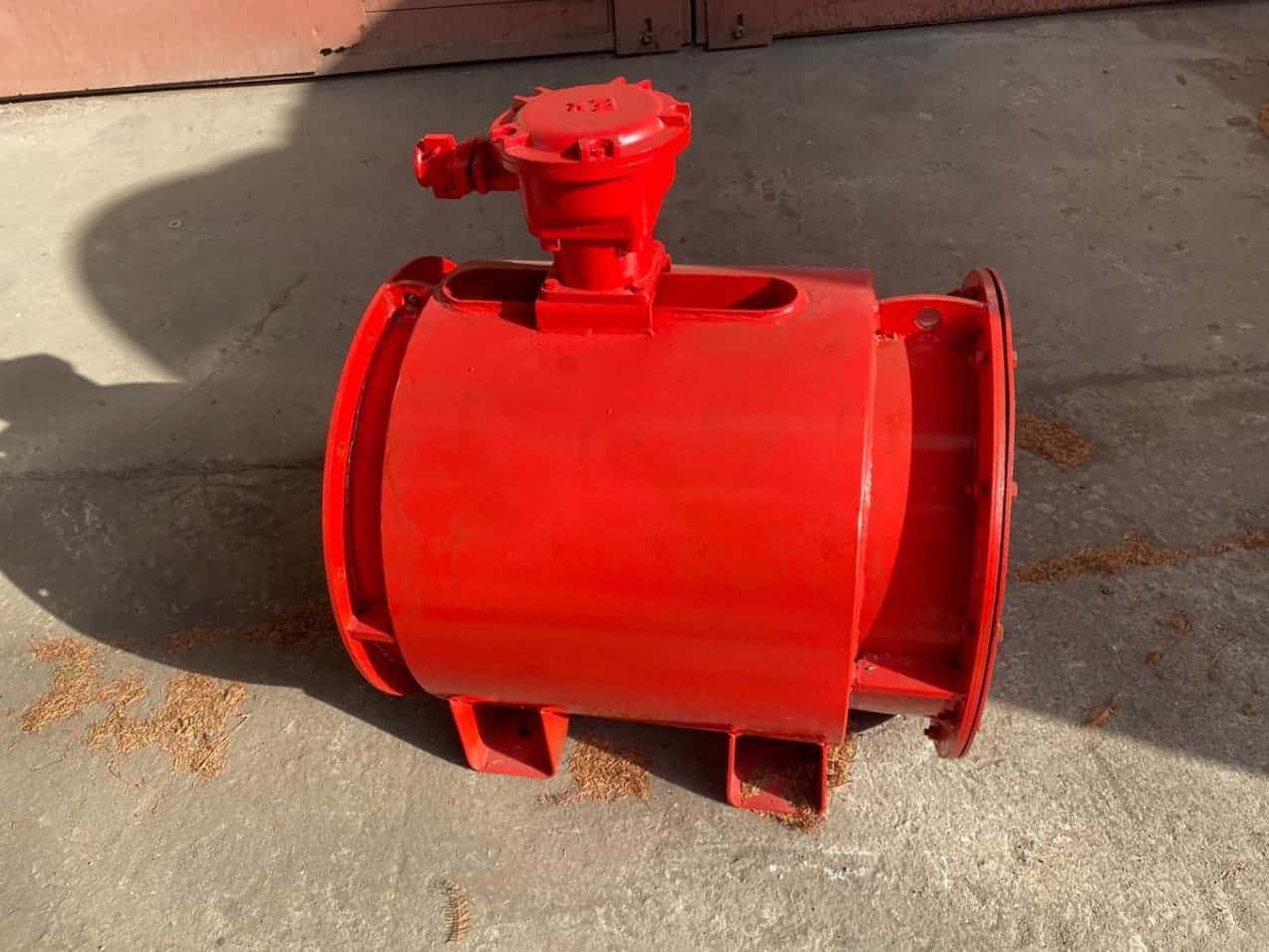
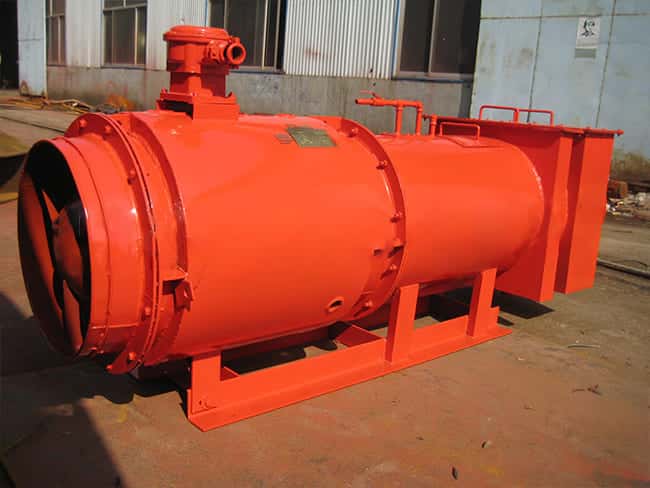
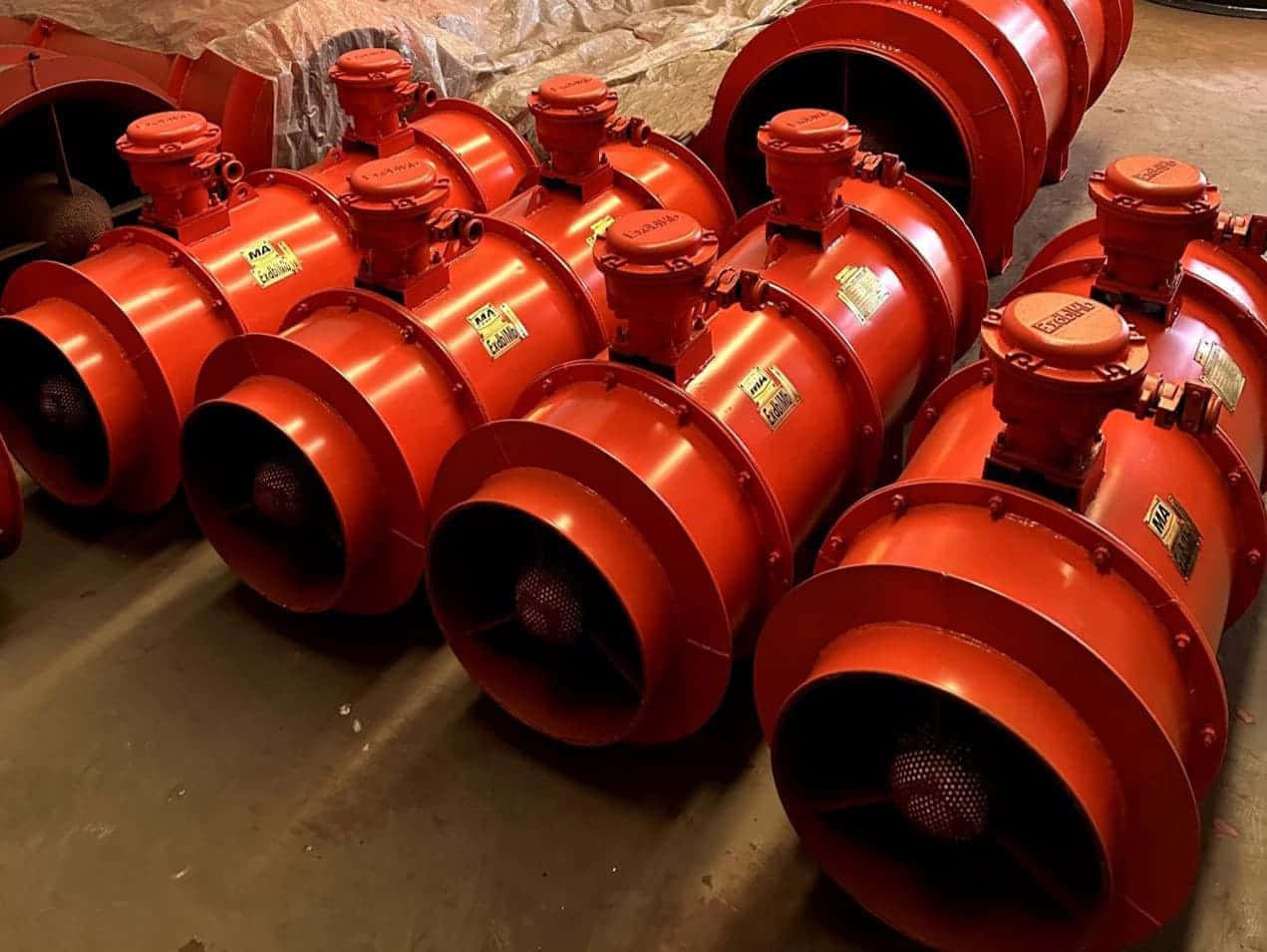
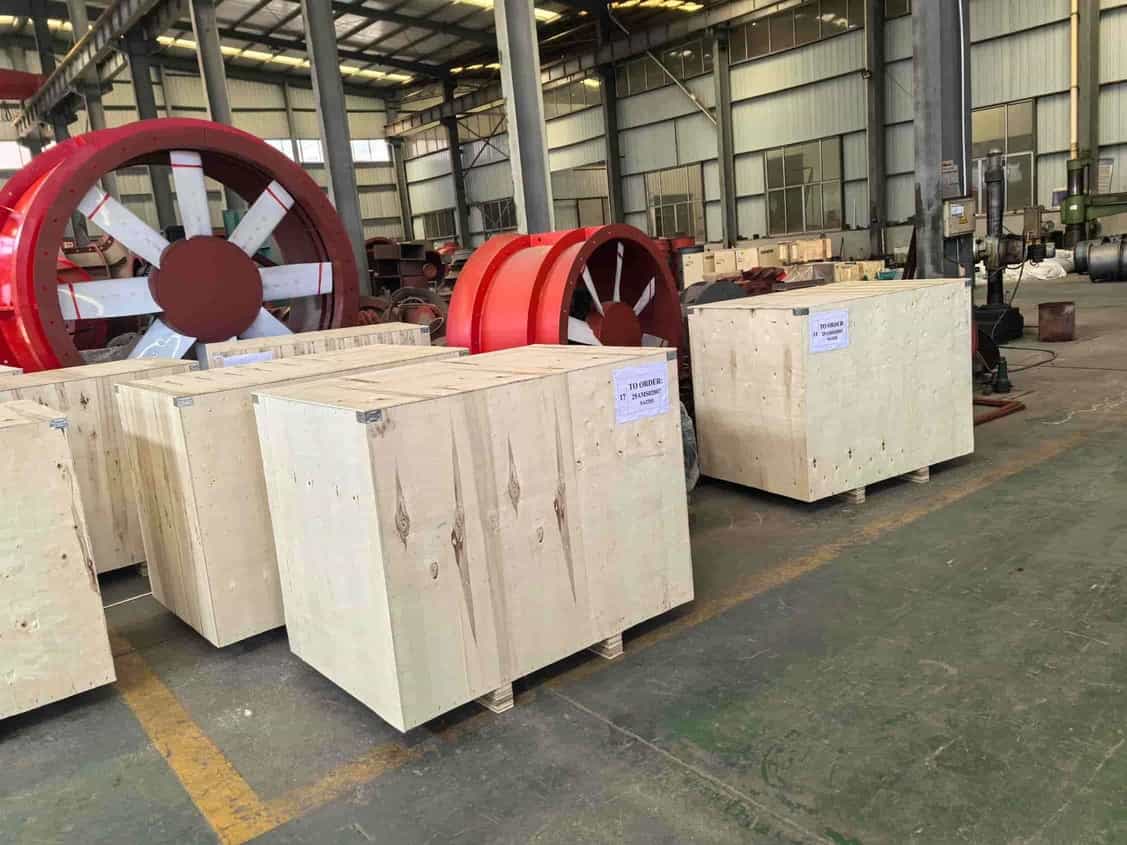
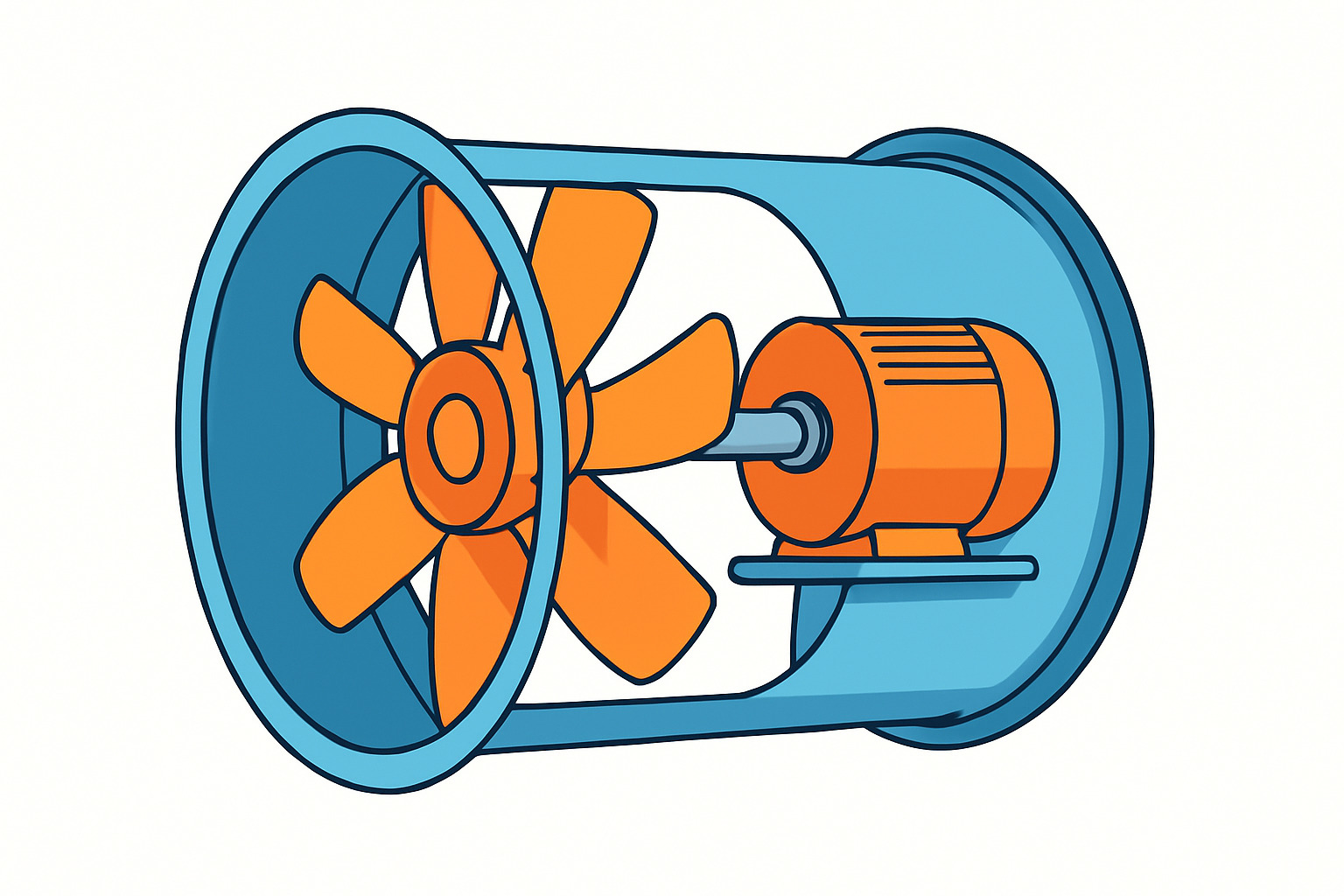
Axial fans move air parallel to the shaft. Common axial fan types include propeller fans, tube-axial fans and vane-axial fans. Propeller fans are simple and used for general low-pressure ventilation. Tube-axial fans place the impeller in a cylindrical casing and are widely used as duct fans for headings and workshops. Vane-axial fans add guide vanes to recover pressure and are used for demanding duties such as main mine fans, tunnel jet fans and high-performance industrial ventilation.
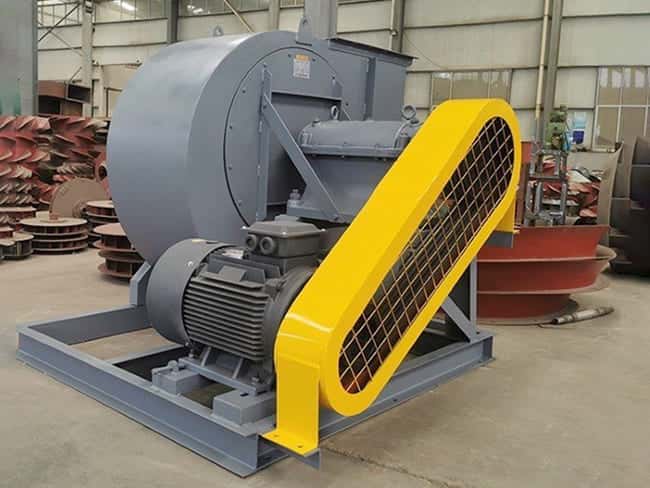
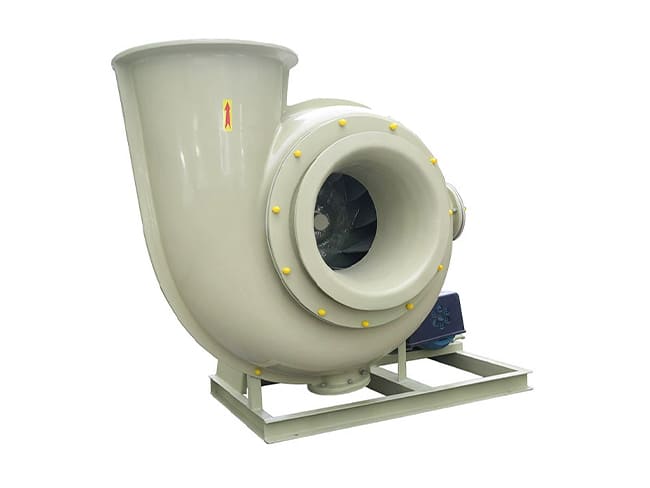
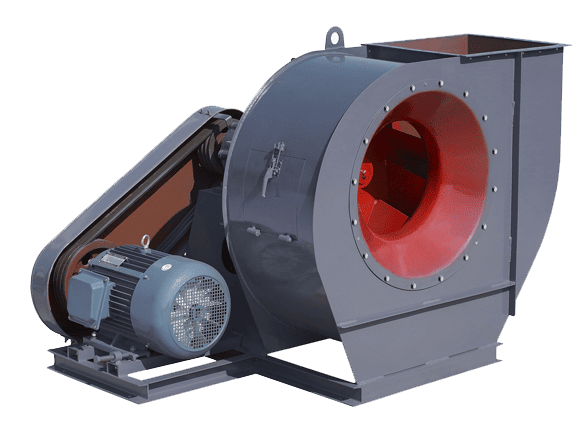
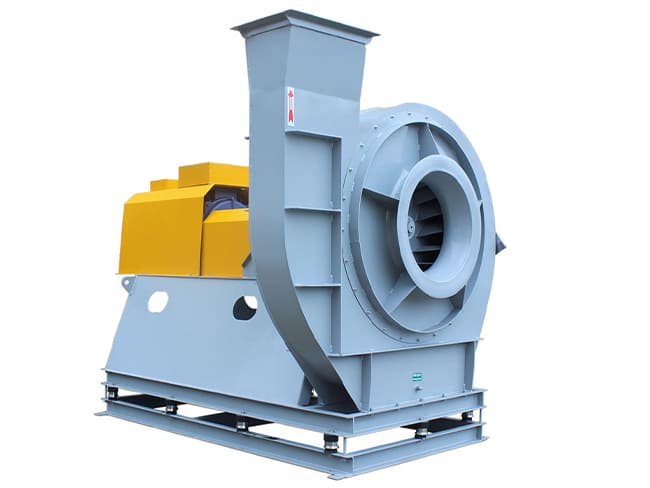
Centrifugal fans, often called blowers, draw air in along the shaft and discharge it radially. Different blade designs create different types of centrifugal fans: forward-curved, backward-curved, radial-blade and airfoil-blade fans. Forward-curved fans are common in low-pressure HVAC systems, while backward-curved and airfoil-blade fans are used for higher efficiency industrial duties. Radial-blade fans handle abrasive or heavily dust-laden gases, making them suitable for some mining, cement and mineral processing applications.
Mixed-flow fans combine axial and centrifugal characteristics. Air enters axially and leaves in a direction between axial and radial. These fans provide a compromise between the high volume of axial fans and the higher pressure capability of centrifugal fans. They are used in space-constrained installations where medium pressure and good efficiency are required, including some tunnel and underground ventilation duties.
Looking at function in a mining or tunnel ventilation system, the main types of fans are labelled as main fans, booster fans and auxiliary fans. Main fans are large axial or centrifugal units installed on shafts or portals to drive airflow through the entire network. Booster fans are installed in series in specific branches to increase pressure and airflow to deep or high-resistance districts. Auxiliary fans are smaller, usually axial fans connected to ducts, used to ventilate blind headings, crosscuts and stopes.
Additional special-purpose fan types include jet fans mounted in tunnels, ID and FD fans for boilers and furnaces, roof exhaust fans for buildings, cooling tower fans for heat rejection and HVLS fans for large open spaces. Each type is optimized for its duty in terms of airflow, pressure, temperature, dust loading and noise.
In summary, while there are many commercial models, the main types of industrial and mining fans fall into axial, centrifugal and mixed-flow design families and into main, booster and auxiliary functions within a ventilation system. Understanding these categories helps engineers select the right fan for each application.