
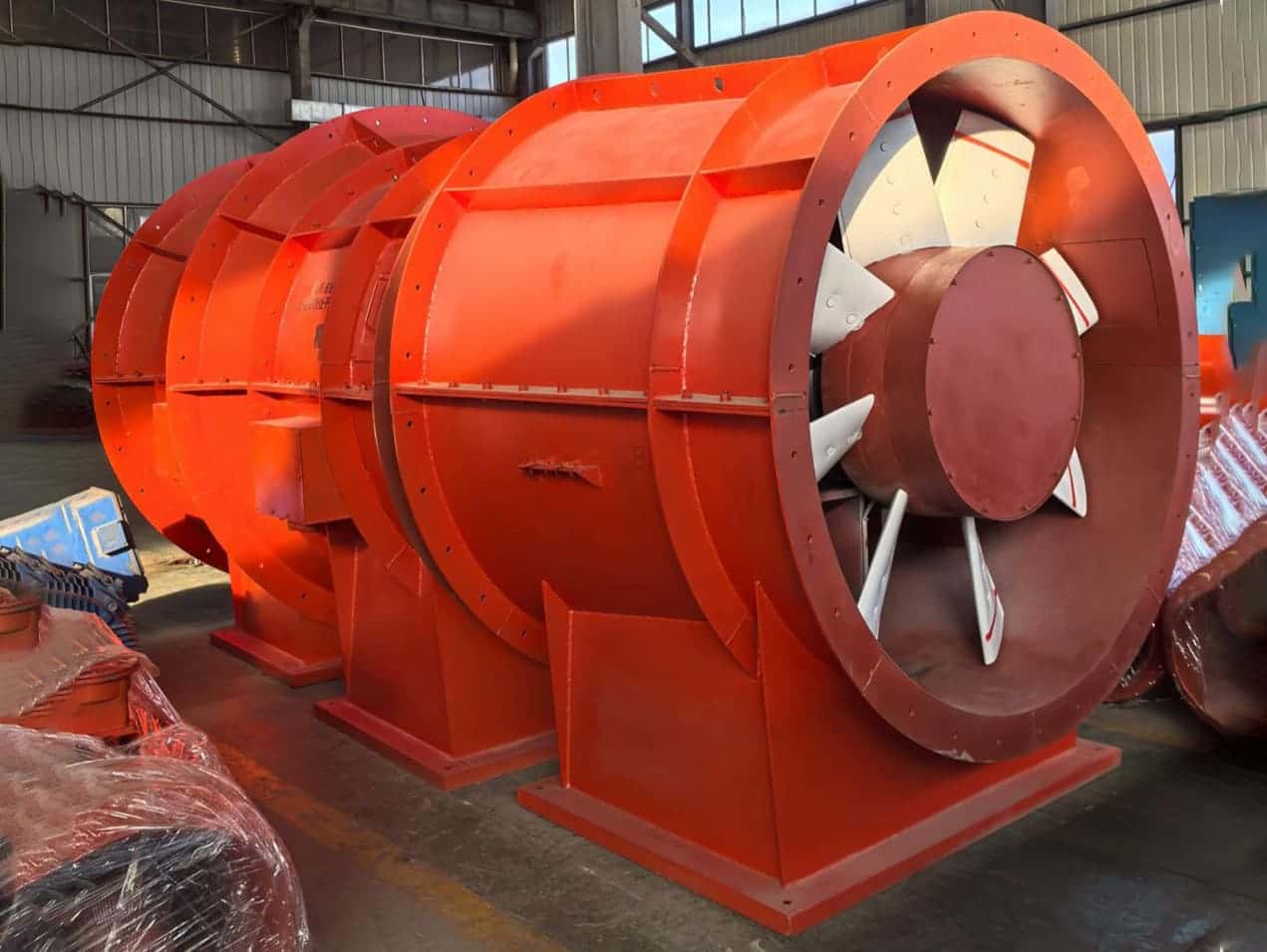
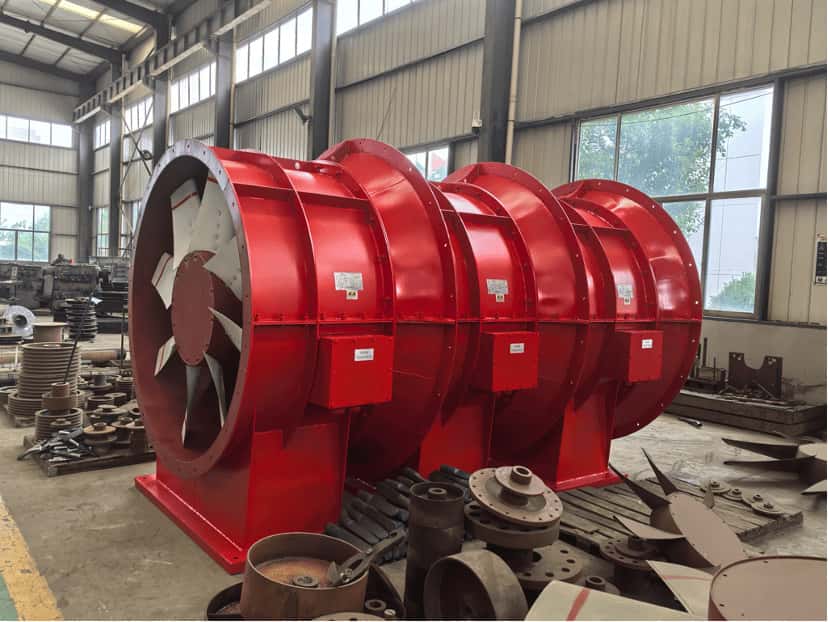
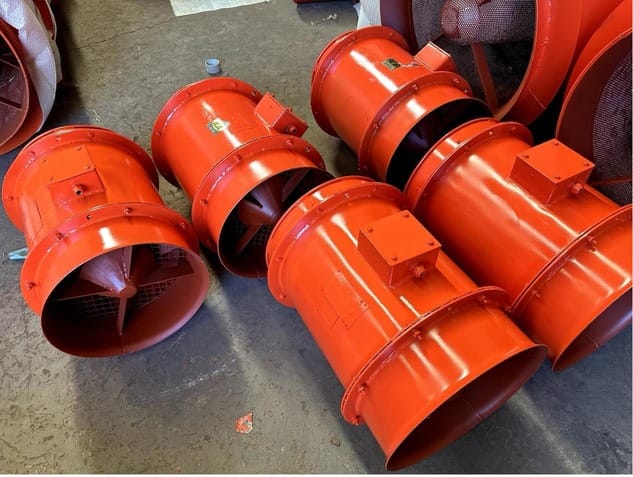
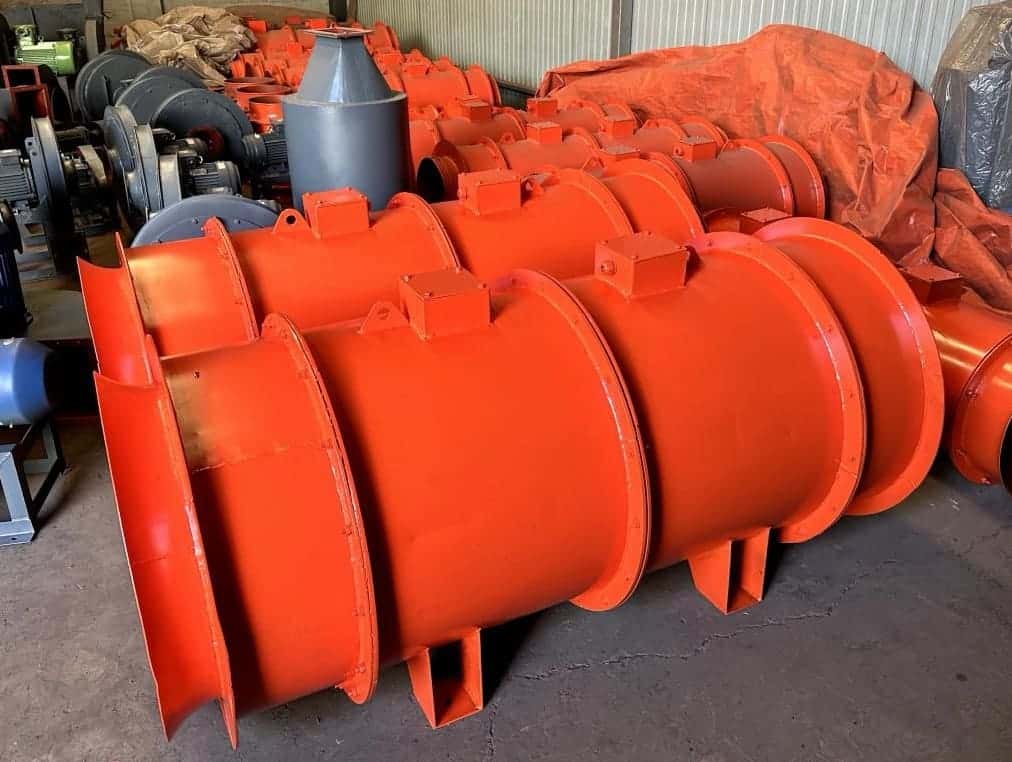
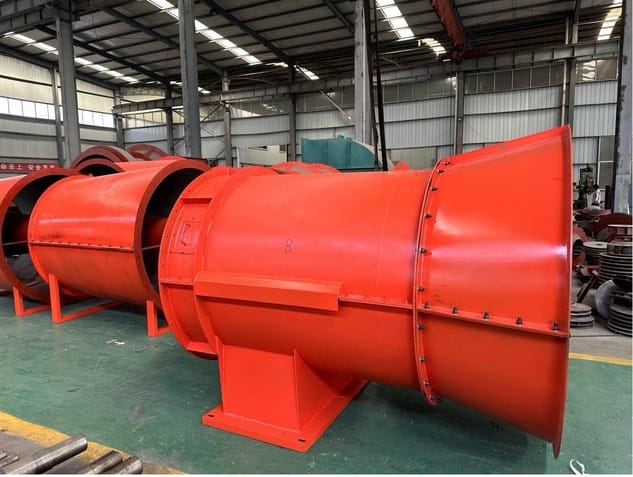
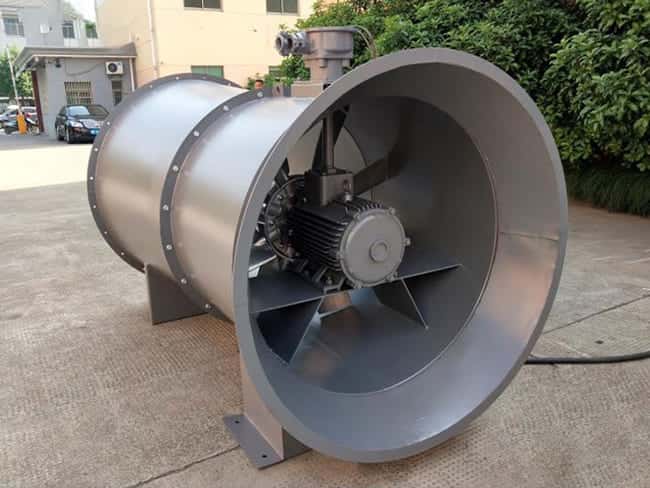
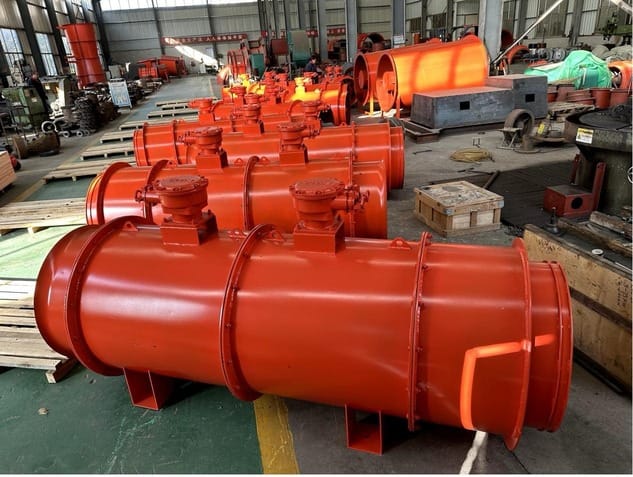
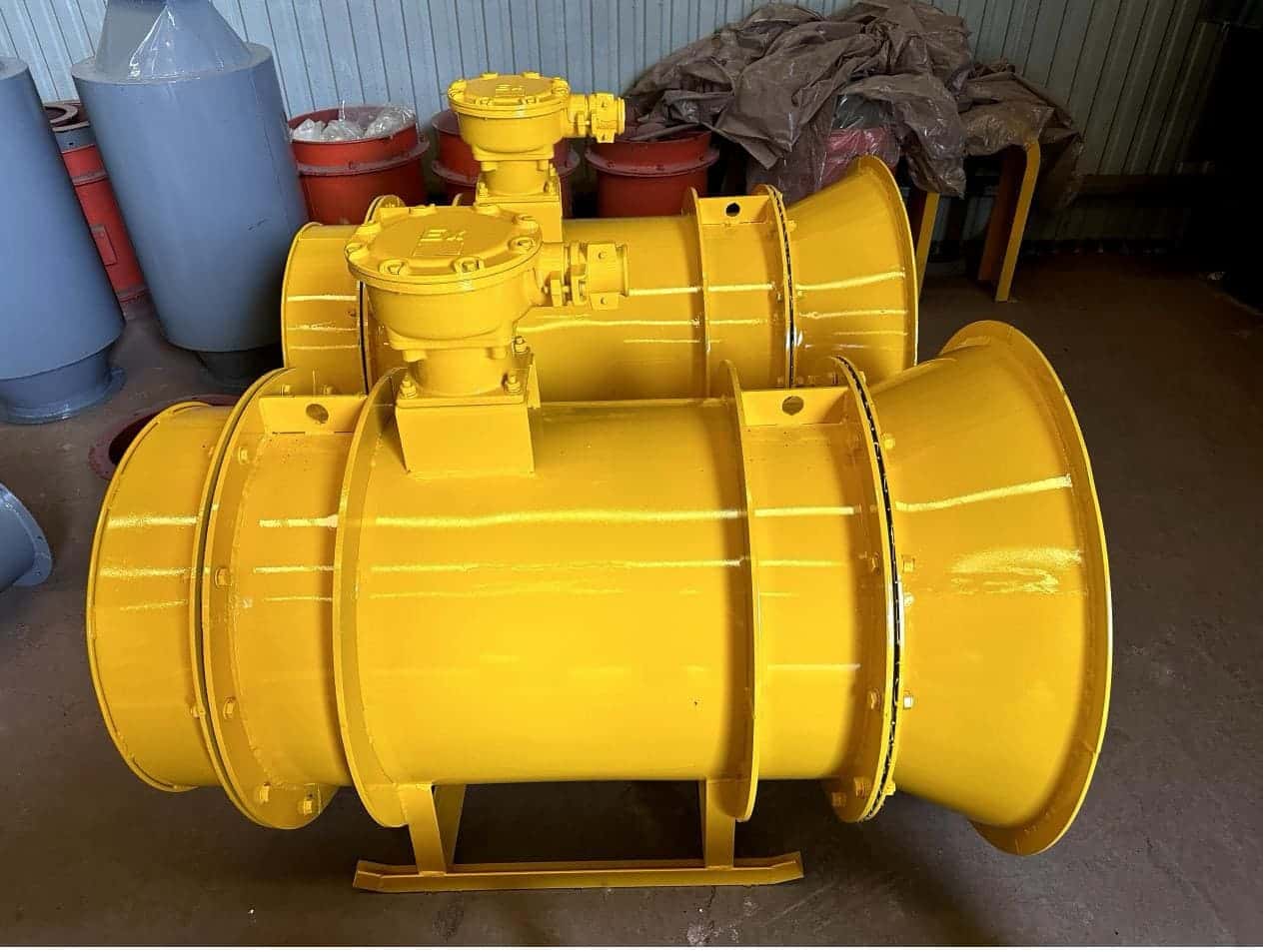
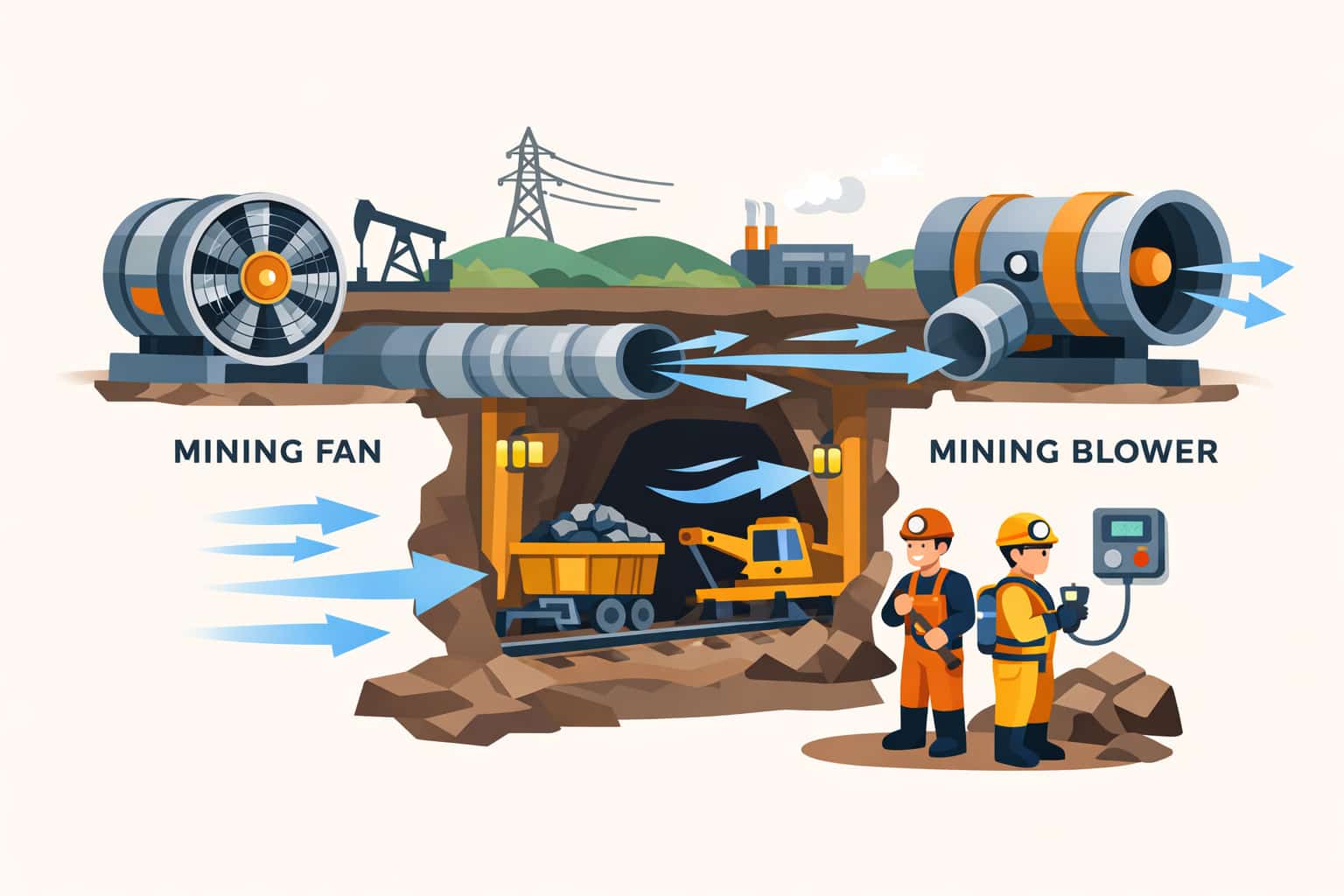
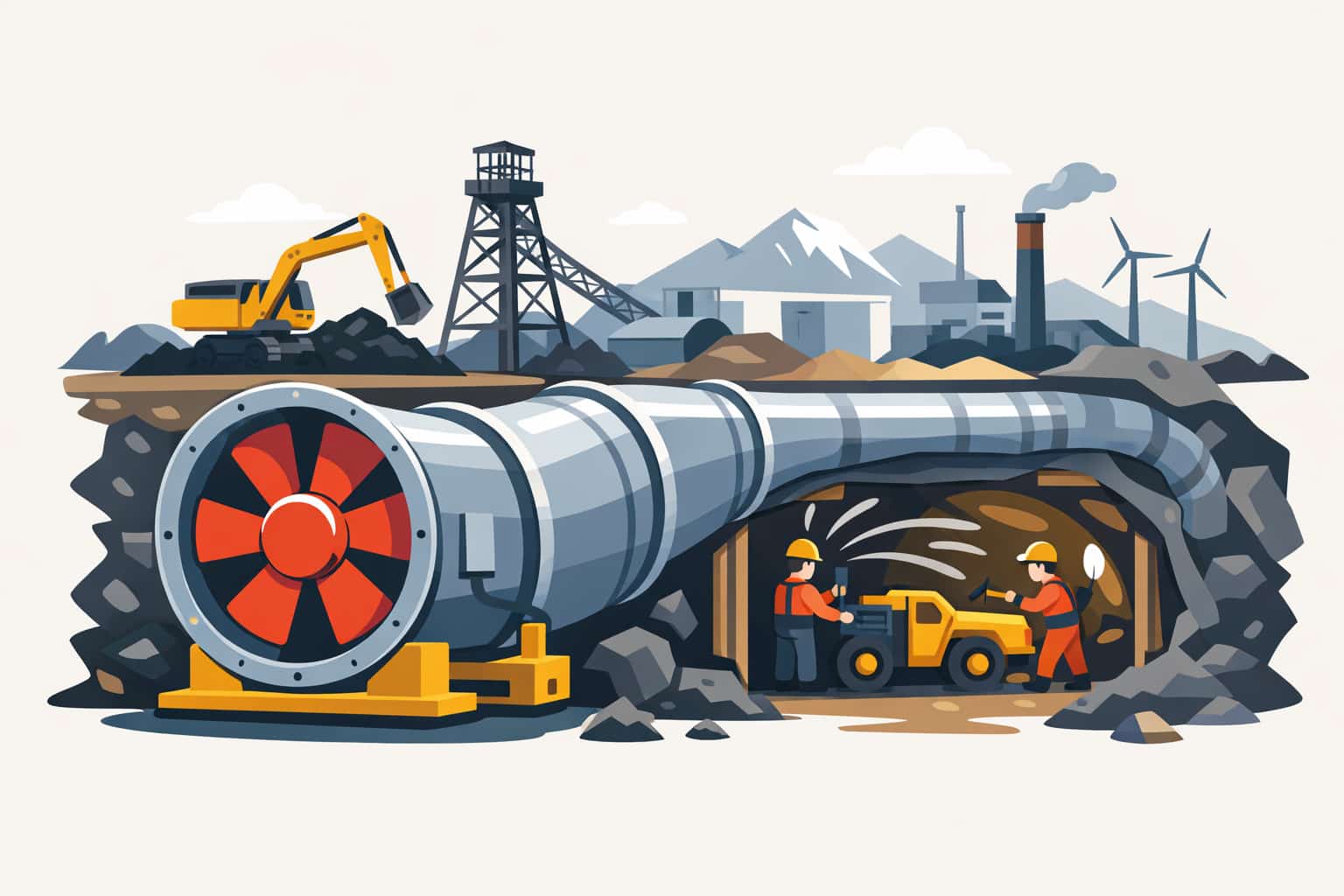
The different types of fans used in mines can be grouped by their role in the ventilation system and by their aerodynamic design. Together, these fans form a complete ventilation solution that moves air through underground workings and associated industrial facilities such as crushing plants, workshops, and processing buildings.
By function within the mine ventilation system, three broad categories are commonly recognized:
- Main (primary) ventilation fans: Large axial or centrifugal fans installed at shafts or portals. They provide the primary pressure difference that drives airflow through the entire mine network and typically run for long periods, often continuously.
- Booster fans: Fans installed within the ventilation network to increase pressure and airflow in specific branches or districts, especially in deep or high-resistance areas. Their use requires careful engineering because they alter pressure distribution and airflow splits.
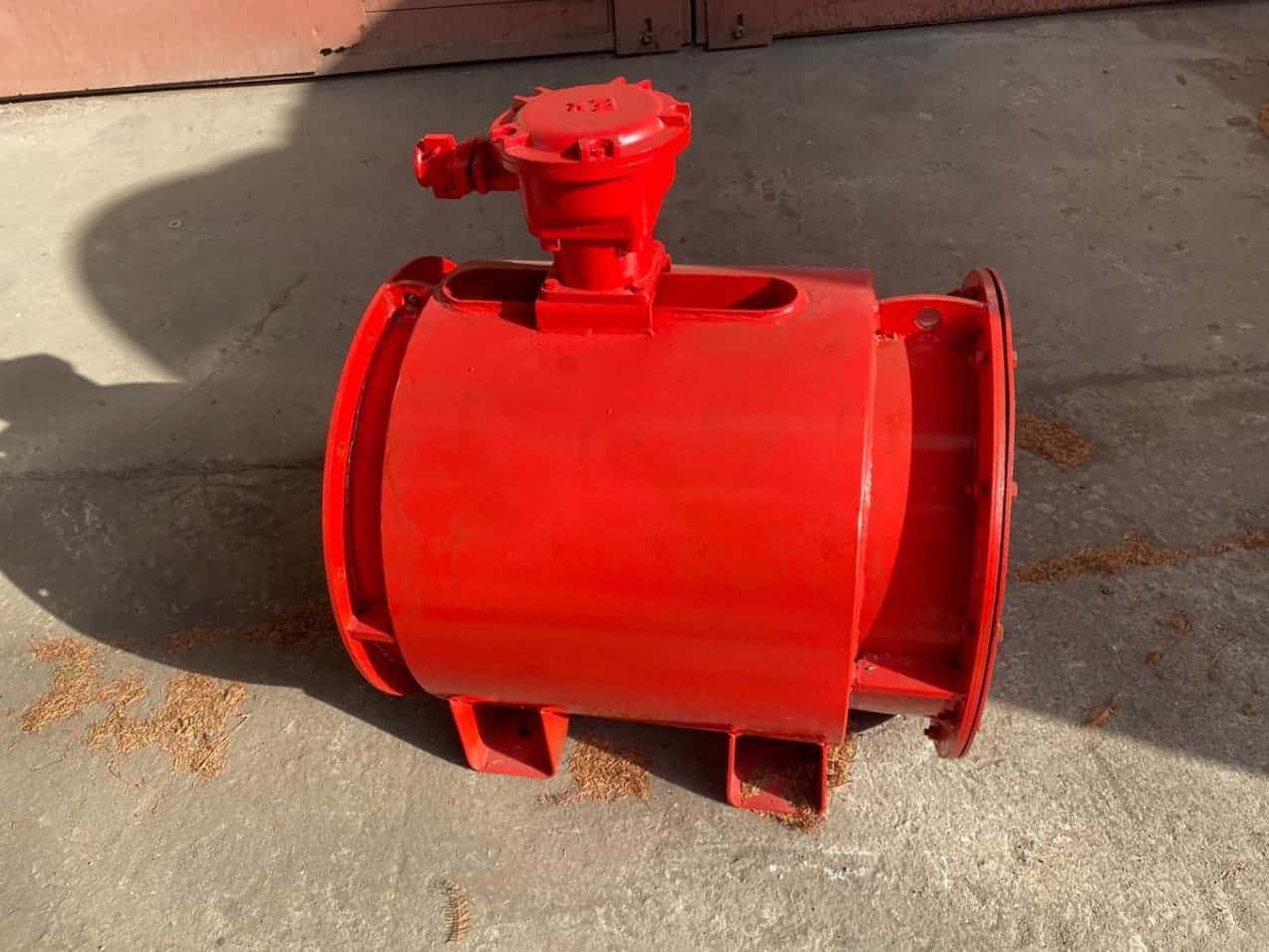
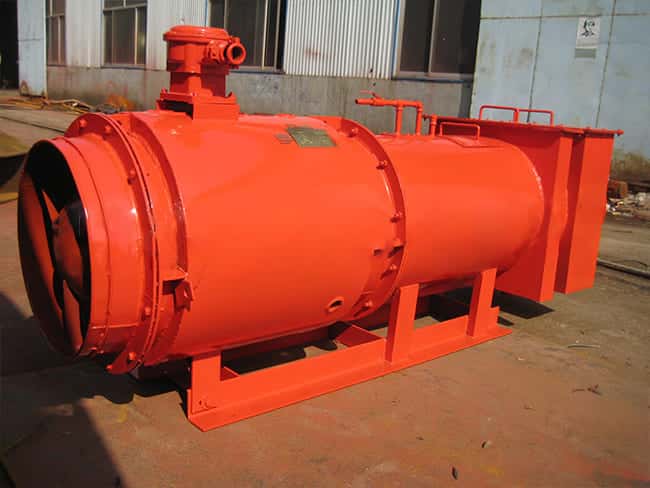
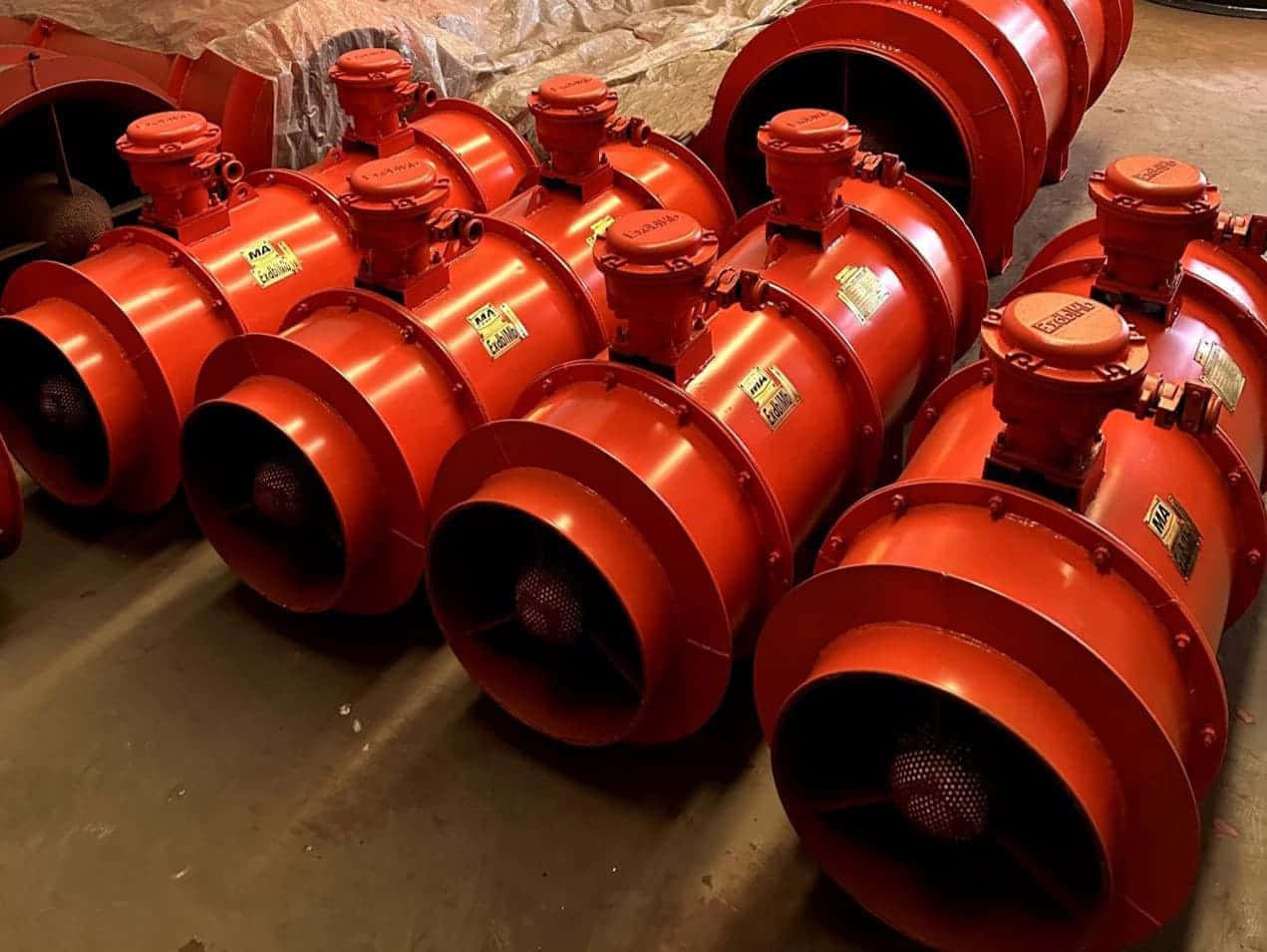
- Auxiliary (local) ventilation fans: Smaller fans used with ducting to ventilate headings, blind ends, and crosscuts. They support development and production faces by delivering fresh air directly to the workplace or extracting contaminated air from it.
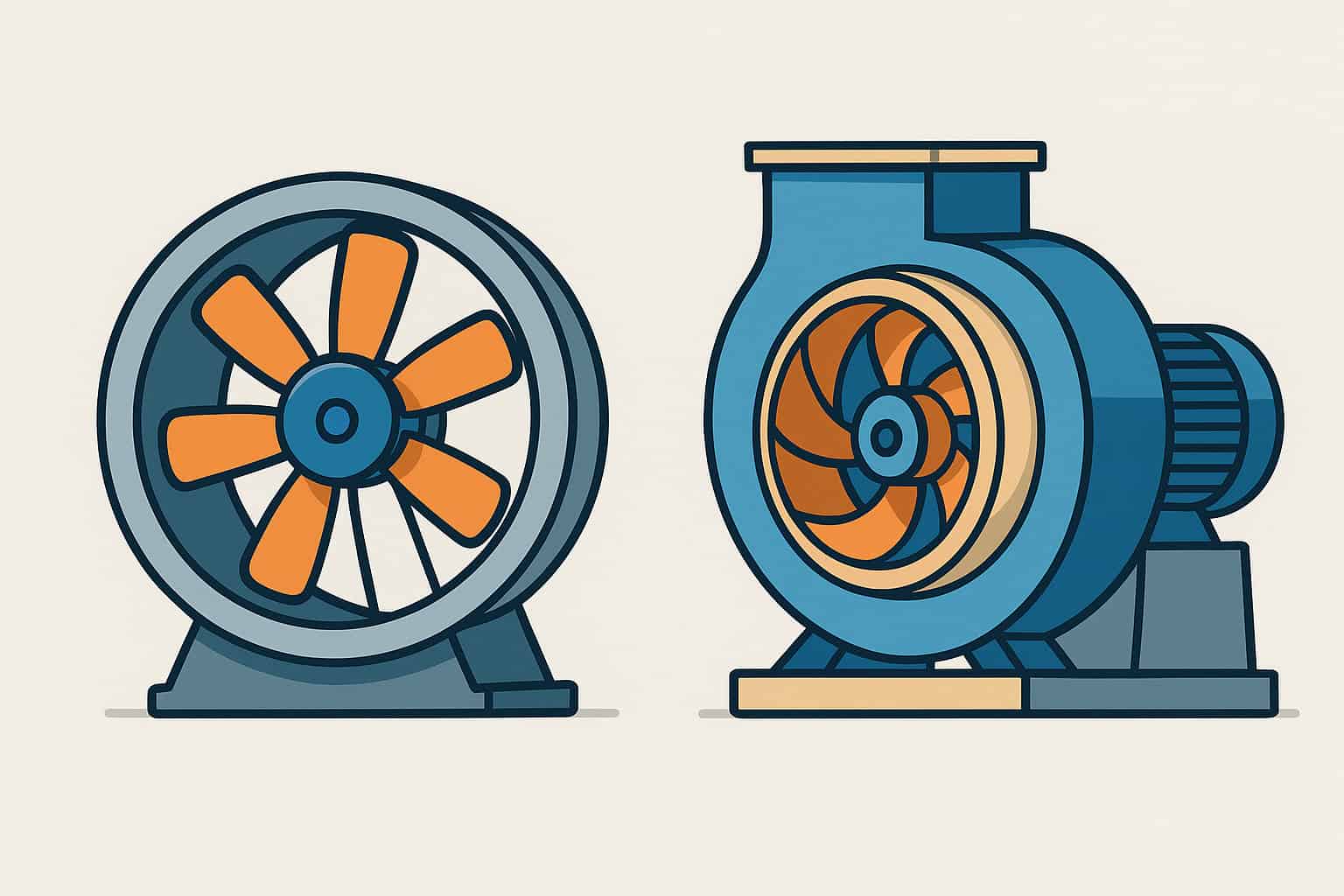
From an aerodynamic perspective, mine ventilation fans are generally either axial or centrifugal in design:
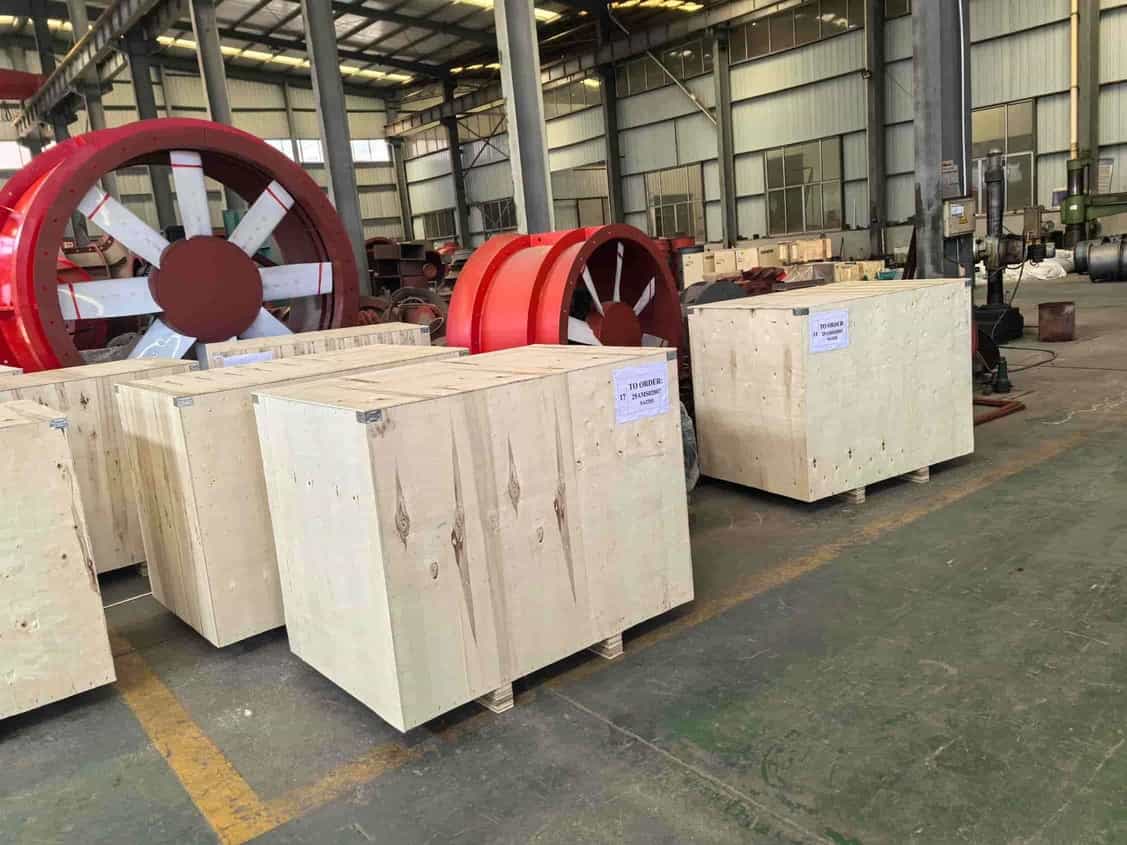
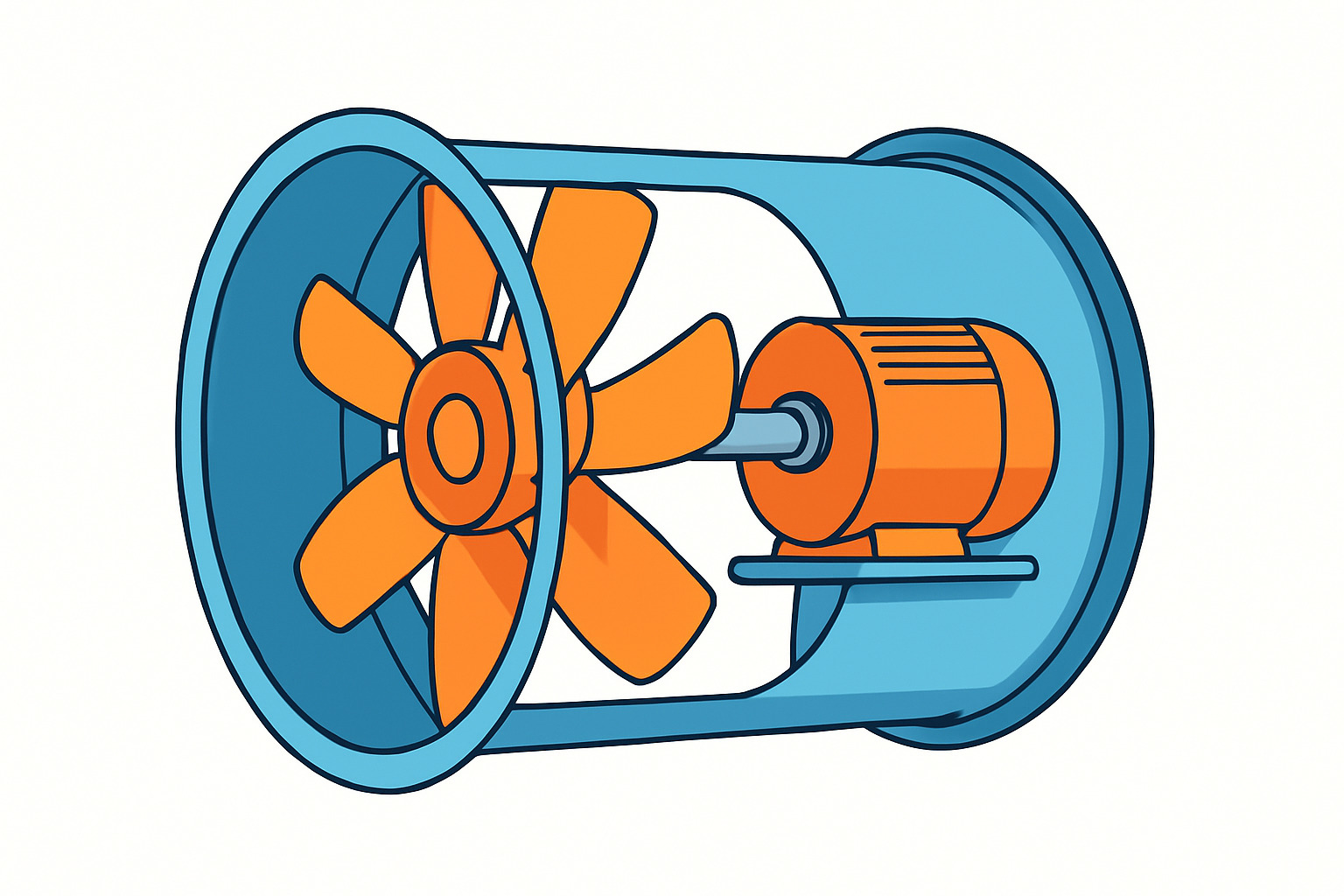
- Axial fans: Move air parallel to the fan axis, like a propeller. They are widely used for main ventilation and large-volume duties because they can deliver high airflows efficiently at moderate to high pressures. Variants such as tube-axial and vane-axial fans, including designs with adjustable-pitch blades, allow flexible performance for different operating conditions.
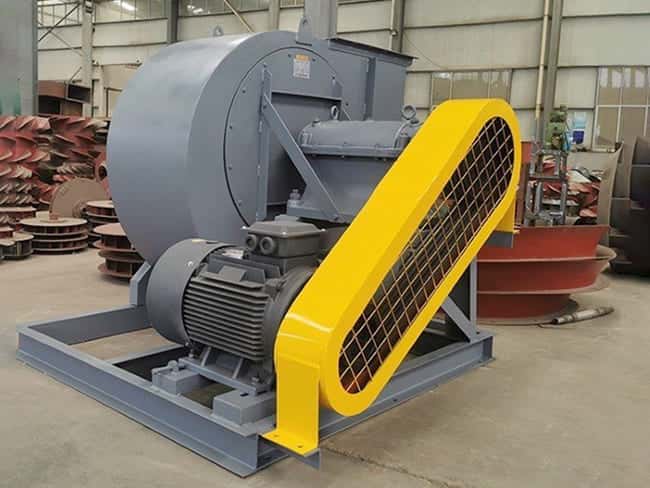
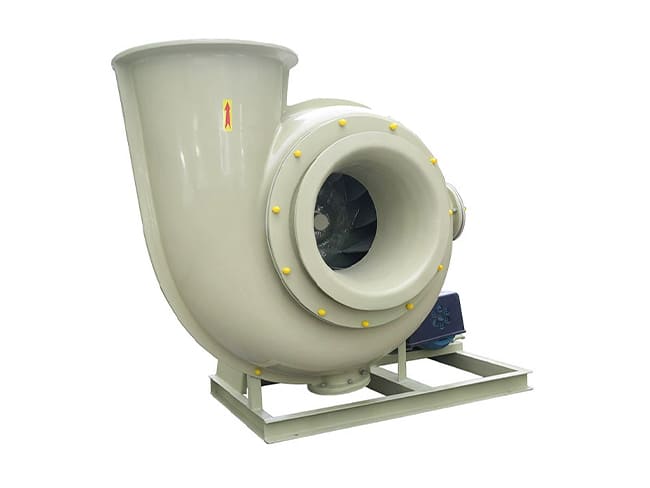
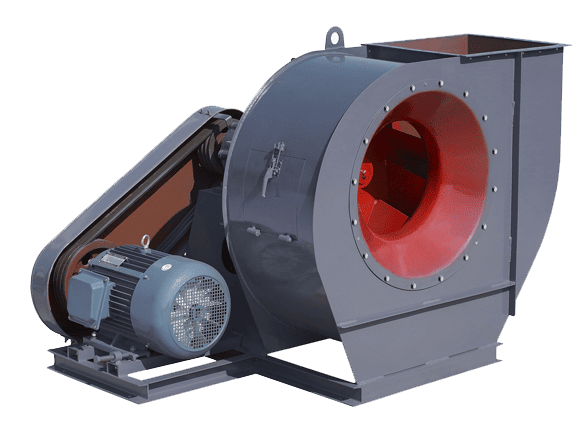
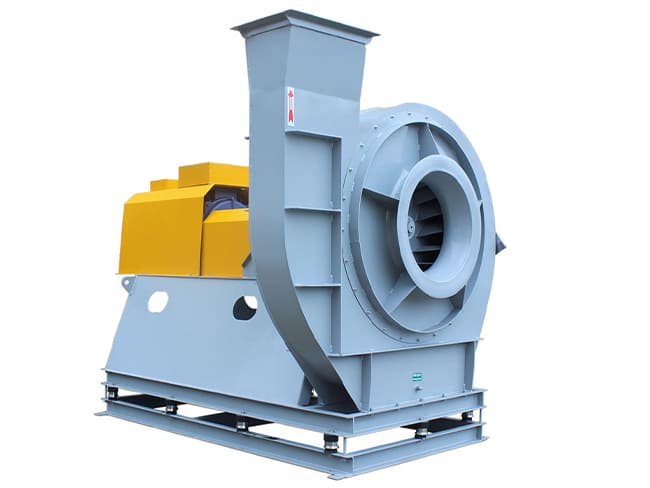
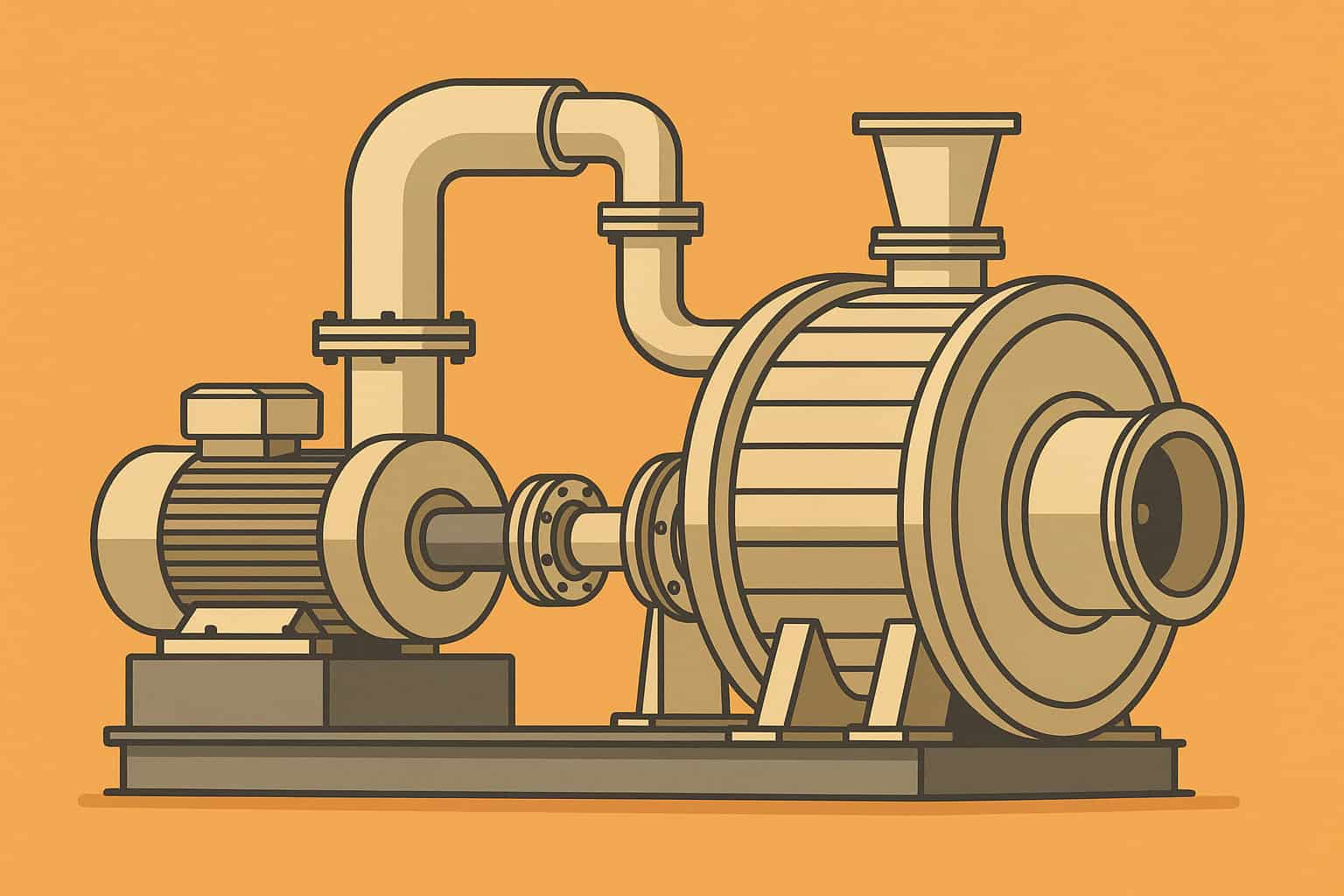
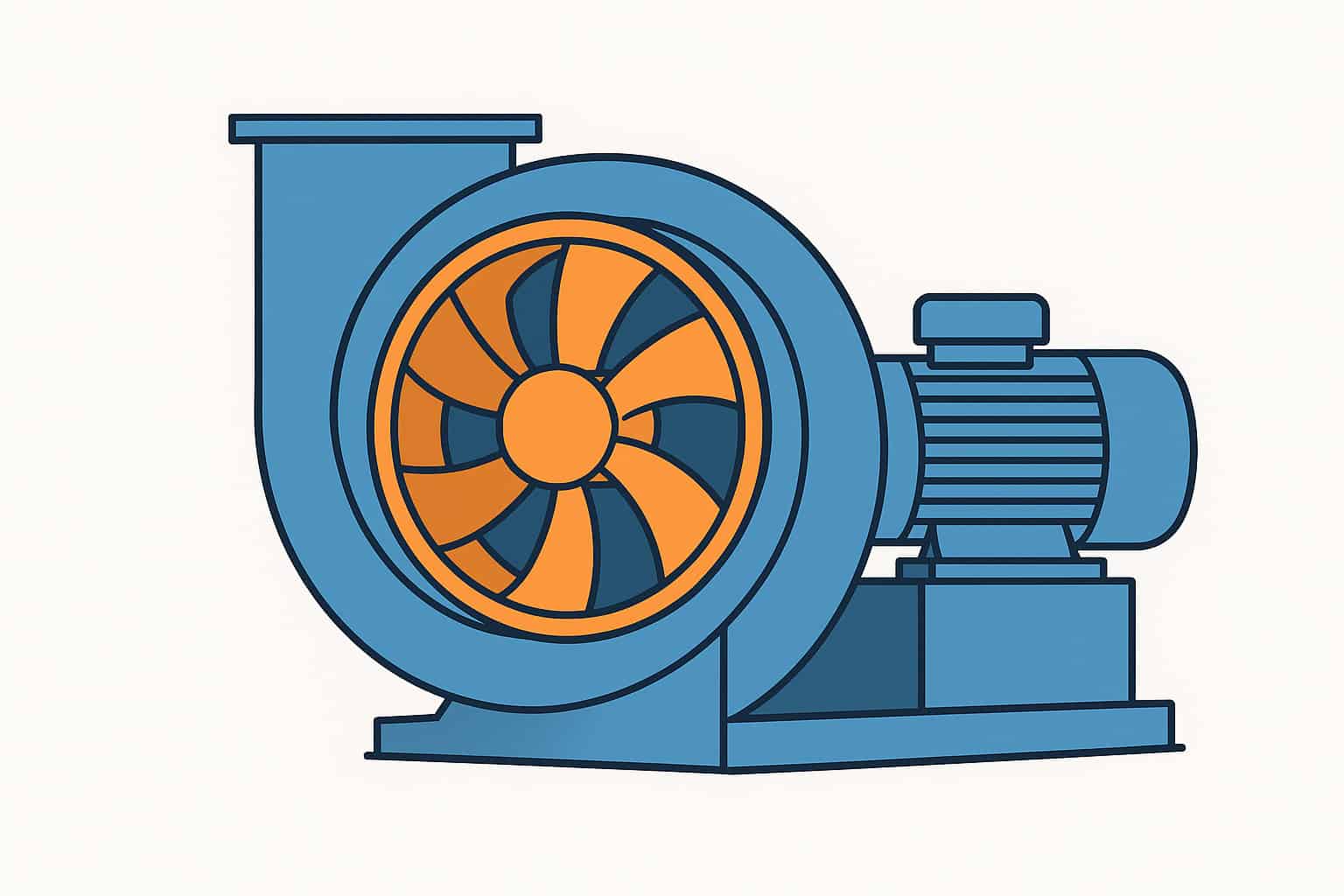
- Centrifugal fans: Move air radially outward from the impeller into a scroll casing, converting velocity into static pressure. They are chosen when higher static pressure is required, such as high-resistance duct systems, long airways, or dust extraction and filtration circuits around mining and industrial facilities.
Some mines also use special-purpose fans such as localized exhaust fans over conveyors and transfer points, cooling fans for heat-intensive areas, and fans integrated into dust collection and filtration equipment. These units may be either axial or centrifugal, depending on the required duty and the connected duct or filtration system.
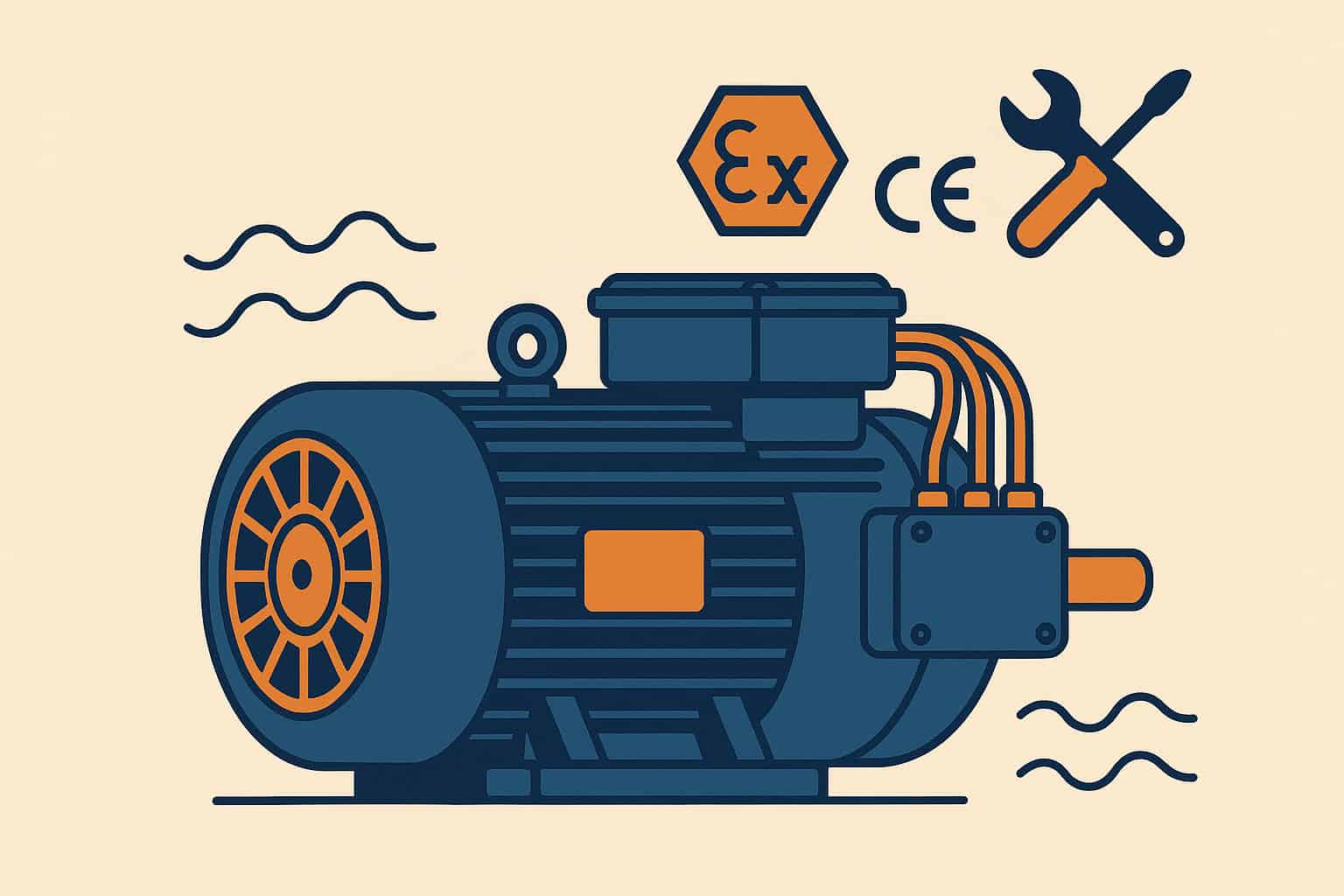
When selecting between these types of fans, mine engineers look at the required duty point (airflow and static pressure), network resistance, installation constraints, energy efficiency, and any applicable safety requirements such as explosion-proof ratings. In practice, most operations use a combination of main, booster, and auxiliary fans, with both axial and centrifugal designs, to build a ventilation system that is reliable, efficient, and capable of adapting to the mine’s changing layout and production demands.