
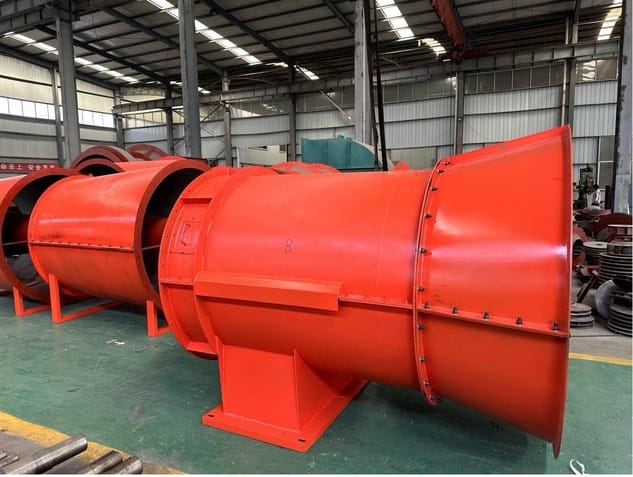
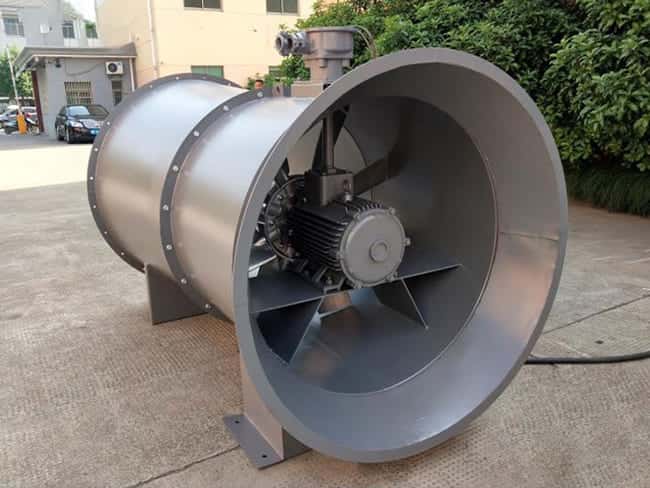
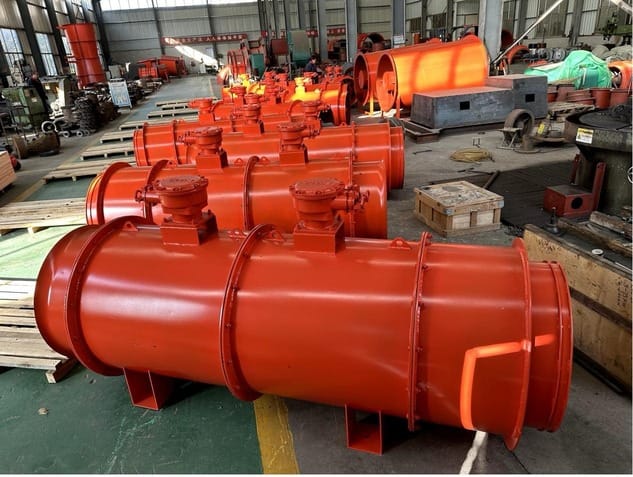
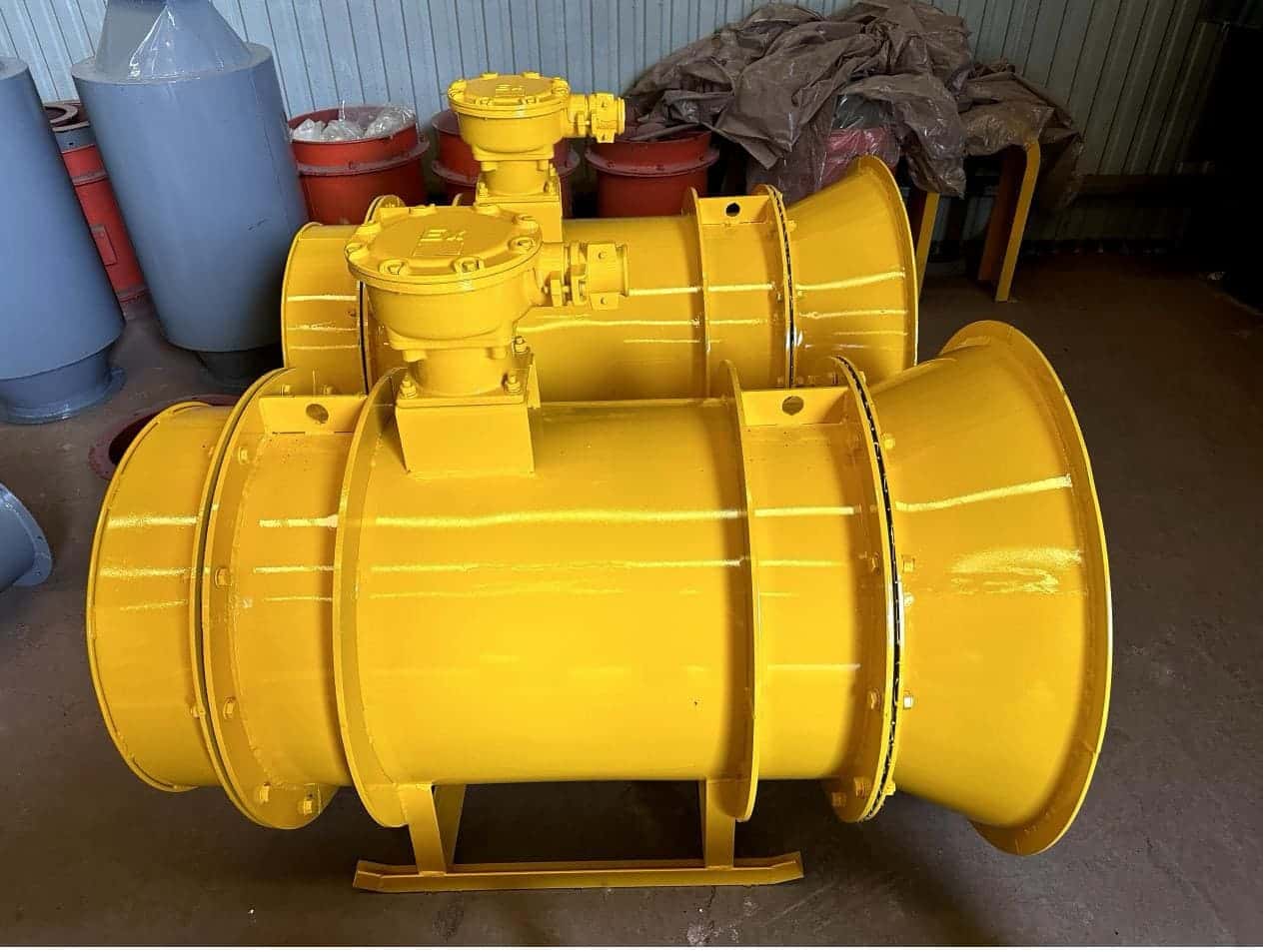
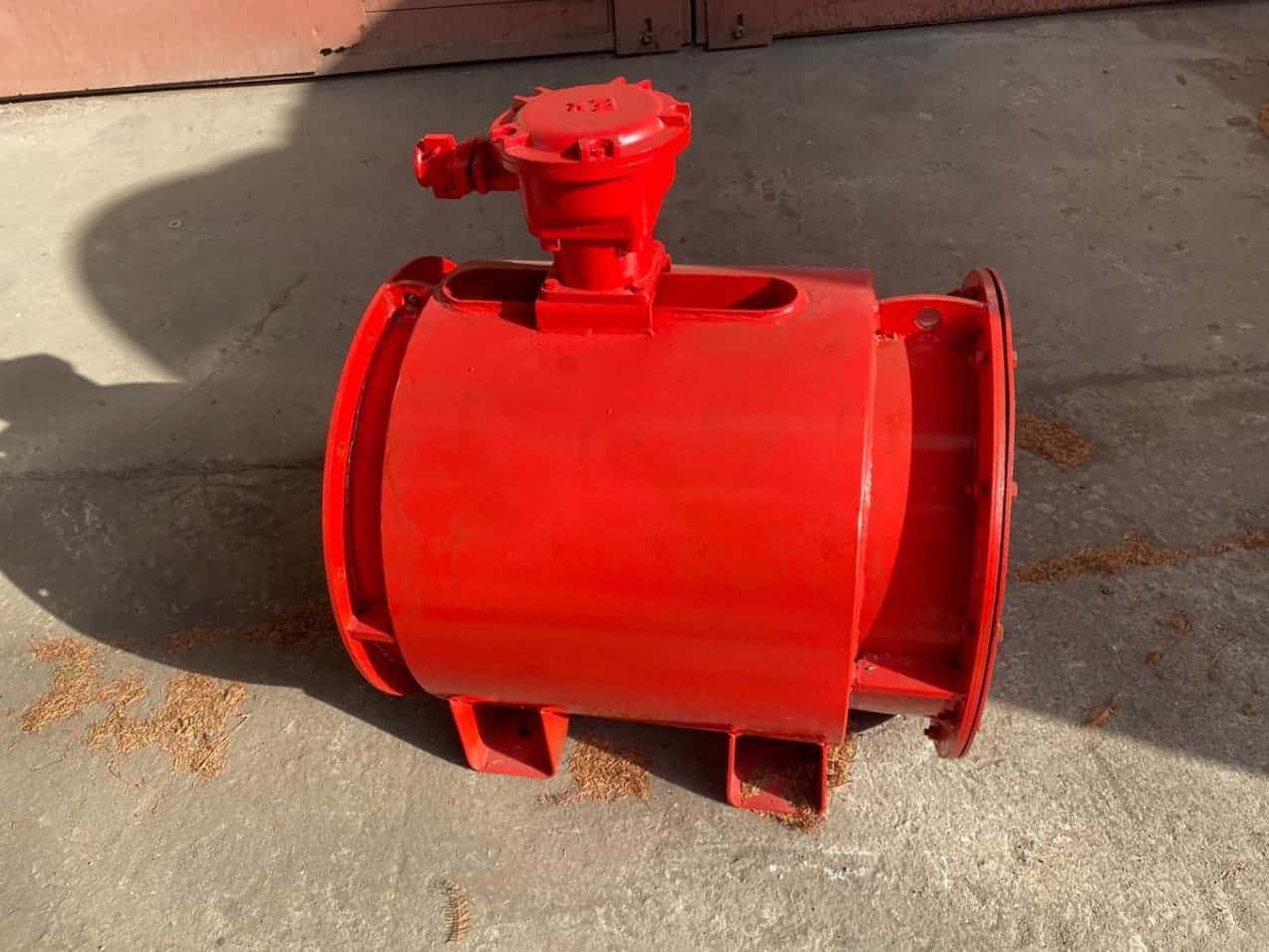
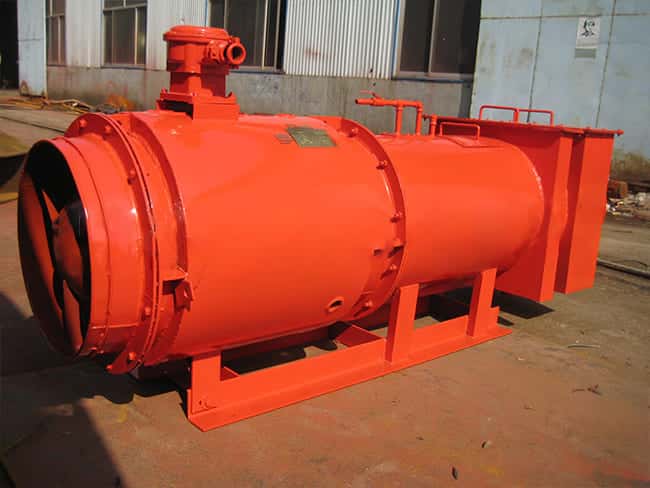
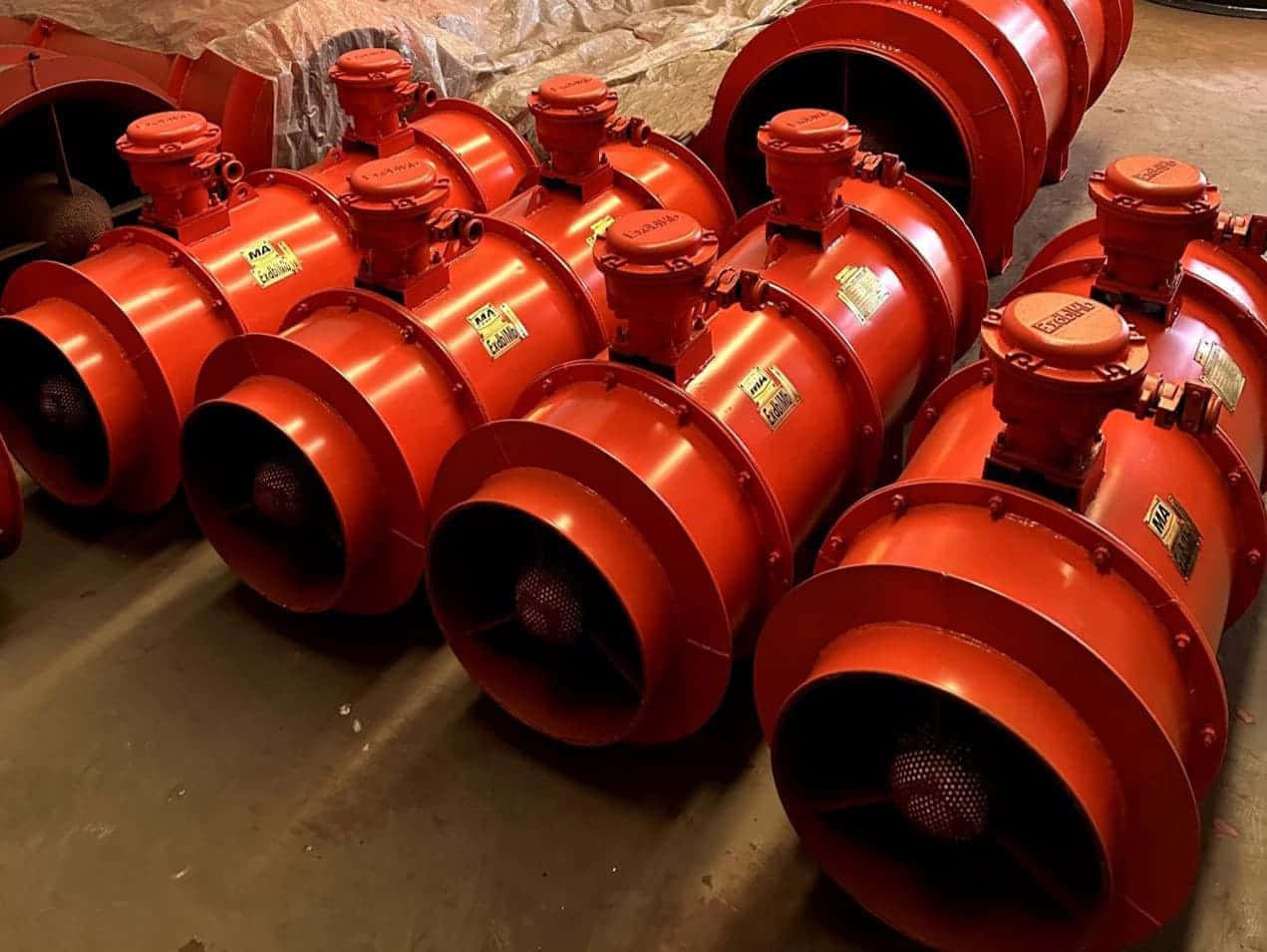
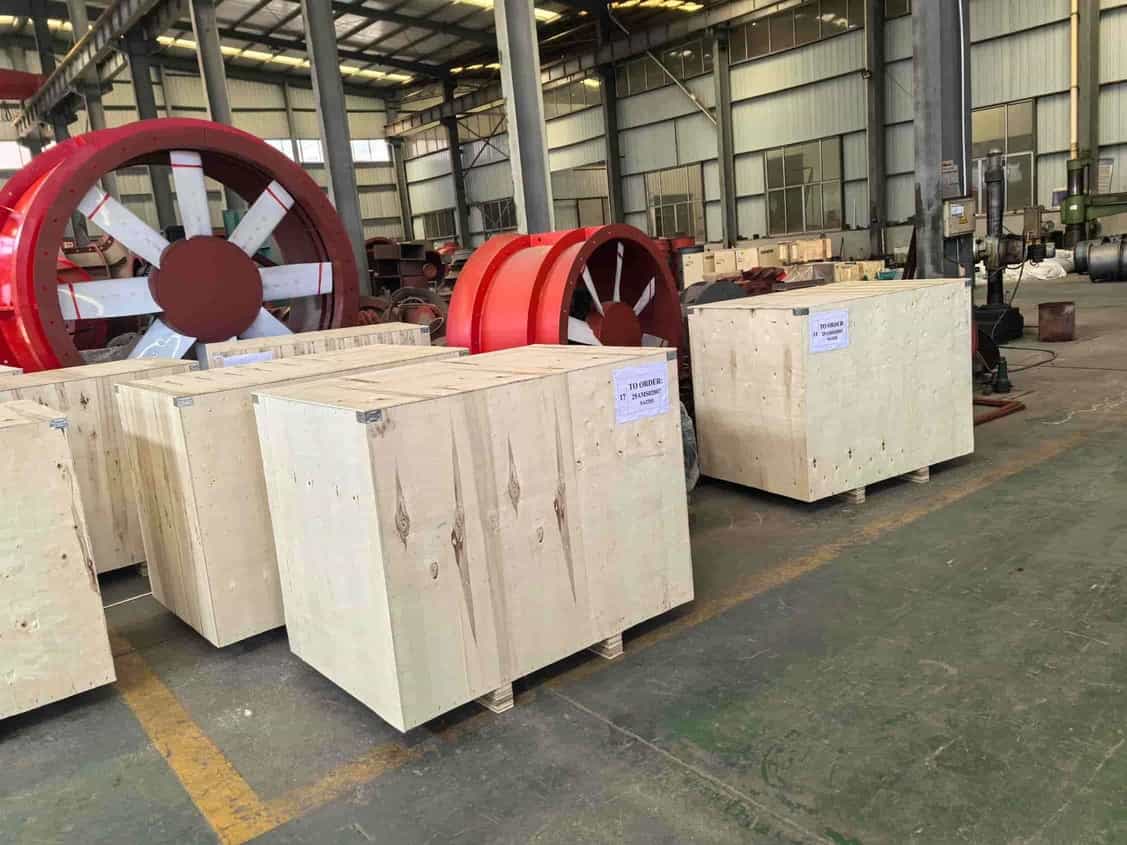
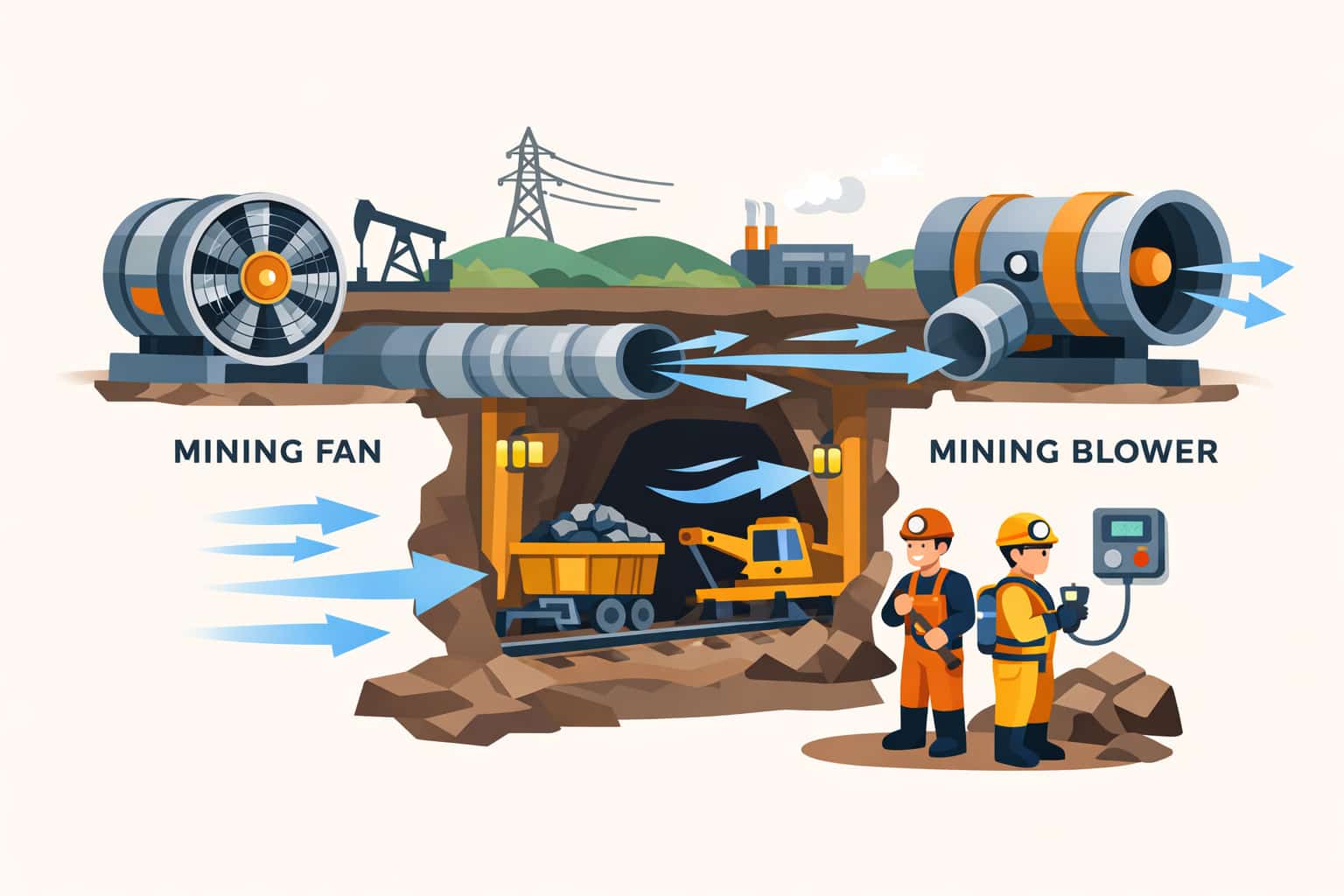
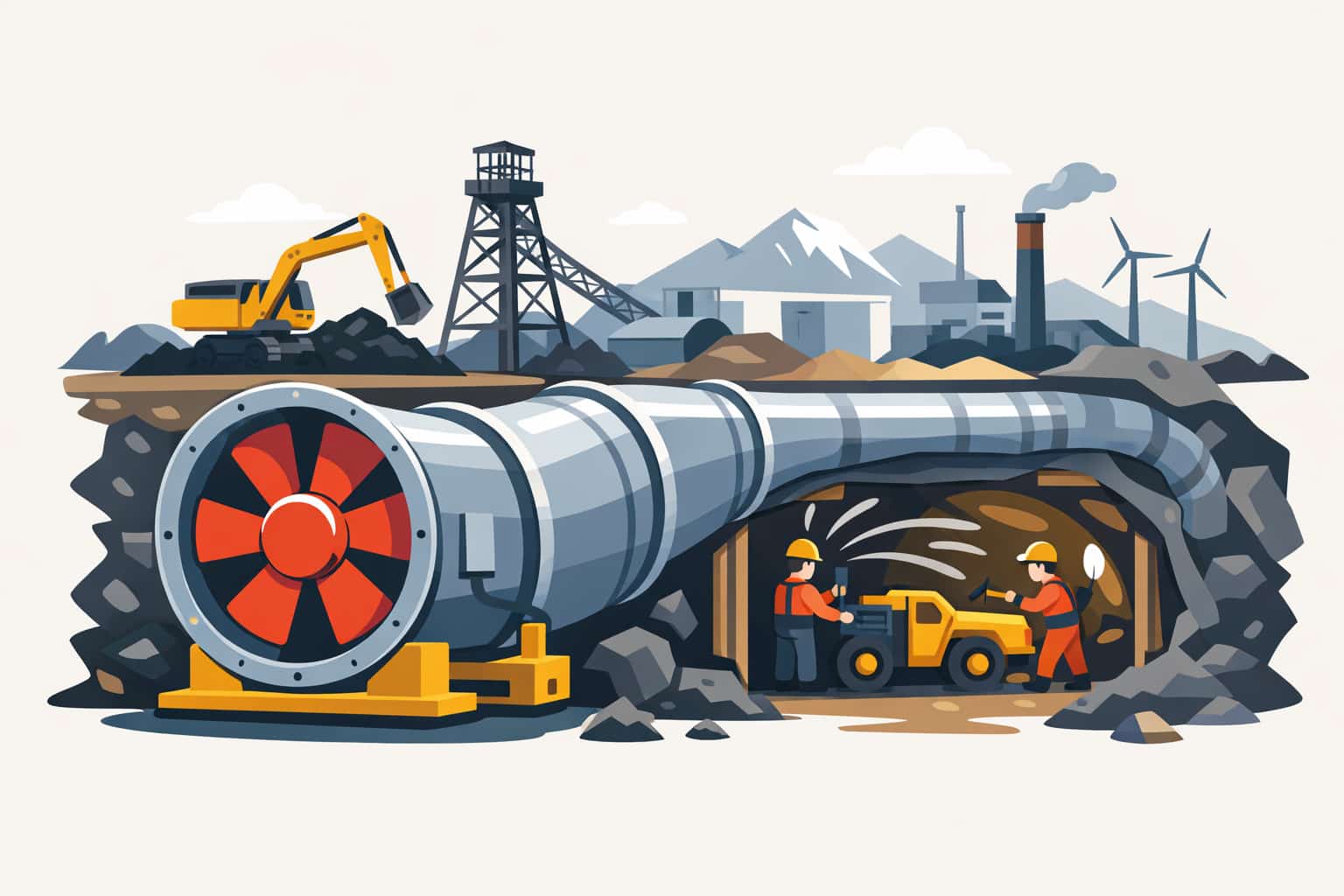
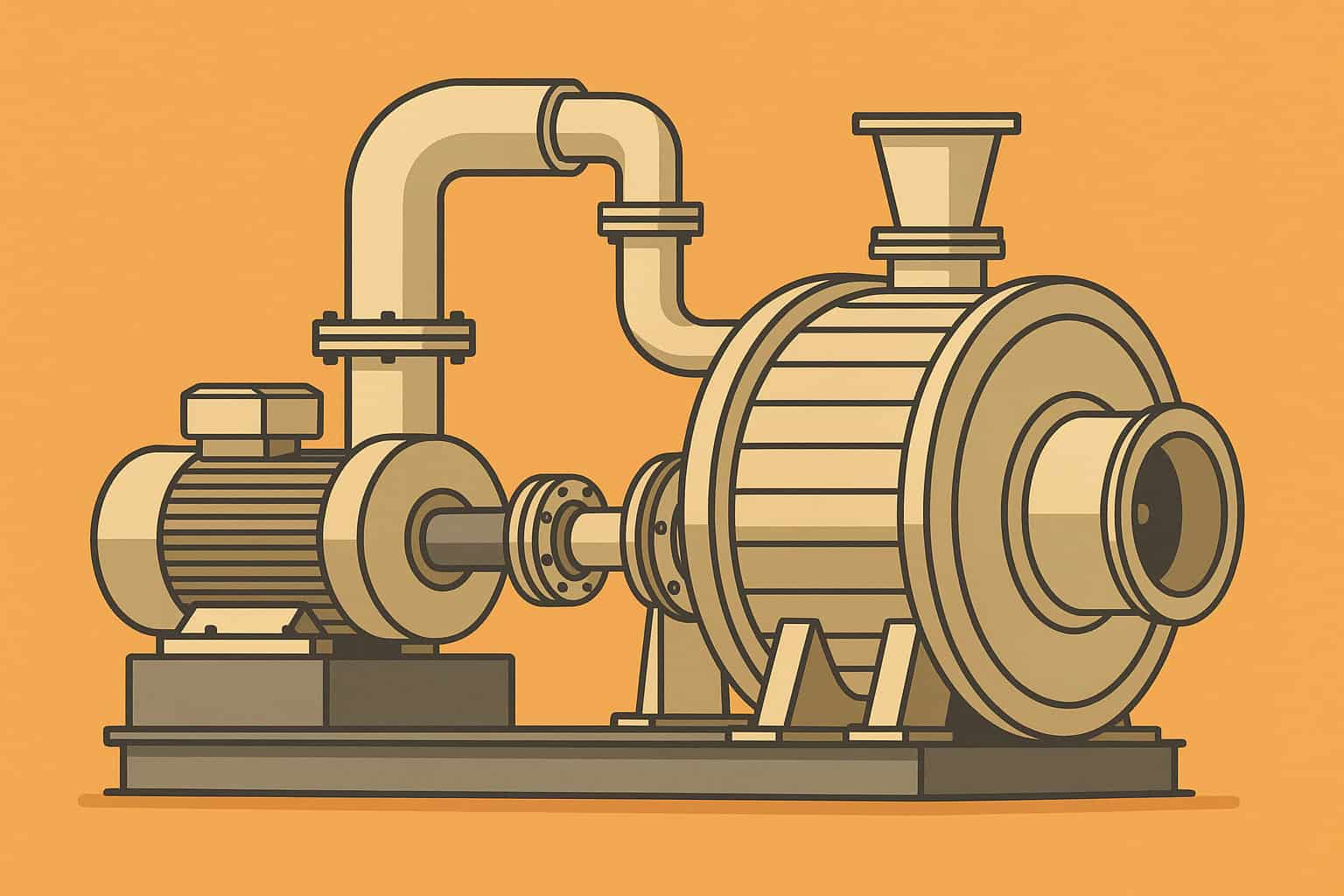

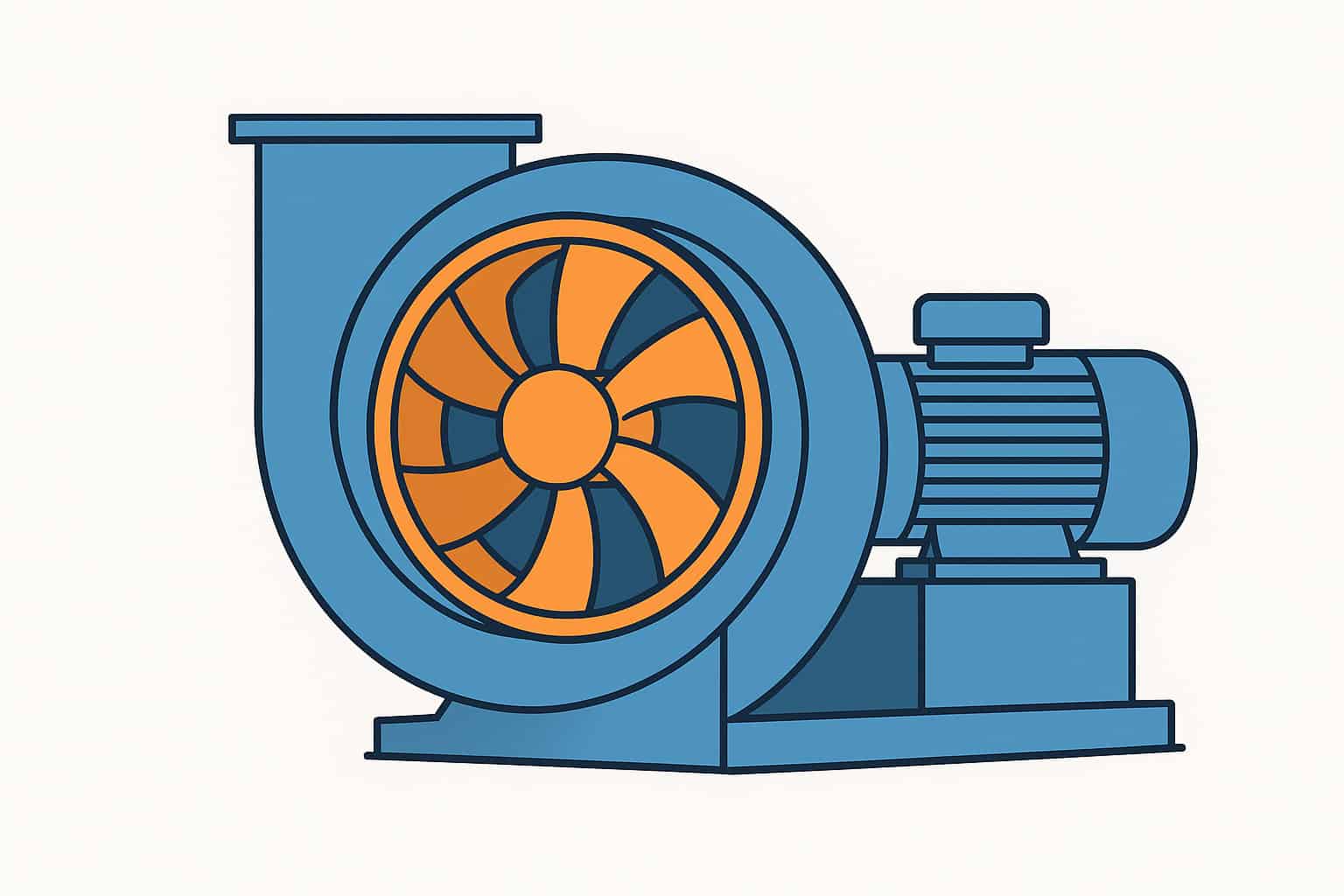
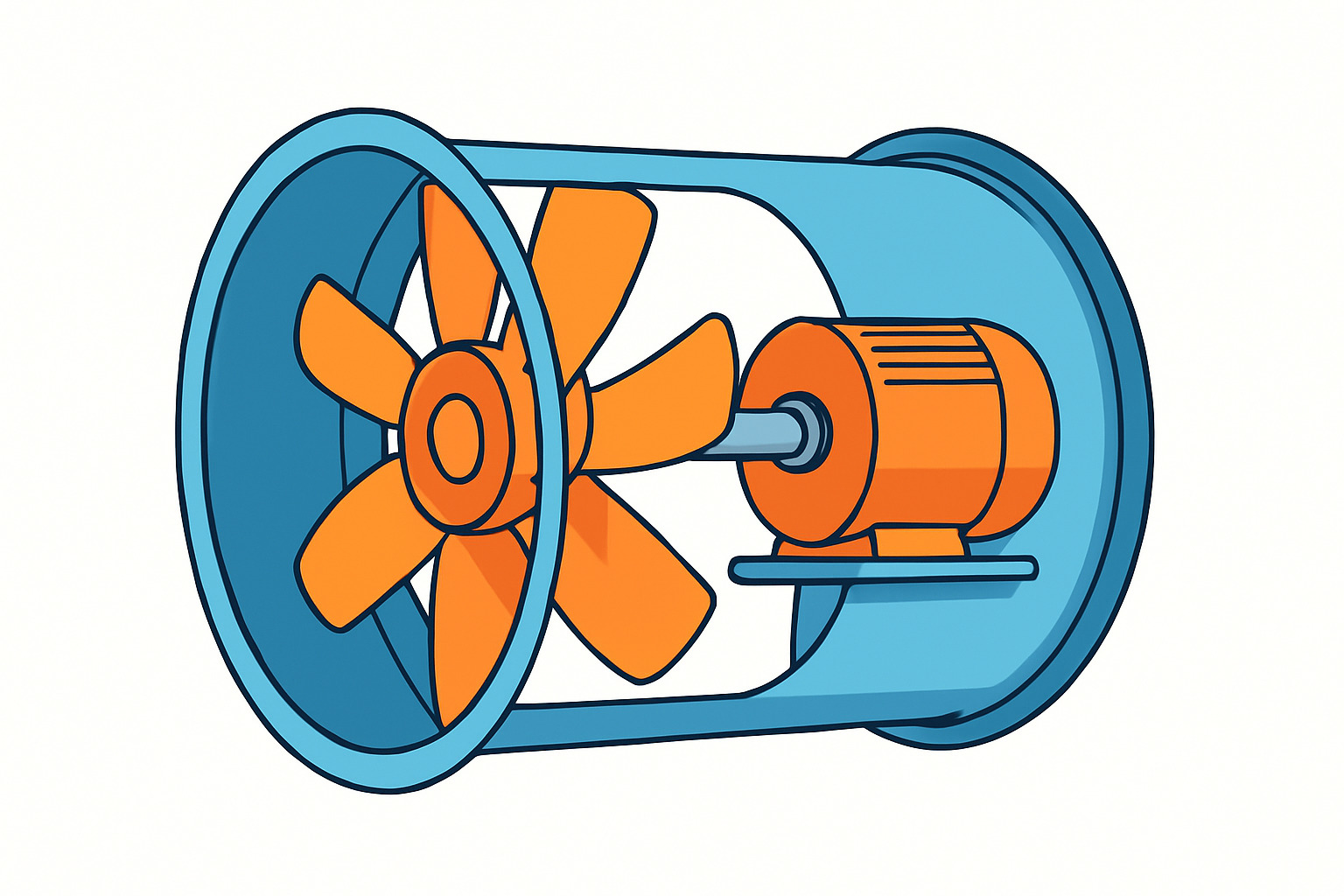
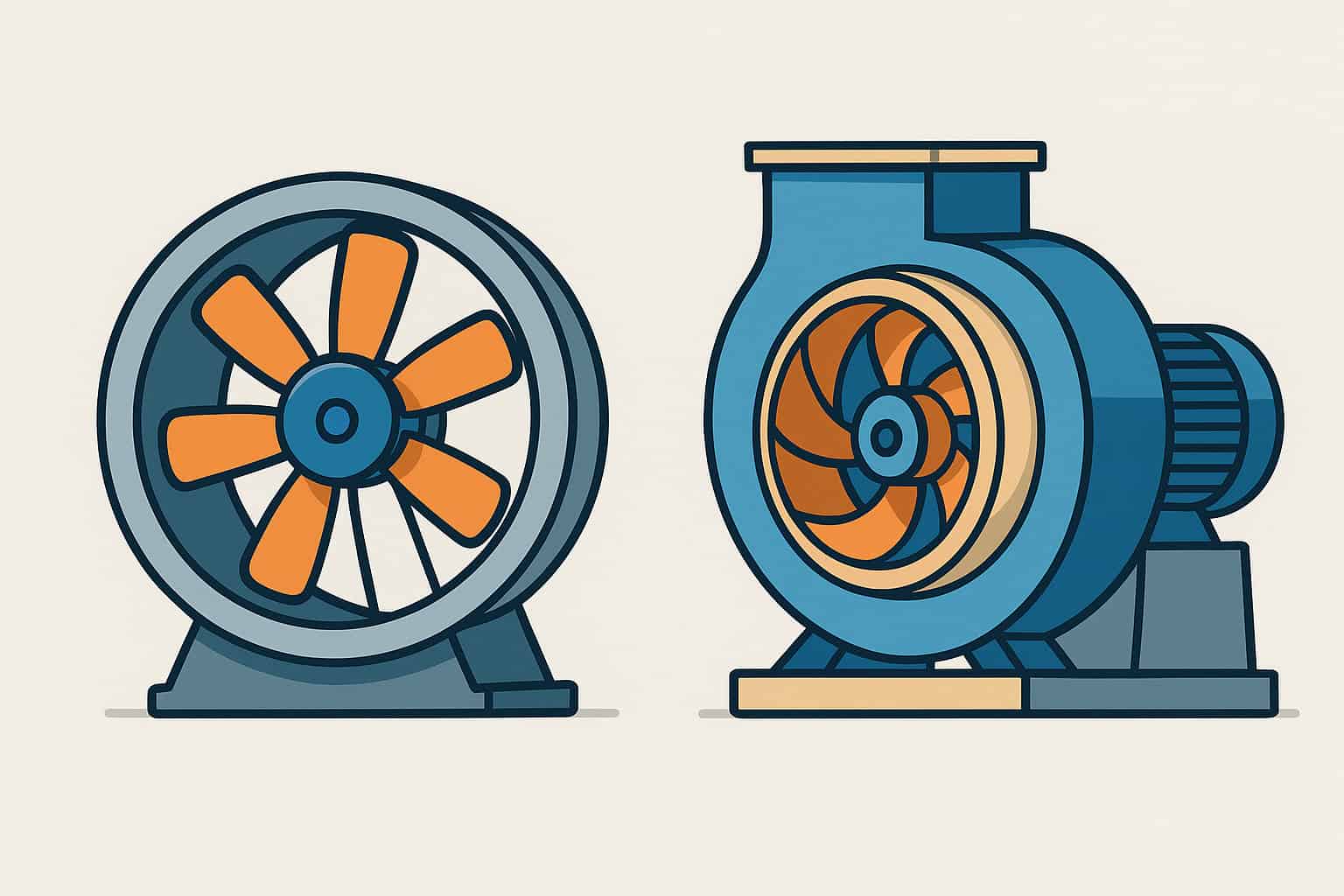
There are several different types of fans used in ventilation, and understanding them helps engineers choose the right equipment for buildings, factories, tunnels and mines. At the aerodynamic level, almost all ventilation fans belong to three families: axial fans, centrifugal fans and mixed-flow fans. At the system level, these fans are configured as main fans, booster fans, auxiliary fans, supply fans and exhaust fans to create a complete ventilation scheme.
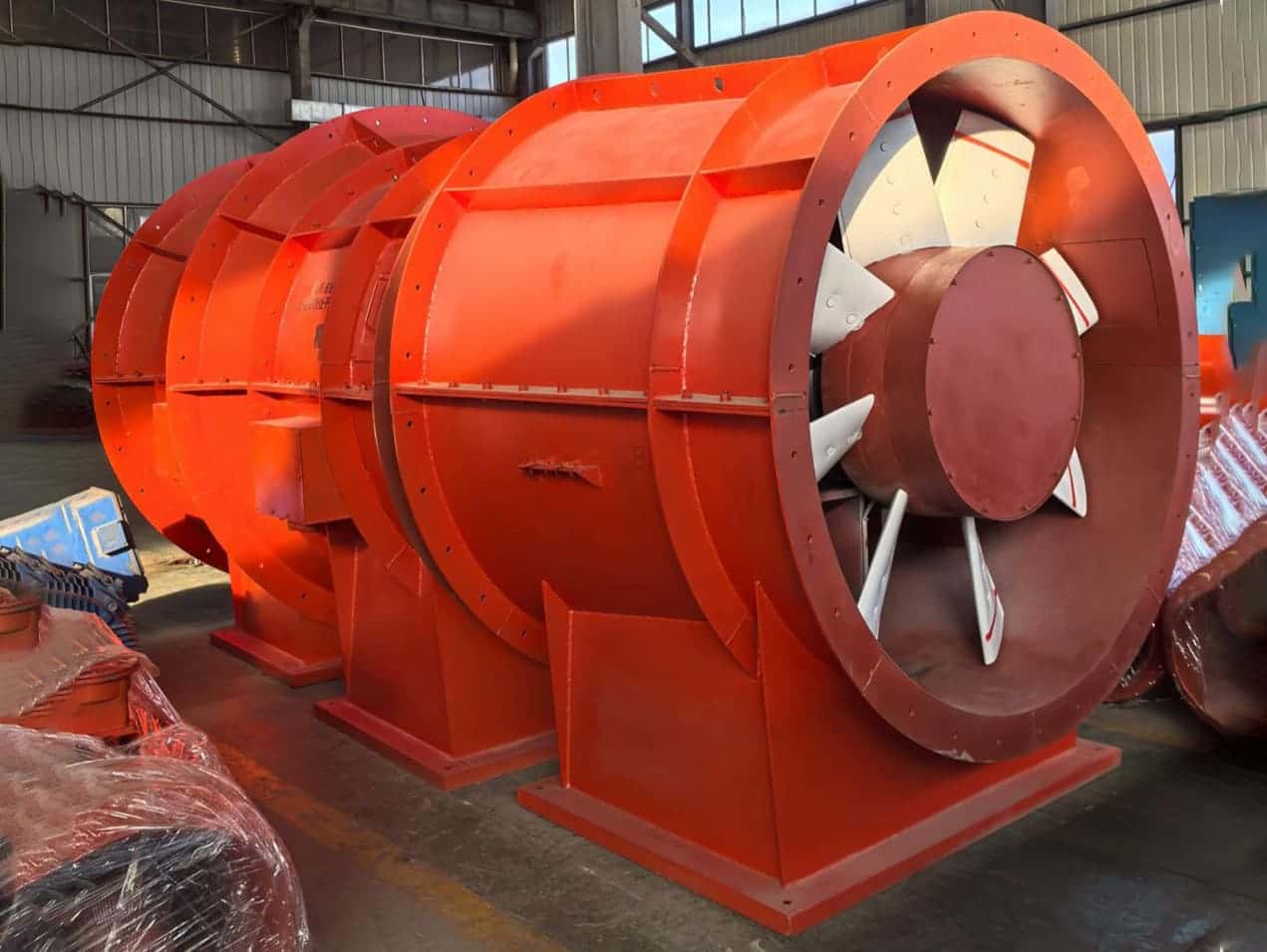
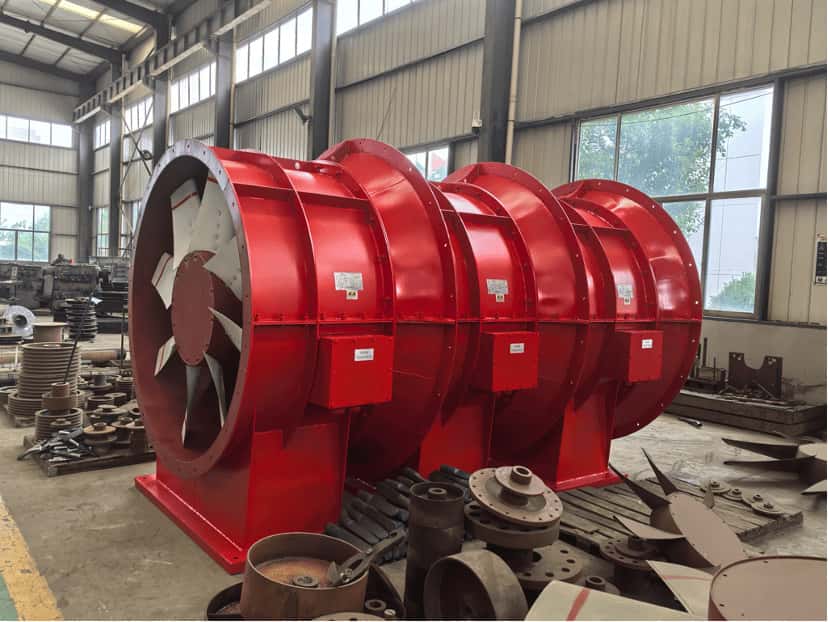
Axial fans move air parallel to the shaft. They are common in general building ventilation (ceiling fans, wall fans), but heavy-duty axial fans are also used as main mine fans, tunnel fans and industrial exhaust fans. Subtypes include propeller fans for low-pressure applications, tube-axial fans for ducted systems and vane-axial fans with guide vanes for higher pressure and efficiency. Axial fans are ideal where large volumes of air must be moved with relatively low to medium static pressure.
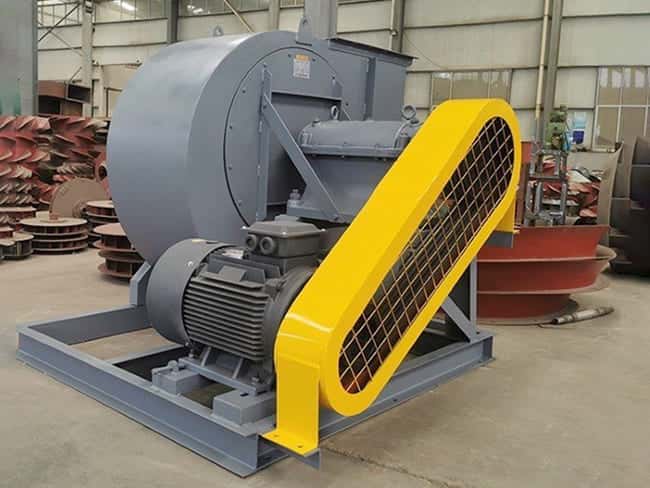
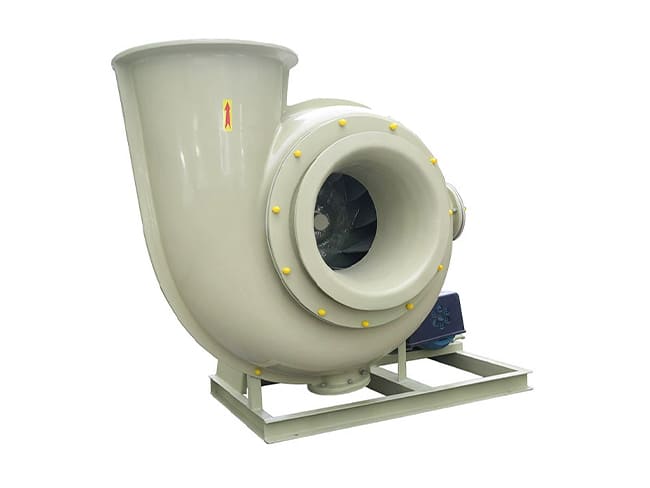
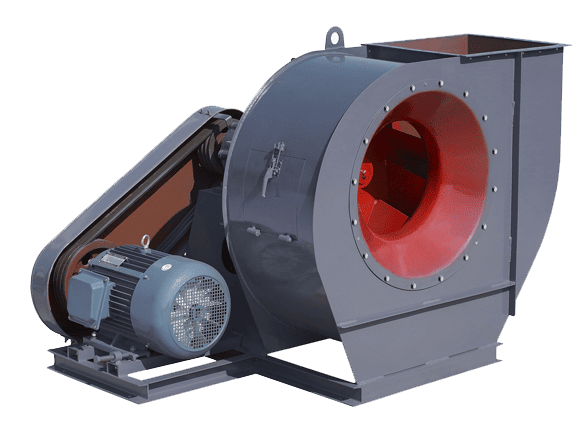
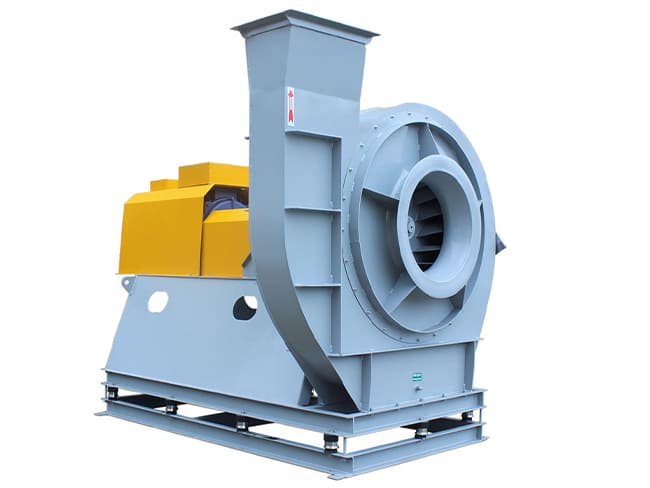
Centrifugal fans, or blowers, draw air in along the shaft and discharge it radially. They are used widely for higher-pressure ventilation duties, such as dust collection, fume extraction and boiler draft. Forward-curved centrifugal fans appear in HVAC units; backward-curved and airfoil-blade fans are used in efficient industrial systems; and radial-blade fans handle abrasive or heavily dust-laden gas streams. In some mines and plants, large centrifugal fans serve as main or booster ventilation fans where resistance is high.
Mixed-flow fans combine features of axial and centrifugal designs. Air enters axially and exits at an intermediate angle. These fans are selected when a compact layout and medium pressure are required, for example in certain tunnel and underground installations where space is limited but the system resistance is too high for simple axial fans.
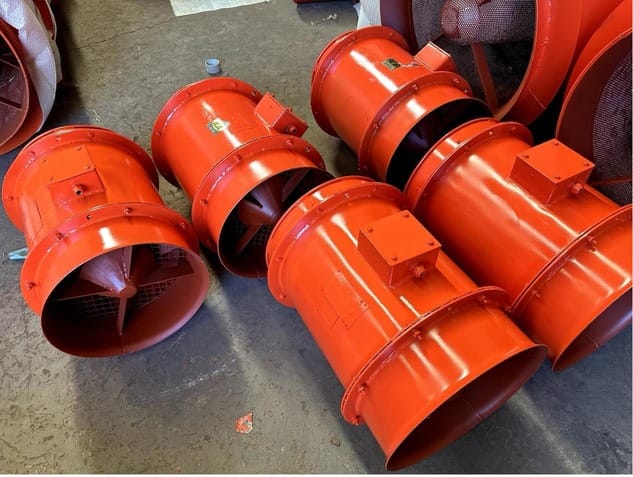
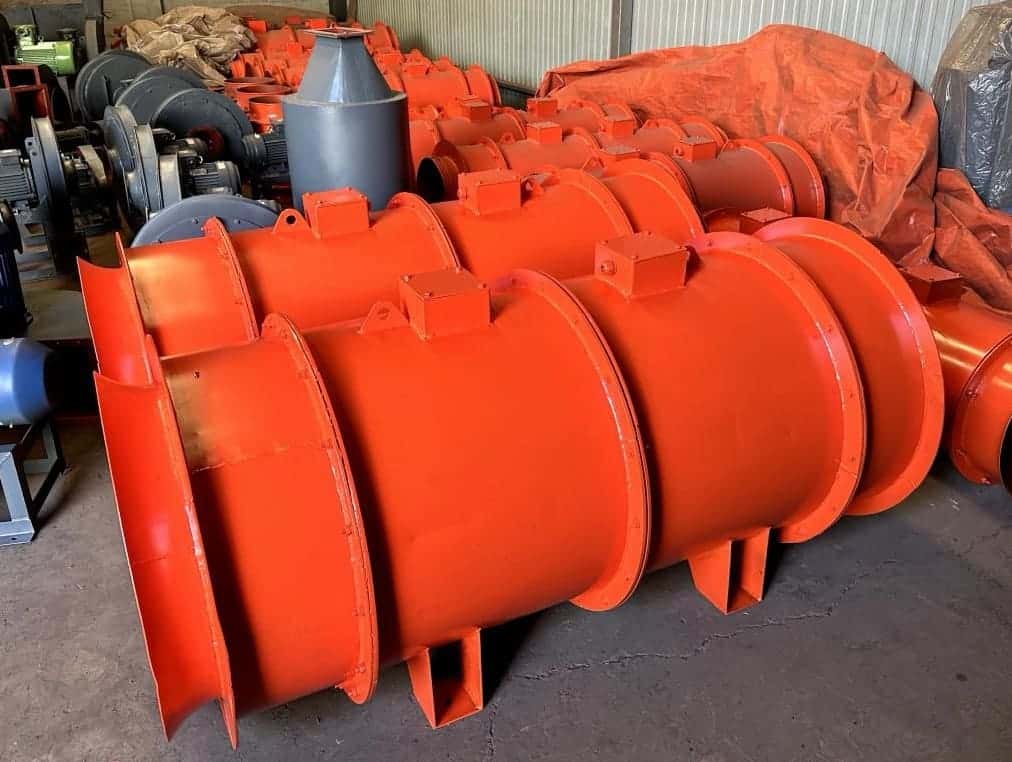
From a functional standpoint, ventilation systems use these fan types as supply and exhaust fans. Supply fans push fresh air into buildings, plants and mines, while exhaust fans pull contaminated or hot air out. In underground mining, supply and exhaust roles are implemented through main fans on shafts, booster fans in long airways and auxiliary fans connected to flexible ducts in headings and stopes. In industrial facilities, roof exhaust fans, wall-mounted propeller fans, inline duct fans and local exhaust hoods all rely on axial or centrifugal principles.
Choosing among these different types of ventilation fans involves matching airflow, pressure, temperature, dust loading, noise limits and safety requirements to fan characteristics. The right combination of axial, centrifugal and mixed-flow fans, correctly arranged as main, booster, auxiliary, supply and exhaust units, delivers safe, reliable and energy-efficient ventilation in industrial and mining environments.