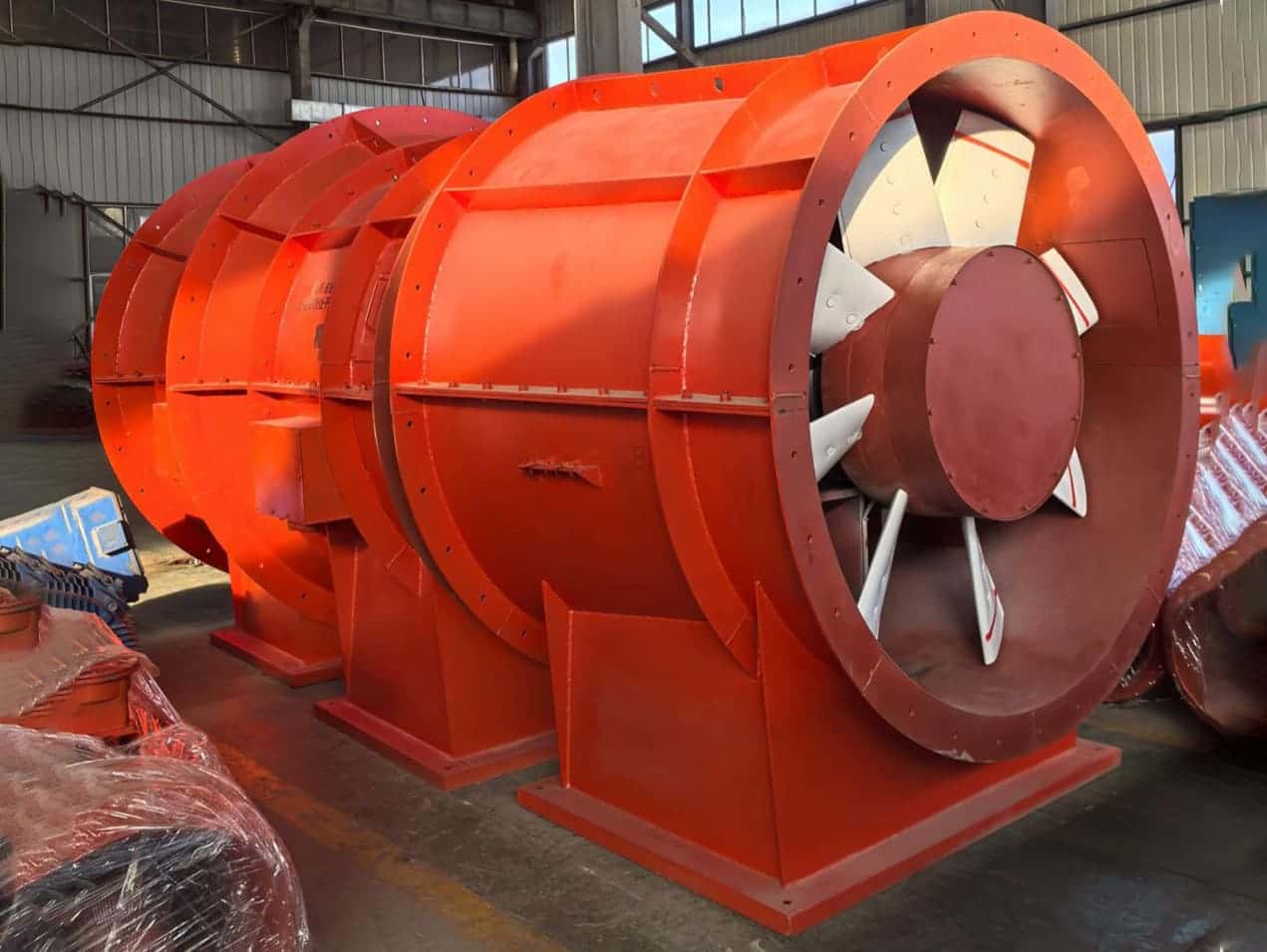
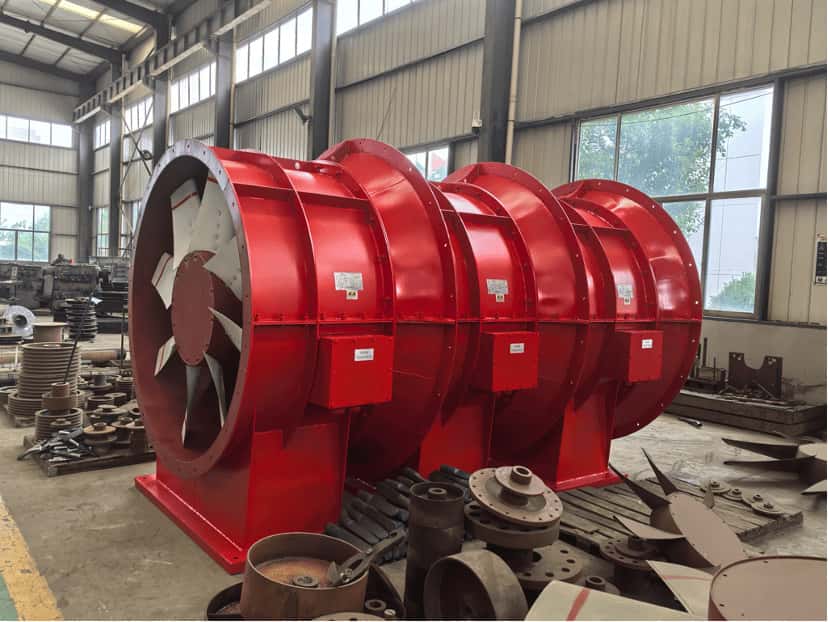
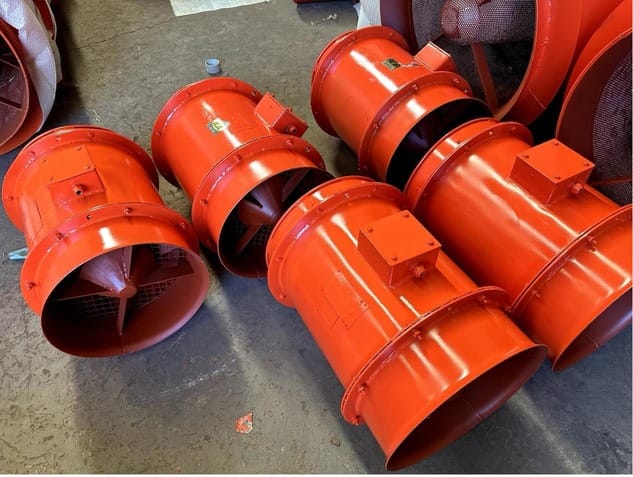
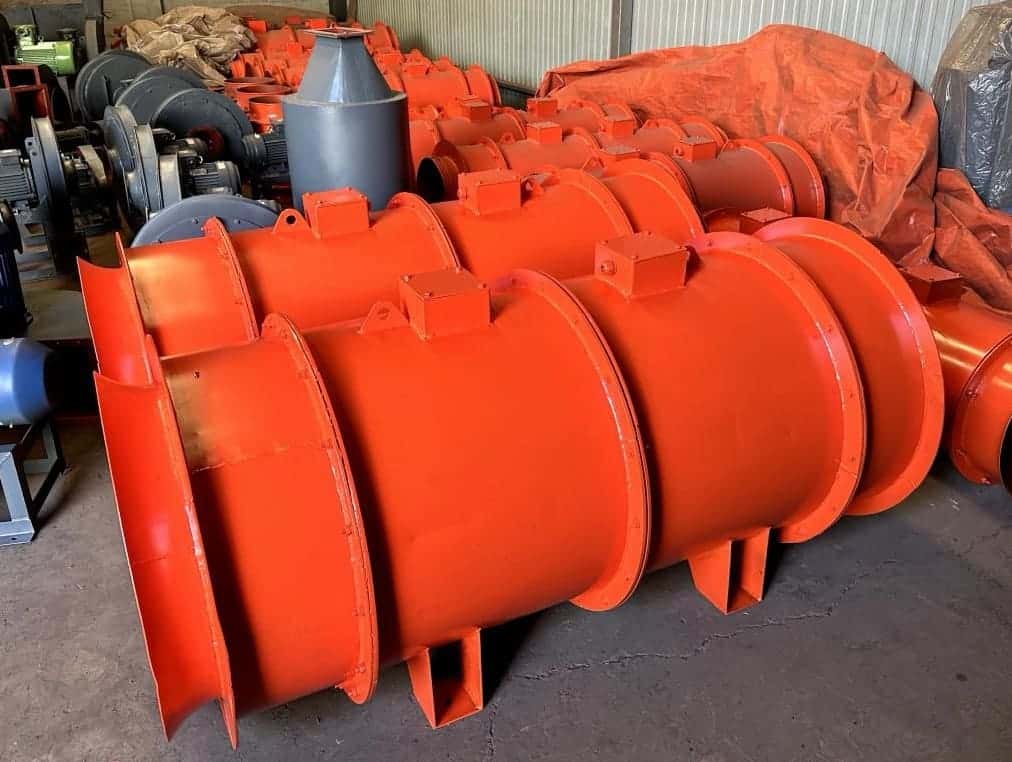
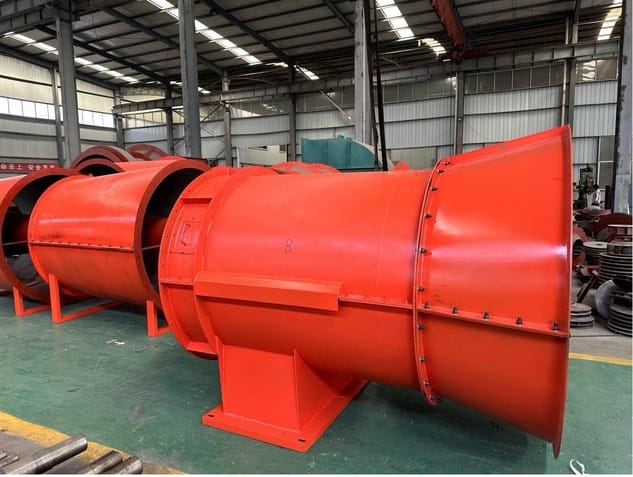
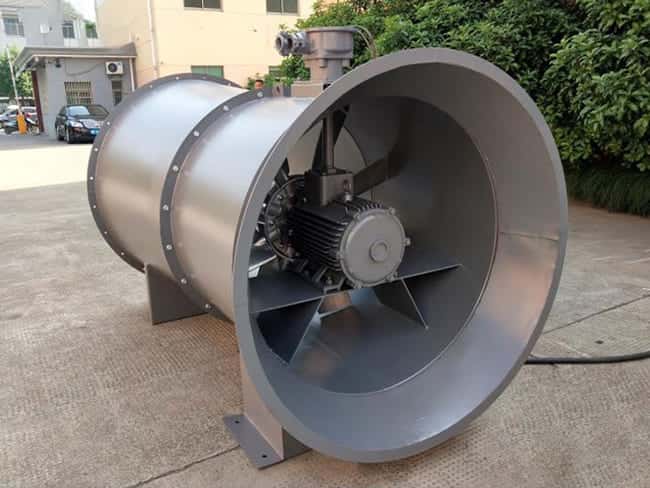
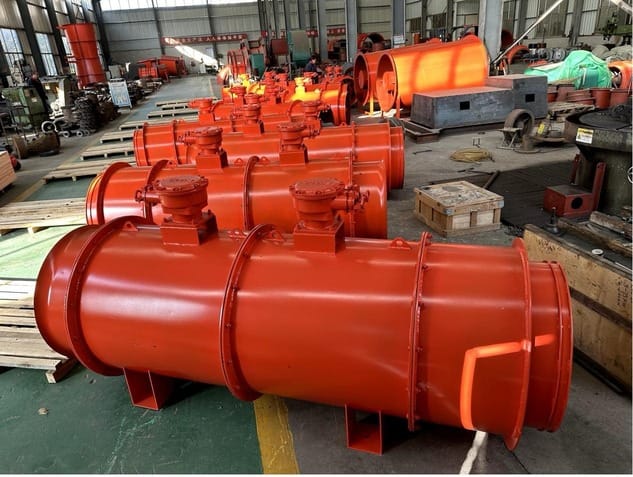
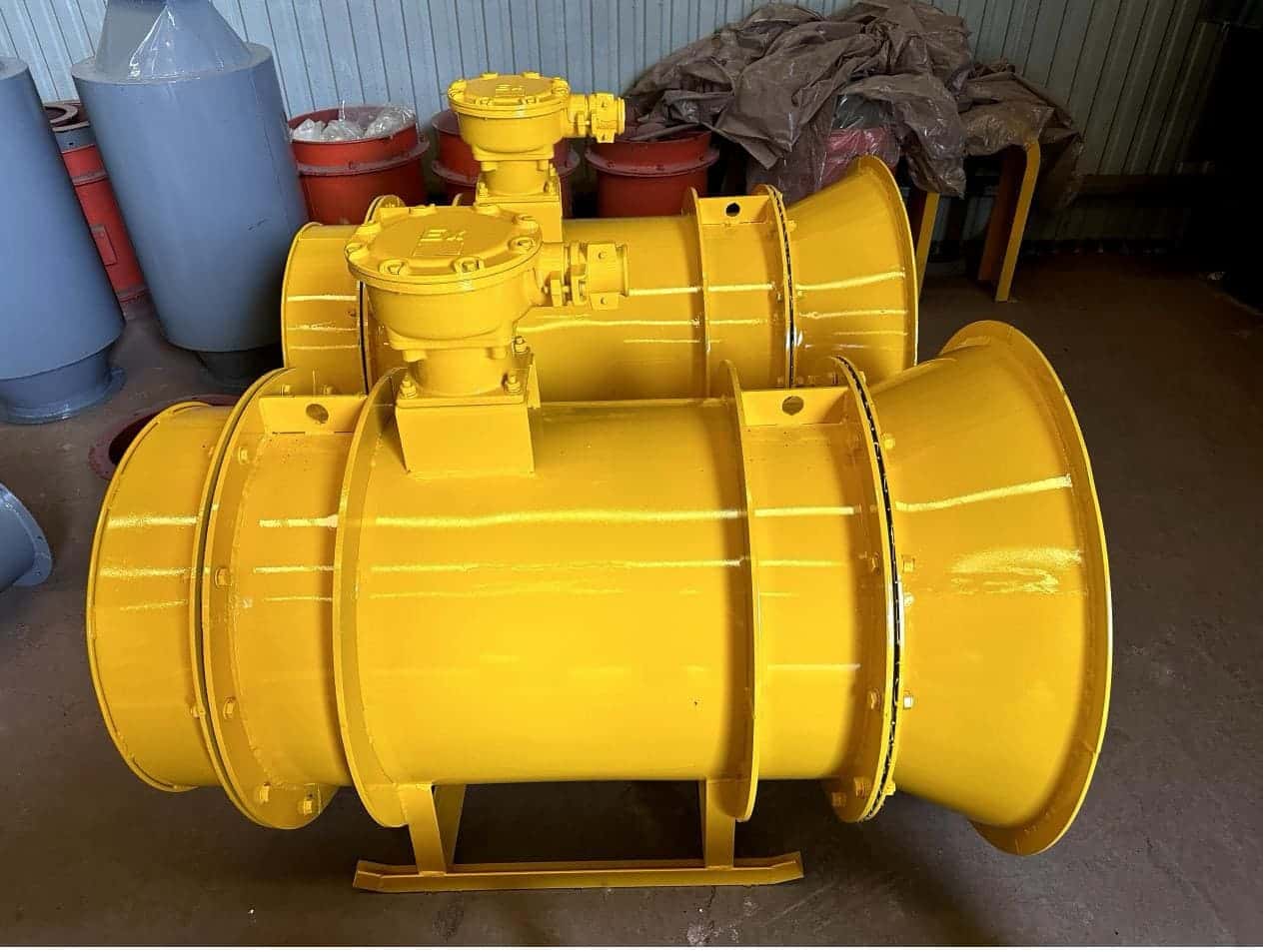
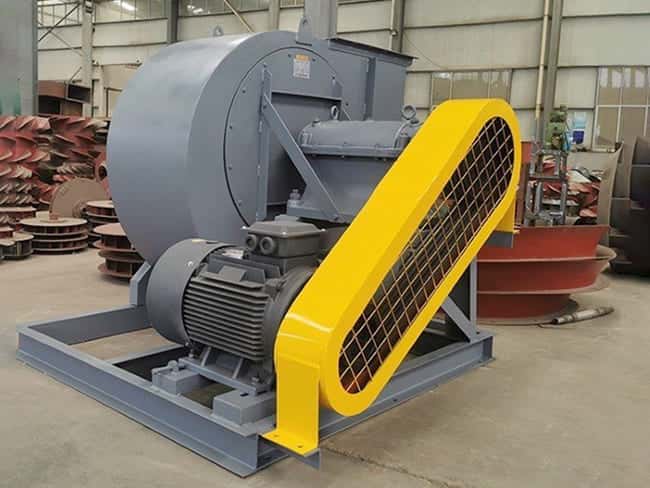
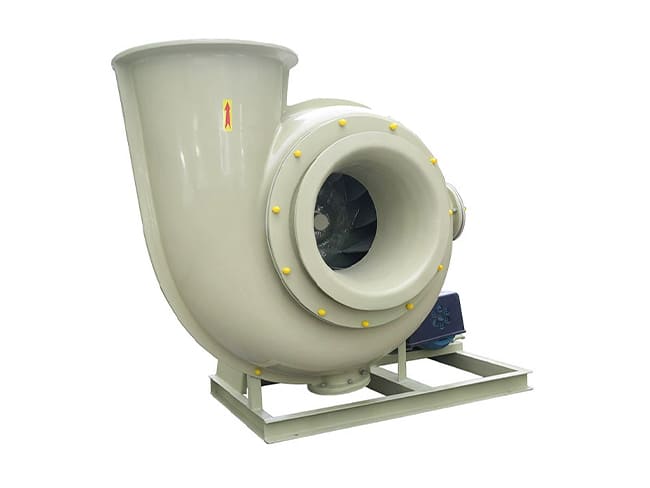
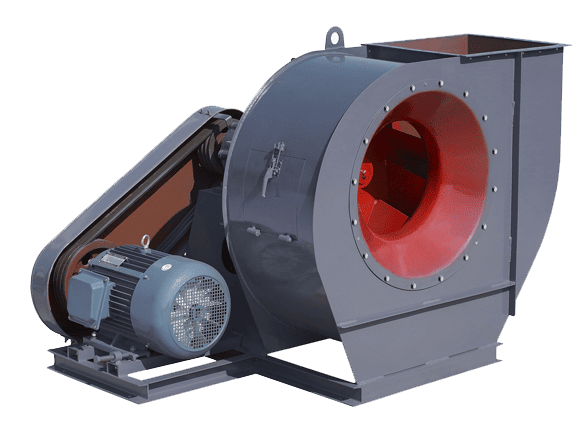
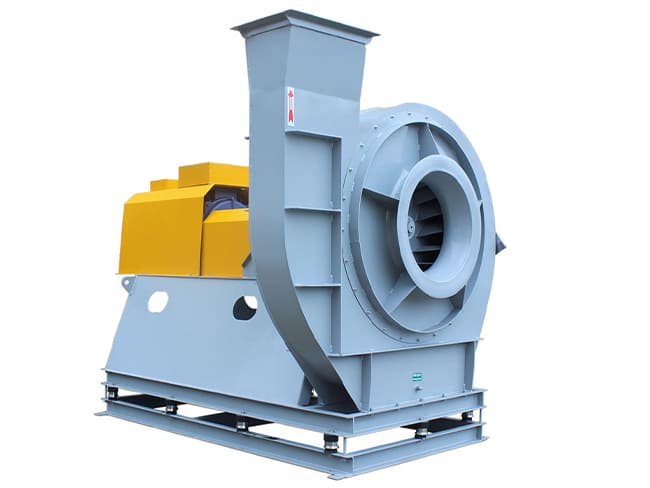
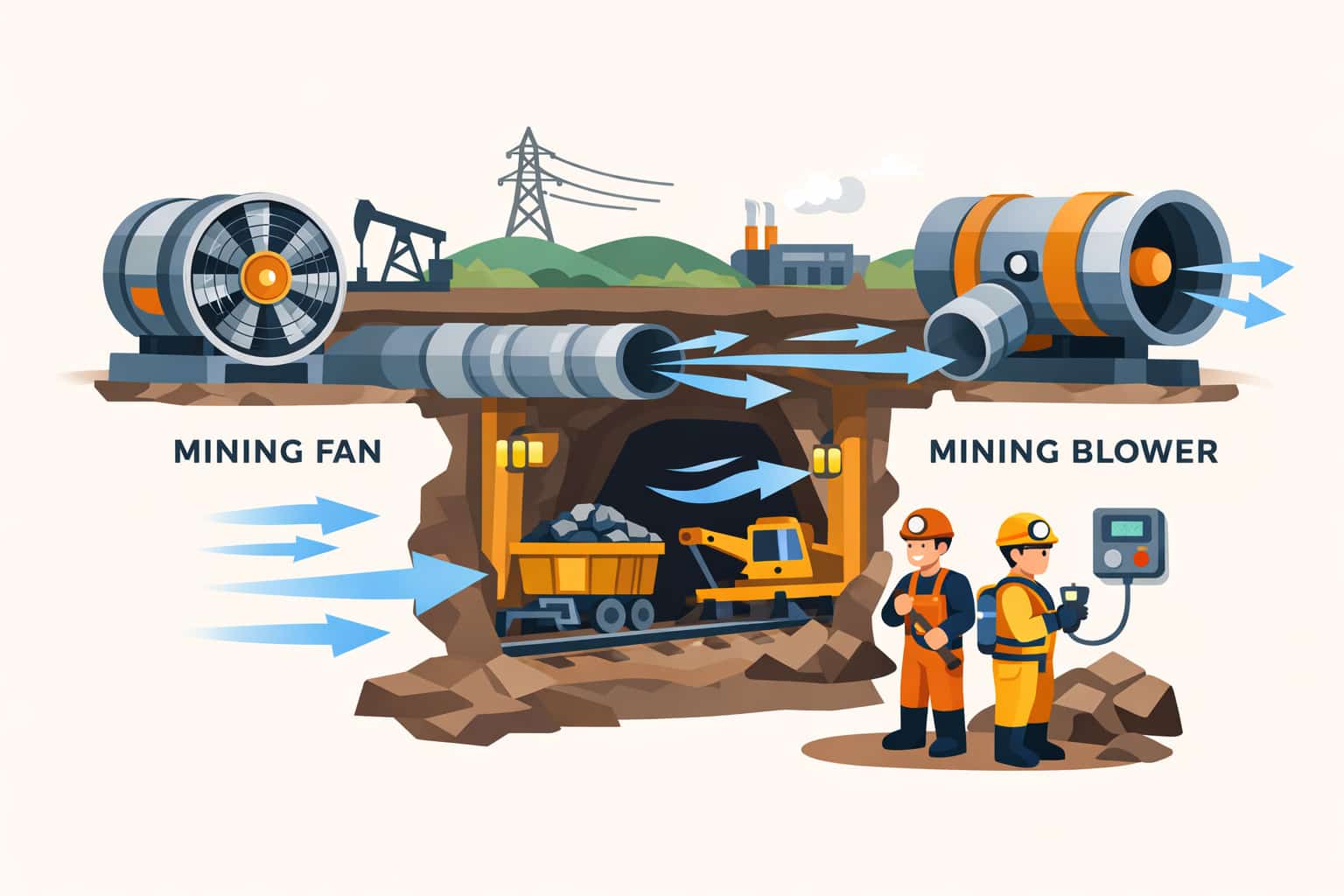
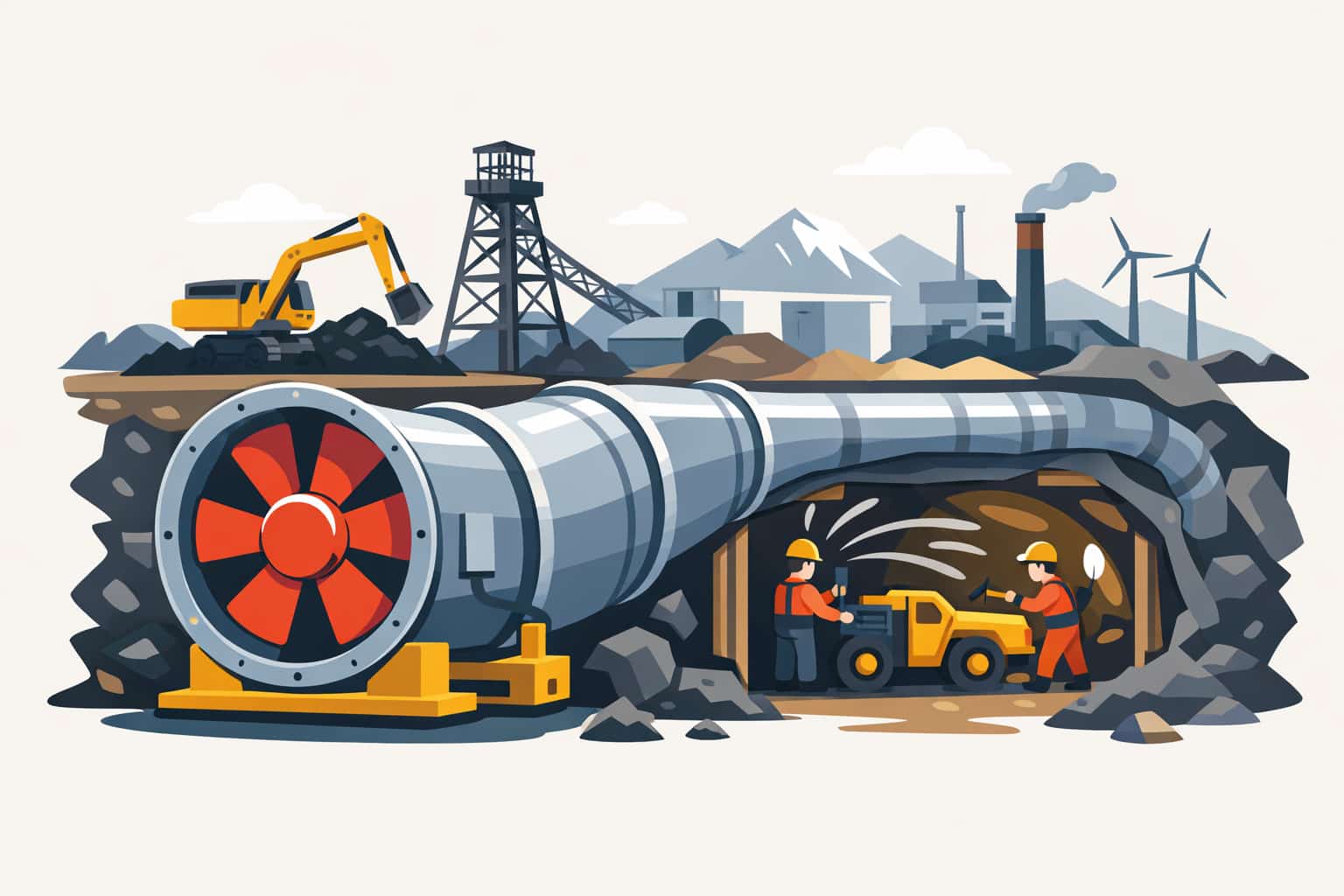
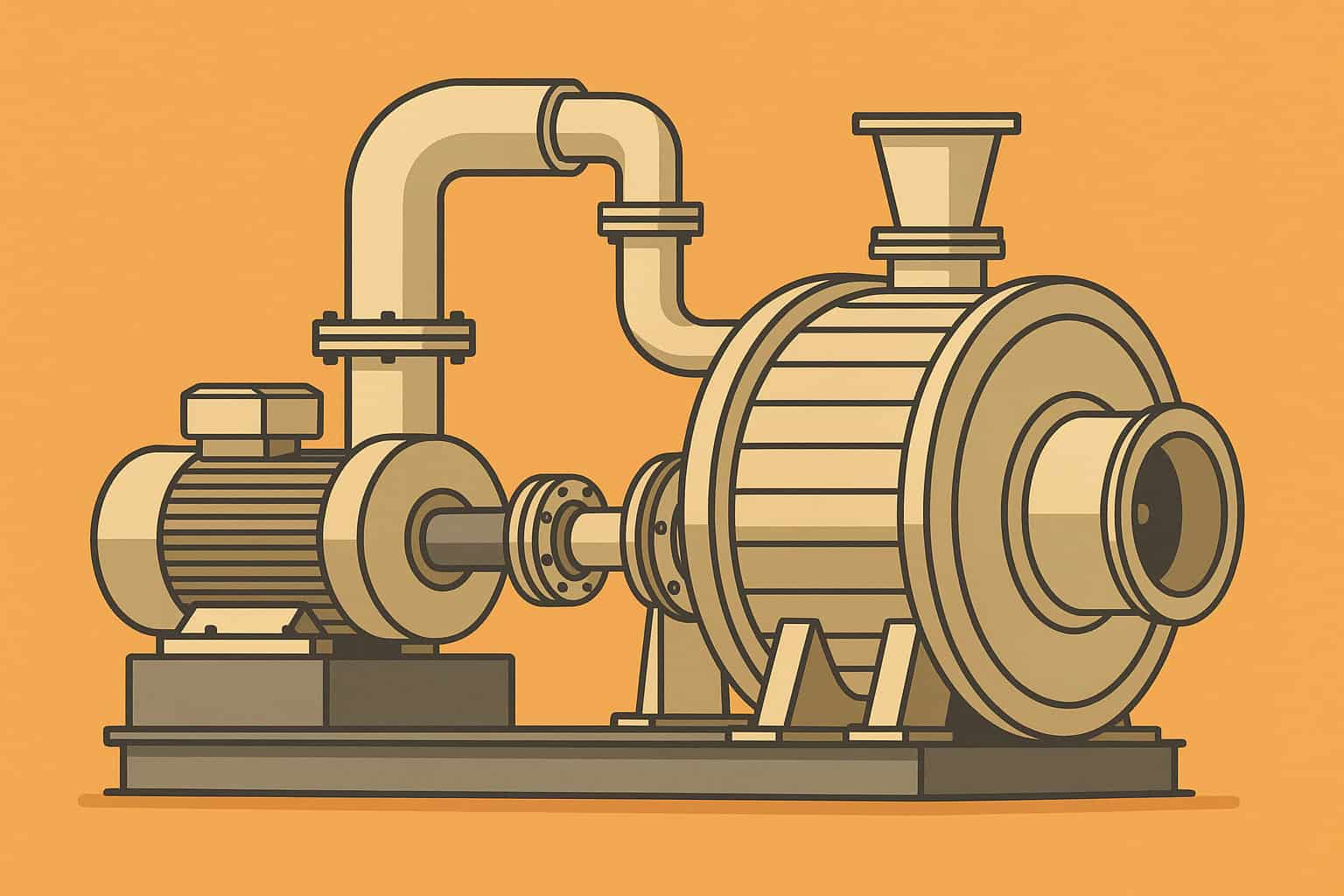

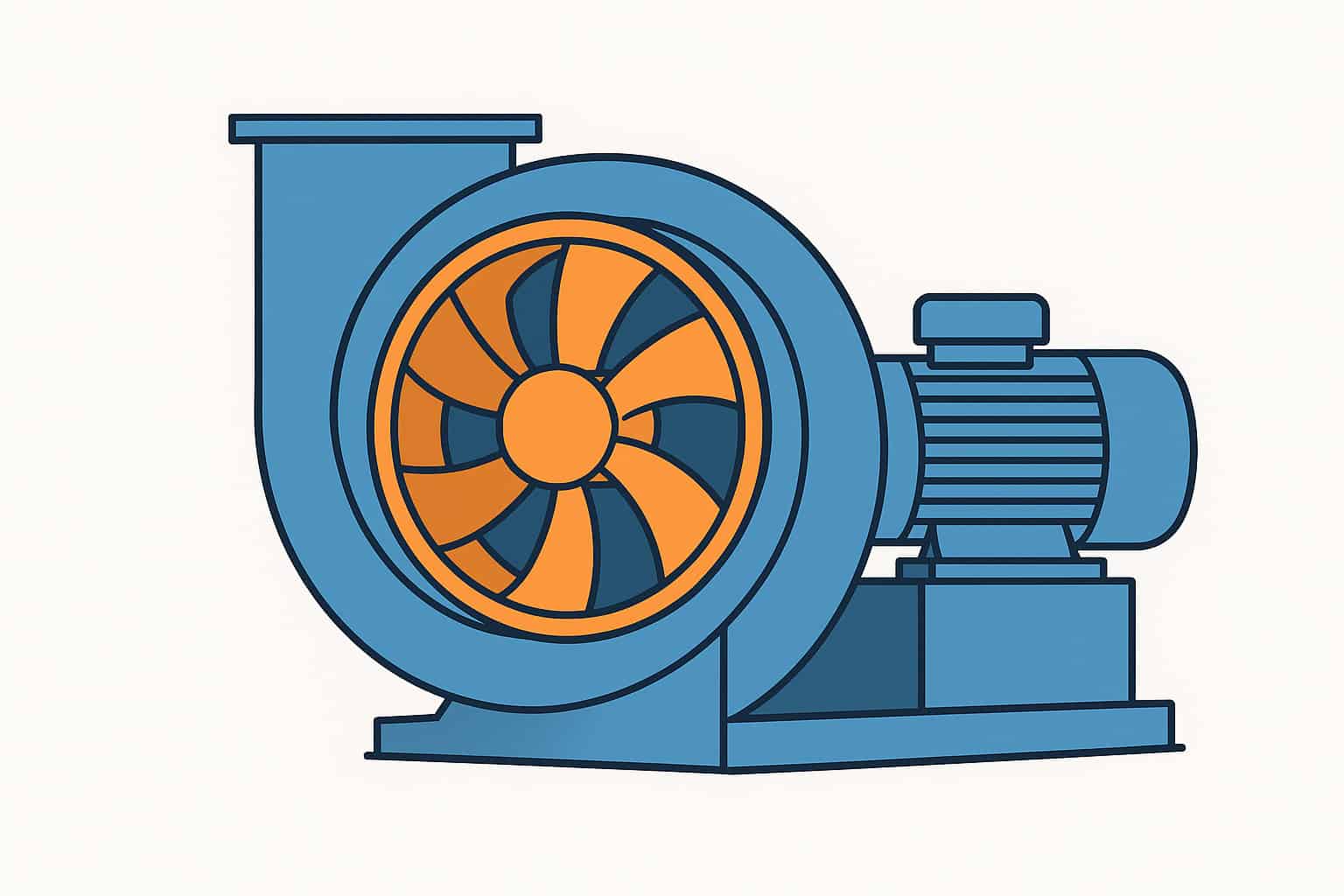
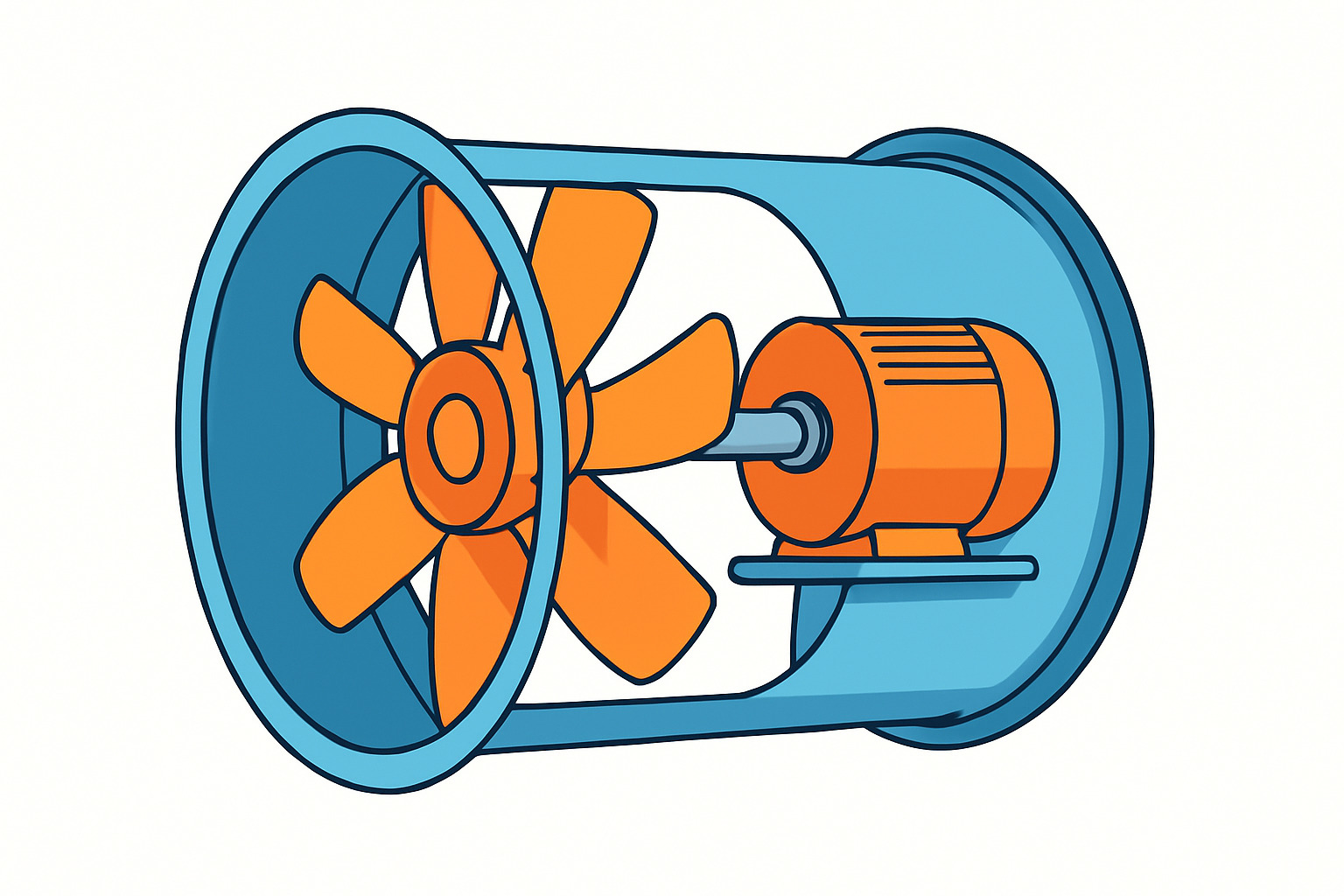
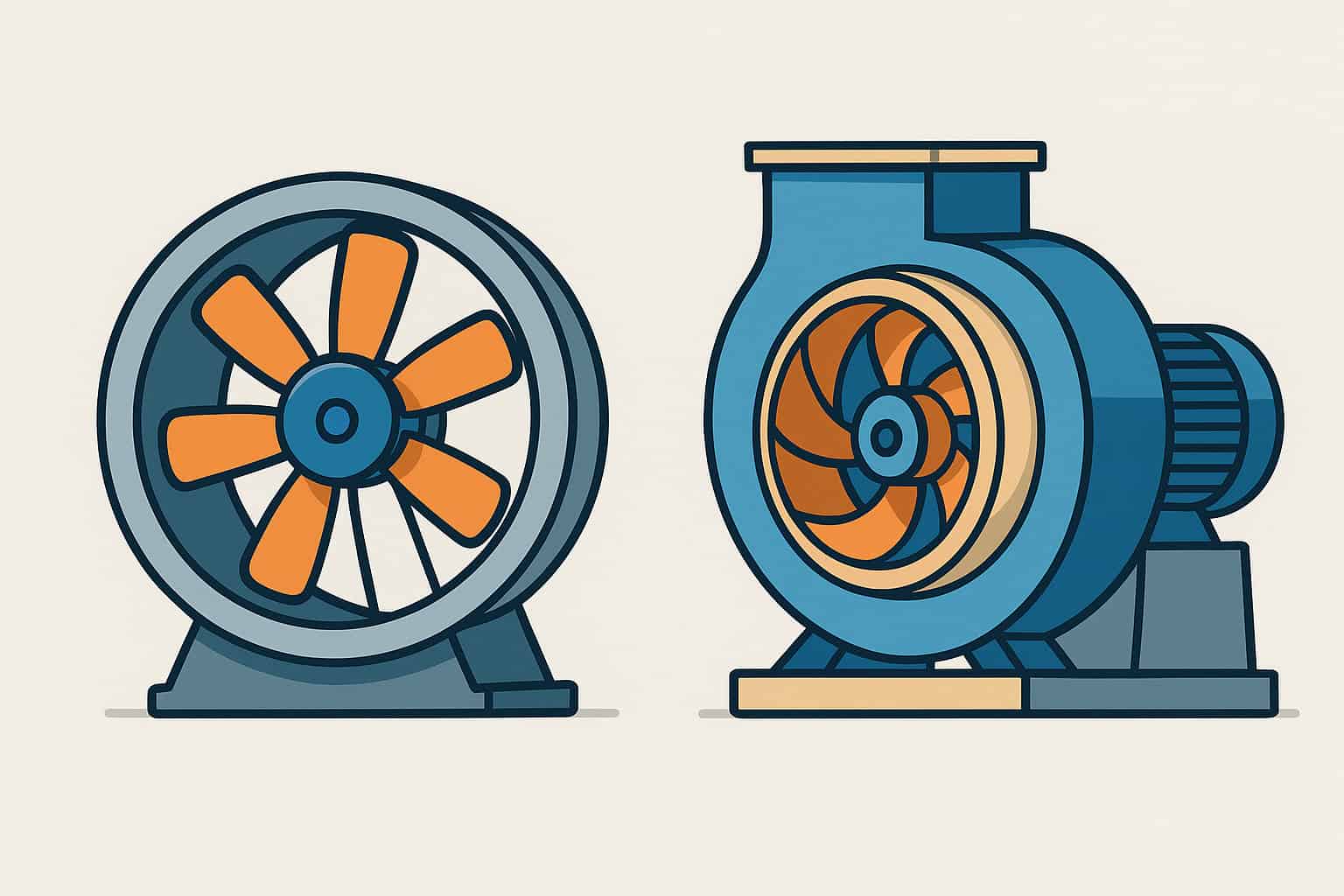
Industrial fans can be grouped into three main types: axial fans, centrifugal fans and mixed-flow fans, with many sub-categories within each group. These fans are used to move air, fumes and dust through ducts, filters and process equipment in factories, power stations, tunnels and underground mines. Understanding the main types of industrial fans helps you select the most suitable design for each ventilation duty.
Axial industrial fans move air in a direction roughly parallel to the fan shaft, like a propeller. Common subtypes include:
- Propeller fans – simple, open fans used in walls or housings for general ventilation and cooling.
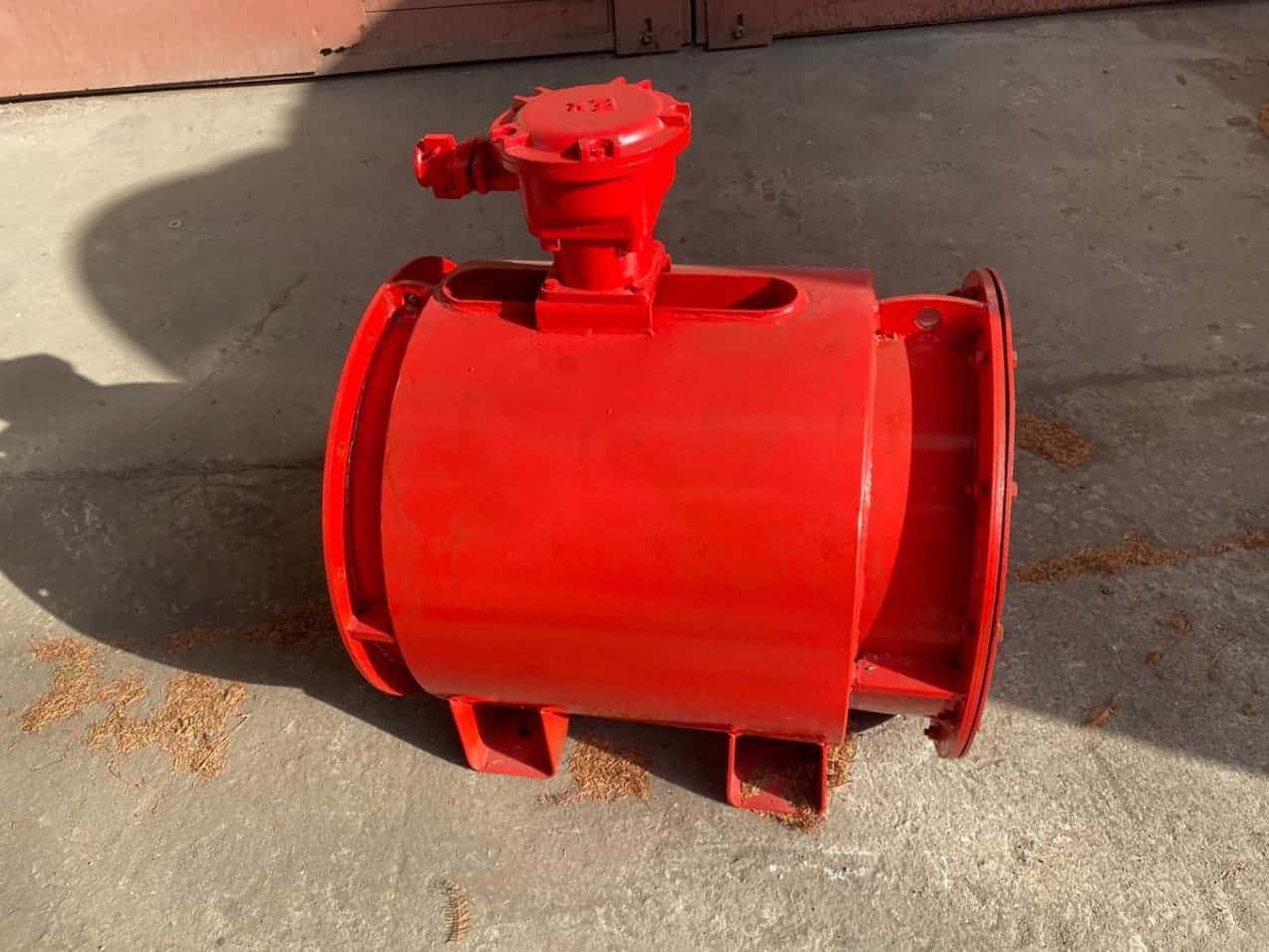
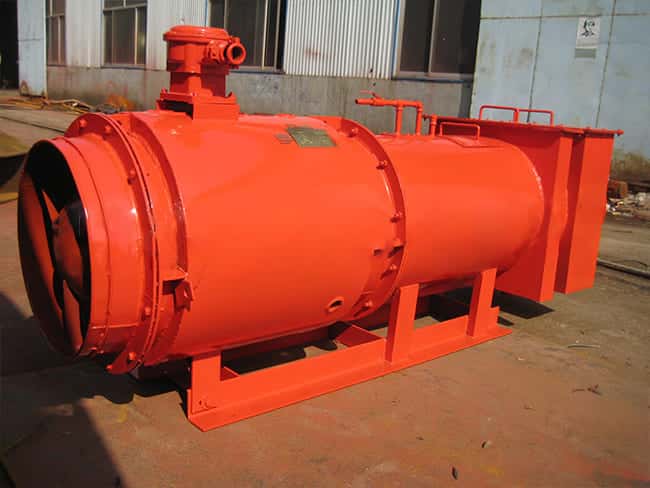
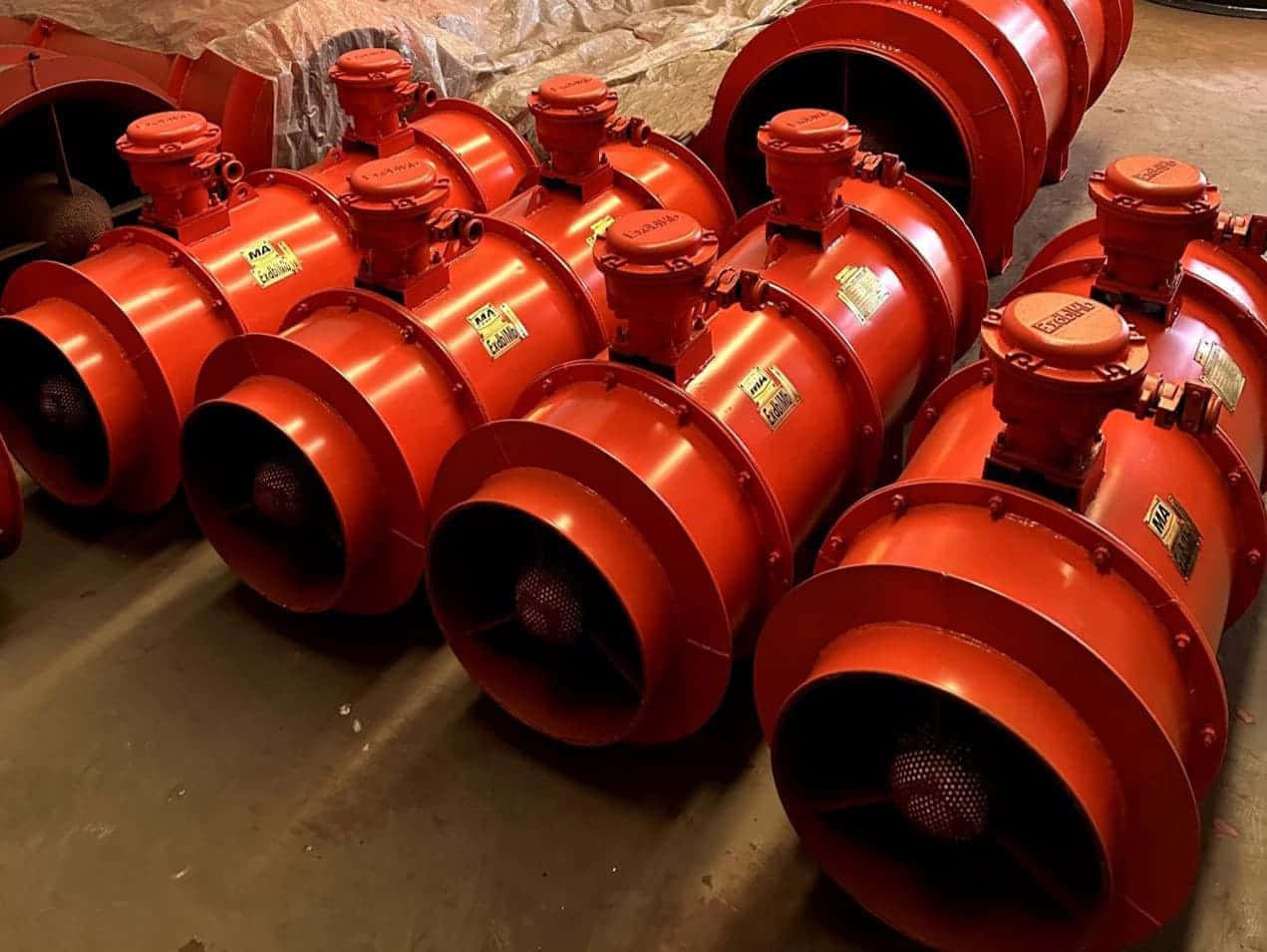
- Tube-axial fans – axial impellers mounted in cylindrical casings, often used in ducts, tunnels and mining headings.
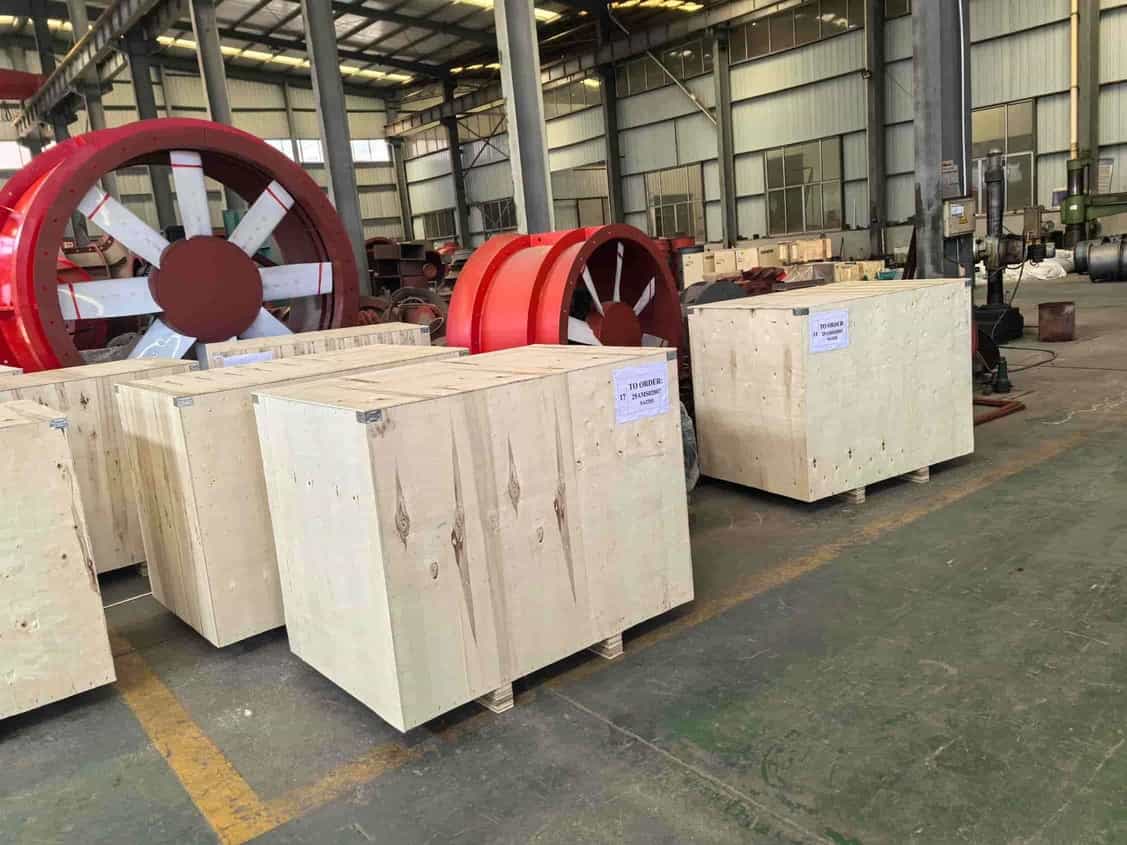
- Vane-axial fans – axial fans with guide vanes that straighten the airflow, improving pressure capability and efficiency; widely used as main fans in mines and tunnels.
- HVLS fans (high-volume low-speed) – very large-diameter ceiling fans that slowly circulate air in warehouses and industrial halls.
Centrifugal industrial fans draw air into the centre of a rotating impeller and then fling it outward into a scroll casing, turning the flow from axial at the inlet to radial at the outlet. Important subtypes include:
- Forward-curved fans – compact fans often used in HVAC systems, delivering moderate pressure with lower noise.
- Backward-curved or backward-inclined fans – high-efficiency designs suitable for higher pressure and cleaner gases.
- Radial blade (paddle wheel) fans – rugged designs capable of handling dust, particles and abrasive fumes in mining, cement and steel plants.
Mixed-flow fans combine features of axial and centrifugal fans. Air enters axially and leaves the impeller at an intermediate angle, allowing mixed-flow fans to provide higher pressure than pure axial fans while keeping a more compact shape than many centrifugal designs. They are used where space is limited but higher pressure and stable performance are required.
In addition to these main categories, there are specialised industrial fan designs such as plug fans for air-handling units, roof-mounted exhaust fans, inline duct fans, induced-draft (ID) and forced-draft (FD) fans for boilers and explosion-proof fans for hazardous areas. For mining ventilation, the most important industrial fans are large axial main fans, booster fans, auxiliary fans for headings and centrifugal fans for dust extraction systems.
Choosing between these different types of industrial fans depends on required airflow, pressure, efficiency, gas composition, dust loading, noise limits, installation space and safety requirements. A correct match between fan type and duty improves reliability, energy efficiency and worker comfort in demanding industrial and mining environments.