
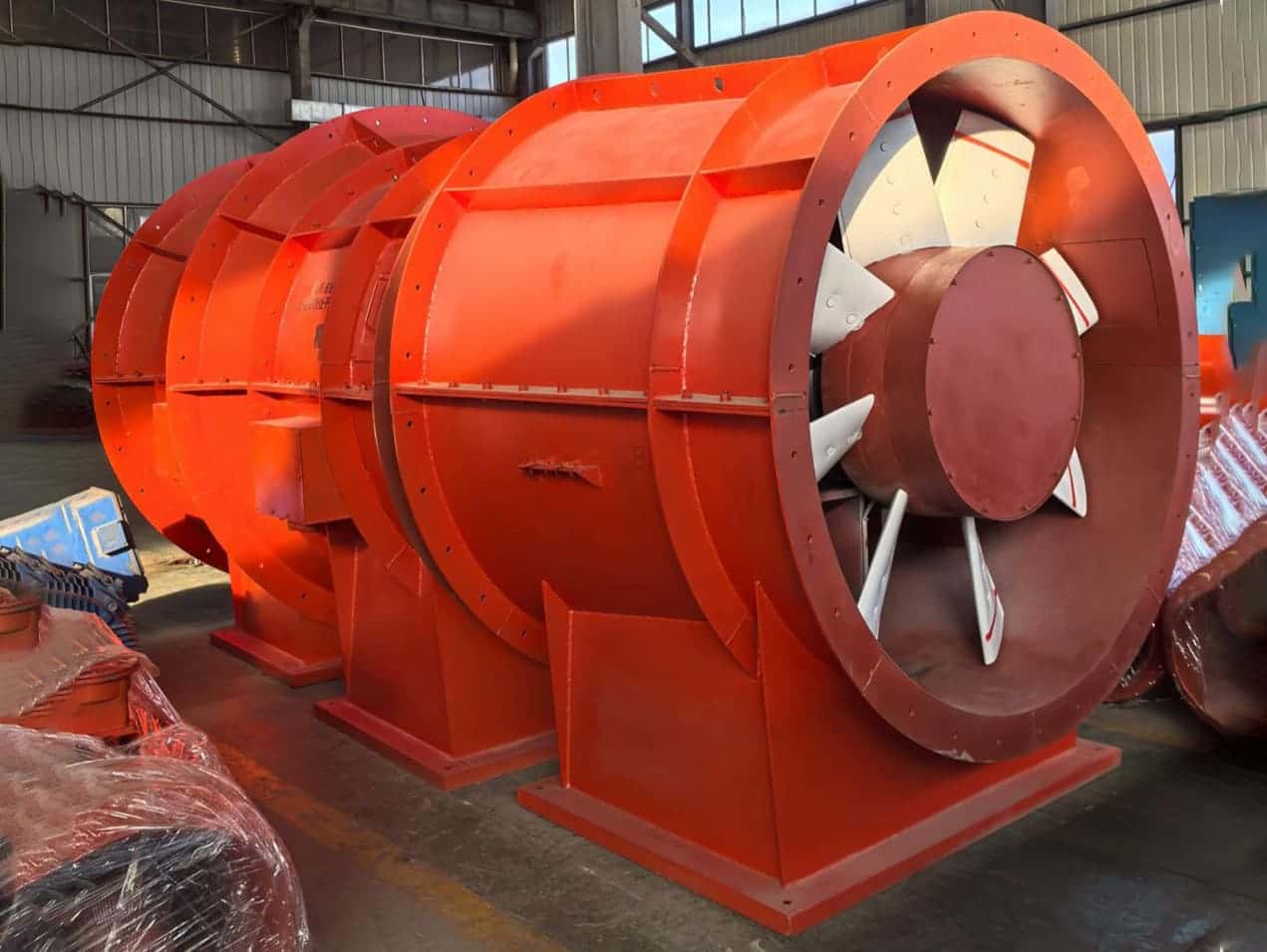
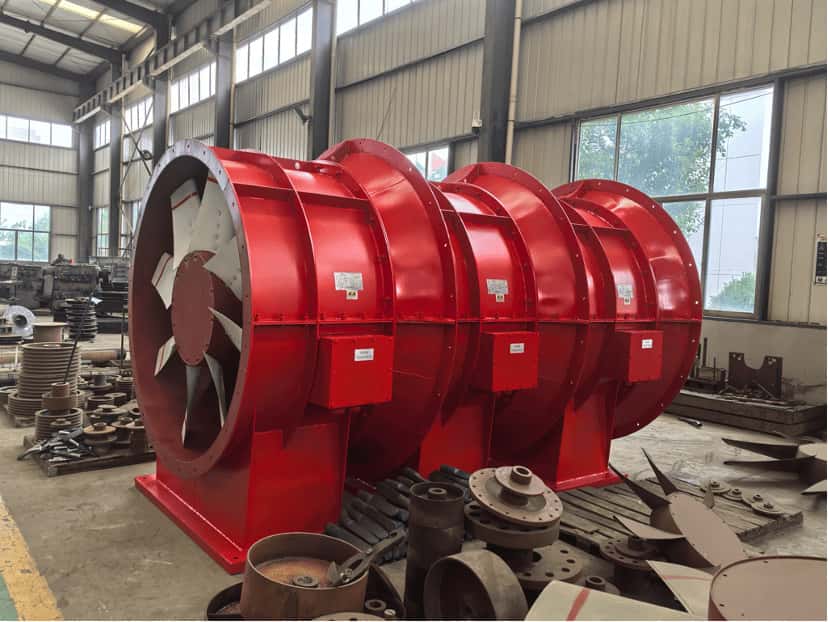
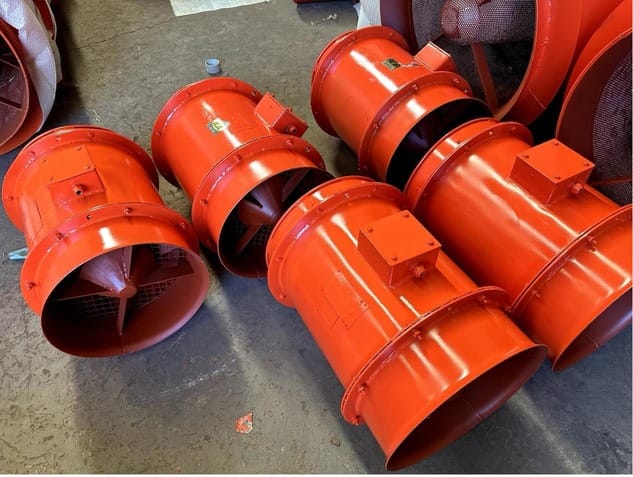
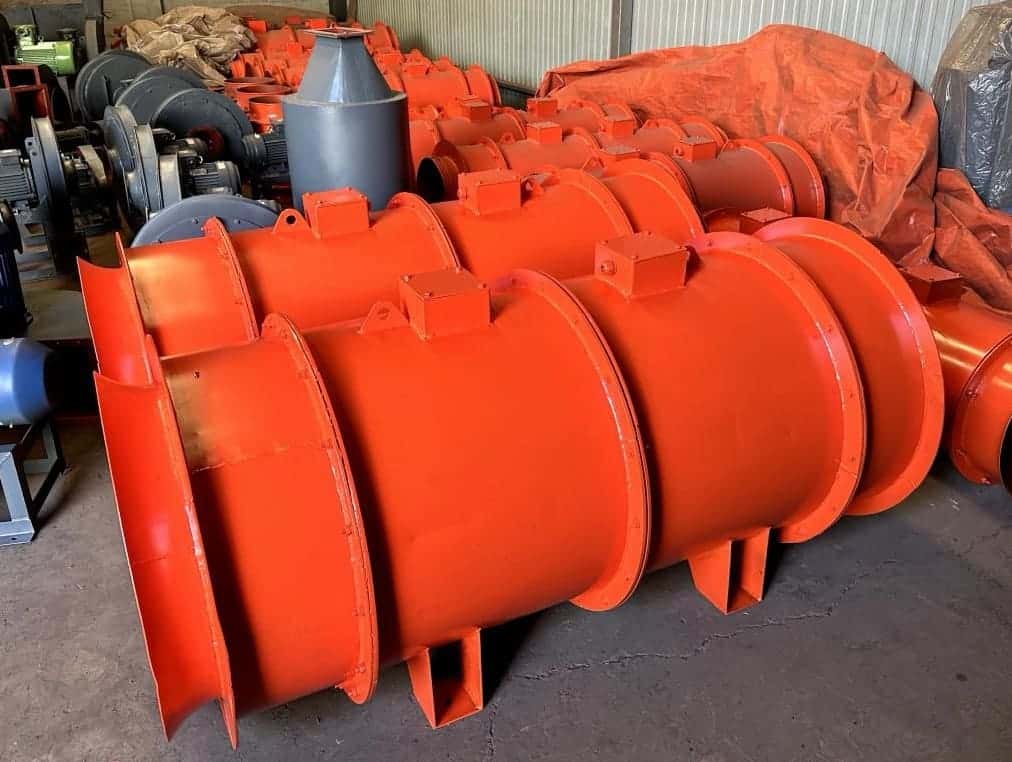

Although booster fans can be useful in some ventilation systems, they also have several important disadvantages that must be considered, especially in mining and industrial applications. If they are used as a quick fix rather than as part of a properly engineered system, booster fans can create more problems than they solve.
One major disadvantage is the potential for airflow instability and recirculation. Adding a booster fan changes the pressure distribution in the network. If it is not correctly coordinated with main fans, regulators and stoppings, air may recirculate between intake and return airways instead of following the planned route. In underground mines, this can dilute fresh air with contaminated return air and undermine gas control. Some regulations restrict booster fans in certain mines precisely because of these risks.
Booster fans also increase system complexity and energy consumption. Each additional fan requires power, controls, cables, starters and often monitoring equipment. If the overall system is not optimised, the added fan may consume energy without delivering proportional airflow gains. Poorly selected booster fans that operate far from their best efficiency point can be particularly wasteful.
Another disadvantage is the additional noise and vibration generated by booster fans, especially if they are installed close to workplaces or in confined headings. Noise can be a significant concern in mines and industrial plants, and every fan added to the system contributes to the acoustic load. Extra vibration may also affect nearby structures and equipment if mounting and balancing are not done correctly.
From a maintenance perspective, booster fans introduce more equipment to inspect and service. Bearings, belts (if fitted), motors and electrical components all require attention. In remote underground locations, accessing booster fans for maintenance can be difficult and time-consuming. A failure of a critical booster fan can lead to reduced airflow and production delays until repairs are made.
Finally, there can be regulatory and safety disadvantages. In some jurisdictions, the use of booster fans in gassy coal mines is restricted or requires special approval because of concerns about explosion risk and control of airflow patterns. This may limit where and how booster fans can be used, adding administrative burden and design constraints.
In summary, the disadvantages of booster fans include possible airflow instability and recirculation, increased energy use and complexity, additional noise and vibration, higher maintenance needs and potential regulatory limitations. For these reasons, booster fans should only be used when justified by careful ventilation design and risk assessment.
