
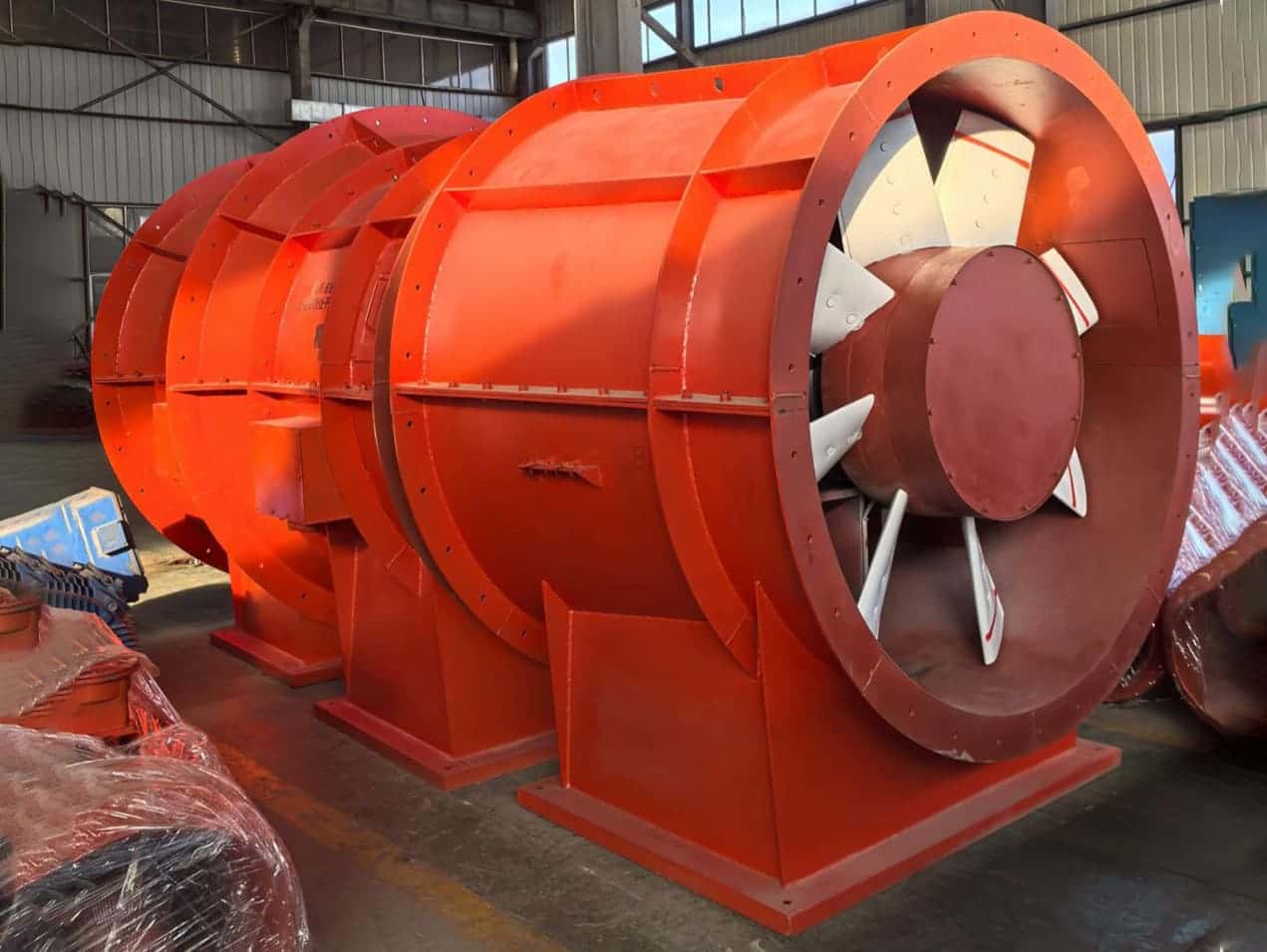
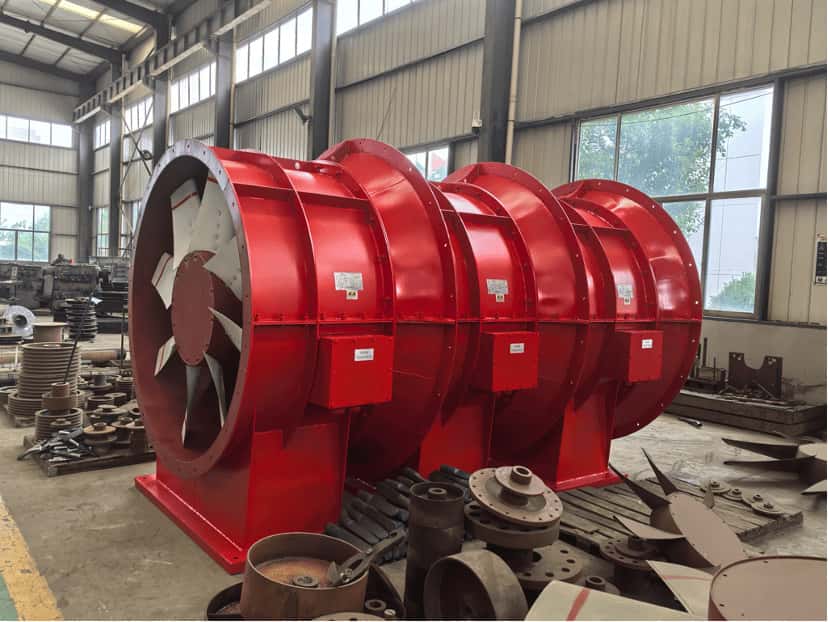
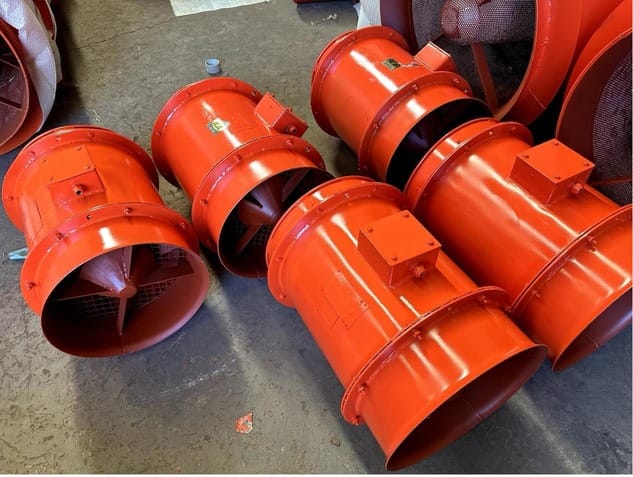
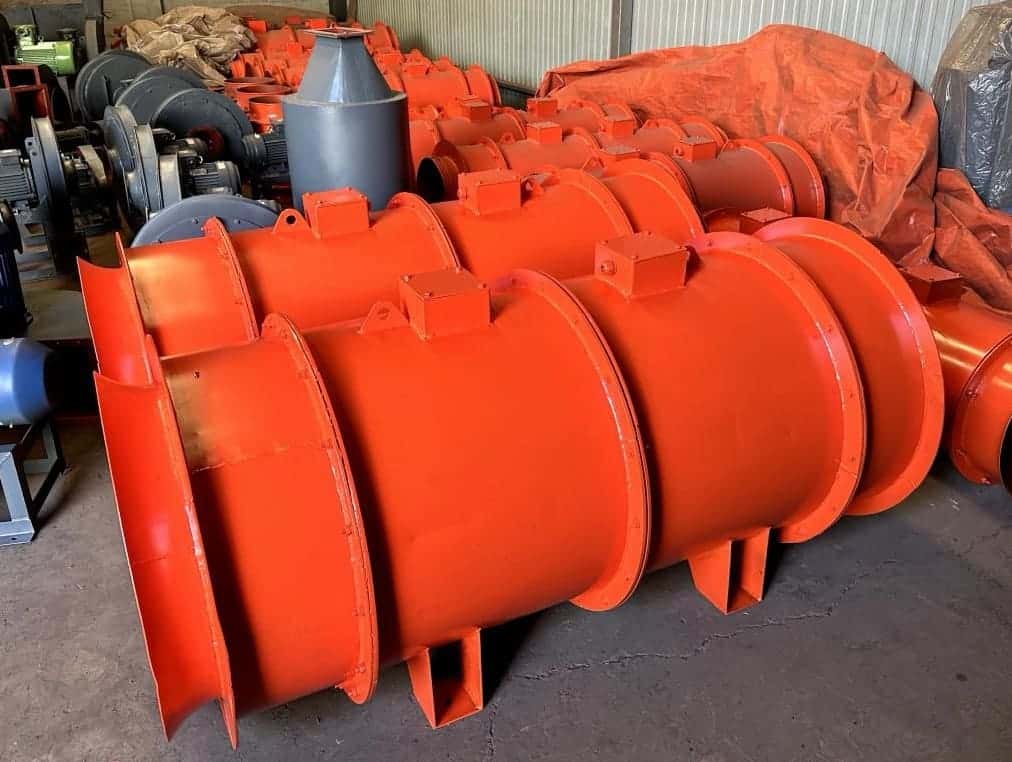
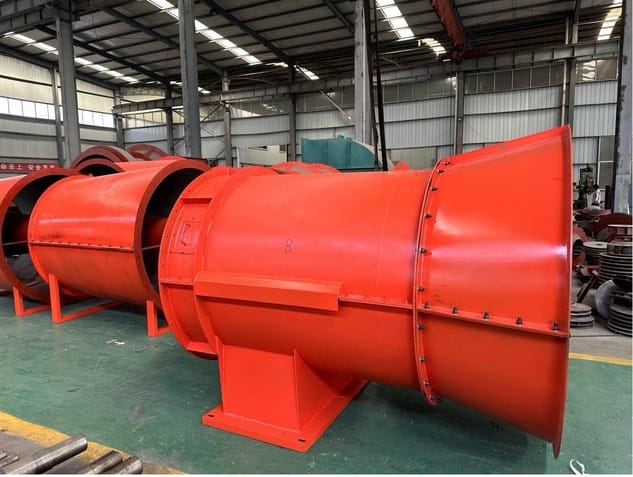
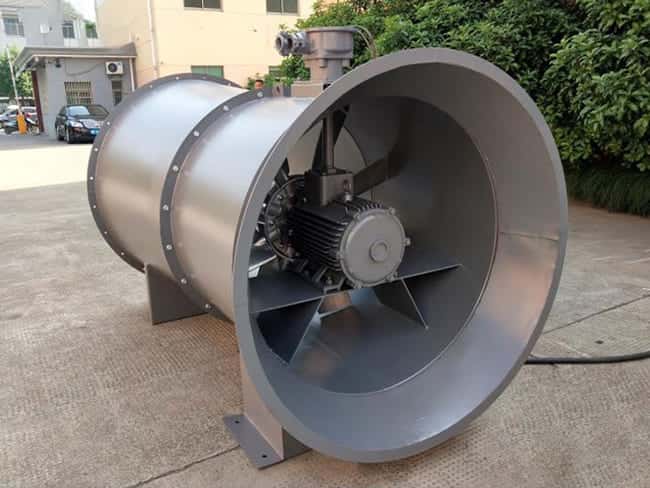
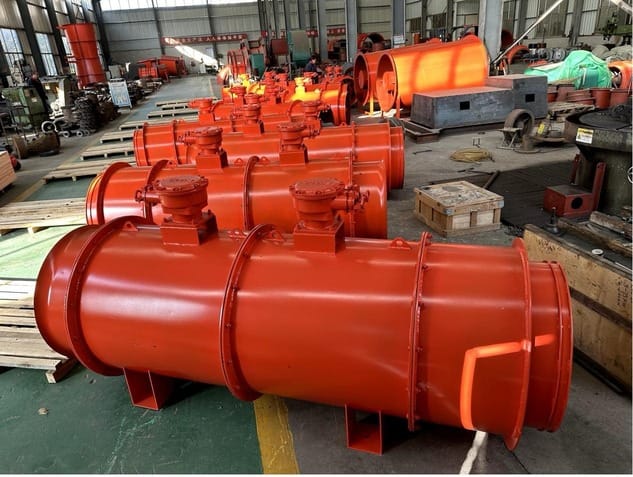
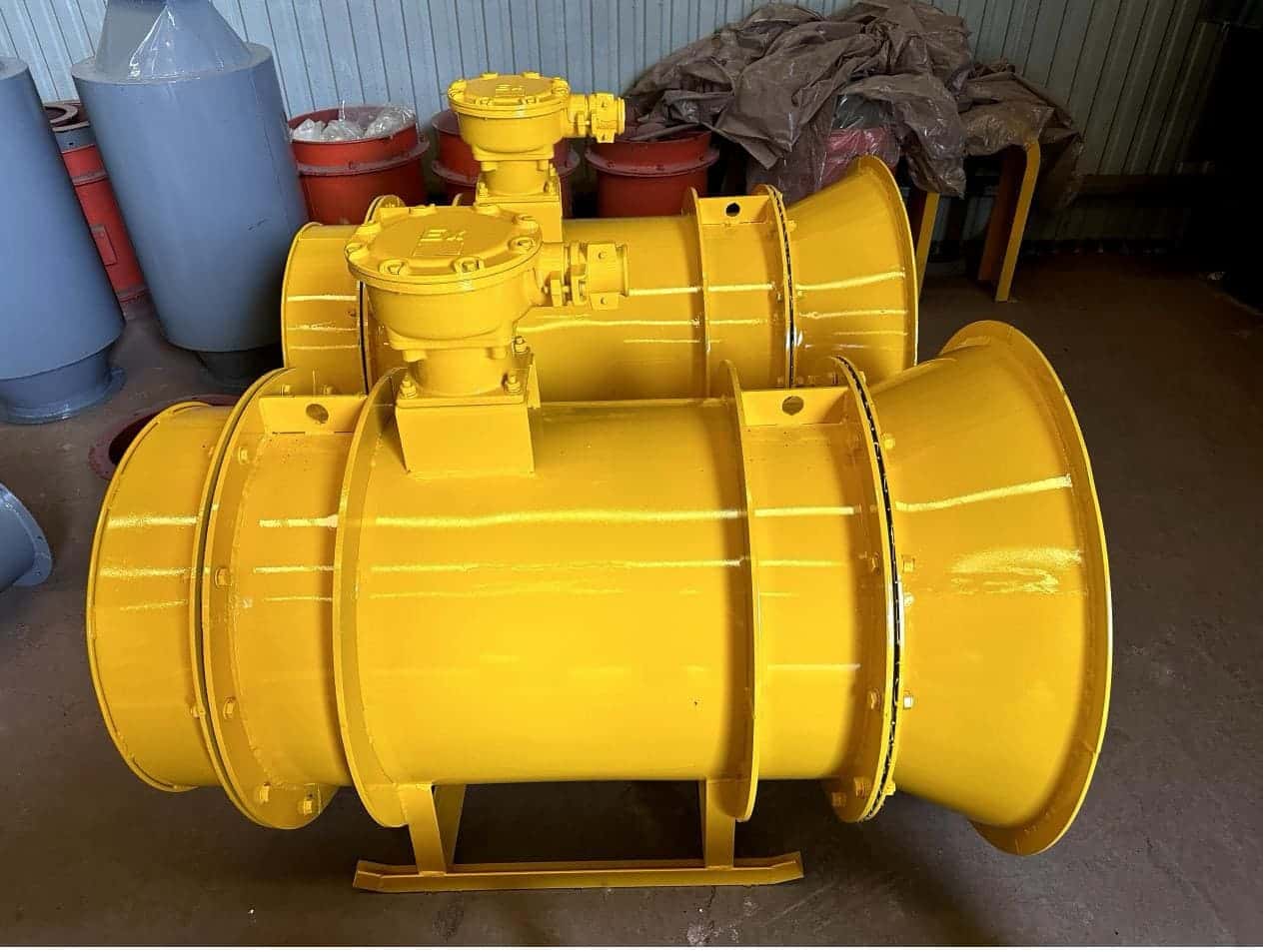
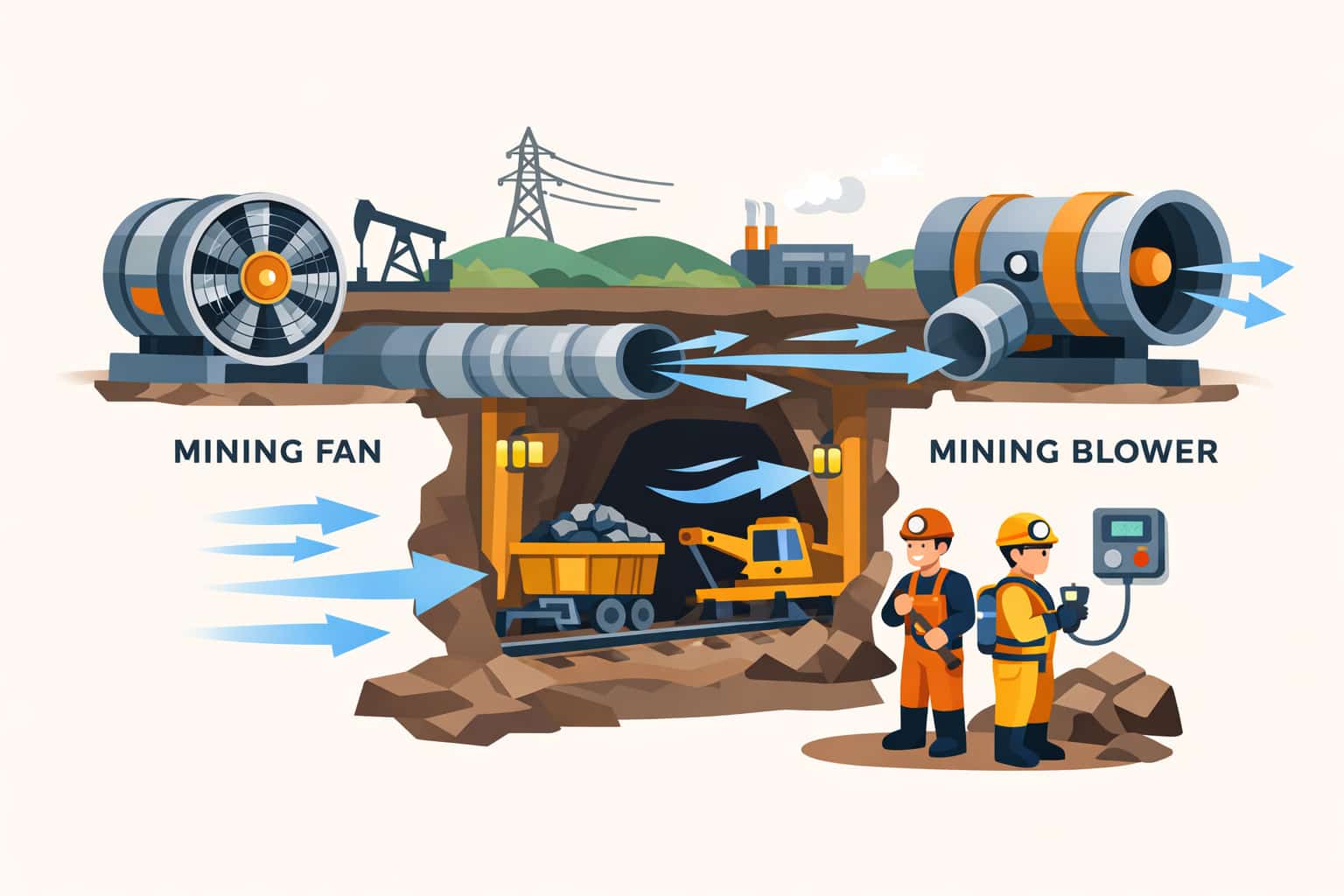
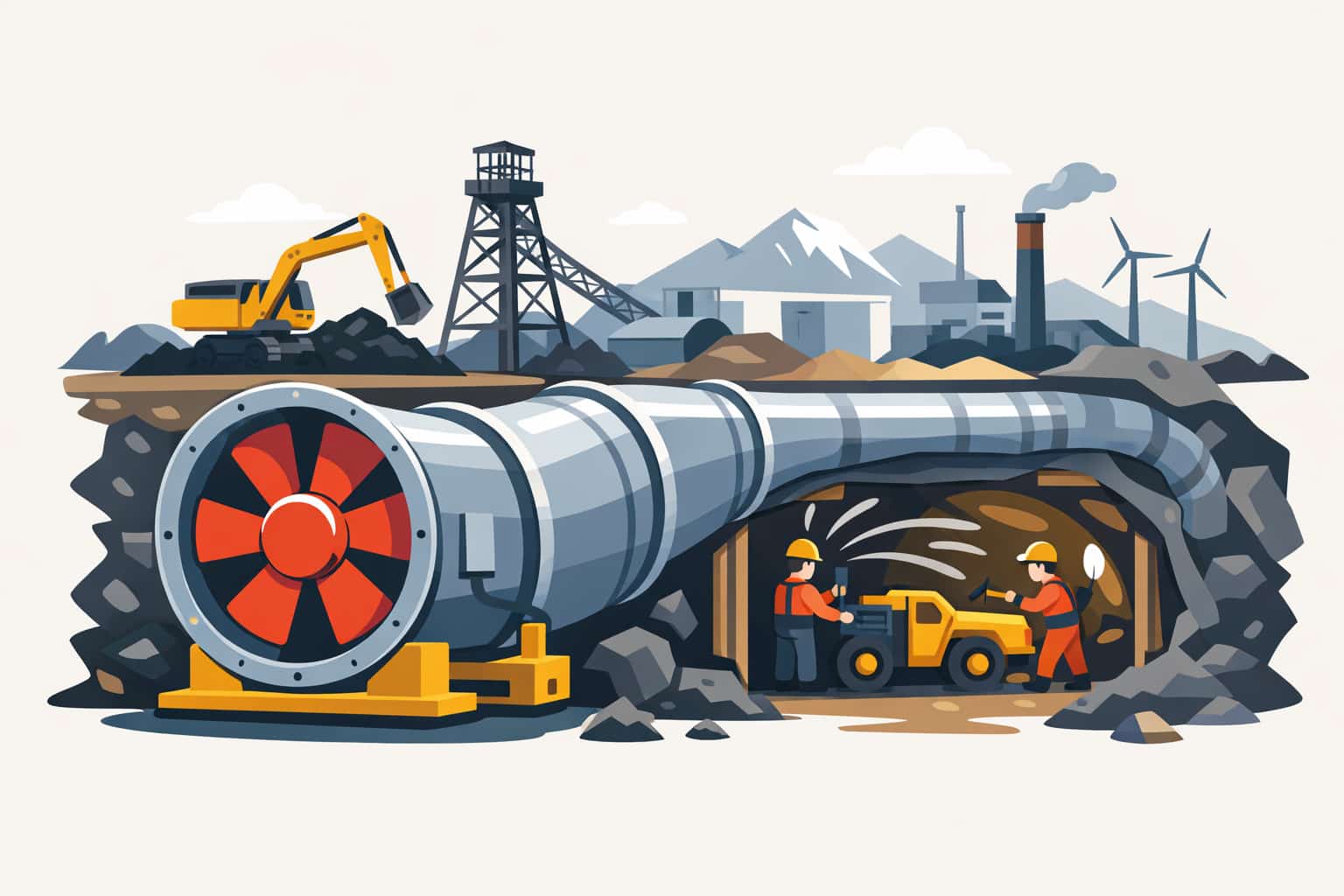
An exhaust fan is a simple and effective way to remove hot, humid or contaminated air from a room or process area, but it also has several disadvantages that need to be considered in ventilation design. These drawbacks become more important in industrial plants and mines, where air quality, energy use and noise levels are tightly controlled.
One of the most noticeable disadvantages is noise. Many exhaust fans, especially older or poorly maintained units, generate significant sound from both the motor and the turbulent airflow. Large wall-mounted or roof-mounted fans can transmit vibration into the building structure and radiate noise to neighbouring properties. In underground mines, the noise from auxiliary exhaust fans can contribute to overall sound levels, increasing the need for hearing protection and acoustic treatment.
Another issue is that simple exhaust fans provide limited control over the quality and path of incoming fresh air. When an exhaust fan pulls air out of a space, replacement air enters through any available openings—doors, windows, cracks or unplanned gaps. This can lead to unwanted draughts, uneven distribution of fresh air and the risk of drawing in dust, odours or pollutants from undesired locations. Without properly designed intake louvers or supply fans, air movement may not follow the pattern you expect.
Exhaust fans can also contribute to energy loss if they are not integrated with the building’s heating and cooling strategy. In cold or hot climates, exhaust fans remove conditioned air and replace it with outdoor air at ambient temperature. If fans run longer than necessary or are oversized, the heating or cooling system must work harder to maintain indoor conditions, increasing energy costs. In industrial processes, uncontrolled exhaust can also remove valuable heated air or conditioned air from production areas.
Another disadvantage is that a single exhaust fan often provides poor source capture of contaminants. If fumes, dust or heat are generated at a specific point—for example, a welding station or a furnace—relying solely on general exhaust may allow pollutants to spread through the room before being removed. Local exhaust ventilation with hoods and ducts is usually more effective for capturing contaminants at the source, while general exhaust fans help with overall dilution.
Finally, exhaust fans can create unintended pressure imbalances. Strong exhaust without adequate makeup air can cause excessive negative pressure, leading to difficulty opening doors, back-drafting of combustion appliances, or infiltration of air from undesirable areas such as loading docks, toilets or process rooms. In mines, unbalanced exhaust can disturb the planned airways and compromise ventilation control.
In summary, the disadvantages of an exhaust fan include noise, draughts, limited control of incoming air, potential energy losses, poor source capture of contaminants and possible pressure imbalance if the system is not carefully designed. Exhaust fans are useful tools, but they should be integrated into a well-planned ventilation strategy rather than used as the only solution.