
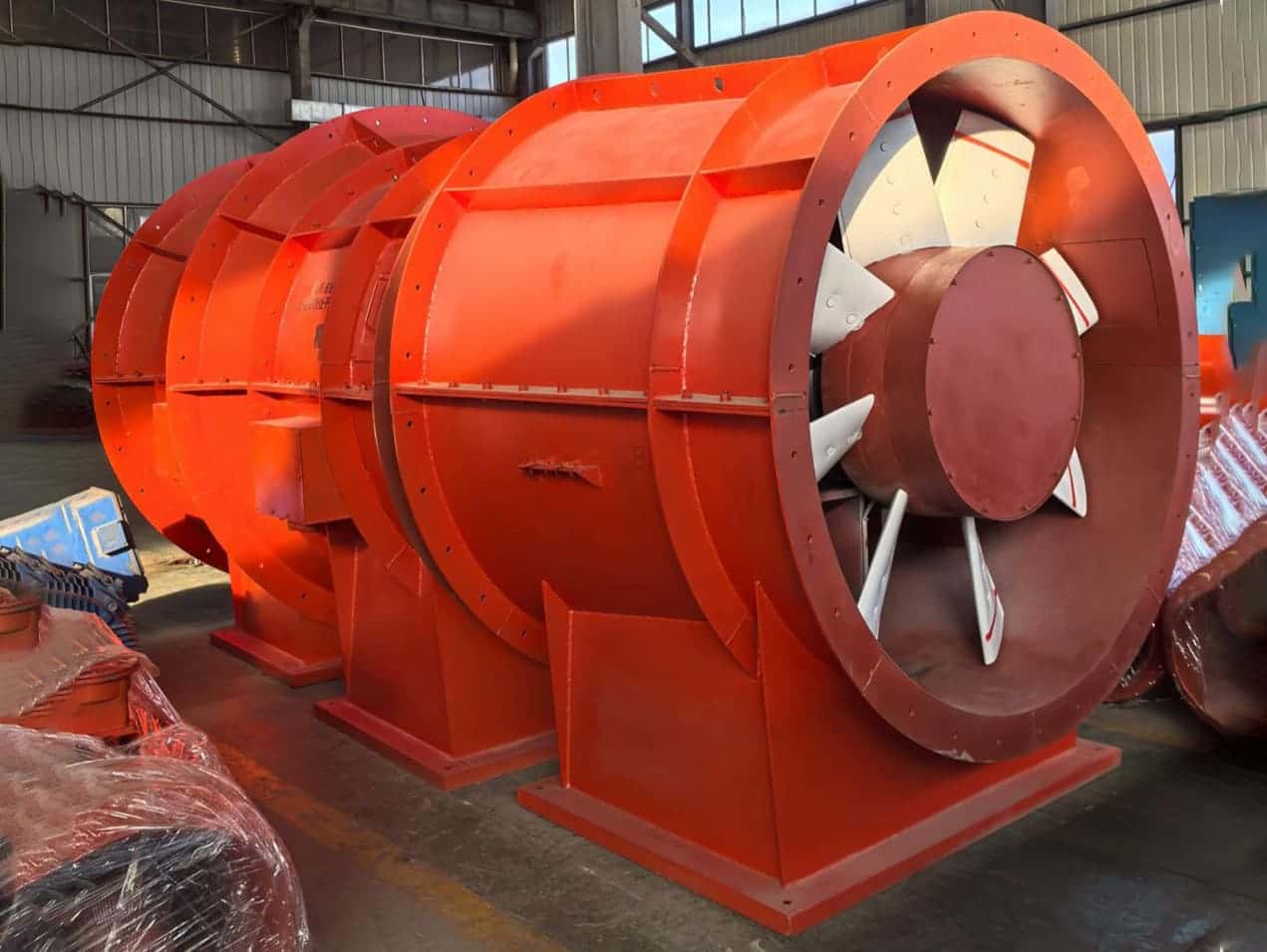
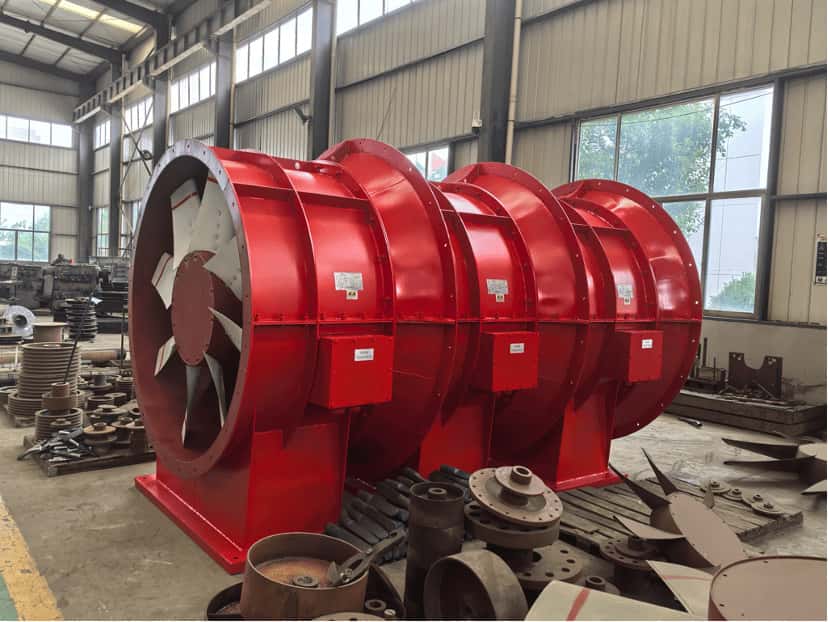
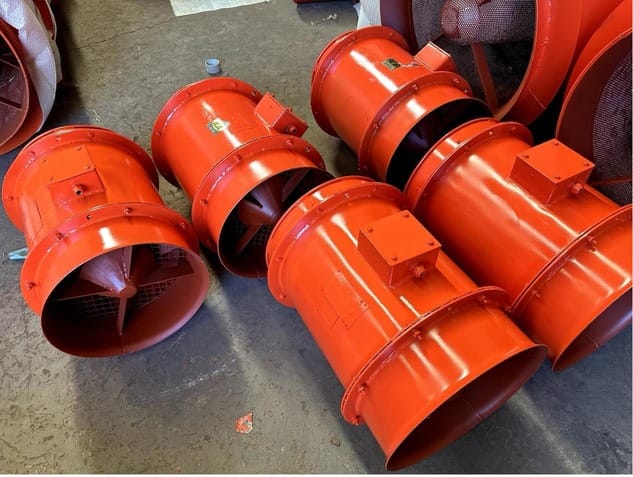
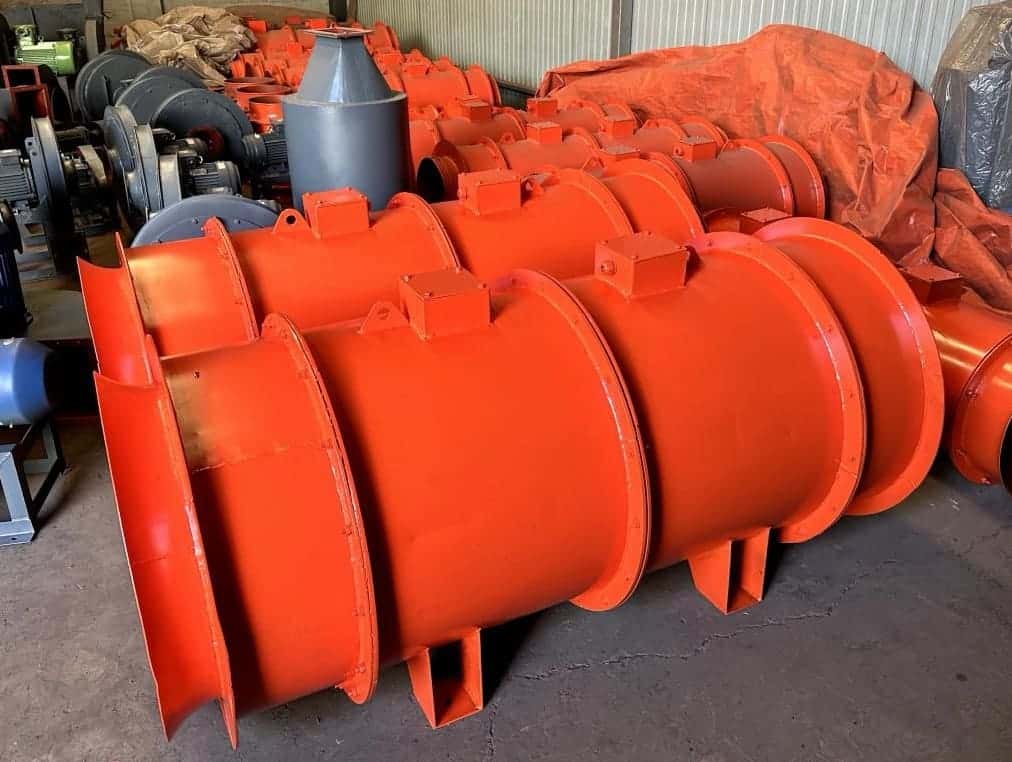
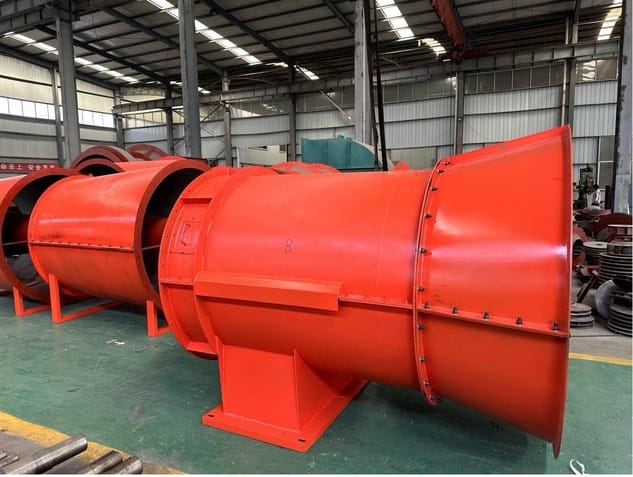
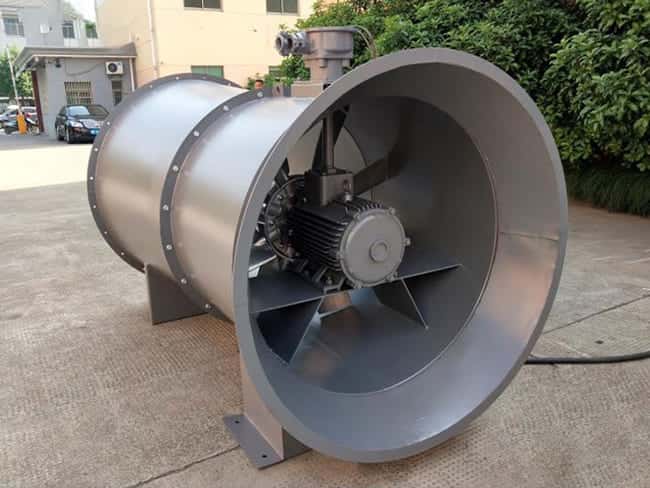
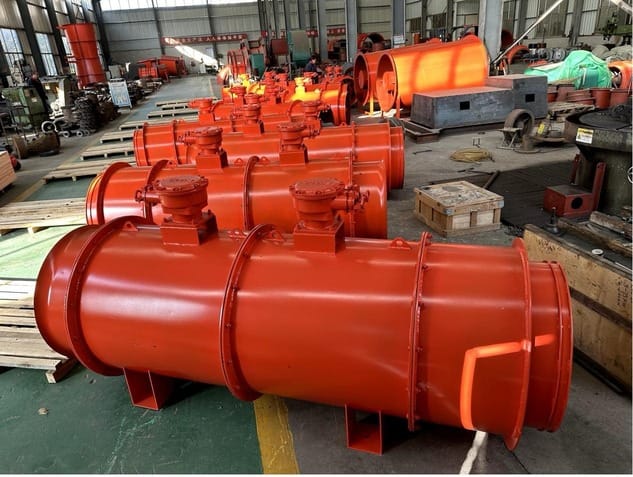
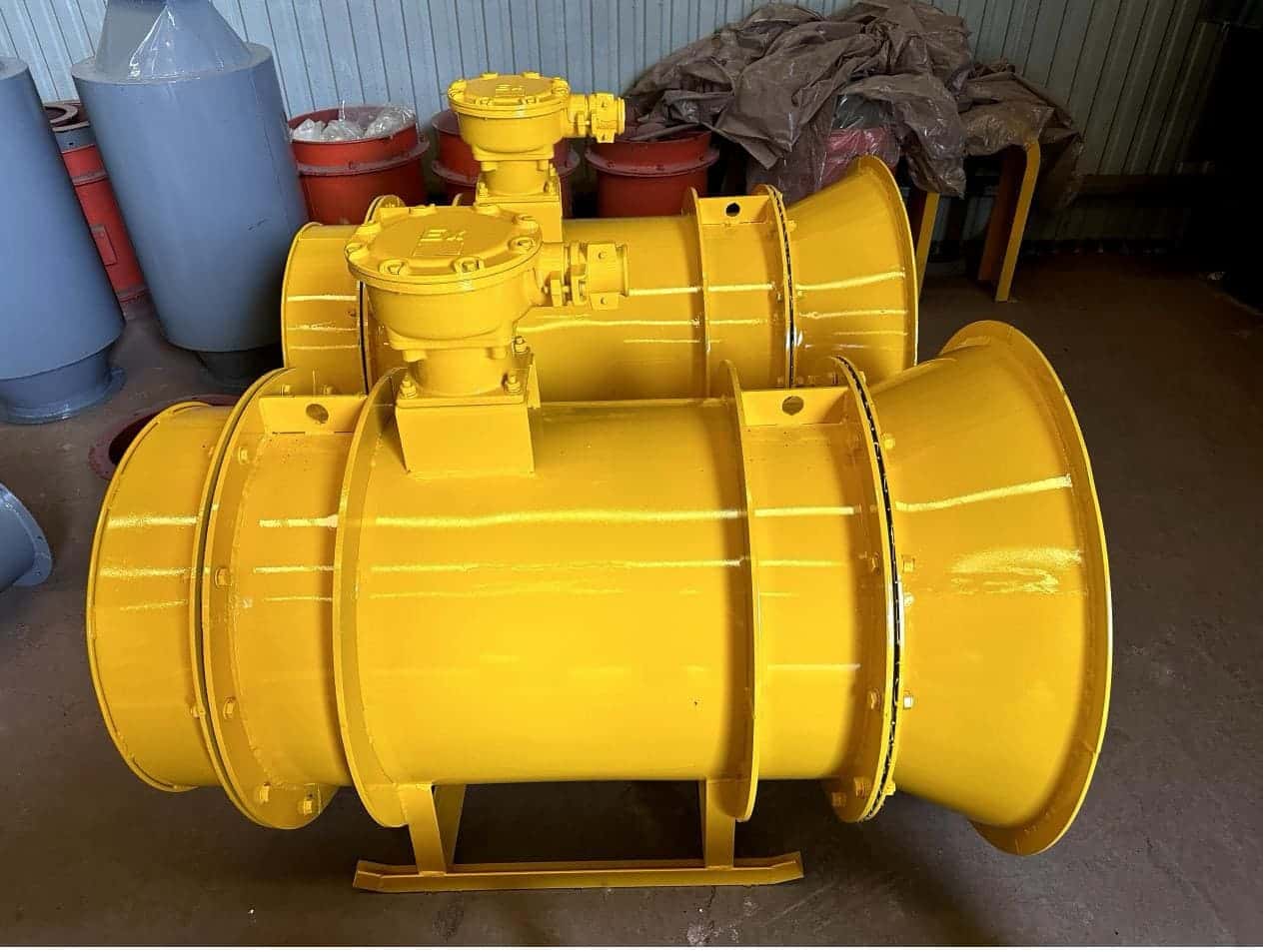
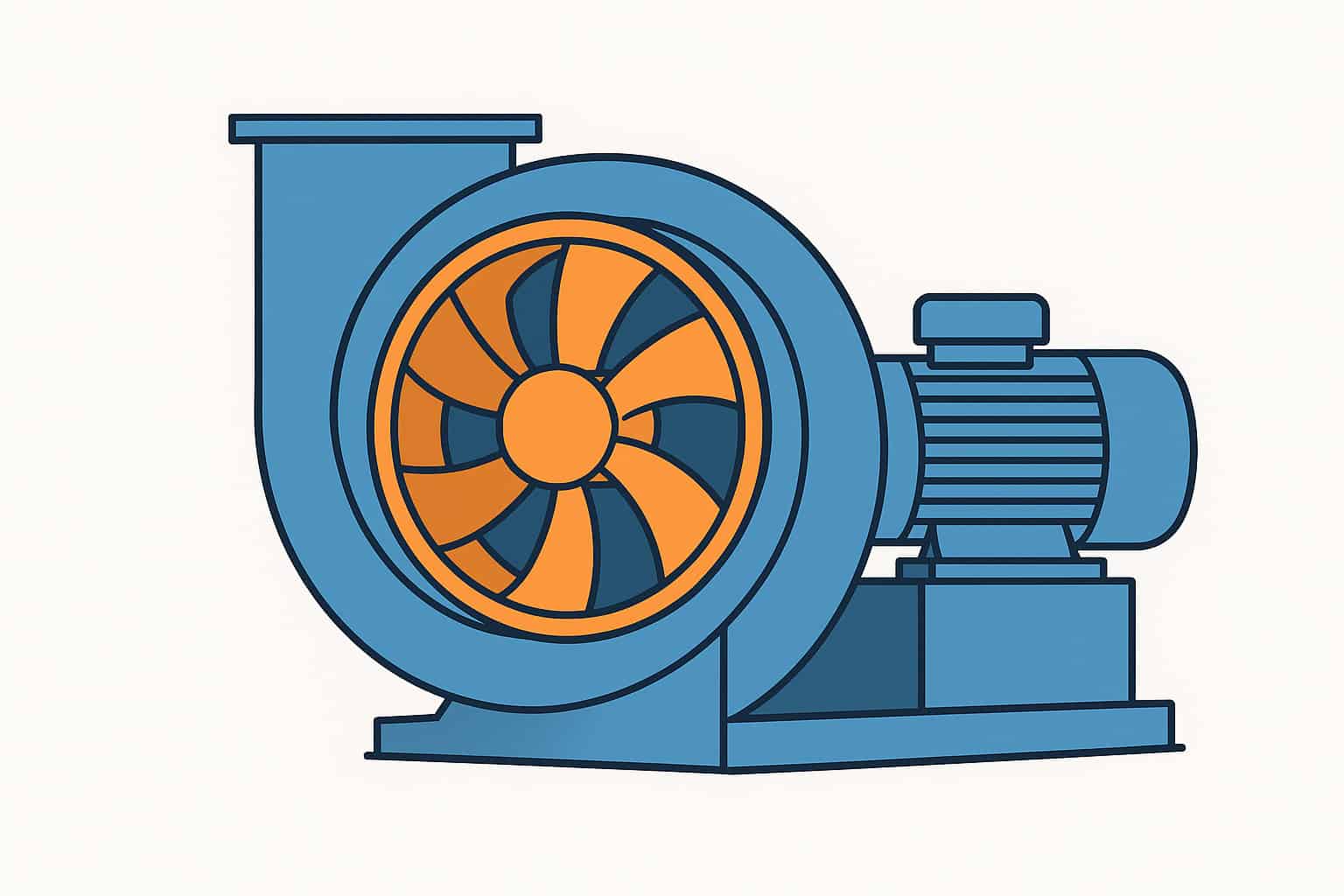
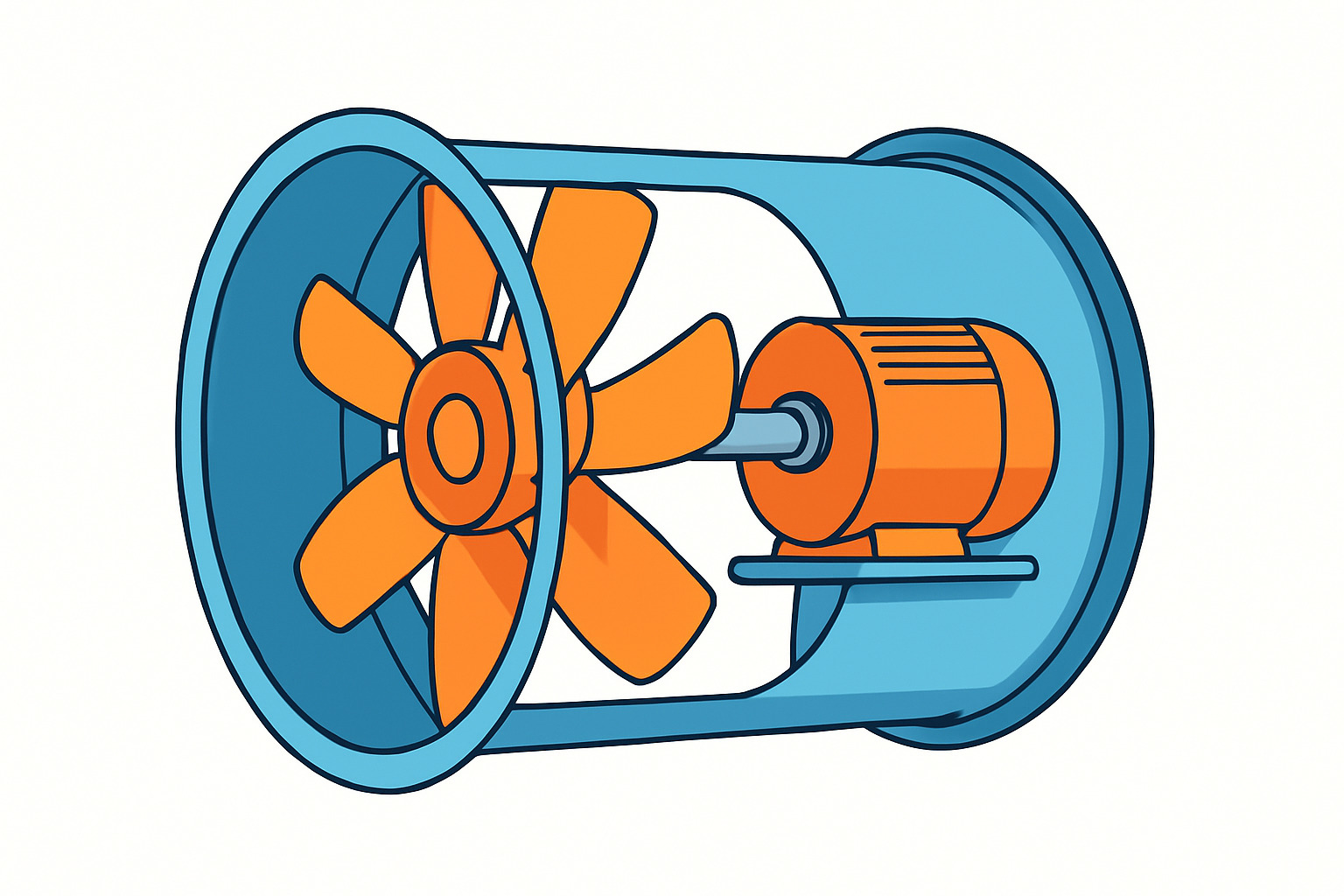
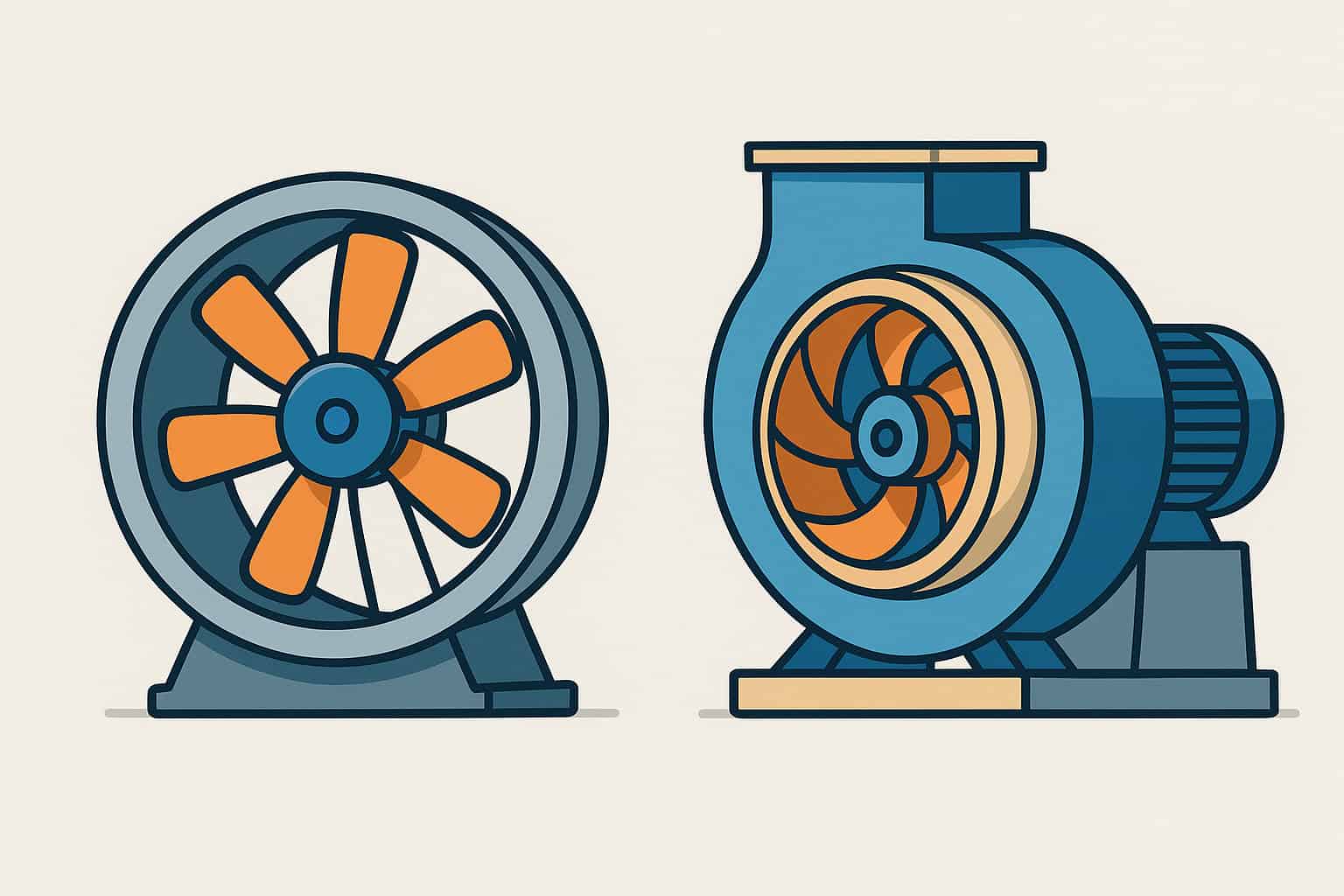
Although axial fans are very popular in mining and industrial ventilation because they move large volumes of air efficiently, there are several disadvantages of axial fans that designers must understand. These limitations often determine whether an axial fan or a centrifugal fan is the better choice for a particular ventilation duty.
The first disadvantage is that axial fans generally have lower static pressure capability than centrifugal fans of similar size and power. They are excellent for moving air through relatively low-resistance airways and ducts, but as system resistance rises (for example, long rough drifts, tight bends, dense filters or cooling coils), an axial fan may struggle to deliver the required airflow. In high-resistance mining circuits, a centrifugal fan or a carefully selected vane-axial fan may be more suitable.
Another disadvantage is noise, especially at high speeds. To achieve a given pressure, axial fans often operate at higher tip speeds than centrifugal fans. High tip speed combined with blade passing frequencies can generate significant aerodynamic noise. For main fans near surface communities, or auxiliary fans close to workplaces underground, this can require silencers, acoustic treatment and careful speed selection, adding cost and complexity.
Axial fans can also be more sensitive to system changes. Their performance is influenced strongly by inlet conditions, outlet conditions and swirl in the airflow. Poor inlet boxes, sharp duct transitions or partially blocked intakes can cause flow separation, vibration and reduced efficiency. In underground mines, where ducting is moved and reconfigured frequently, these issues can appear if auxiliary fans and ducts are not installed carefully.
A further disadvantage is that axial fans may suffer from reduced efficiency when operating far from their design duty point. If the ventilation system is throttled with dampers or if the actual resistance is very different from what was assumed in design, the fan may run at a point on its curve where efficiency drops and power consumption rises. In such cases, the energy advantage of an axial fan can be lost, and operators may see higher electricity bills than expected.
Mechanical considerations also matter. High-speed axial fans require accurate balancing and robust bearings to control vibration. In dusty mining environments, blade erosion and fouling can upset balance and increase noise. Regular inspection, cleaning and balancing are essential, which adds maintenance requirements compared with some slower-speed centrifugal designs.
In summary, the disadvantages of axial fans include limited pressure capability in very high-resistance systems, higher noise at high speed, sensitivity to inlet and outlet conditions, and reduced efficiency when operating away from their design point. Recognising these limitations helps ventilation engineers decide when an axial fan is the right solution and when a centrifugal or mixed-flow fan would be a better choice.