
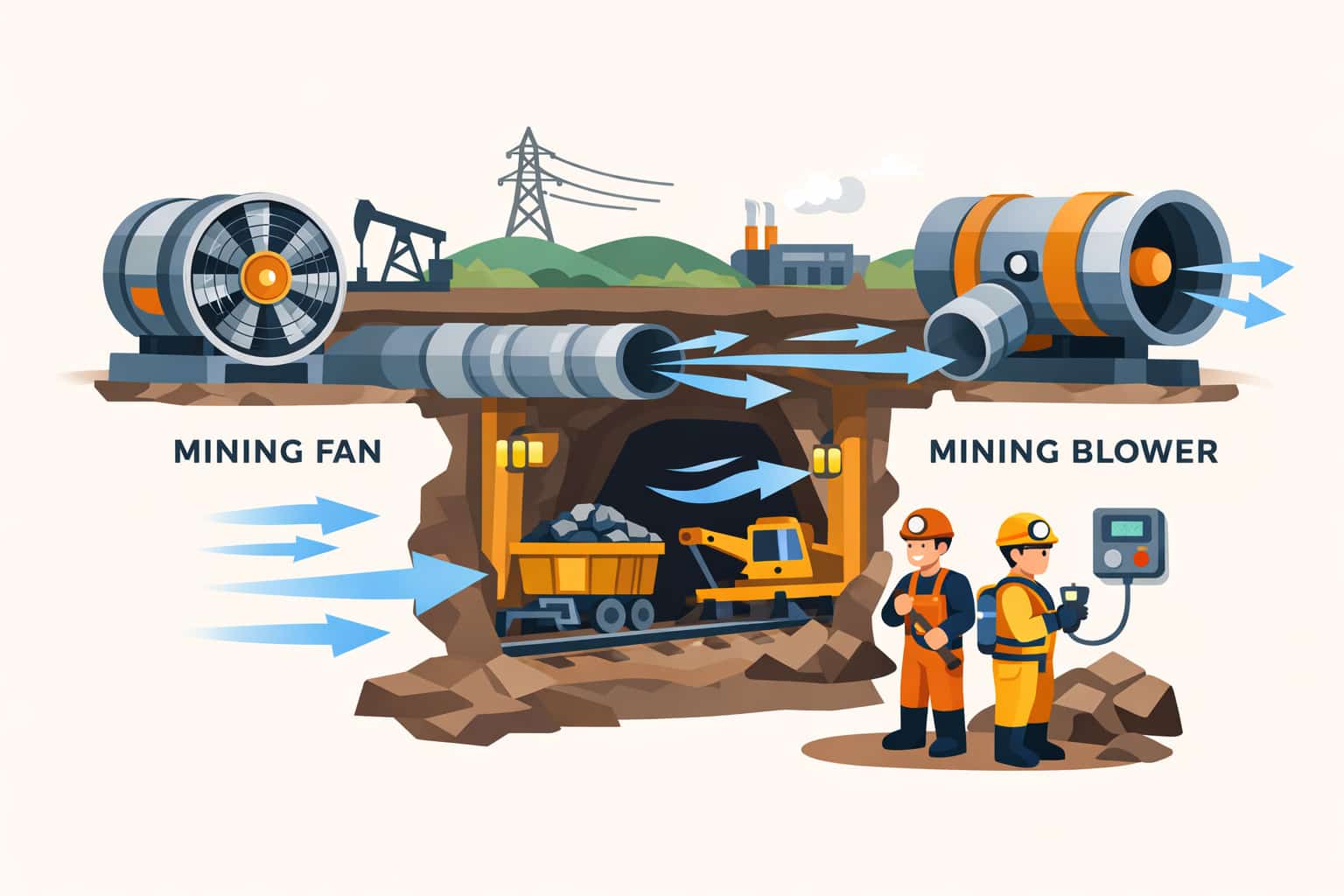
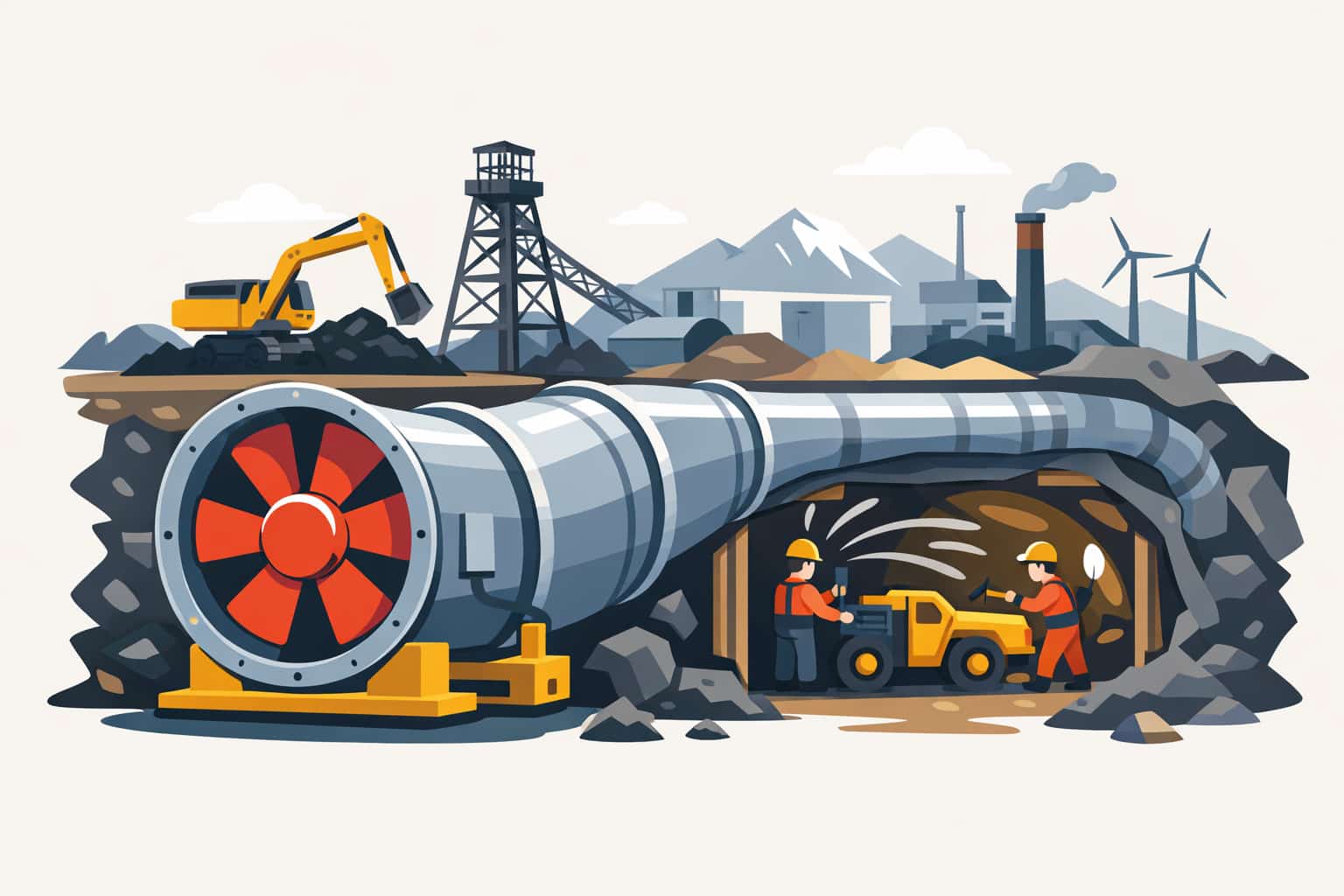
Ventilation serves several objectives, but they can be grouped into four main purposes: supplying fresh air, removing contaminants, controlling temperature and managing humidity and odours. These purposes apply to homes and offices, but they are especially critical in industrial plants and mines where air quality directly affects safety and production.
The first purpose is supplying fresh air and oxygen. People and combustion processes use oxygen and produce carbon dioxide and other gases. Without a continuous supply of fresh outdoor air, CO2 rises, oxygen can fall, and indoor air becomes stale. In buildings, this leads to discomfort and reduced productivity. In underground mines and enclosed industrial spaces, inadequate oxygen can quickly become life-threatening. Ventilation systems bring in enough fresh air to maintain safe gas concentrations.
The second purpose is removing or diluting contaminants. Many industrial and mining activities generate dust, fumes, vapours and gases: welding fumes, solvent vapours, diesel exhaust, blasting fumes, process emissions and fine mineral dust. Ventilation works with local exhaust systems to capture pollutants at the source and dilute any remaining contaminants in the general air. The goal is to keep exposure below occupational limits and prevent explosive atmospheres from developing.
The third purpose is controlling temperature and heat. Equipment, lighting, people and geological formations all produce heat. Without ventilation, temperatures in factories, tunnels and deep mines can climb to levels that are uncomfortable or dangerous. Ventilation carries heat away from hot surfaces and replaces warmed air with cooler air from outside or from cooled supply systems. This protects workers, extends equipment life and stabilises process conditions.
The fourth purpose is managing humidity and odours. Excess moisture in the air promotes corrosion, mould growth, slippery surfaces and electrical problems. Very dry air can cause static, dust re-suspension and discomfort. Ventilation, sometimes combined with dehumidification or humidification, keeps humidity in a workable range. At the same time, it helps remove odours from processes, storage areas or sanitary facilities, contributing to a more acceptable working environment.
All four purposes are interconnected. A well-designed ventilation system does not focus on just one of them; it supplies enough fresh air while also addressing contaminants, heat and moisture. In industrial and mining design, engineers quantify each of these needs and size fans, ducts and airways so that all four purposes are met across the entire facility.
In summary, the four main purposes of ventilation are to provide fresh air and oxygen, control harmful contaminants, remove excess heat and maintain acceptable humidity and odour levels. Together, these functions create a safe, healthy and efficient environment for people and processes.
