
Legal requirements for ventilation depend on the laws and standards in each country or region, but the basic principles are similar. In almost all jurisdictions, employers are required to provide workplaces with sufficient fresh air and to control harmful contaminants so that workers can perform their jobs safely. Underground mining, tunnelling and certain industrial processes are subject to especially strict ventilation rules because of the higher risks involved.
In general industry, health and safety regulations usually state that workplaces must have adequate ventilation to:
- Supply enough fresh air for breathing and comfort.
- Remove or dilute contaminants such as dust, fumes, vapours and odours.
- Control temperature and humidity to prevent heat stress and condensation.
These requirements may be expressed in terms of minimum air changes per hour, target air velocities, or limits on specific substances, such as maximum allowable concentrations of hazardous chemicals or dust.
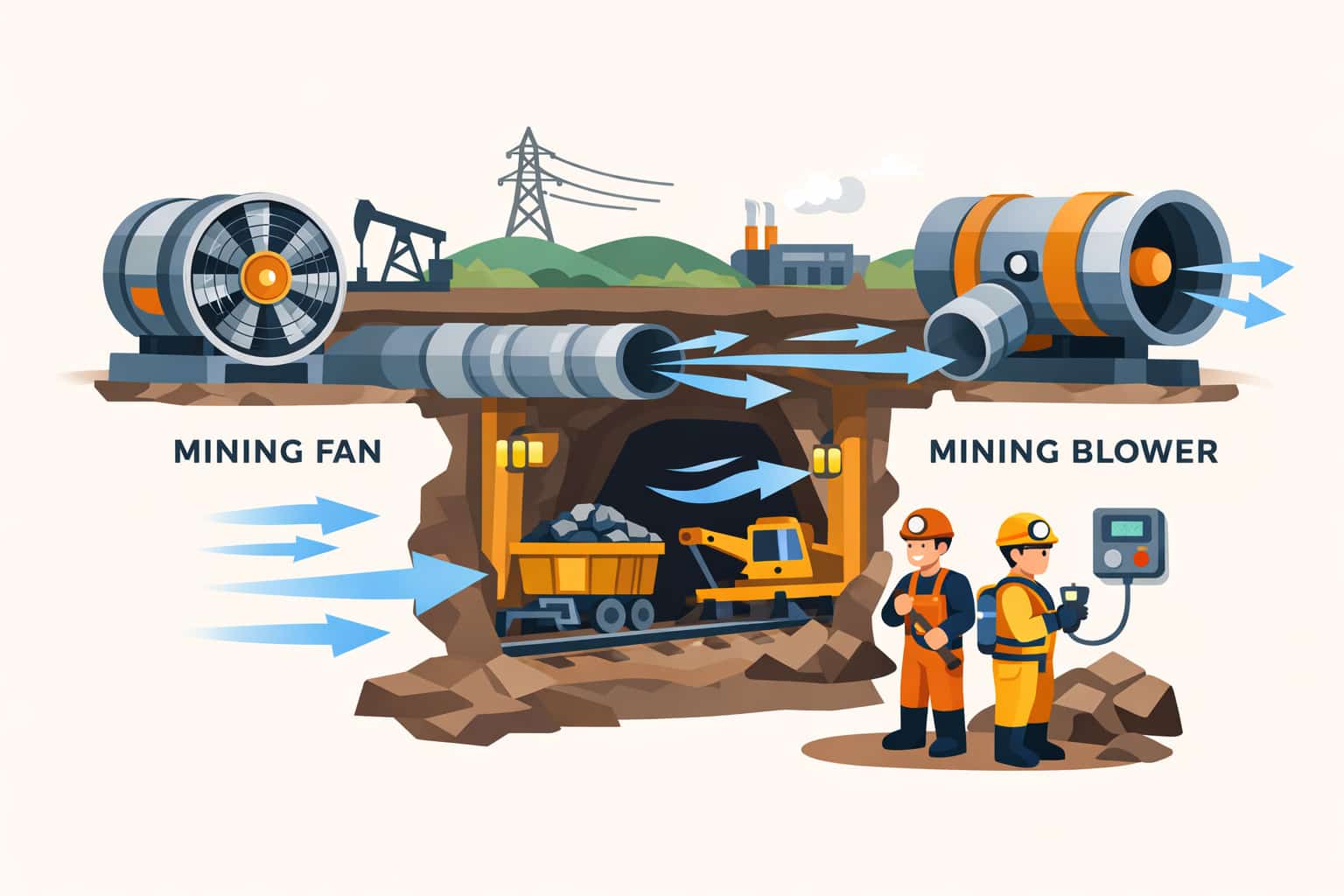
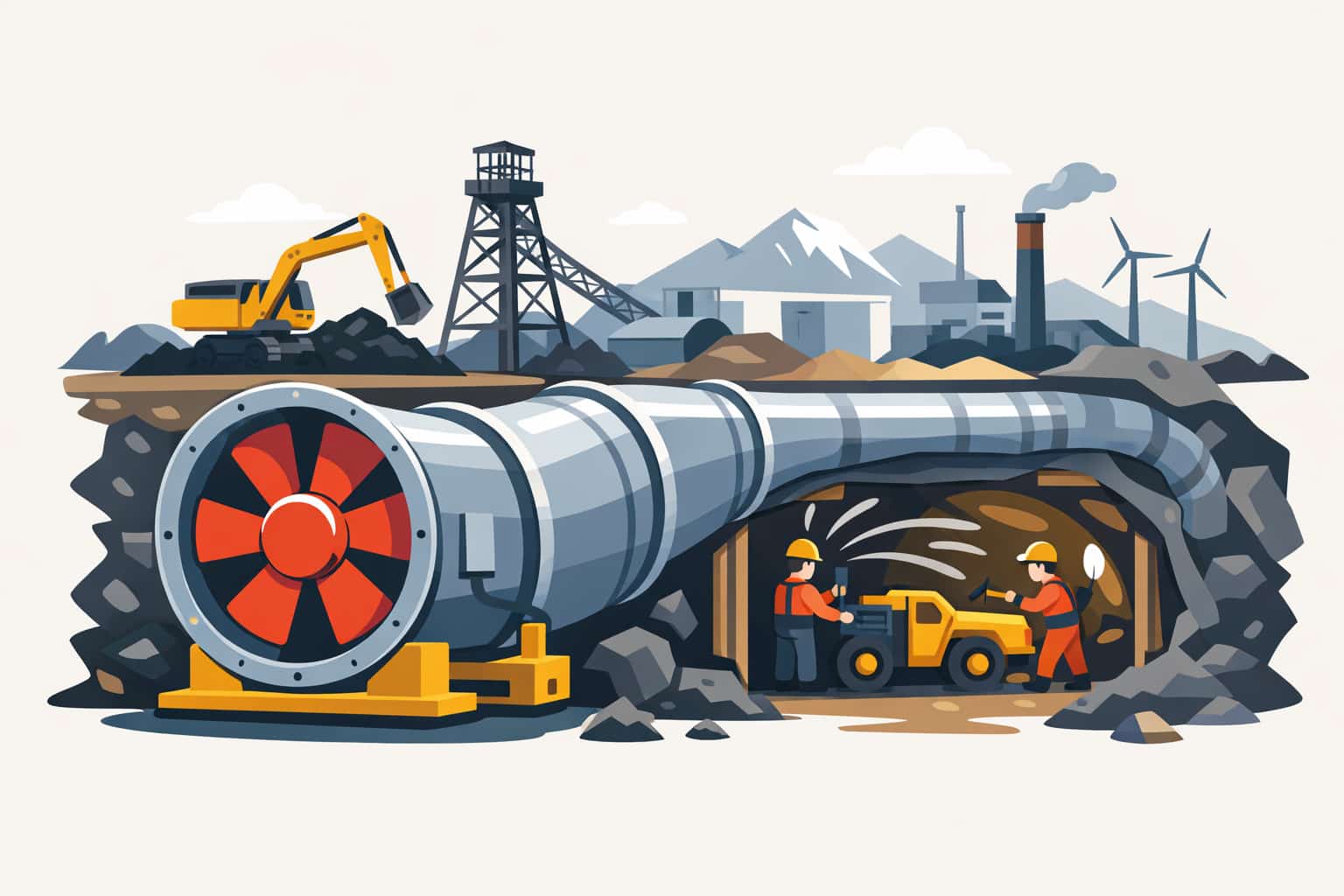
In underground mining and tunnelling, ventilation requirements are usually more detailed and mandatory. Regulations commonly specify:
- Minimum air quantities in main intakes and returns.
- Minimum fresh air supply per worker and per unit of diesel equipment power.
- Limits on concentrations of toxic gases, explosive gases and dust.
- Requirements for ventilation plans, monitoring and emergency procedures.
Authorities responsible for mine safety typically require operators to design, document and maintain a ventilation system that meets these standards and to update the system as workings advance.
Other sectors have their own rules. For example, building codes often contain provisions for minimum outdoor air rates in offices, schools and residential buildings to prevent poor indoor air quality. Industrial standards may define extraction requirements for specific processes such as welding, painting, chemical handling or grain storage, where local exhaust ventilation is needed to capture contaminants at the source.
Regardless of sector, legal requirements for ventilation are closely linked to exposure limits. Agencies publish occupational exposure limits for gases, vapours, dust and fibres; ventilation is a primary control method used to keep airborne concentrations below these limits. Employers must assess risks, measure contaminant levels where necessary and provide enough ventilation and other controls (such as dust collection or filtration) to remain within legal thresholds.
Because regulations differ widely between countries and industries, any project involving industrial or mining ventilation should consult the relevant local laws, standards and guidance documents rather than relying on general statements. However, the core legal duty is consistent: to design, operate and maintain a ventilation system that supplies adequate fresh air and controls contaminants so that workers are not harmed.