
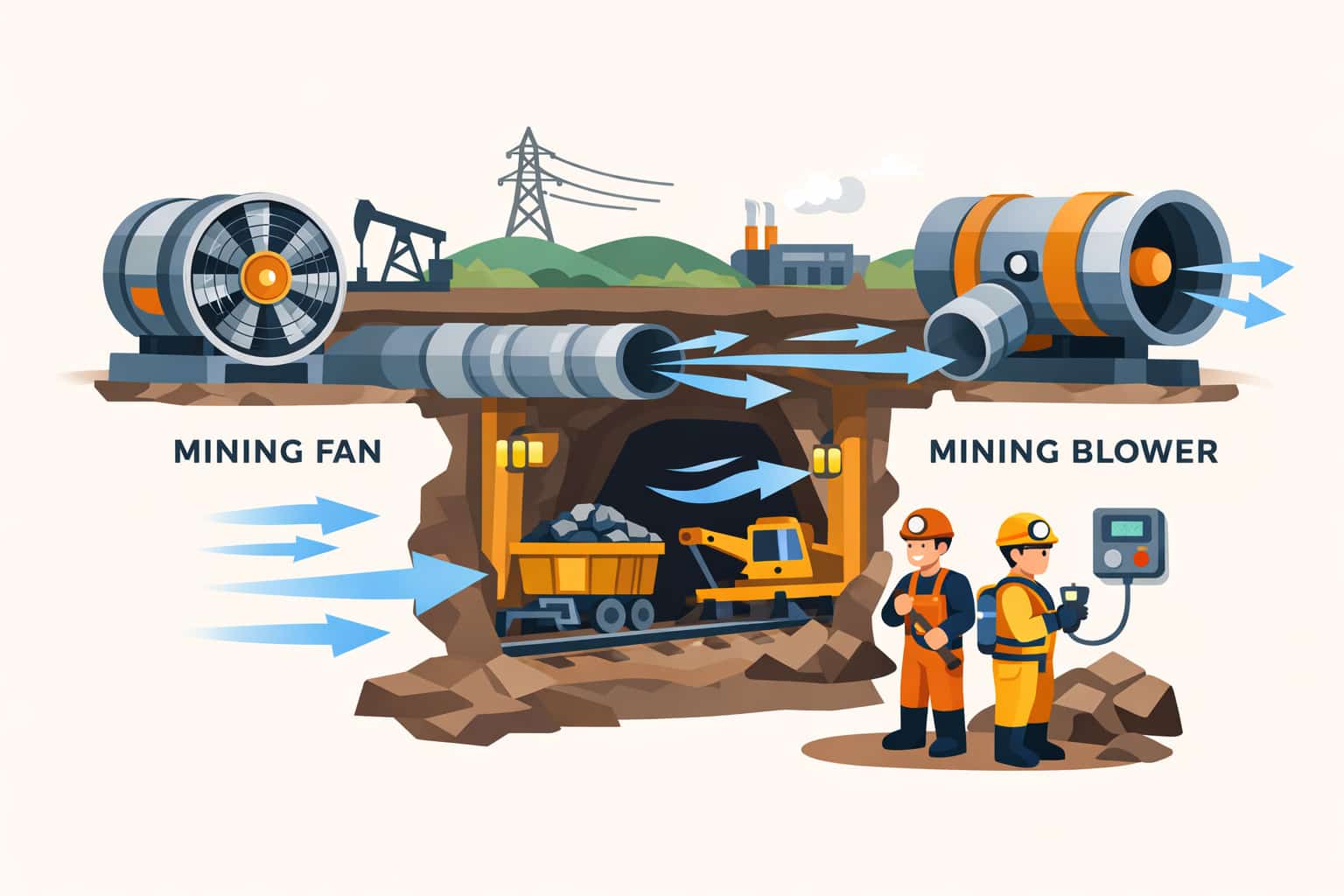
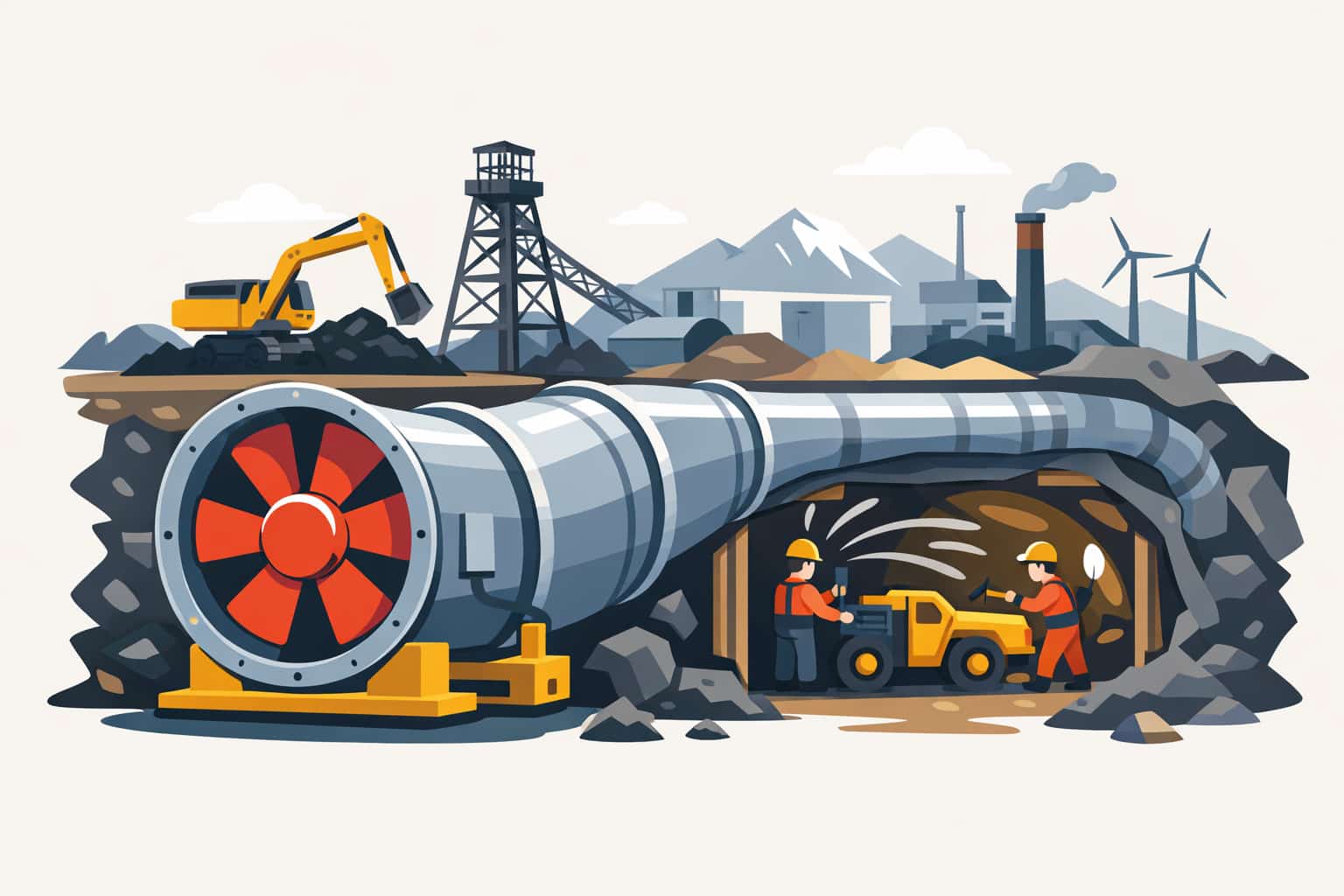

The rules for mine ventilation are a combination of legal regulations, industry standards, and site-specific company procedures that together define how air must be supplied and controlled underground. Although exact numerical limits vary by country and mining jurisdiction, all rules aim at the same goal: ensuring safe air quality, adequate oxygen, acceptable temperatures, and predictable airflow patterns for workers and equipment.
Most jurisdictions specify minimum airflow requirements in working places and travelways. These rules may be expressed as a minimum quantity per person, per diesel kilowatt, or per production heading. Regulations also define requirements for fresh air reaching working faces, refuge chambers, and critical infrastructure such as pump rooms and electrical substations. The mine ventilation engineer must design a system that consistently delivers at least these minimum quantities, even when layouts change or equipment is added.
Another major part of mine ventilation rules concerns gas and dust limits. Maximum allowable levels are set for gases such as methane, carbon monoxide, nitrogen oxides, and other contaminants depending on the orebody and equipment used. Dust exposure limits, especially for respirable crystalline silica and coal dust, are strictly regulated. Ventilation systems, together with dust suppression and filtration, must keep concentrations below these limits under normal operations and provide a margin of safety for foreseeable variations.
Regulations also address heat and humidity. In hot, deep mines, rules may set maximum allowable working temperatures or wet bulb values. Ventilation plays a key role in controlling heat by removing warm air and distributing cooled or conditioned air. If refrigeration plants or cooling coils are used, they must be integrated into the ventilation system so that cooled air reaches the right zones.
Beyond environmental limits, mine ventilation rules require each operation to maintain an approved ventilation plan. This plan typically includes fan locations and duties, main and auxiliary airflow routes, ventilation control devices, and procedures for inspecting and maintaining the system. It also covers alarm and response protocols for fan trips, power failures, gas spikes, or fire events. Many regulators require that competent personnel, such as a certified ventilation officer or engineer, be responsible for updating and implementing the plan.
Finally, there are rules for monitoring, inspection, and record keeping. Mines must regularly measure airflow, gas levels, and temperature at specified locations, and keep records for auditing. Inspections of fans, ducting, stoppings, doors, and regulators ensure that physical controls are in good condition. Any modifications to the ventilation system usually must be documented and evaluated for safety impact.
In summary, the rules for mine ventilation form a comprehensive framework that governs airflow quantities, contamination limits, heat control, system design, monitoring, and emergency response. While exact numbers differ between regions, every mine must comply with these rules and maintain a robust ventilation system to protect workers and support safe, efficient production.