
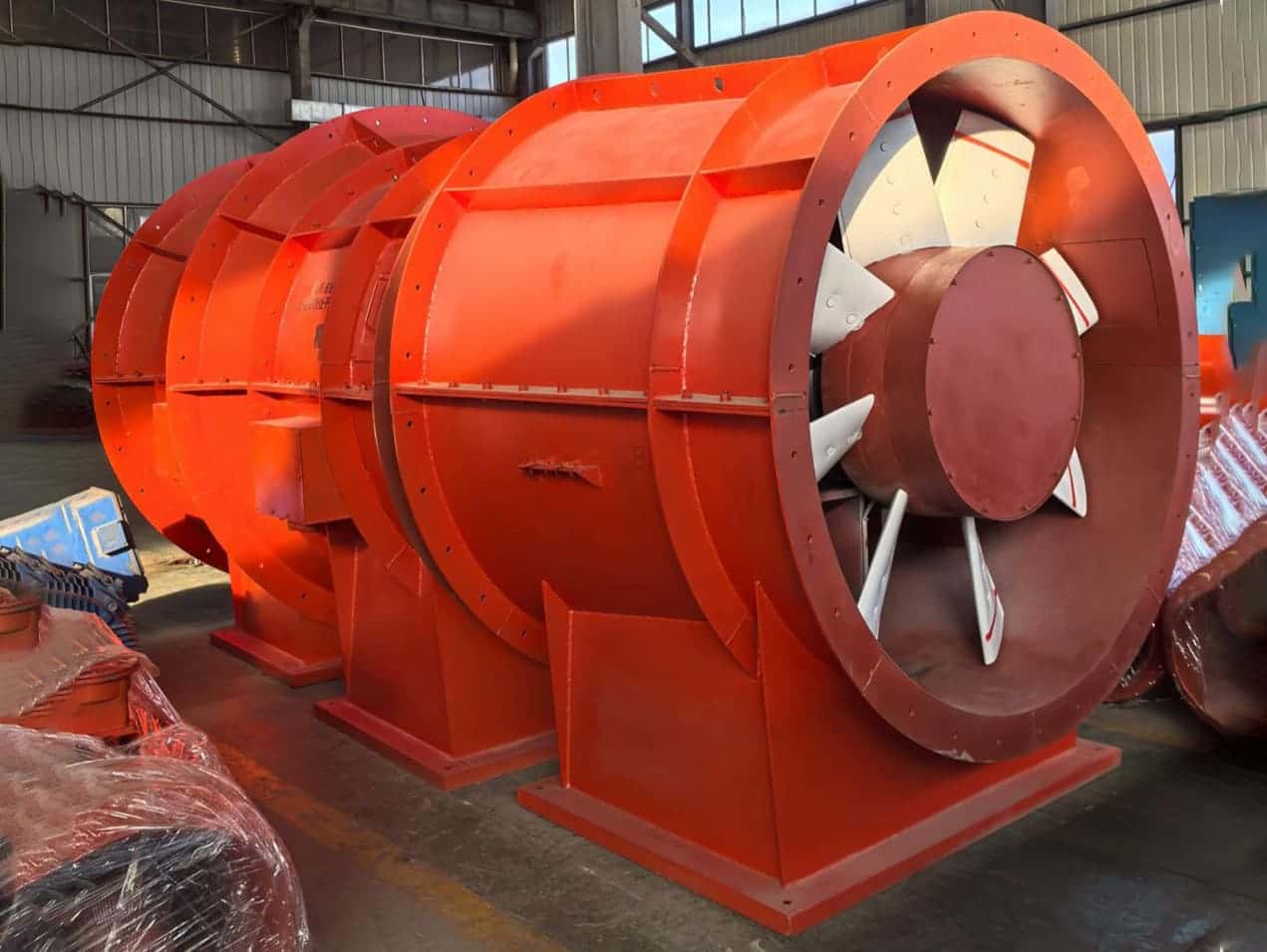
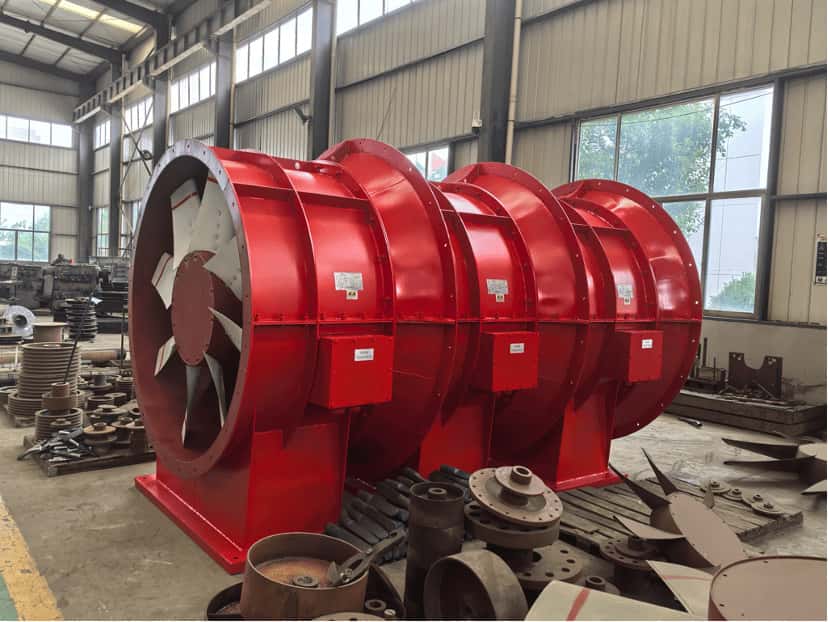
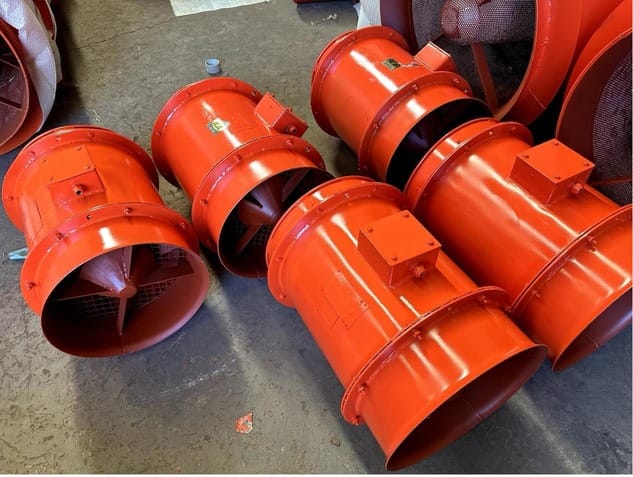
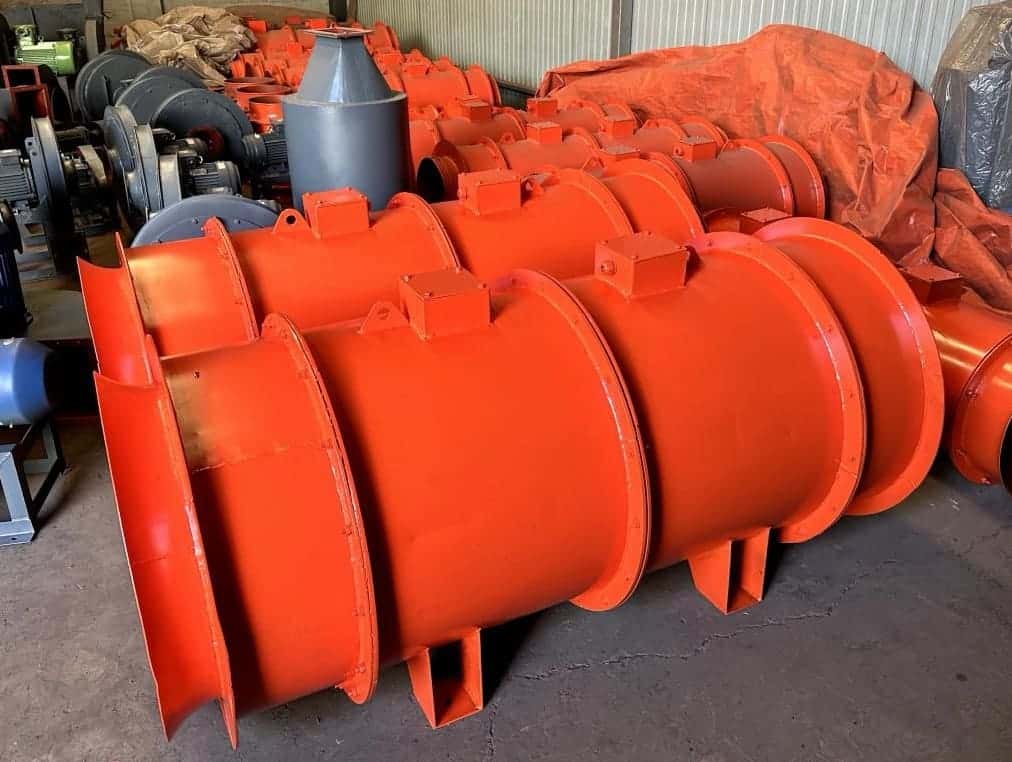
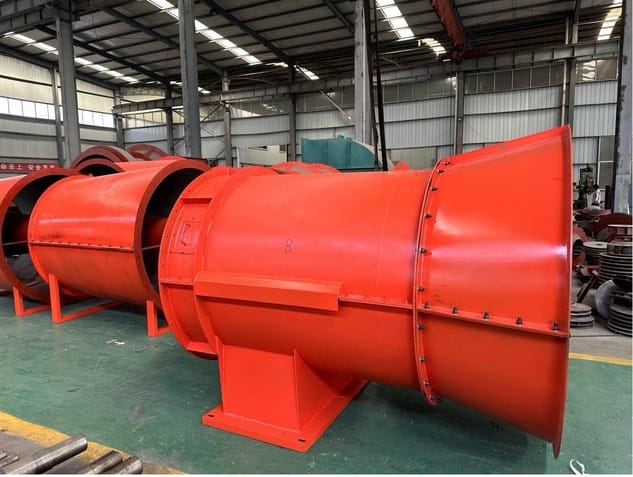
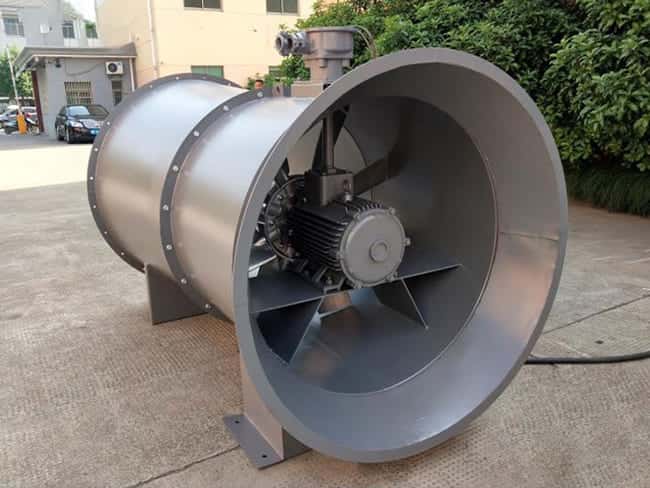
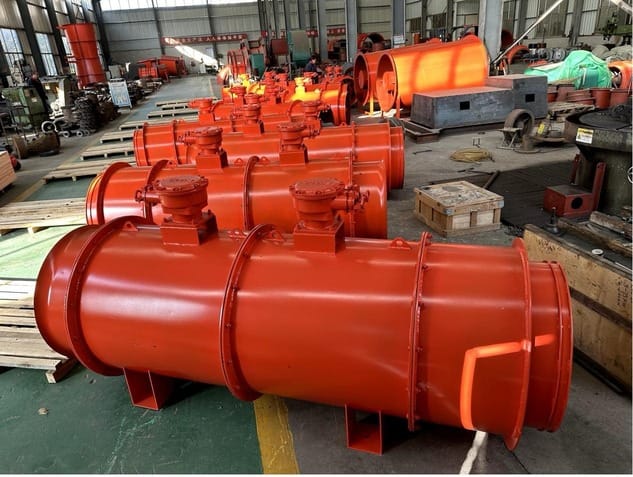
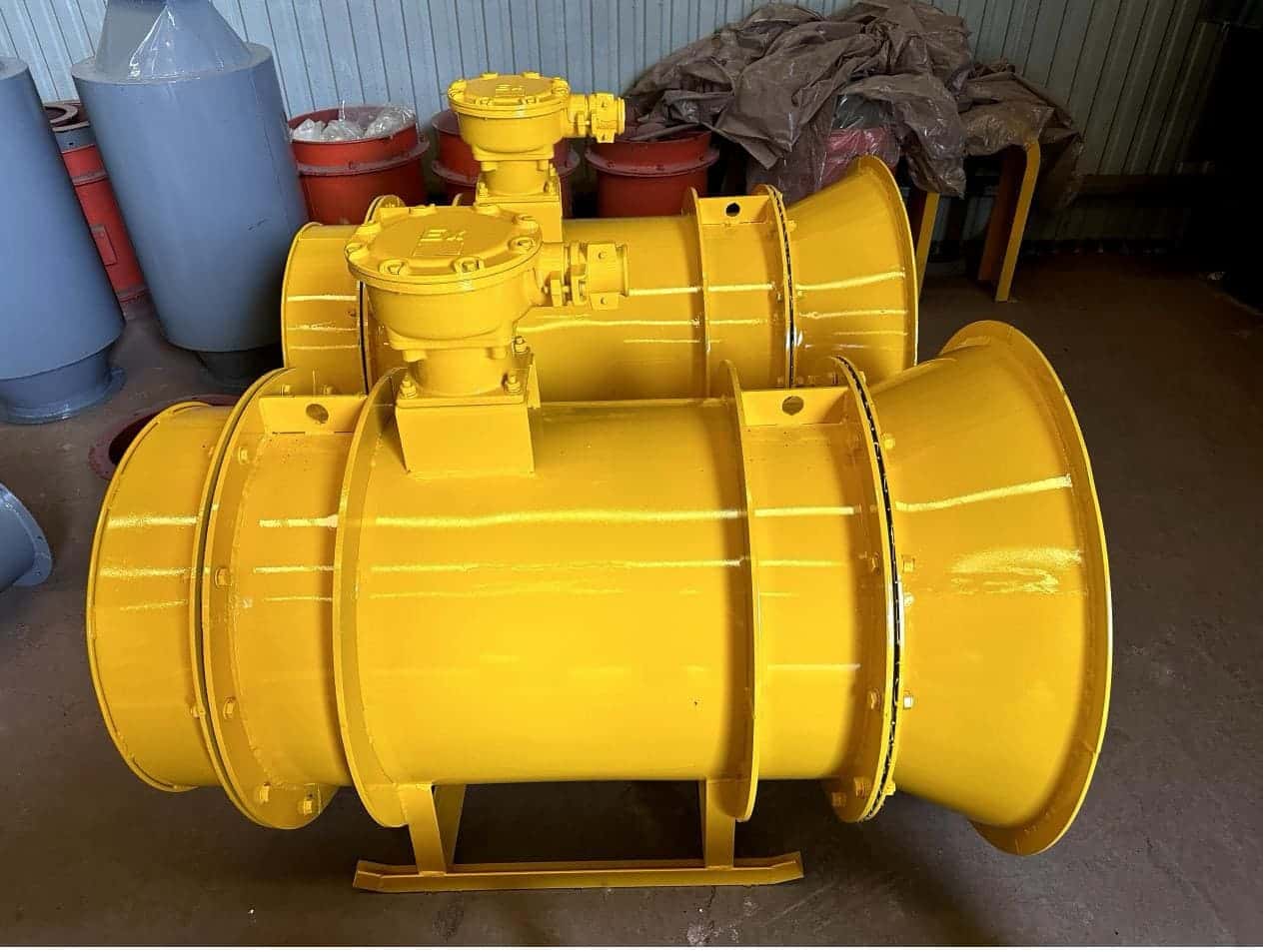
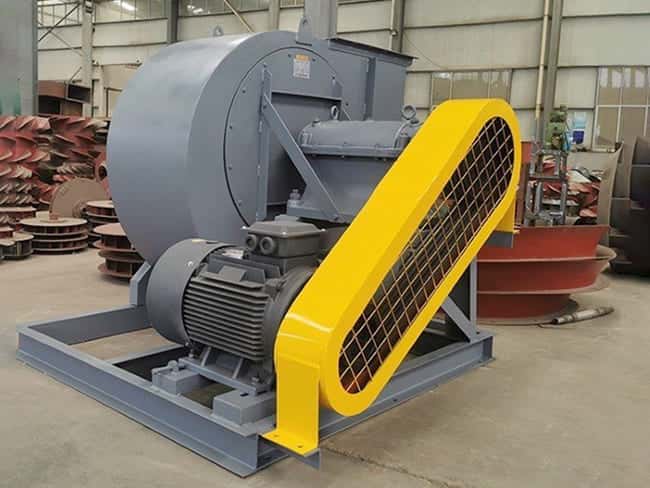
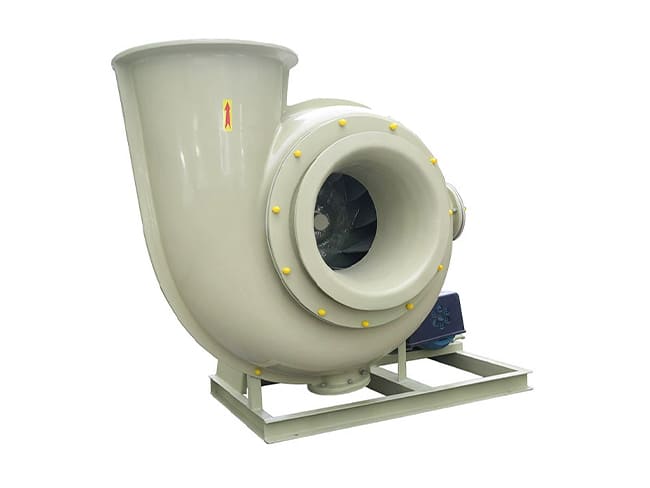
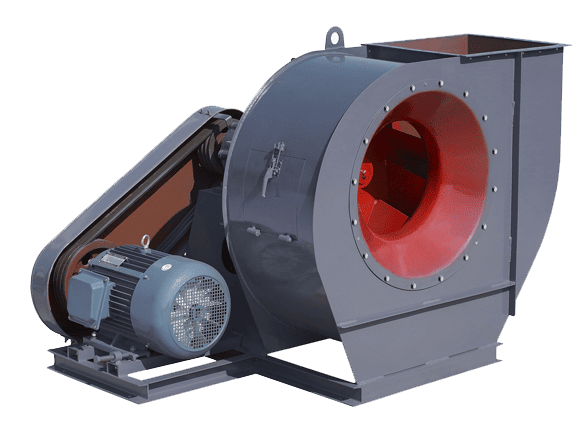
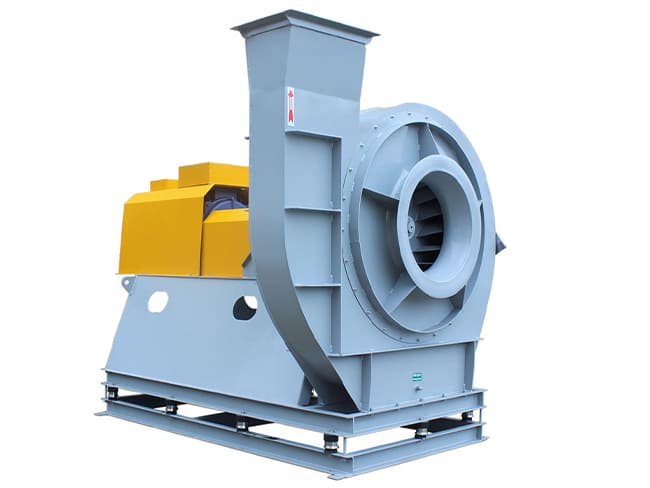
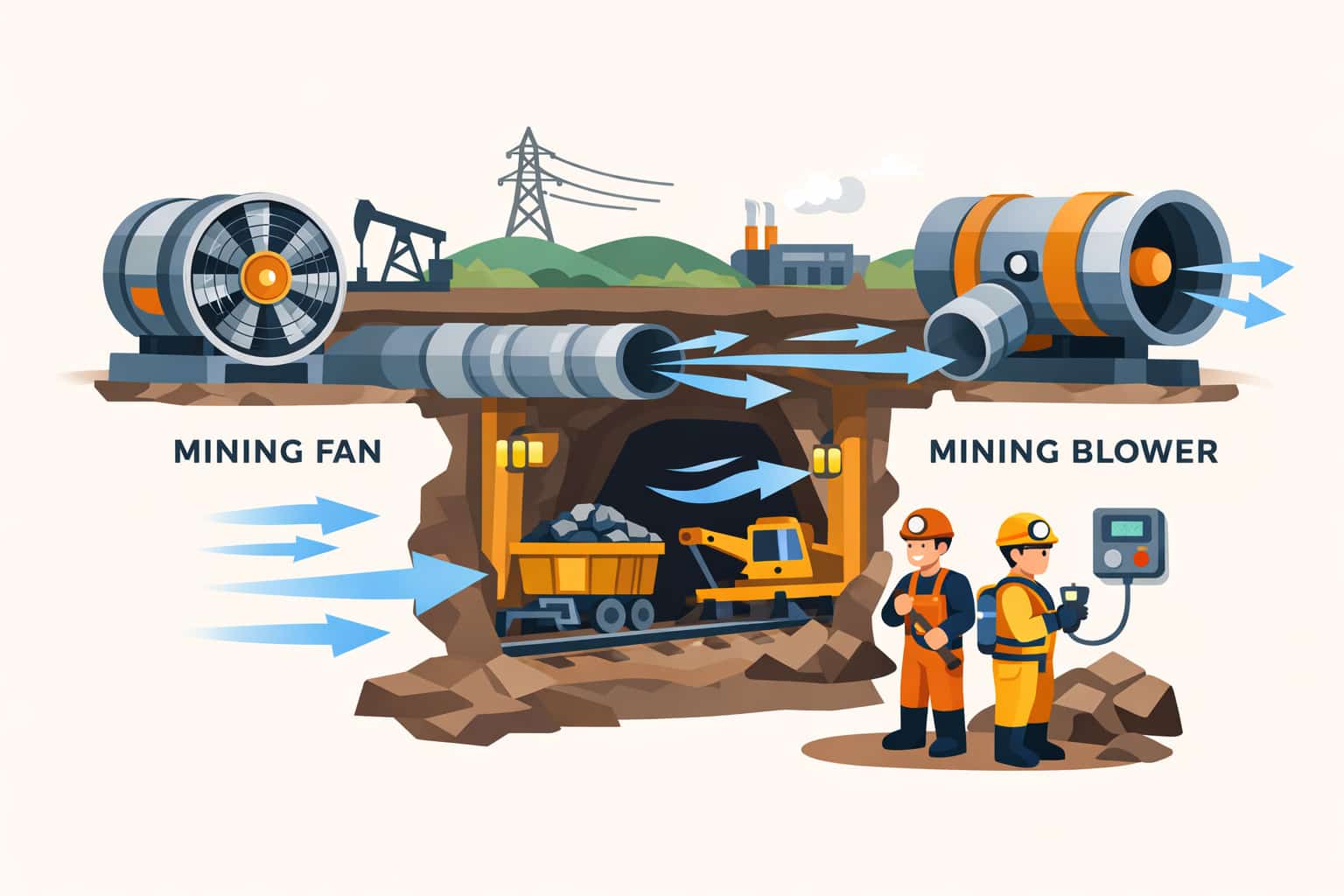
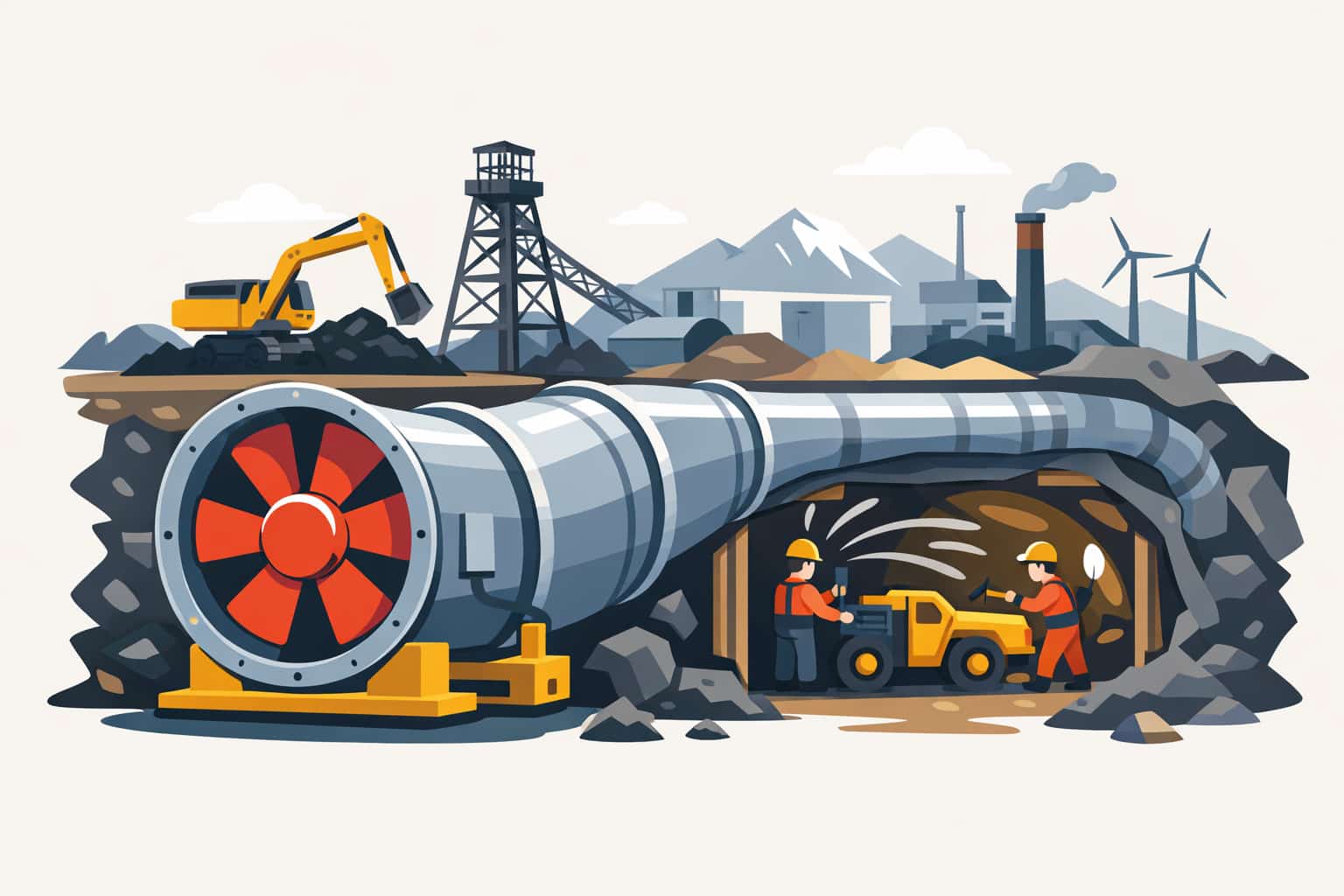
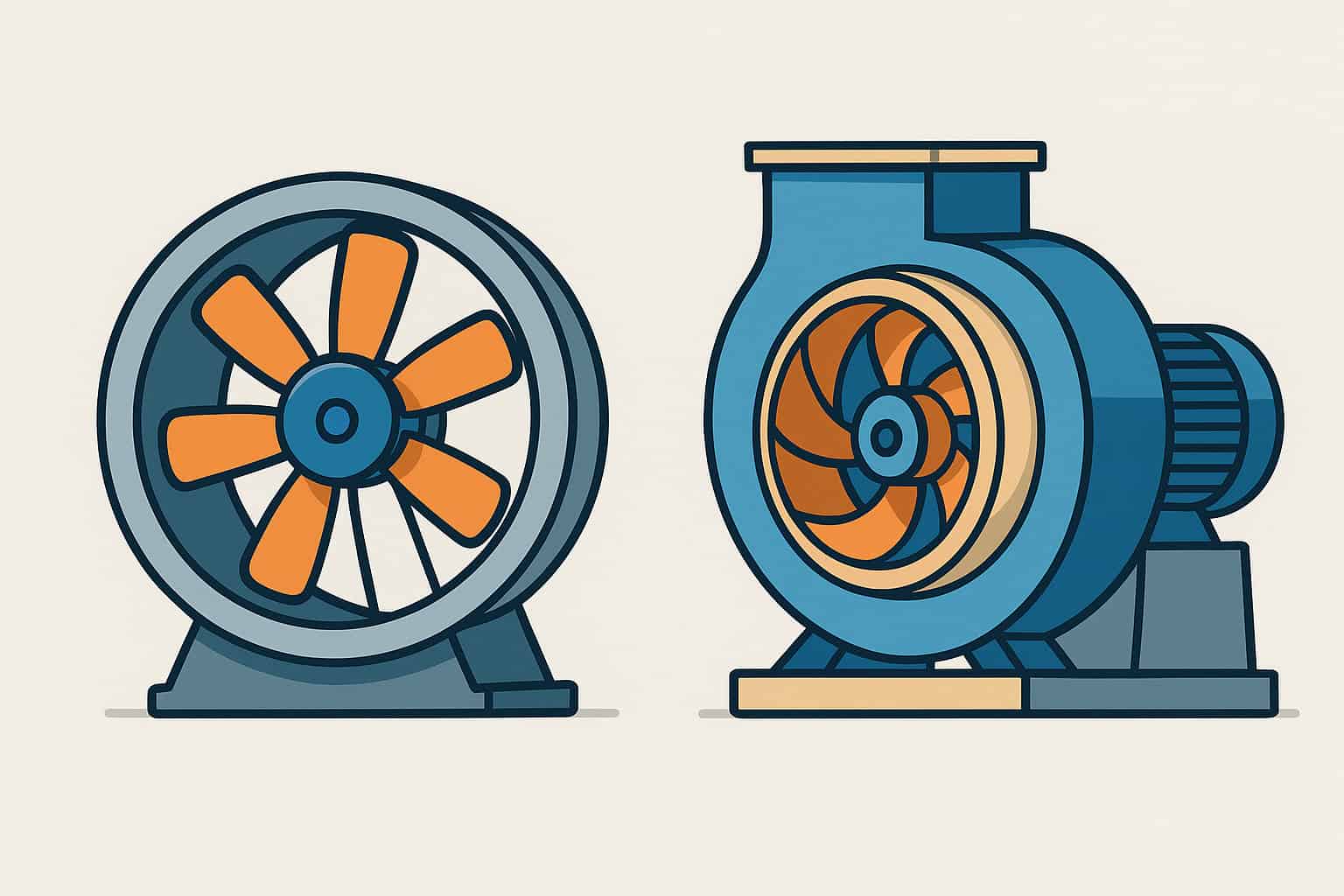
The two main types of industrial ventilation are general (dilution) ventilation and local exhaust ventilation. Most factories, workshops and mines use a combination of both types, supported by properly selected axial and centrifugal fans, to achieve safe and efficient air quality control.
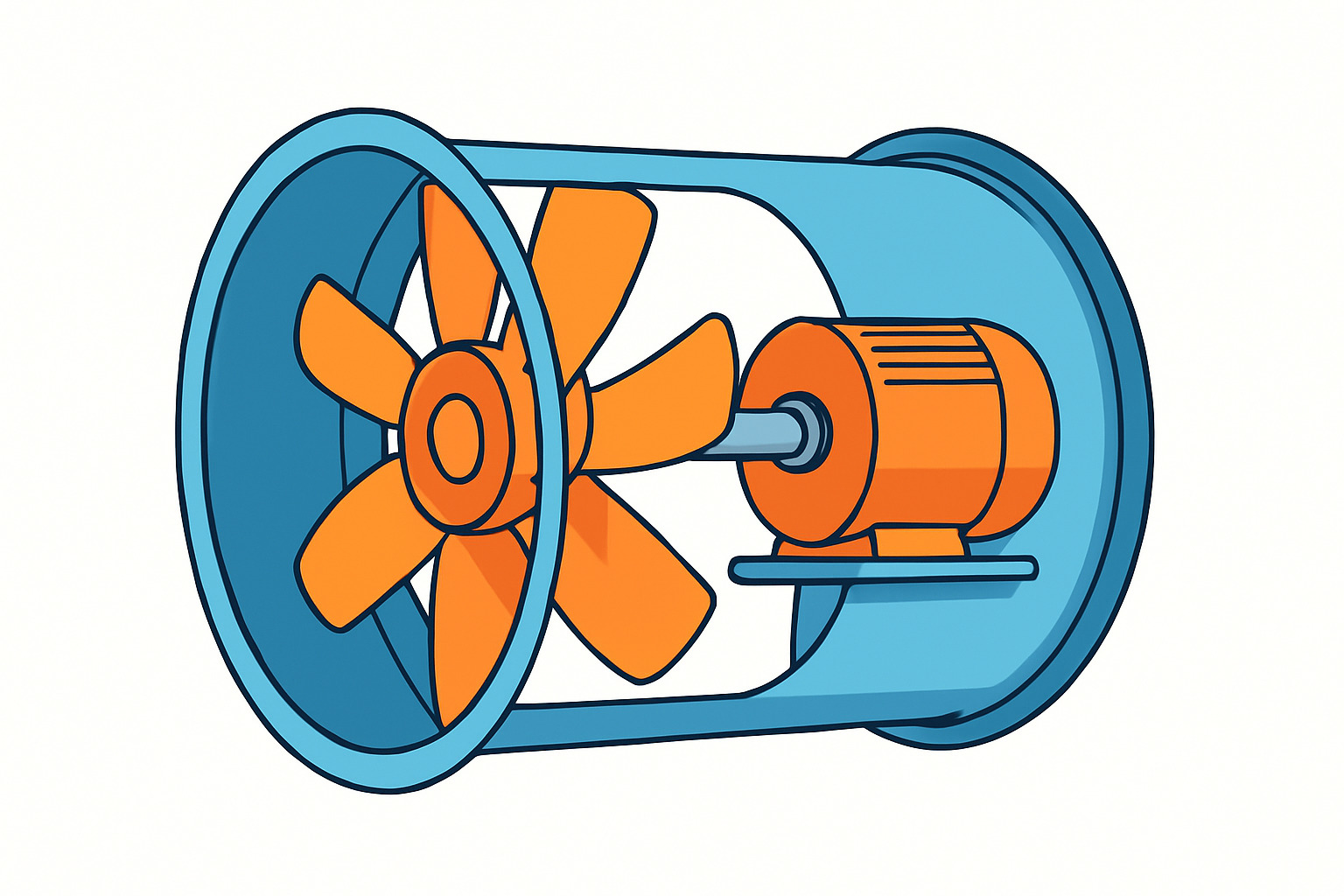
General ventilation, also called dilution ventilation, aims to control temperature and contaminant levels in the entire space by supplying and exhausting air on a broad scale. Supply fans introduce fresh outdoor air through ducts and diffusers or large inlets, while exhaust fans remove warm or contaminated air through roof vents, wall fans or return ducts. Over time, this airflow dilutes airborne contaminants, reduces heat build-up and helps maintain comfortable conditions for workers.
General ventilation is suitable for large areas with relatively low to moderate contaminant generation, such as assembly halls, warehouses or some machine shops. It is also used for overall cooling in steel plants, foundries and similar facilities. In mines, main ventilation systems that move air through primary intakes and returns are a form of general ventilation, ensuring that the whole network receives enough fresh air.
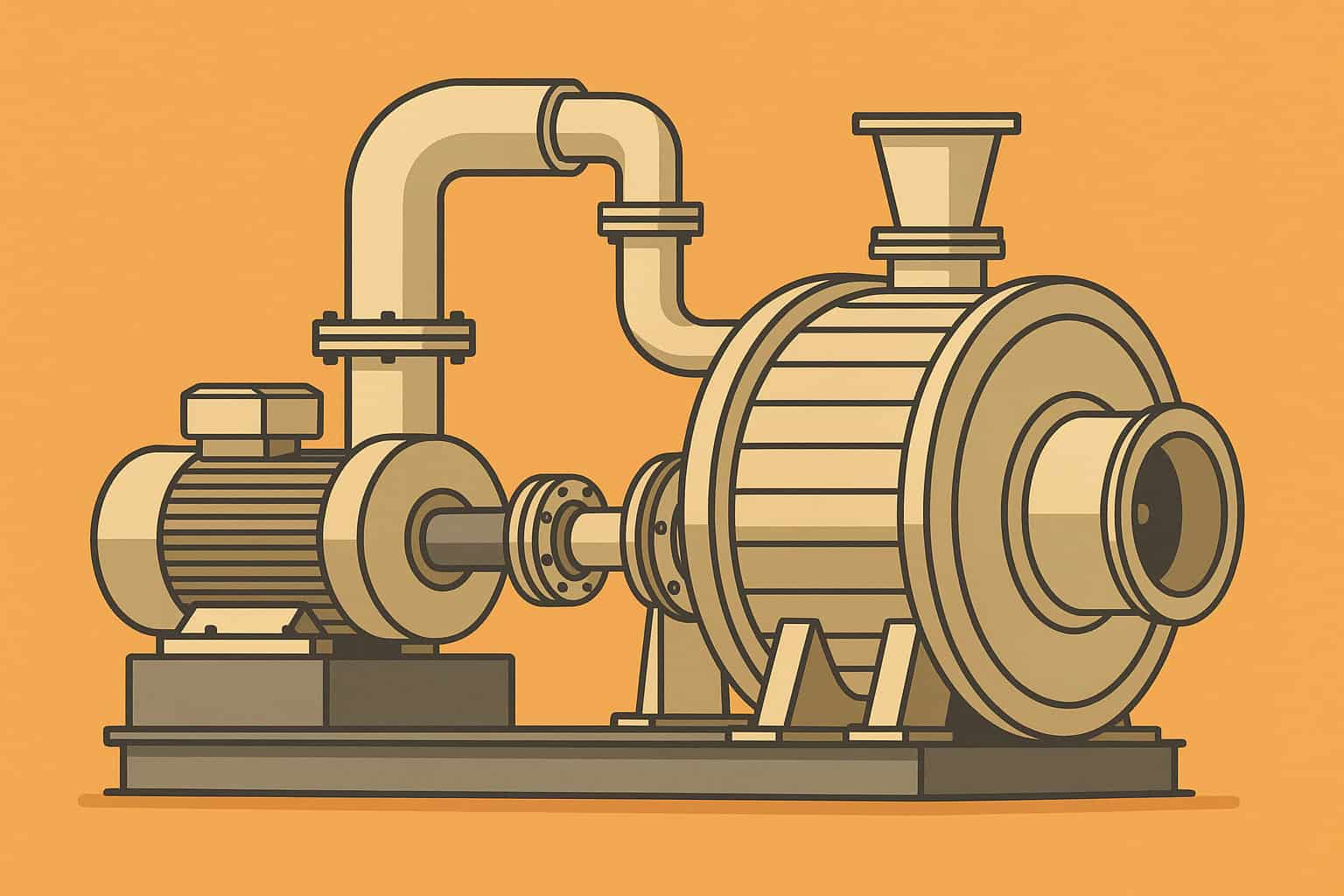
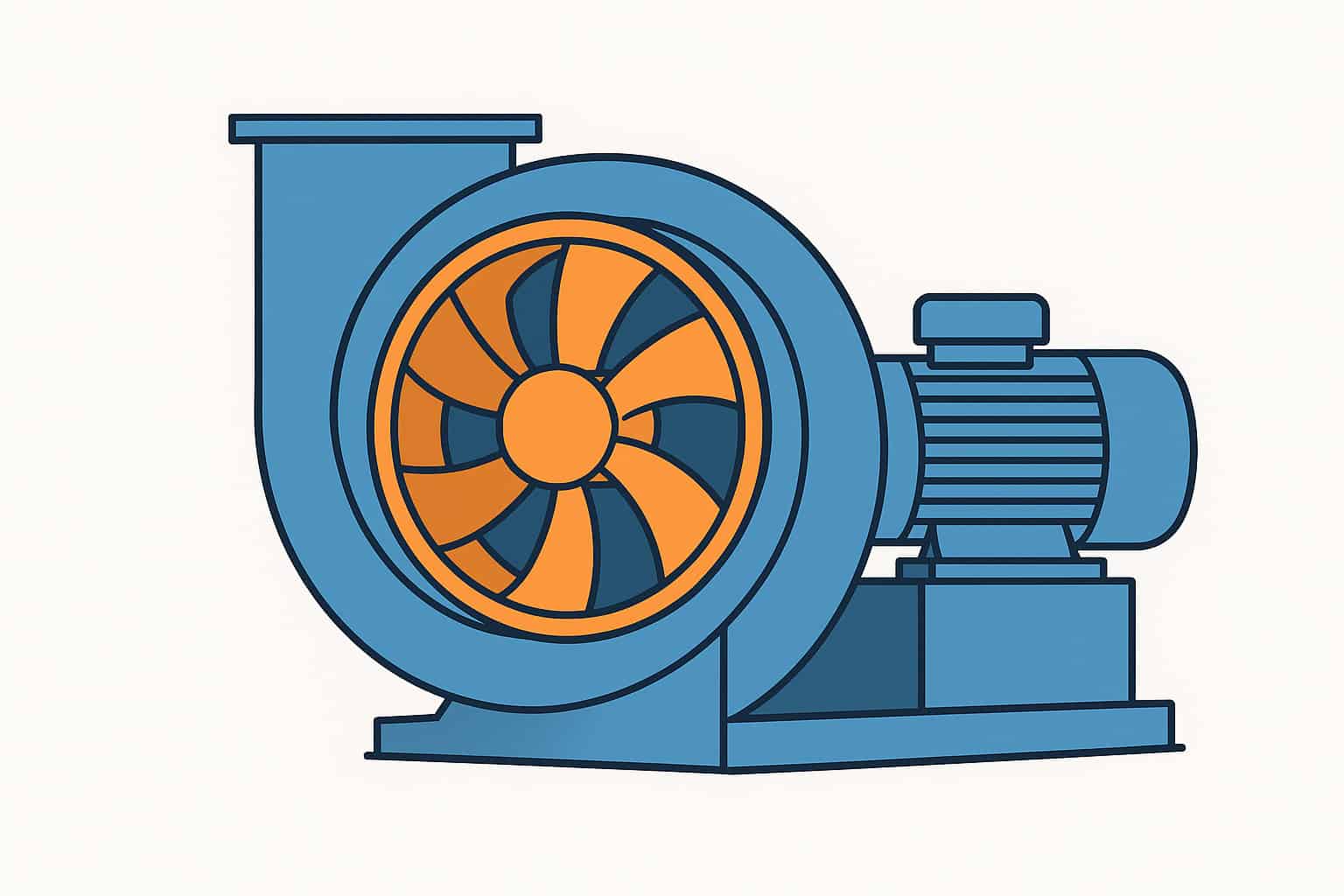
Local exhaust ventilation (LEV) focuses on capturing contaminants as close as possible to their source before they spread through the workspace. It uses hoods, capture arms, booths or enclosures connected to ducts and fans. Centrifugal fans are often used because they can handle higher pressures and dust loads. Examples include welding fume hoods, grinding dust booths, chemical fume cupboards and dust collection systems for crushers or transfer points in mines.
Local exhaust ventilation is essential where hazardous contaminants such as welding fumes, solvent vapours or respirable crystalline silica are generated. By capturing them at the source, LEV prevents harmful substances from entering workers’ breathing zones and reduces the overall load on general ventilation systems. In underground mining, local exhaust fans may be installed at crushers, loading stations or fuel bays to remove fumes from confined areas.
Although they are described separately, the two types of industrial ventilation are complementary. General ventilation maintains background air quality, controls heat and provides make-up air for exhaust systems, while local exhaust equipment deals with high concentration sources. When both are correctly designed—using appropriate fans, ducts and controls—they form a complete strategy for protecting workers and equipment.
In summary, industrial ventilation is built around two primary types: general (dilution) ventilation, which treats the whole space, and local exhaust ventilation, which captures contaminants at their source. Effective systems combine both approaches, supported by reliable industrial fans and sound engineering design.