
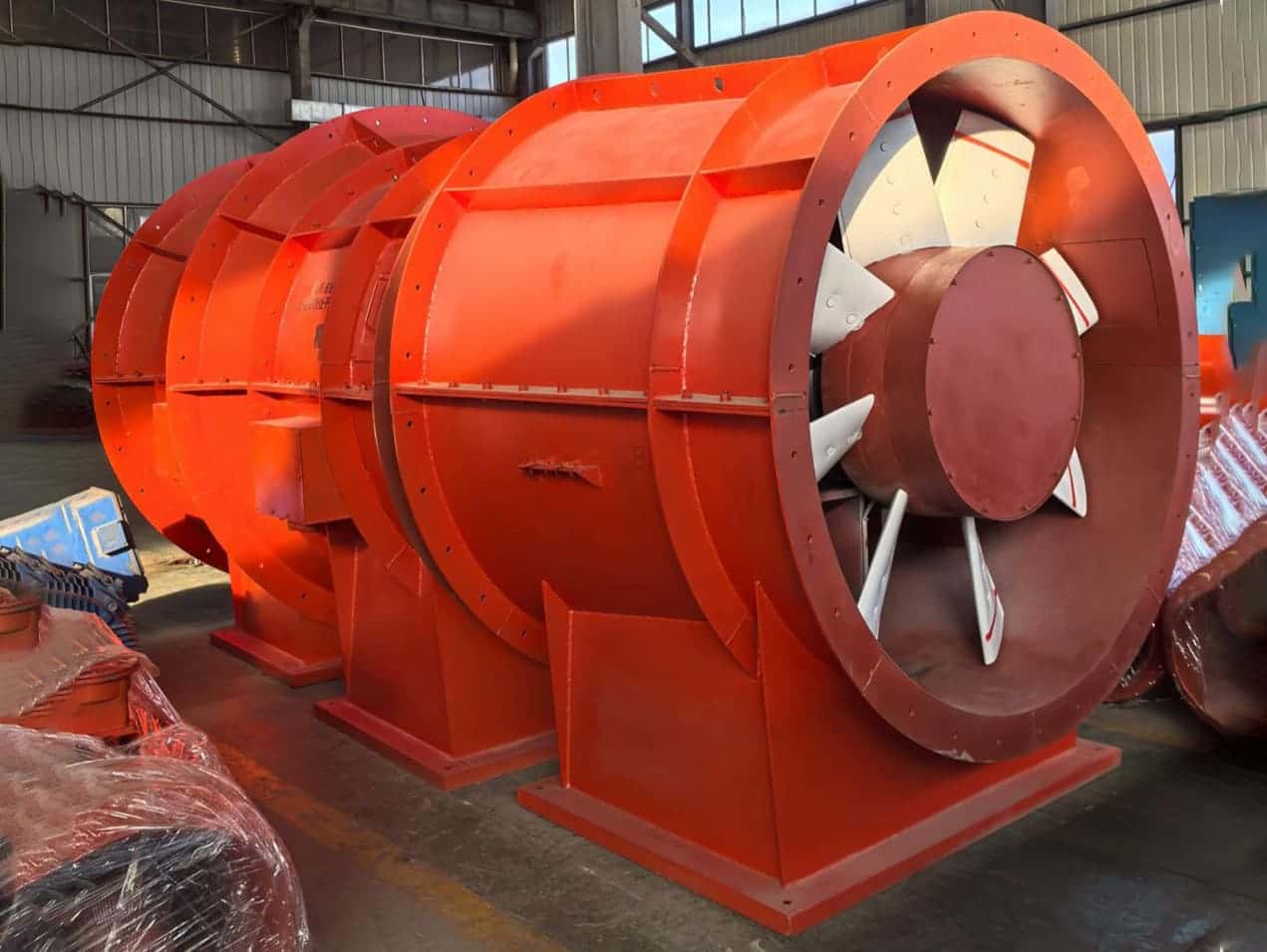
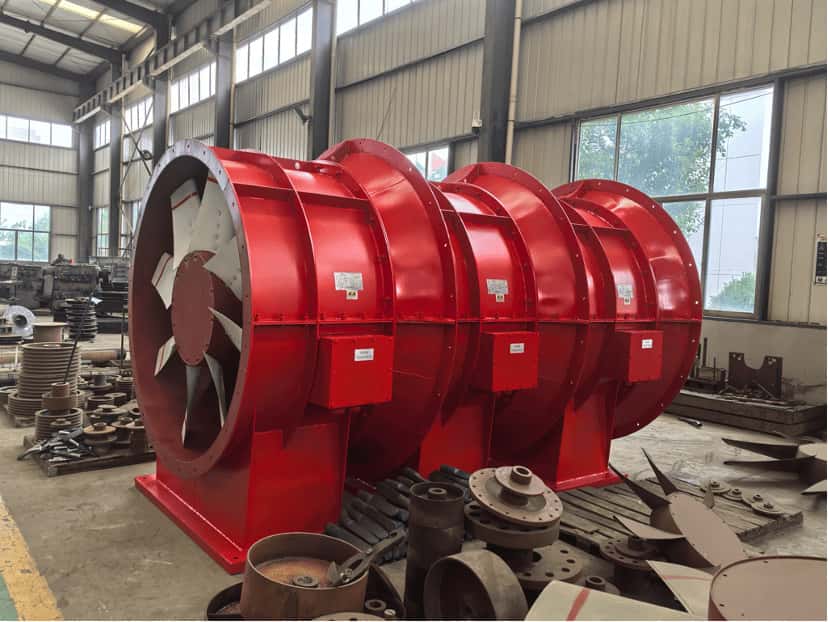
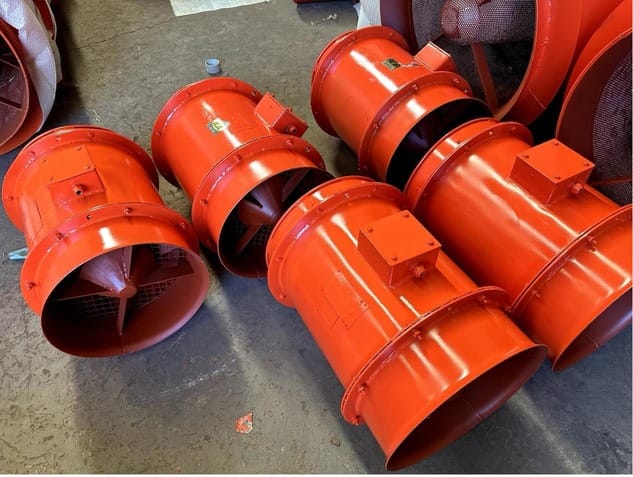
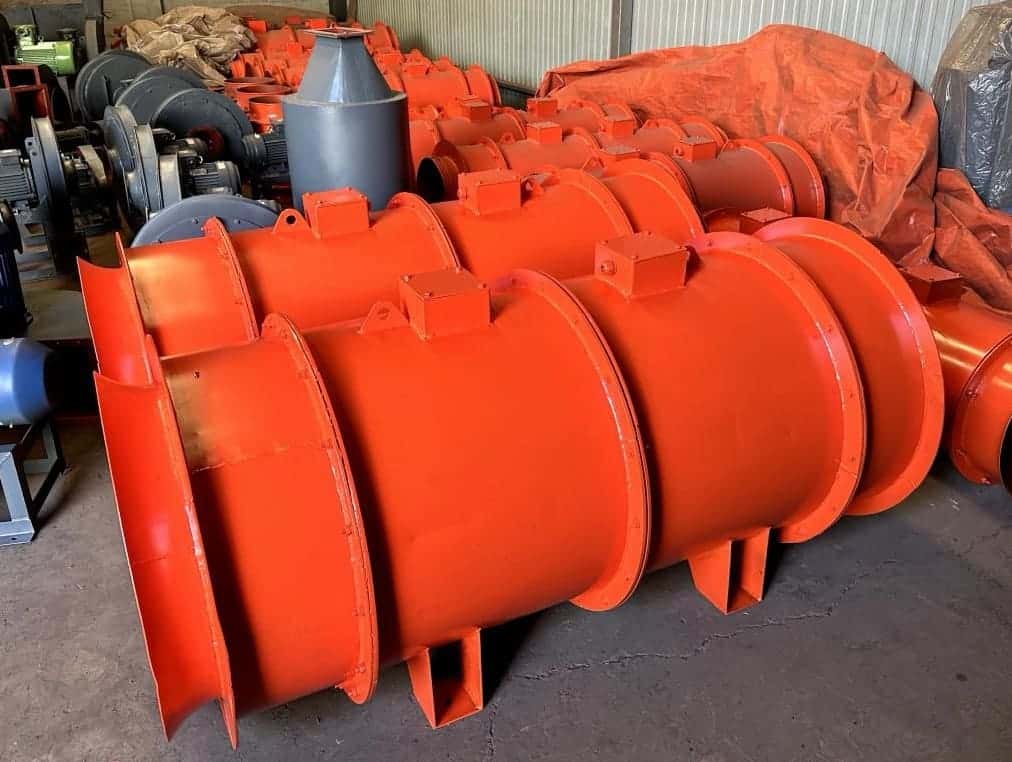
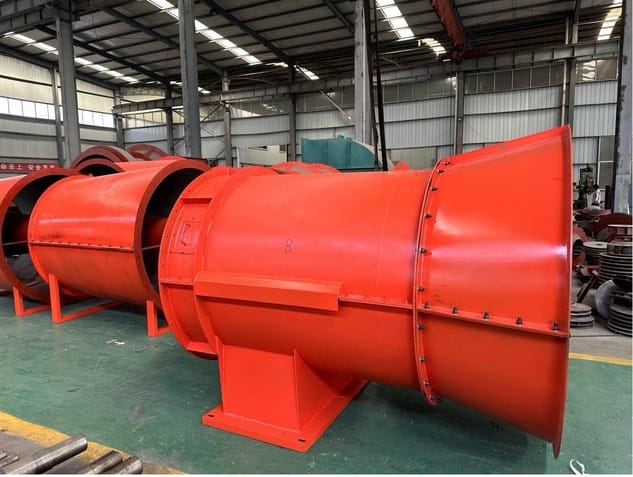
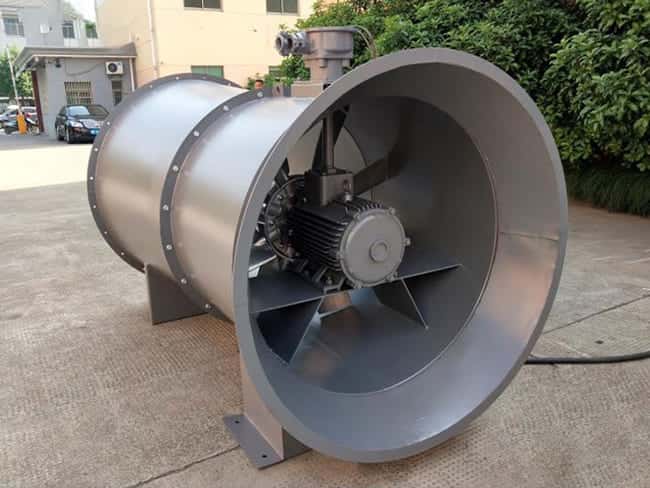
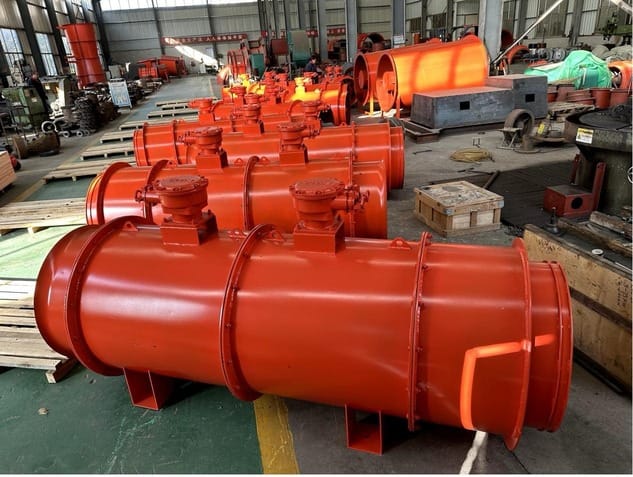
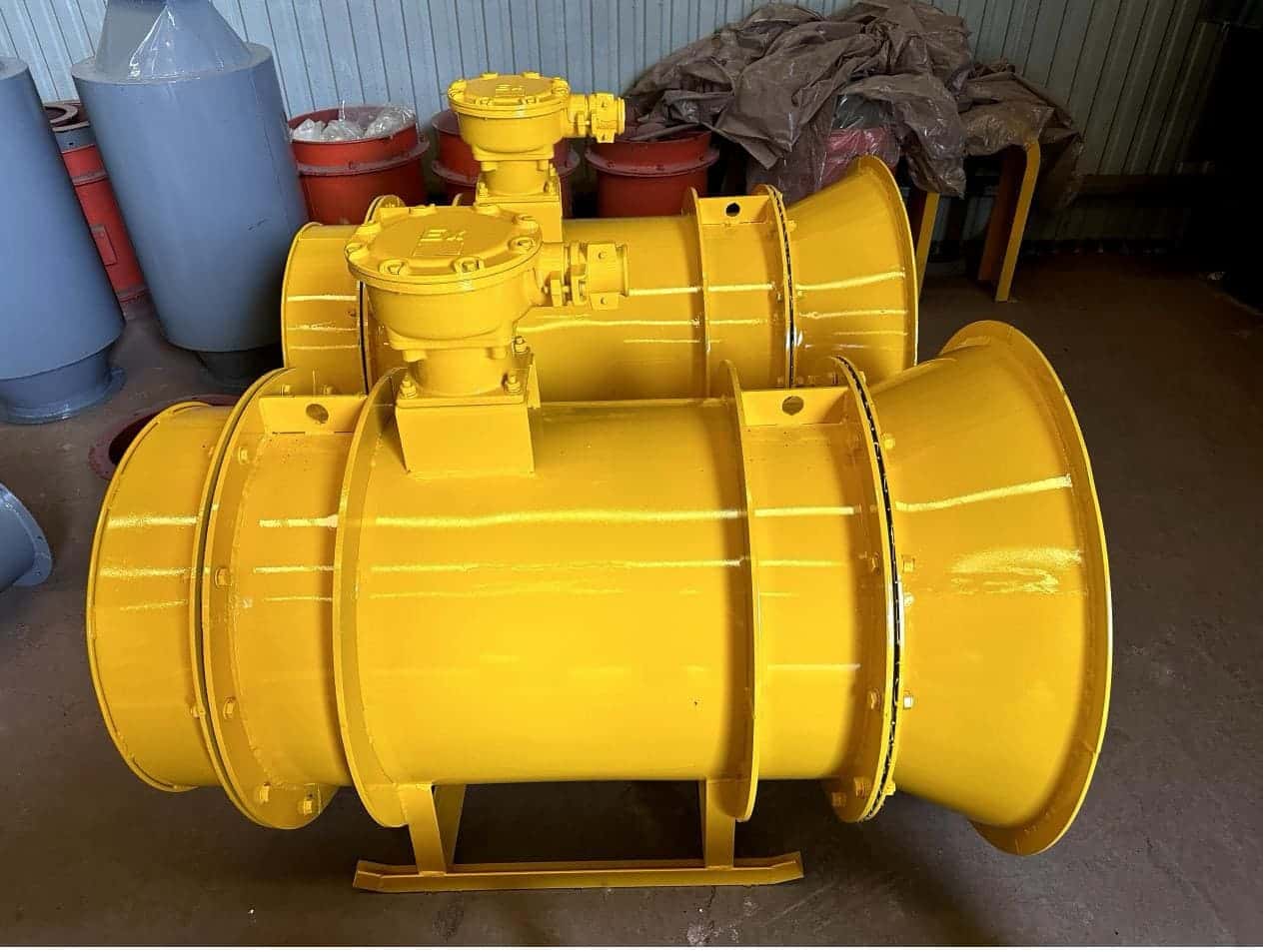
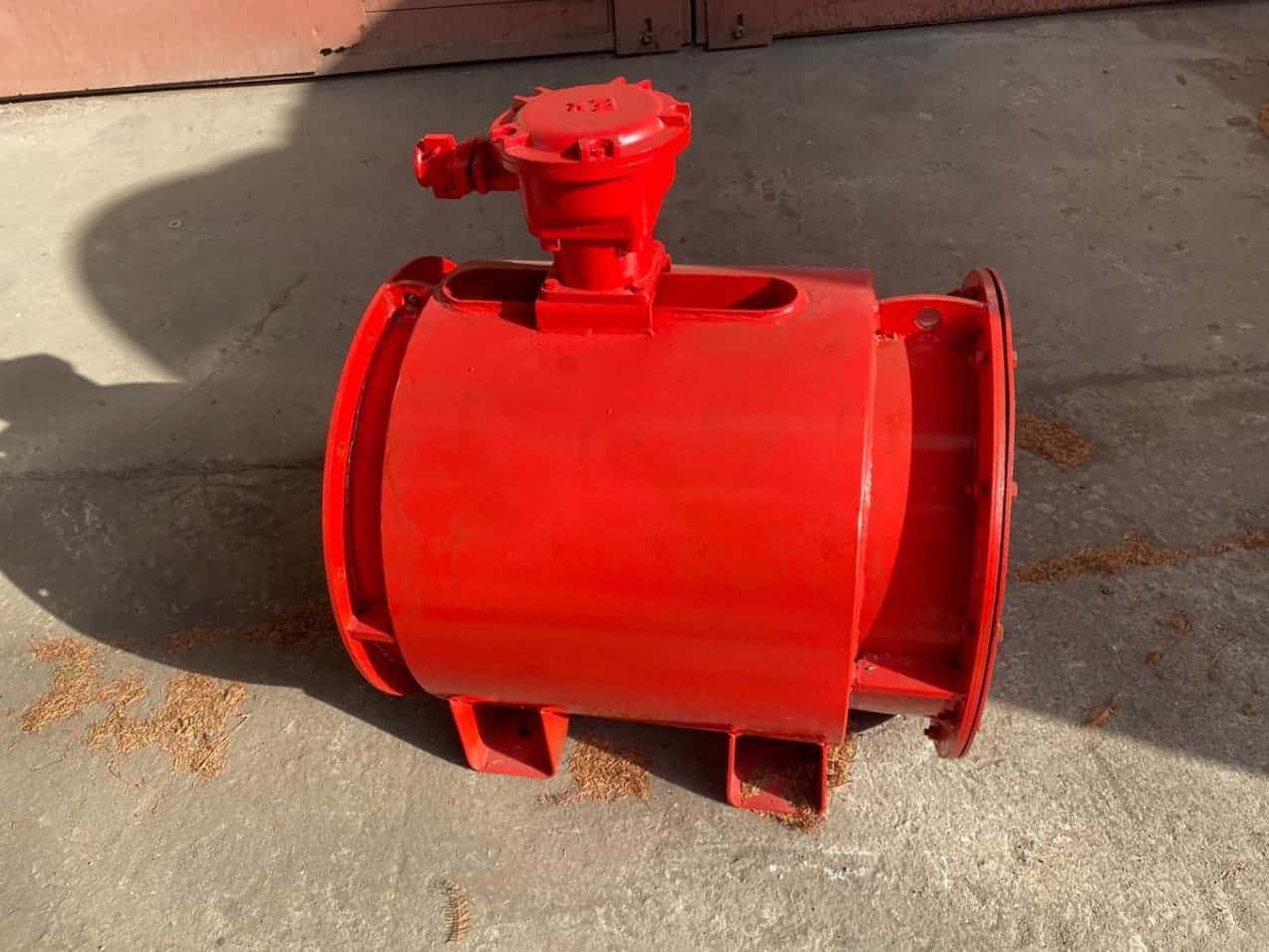
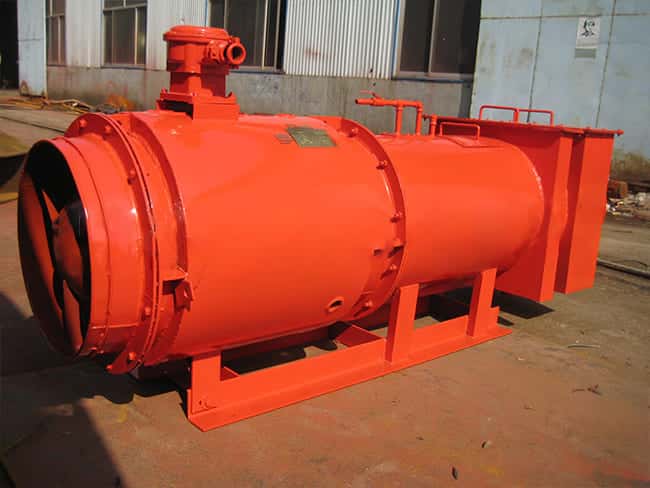
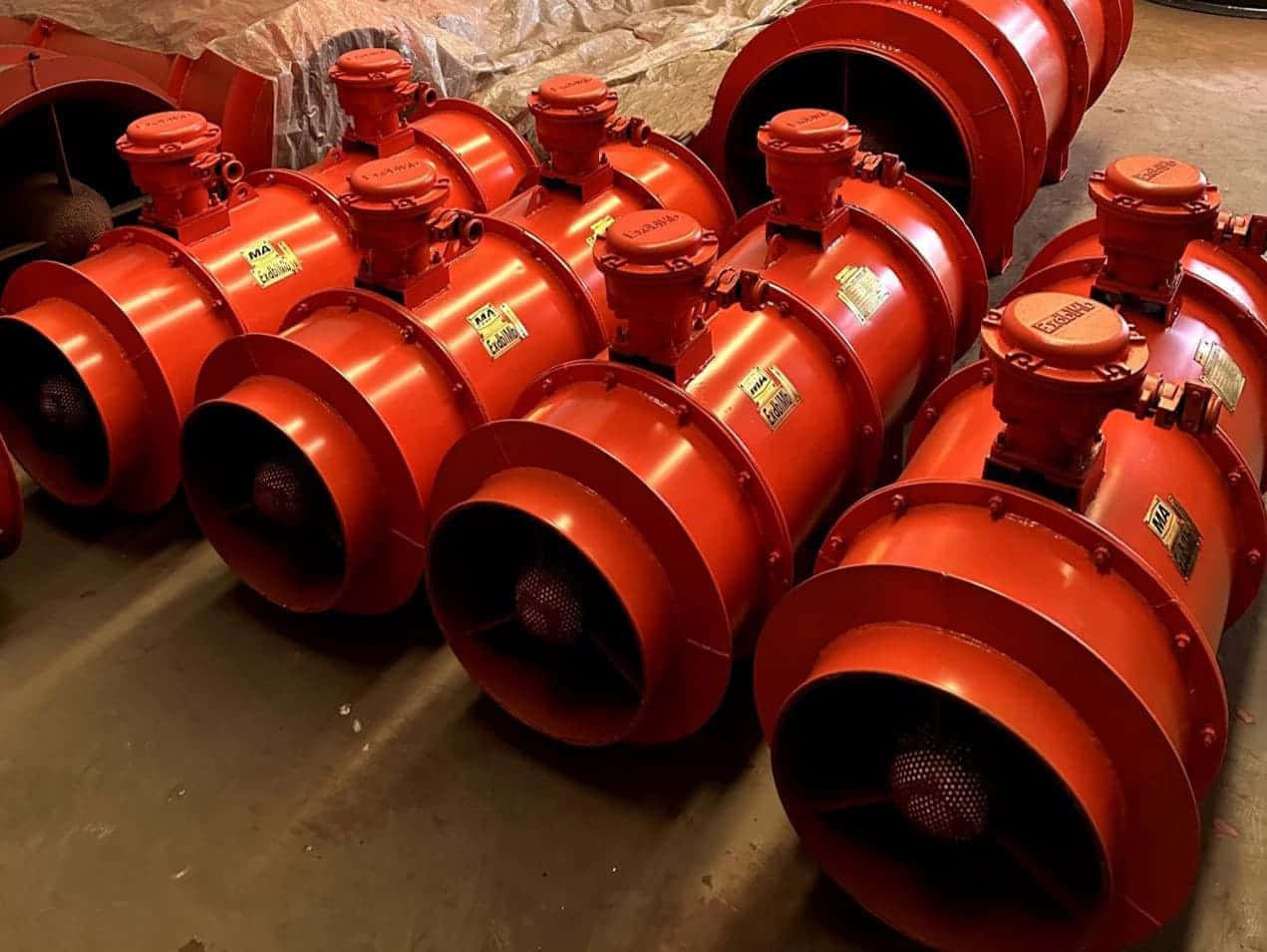
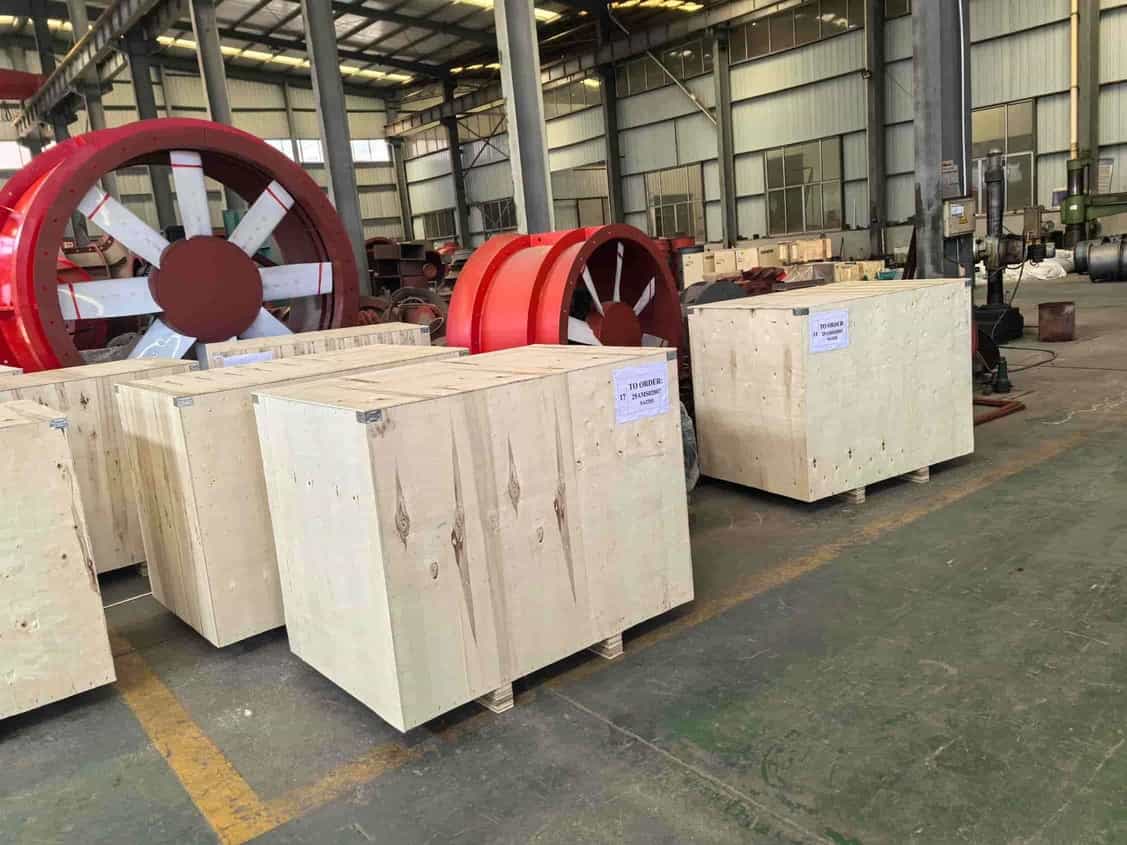
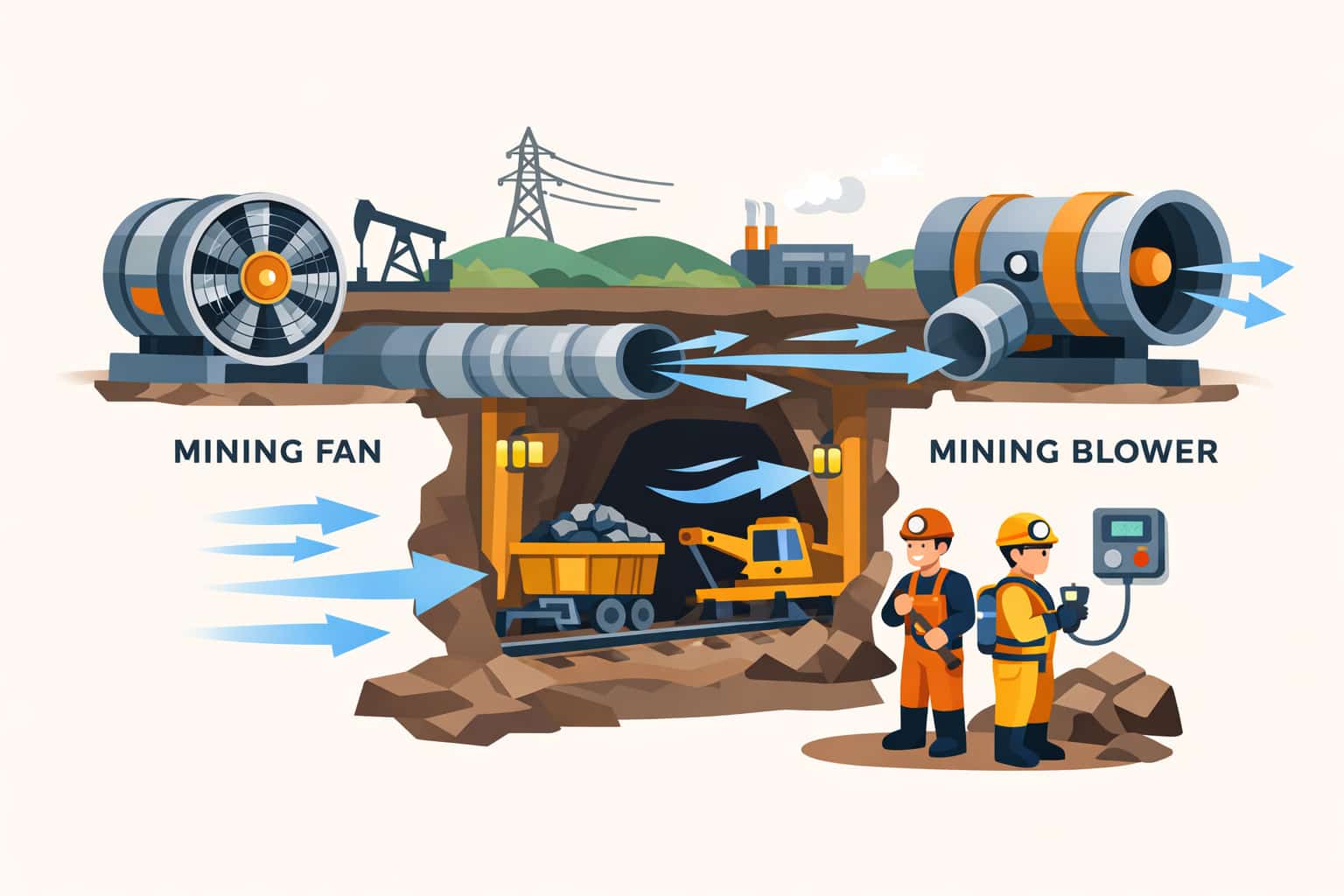
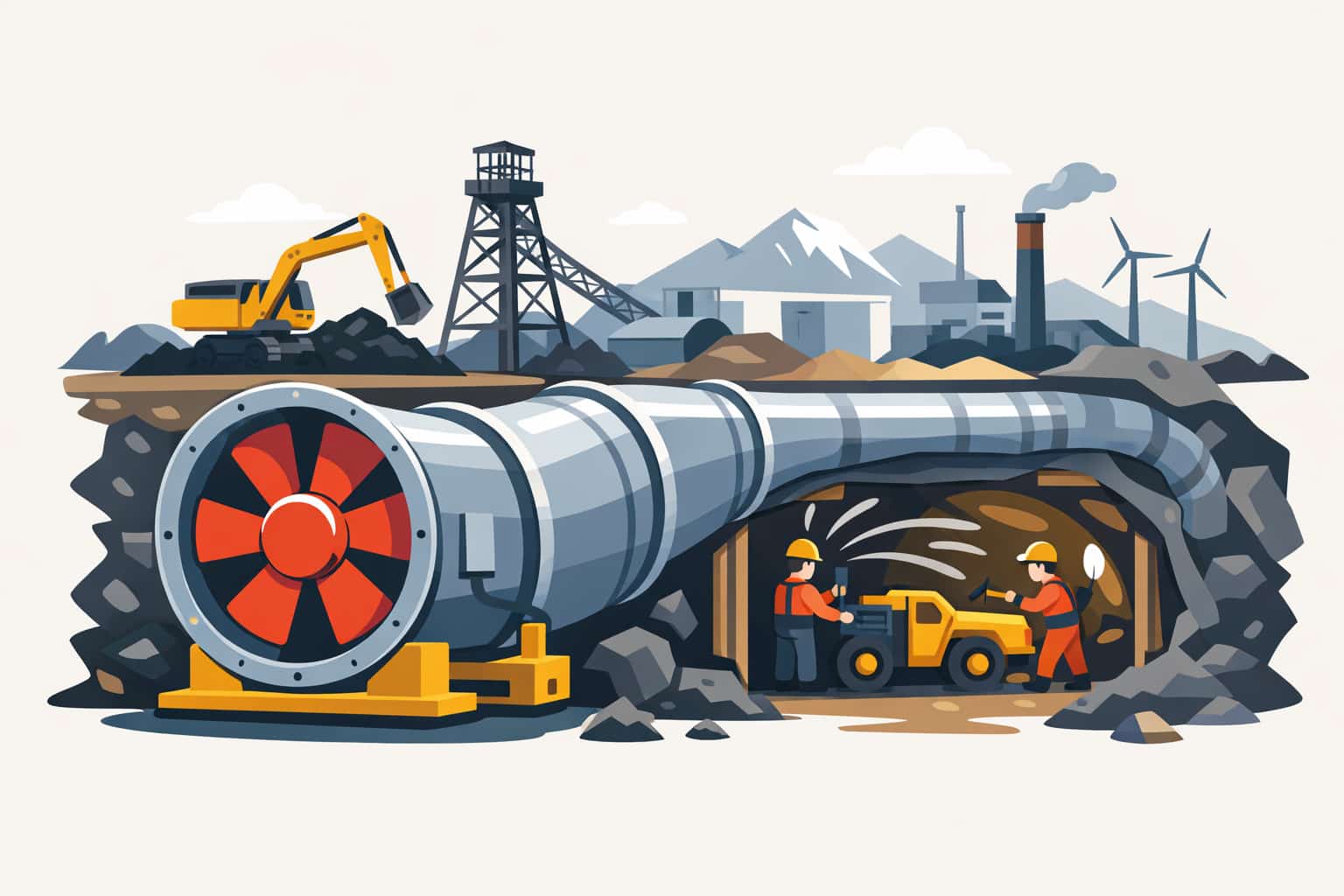

Tunnel fans are specialized ventilation fans used to move air through road, rail, metro, and mining tunnels. Their main purpose is to control exhaust gases, dust, temperature, and smoke so that people and vehicles can use the tunnel safely in both normal and emergency situations. Without tunnel fans, long or heavily trafficked tunnels would quickly fill with vehicle exhaust and heat, and smoke from a fire would be impossible to control.
In everyday operation, tunnel fans are used primarily for air quality control. Vehicles and equipment in the tunnel emit carbon monoxide, nitrogen oxides, particulates, and heat. Tunnel fans, often installed as axial jet fans mounted in the tunnel crown or as larger axial fans at portals and ventilation shafts, create an airflow that carries contaminated air toward exhaust points. Fresh air flows in from portals or through dedicated intake shafts, keeping pollutant concentrations below regulatory limits and maintaining visibility for drivers and operators.
Tunnel fans also help manage temperature and comfort. In long tunnels, heat from engines, electrical equipment, and lighting can cause air to become hot and stagnant. By moving air along the tunnel and exchanging it with outside air, ventilation fans limit heat build-up and reduce condensation, protecting structural elements and electrical systems.
One of the most critical functions of tunnel fans is smoke control during fires. In a fire event, smoke and hot gases can spread rapidly, making evacuation extremely dangerous. Tunnel ventilation systems are therefore designed so that fans can operate in special fire modes. Jet fans may be used to direct smoke in one direction along the tunnel, while powerful exhaust fans draw it out through shafts or portals. This controlled airflow helps keep escape routes clearer for longer and provides safer conditions for firefighting teams.
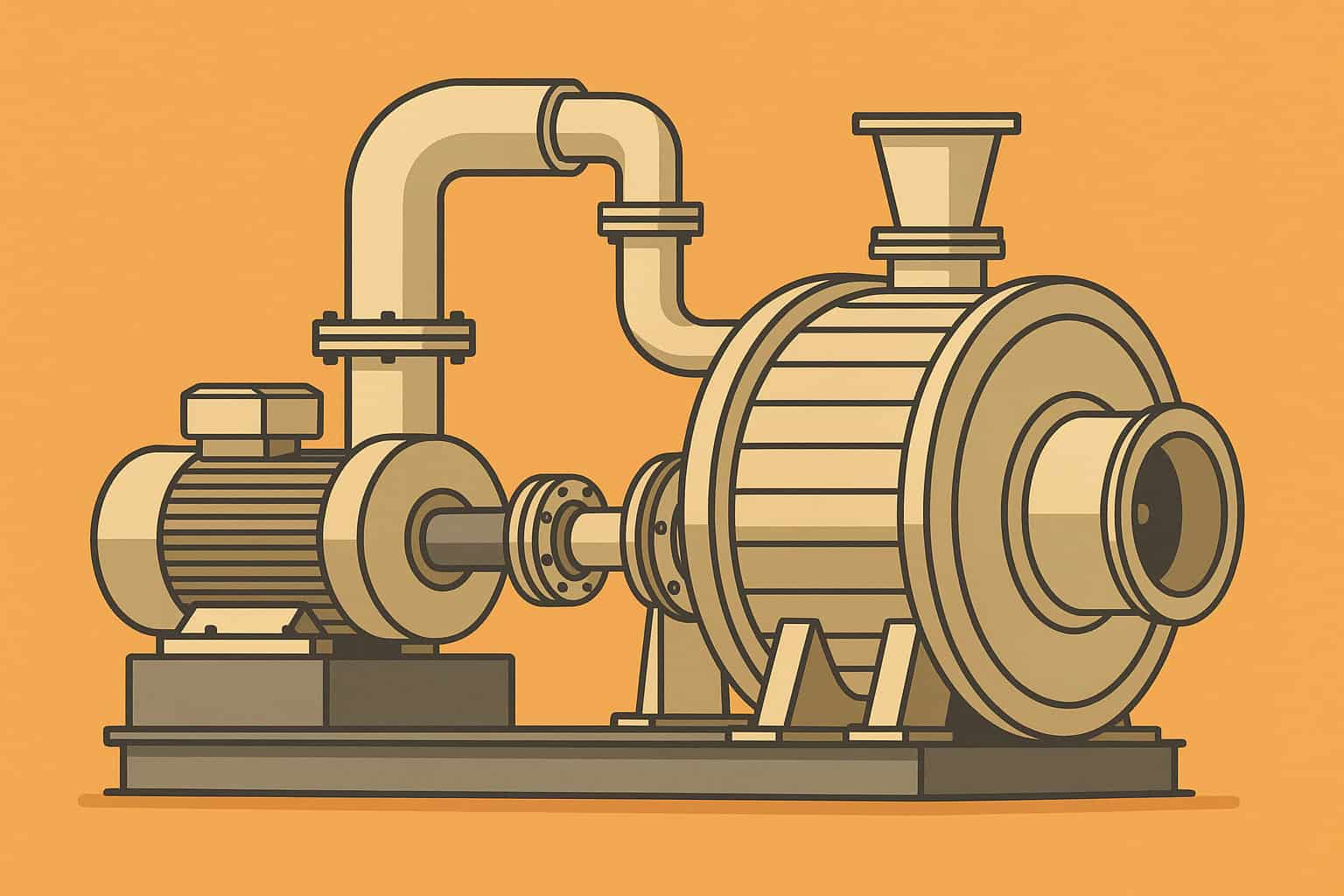
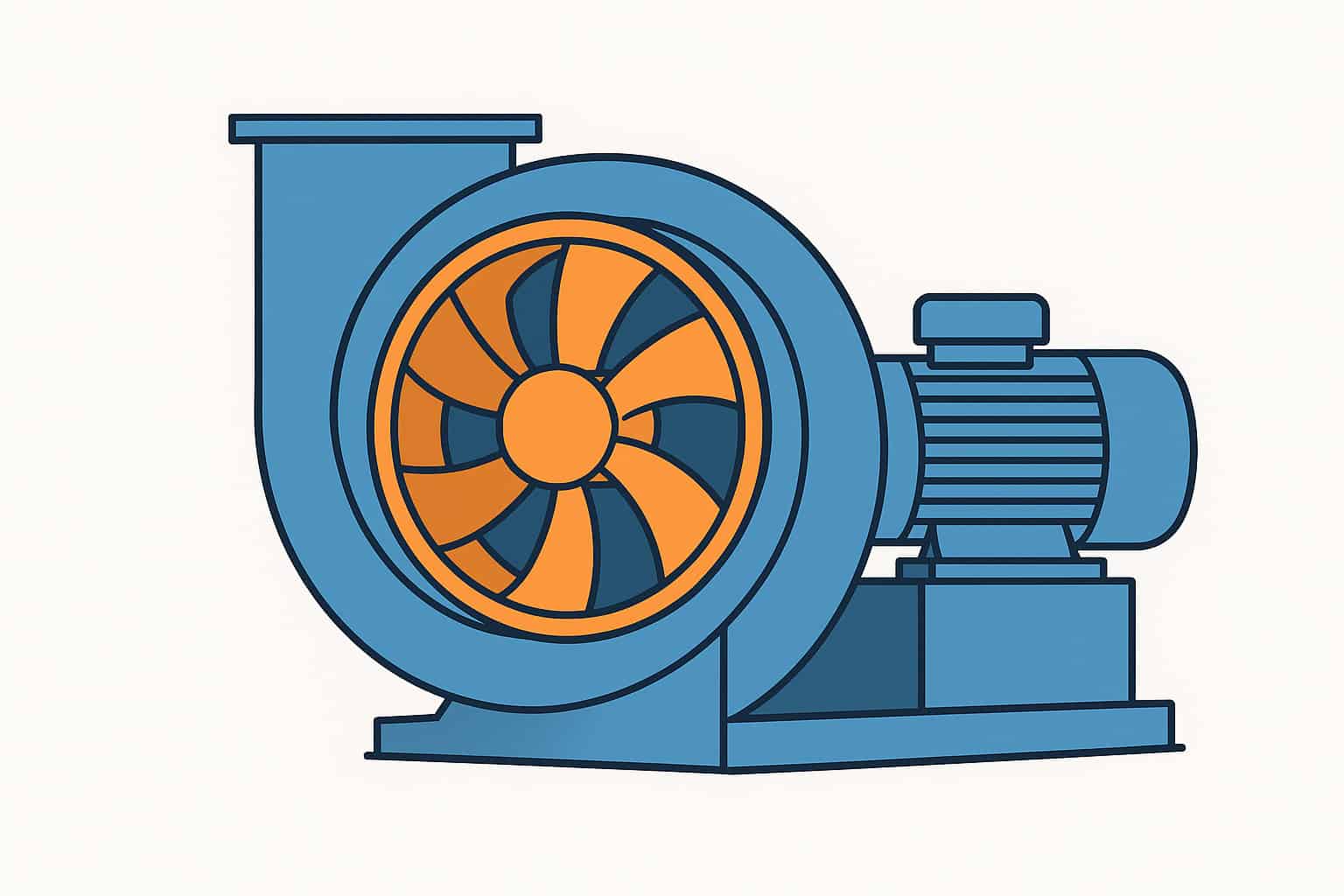
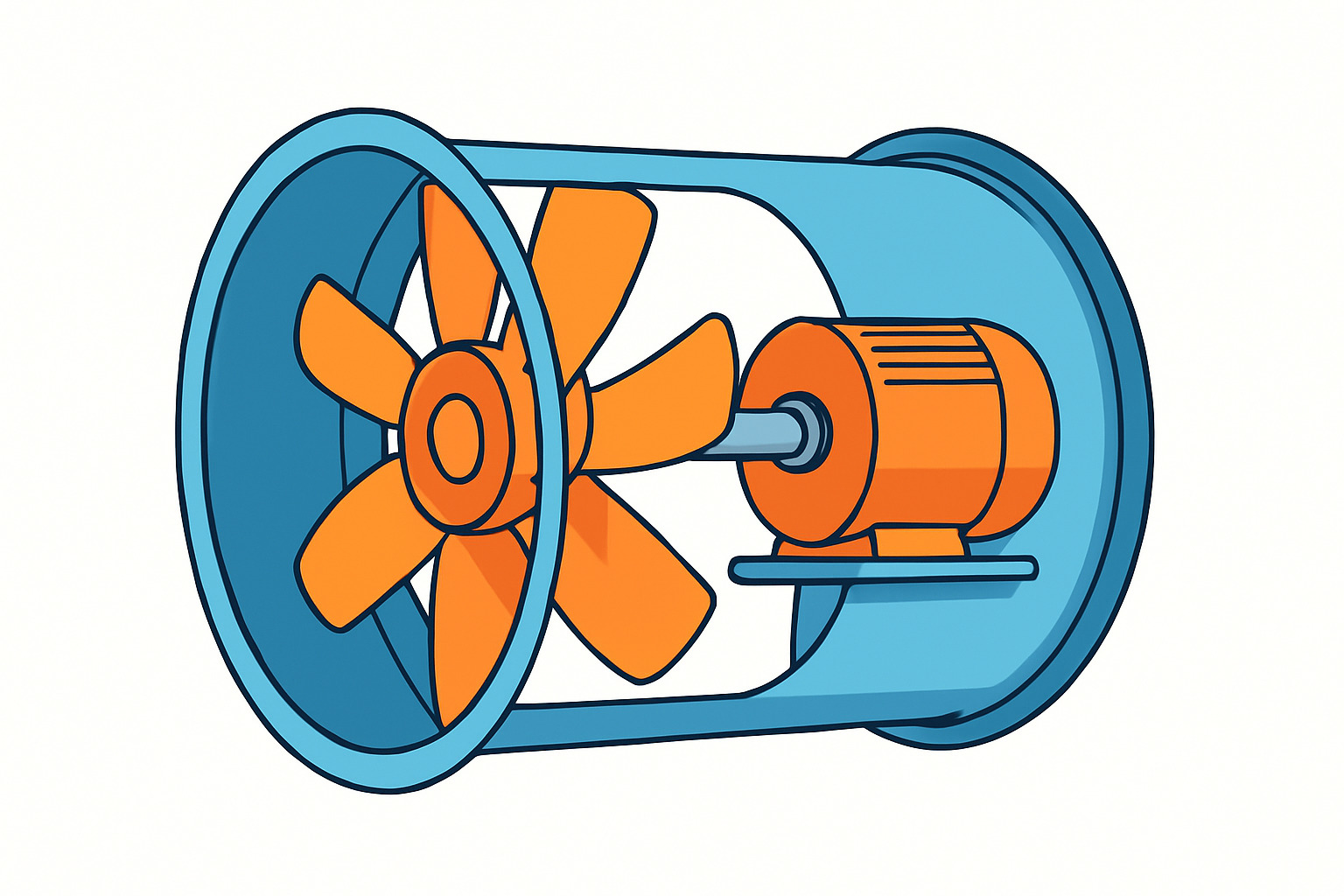
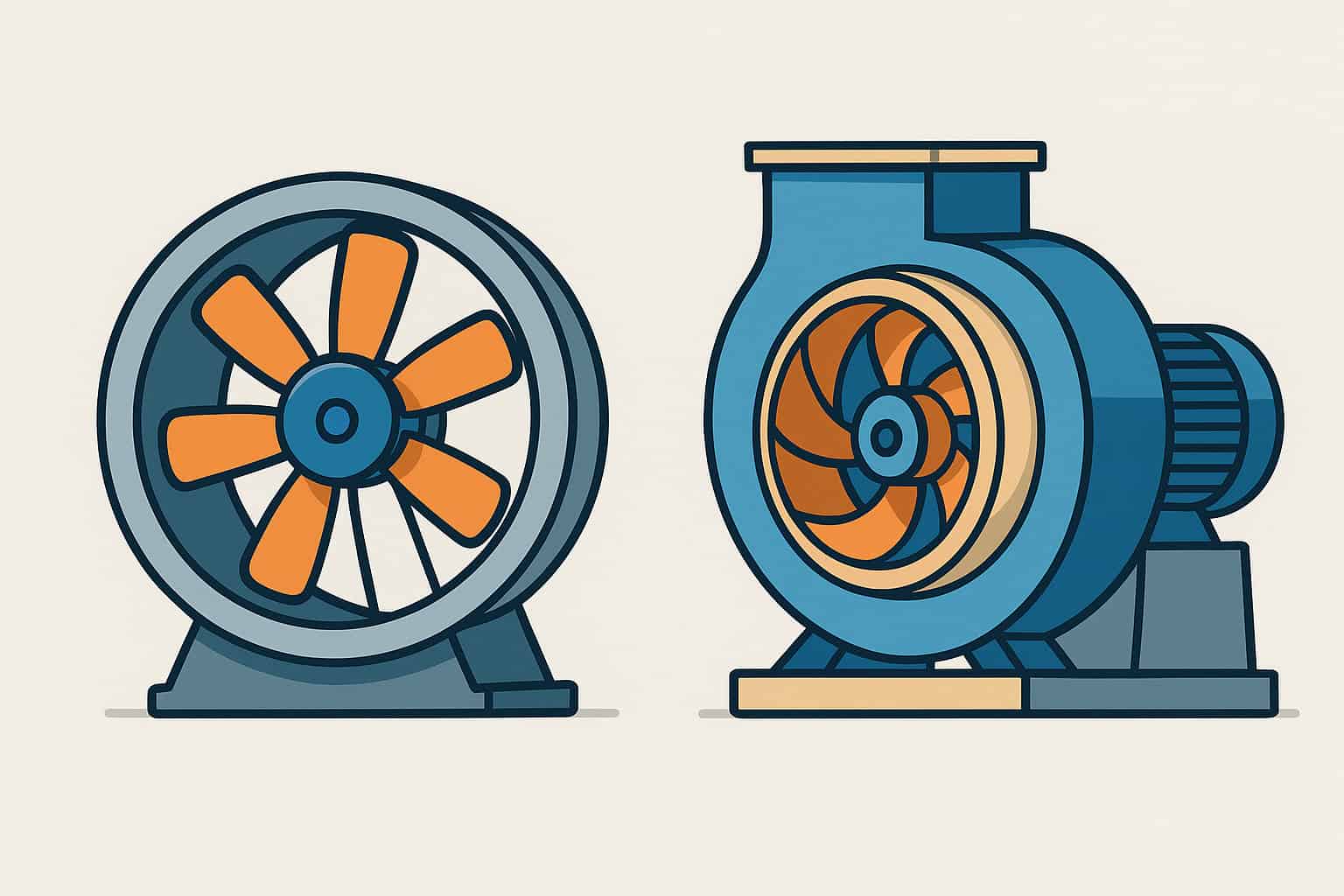
There are different types of tunnel fans, including jet fans, which are compact axial fans installed directly in the tunnel, and shaft-mounted exhaust or supply fans, which are larger axial or centrifugal units connected to vertical shafts. Jet fans create a longitudinal airflow by imparting momentum to the air, while shaft fans inject or remove air at specific points to support transverse or semi-transverse ventilation systems. Many tunnels use a combination of these designs to achieve the desired airflow patterns.
Modern tunnel fans are built to meet demanding performance and safety standards. They must operate reliably in dusty, humid conditions and often need to be certified for high-temperature operation so they can continue running for a defined period during a fire. Variable speed drives and automation systems allow operators to adjust fan output in response to traffic levels, sensor readings, or emergency conditions.
In summary, tunnel fans are used to maintain safe air quality, control temperature, and provide essential smoke management in tunnels. They are a key component of the tunnel’s safety infrastructure and are carefully selected and controlled to match the tunnel’s length, traffic, and regulatory requirements.