
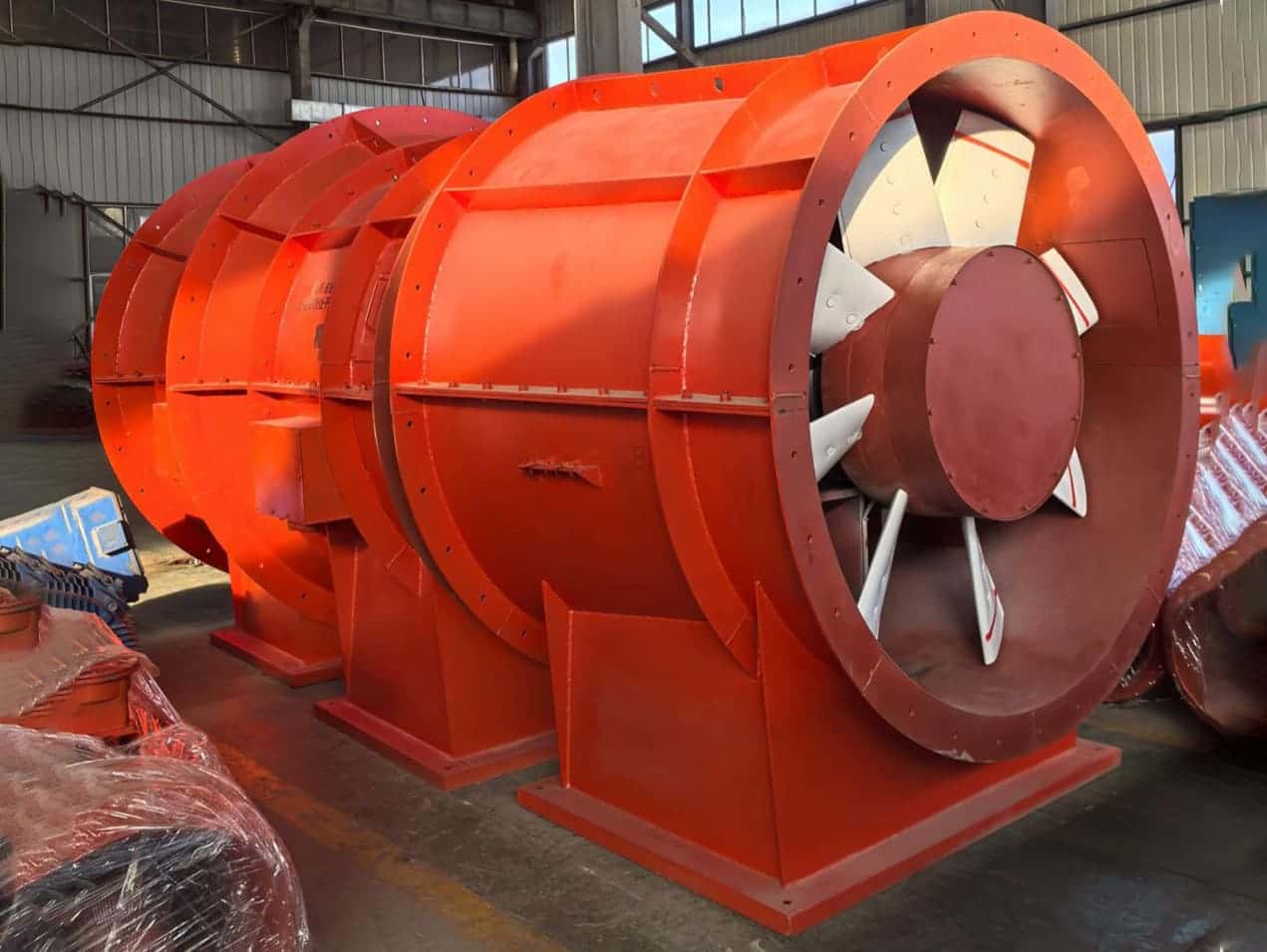
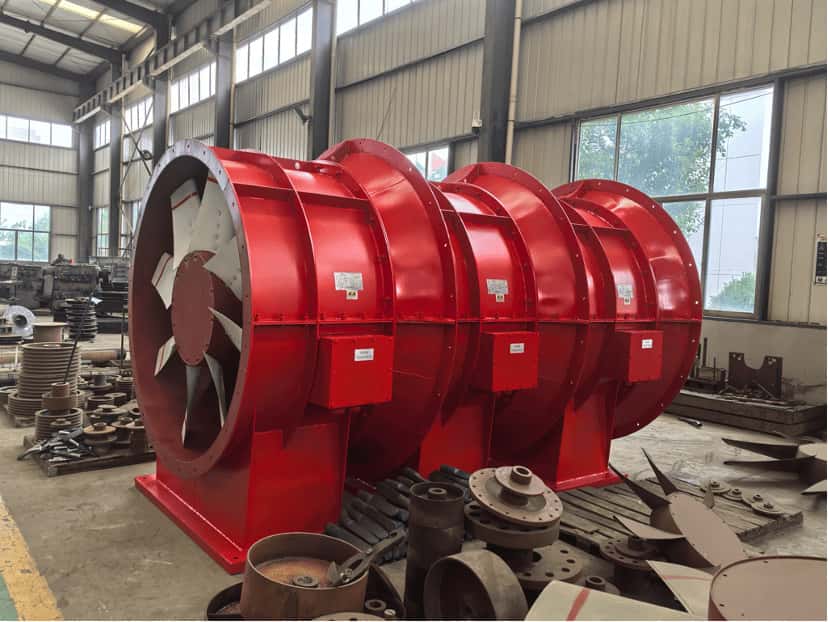
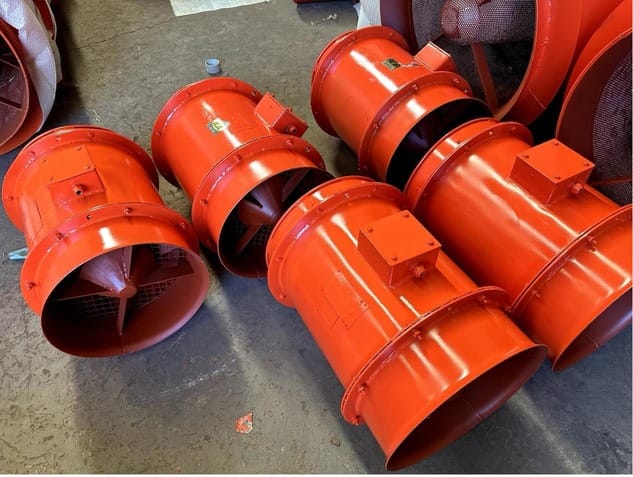
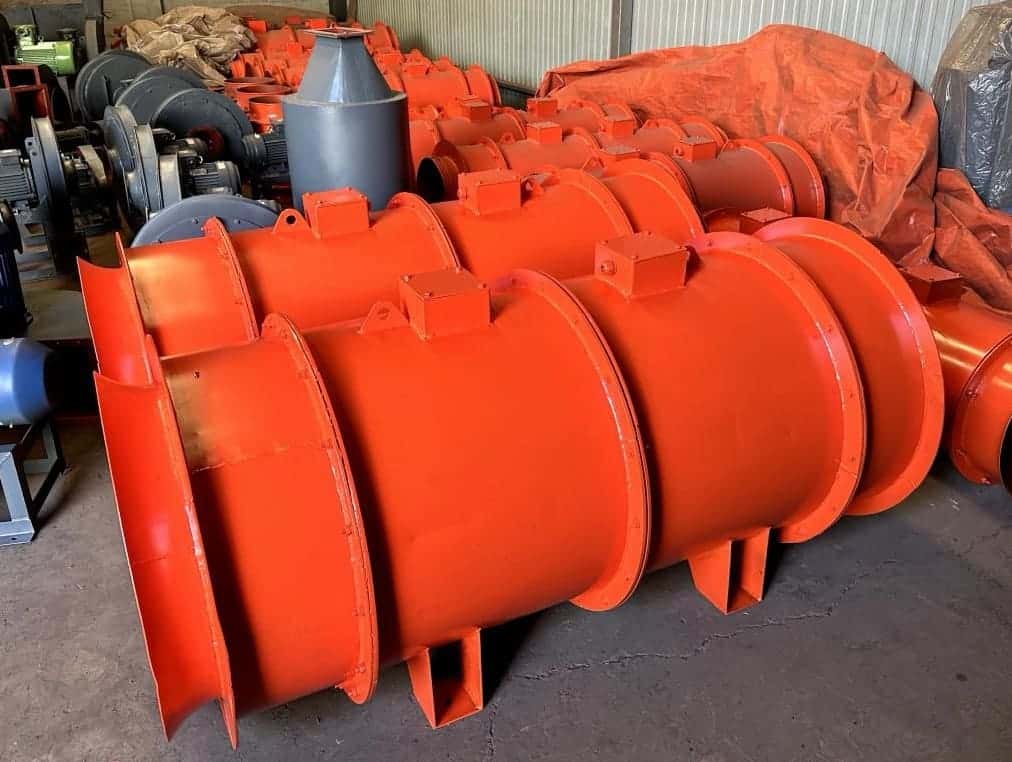
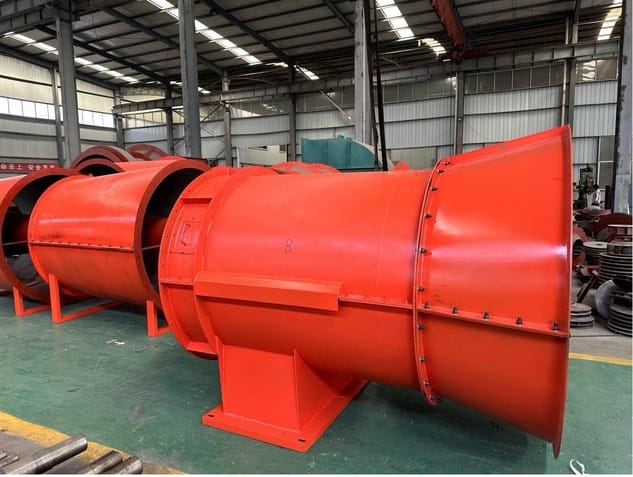
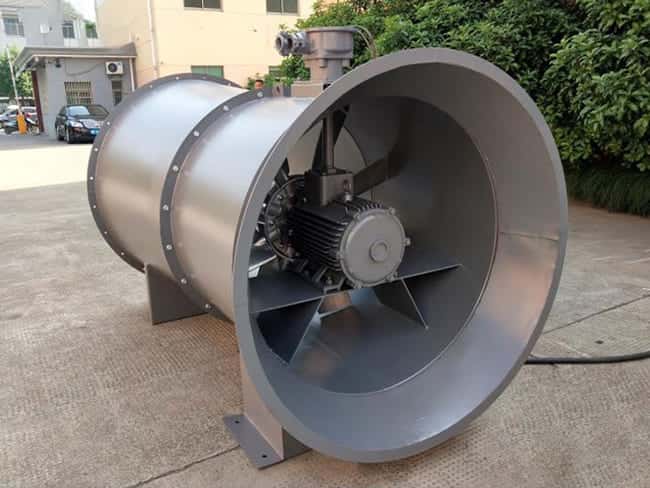
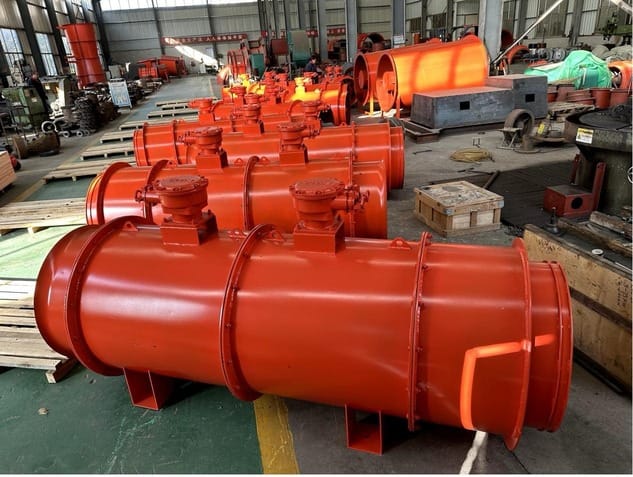
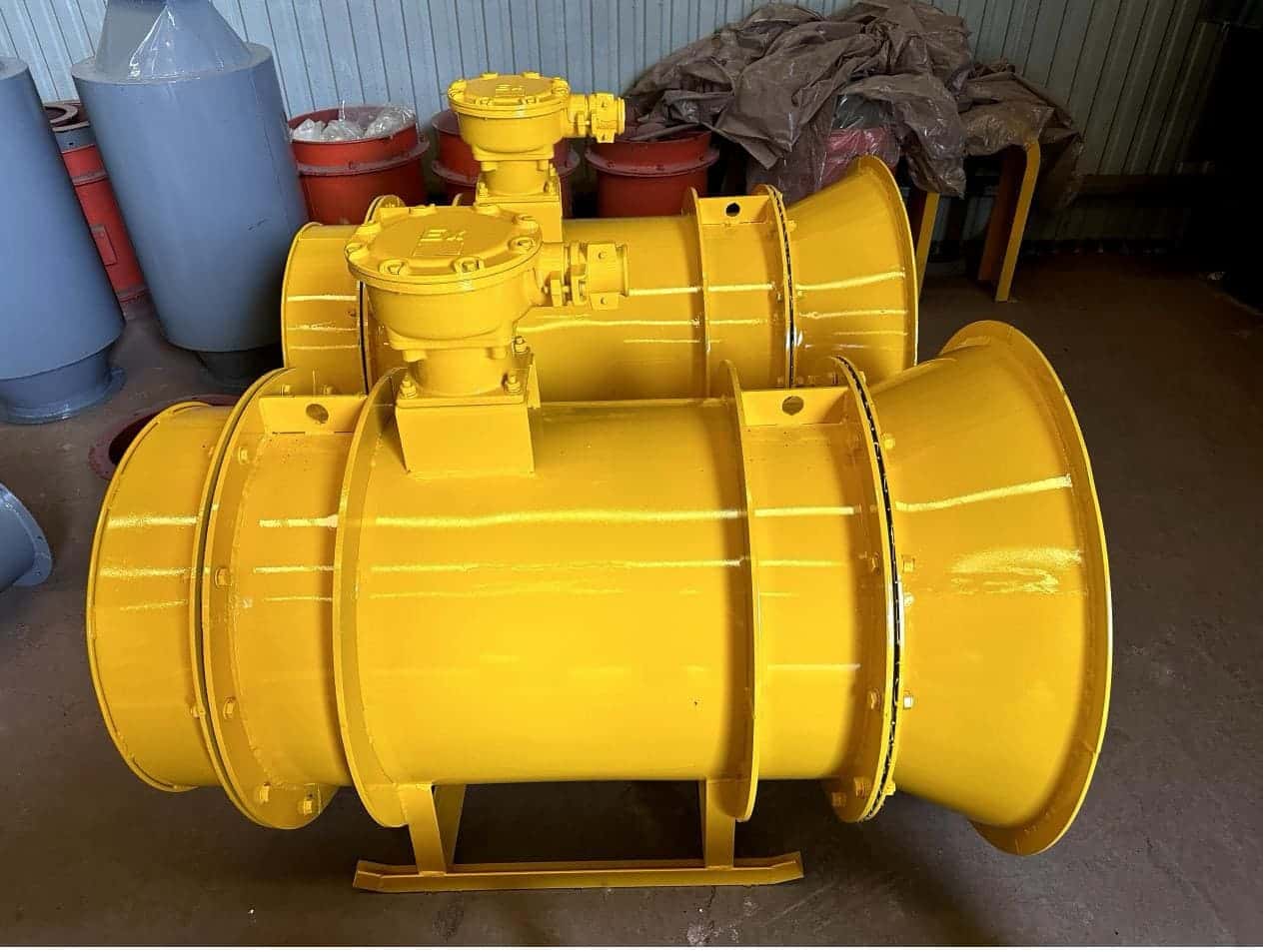
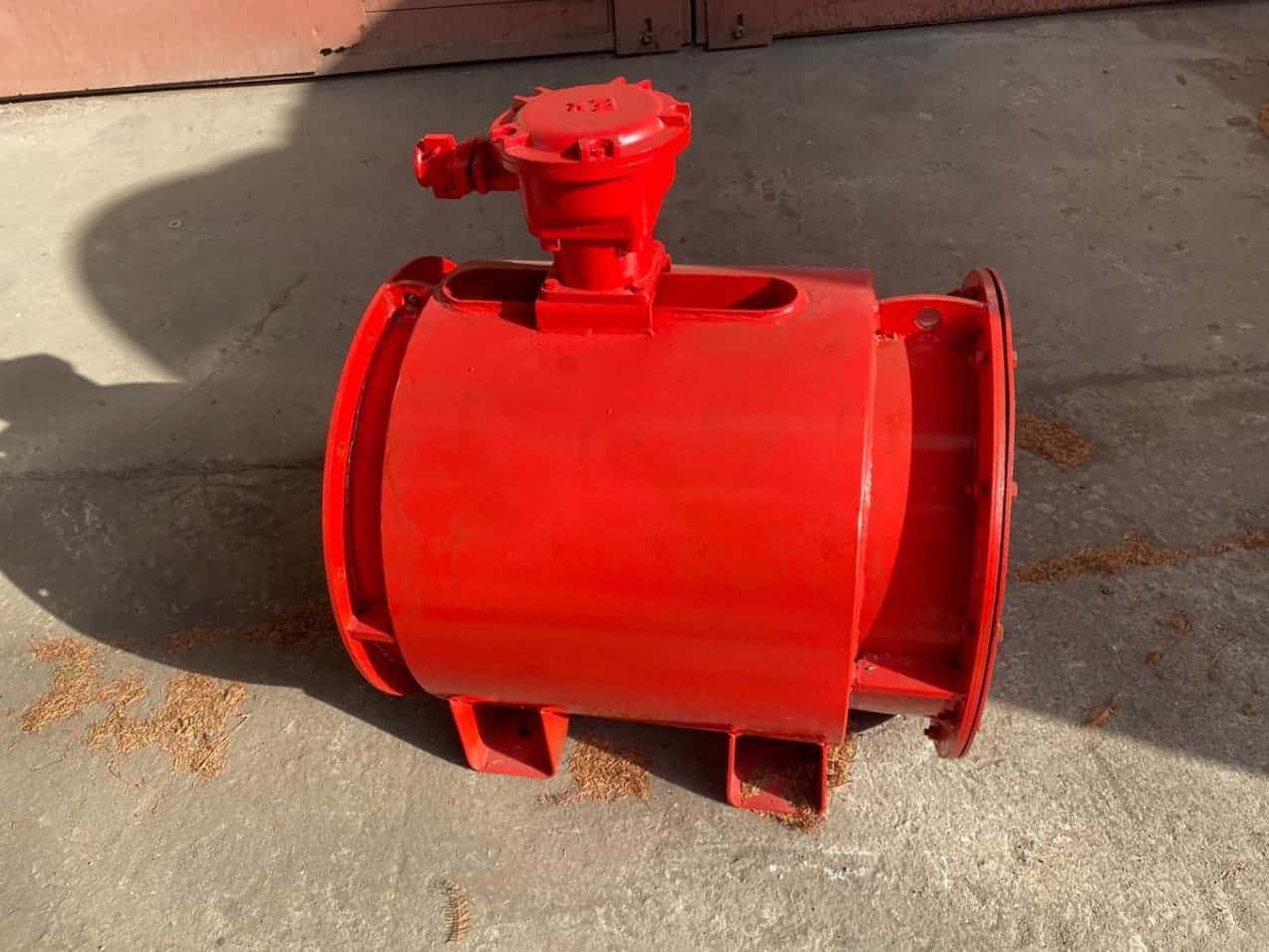
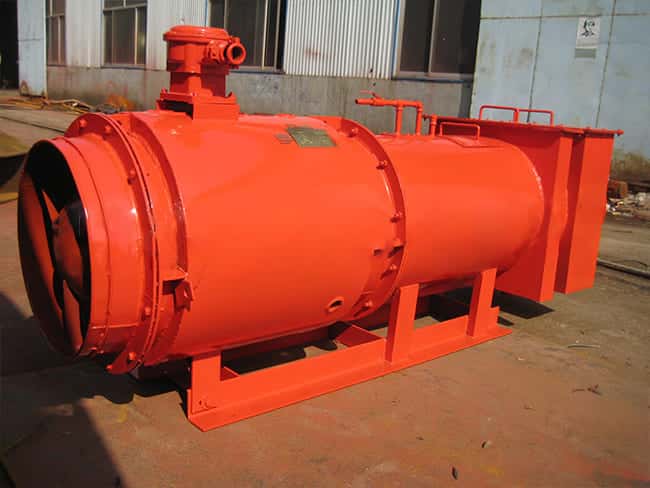
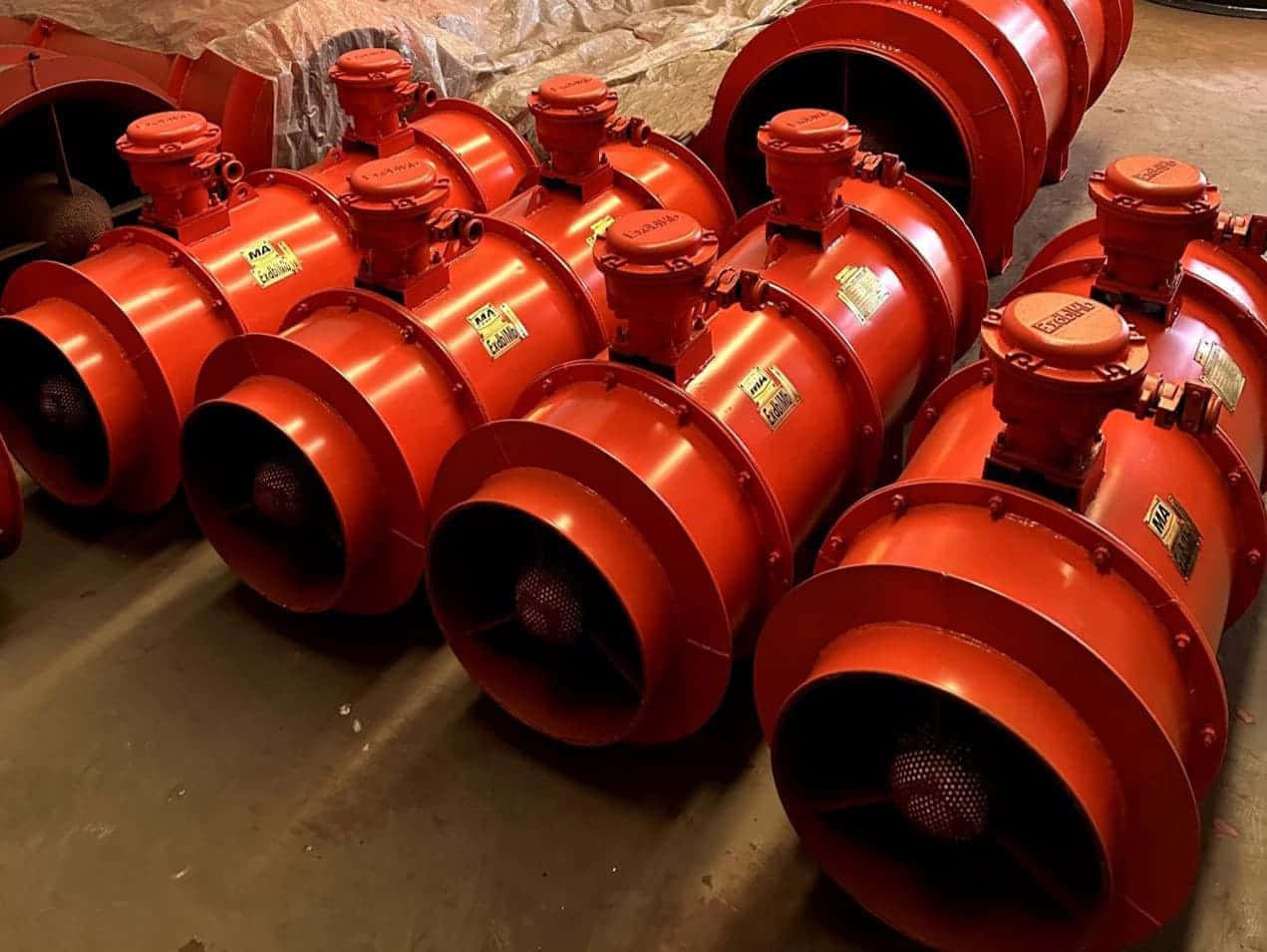
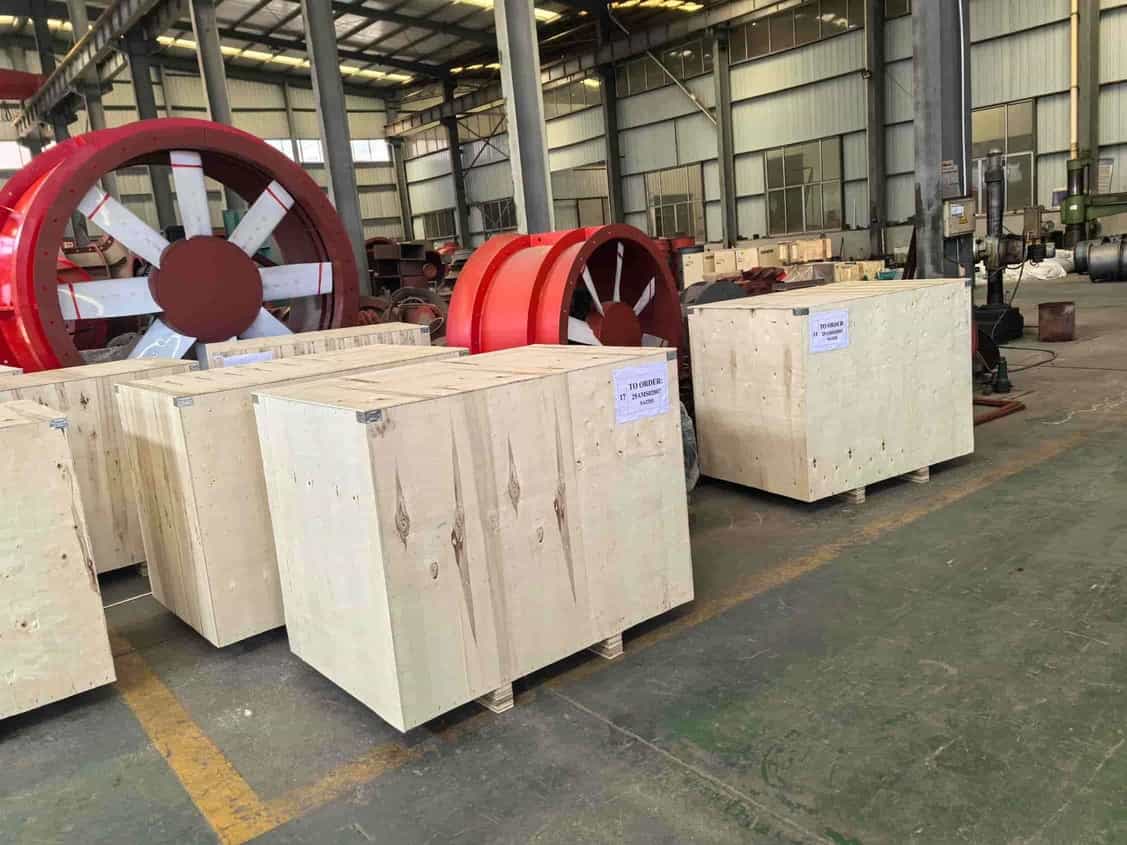

Vibration noise in duct ventilation fans is a sign that the fan, ductwork or supports are moving more than they should. This can be caused by mechanical problems such as imbalance and misalignment, or by aerodynamic issues like turbulence and resonance. In industrial and mining ventilation, ignoring vibration noise can lead to accelerated wear, fatigue cracks and unexpected failures.
One of the most frequent causes is impeller imbalance. Dust build-up on blades, erosion, corrosion or damage can make one side of the rotor heavier than the other. As the fan spins, the unbalanced mass creates a centrifugal force that makes the fan and its supports vibrate. This vibration is transmitted into the ductwork and surrounding structure, where it becomes audible as rumbling, drumming or rattling.
Misalignment and mechanical looseness also lead to vibration noise. If the motor and fan shafts are not properly aligned, or if belts and pulleys are out of line, cyclic forces are introduced that cause vibration. Loose foundation bolts, frames, hangers and duct supports allow the whole assembly to move and rattle. Over time, these conditions can worsen as fasteners wear and holes elongate, increasing both vibration and noise.
Aerodynamic factors play a role too. Poor inlet and outlet conditions create turbulence, pulsations and uneven loading on the impeller. For example, a tight elbow directly at the fan inlet, a partially closed damper or a sudden change in duct area can cause flow separation and periodic forces on the blades. In some cases, these forces excite natural frequencies of the fan, duct or building structure, leading to resonance, higher vibration and a loud humming or booming sound.
Within long duct systems, acoustic and structural resonances can amplify certain frequencies. If the blade-passing frequency or a harmonic of the fan speed coincides with a natural frequency of the duct or mounting frame, even small excitation forces can produce noticeable vibration noise. This is particularly relevant in large industrial and mine ventilation ducts that run long distances and may have flexible sections.
Worn or damaged bearings are another common source. As clearances increase and rolling surfaces deteriorate, bearings generate both vibration and characteristic noise patterns (rumbling, growling or high-pitched tones). Left unchecked, bearing problems can lead to shaft damage and catastrophic failure.
In summary, vibration noise in duct ventilation fans most often arises from impeller imbalance, misalignment, loose supports, turbulent or unstable airflow, resonance in ducts and structures, and worn bearings. Addressing these issues through cleaning and balancing, alignment checks, tightening and reinforcing supports, improving duct geometry and maintaining bearings will reduce vibration noise and increase the reliability of industrial and mining ventilation systems.
