
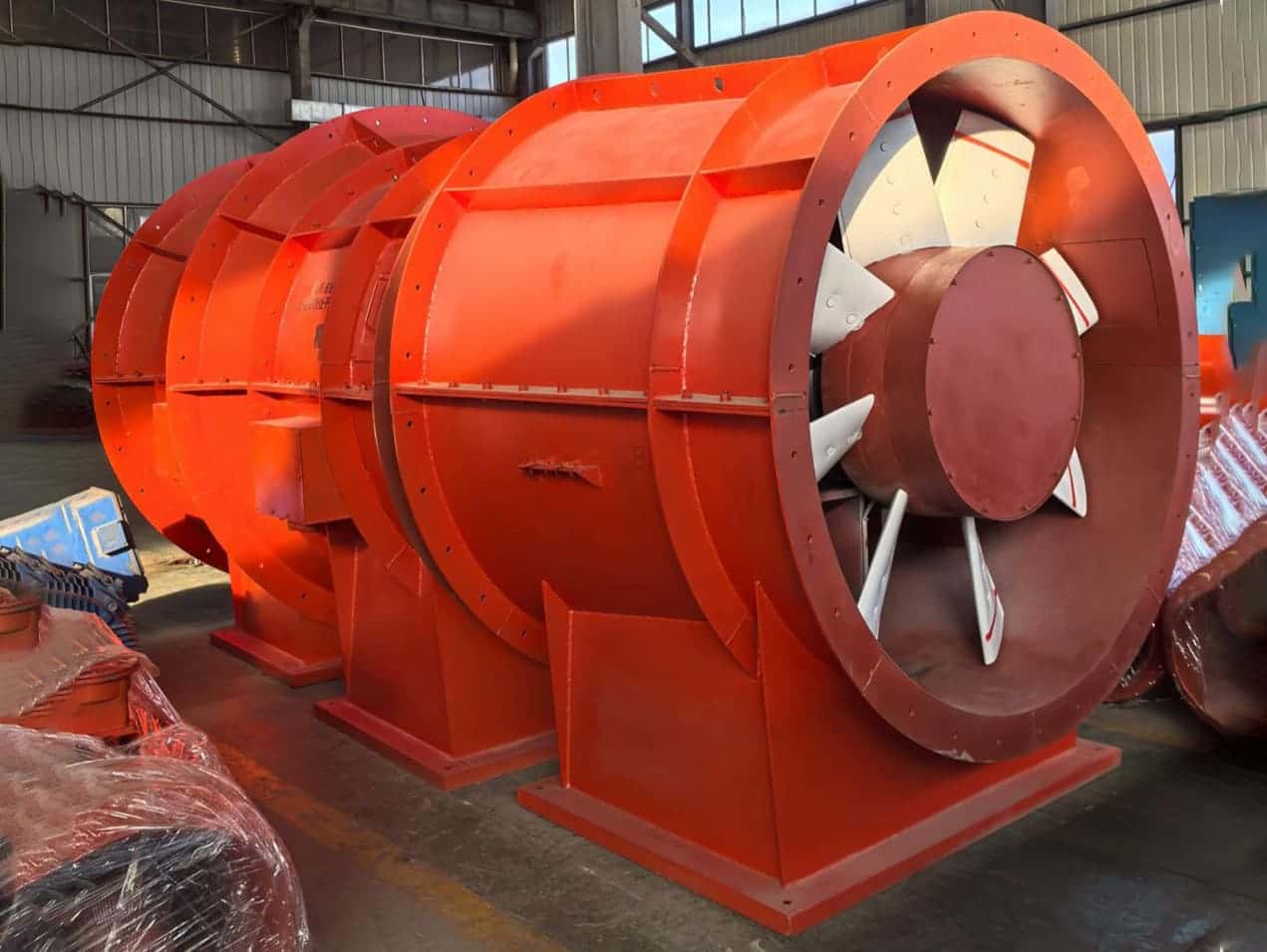
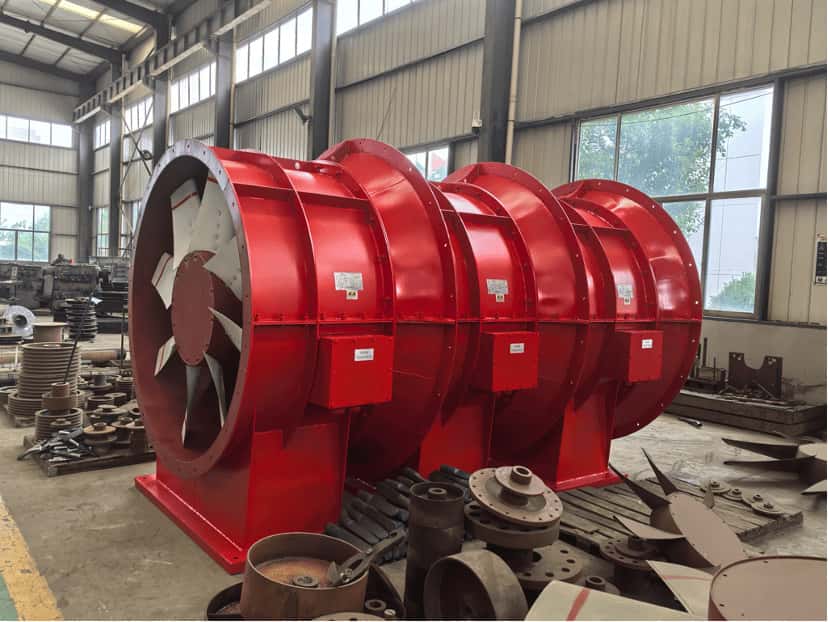
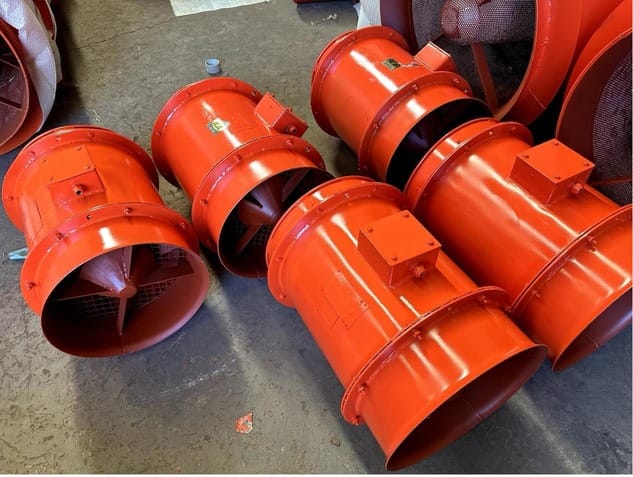
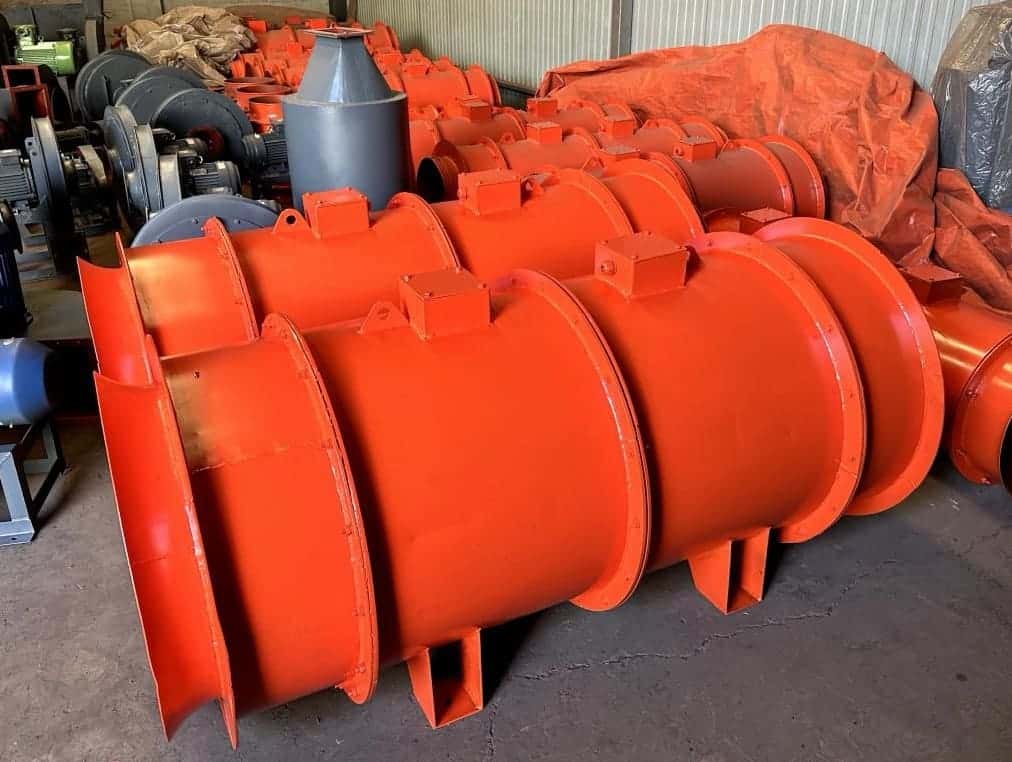
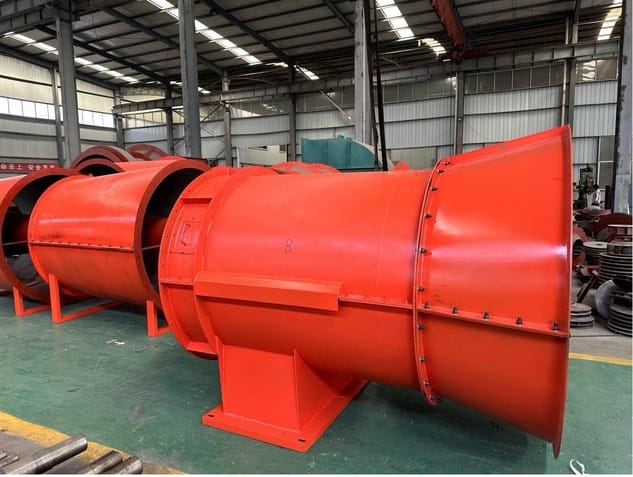
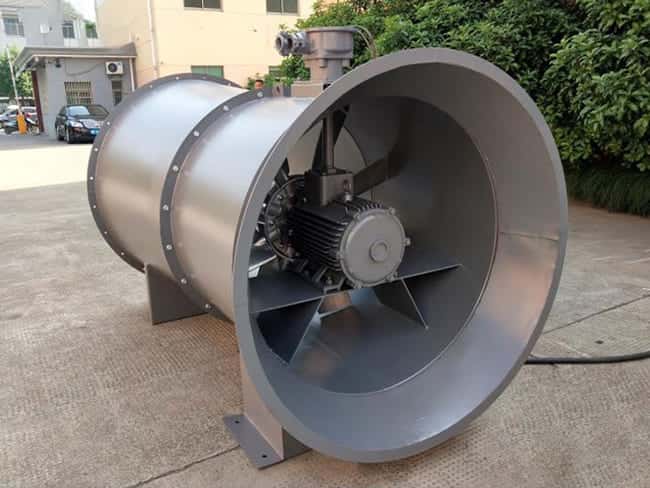
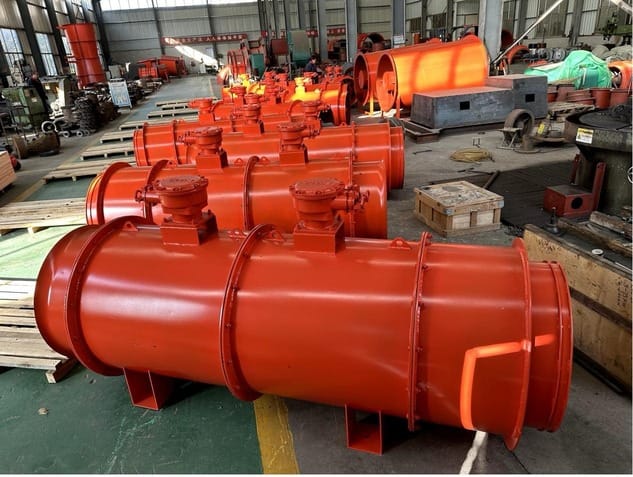
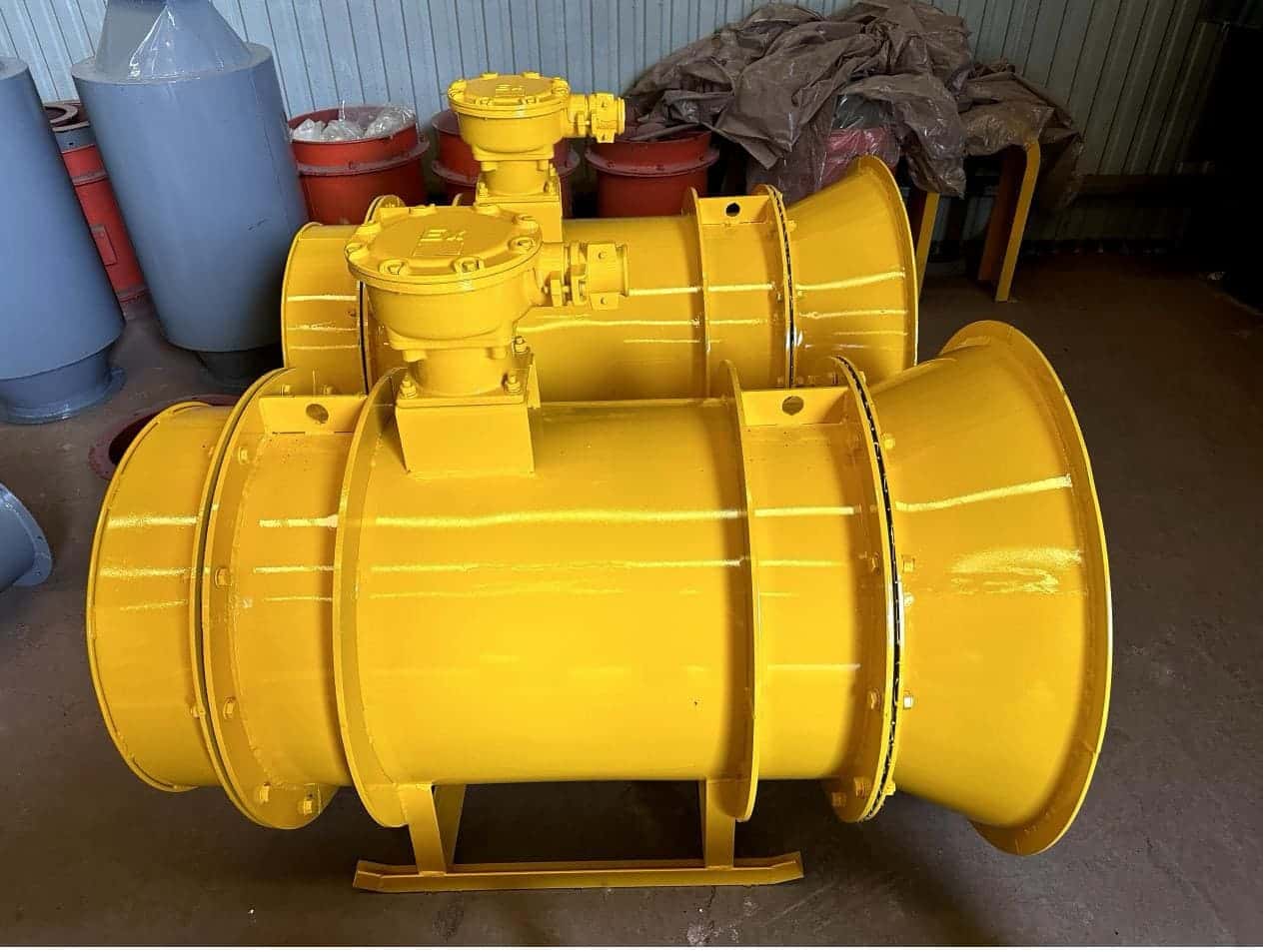
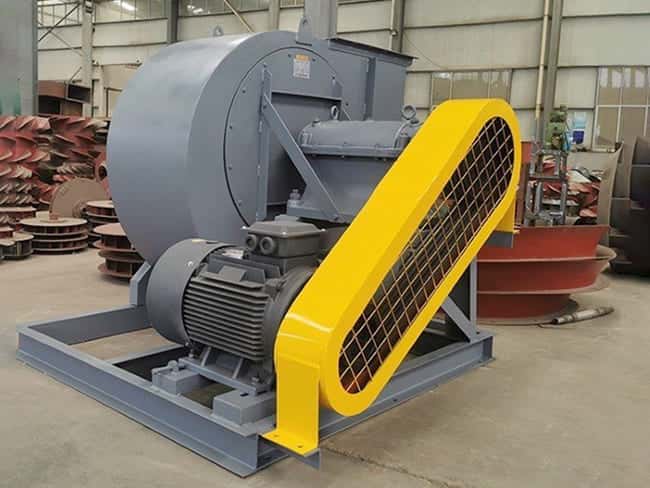
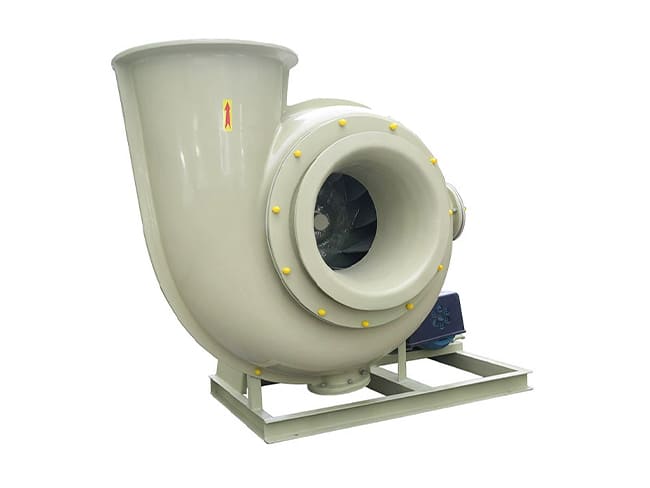
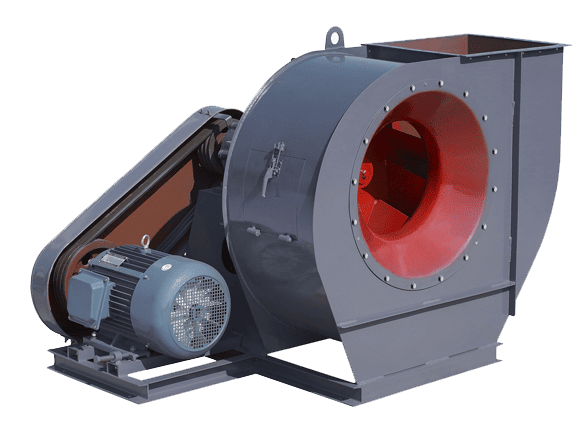
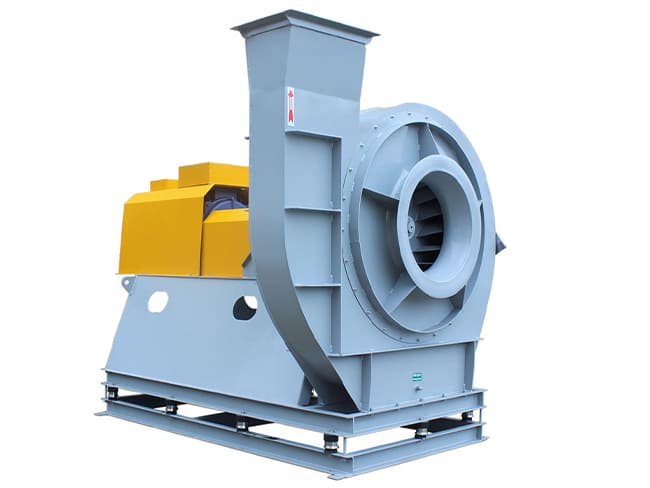
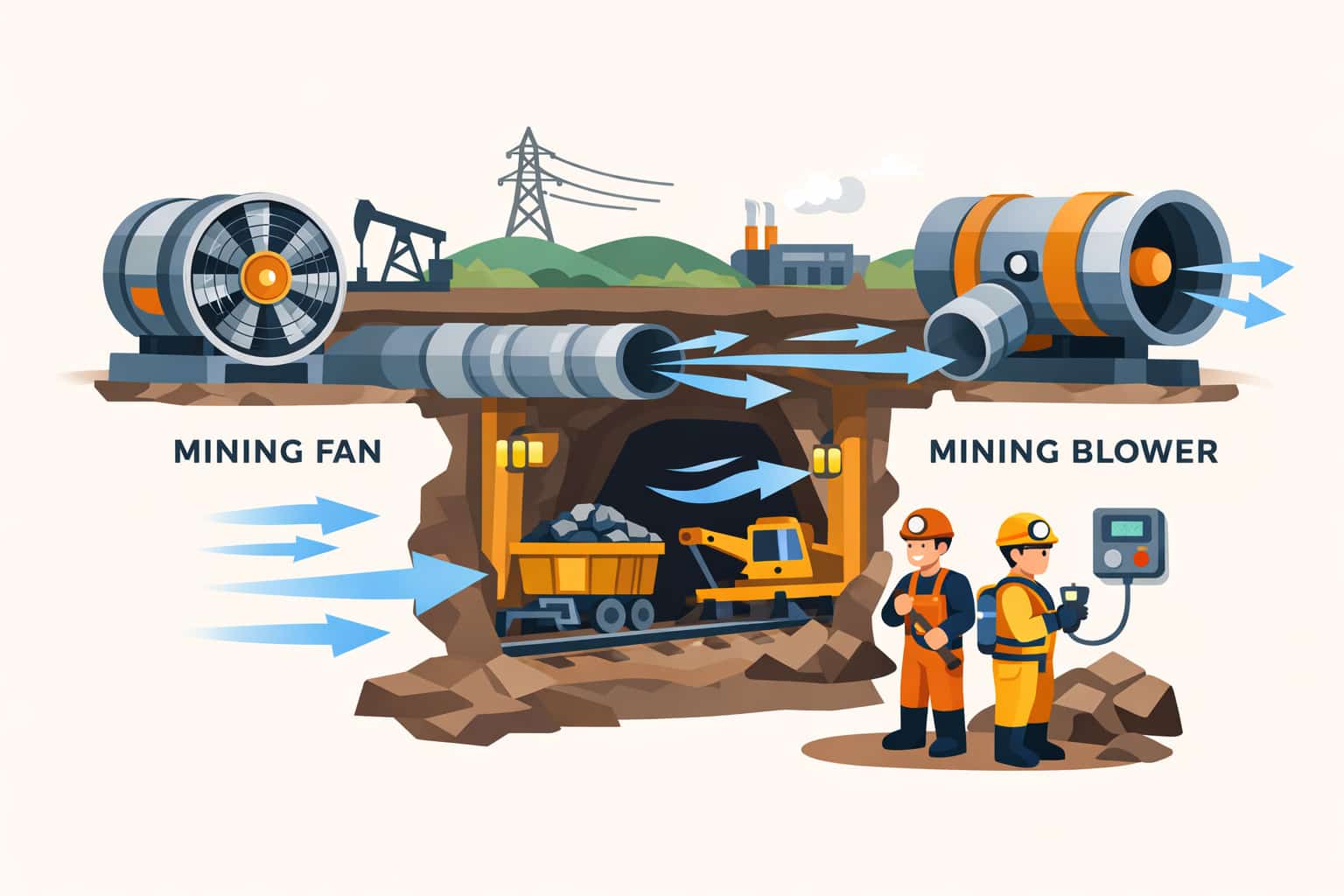
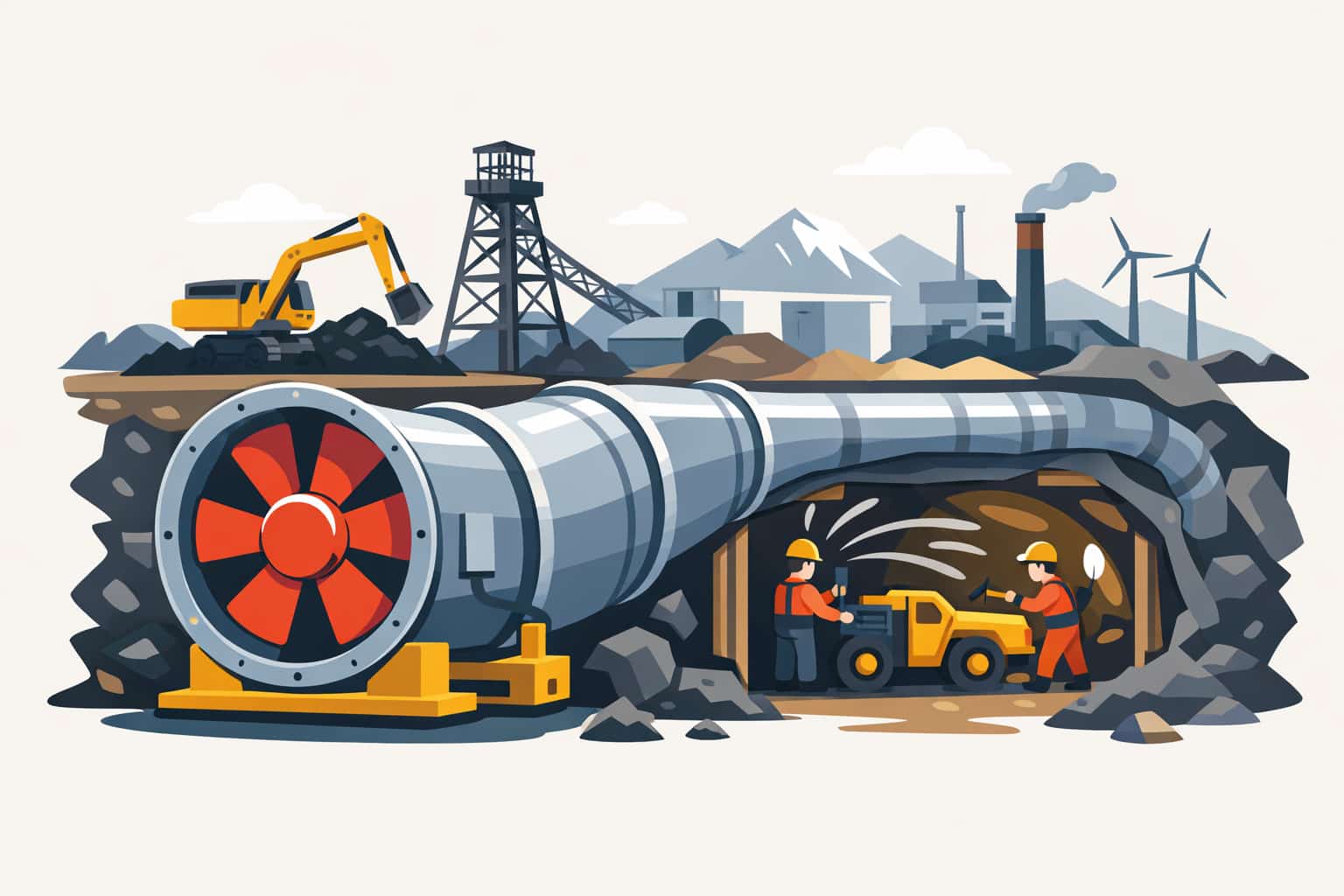
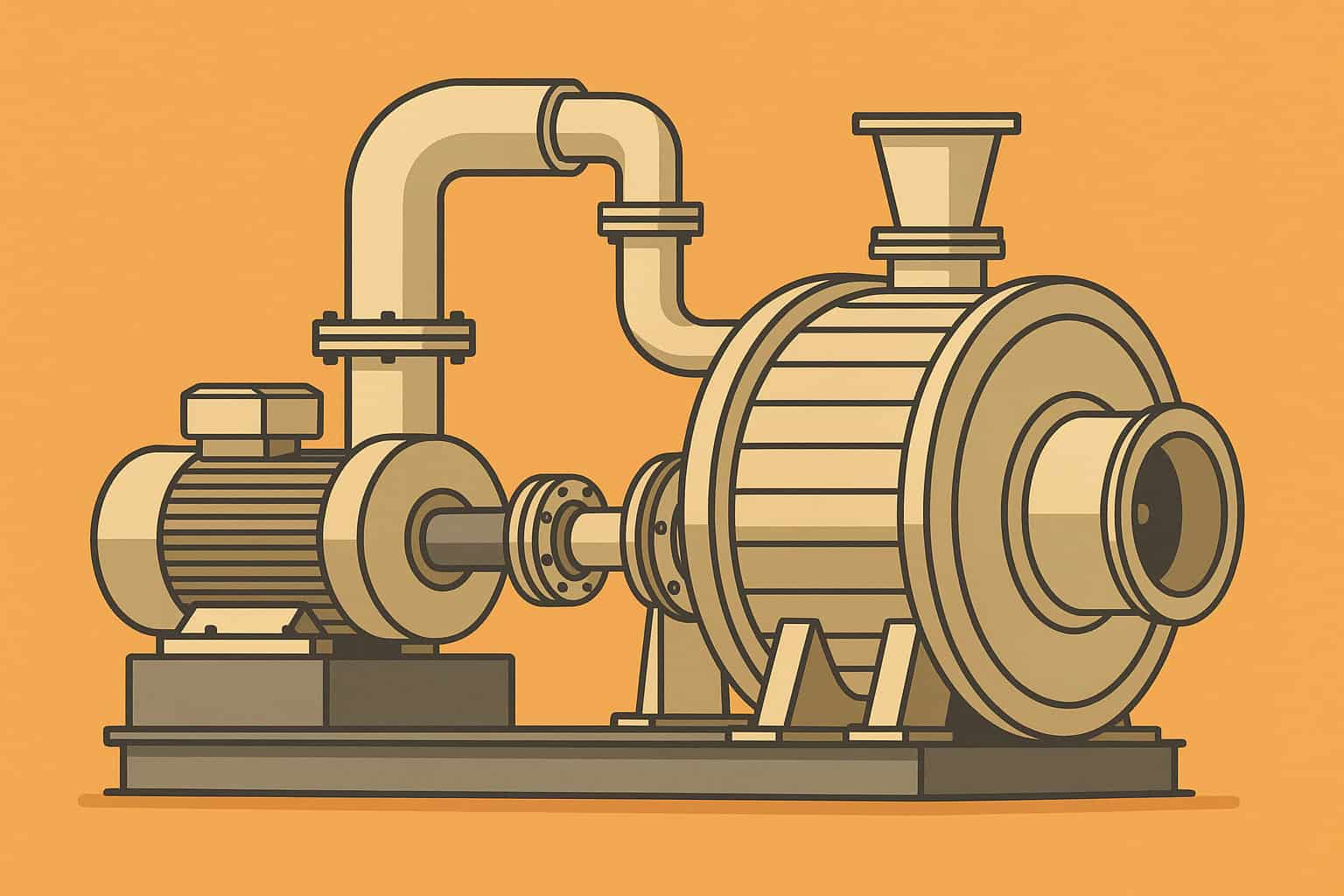
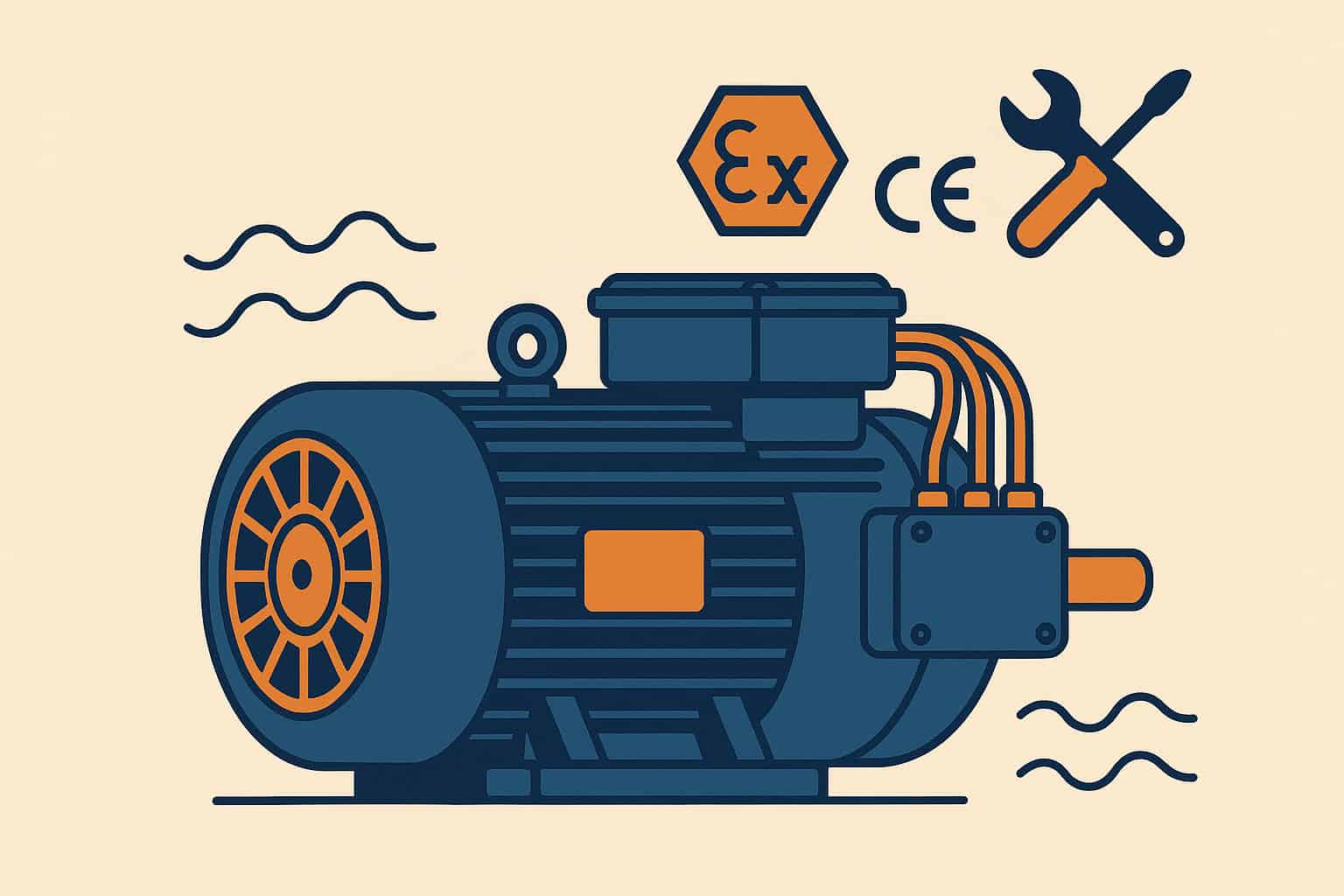
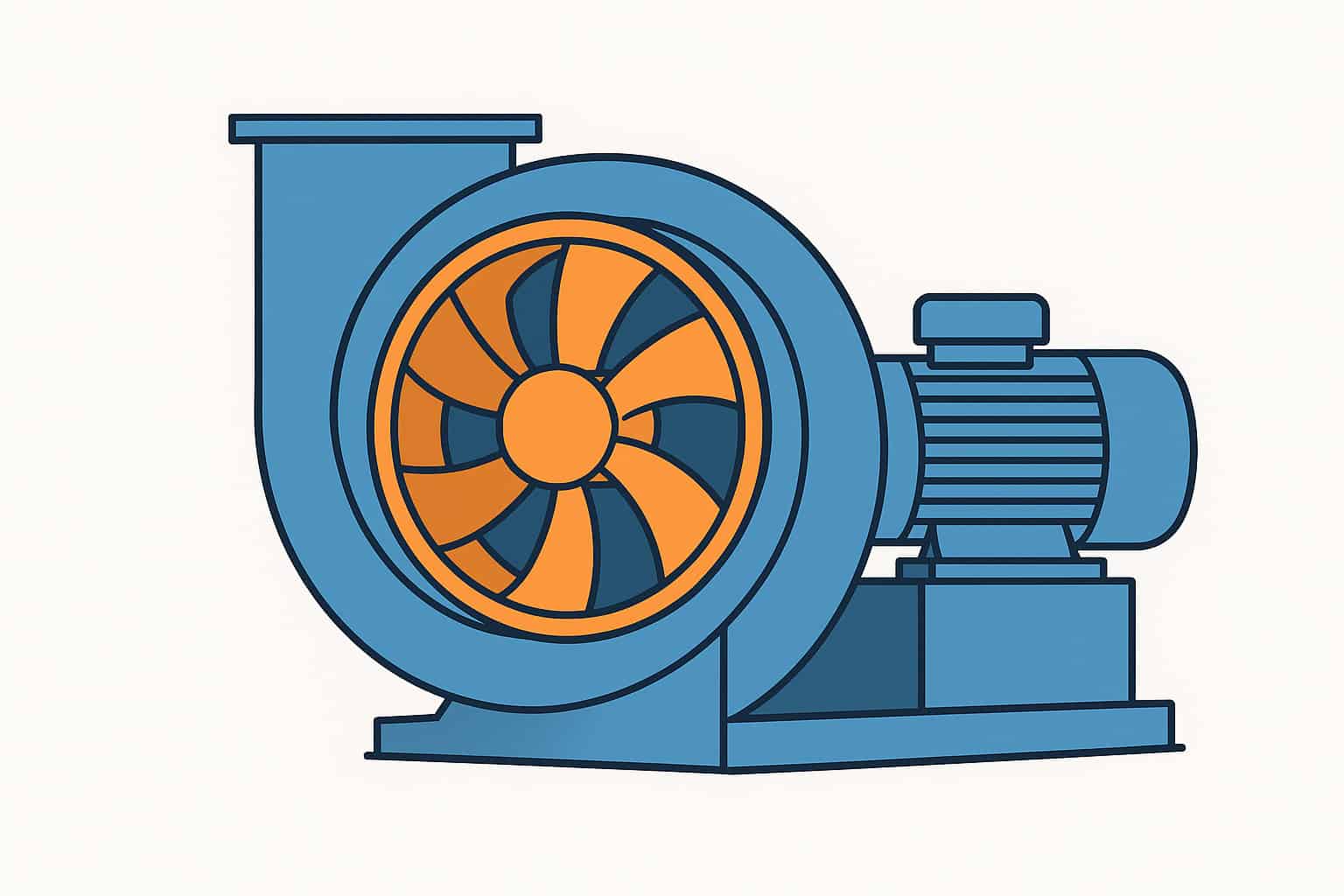
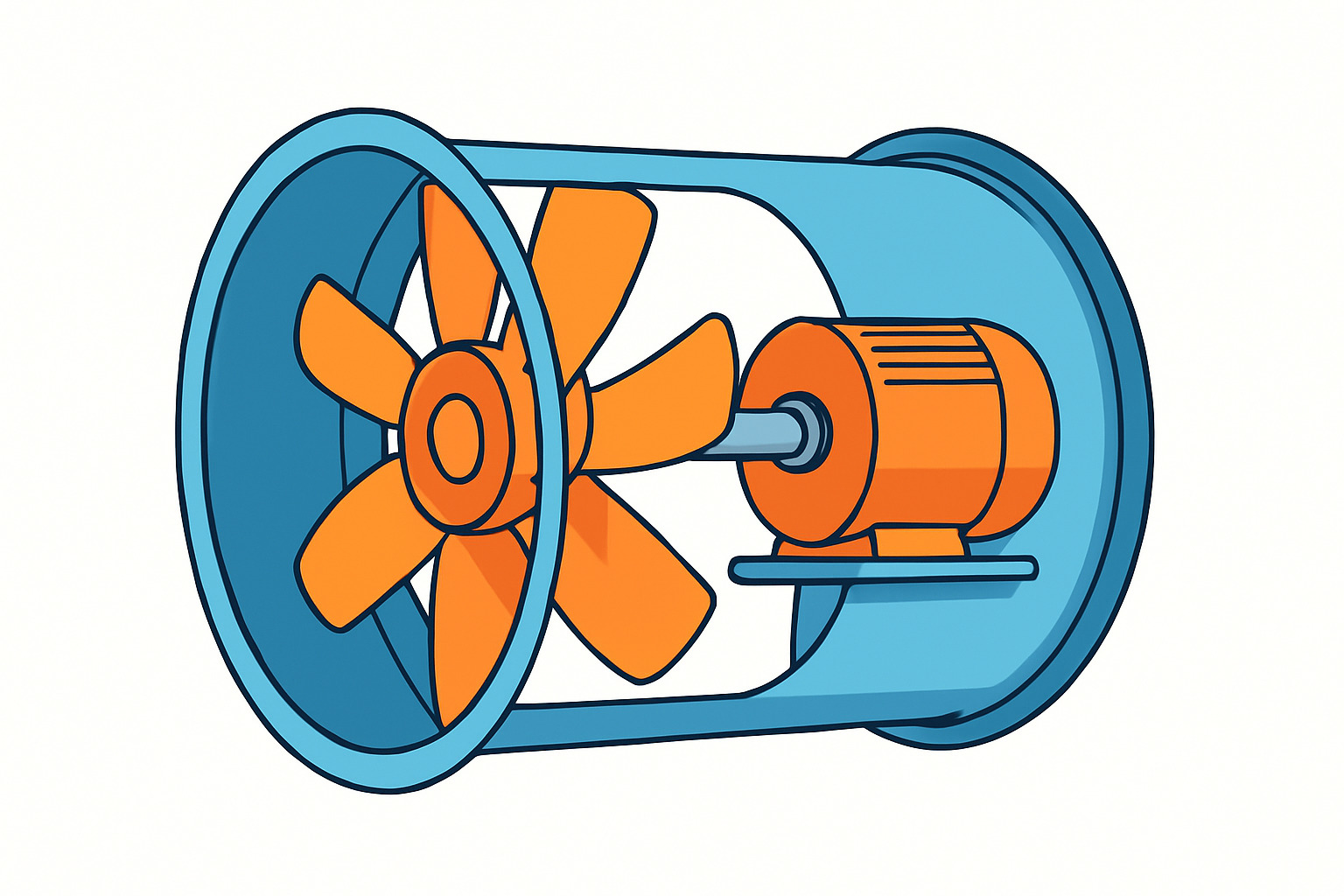
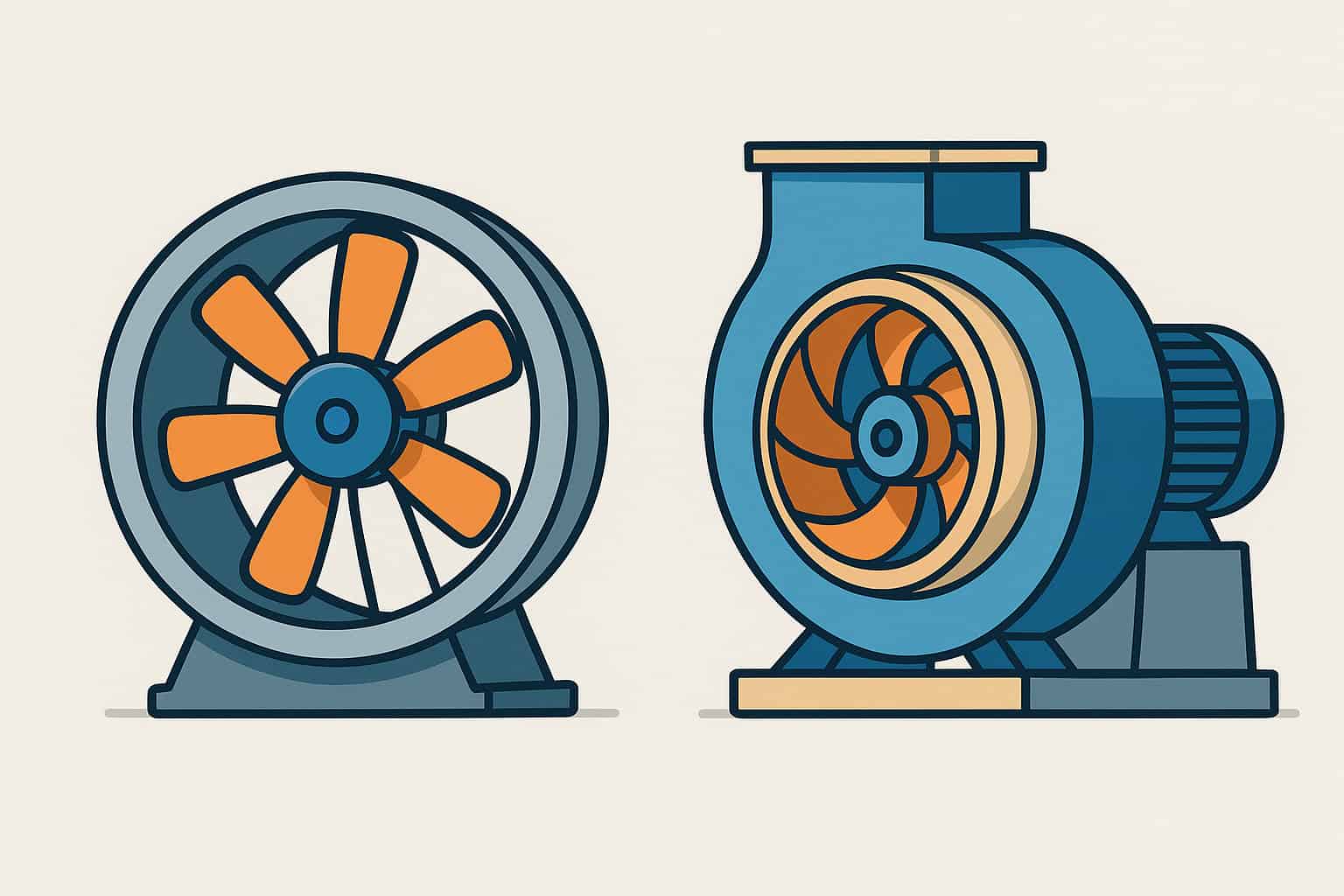
At its simplest, a fan is a machine that moves air, but inside every industrial or mining ventilation fan there is a set of carefully designed components working together. Whether the fan is axial or centrifugal, small or very large, it typically consists of an impeller, motor, shaft, bearings, housing, inlet and outlet fittings, supports and electrical accessories.
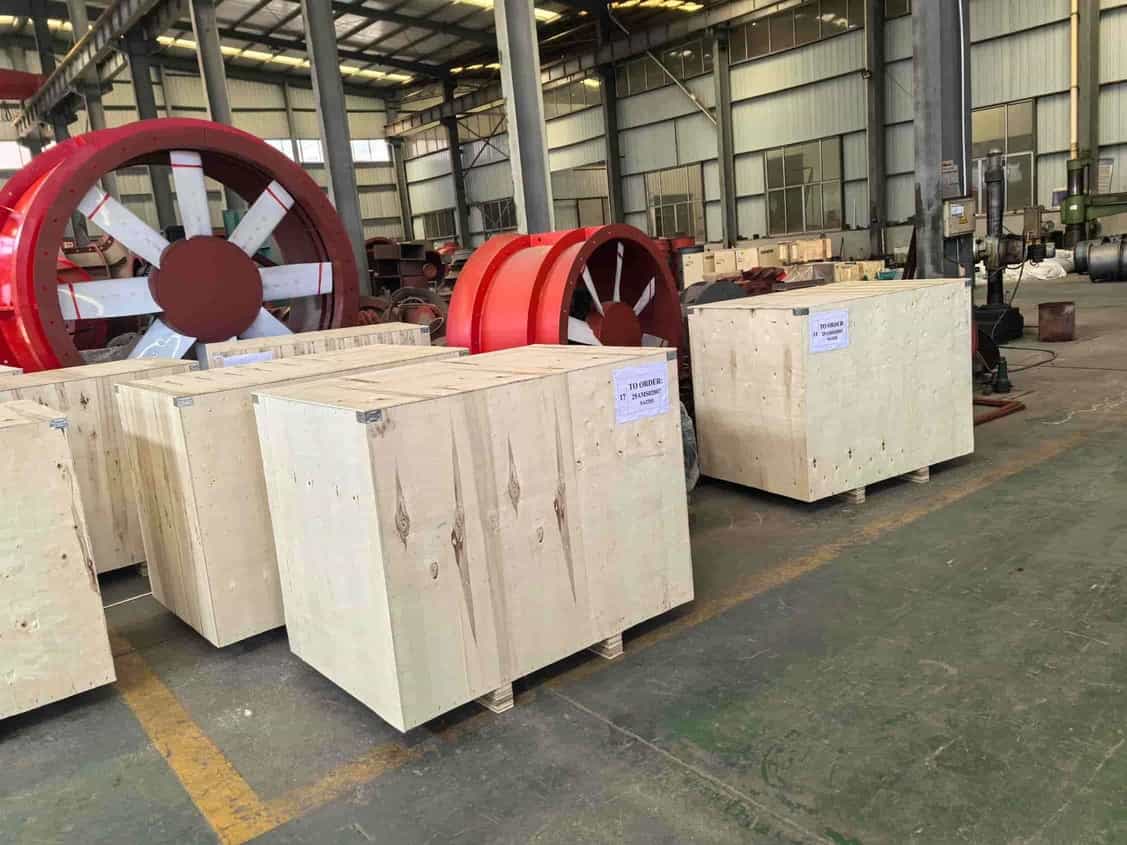
The core airflow-producing element is the impeller, also known as the fan wheel or rotor. In an axial fan the impeller has blades arranged around a hub and pushes air parallel to the shaft, like a propeller. In a centrifugal fan the impeller is a wheel with backward, forward or radial blades that throw air outward into a scroll casing. The blade size, number, angle and profile determine how much air the fan can move and how much pressure it can develop.
Driving the impeller is the motor. Most industrial fans use three-phase induction motors because they are robust and efficient. The motor converts electrical energy into mechanical rotation. In direct-drive fans the motor shaft is directly connected to the impeller hub. In belt-drive fans the motor turns pulleys and belts that transmit power to a separate fan shaft, allowing speed adjustment and isolating the motor from hot or contaminated air streams.
The impeller is mounted on a shaft supported by bearings. The shaft transmits torque from the motor to the impeller. Bearings allow the shaft to rotate smoothly while carrying radial and axial loads. For heavy-duty fans, bearings may be mounted in separate housings with lubrication systems and condition monitoring devices. Bearing selection and maintenance are critical for reliable long-term fan operation.
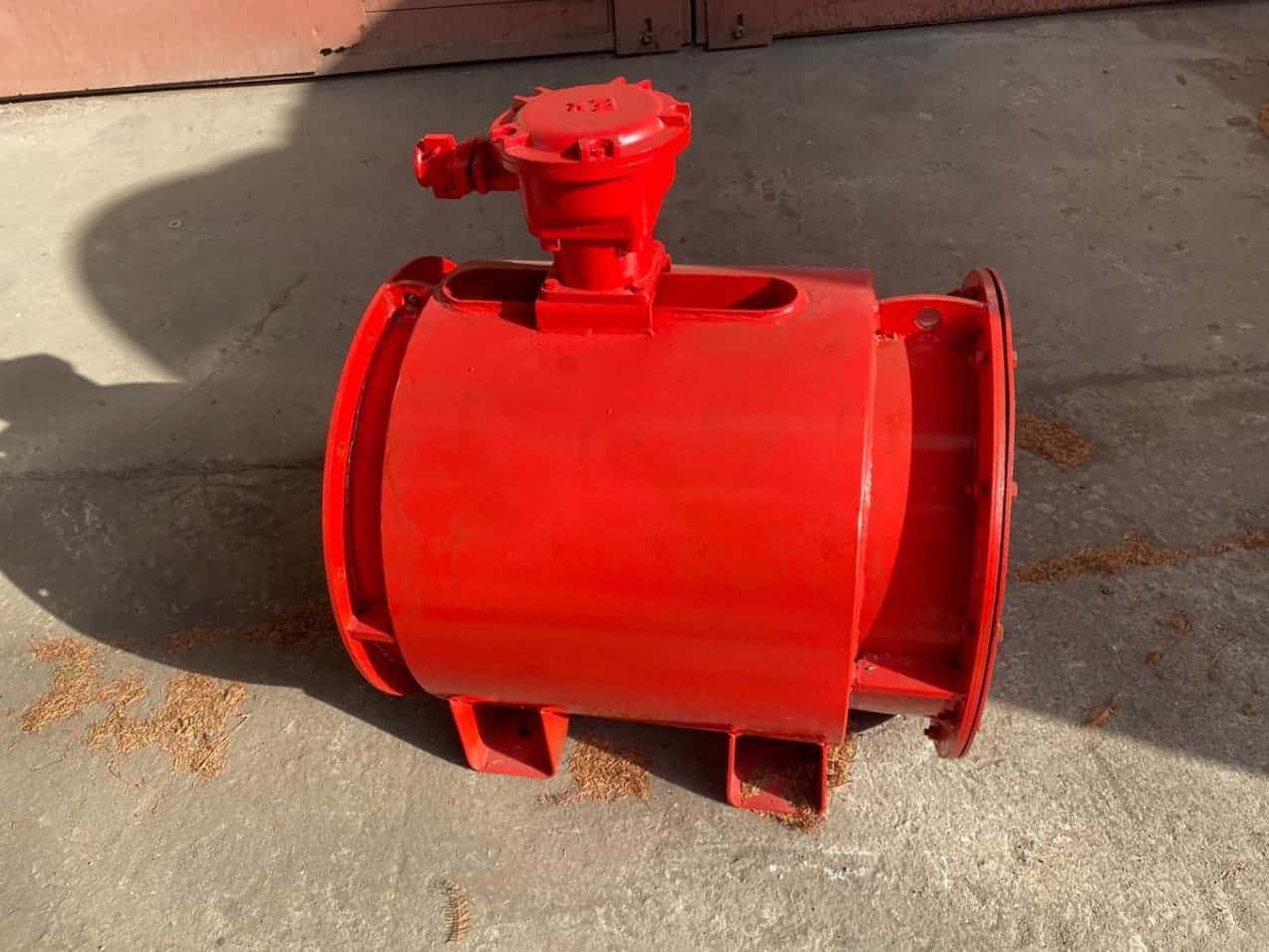
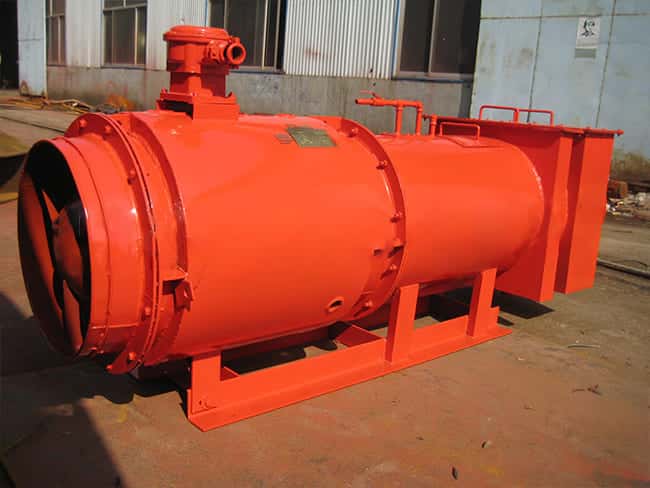
Surrounding and supporting these rotating parts is the housing or casing. In axial fans the housing may be a cylindrical tube, panel ring or box with fixed guide vanes. In centrifugal fans it is a volute casing that collects air from the impeller and directs it toward the outlet. The housing provides mounting surfaces, protects moving parts and helps shape the airflow. For mining and industrial fans, the casing is usually fabricated from steel and reinforced to withstand pressure and vibration.
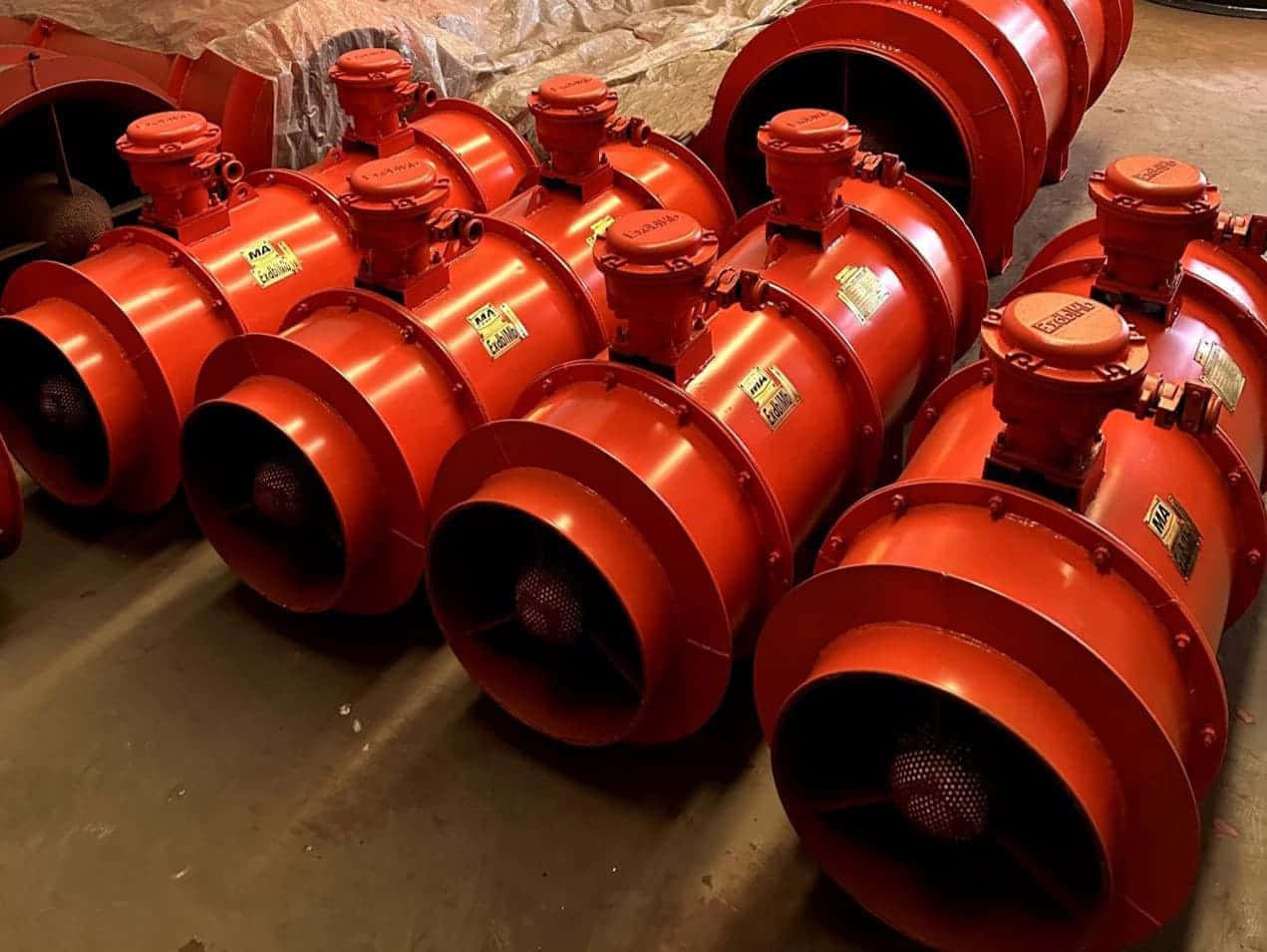
Fans also consist of inlet and outlet fittings and supports. Inlets may have bells, cones or guards to smooth airflow and protect against foreign objects. Outlets may be flanged to connect to ducts, or fitted with diffusers, silencers or discharge cones. The complete fan is mounted on a base frame, wall, roof curb or structural steelwork, often with vibration isolators to reduce transmission of vibration to the building or shaft structure.
Finally, there are important electrical and safety accessories. These include the motor terminal box, earthing points, cable glands, sometimes temperature and vibration sensors, and in hazardous areas, explosion-proof enclosures or spark-resistant materials. Guards and screens protect personnel from rotating parts, while inspection doors provide access for cleaning and maintenance.
In summary, a fan consists of an impeller, a motor and shaft supported by bearings, a housing or casing, inlet and outlet fittings, structural supports and various electrical and safety accessories. Together, these components allow the fan to move air reliably and efficiently in industrial plants, tunnels and underground mines.