Auxiliary ventilation is the part of a ventilation system that delivers fresh air and removes contaminated air from blind headings, stopes, raises and other remote areas that the main ventilation flow does not reach directly. In underground mining, tunnelling and large industrial facilities, the main fans create airflow through primary intakes and returns, but local workplaces away from this main circuit need additional support. Auxiliary ventilation fills this gap.
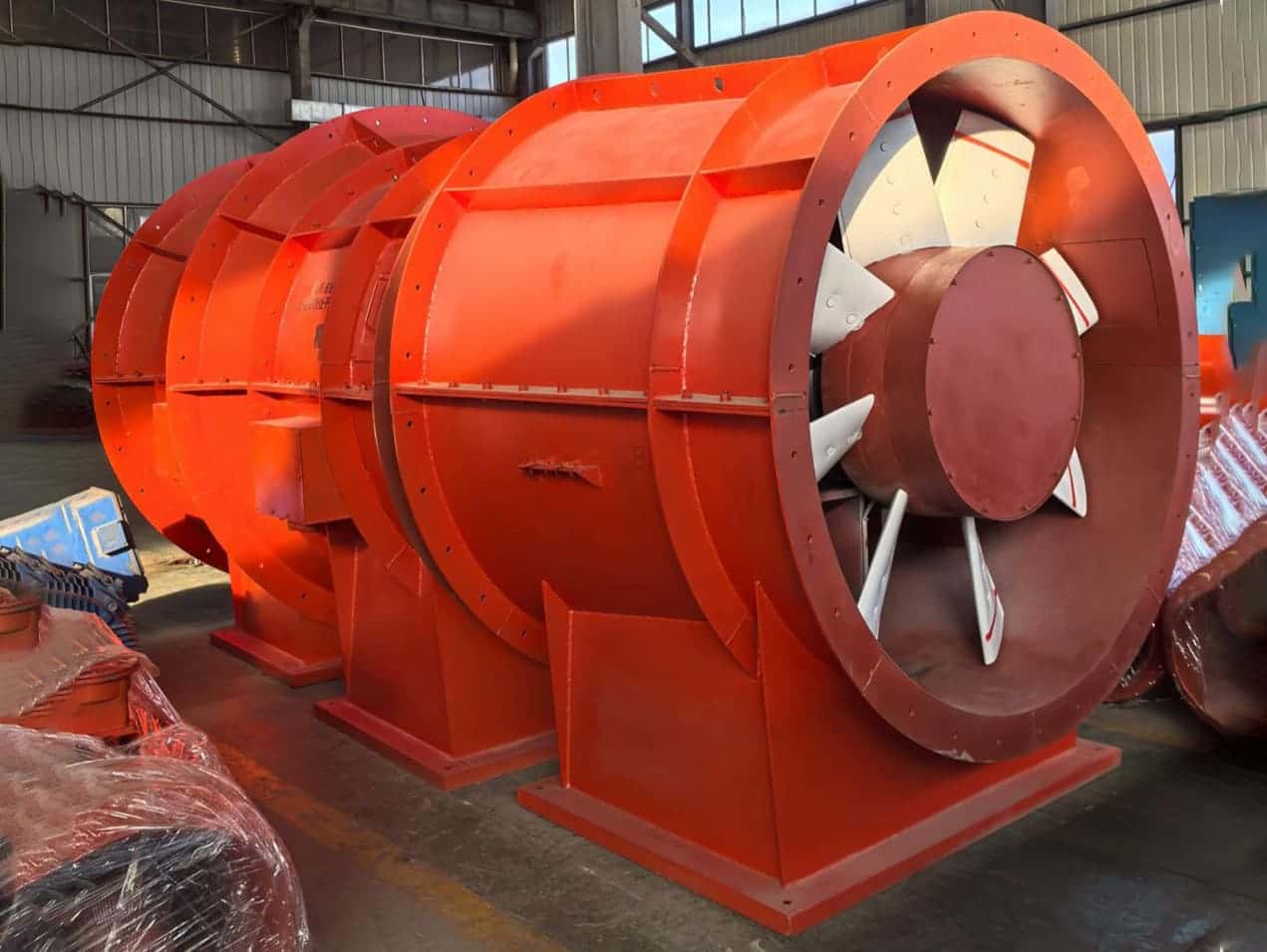
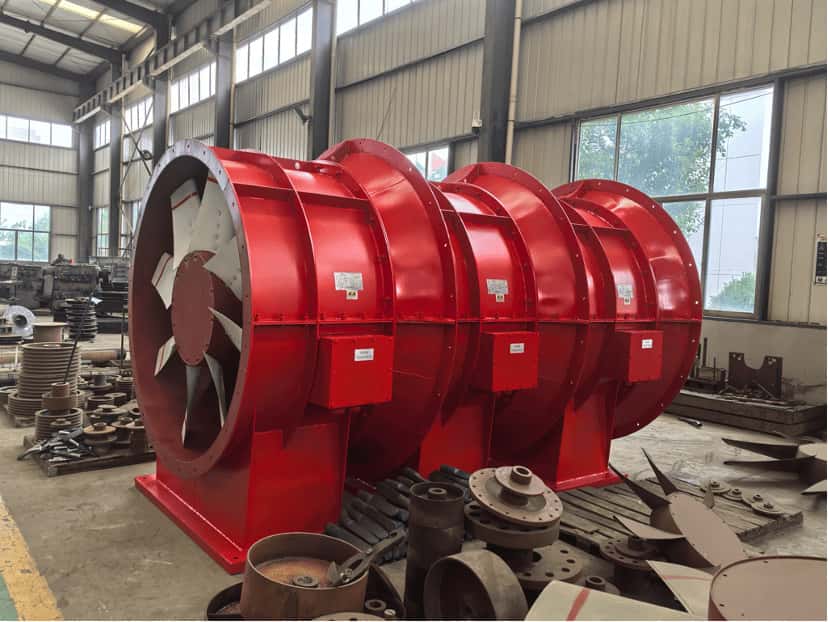
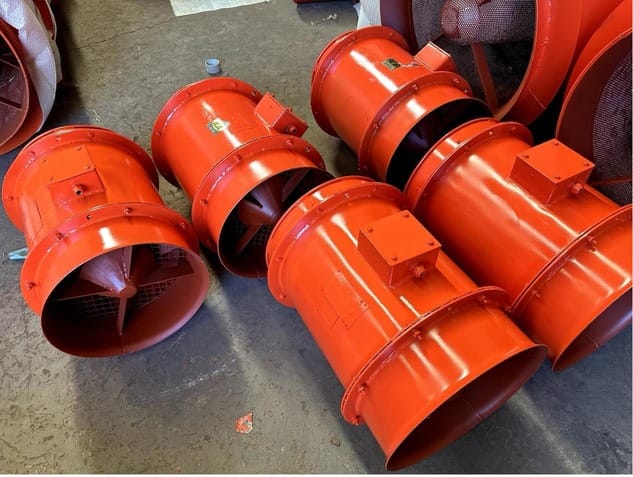
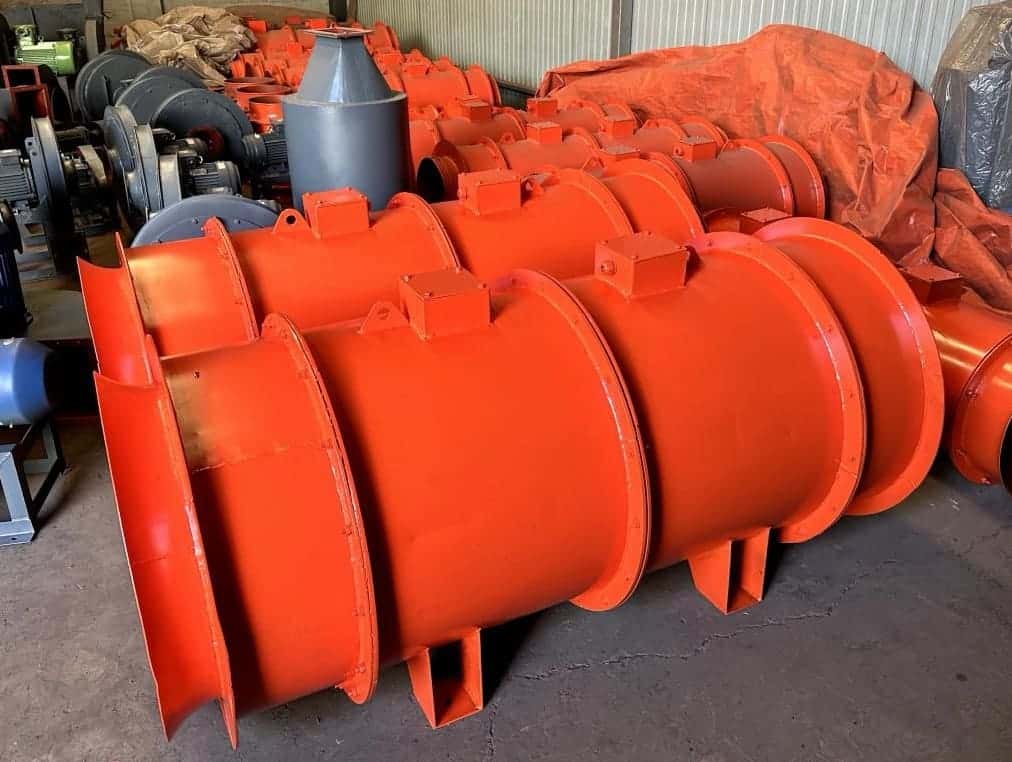
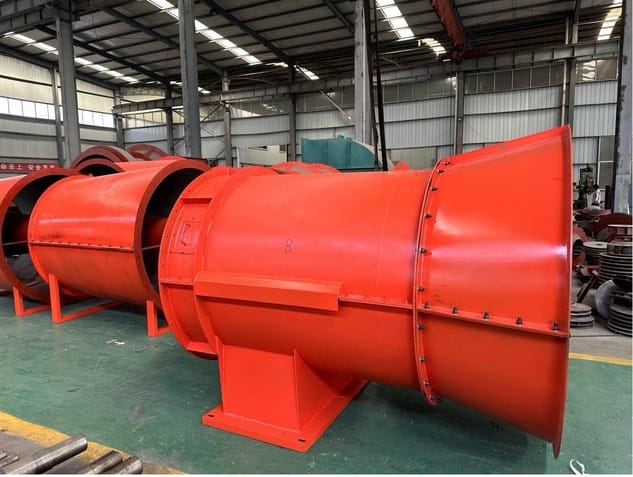
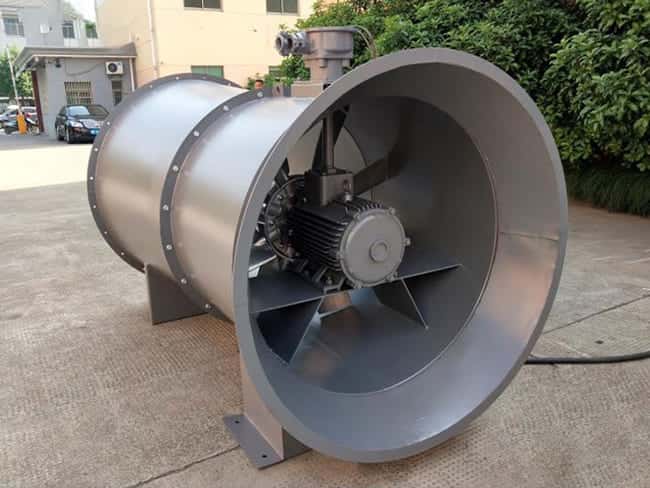
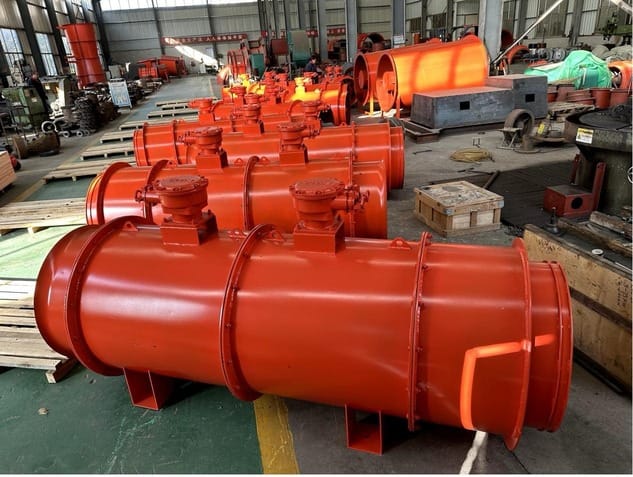
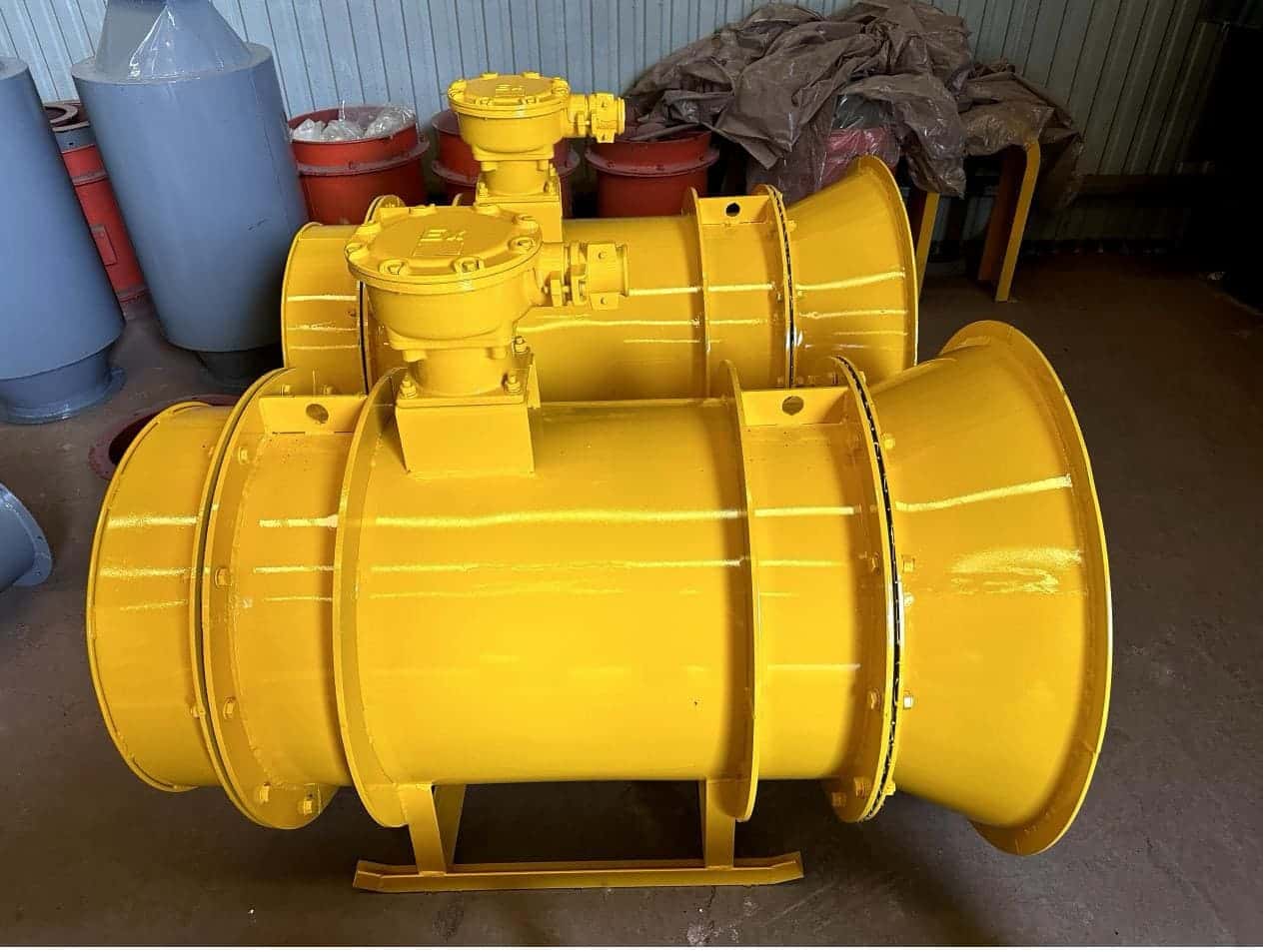
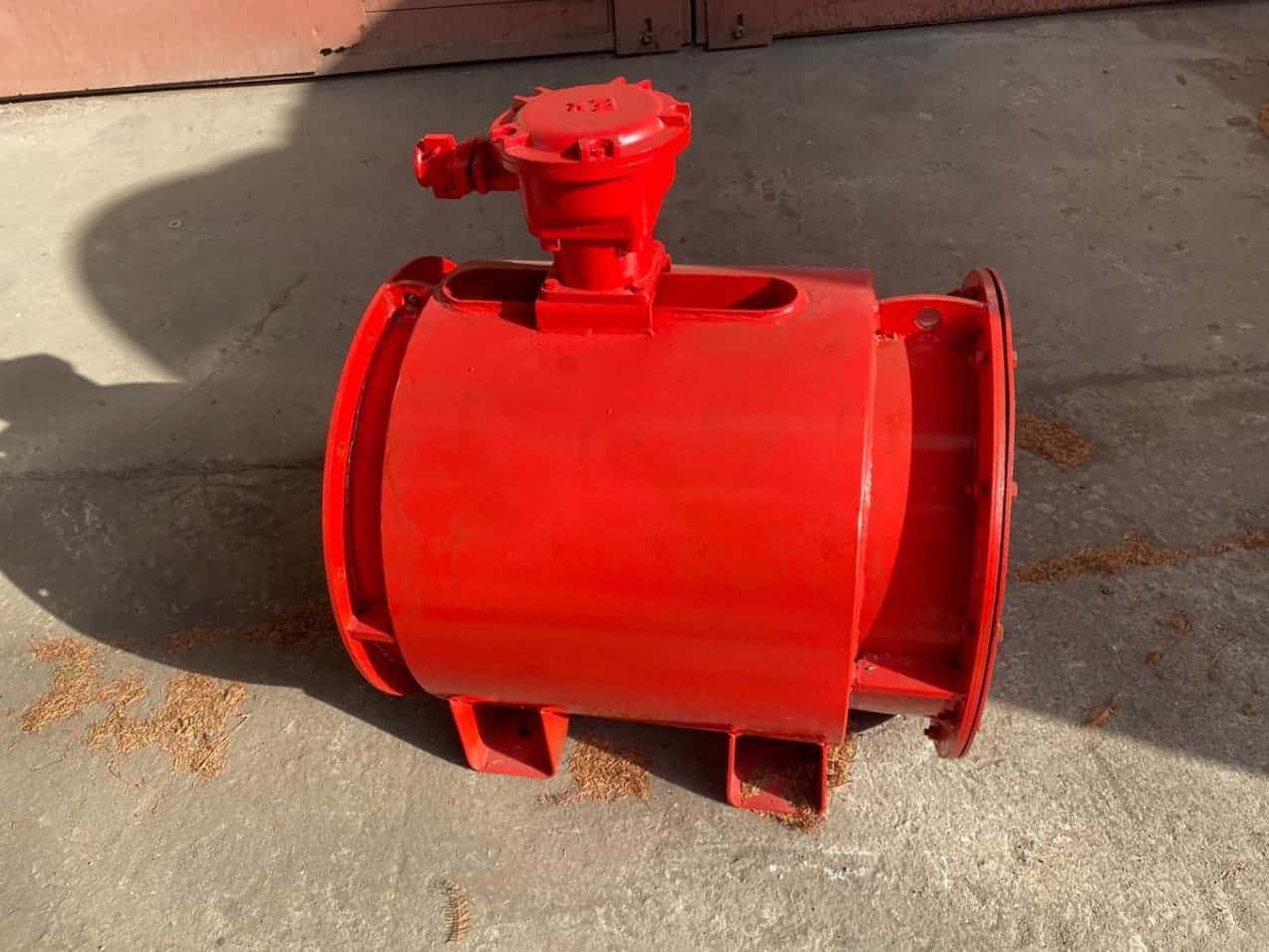
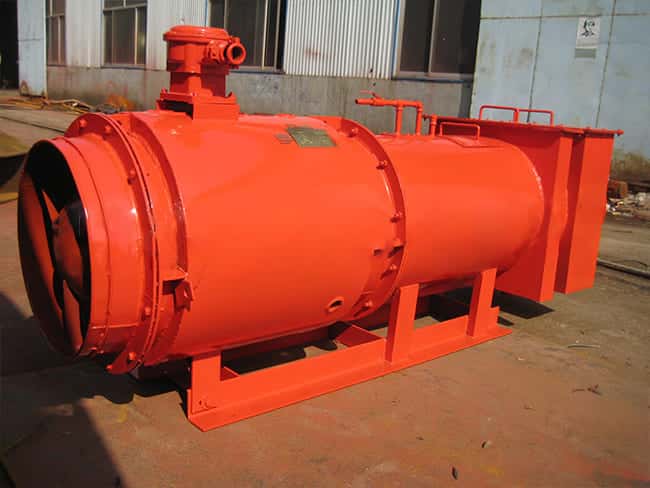
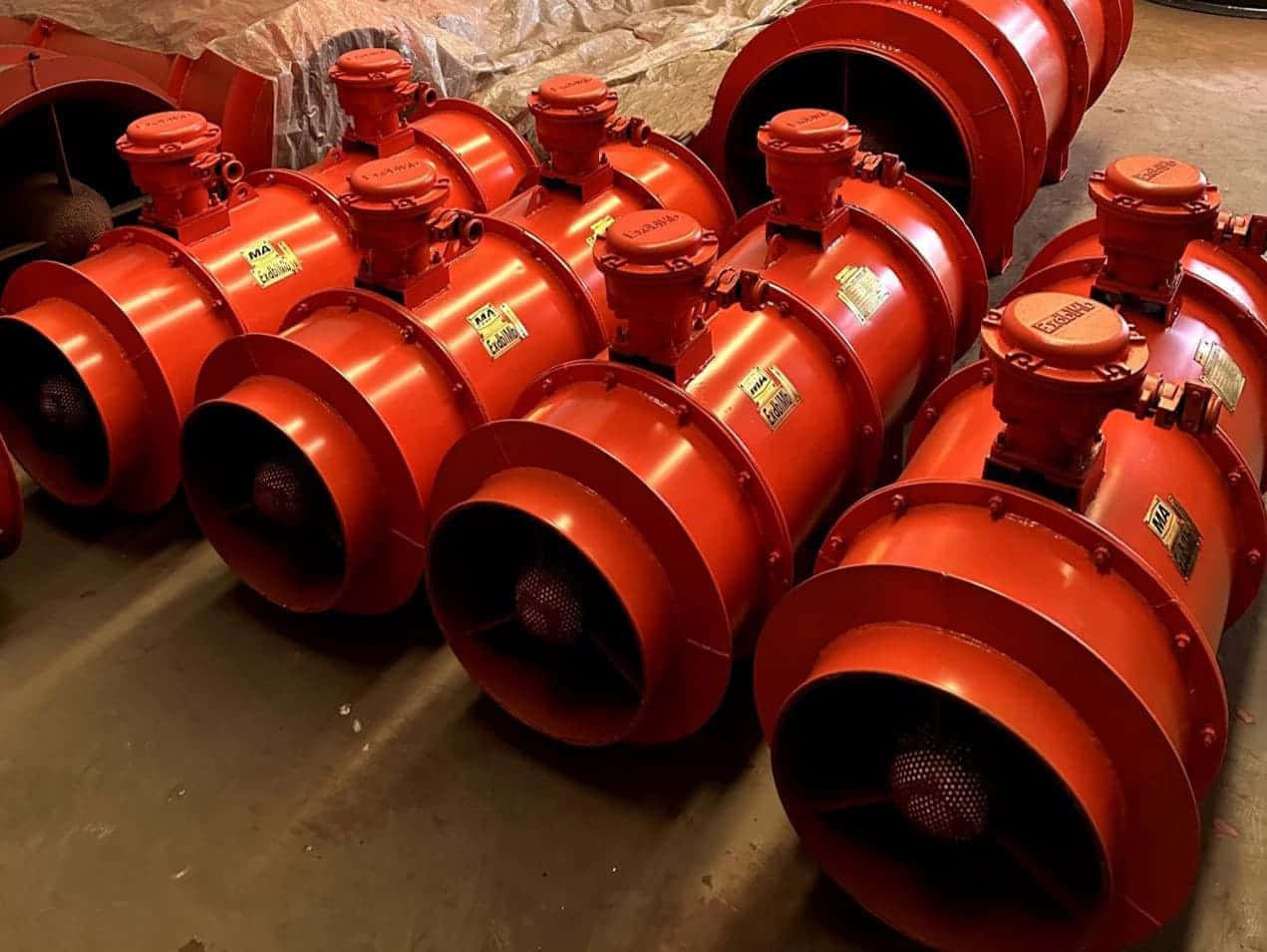
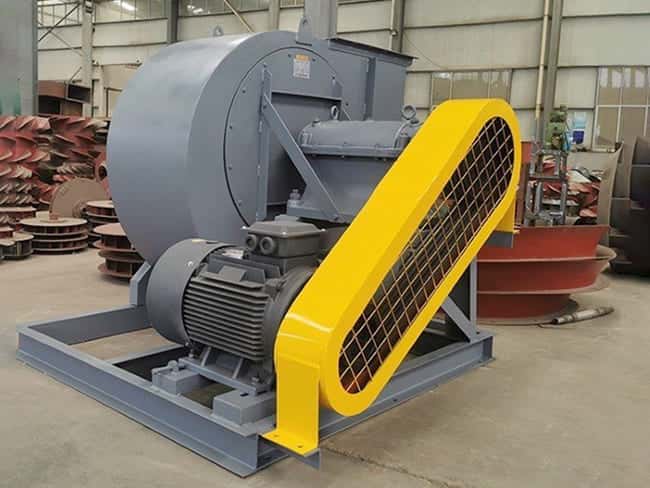
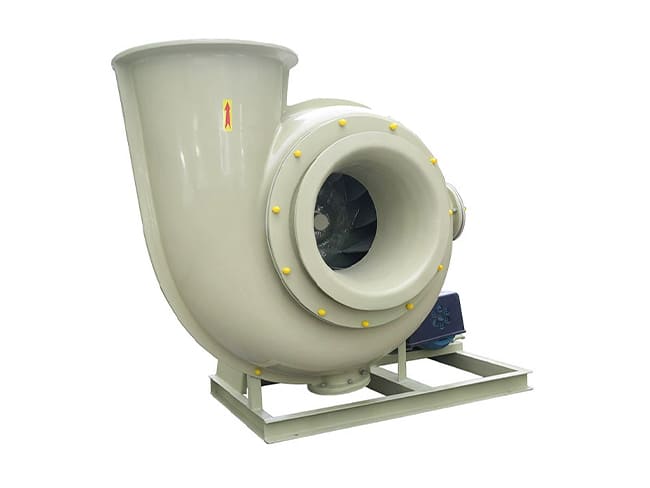
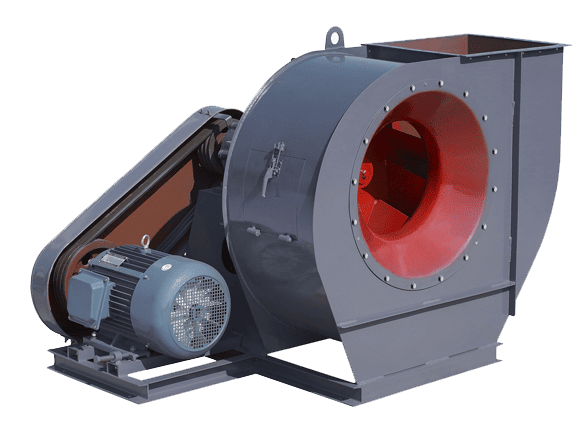
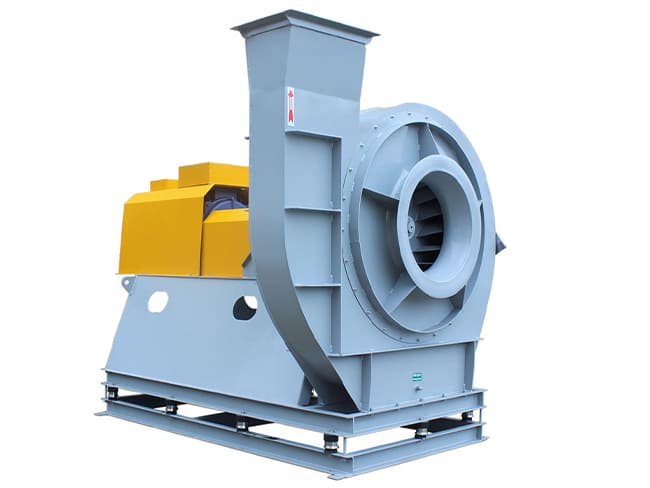
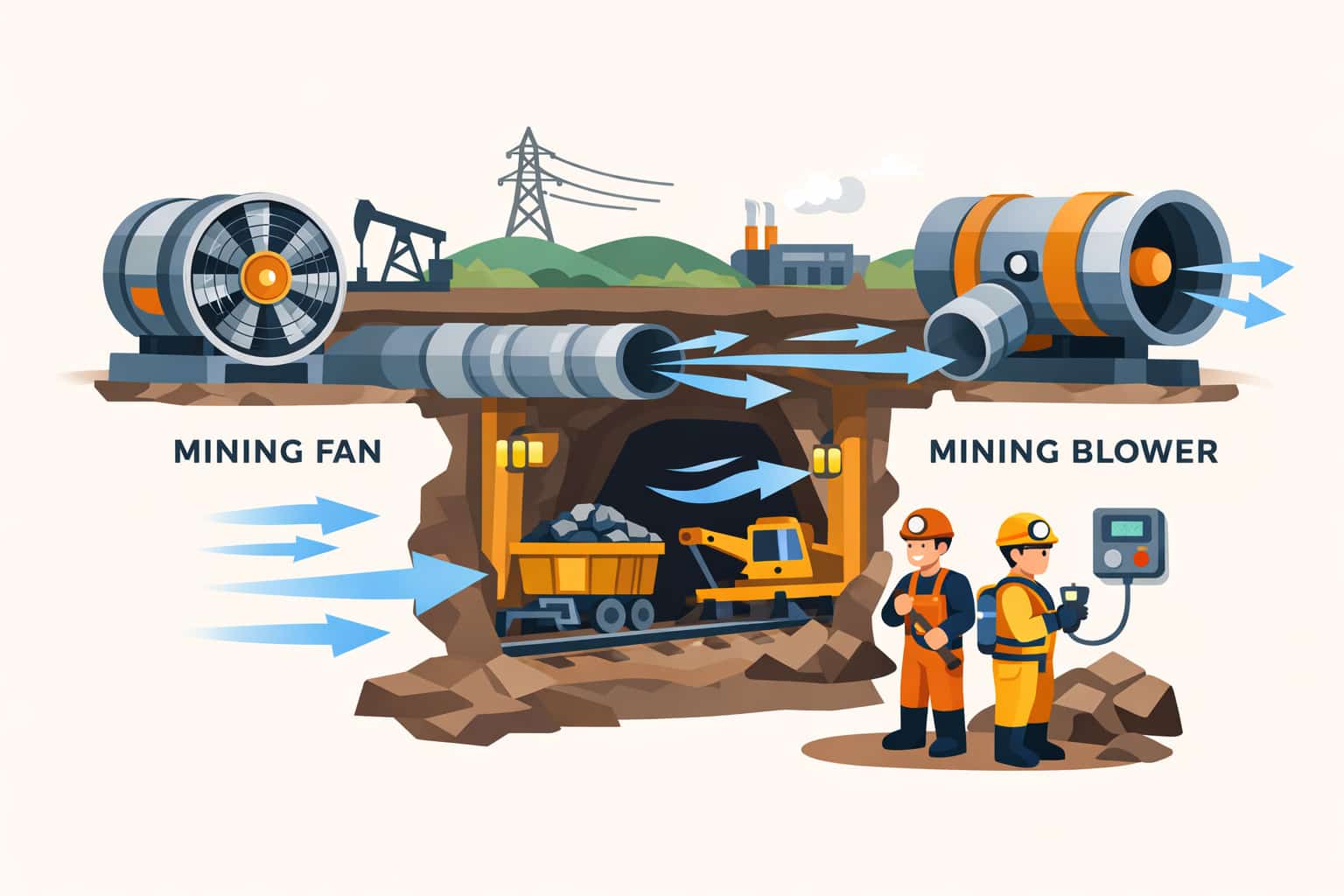
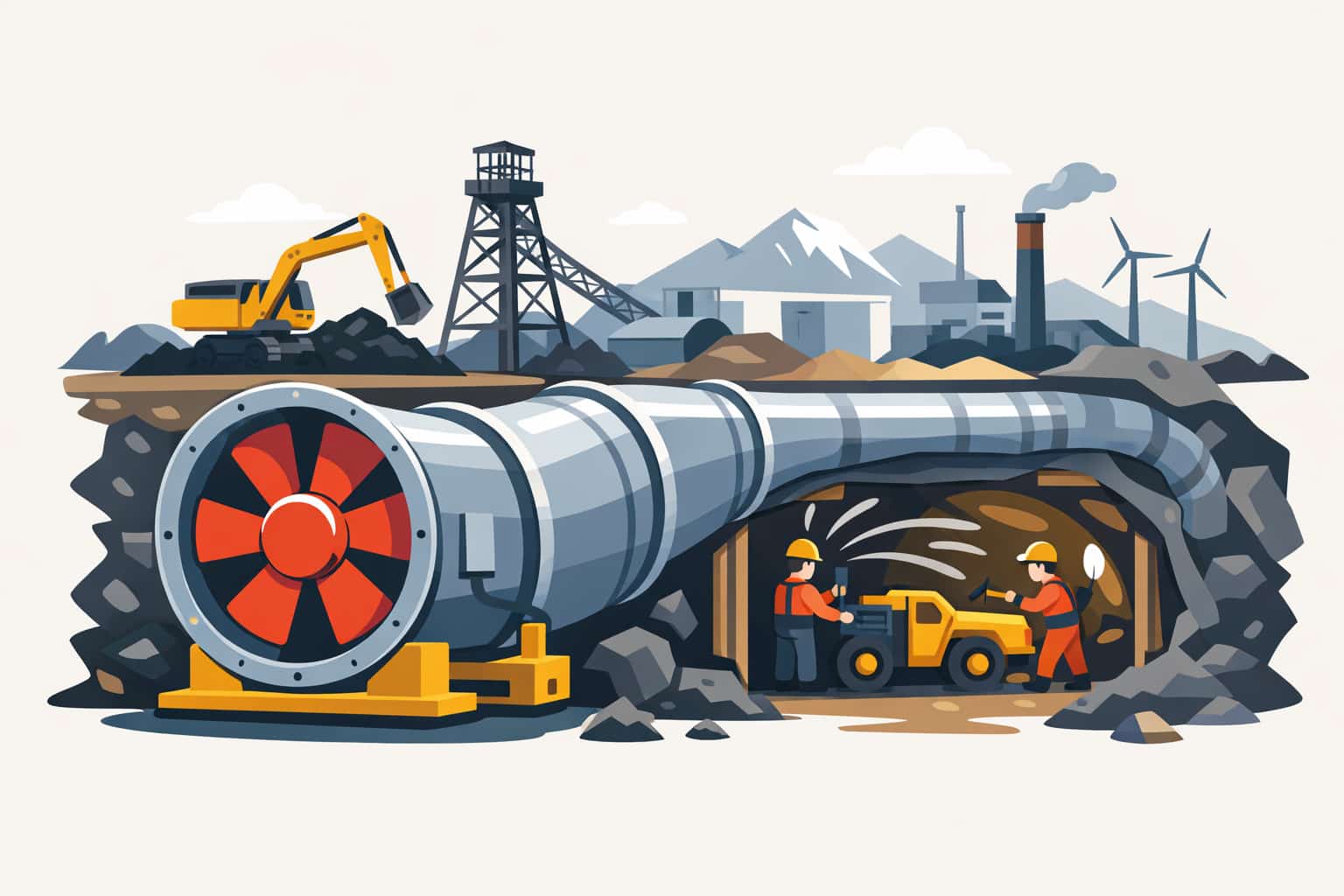
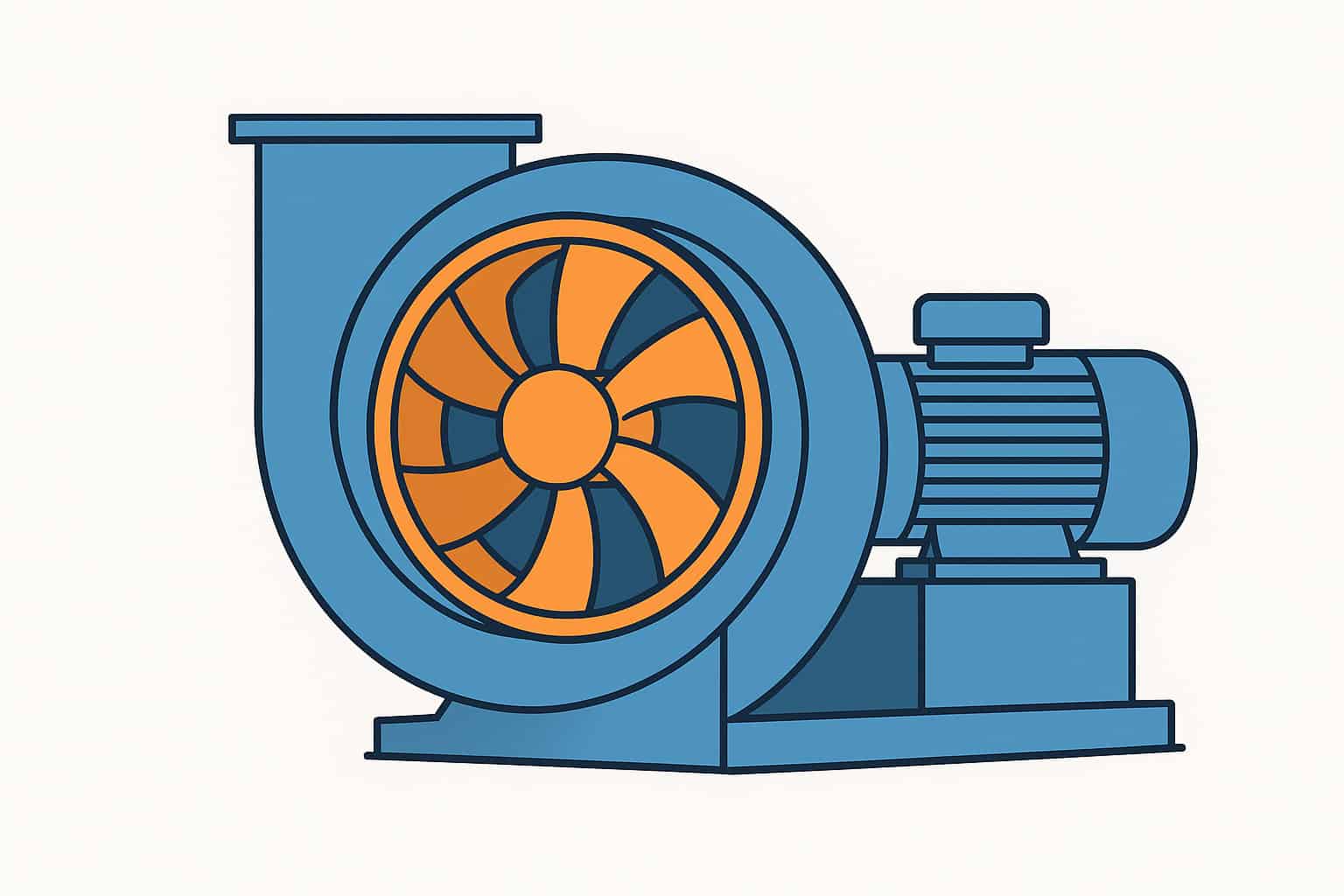
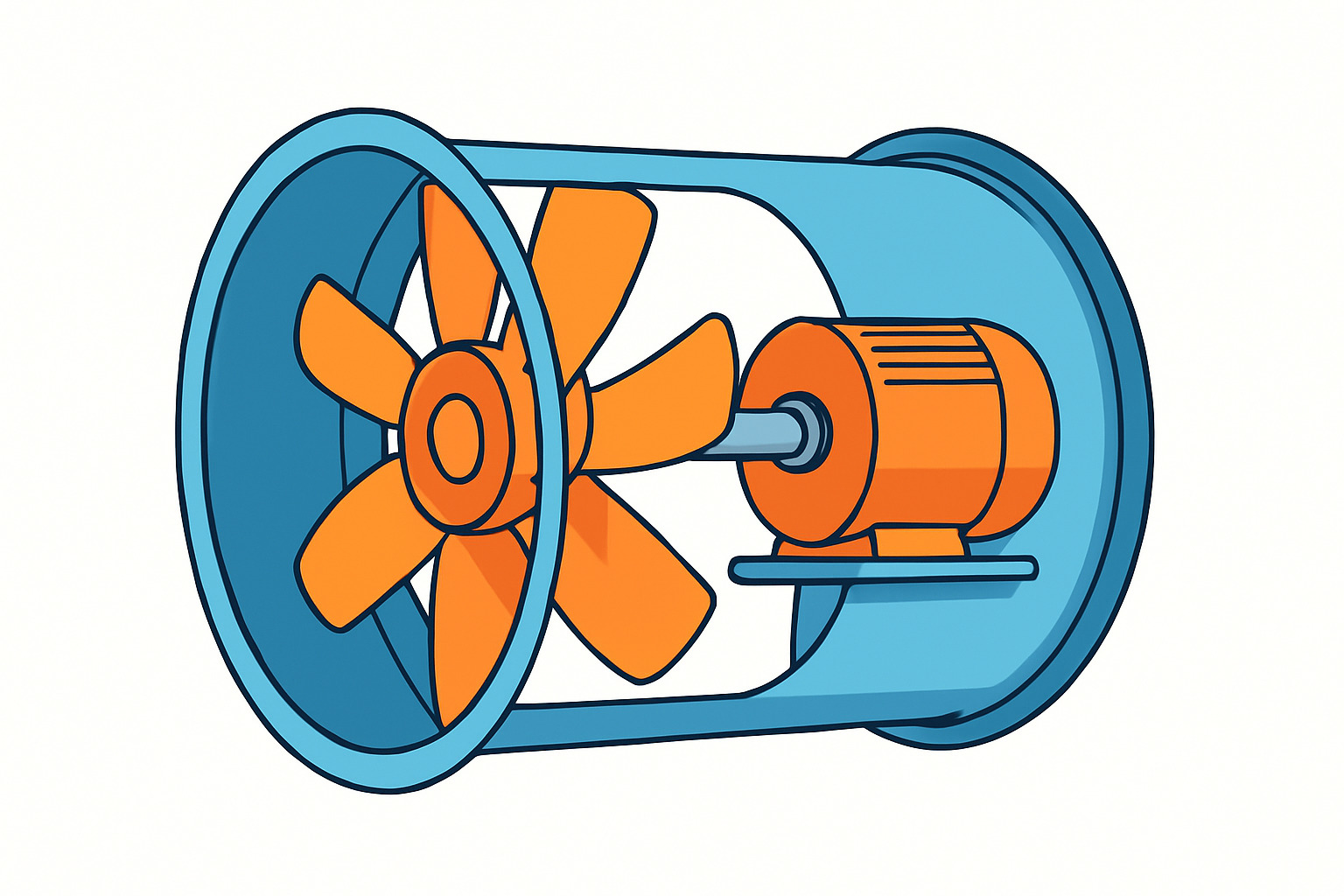
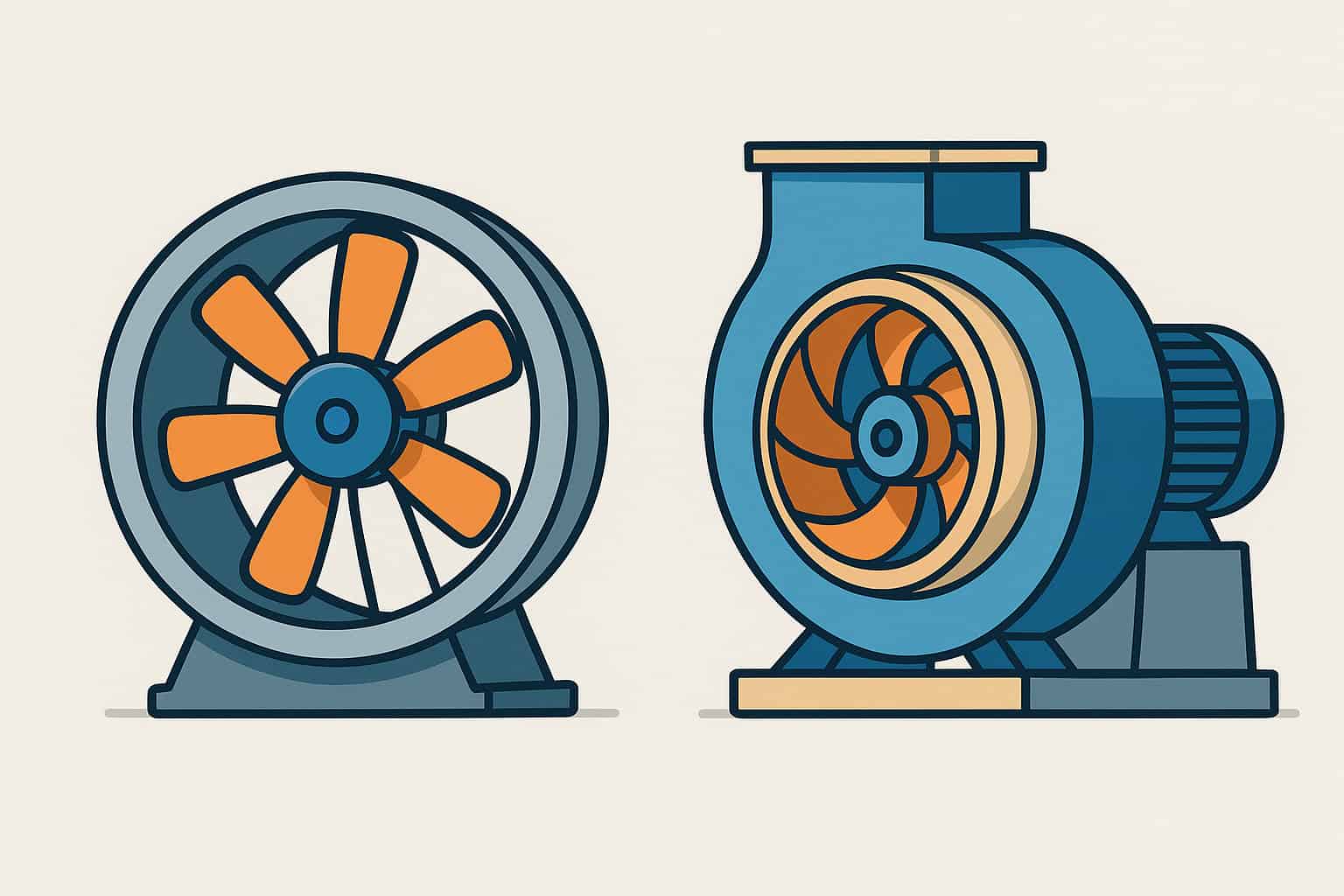
In an underground mine, auxiliary ventilation usually consists of auxiliary fans and ducting. The fan is installed near a main intake airway and connected to a line of flexible or steel duct that extends along a development drive or up a raise. The fan either blows fresh air down the duct to the face (forcing system) or sucks contaminated air from the face through the duct to a return airway (exhaust system). This ensures that workers at the face receive breathable air and that fumes, dust and heat are removed efficiently.
Auxiliary ventilation is crucial for diluting and clearing hazardous contaminants. After blasting, concentrations of gases such as nitrogen oxides and carbon monoxide can be high in the confined space of a heading. Diesel equipment and drilling also add exhaust gases and dust. By directing a strong, controlled airflow exactly where it is needed, auxiliary ventilation shortens re-entry times, reduces exposure to harmful substances and improves visibility.
Auxiliary systems also help with thermal comfort and equipment cooling. Fresh air delivered to the face carries away heat from the rock and machinery, limiting temperature rise in long or deep headings. In some cases, auxiliary ventilation works together with localized cooling units or chilled water sprays to keep the workplace within acceptable limits for temperature and humidity.
In construction tunnels or industrial plants, auxiliary ventilation performs similar functions: evacuating welding fumes, supplying fresh air to confined spaces, and providing temporary ventilation in areas not yet connected to the permanent HVAC or ventilation network. Its portable, flexible nature allows it to follow the work as layouts change.
In summary, auxiliary ventilation uses ducted fans to extend the reach of the main ventilation system, delivering fresh air and removing contaminated air in blind or remote areas. It is a critical tool for maintaining safe, healthy and productive conditions wherever the primary airflow cannot directly reach the workplace.