
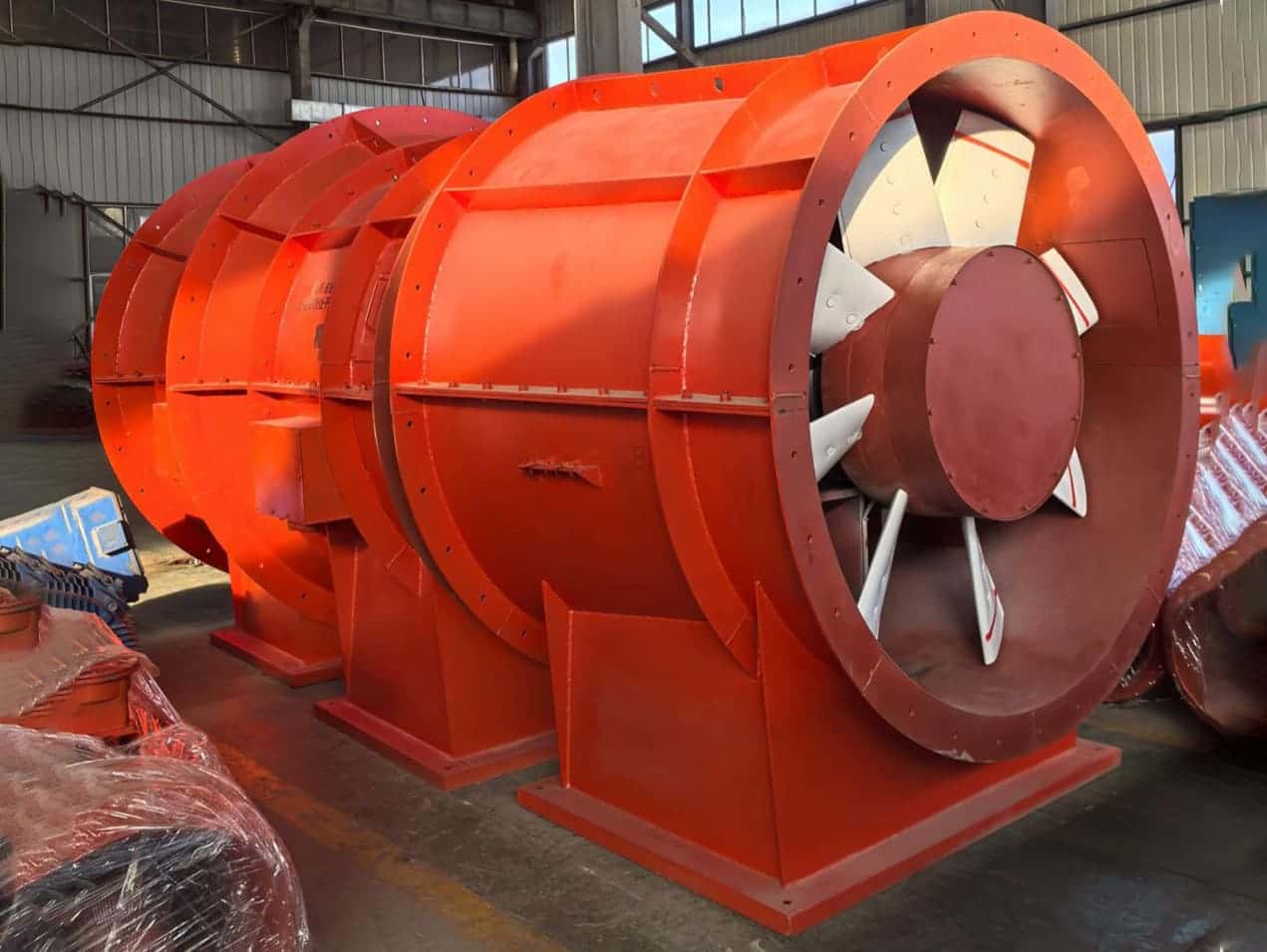
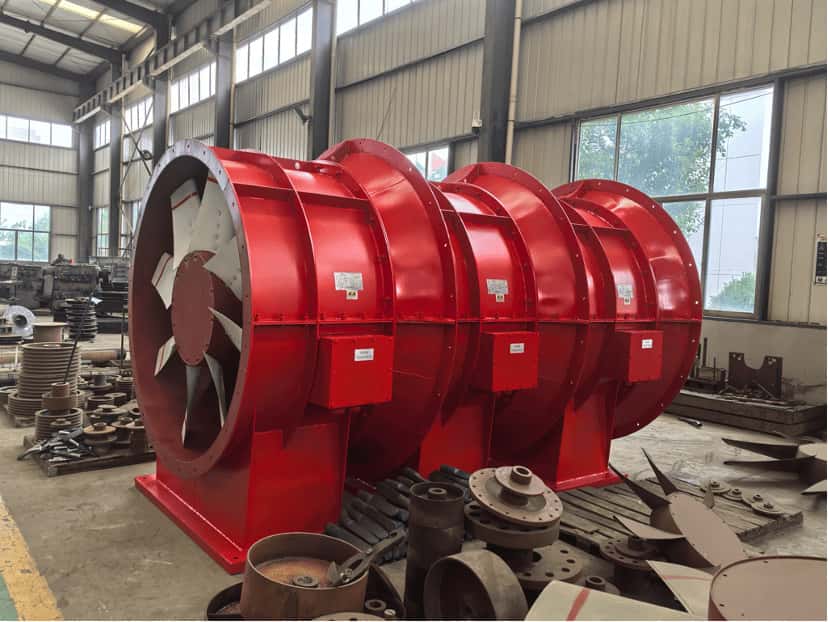
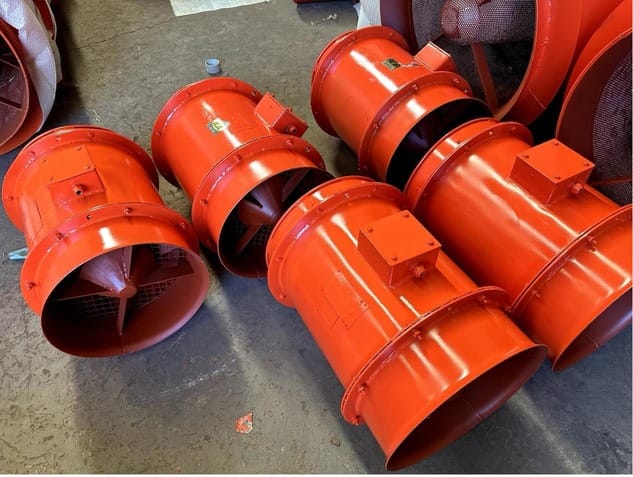
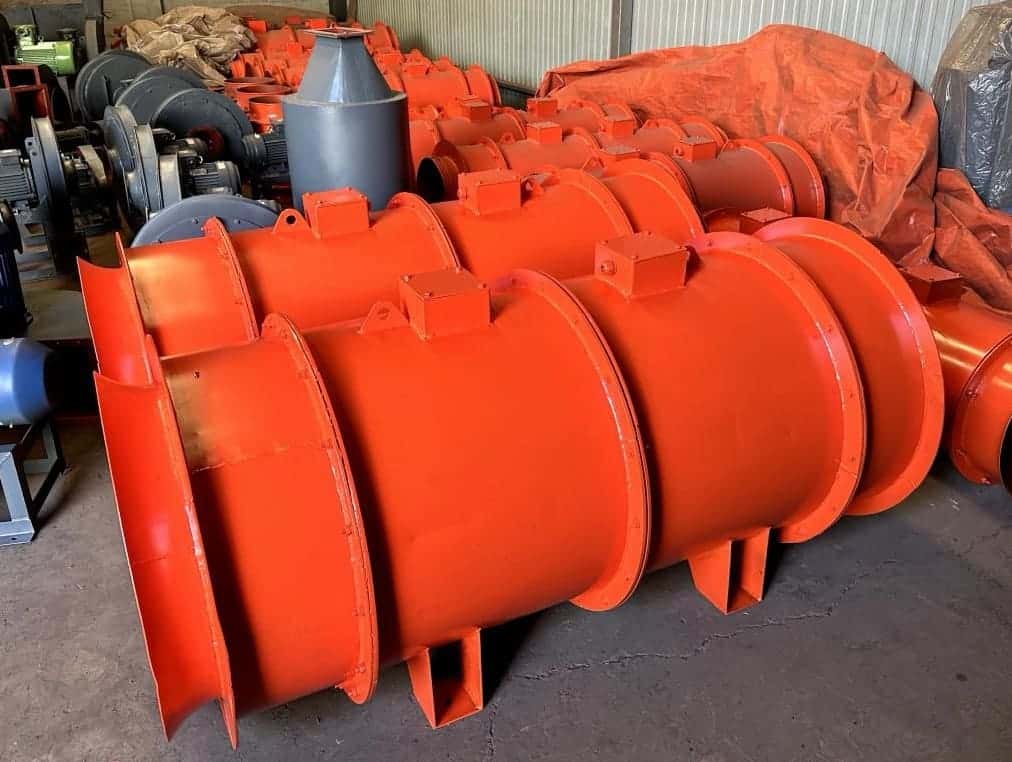
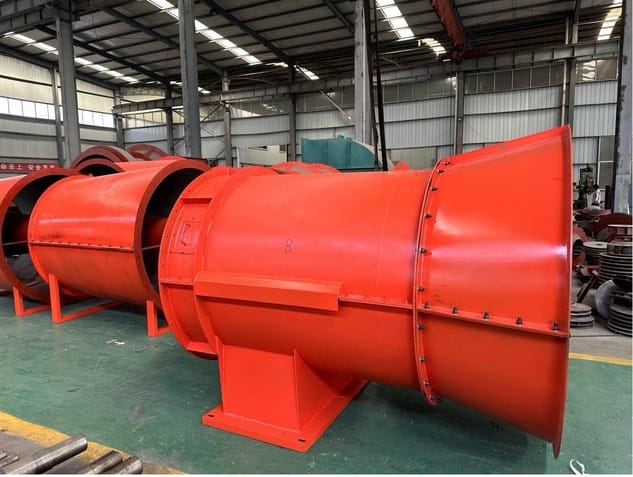
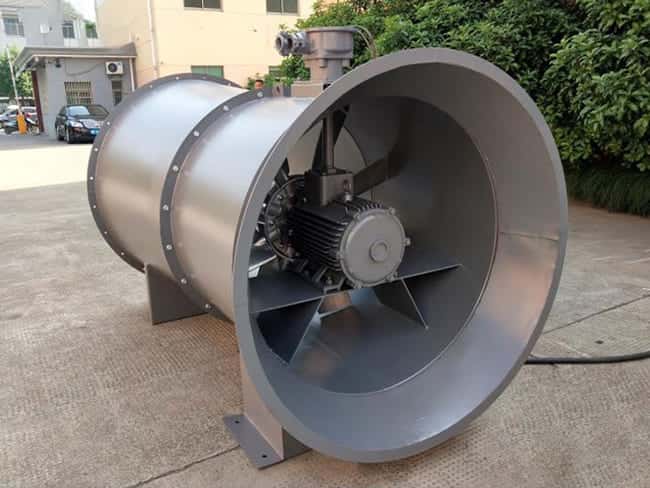
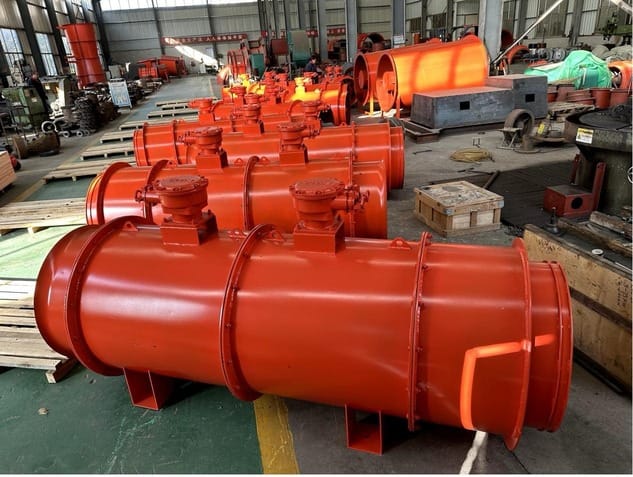
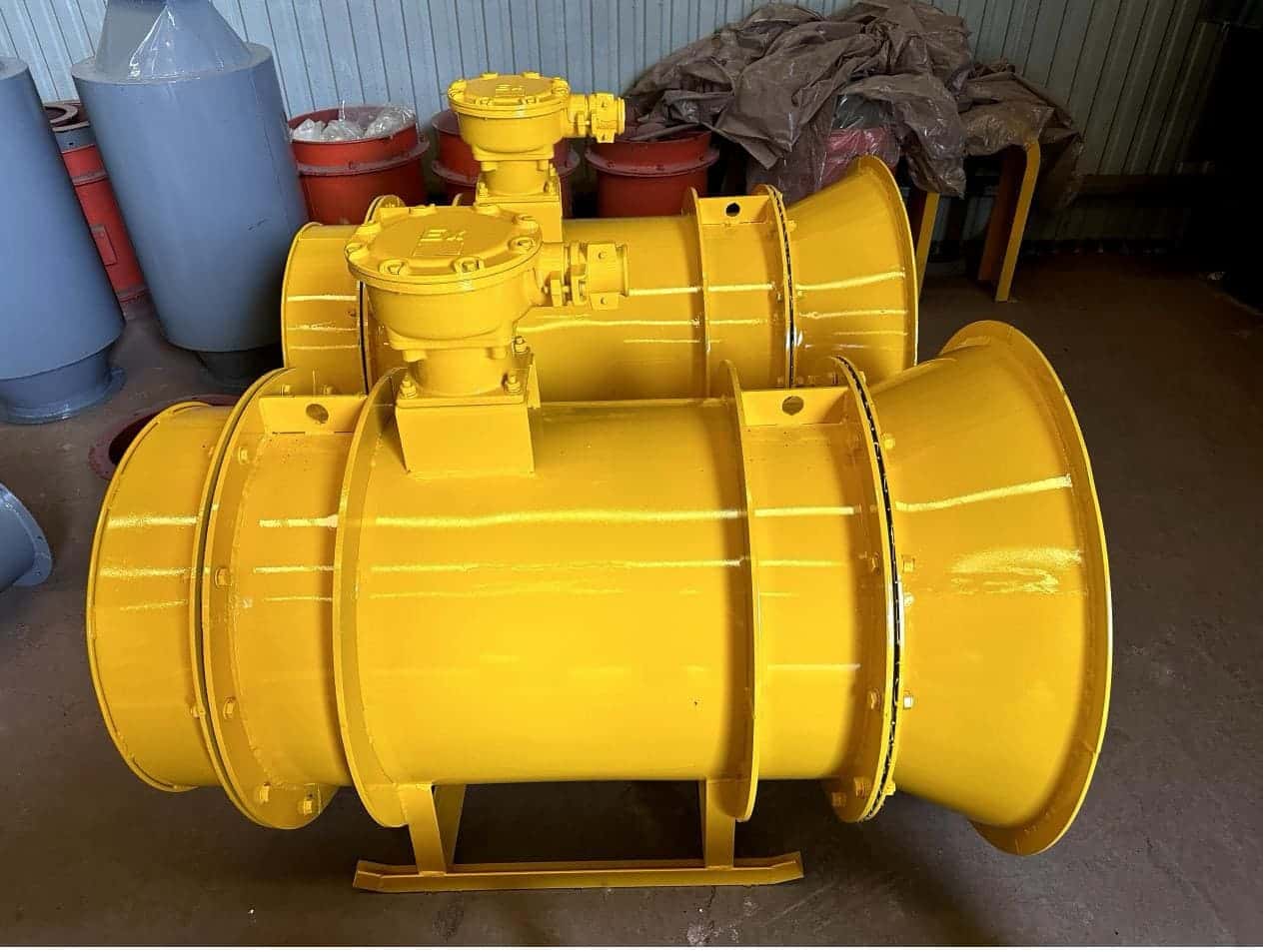
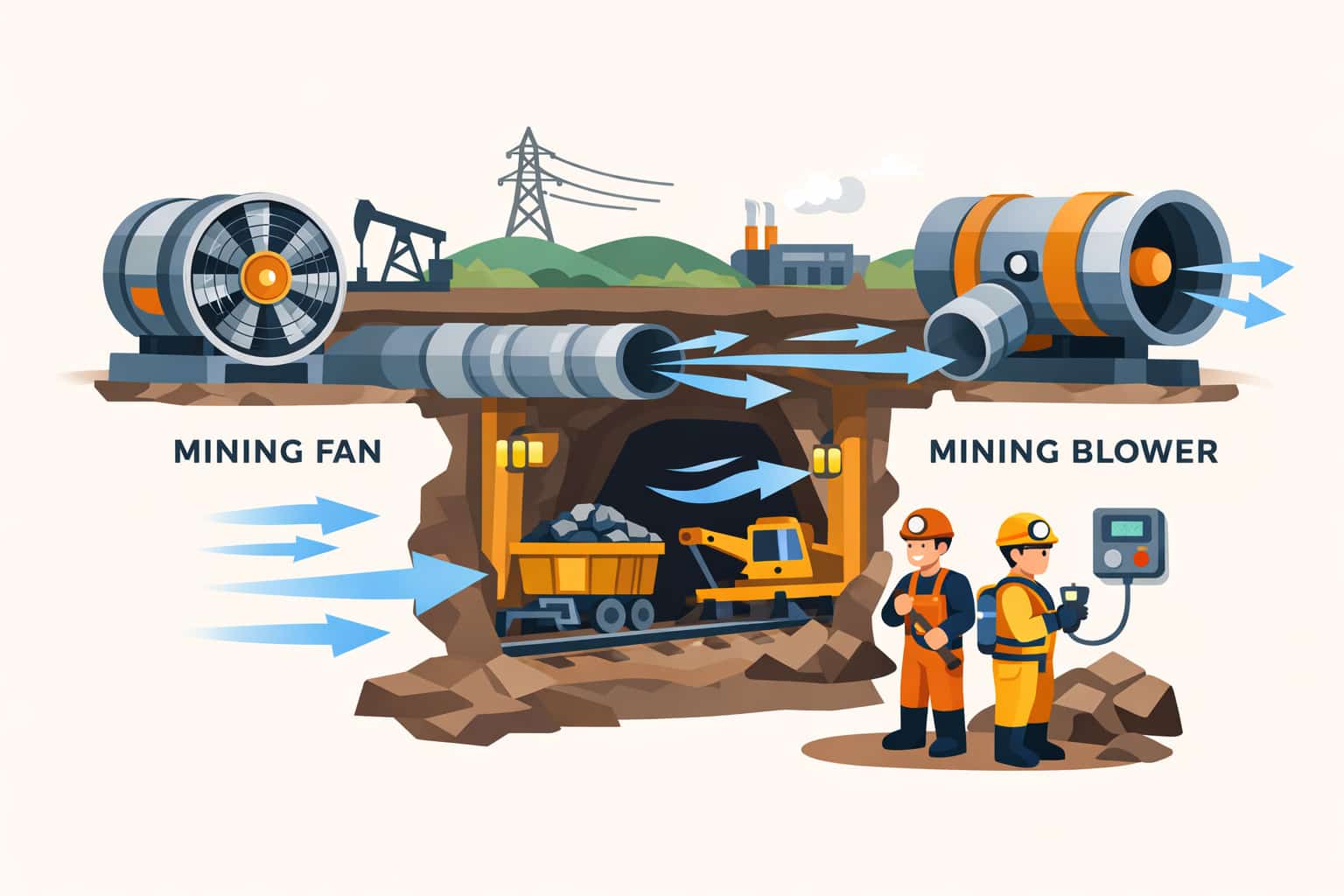
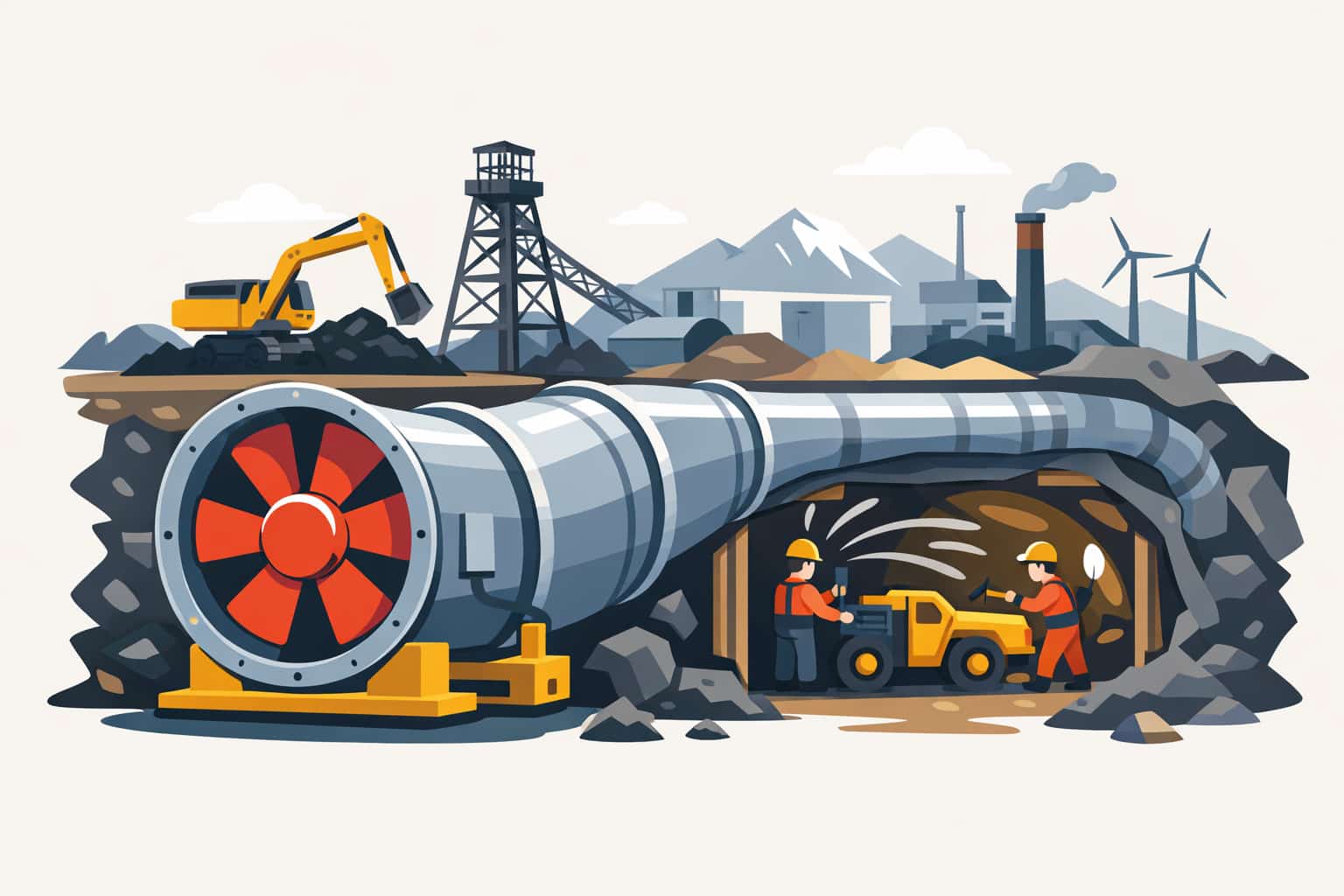
In mining, a ventilation duct is a pipe, tube, or flexible hose used to carry air between a fan and the underground work area. The duct forms the link between an auxiliary ventilation fan and the heading or blind end, allowing fresh air to be delivered to the face or contaminated air to be extracted from it. Without properly designed and maintained ventilation ducting, even a good auxiliary fan cannot deliver the required airflow where it is needed.
Ventilation ducts are used in both forcing and exhaust auxiliary ventilation systems. In a forcing system, fresh air is pushed through the duct toward the working face, creating a clean air stream that sweeps across the workplace. In an exhaust system, contaminated air is drawn into the duct at the face and carried away to a return airway. In both cases, the duct must handle the fan pressure, minimize leakage, and be routed so that air reaches the correct zones.
Several types of mine ventilation ducts are common:
- Flexible ducting: usually made from coated fabric or plastic, reinforced with wire or ribs. Flexible ducts are easy to install, move, and extend as the heading advances, which makes them popular for development and temporary headings.
- Rigid ducting: steel, fiberglass, or rigid plastic tubes. Rigid ducts are more durable and often have lower leakage, but they are heavier and less convenient to relocate.
- Semi-rigid ducting: combines some flexibility with improved strength and lower leakage compared to very light fabric ducts.
A key performance concept for ventilation ducts is resistance. As air flows through a duct, friction along the walls and losses at bends and fittings consume pressure. Longer ducts, smaller diameters, sharp bends, and rough internal surfaces all increase resistance. The auxiliary fan must be sized to overcome this resistance and still deliver the required airflow at the face. If resistance is underestimated, the actual airflow at the end of the duct can be significantly lower than expected.
Duct leakage is another critical factor. Poor joints, tears, and damaged sections allow air to escape before it reaches the face, which wastes fan power and reduces face airflow. Good practice includes tight connections, proper suspension, prompt repair of damage, and periodic inspection to identify high-leakage sections. In exhaust systems, leakage can also draw contaminated air back into intake routes if the duct passes through intake airways.
Correct duct installation also considers routing and position. The duct outlet should be placed close enough to the face to ensure effective sweeping of contaminants, while avoiding locations that cause air to short-circuit or bypass key work areas. Where possible, ducts should be supported safely, clear of moving equipment, and positioned to minimize sharp bends and kinks that add resistance.
In summary, a mine ventilation duct is more than just a pipe; it is a designed component of the auxiliary ventilation system that transports air between fans and working places. Proper selection of material and diameter, control of resistance and leakage, and careful installation all determine how well the duct supports safe, effective ventilation in underground mines.