
The terms duct and vent are related but not the same. In ventilation systems for buildings, factories and mines, a duct is the enclosed pathway that carries air, while a vent is the visible opening where air enters or leaves a room, cabinet or airway. Understanding the difference helps when planning or troubleshooting ventilation systems.
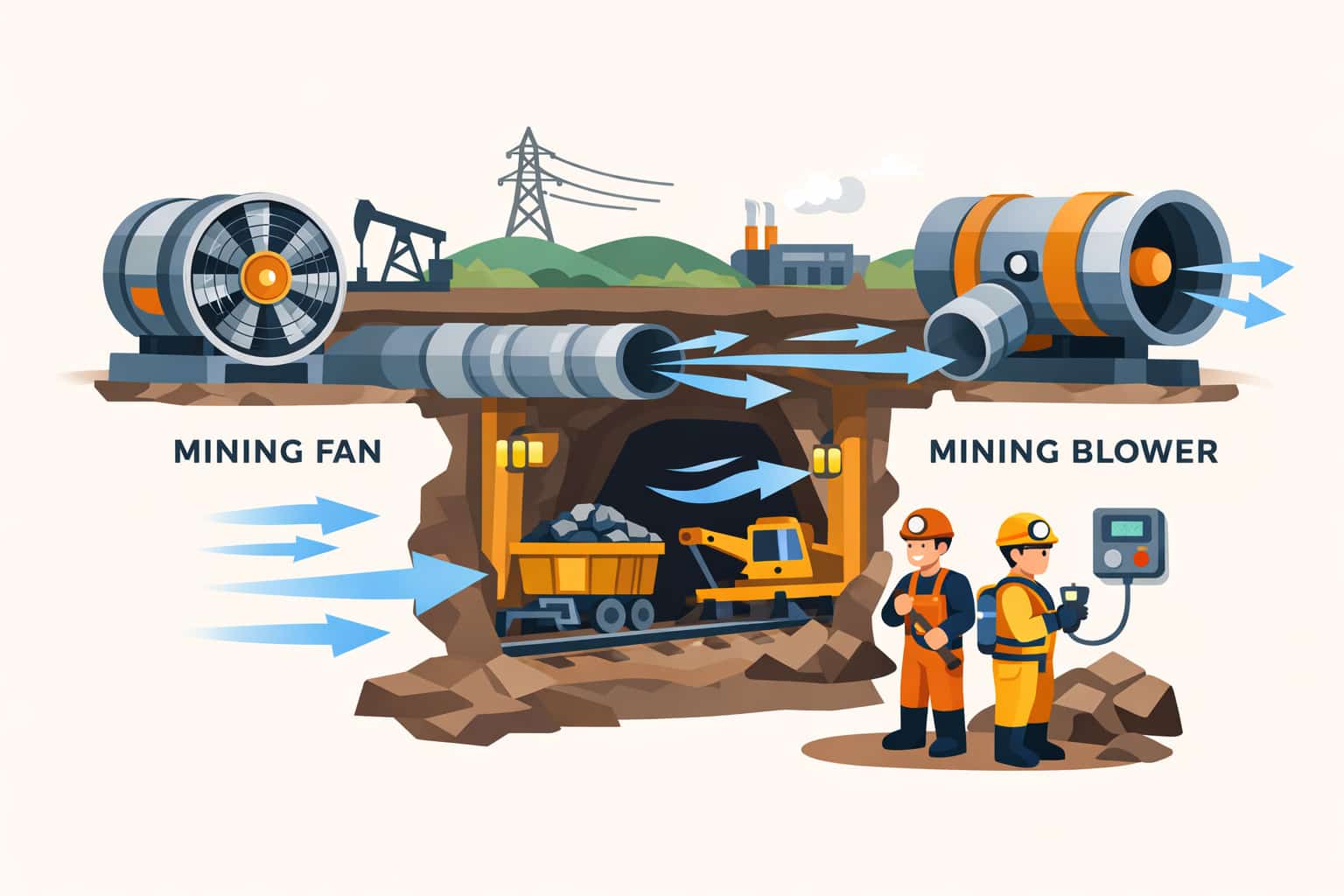
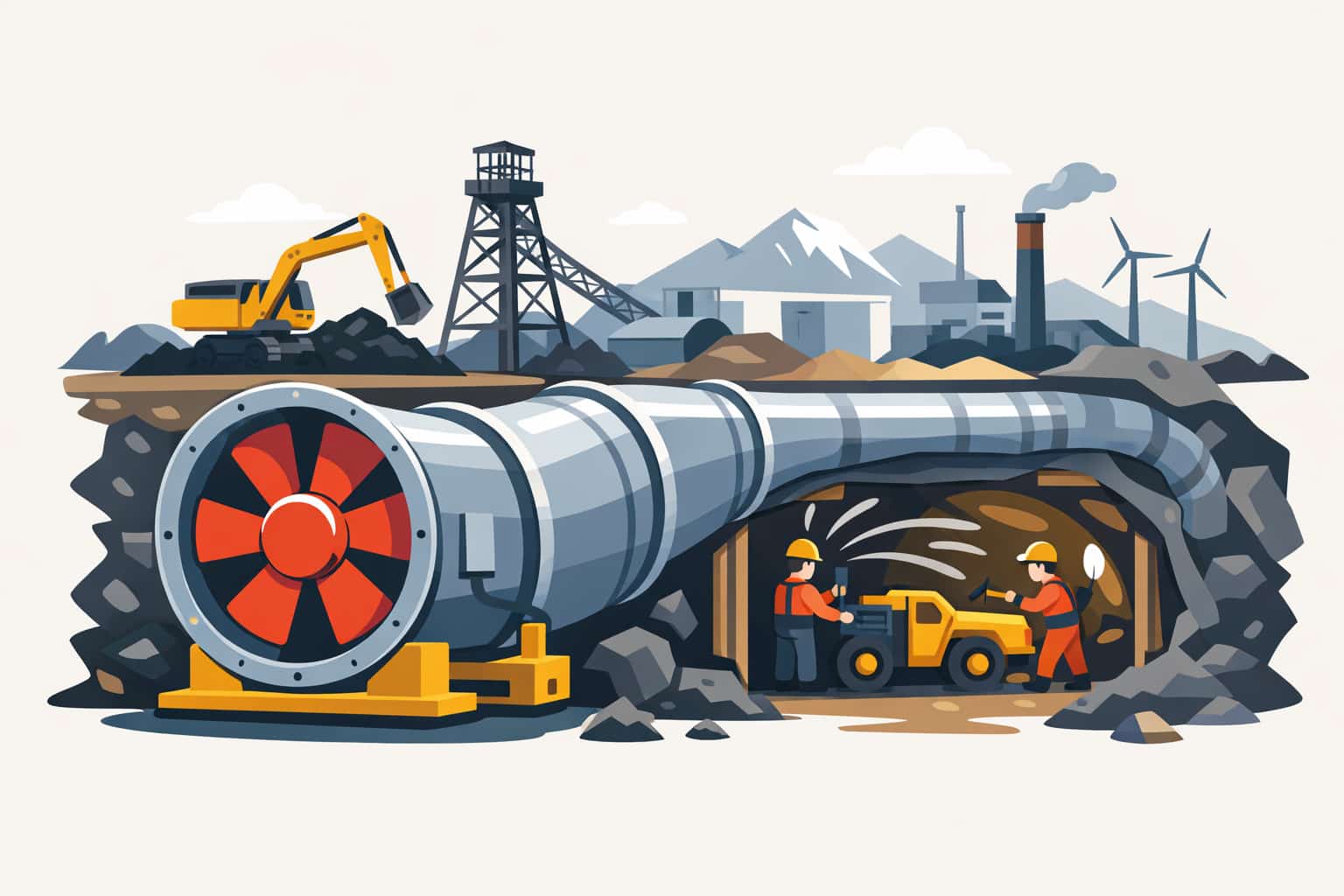
A duct is usually a pipe or rectangular channel that conveys air between different points. Ducts are commonly made from sheet metal, plastic, flexible hose or specialised materials for corrosive or high-temperature gases. In an industrial plant, main supply and exhaust ducts run above the production floor, connecting fans, air-handling units, filters and local hoods. In underground mining, ventilation ducts (rigid or flexible) carry fresh air from an auxiliary fan to the face of a development heading.
A vent, by contrast, is the opening where the air flow is delivered or removed. In a room, vents appear as diffusers, grilles or registers on ceilings, walls or floors. In building envelopes they appear as wall louvers, roof vents, soffit vents or intake/exhaust hoods. In mines, portals, shaft collars and raise openings act as large vents connecting the underground airways to the surface. Vents are often the only part of the system that occupants see, even though ducts and fans are hidden above ceilings or underground.
The relationship between them can be summarised simply: ducts carry air; vents interface between the duct system and the space. A supply duct brings conditioned air from an air handler to a room, where it discharges through a supply vent. Return ducts collect air from return vents and carry it back to the air handler or exhaust fan. In a mine, an auxiliary fan pushes air into a duct, and the open duct end or diffuser at the face acts as a vent delivering that air to miners.
From a design point of view, the sizing of both ducts and vents is important. Ducts must be large enough to carry the required air volume with acceptable pressure loss and noise, while vents must be sized and shaped to distribute air evenly without drafts. Poorly designed ducts can cause high resistance and wasted fan power; poorly designed vents can lead to hot spots, dead zones and inadequate contaminant removal.
In summary, a duct is the transport channel and a vent is the access point between the ventilation system and the occupied or working space. Both are essential to reliable ventilation in industrial plants and mines.