
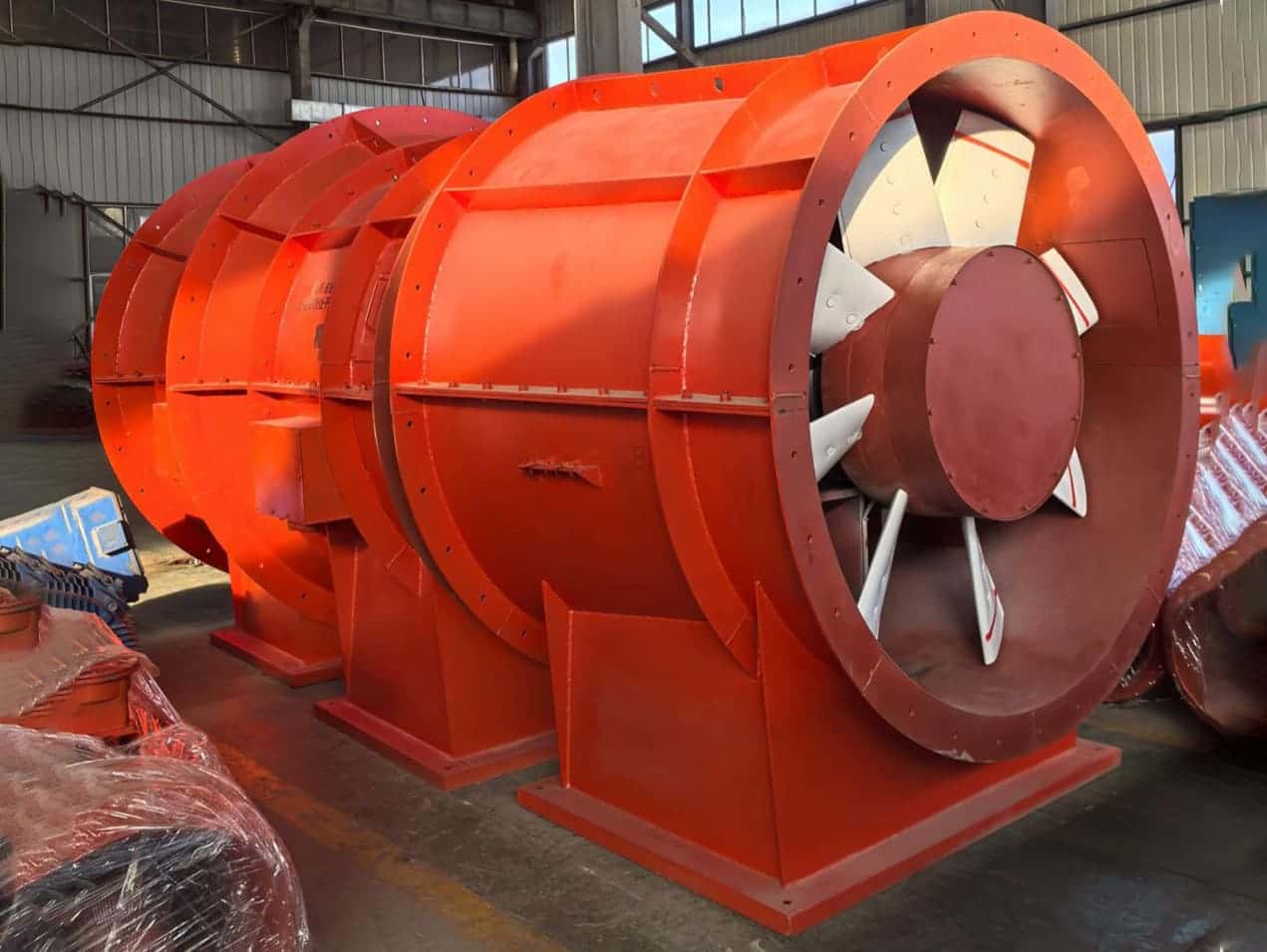
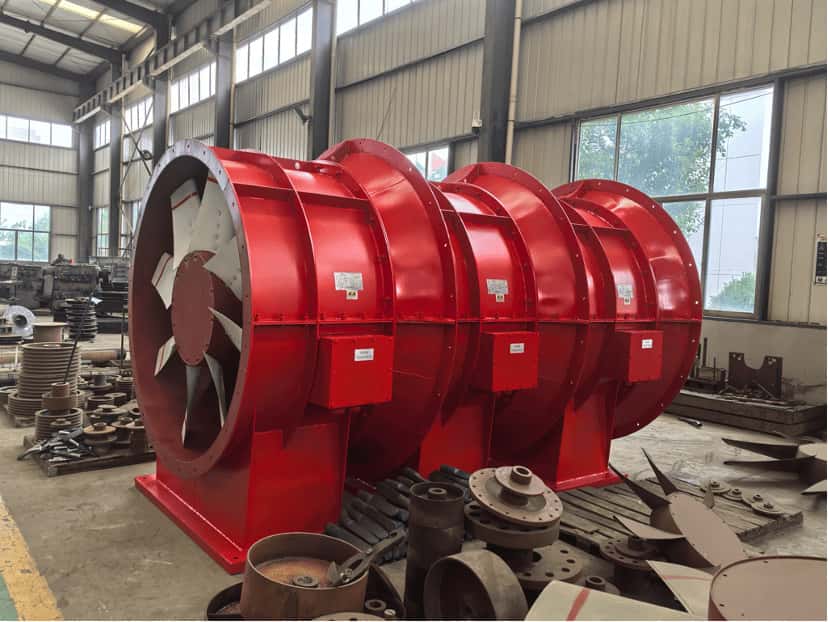
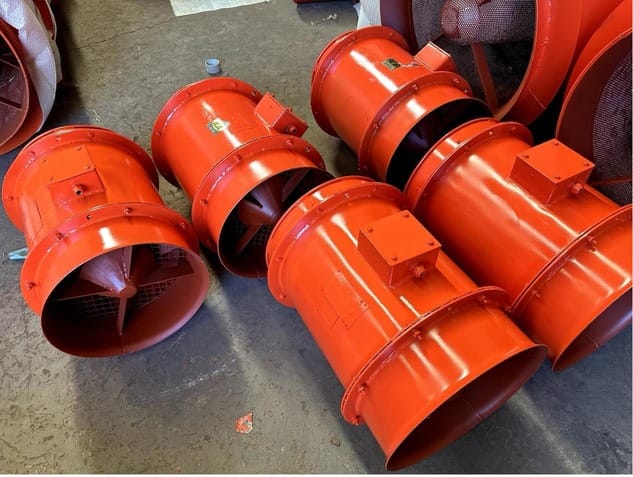
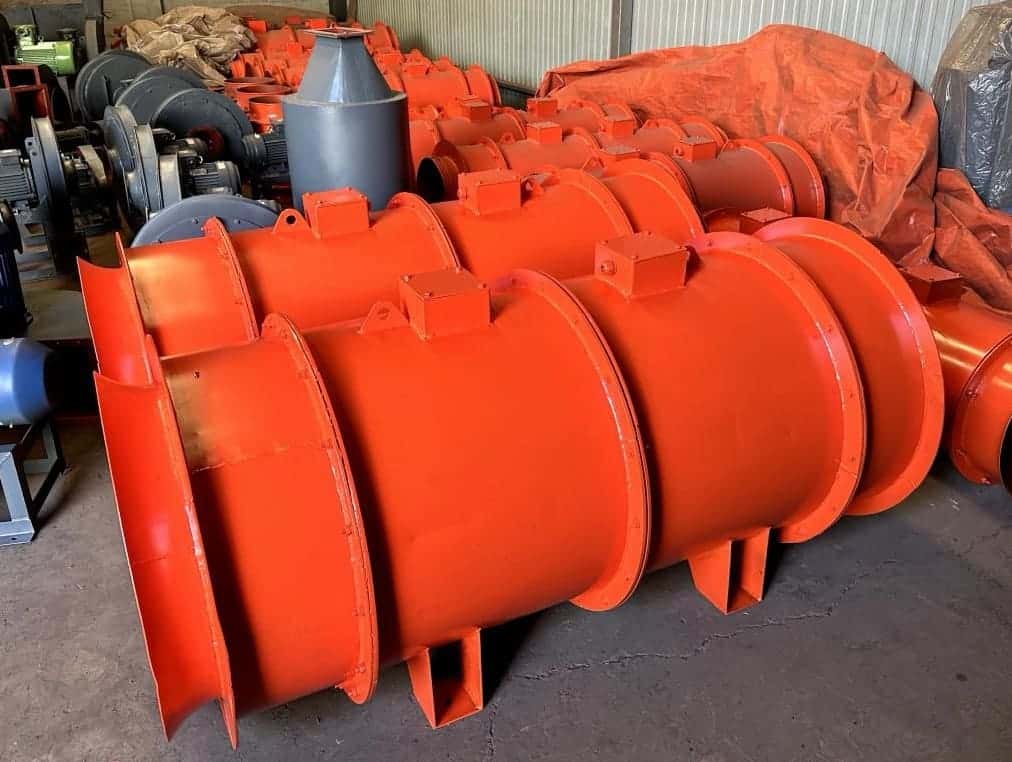
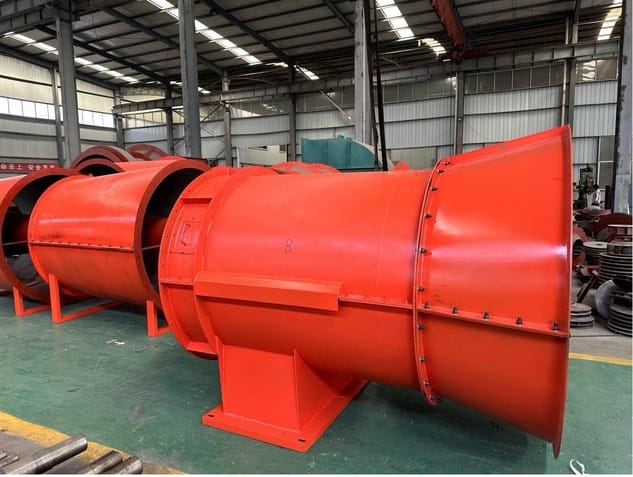
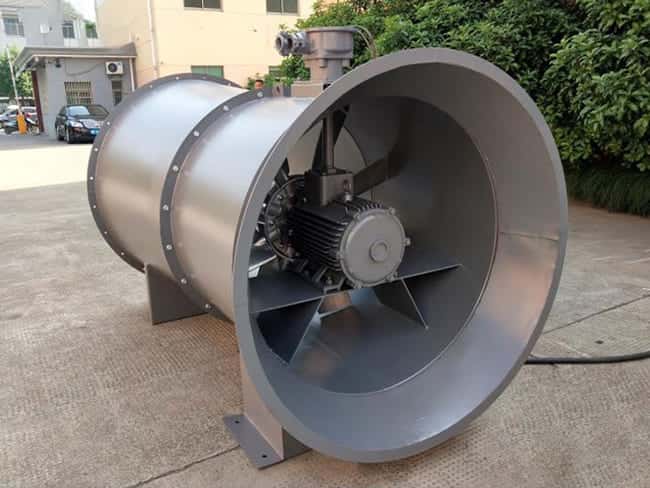
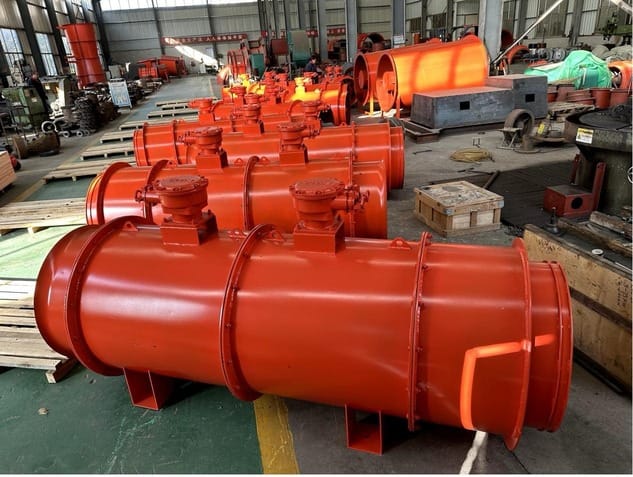
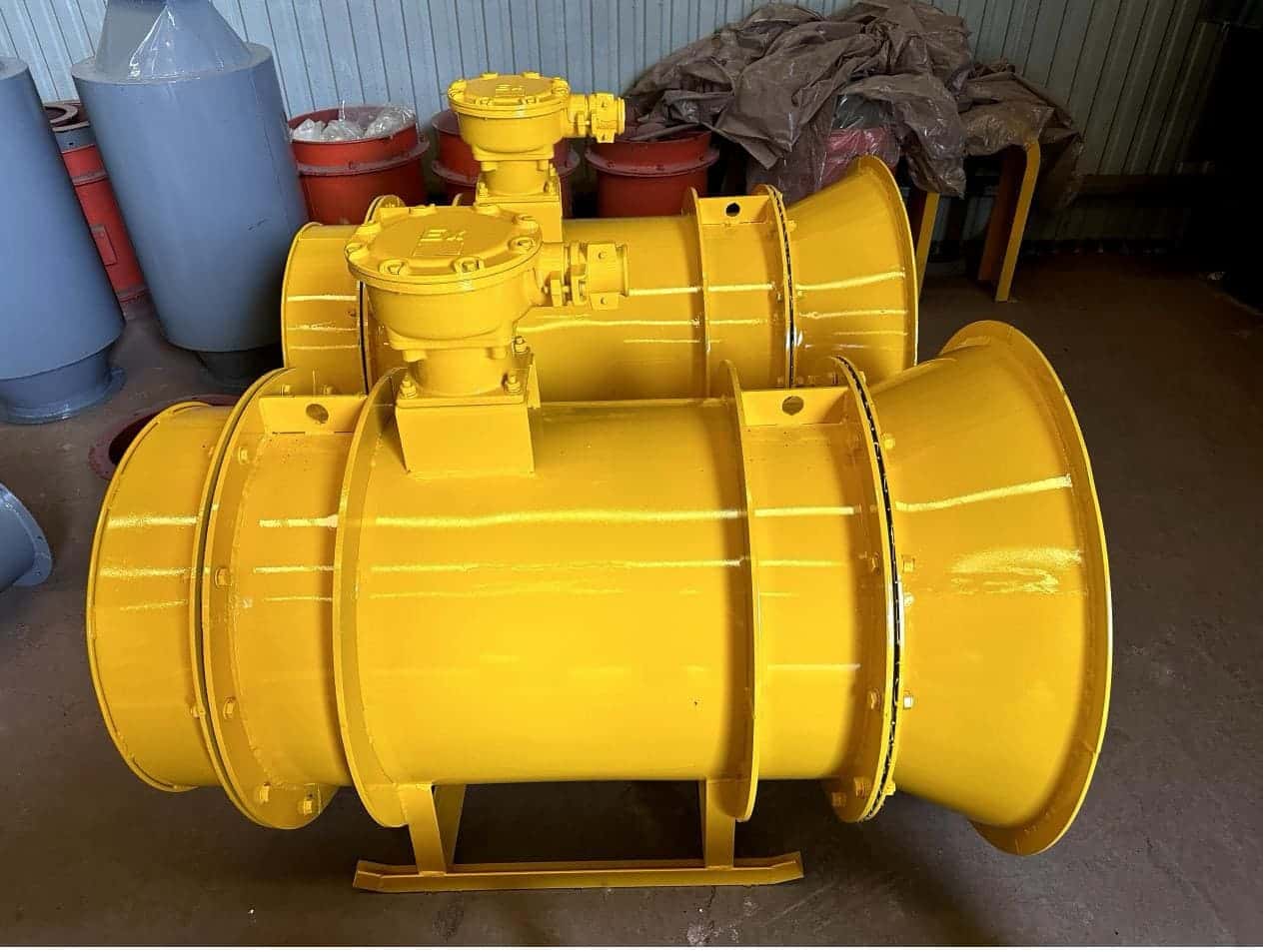
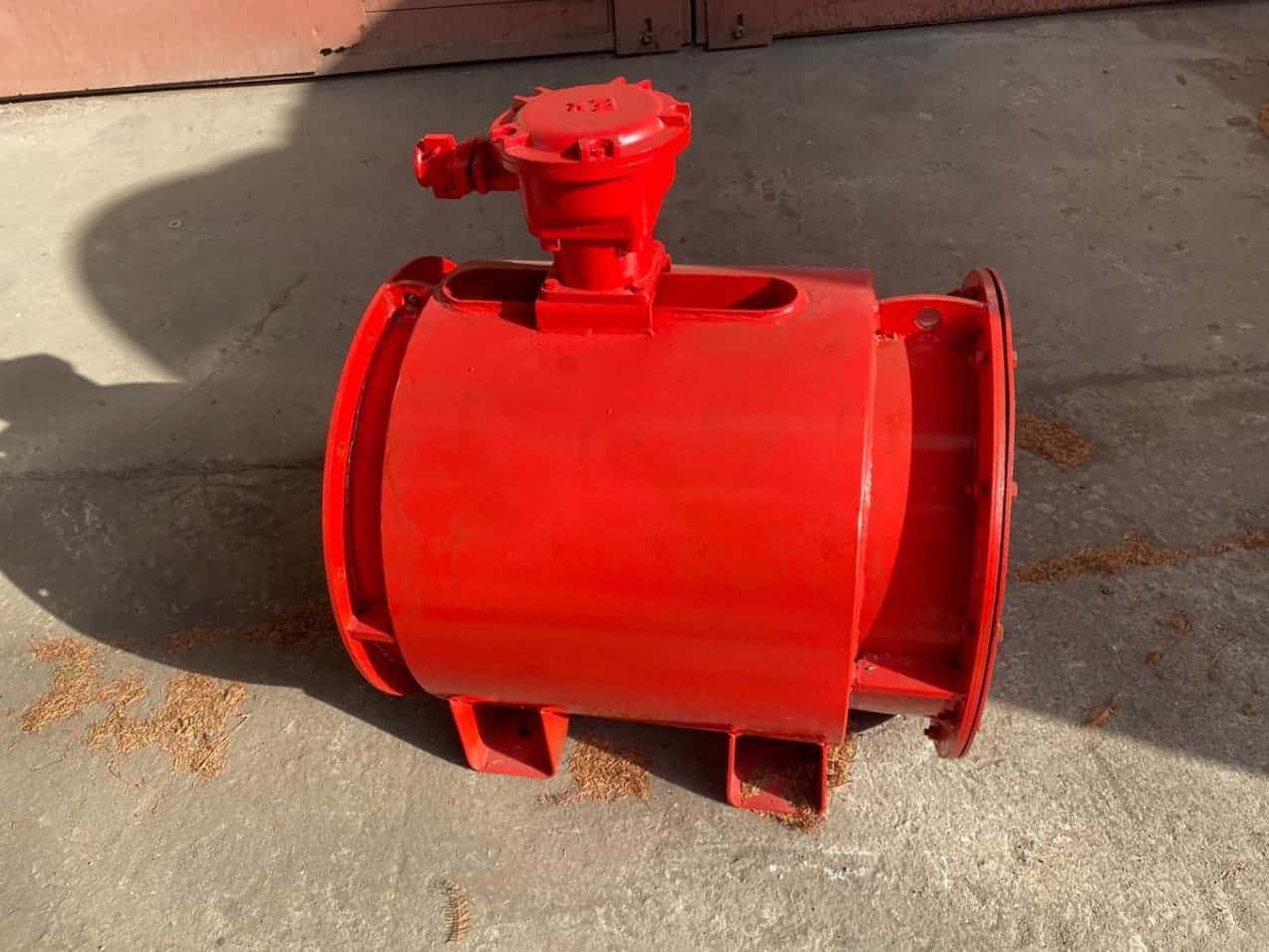
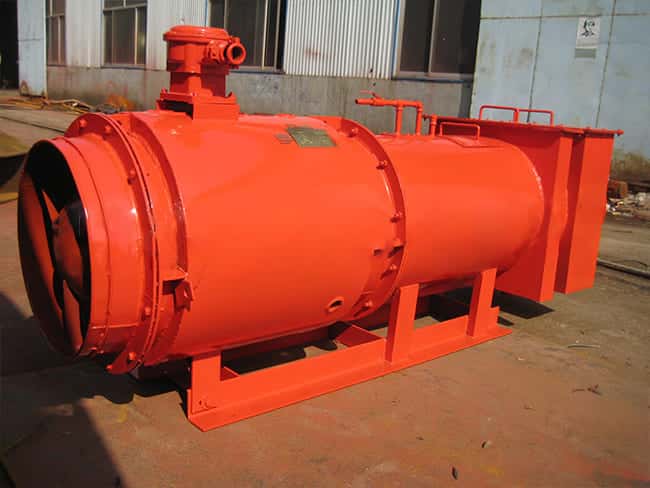
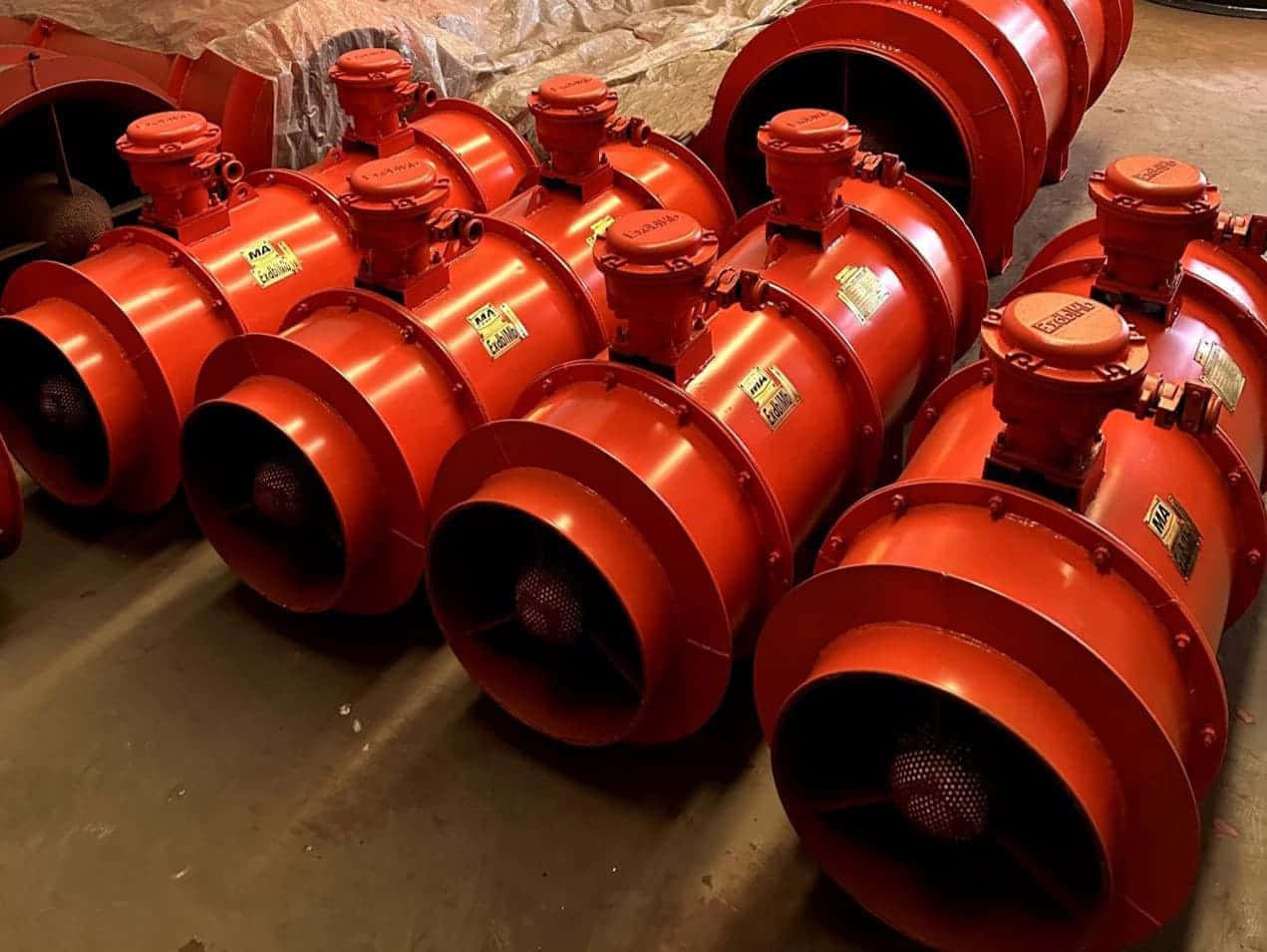
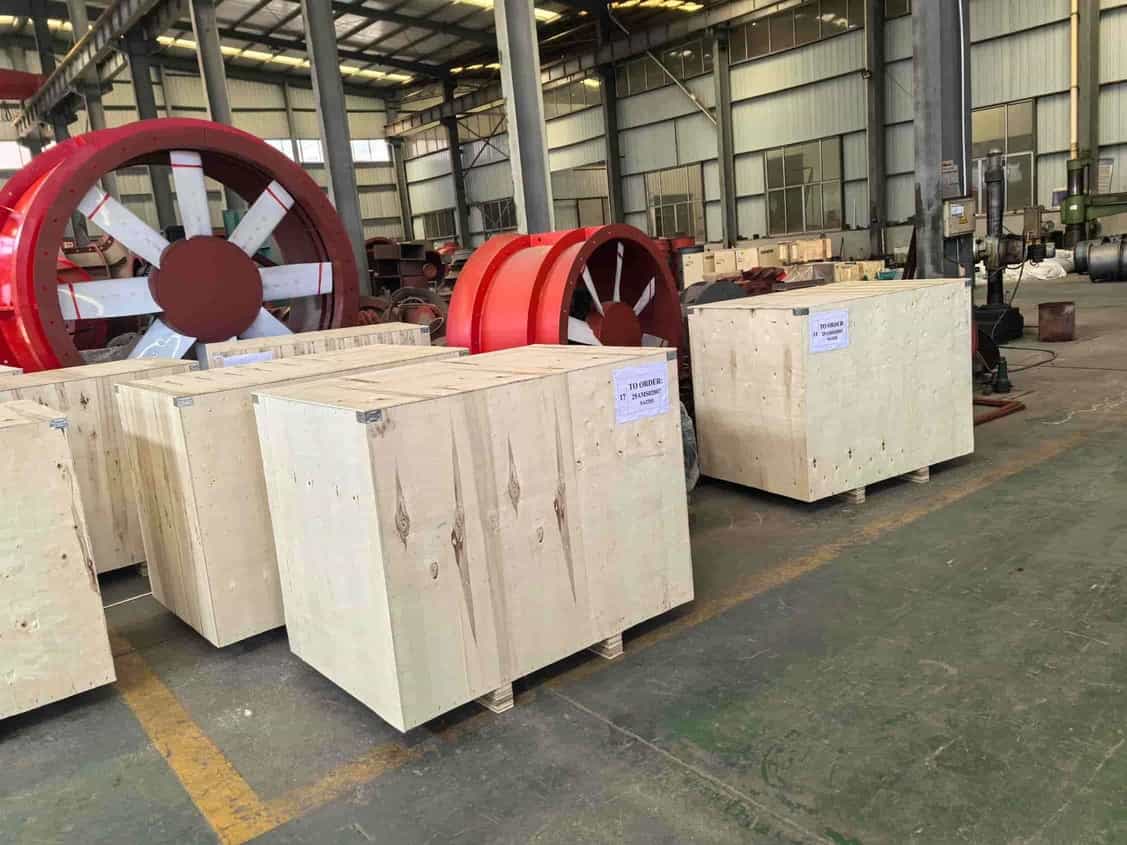



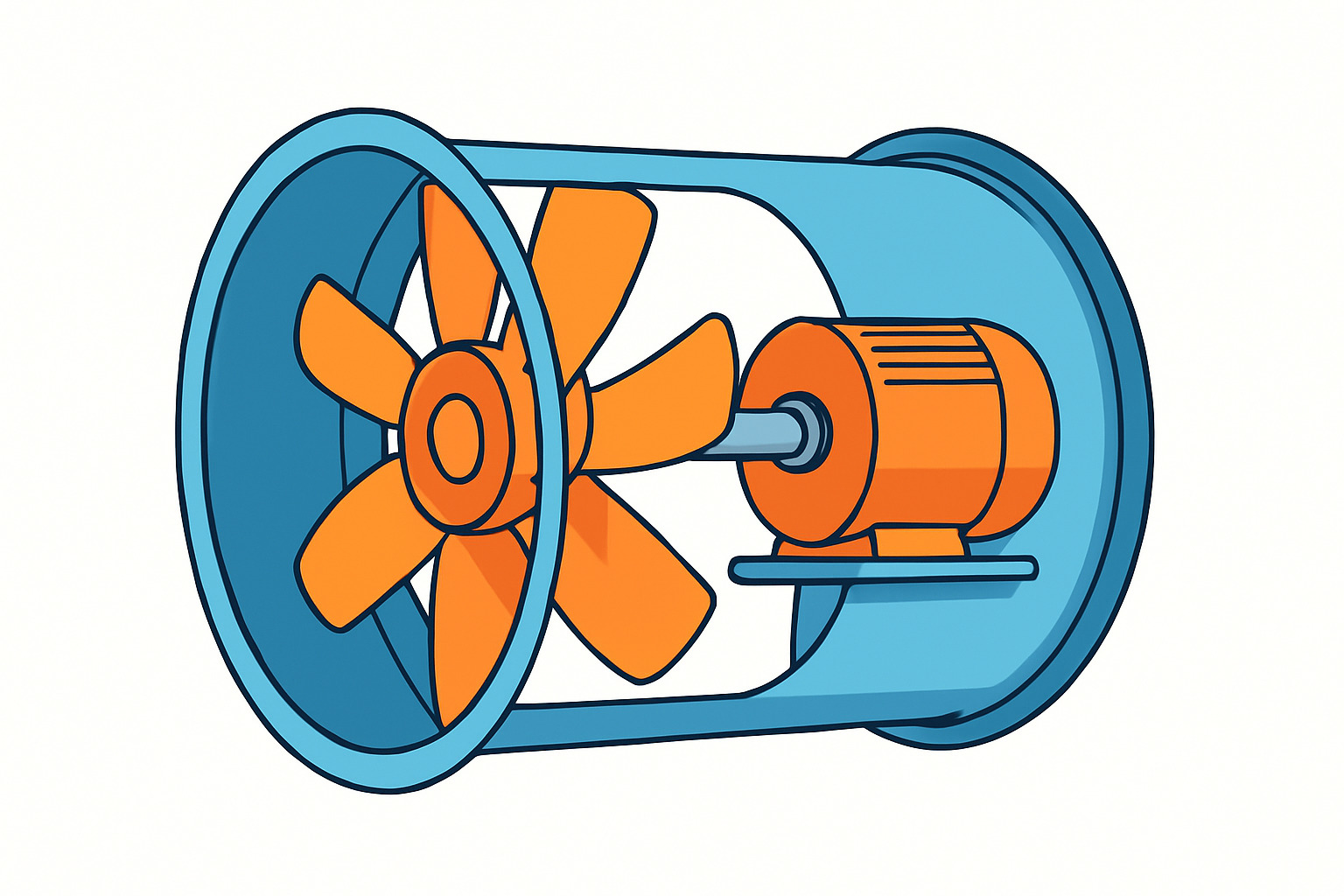
An axial fan shroud is the casing or ring that surrounds the blade tips and guides air through the fan. It can be a full cylindrical housing, a short inlet cone, a bellmouth or a close-fitting fan ring. In industrial and mining ventilation, the shroud is a key part of the aerodynamic design because it controls tip clearance, reduces recirculation losses and helps the fan reach its rated efficiency and pressure.
Without a proper shroud, air can leak around the blade tips from the high-pressure side downstream of the fan back to the low-pressure side upstream. This tip leakage creates vortices, turbulence and energy loss. The closer and smoother the shroud is to the blade tips (within safe mechanical clearances), the less leakage occurs. This typically results in higher static pressure and better efficiency at the same speed and power input.
The shape of the shroud, especially at the inlet side, also affects efficiency. A well-designed bellmouth or inlet cone provides a smooth transition from the upstream duct or airway into the fan, reducing separation and swirl. This allows the impeller to operate closer to its ideal flow pattern. In main mine fans, tunnel fans and large industrial axial fans, careful inlet and outlet shaping can make several percentage points difference in efficiency and significantly reduce noise.
However, the shroud must be designed with practical considerations in mind. In dusty mining environments, tip clearance cannot be too tight, or there is a risk of rubbing if deposits build up on blades or if the rotor shifts slightly due to bearing wear. Designers balance aerodynamic performance with mechanical safety, allowing enough clearance to avoid contact but small enough to keep leakage under control.
The shroud can also influence noise levels. Good shroud and bellmouth design reduces turbulence, which tends to lower broadband noise. Poorly shaped or damaged shrouds can create whistling tones and additional turbulence noise. In industrial plants and mines where noise regulations apply, upgrades to shrouds and inlets are often part of noise-reduction projects.
In summary, an axial fan shroud is the surrounding ring or casing that controls tip clearance and guides airflow into and out of the fan. A well-designed shroud reduces recirculation, increases efficiency and pressure, and helps control noise, which is critical for reliable, energy-efficient ventilation in industrial plants and underground mines.