
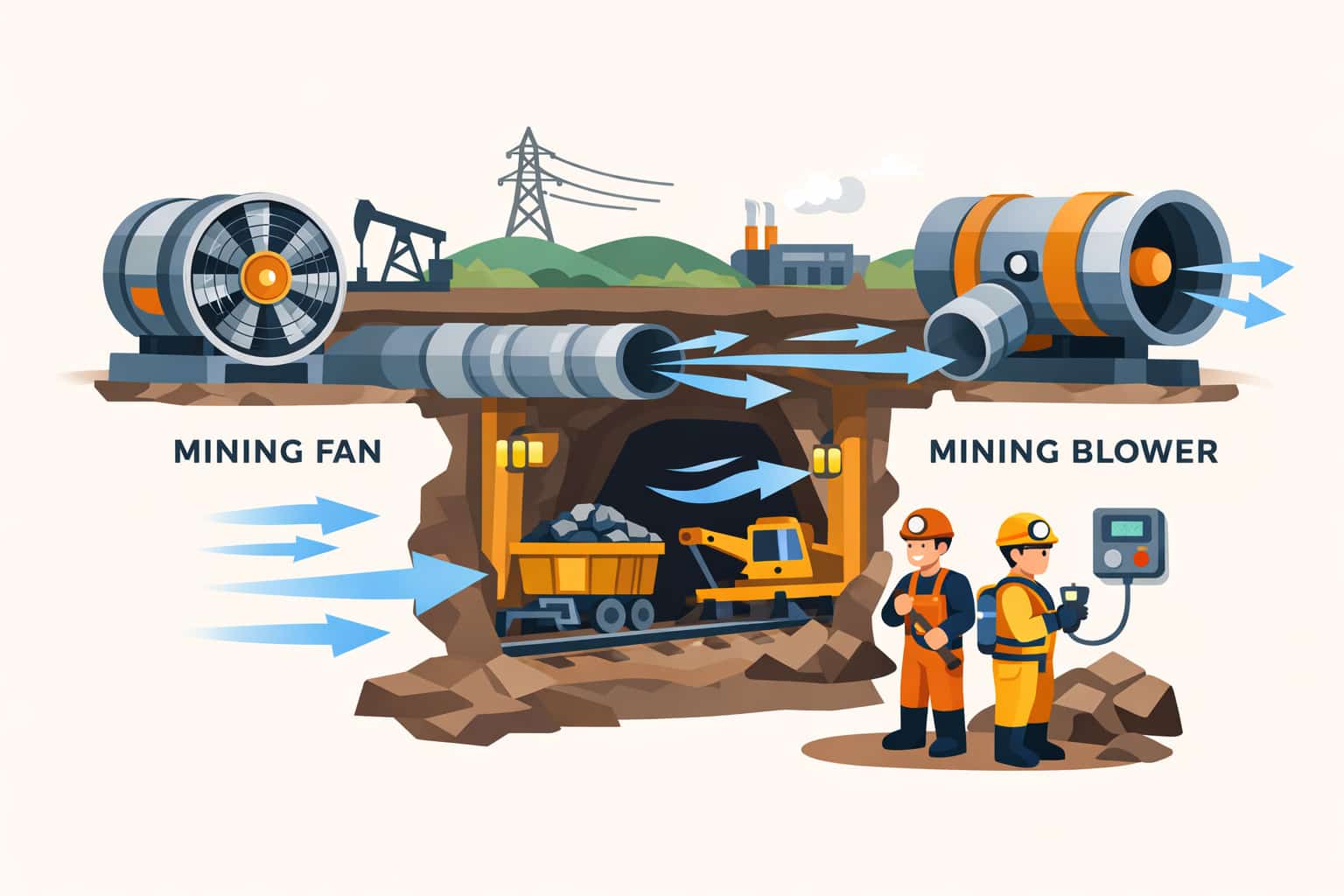
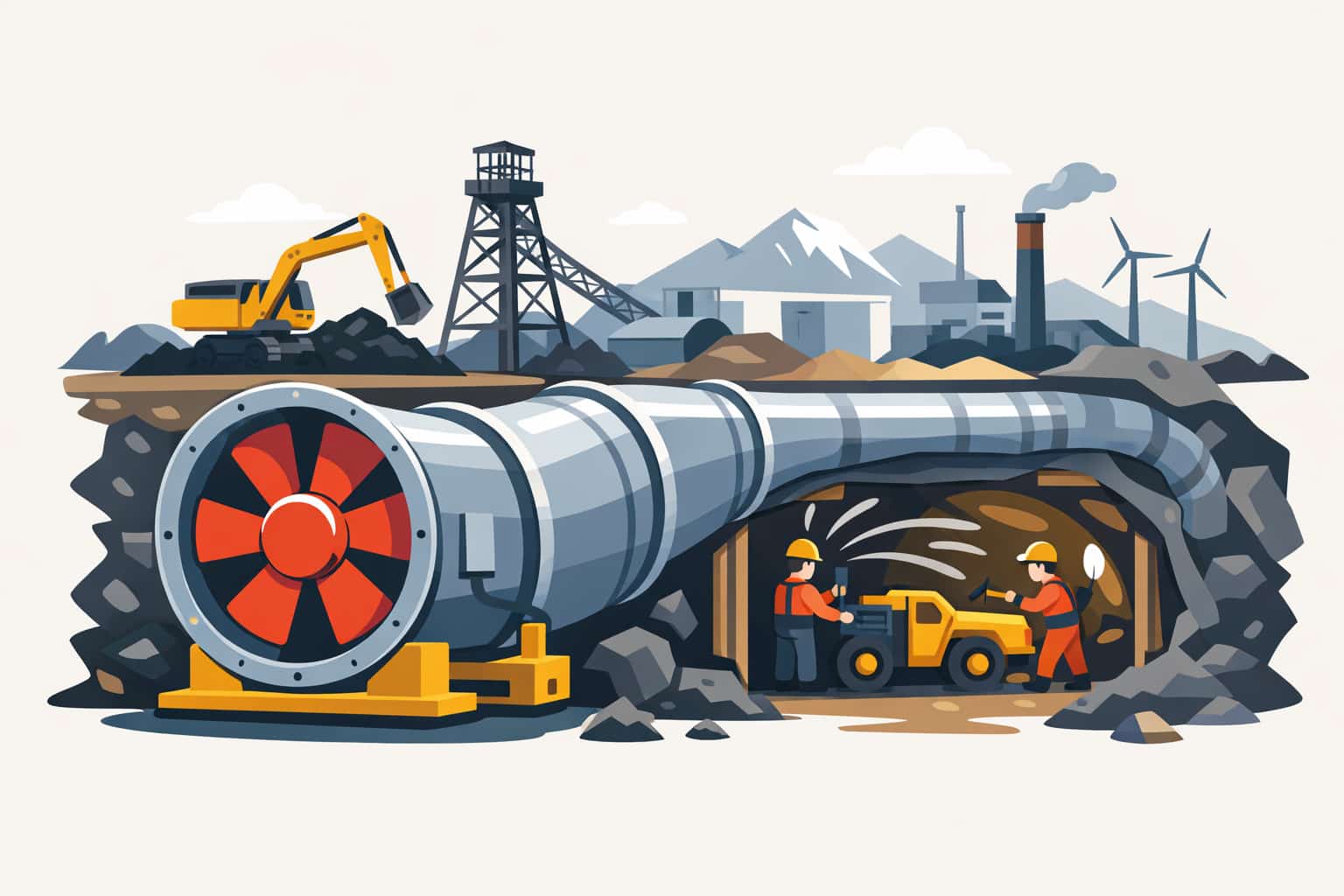

Natural ventilation pressure in mining, often abbreviated as NVP, is the pressure difference created by natural forces that can drive airflow through a mine even without mechanical fans. It arises from differences in temperature and barometric pressure between intake and return openings, and from elevation differences between shafts and portals. This natural draft can be helpful or problematic, depending on how it interacts with the mine’s mechanical ventilation system.
The most important contributor to natural ventilation pressure is the temperature difference between air in the mine and air at the surface. Warm air is less dense than cold air. If the air column in one shaft is warmer than the air column in another shaft or portal at a different elevation, the difference in air density creates a buoyancy-driven pressure difference. Warm air tends to rise, cold air tends to sink, and air starts to move through the network to equalize these differences.
This effect can be illustrated by comparing a deep return shaft and a shorter intake. In winter, air in the mine may be warmer than cold outside air. The warmer air in a tall shaft is lighter, so the column of air has less weight than the colder column in another opening. The resulting natural ventilation pressure tends to drive warm air up the tall shaft and pull cold air into the mine through the other opening, creating a natural airflow circuit. In summer, the direction and magnitude of this natural draft can change as surface air becomes warmer than mine air.
Barometric pressure changes and wind effects can add to or subtract from natural ventilation pressure. Rapid changes in outside barometric pressure can temporarily cause airflow reversals or surges in sensitive networks. Wind blowing across shaft collars and portals can create suction or positive pressure at individual openings, modifying the overall natural draft in complex ways.
In modern mining, mechanical ventilation fans provide the primary driving force for airflow, but natural ventilation pressure is still important. Engineers must account for NVP when designing fan duties and airflow patterns, especially in deep or extensive mines with multiple shafts and portals. In some cases, fans are selected with enough pressure margin to overcome unfavorable NVP and prevent unwanted flow reversals. In other situations, NVP can be used advantageously to reduce fan load during certain seasons.
In summary, natural ventilation pressure in mining is the buoyancy- and barometric-driven pressure difference between mine openings caused mainly by temperature and elevation differences. It can assist or oppose mechanical ventilation and must be understood and managed as part of the overall mine ventilation design.