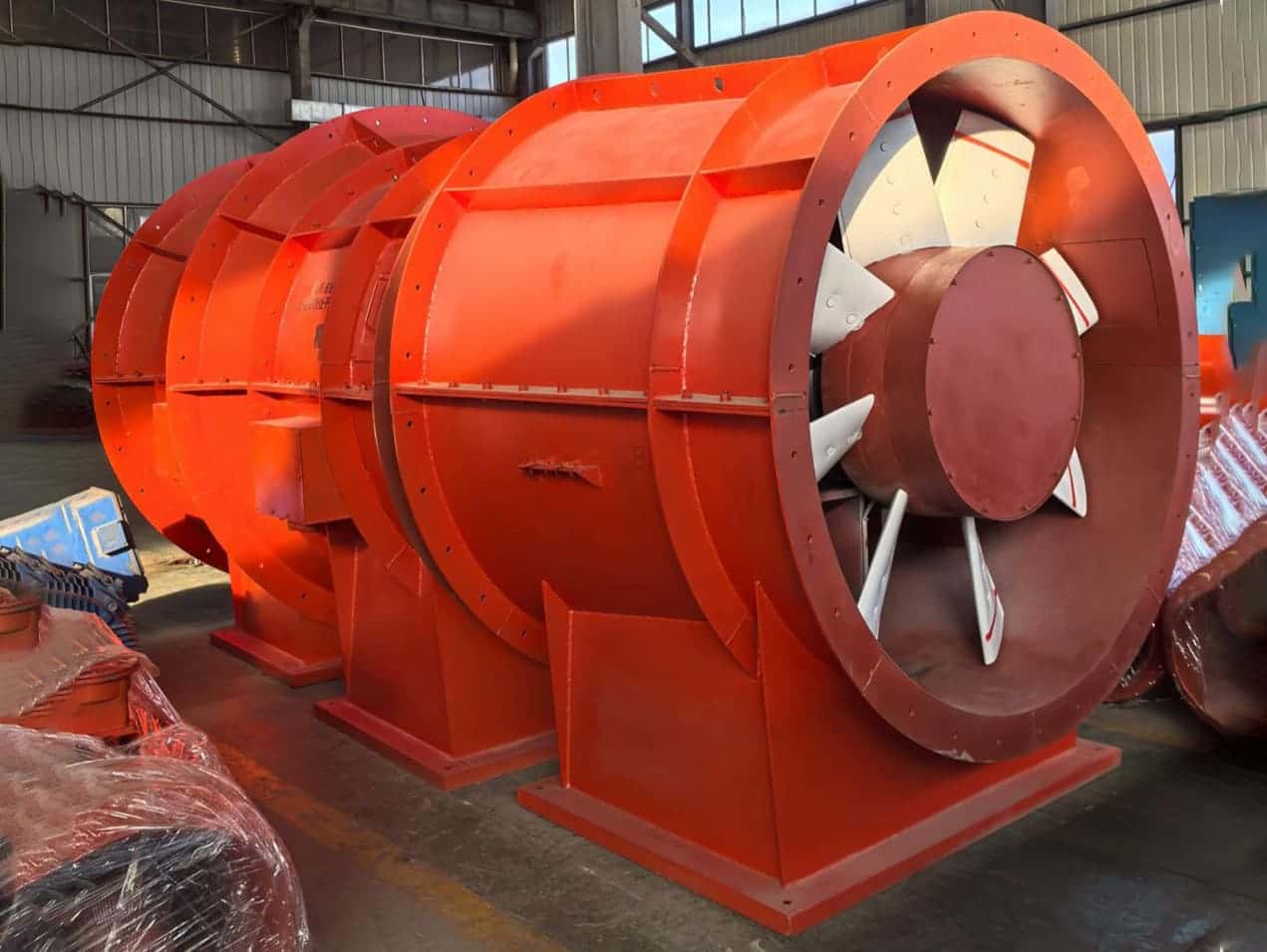
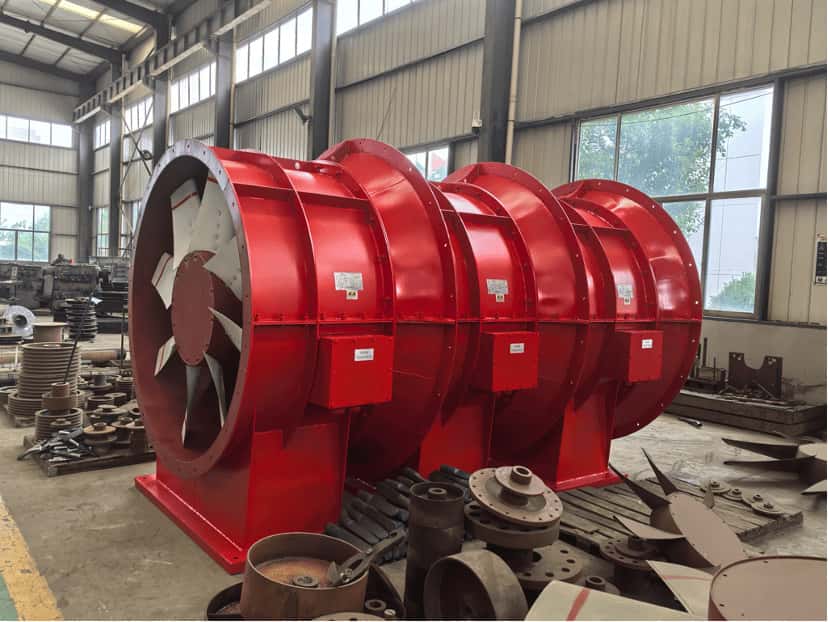
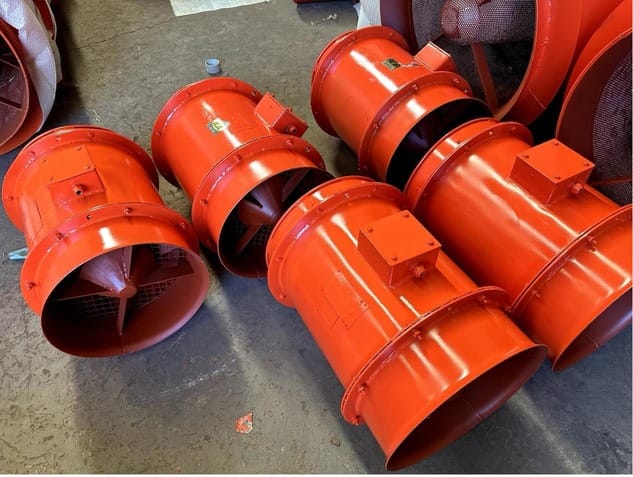
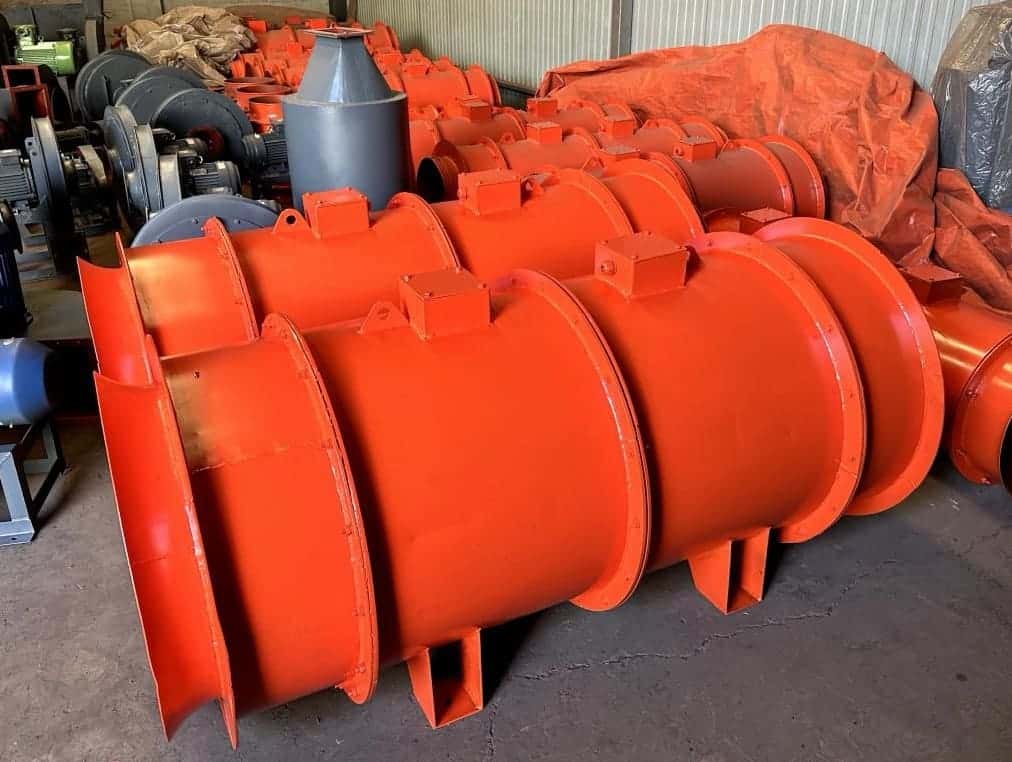
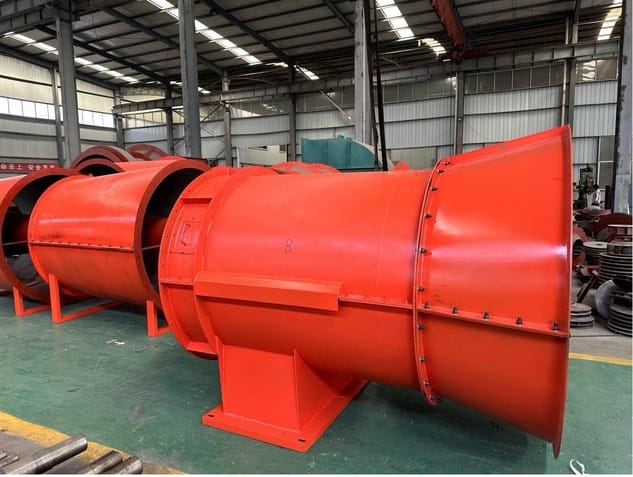
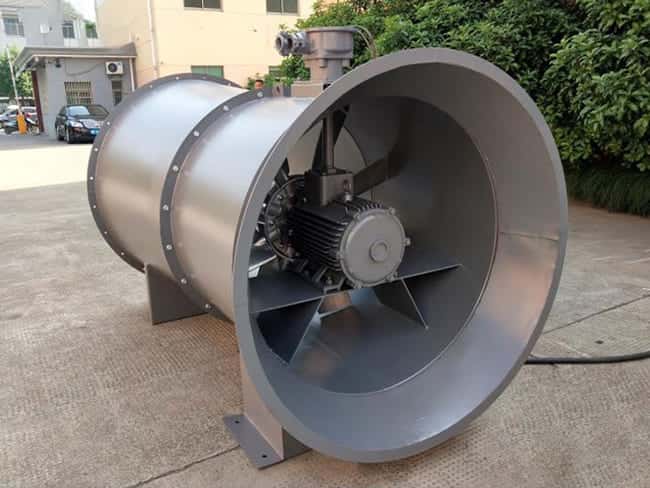
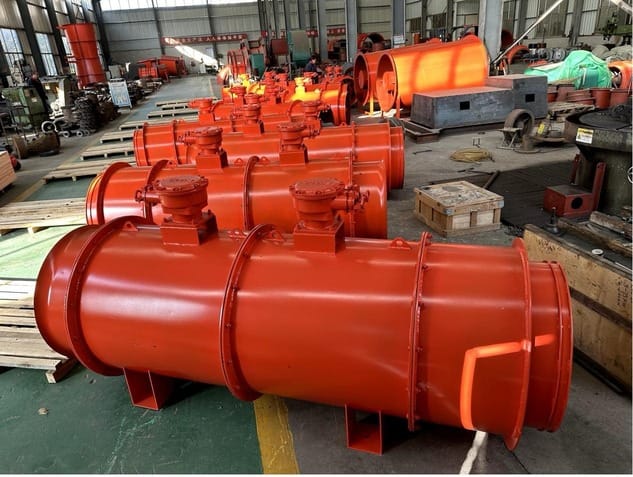
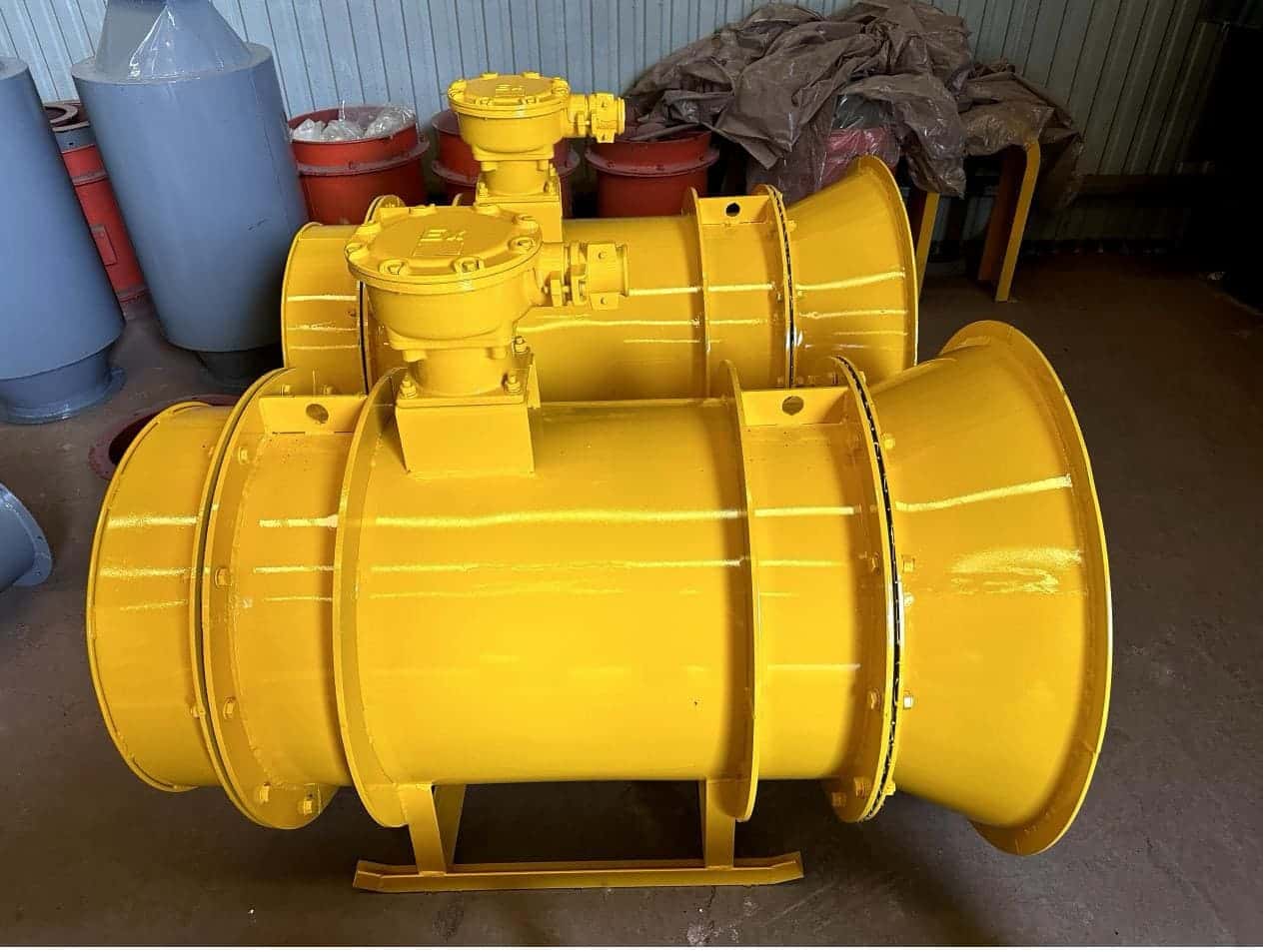
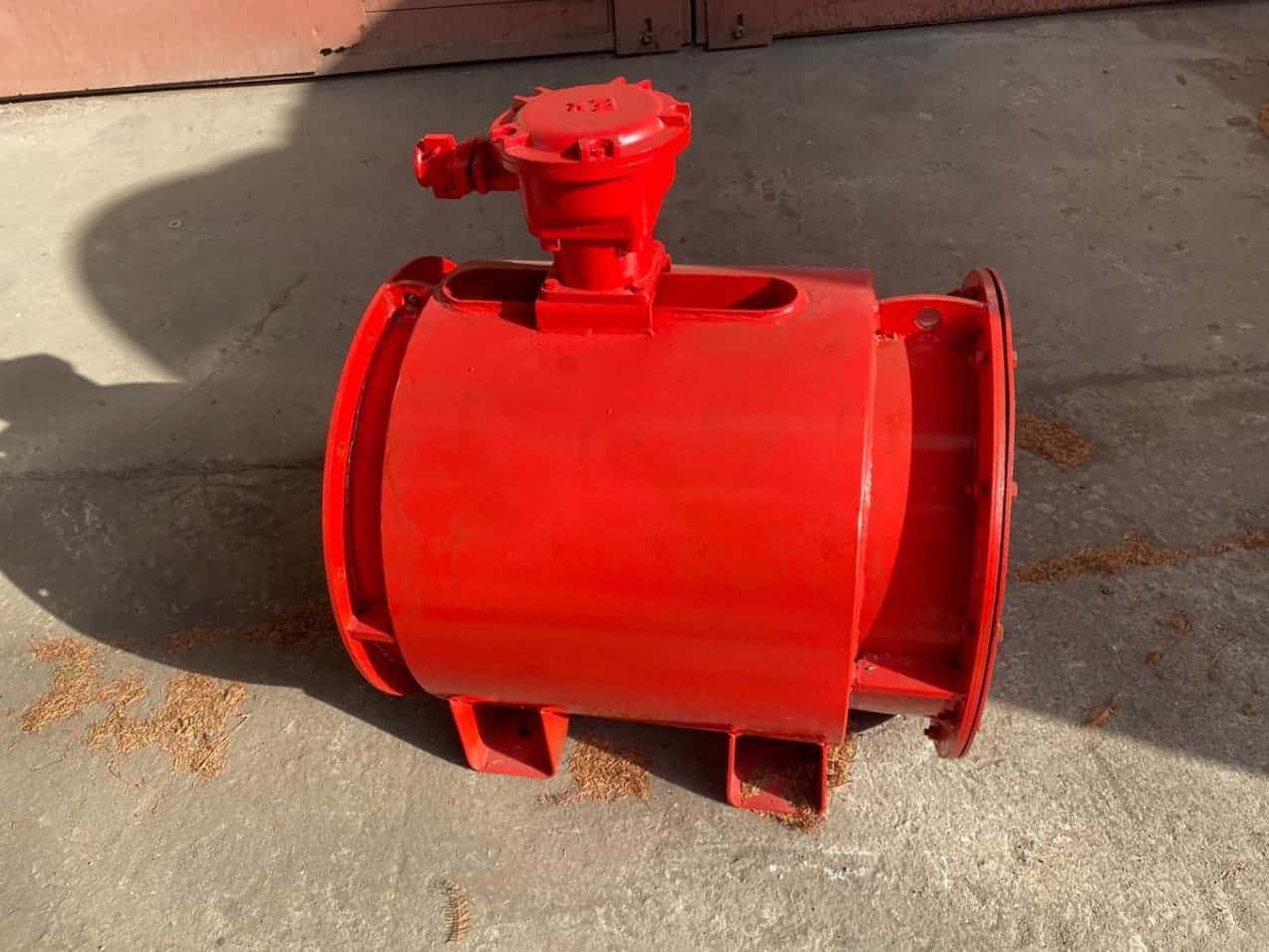
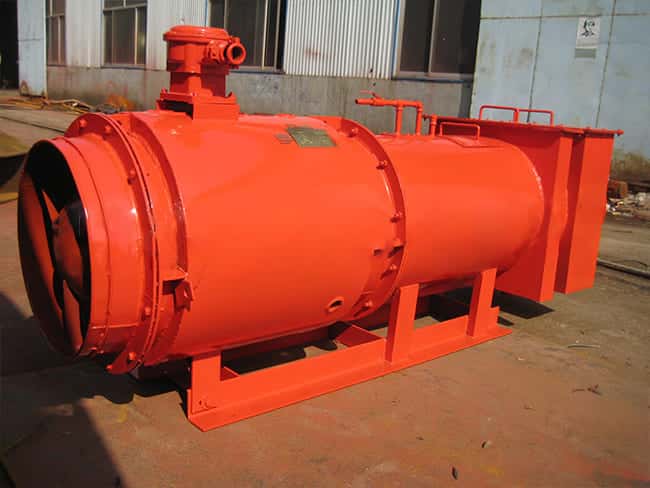
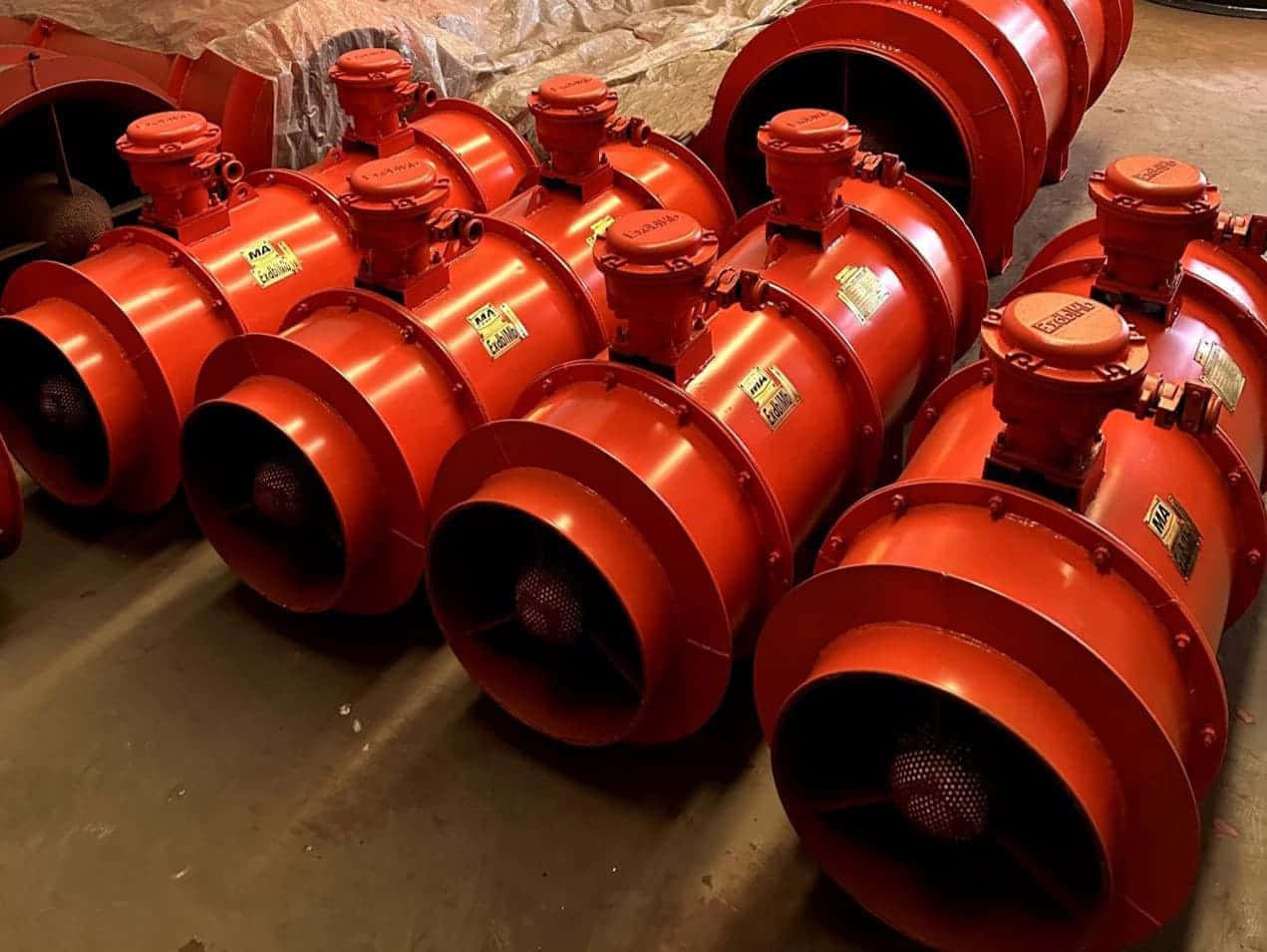
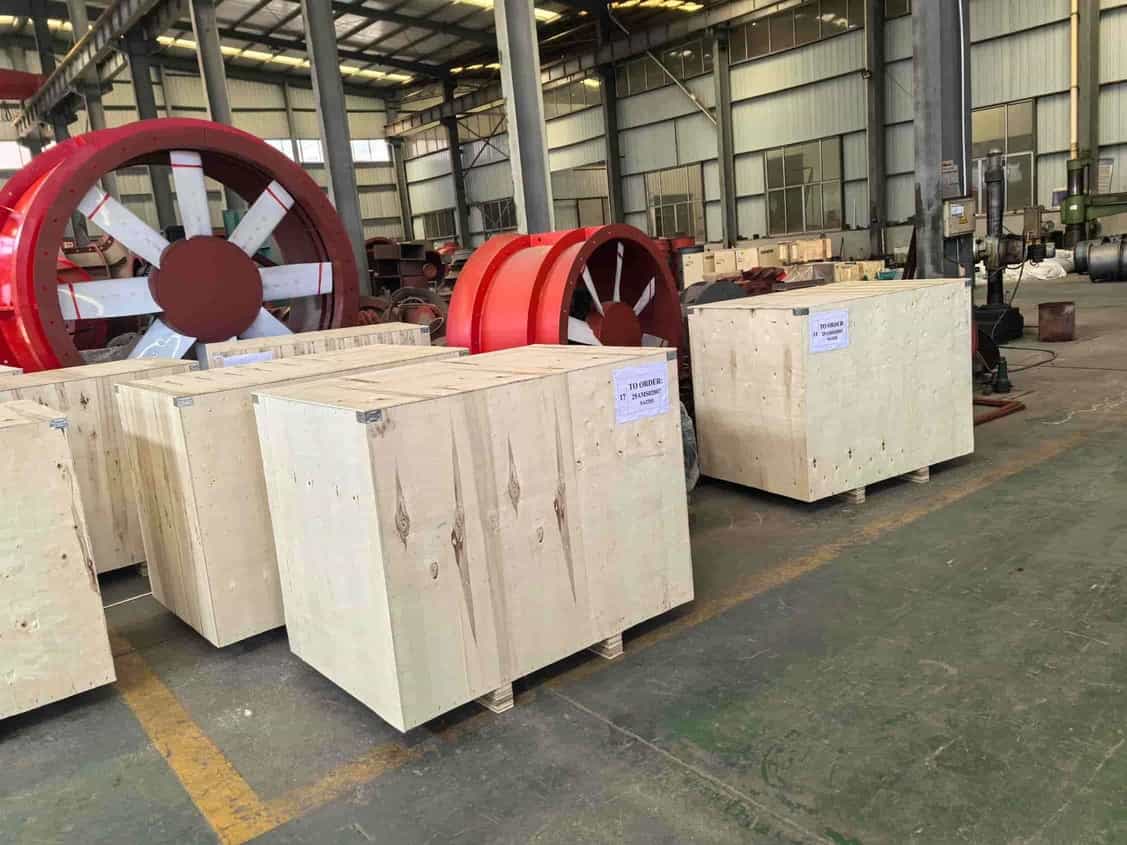
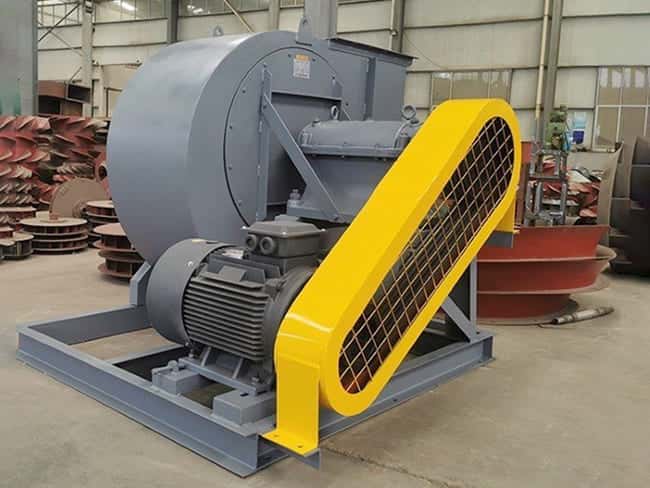
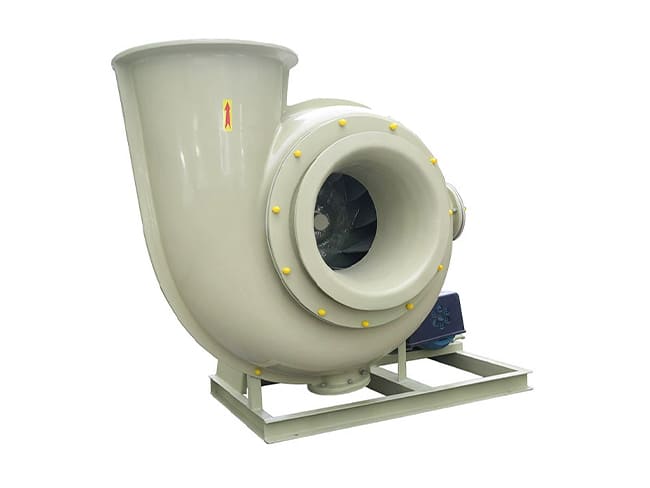
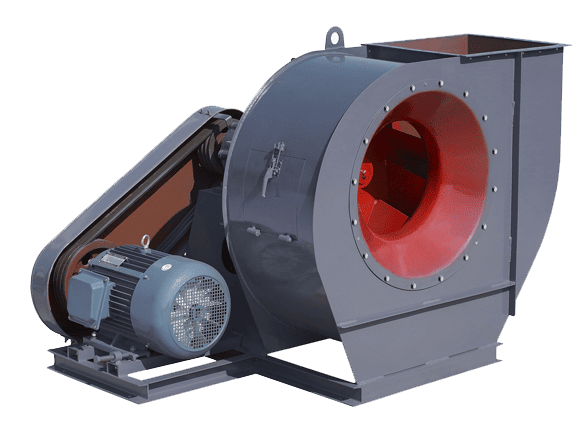
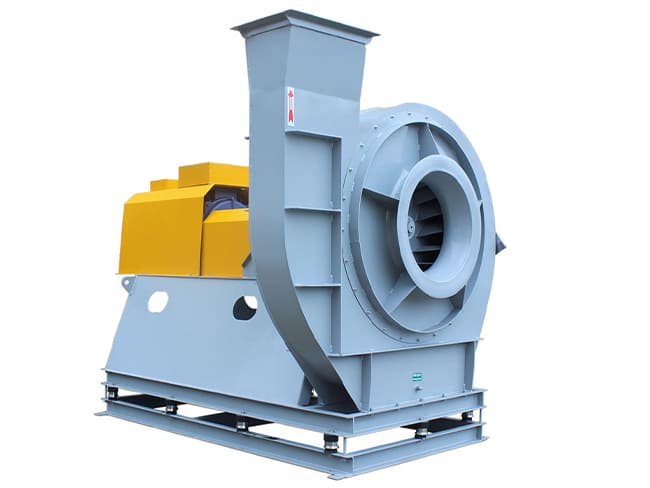
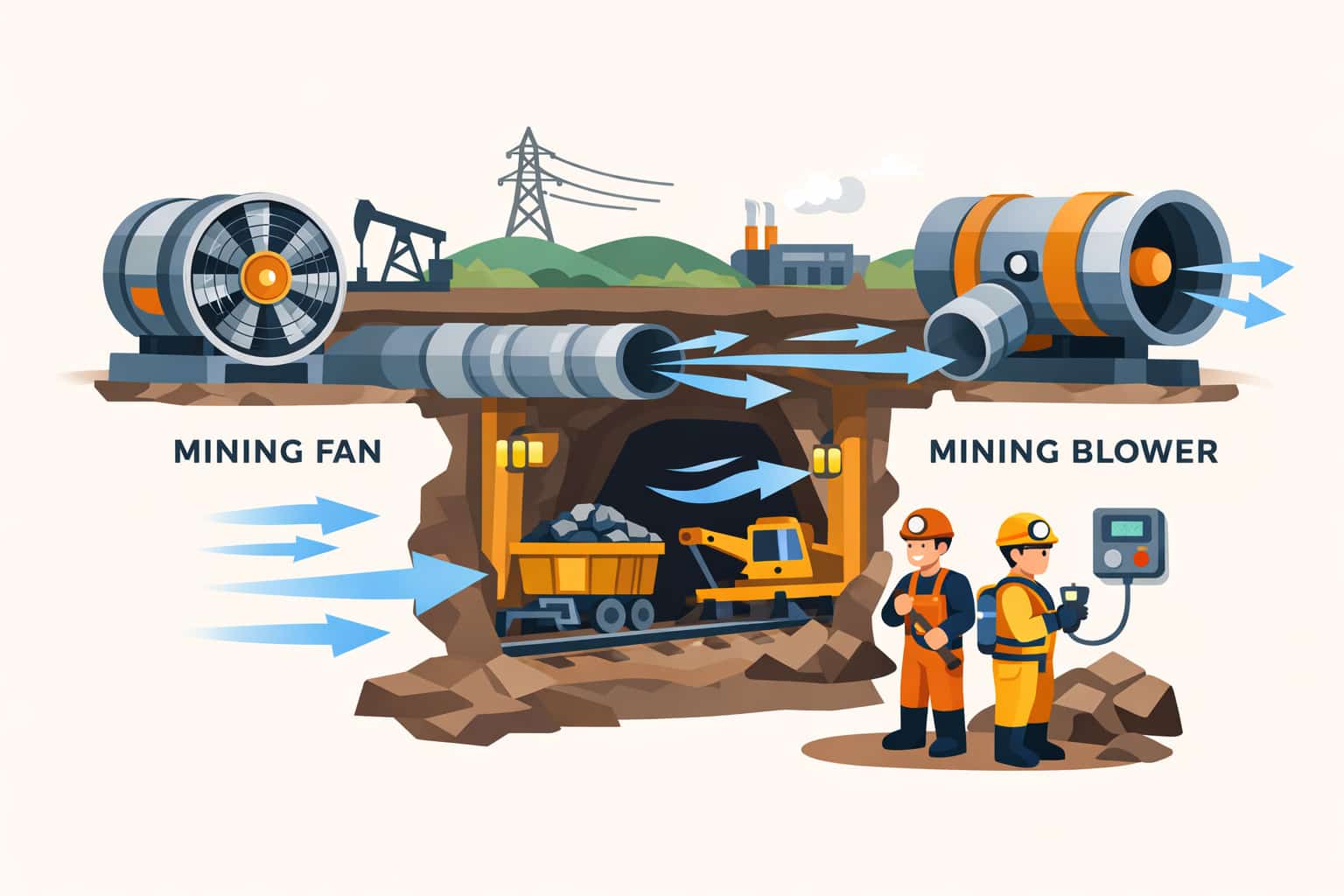
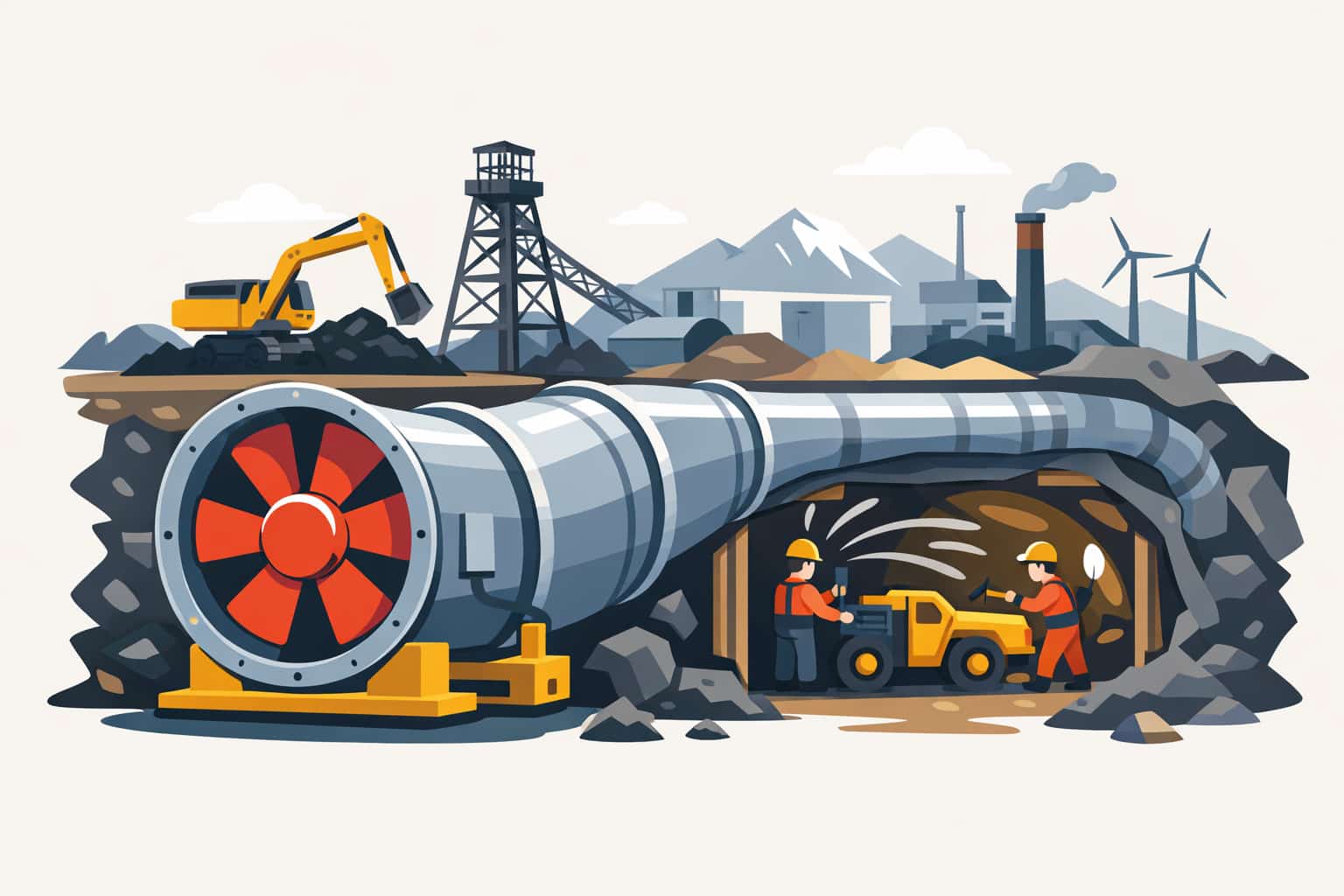
An auxiliary fan in underground mines is a local ventilation fan used to move air in areas where the main ventilation circuit cannot supply enough airflow or cannot direct air effectively to the working face. It is most commonly applied in development headings, blind ends, crosscuts, and advancing drifts, where air must be delivered precisely to the active work area to control contaminants and temperature.
Unlike a main mine fan that drives airflow through the entire mine network, an auxiliary fan is installed closer to the workplace and typically operates with ventilation ducting. The duct acts as the “air conduit” that carries fresh air to the face (or carries contaminated air away), while the fan provides the pressure needed to overcome duct resistance and leakage.
How auxiliary fans are used
- Forcing (blowing) system: the fan pushes fresh air through ducting to the face. This is widely used because it delivers a direct stream of fresh air to workers and equipment.
- Exhaust (extracting) system: the fan draws contaminated air from the face through ducting and discharges it into a return airway. This can be useful for fume control in certain layouts but requires tighter ducting to limit leakage.
Why auxiliary ventilation is critical
Underground headings can accumulate dust, diesel exhaust, blasting fumes, heat, humidity, and in some mines, gases that must be diluted. Without adequate local airflow, these hazards can concentrate quickly because headings are often dead-end spaces with limited natural circulation. Proper auxiliary ventilation helps maintain safer air quality, improves visibility, supports equipment operation, and reduces downtime due to poor atmospheric conditions.
Key selection and performance factors
- Air quantity at the face: required airflow should be maintained at the working end, not just at the fan outlet.
- Static pressure capability: longer duct runs, sharp bends, and duct damage increase resistance. The fan must have enough pressure margin.
- Duct leakage control: leakage is often the biggest hidden airflow loss. Tight joints and good duct material matter.
- Installation location: placement should minimize recirculation and keep the fan in stable airflow, away from turbulent returns when possible.
- Safety and reliability: guarding, electrical protection, suitable ratings for the environment, and robust bearings and impeller design.
In summary, the auxiliary fan is the primary tool for local, ducted ventilation in underground mines. When correctly selected and properly installed with good duct integrity, it provides consistent airflow at headings, supports safe working conditions, and keeps development and production activities operating smoothly.