
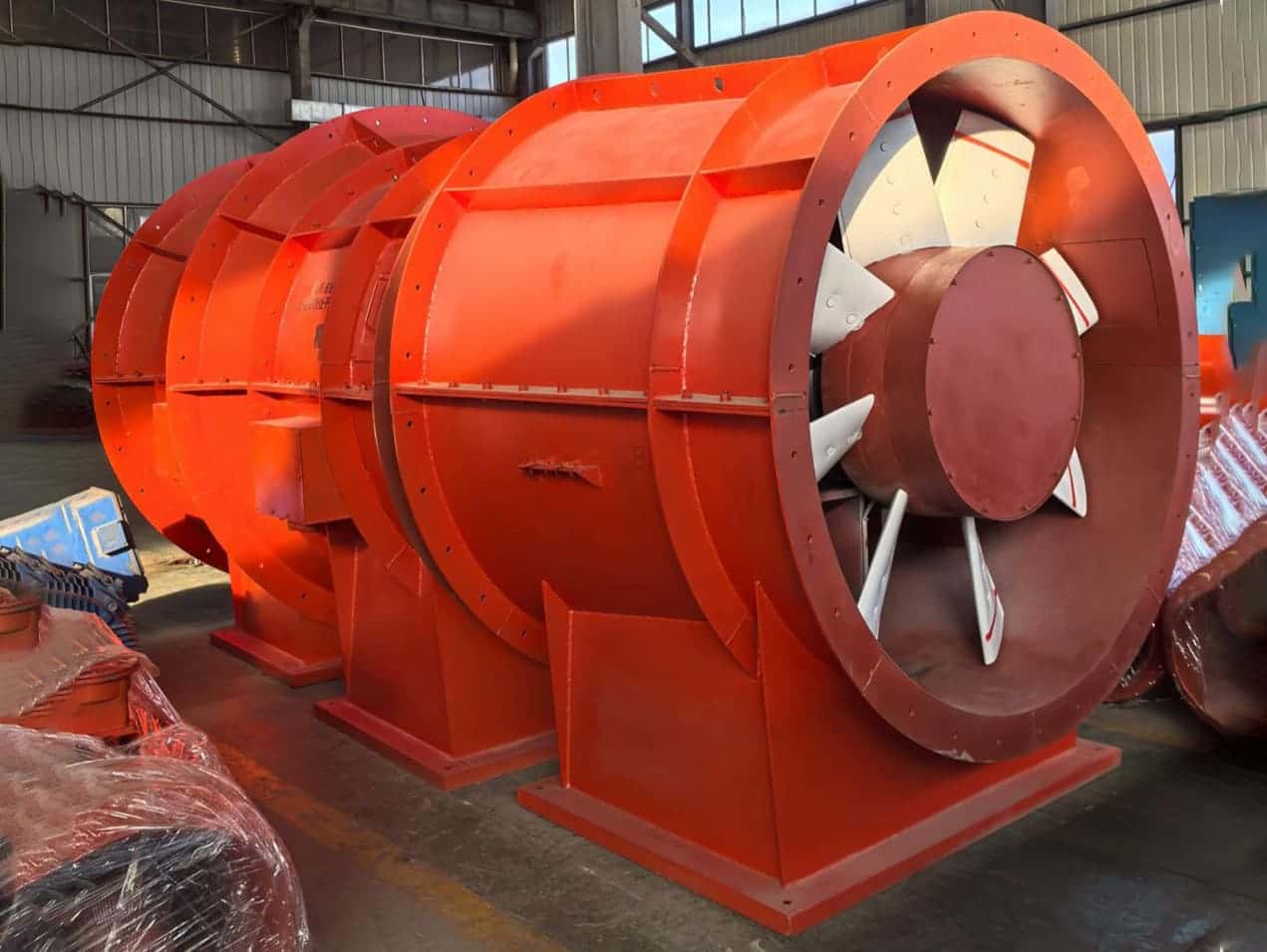
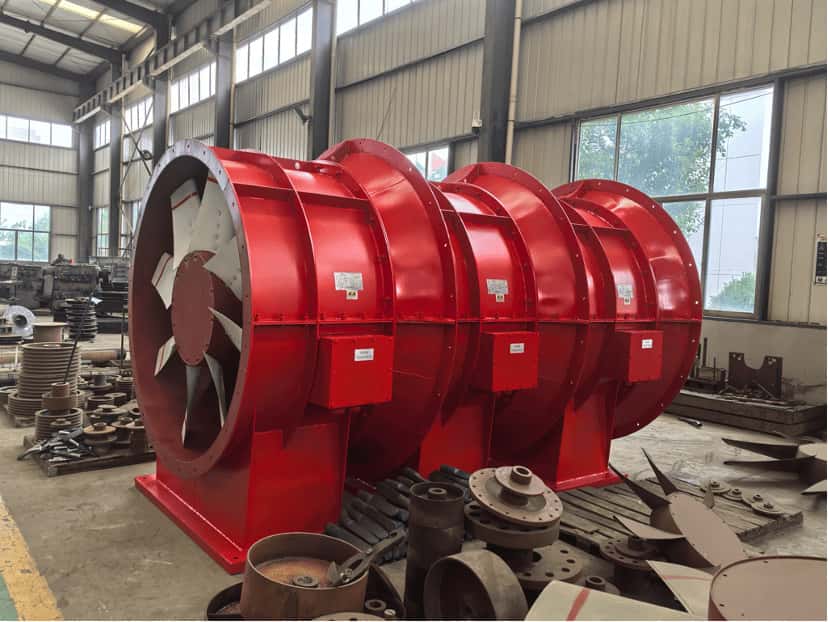
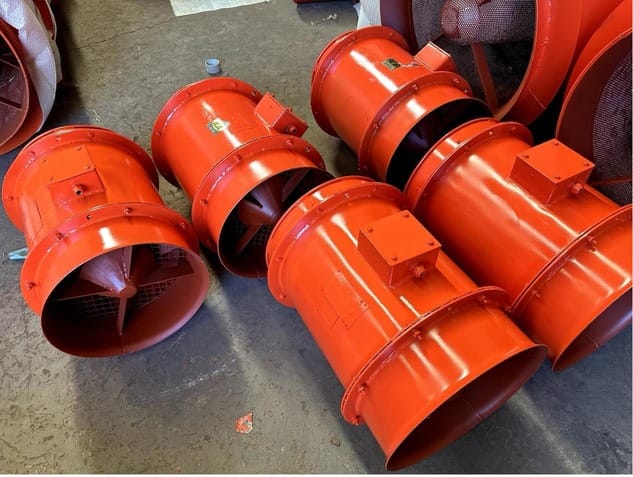
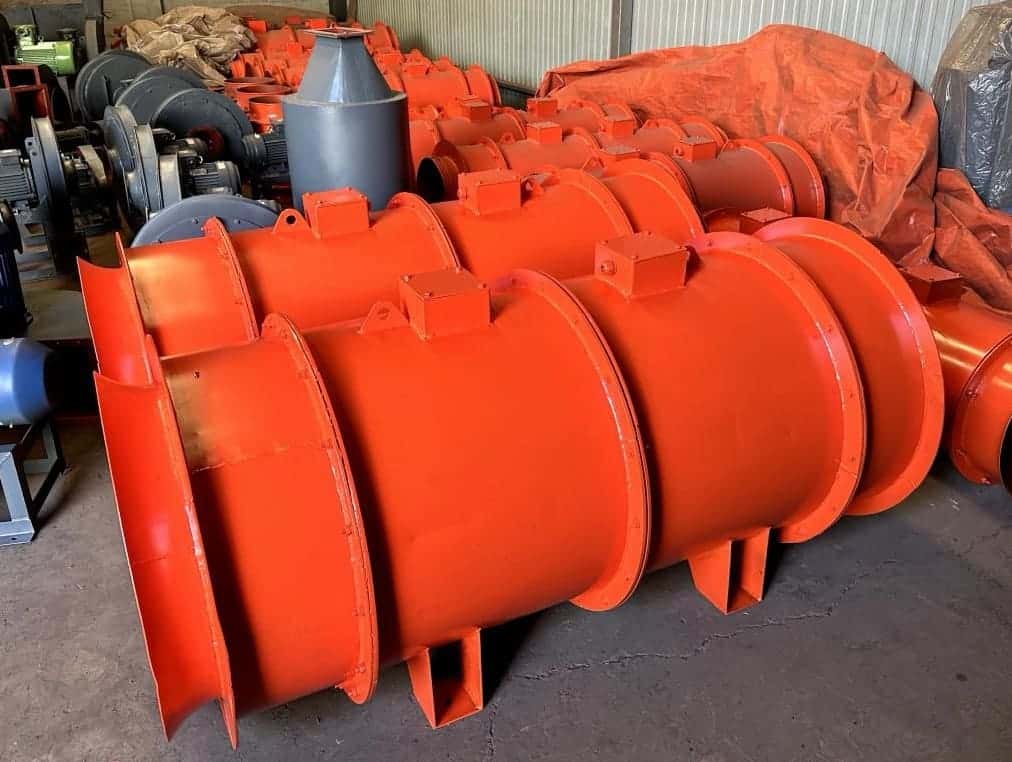
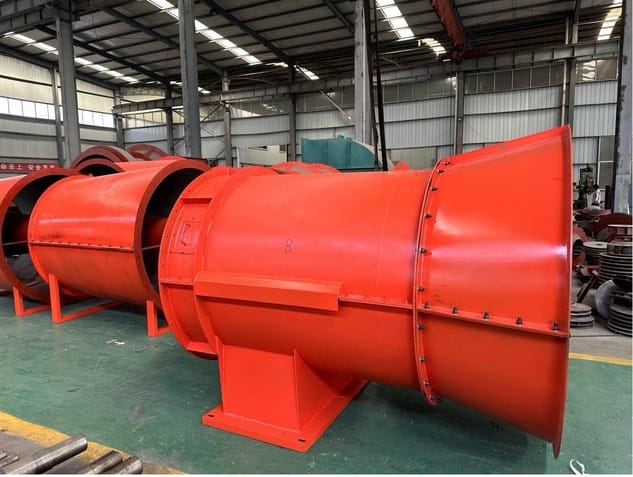
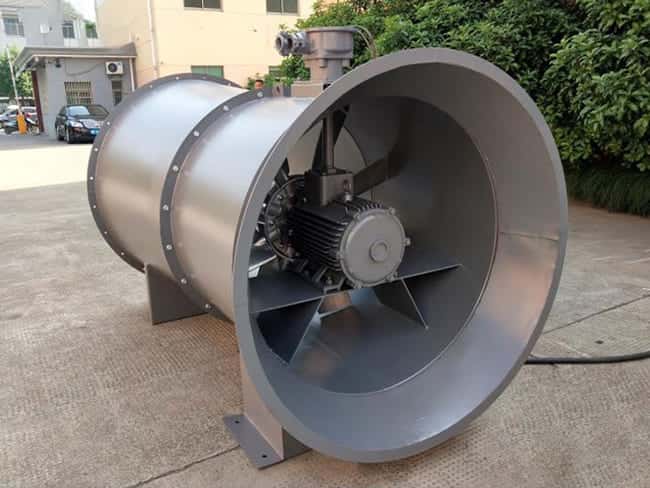
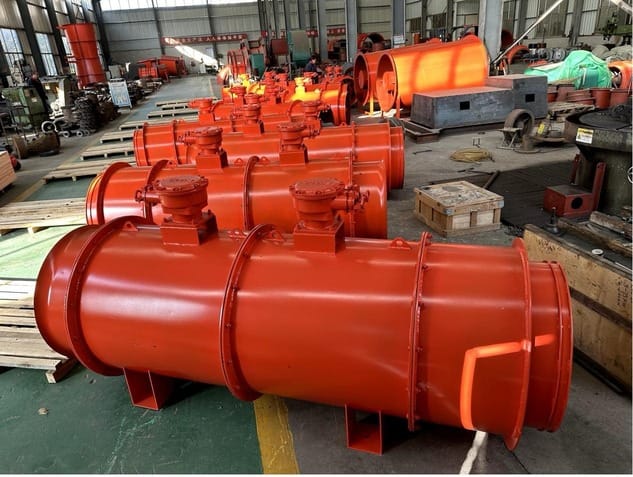
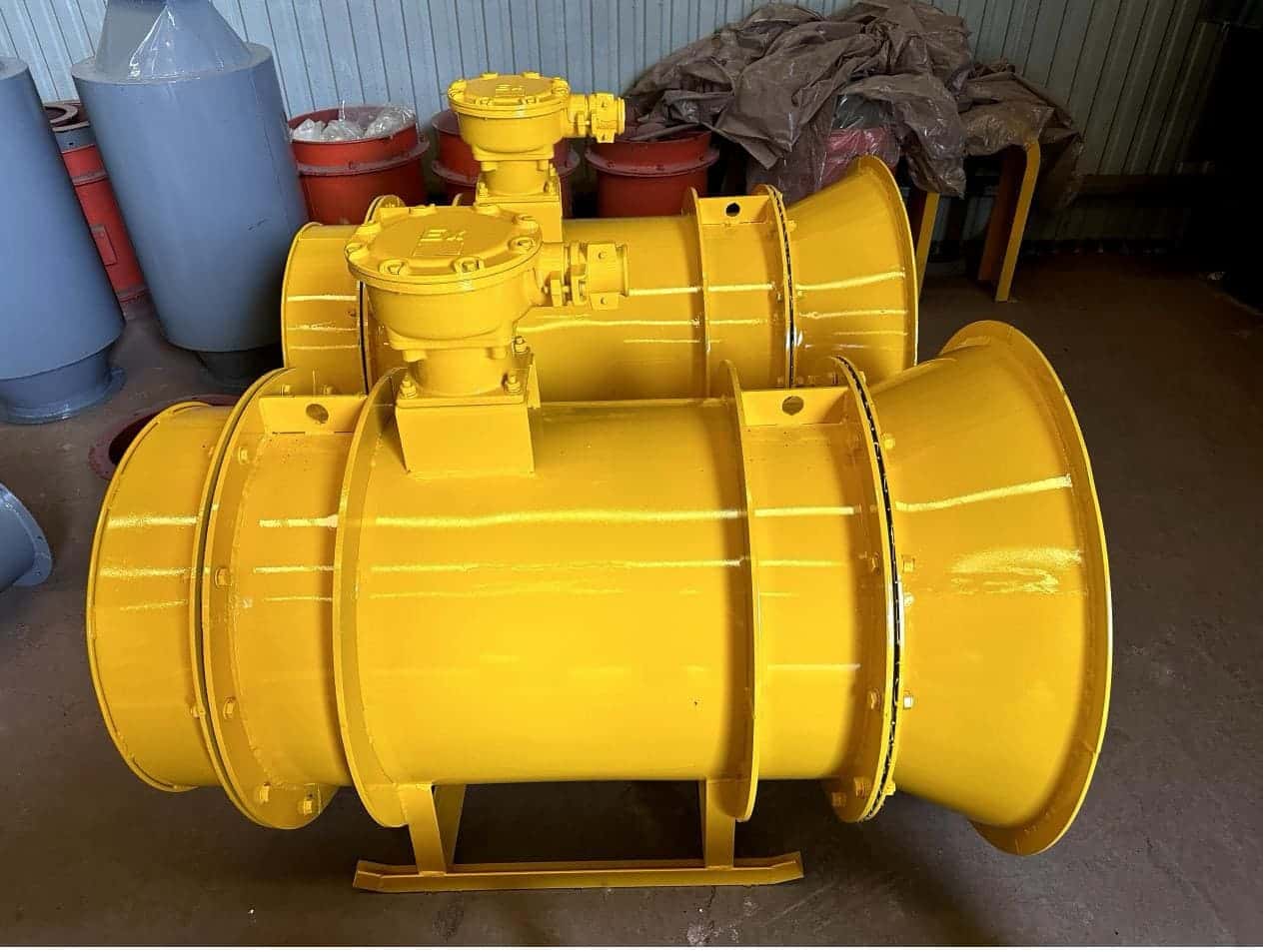
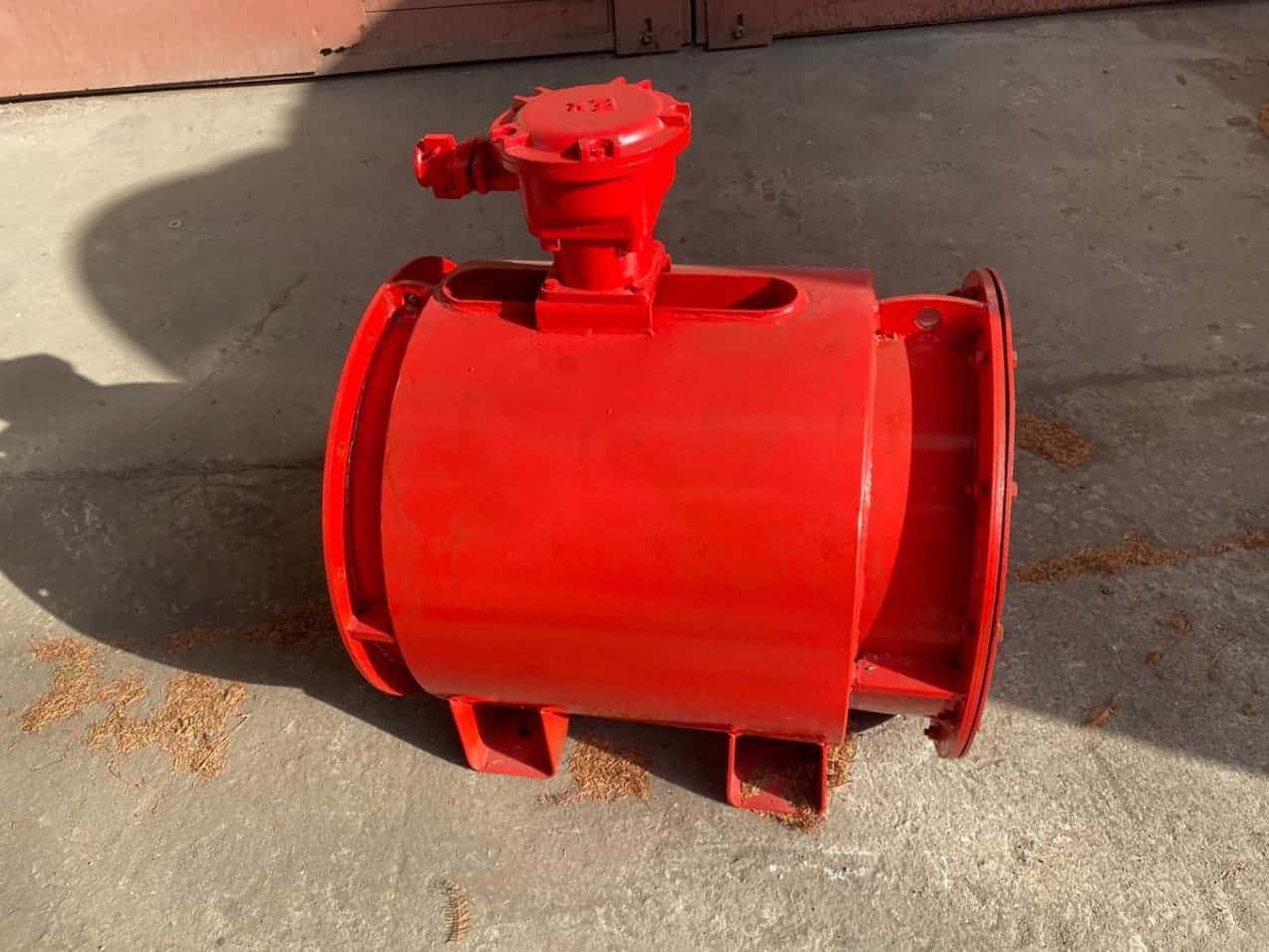
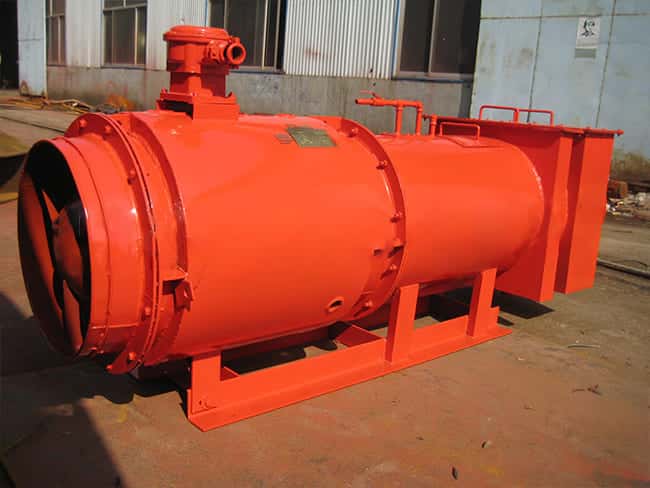
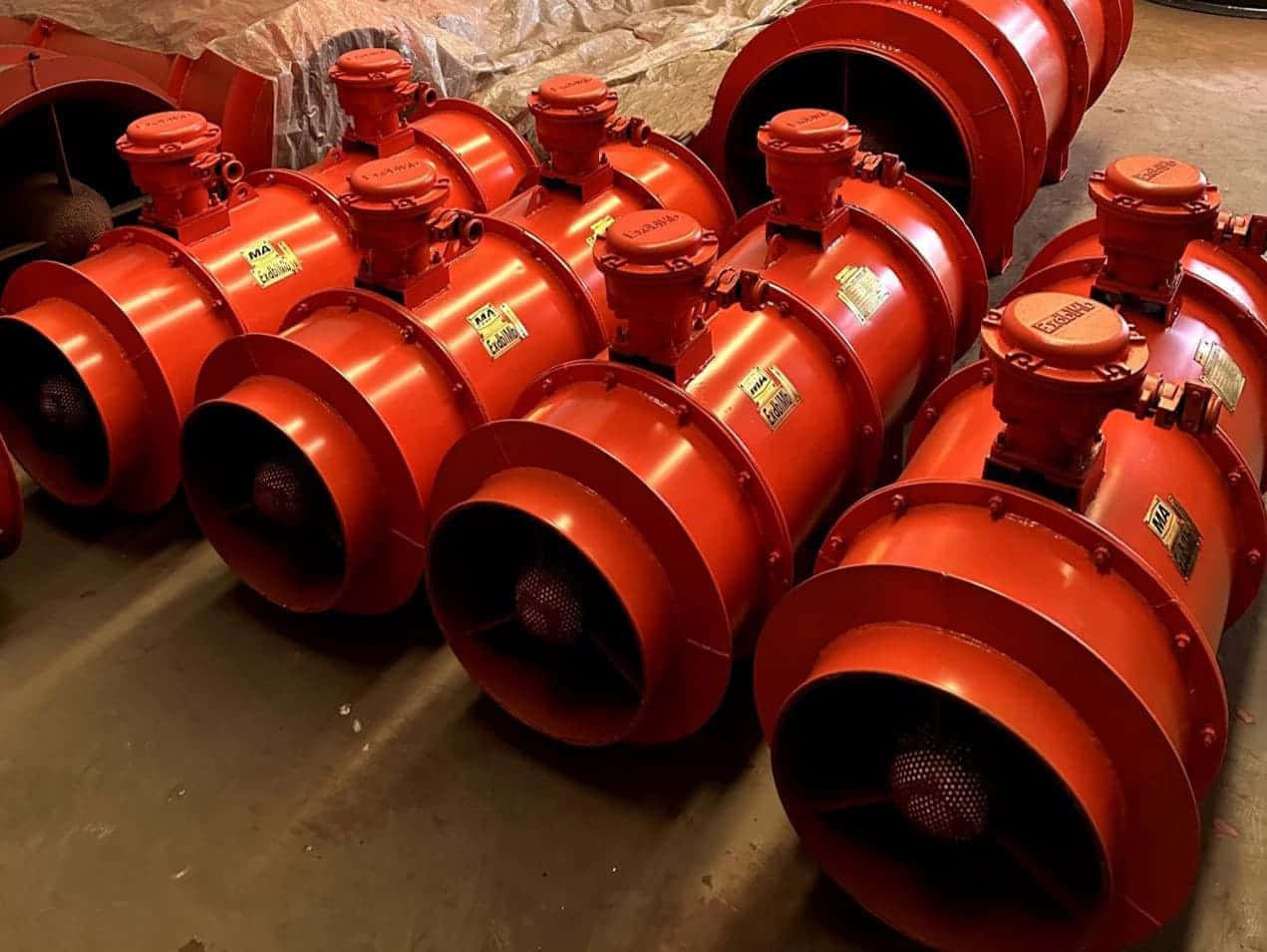
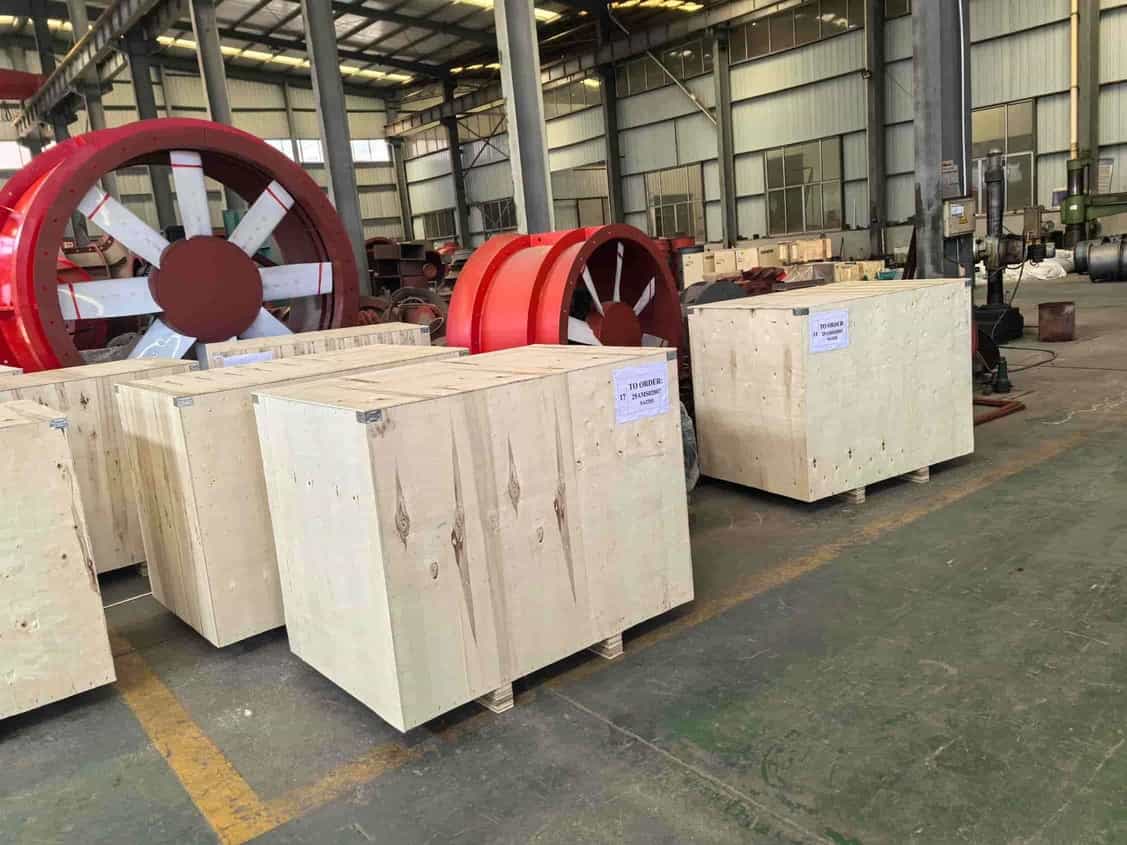
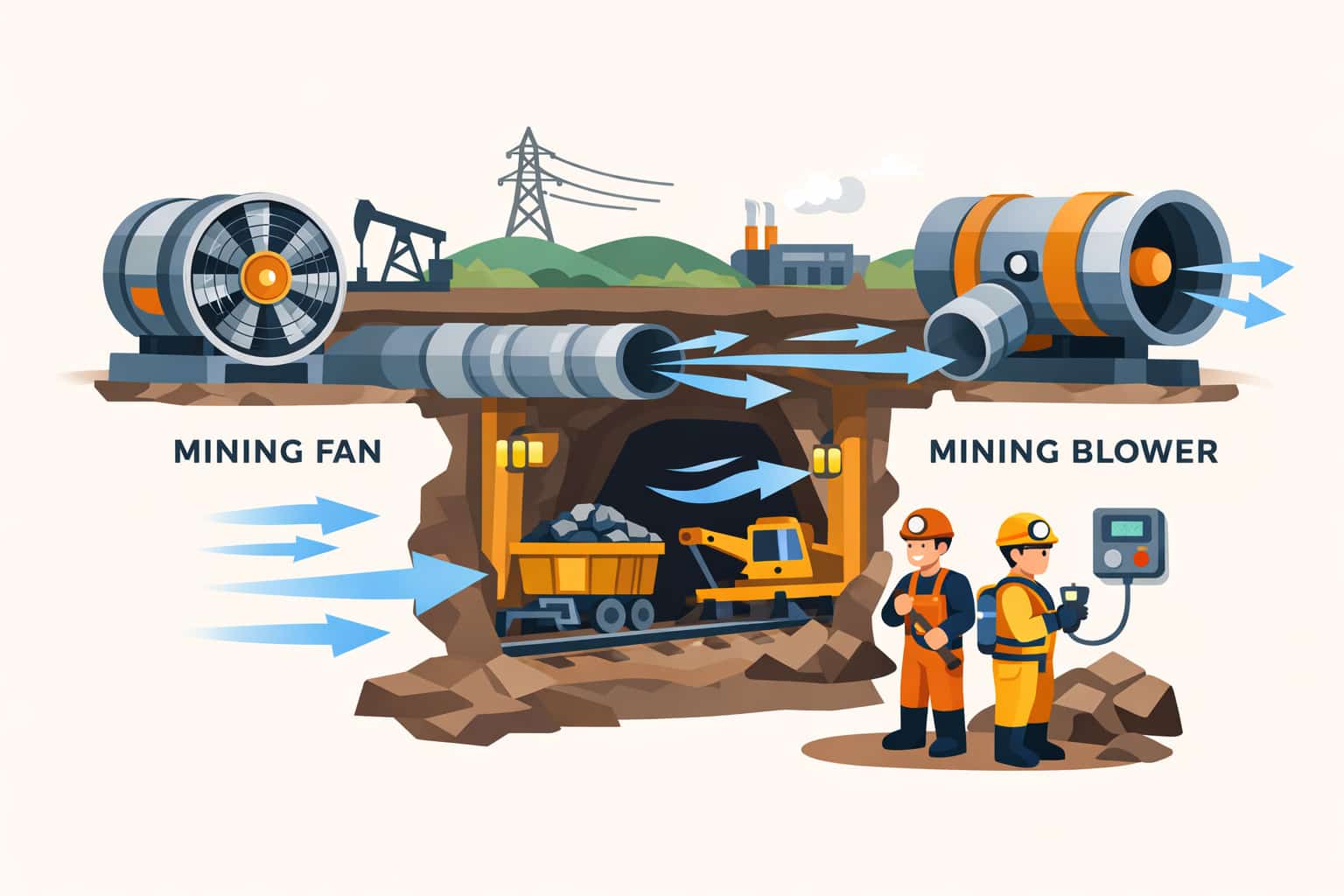
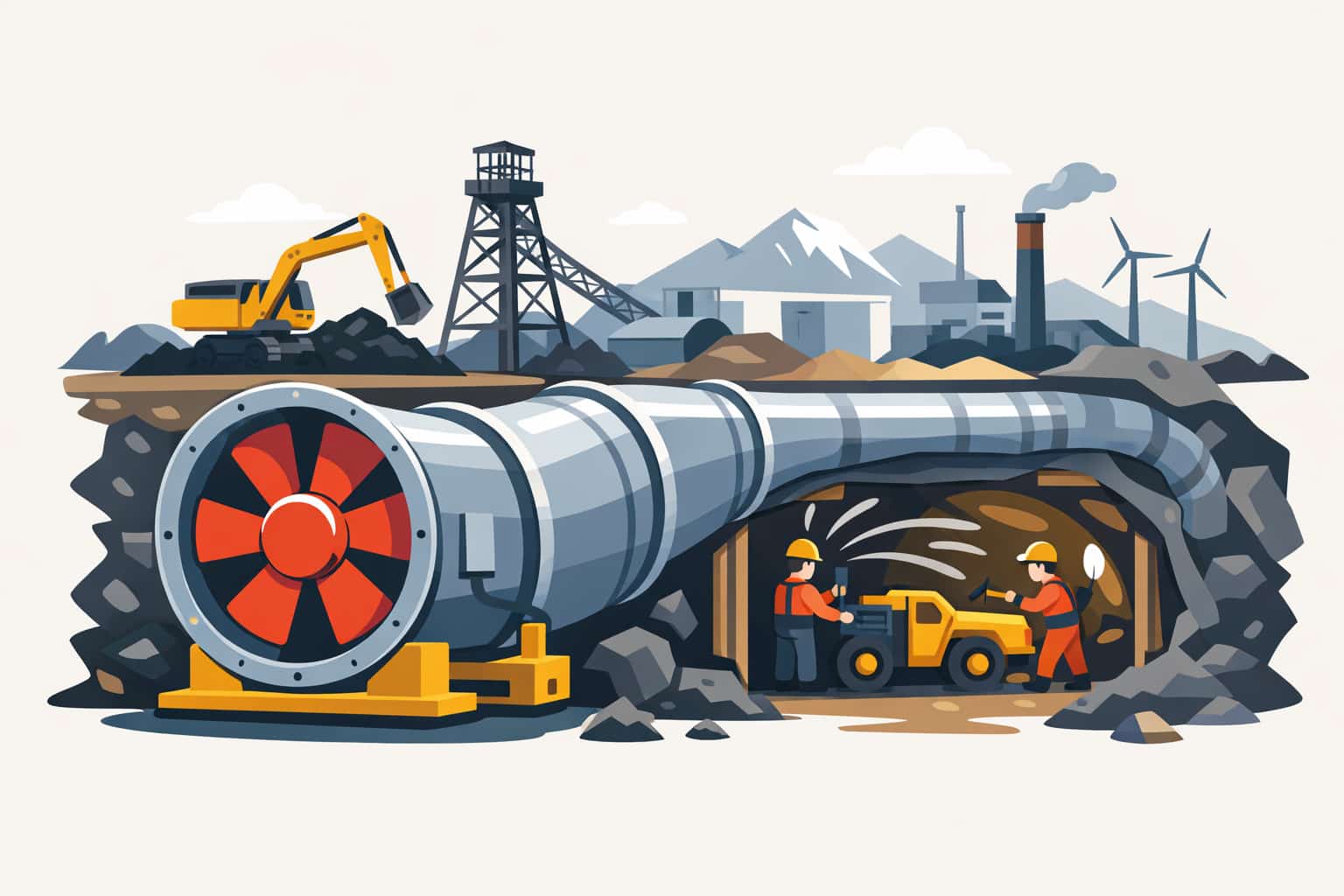

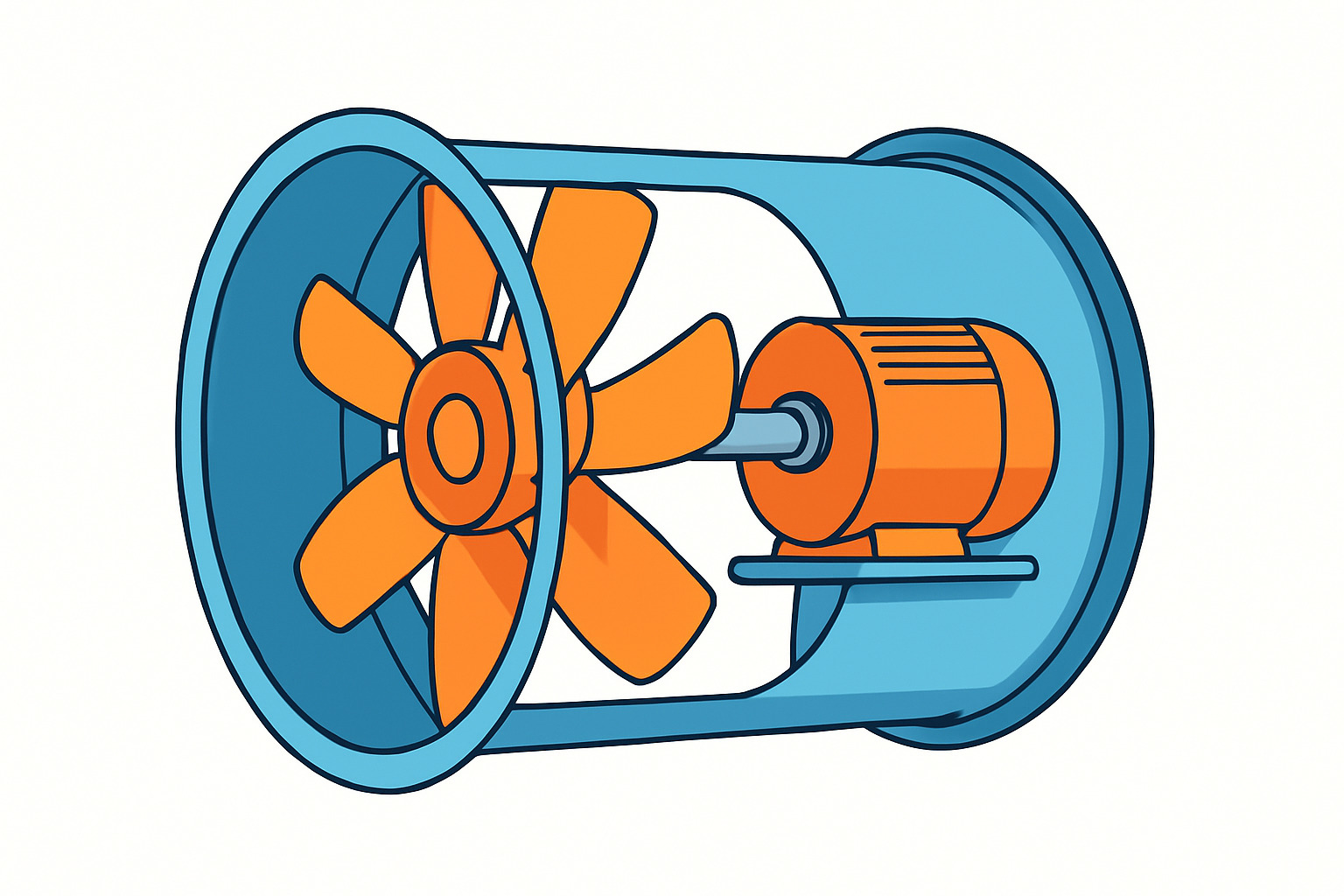
An axial fan in a shaft is a large ventilation fan installed in or on a vertical shaft so that it moves air along the shaft’s axis. In mines and tunnels, vertical shafts are key elements of the ventilation system, connecting underground workings to the surface. Axial shaft fans use rotating blades arranged around a hub to push or pull air up or down the shaft, supplying fresh air or exhausting contaminated air depending on the chosen airflow direction.
In underground mining, an axial fan mounted at the top of a main intake shaft can be used as a forcing fan, pushing fresh surface air down the shaft into intake airways. Alternatively, an axial fan on a return shaft can act as an exhaust fan, drawing contaminated air from underground workings and discharging it at surface. Axial shaft fans are often chosen because they can handle very large air volumes with relatively compact installation and good efficiency at the low to medium pressure levels typical of mine ventilation.
Structurally, a shaft axial fan usually includes a fan casing or evasee, inlet bellmouth and flow straighteners. The casing is mounted to the shaft collar or to a fan chamber at the top of the shaft. The fan impeller and hub are supported on a shaft driven by an electric motor, often through a direct drive or gearbox. Inlet bells and outlet diffusers smooth the airflow into and out of the fan, improving efficiency and reducing turbulence and noise.
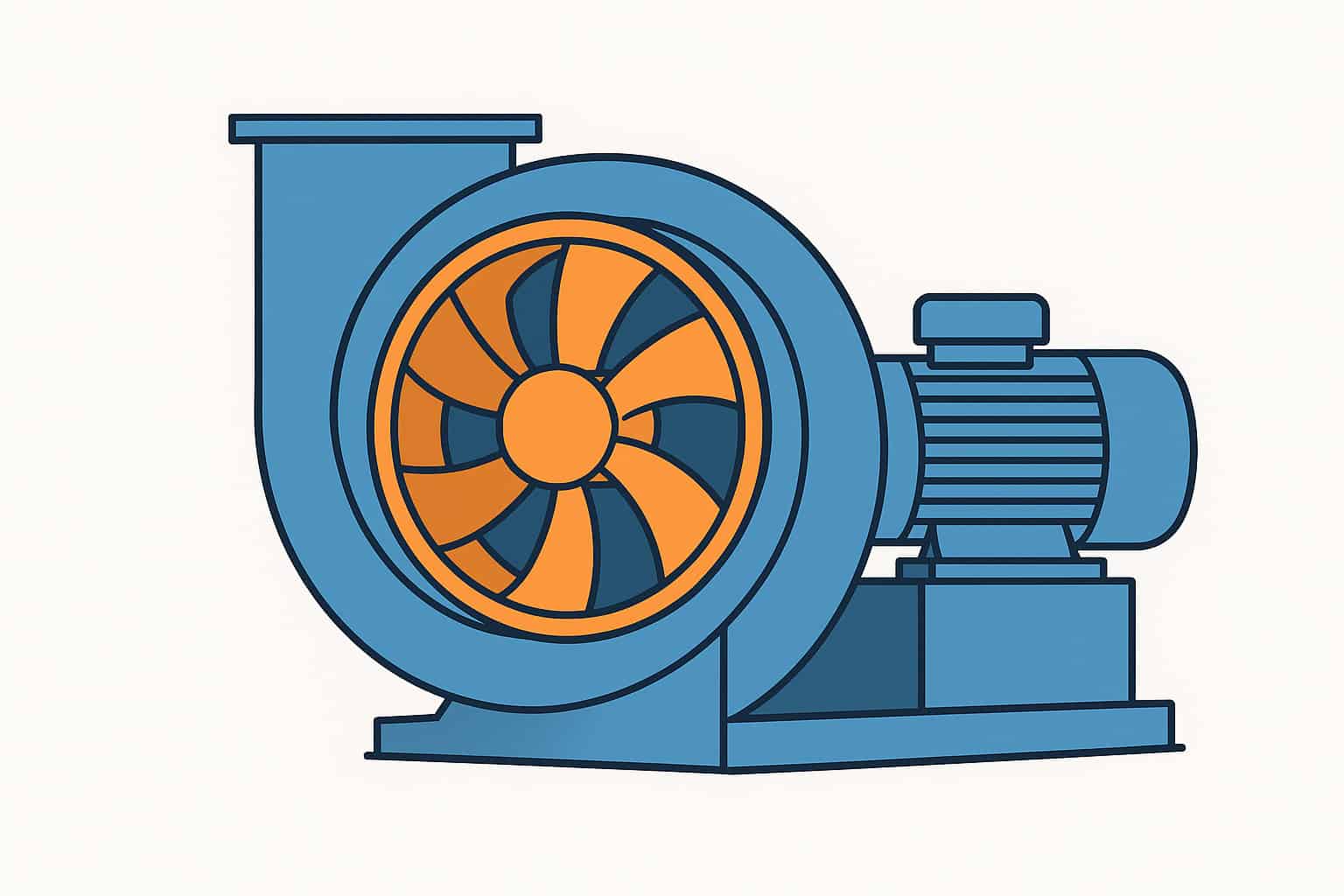
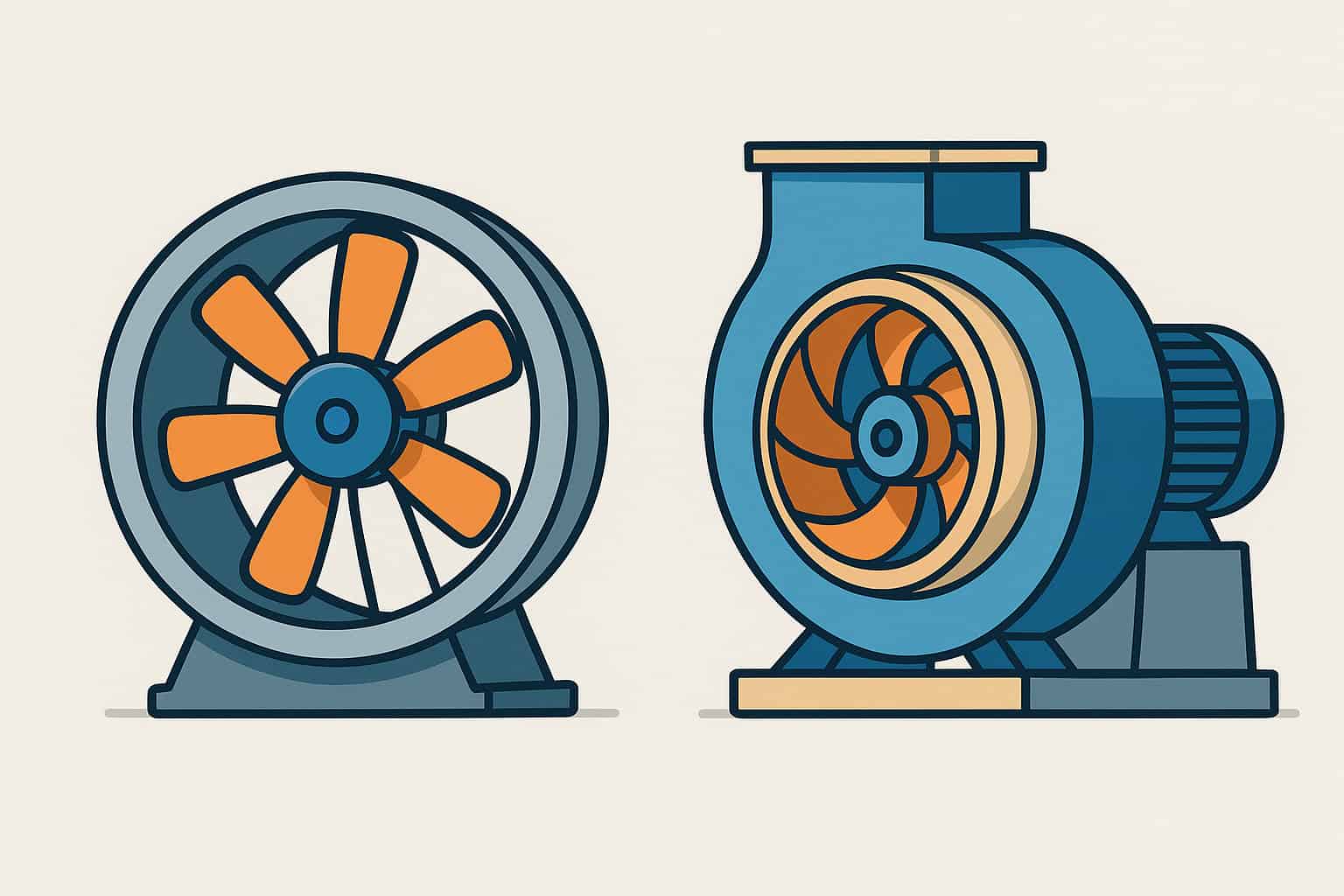
Compared with centrifugal fans, axial fans in shafts have some distinct advantages. They typically have higher efficiency at large flow, low-pressure duties, occupy less horizontal space and can be easier to install on existing shafts. They can also be fitted with variable pitch blades or variable speed drives to adjust airflow for different operating conditions, such as production ramp-up, ventilation on demand or emergency smoke extraction.
However, axial shaft fans also require careful engineering. They are sensitive to system resistance and inlet conditions, and recirculation or backflow must be avoided. Shafts must be lined and kept free of large obstructions that could disrupt airflow. Vibration, noise and structural loads on the shaft collar and surrounding rock must be considered, particularly for high-power fans. In gassy or explosive atmospheres, the fan and motor may need explosion-proof or flameproof construction and appropriate monitoring systems.
In tunnel projects, axial fans in vertical shafts are used in a similar way. They may serve as temporary construction ventilation fans or as permanent fans for road or rail operations, moving air between underground tunnels and surface ventilation buildings.
In summary, an axial fan in a shaft is a key component of many mine and tunnel ventilation systems. Installed on intake or exhaust shafts, it moves large volumes of air along the shaft axis to supply fresh air or remove contaminated air, working together with underground airways and other fans to maintain safe conditions.