
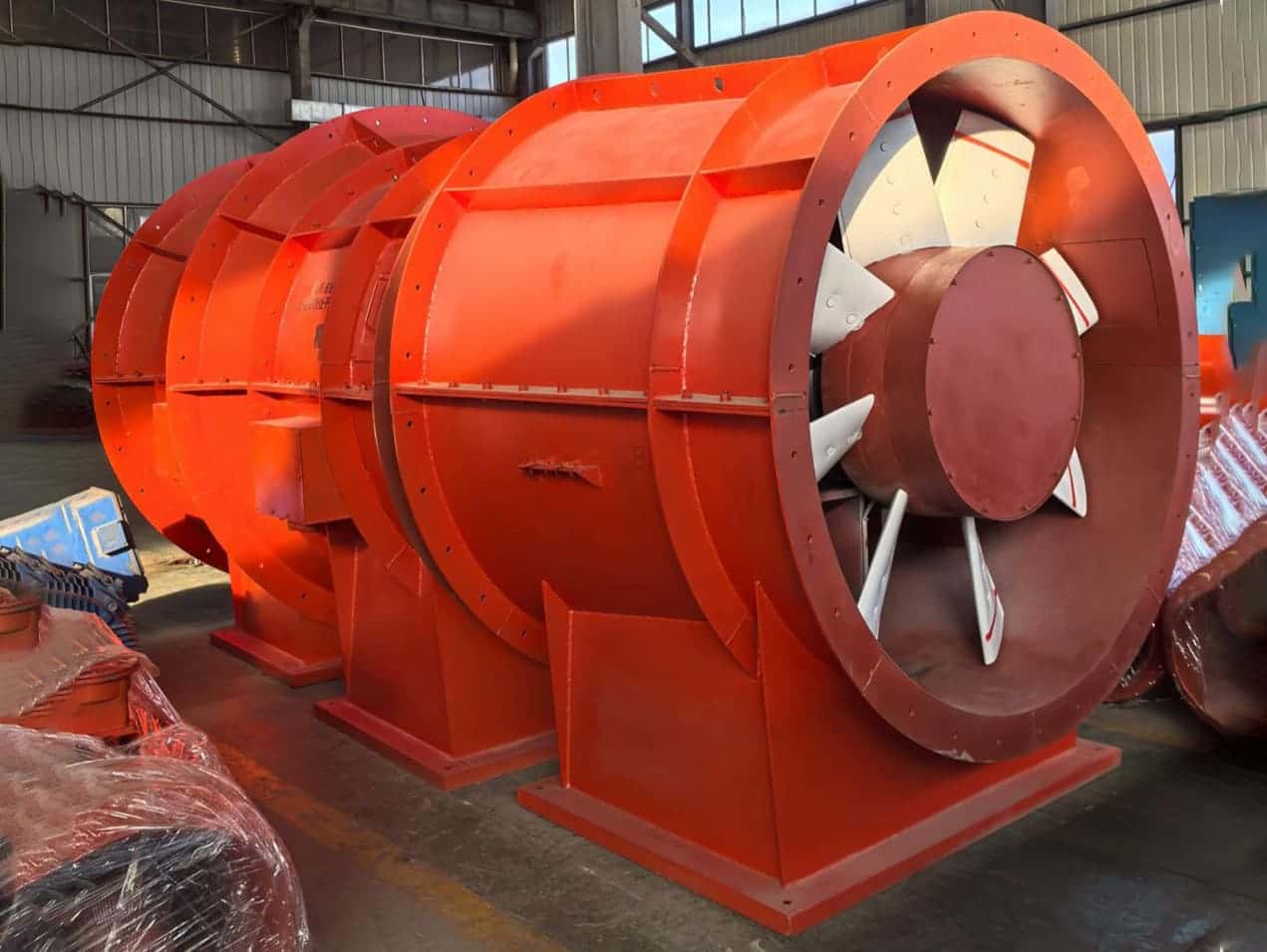
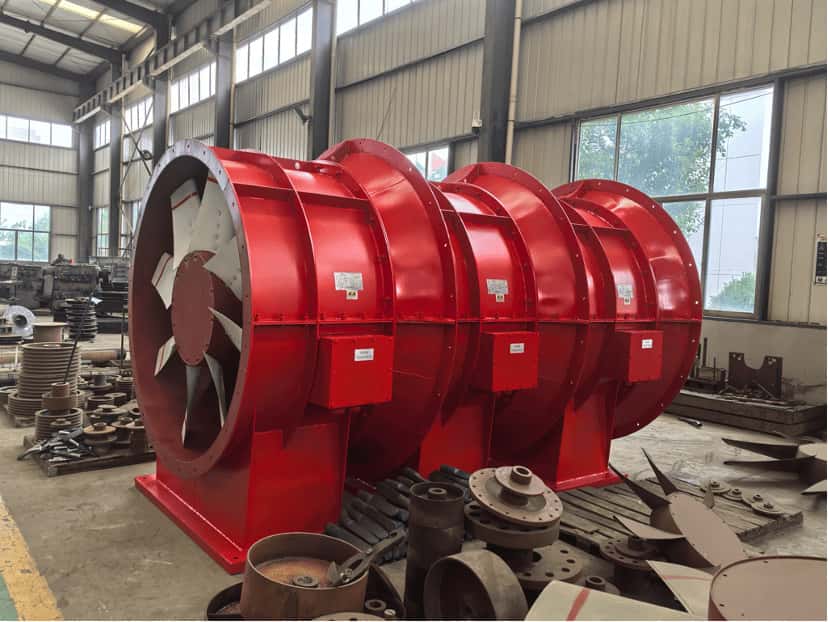
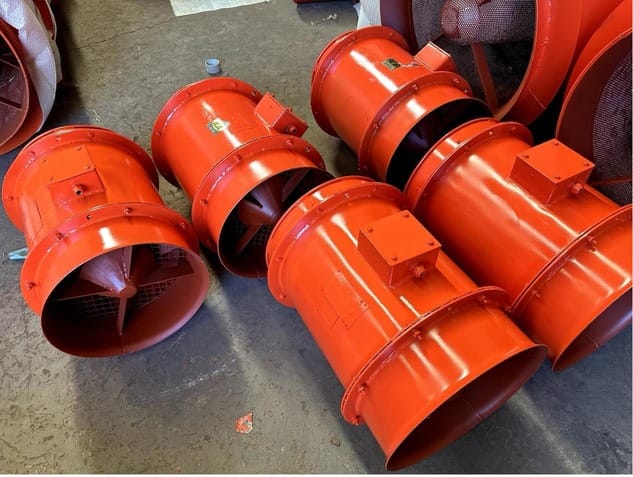
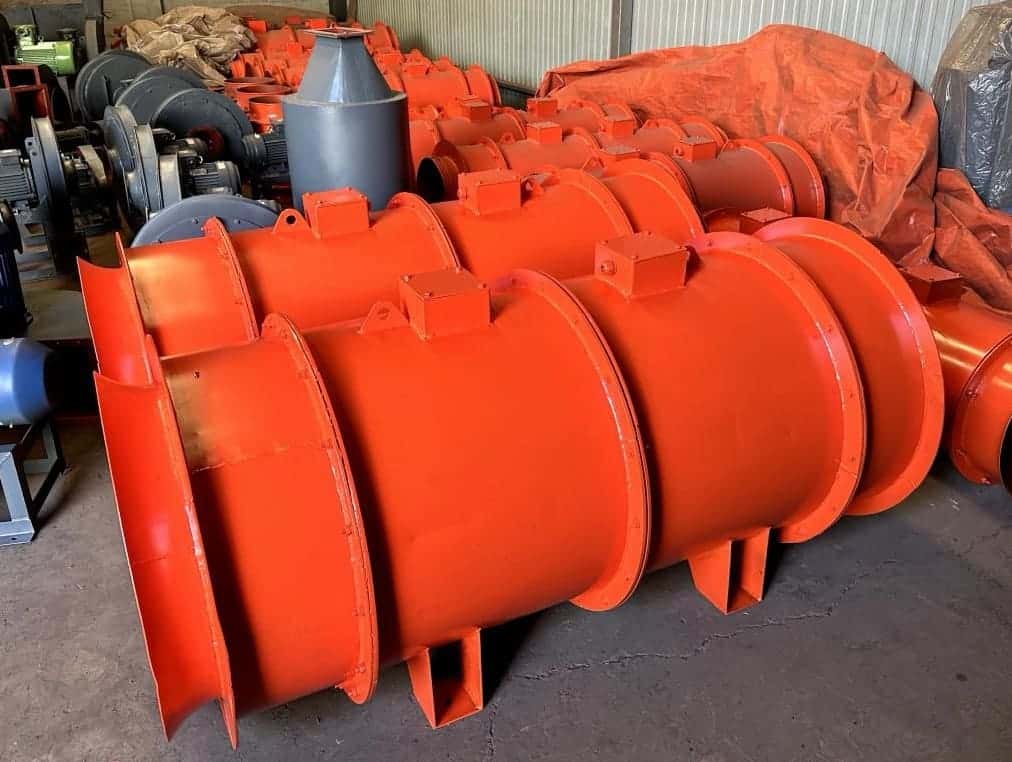
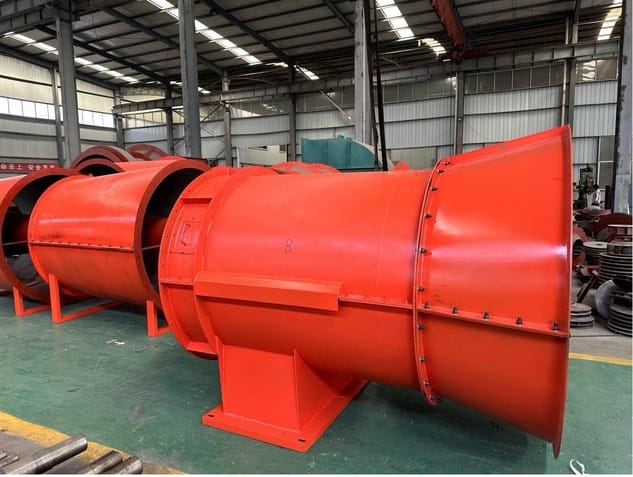
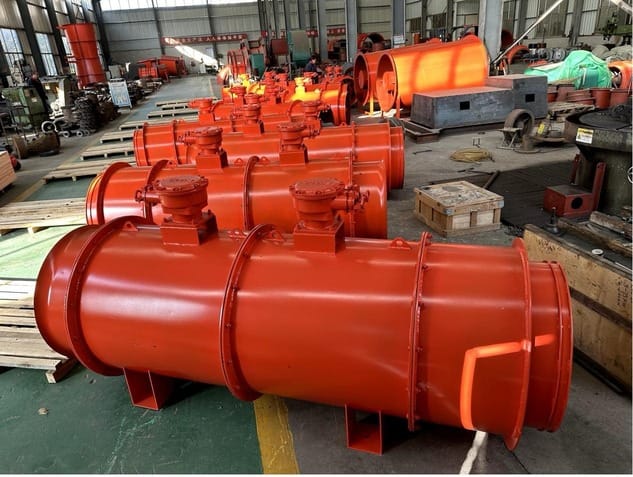
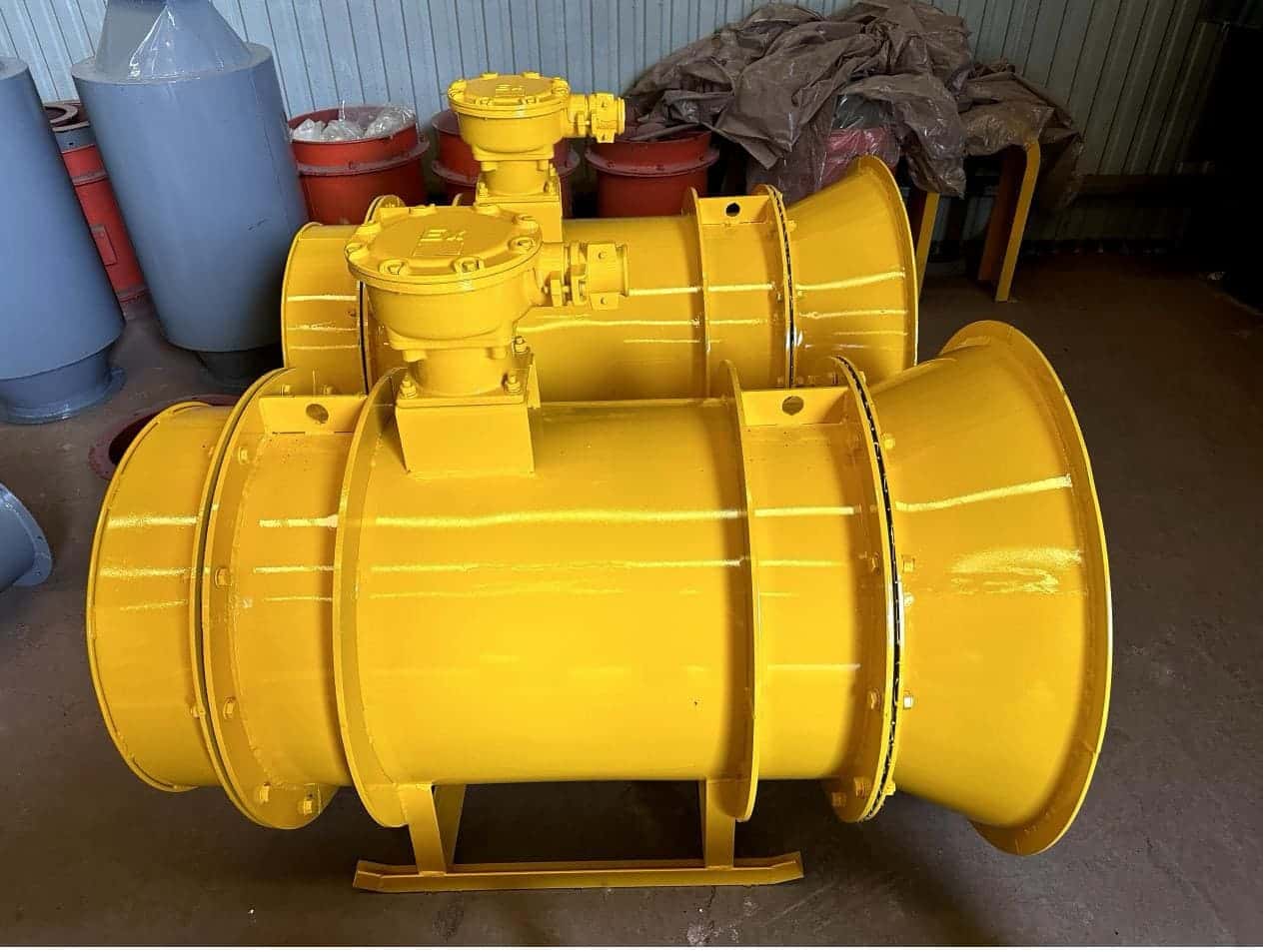
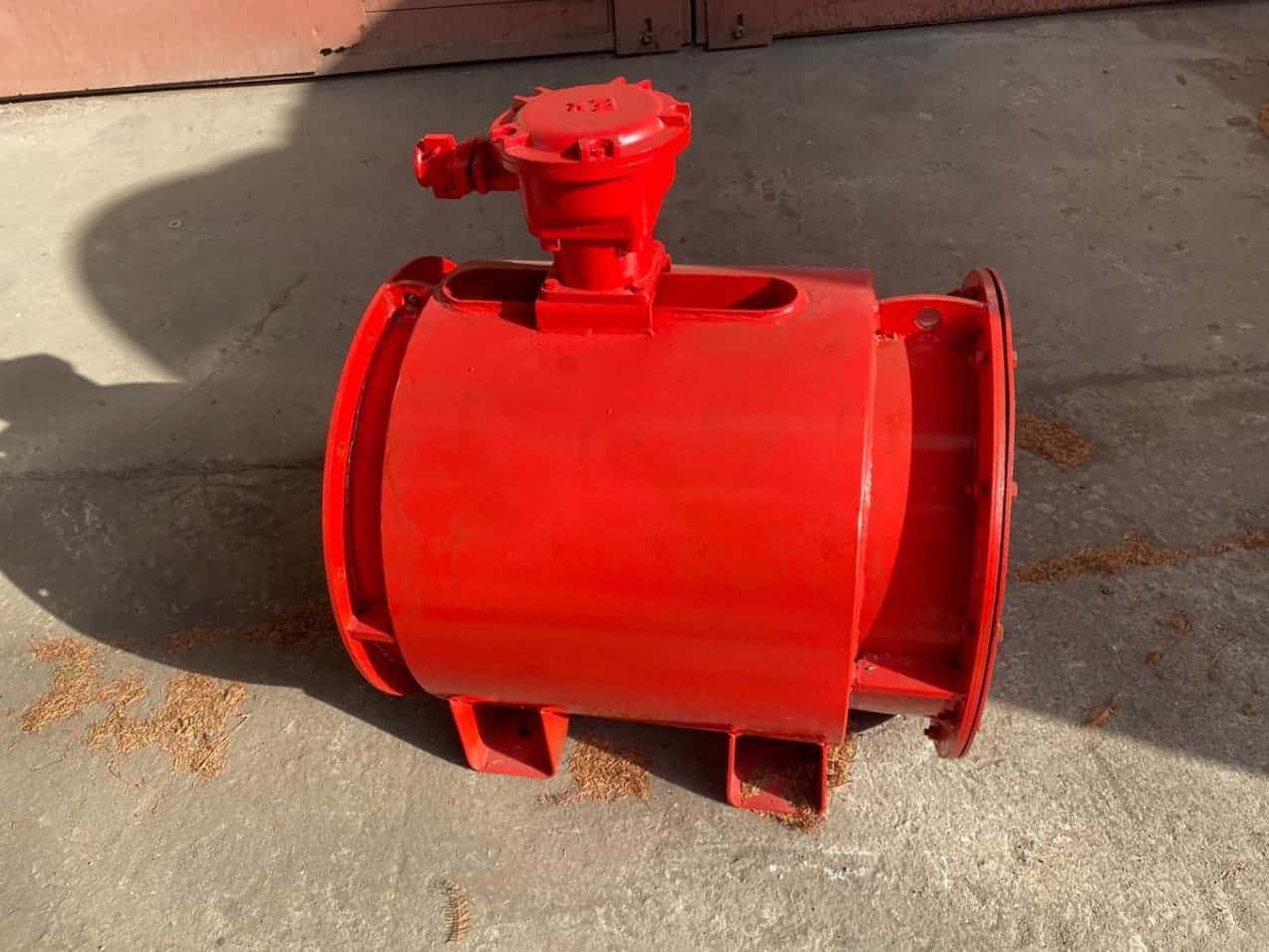
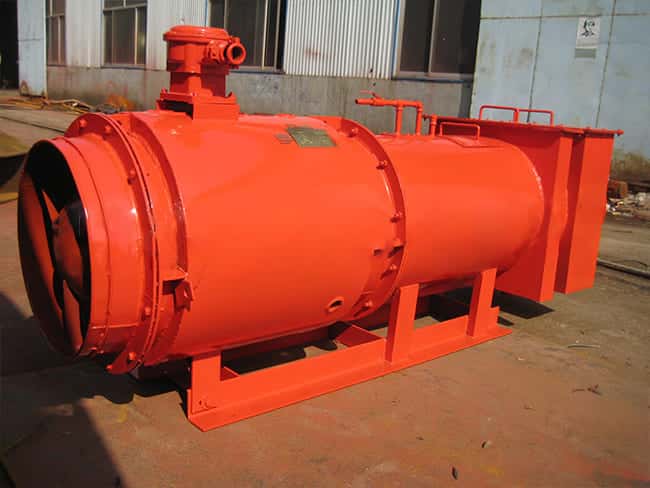
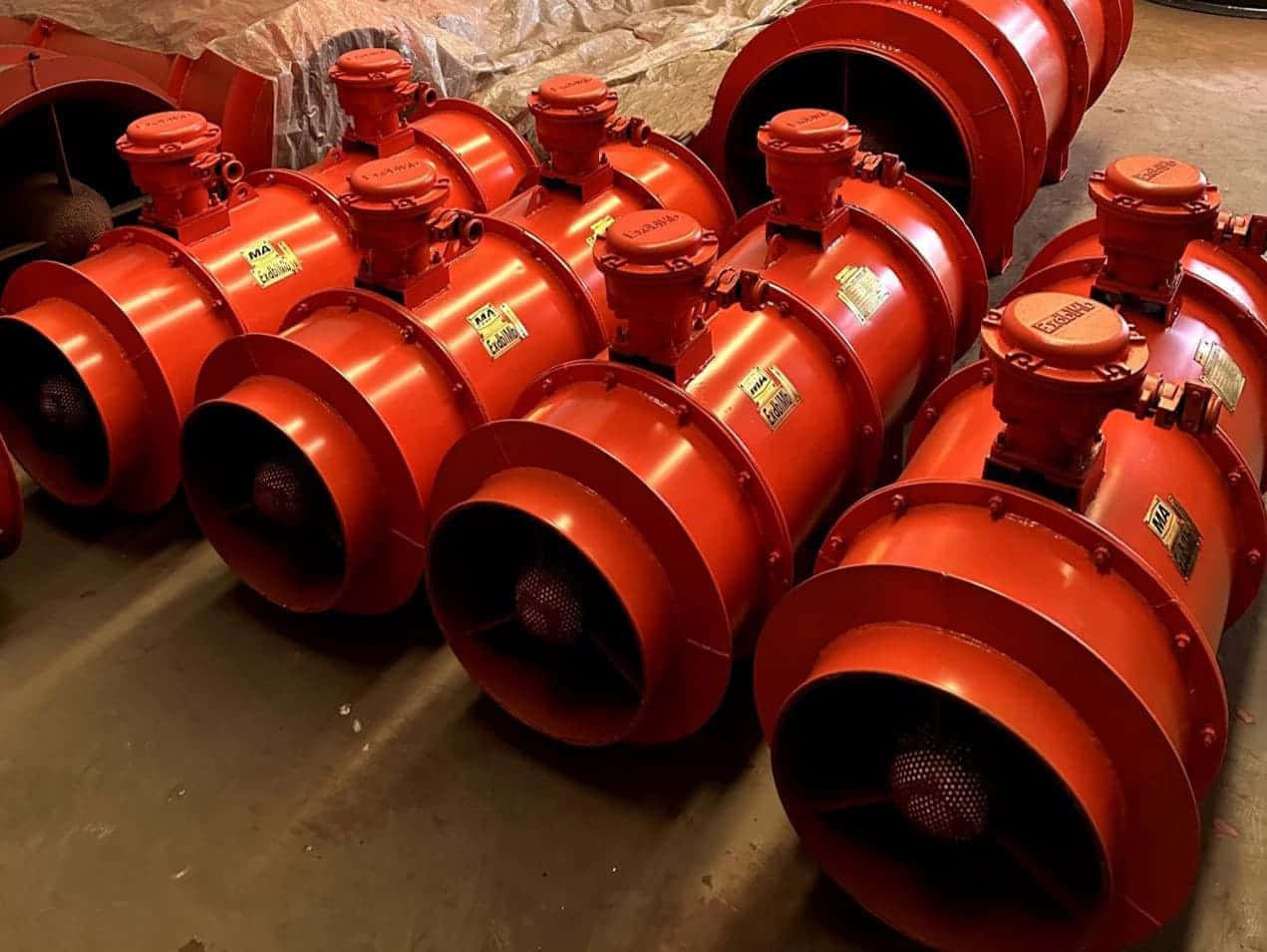
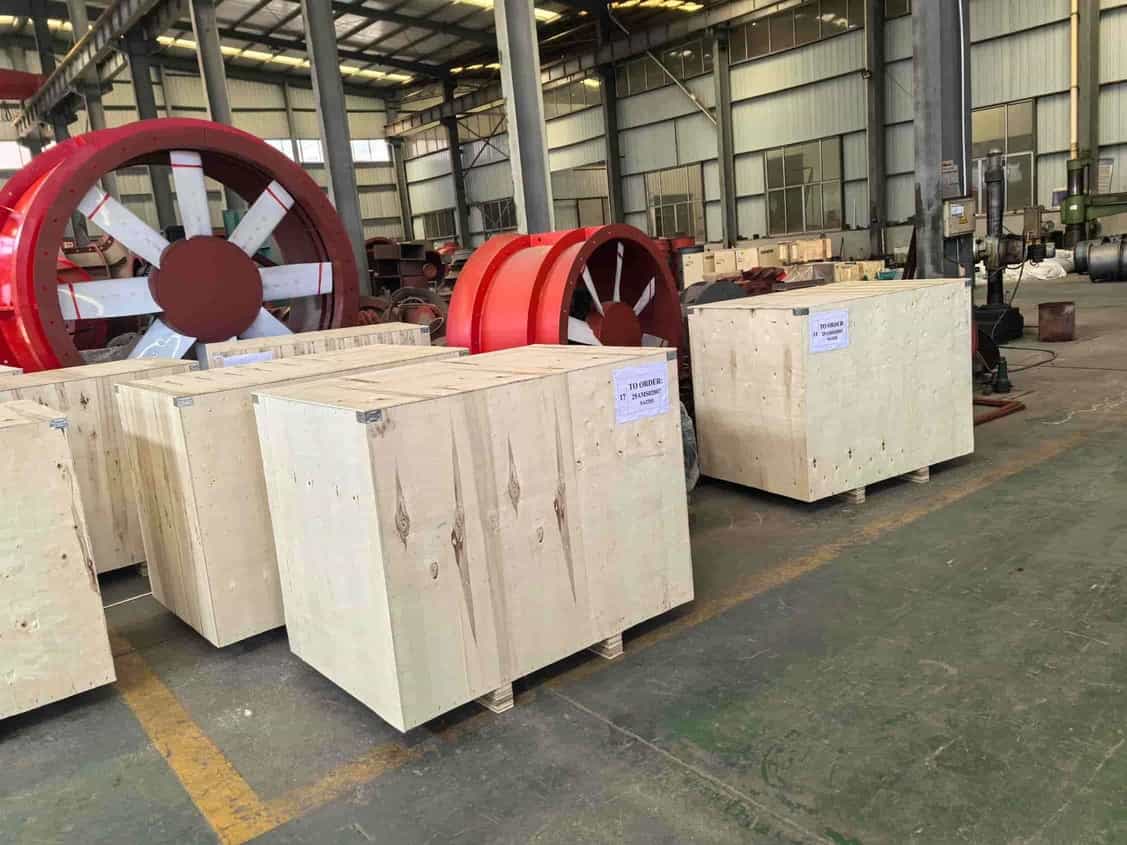
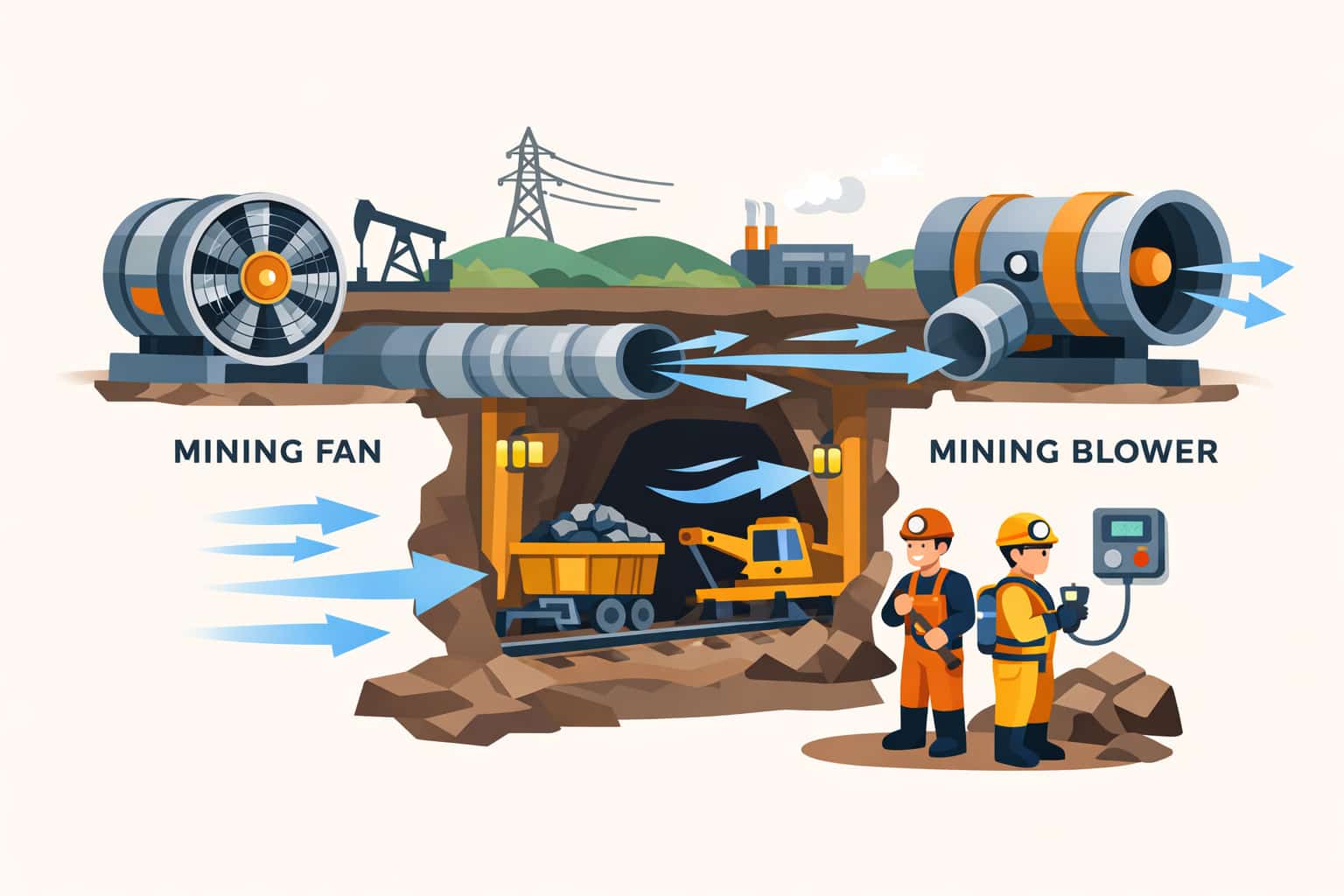
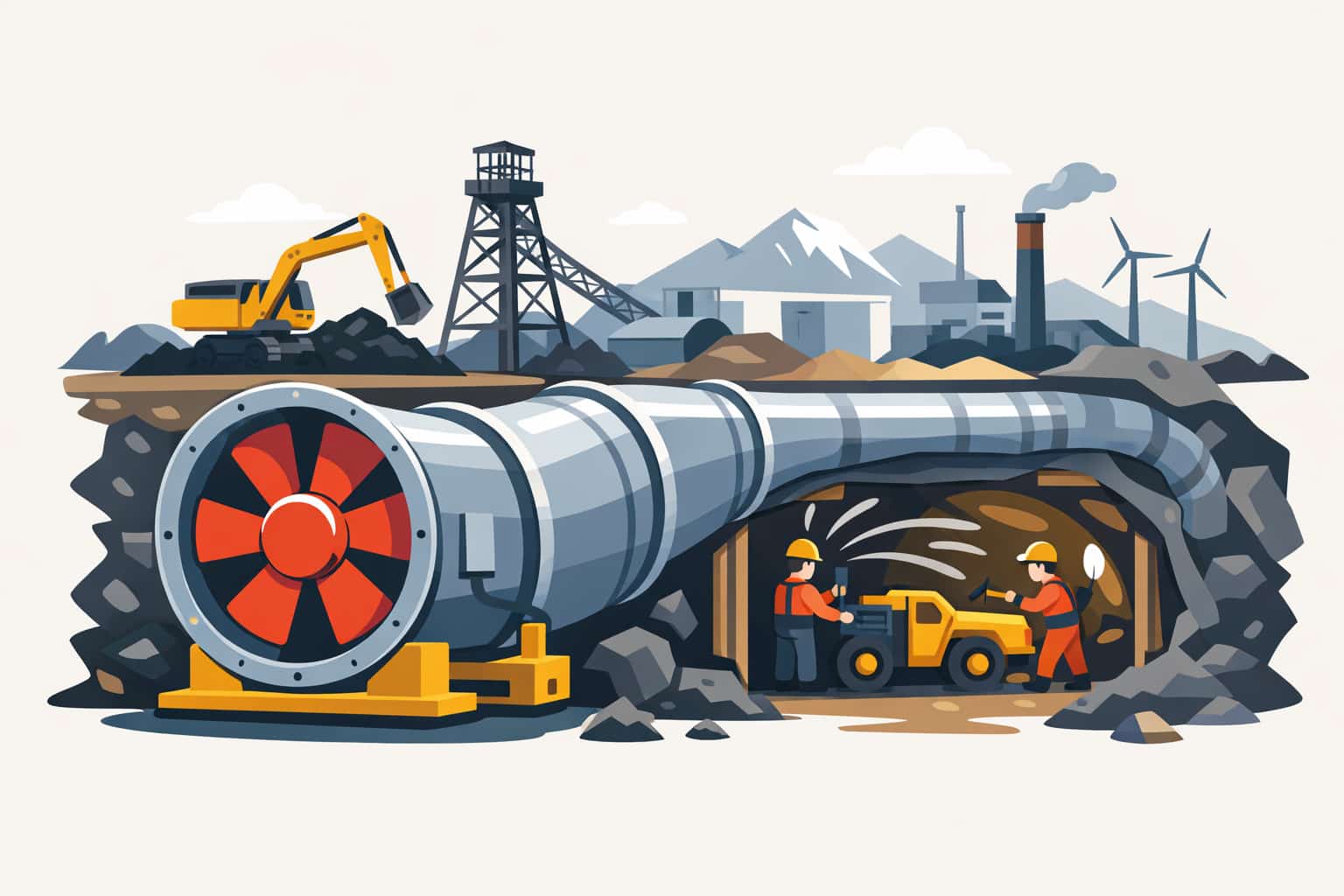

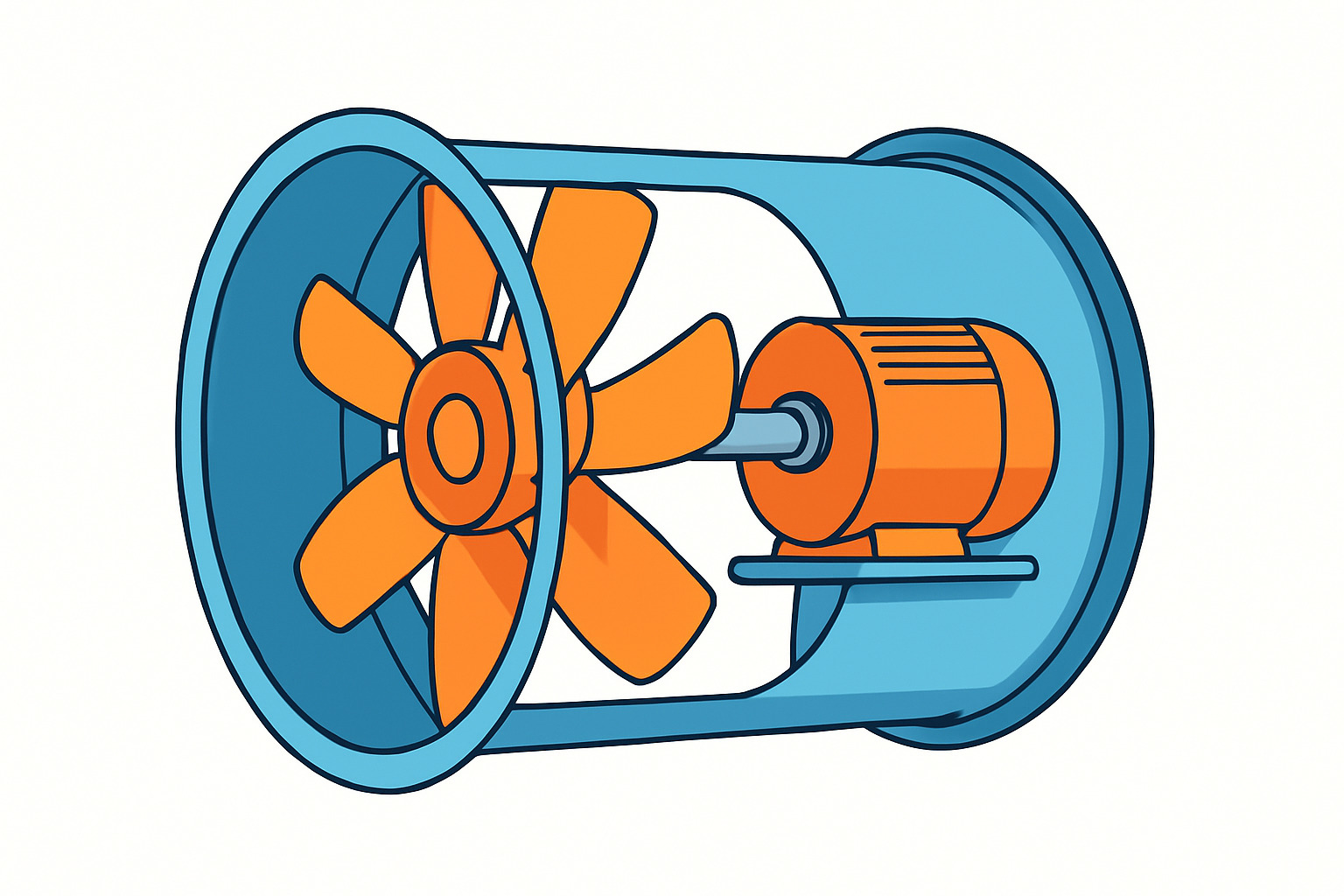
An axial flow fan in mines is a type of ventilation fan that moves air parallel to the fan shaft, similar to a propeller. Axial mining fans are widely used in underground operations because they can handle very high airflow rates efficiently, making them ideal as main fans at shafts and portals, as well as auxiliary fans supplying headings and development drives.
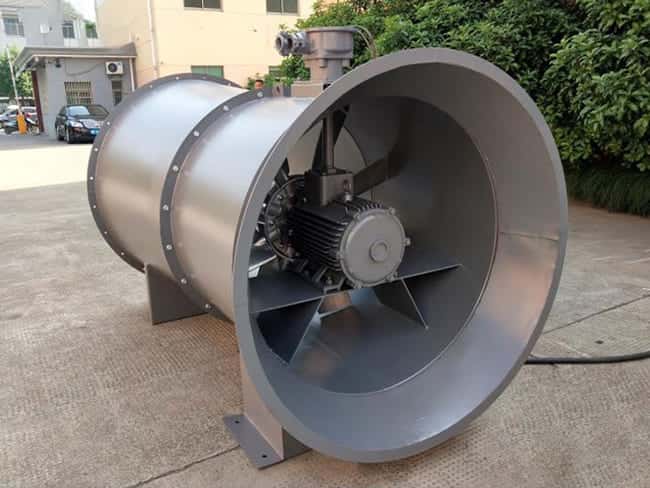
Structurally, an axial flow fan consists of a cylindrical casing, an impeller with multiple blades, and a hub connected to a motor. When the blades rotate, they impart energy to the air, causing it to flow in the axial direction through the fan. The blade shape, angle, and number of blades are optimized so that the fan delivers the required volume and pressure with good efficiency and acceptable noise levels. In mining service, axial fans are usually rugged, with heavy-duty casings and corrosion-resistant coatings to withstand dust, moisture, and vibration.
In many mines, large axial flow fans are installed as main ventilation fans at downcast or upcast shafts. They can be configured as single or multi-stage units, with options such as adjustable-pitch blades to fine-tune performance. Their main role is to generate the pressure difference between intake and return airways that drives airflow through the entire mine. Because main fans often run 24/7, efficiency and reliability are critical to keep energy costs and downtime under control.
Smaller axial flow fans are widely used as auxiliary fans to ventilate headings, blind ends, and long development drives. Paired with flexible ducting, these fans push clean air to the face (forcing ventilation) or pull contaminated air away (exhaust ventilation). Their compact design, relatively low weight, and high airflow capacity make axial fans practical for frequent relocation as headings advance.
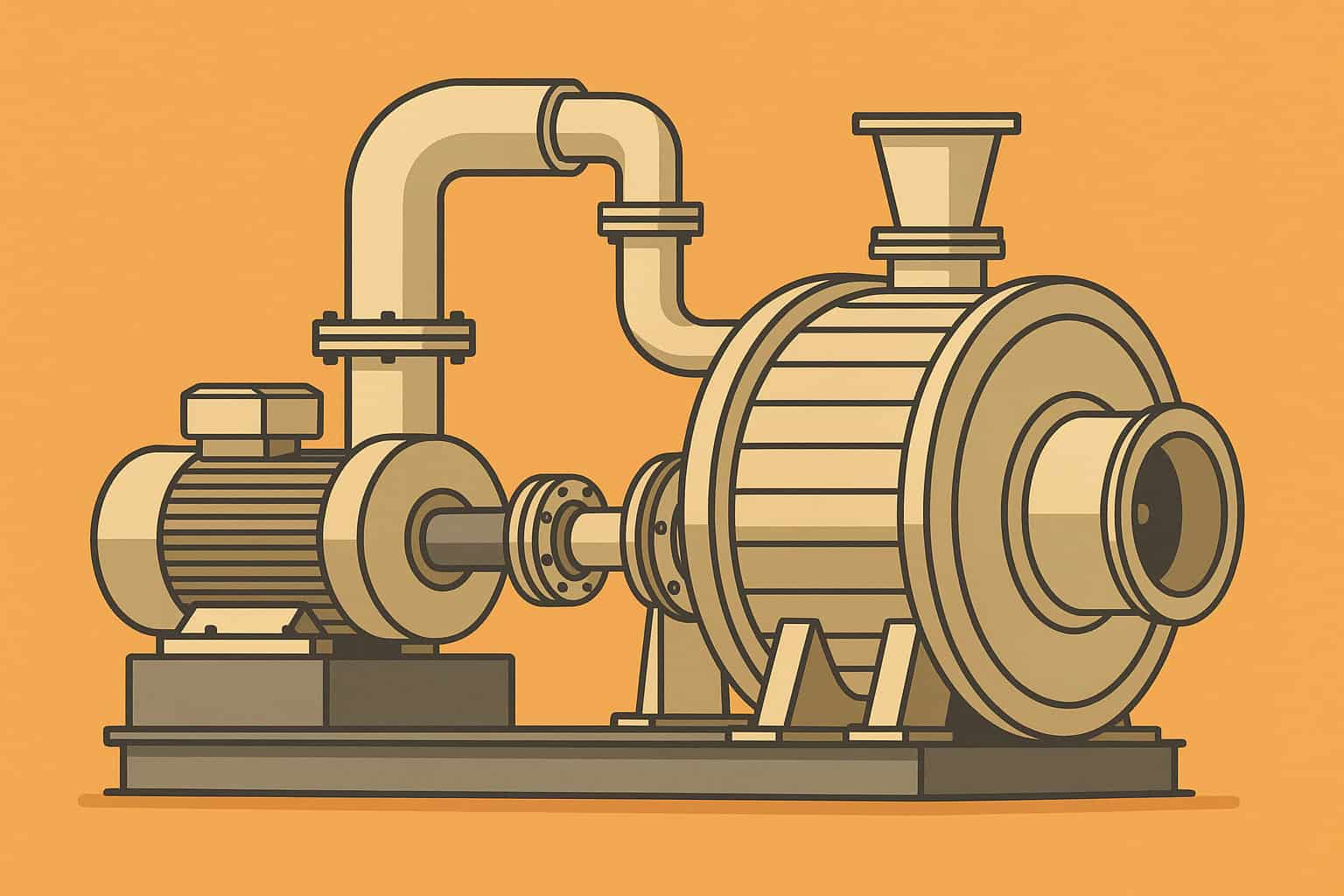
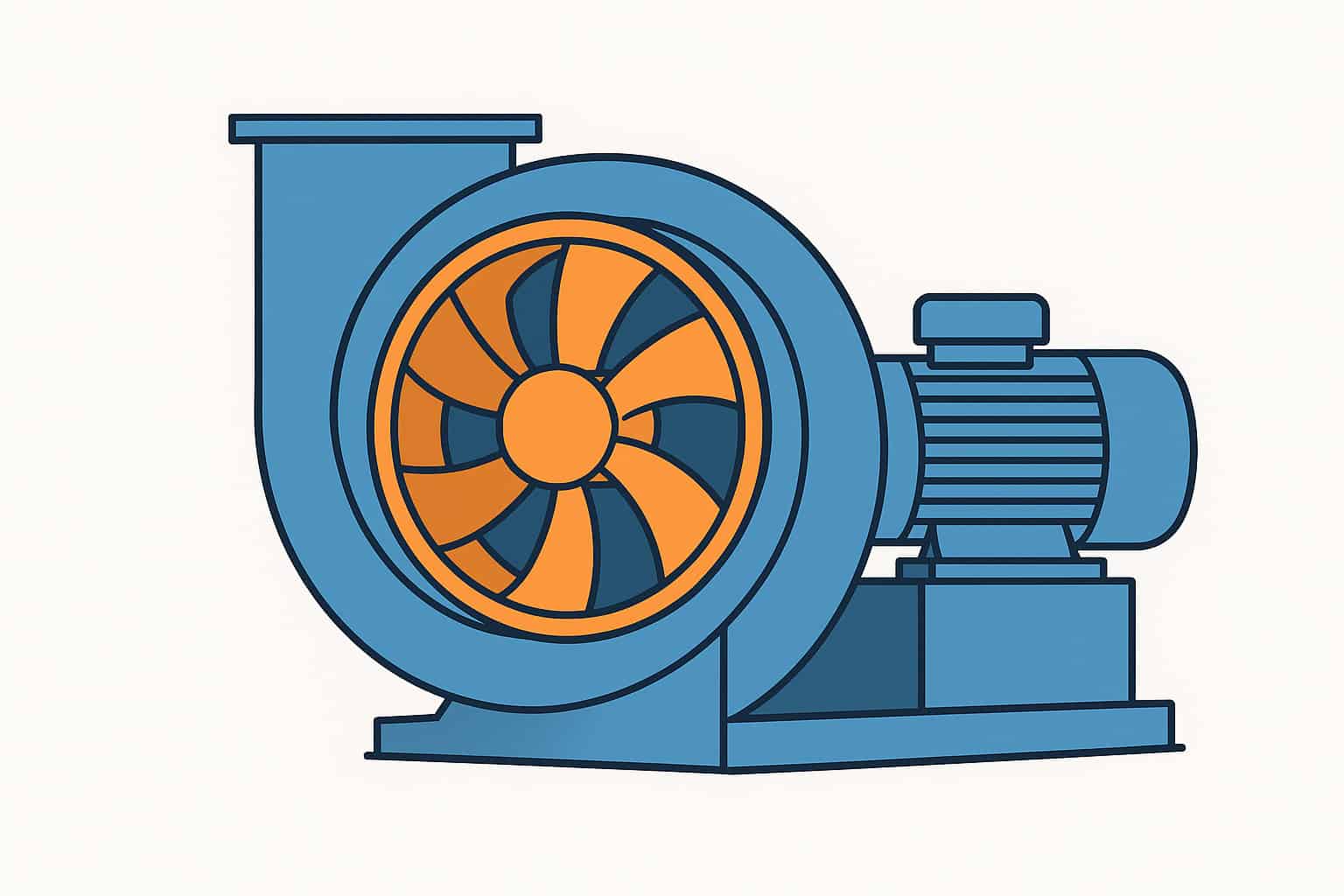
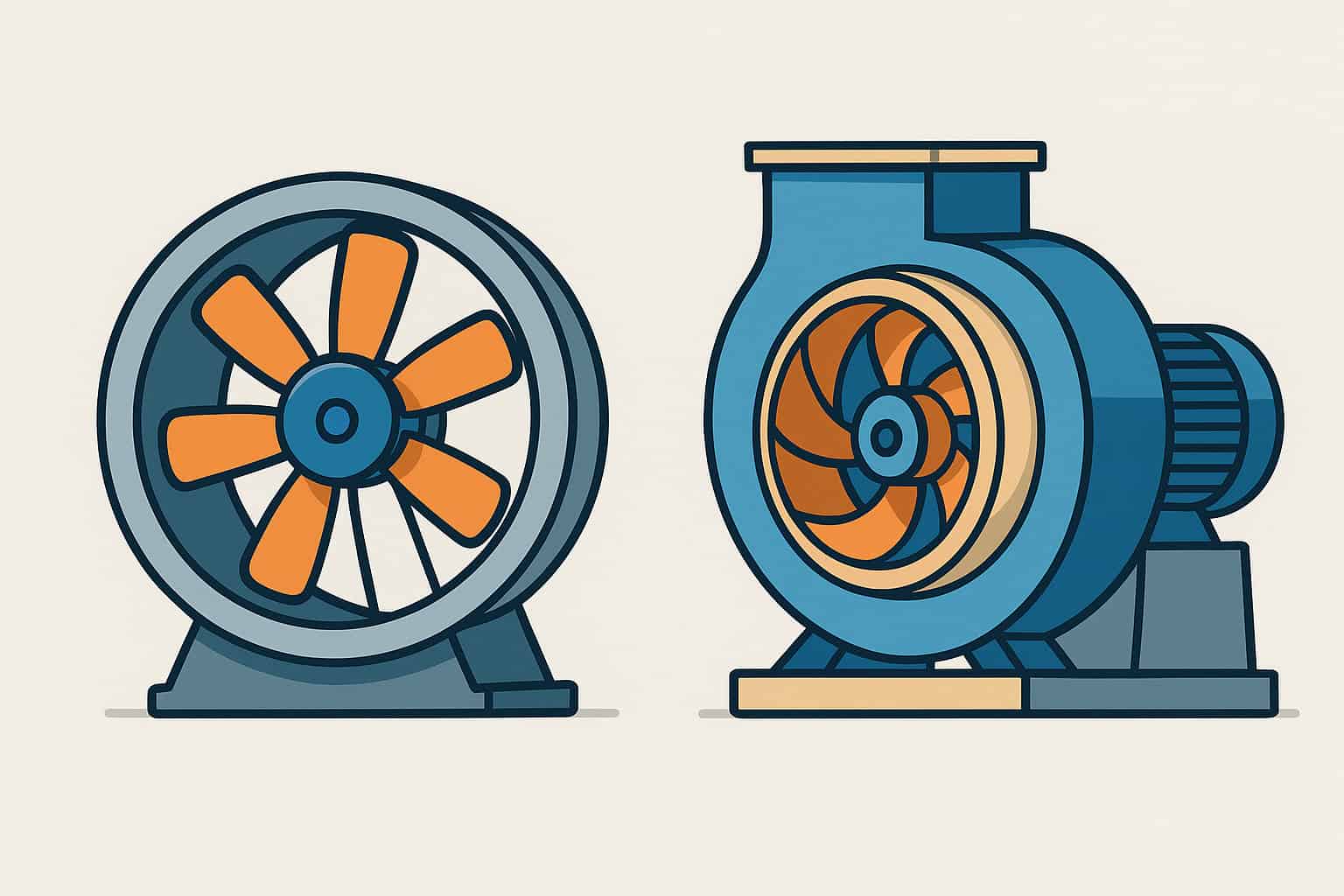
Compared with centrifugal fans, axial flow fans typically provide higher airflow at moderate pressures, which suits the long, relatively open airways and large cross-sections common in main mine ventilation. Centrifugal fans, on the other hand, are often chosen where higher static pressure is required, such as long duct systems with filters or scrubbers. Many mines use both types together: axial fans for main or shaft ventilation, and centrifugal fans for specific high-resistance circuits in plants or dust collection systems.
Axial flow fans in mines must meet specific safety and performance requirements. In gassy coal or metal mines, explosion-proof motors and flameproof housings may be required. Fans may also be designed for reverse operation in emergency modes, for example to assist smoke control. Monitoring of vibration, temperature, and airflow ensures that axial mining fans continue to operate within their design envelopes over long service lives.
In summary, the axial flow fan in mines is a propeller-type ventilation fan used extensively as both main and auxiliary equipment. Its ability to move large volumes of air efficiently makes it a cornerstone of modern underground mine ventilation systems.