












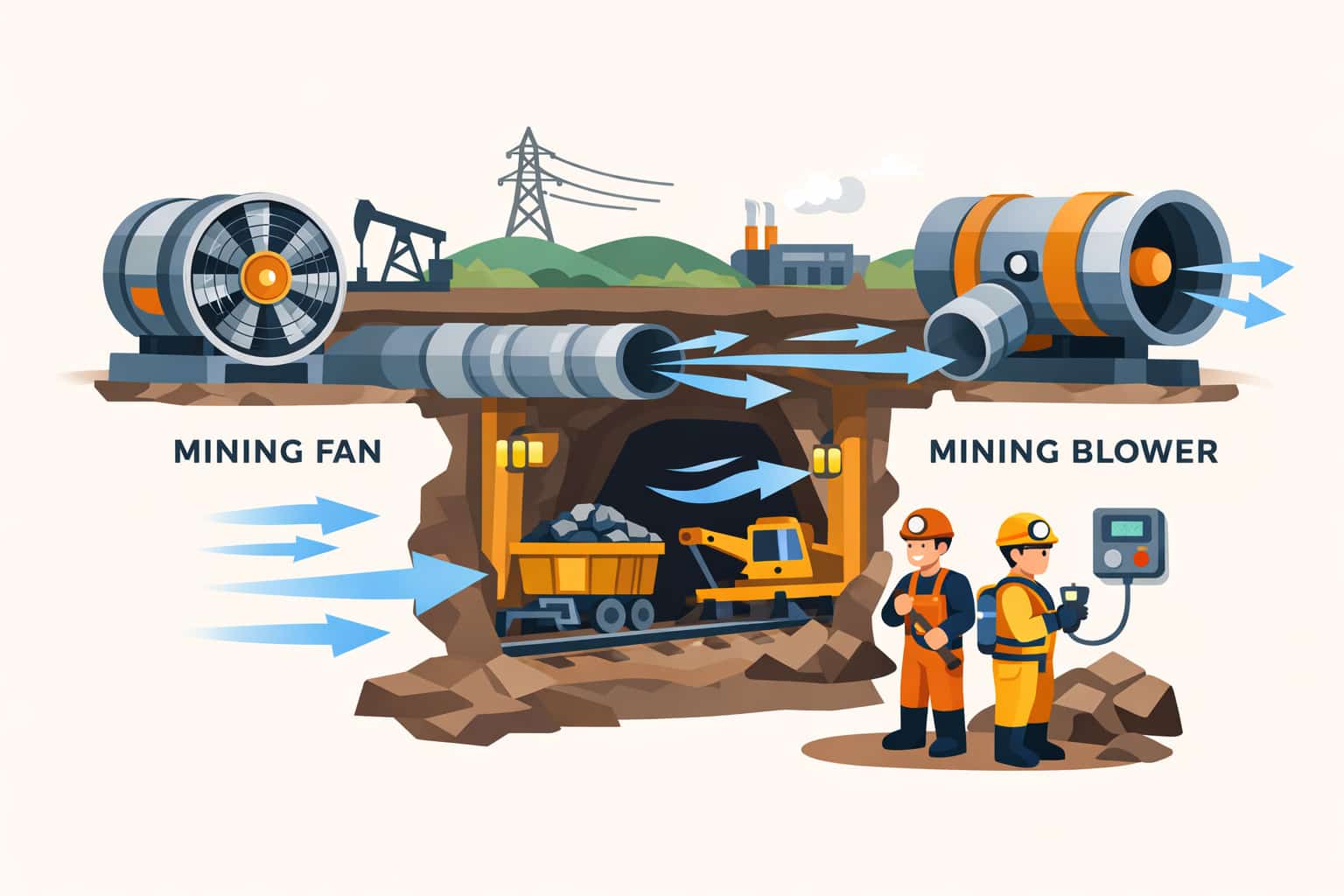
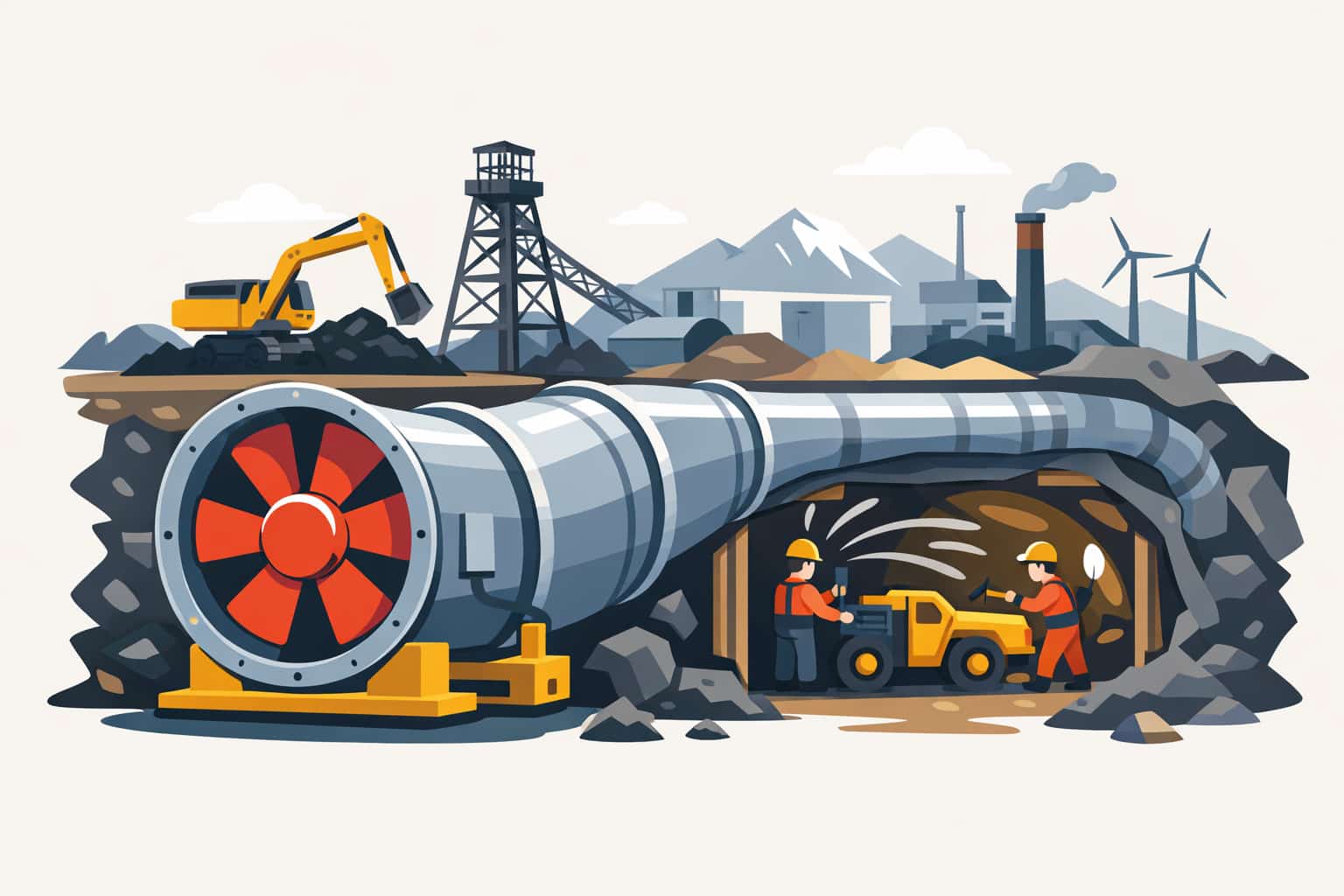

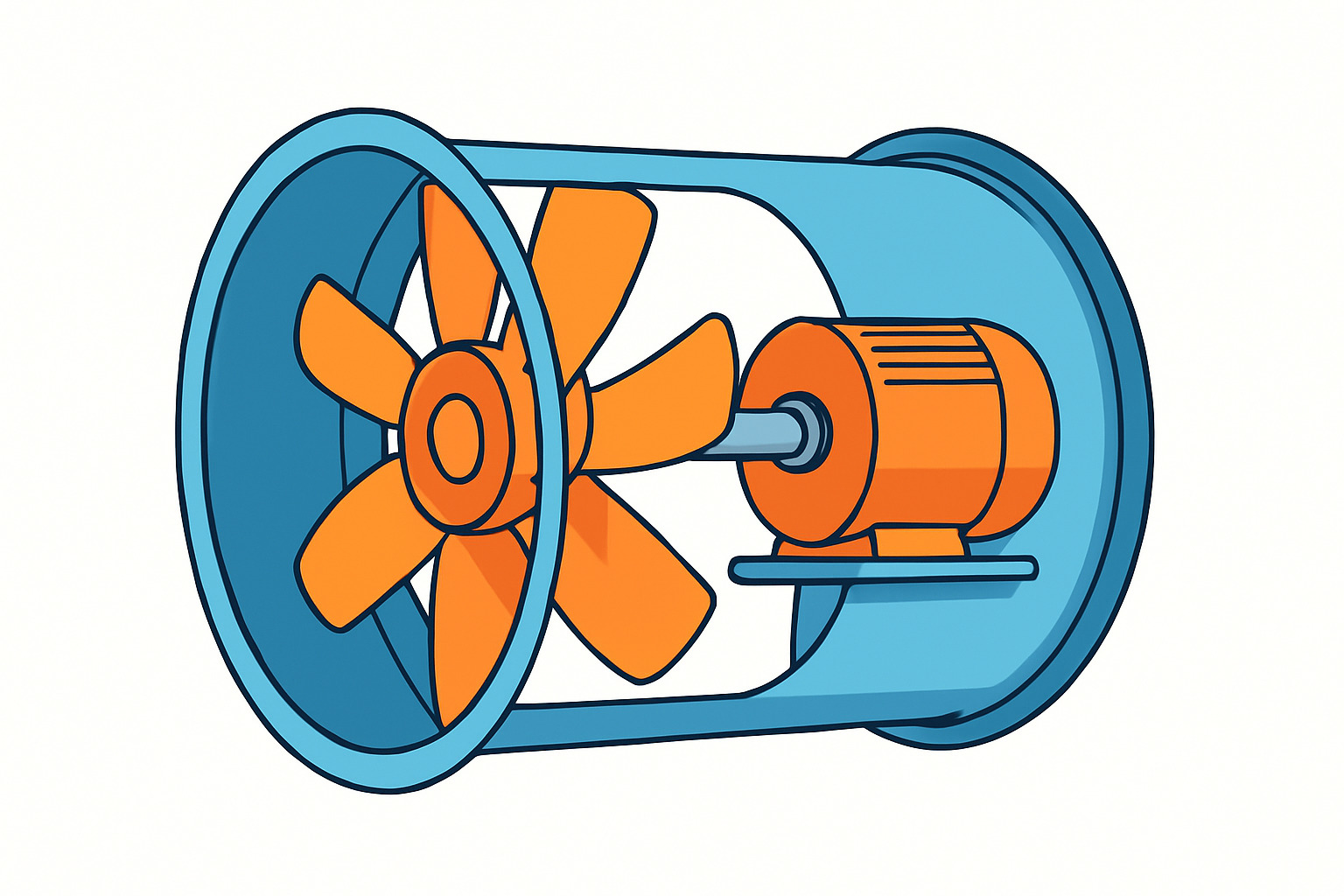
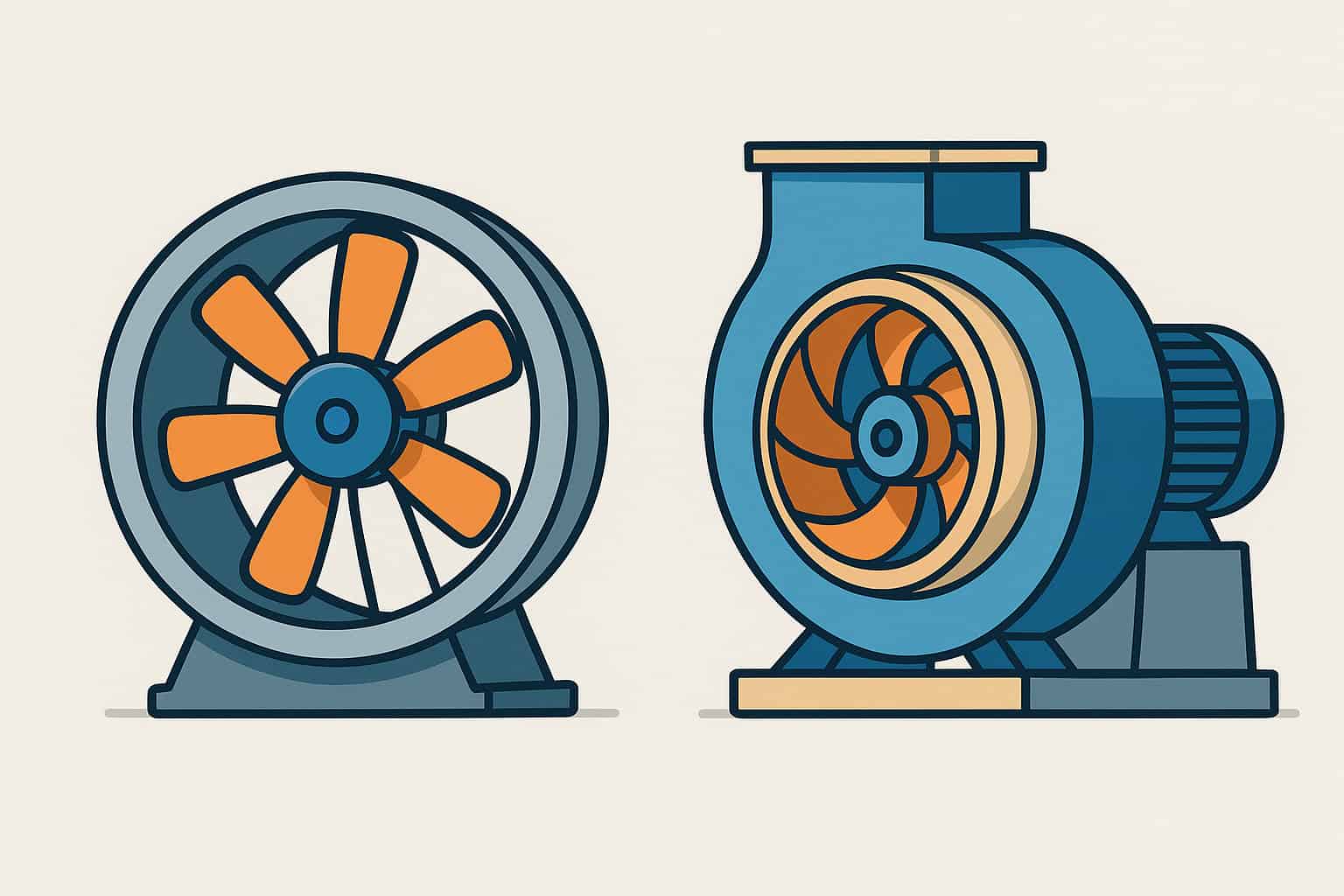
The difference between an axial fan and a radial fan lies in the direction of airflow and the pressure capability. Axial fans move air parallel to the shaft, while radial fans (a form of centrifugal fan) move air outward at 90 degrees to the shaft. This fundamental difference leads to distinct performance characteristics and typical uses in industrial and mining ventilation.
An axial fan works like a propeller. Air enters from one side, flows along the axis of rotation and leaves from the opposite side in a straight-through path. Axial fans are particularly good at delivering high airflow at low to moderate static pressure. They are the workhorses of tunnel and shaft ventilation, cooling towers, condenser systems and large building exhaust applications. The in-line configuration also makes axial fans compact in the direction of airflow and easy to install in ducts or tunnels.
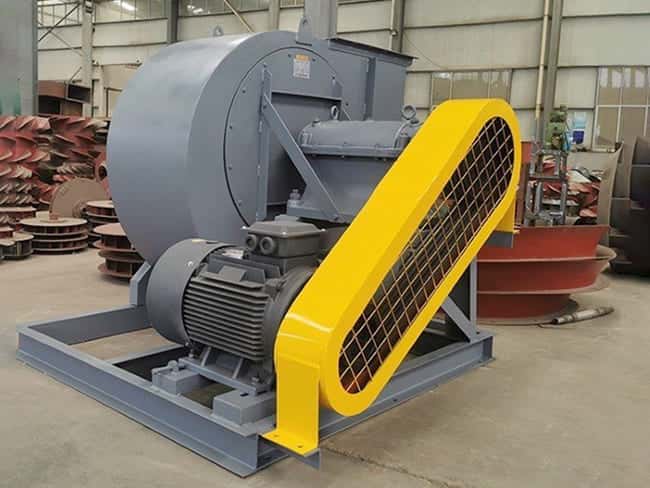
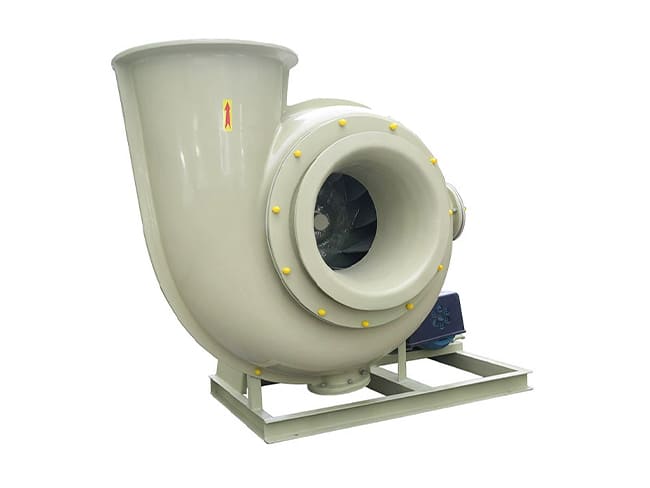
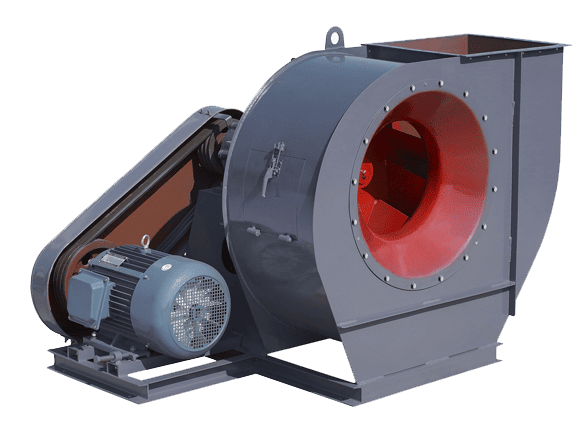
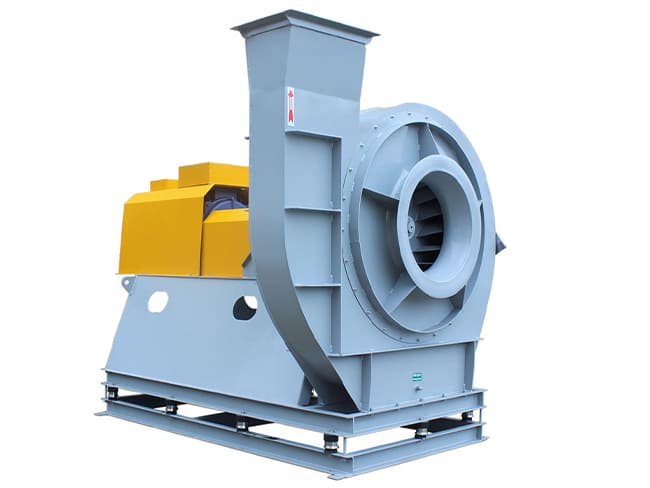
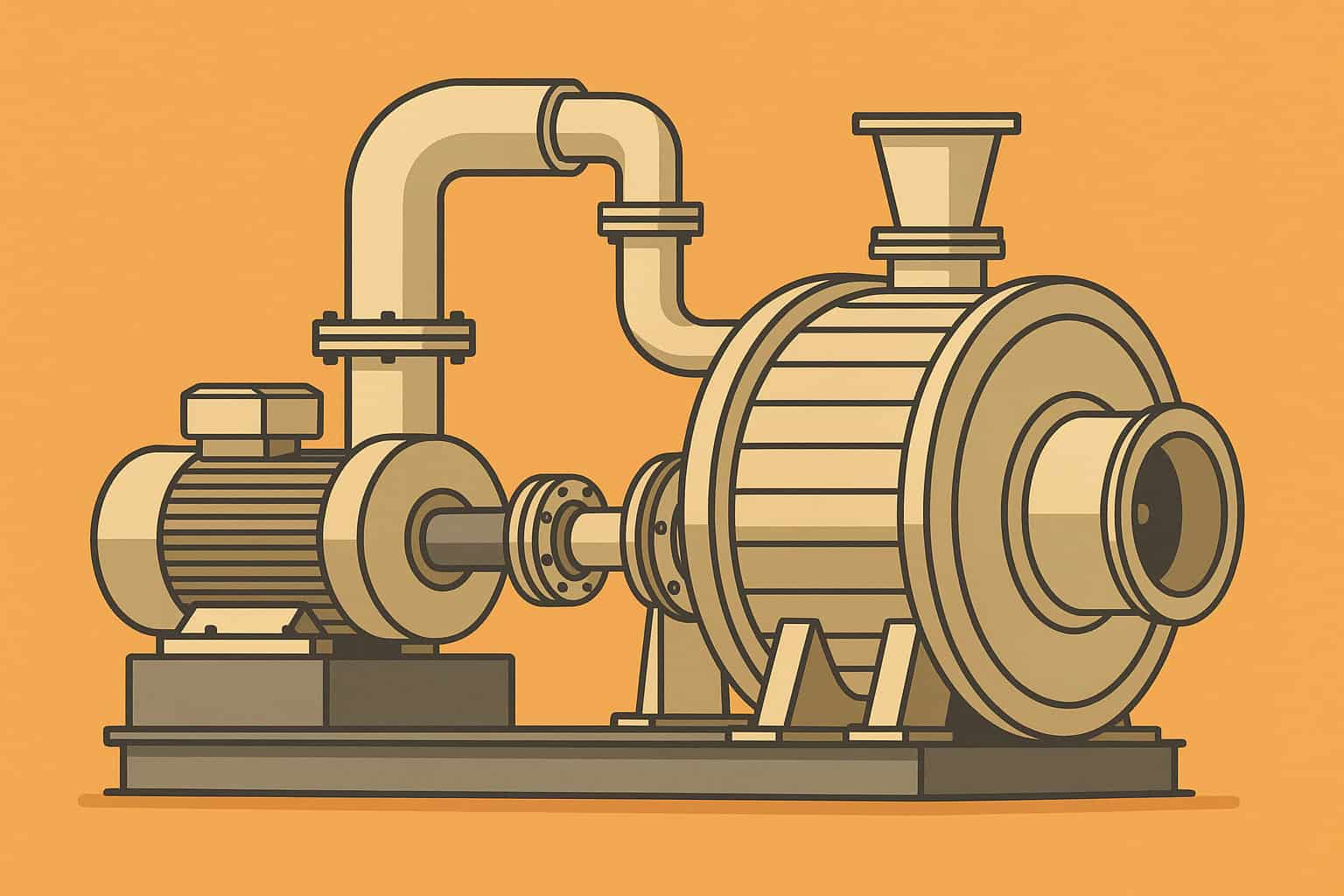
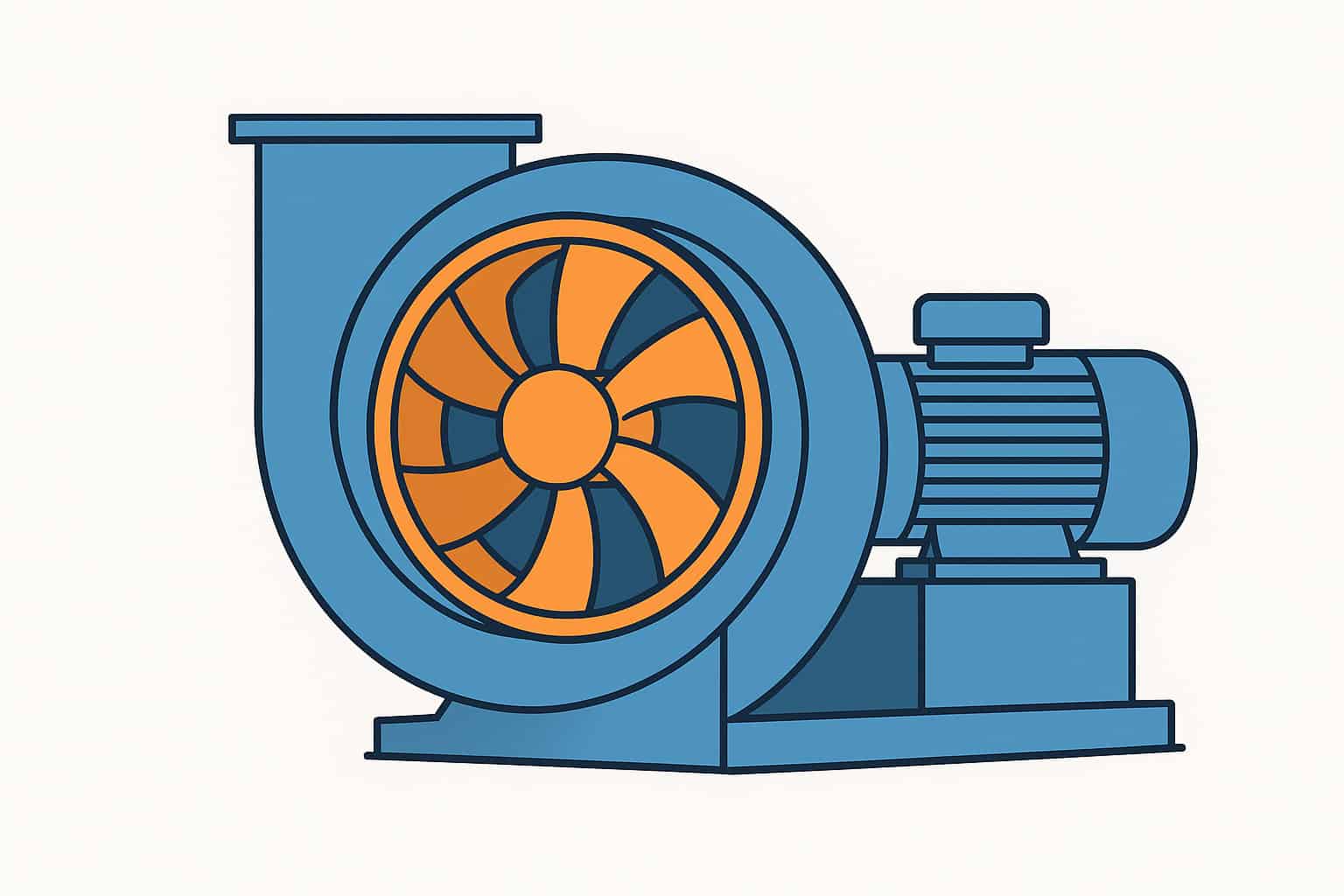
A radial fan is a type of centrifugal fan with blades that extend straight out from the hub. Air enters the centre of the impeller along the shaft, is accelerated outward by centrifugal force and leaves the impeller in a radial direction. A scroll-shaped housing then collects the flow and directs it towards the discharge. This design allows radial fans to develop higher static pressure than axial fans of similar size, making them ideal for dust collection systems, scrubbers, local exhaust ventilation, material-handling and high-resistance mine branches.
In terms of air quality and durability, radial fans are usually more robust. Their straight, heavy-duty blades can better tolerate dust, particles and even small solids without plugging or severe erosion, which is why radial fans are common near crushers, transfer points and process equipment. Axial fans, although they can be engineered for harsh conditions, are generally more sensitive to imbalance and wear when exposed to heavy dust loading.
Efficiency varies with duty. For clean air at moderate pressure, backward-curved centrifugal fans often reach very high efficiencies, while axial fans can be extremely efficient for high-volume, low-pressure flow. Radial fans used for heavy dust may sacrifice some aerodynamic efficiency for strength and reliability. The overall system efficiency depends not just on fan type but on selection, speed and duct design.
In summary, an axial fan moves air parallel to the shaft and is best for high-volume, low to moderate pressure applications with relatively open airflow paths. A radial fan discharges air at 90 degrees to the shaft and is designed to deliver higher static pressure and handle dusty, harsh conditions in ducted industrial and mining systems.
