
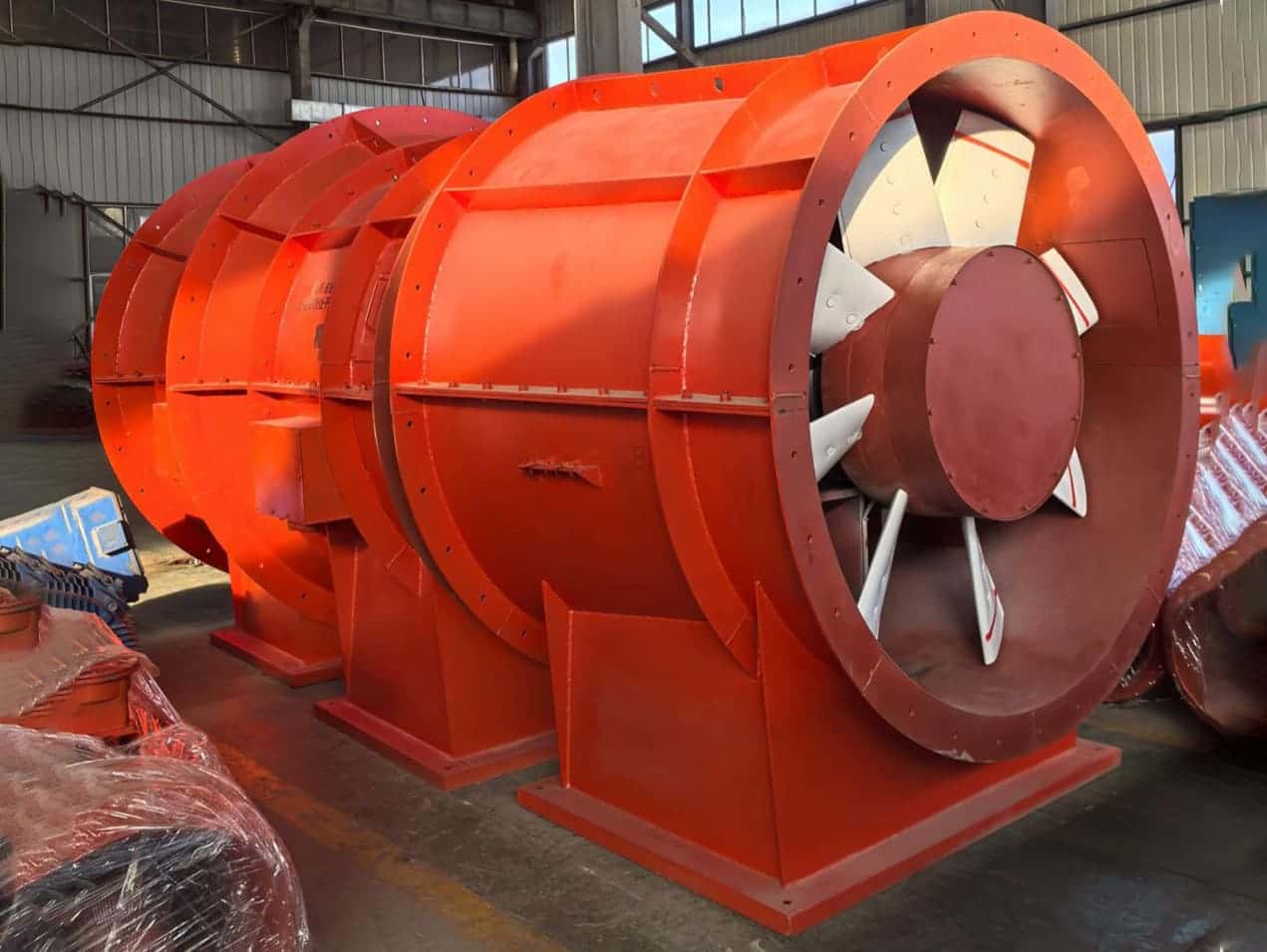
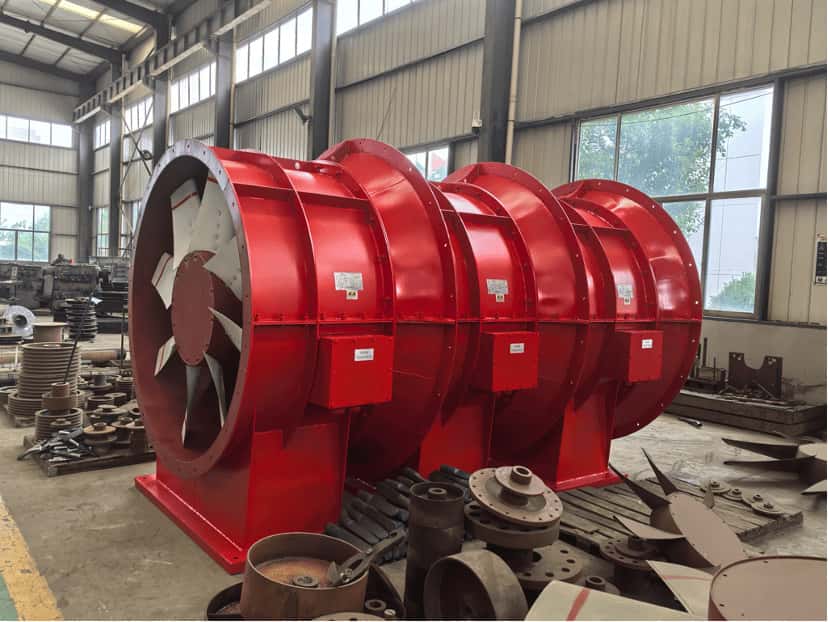
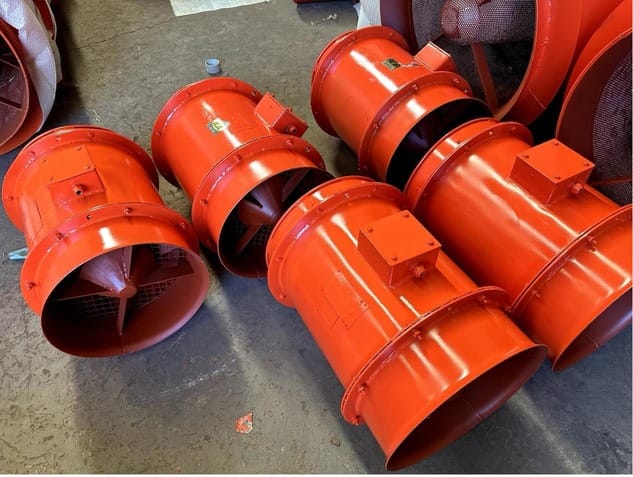
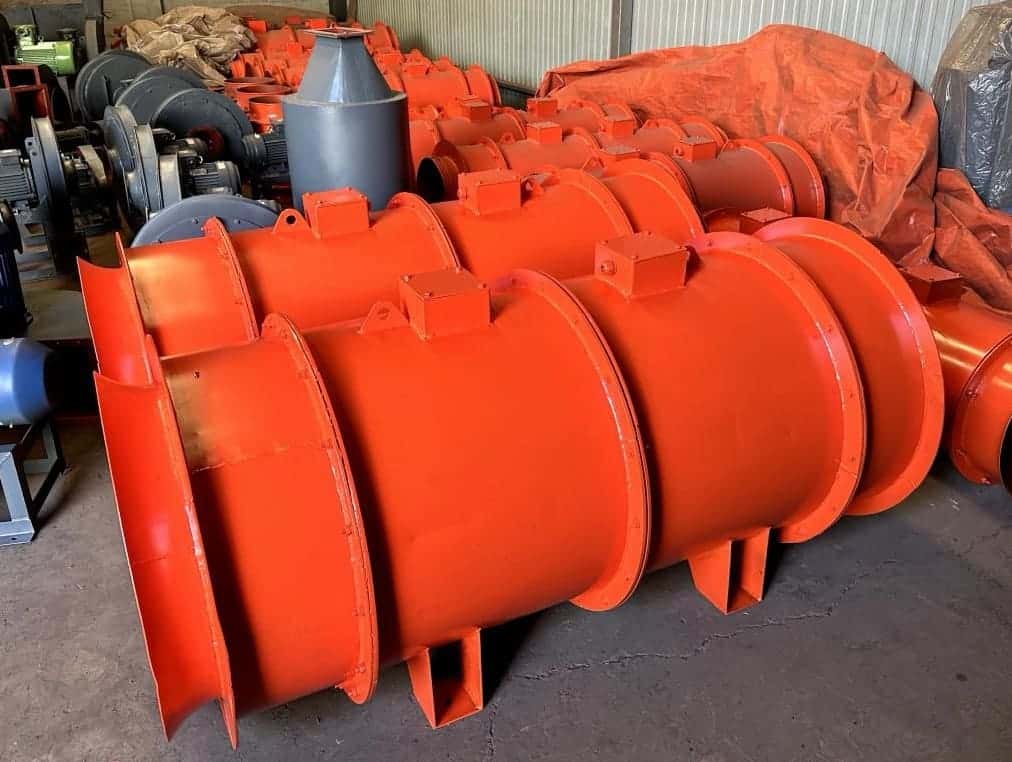
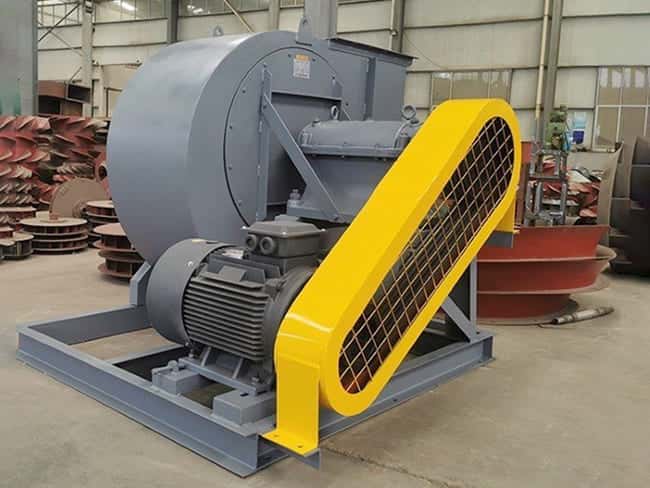
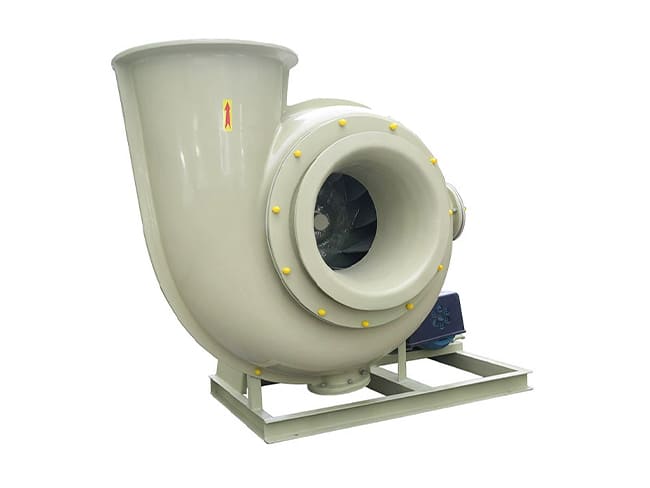
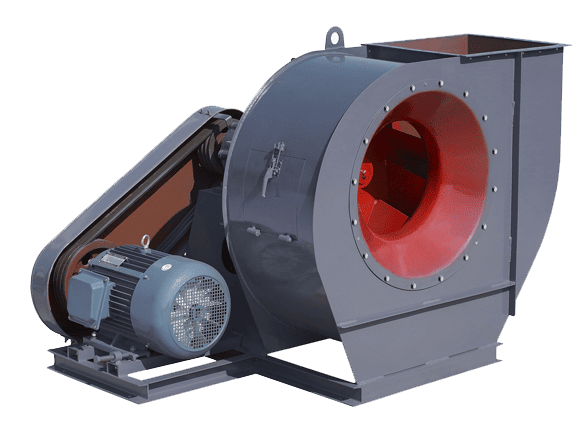
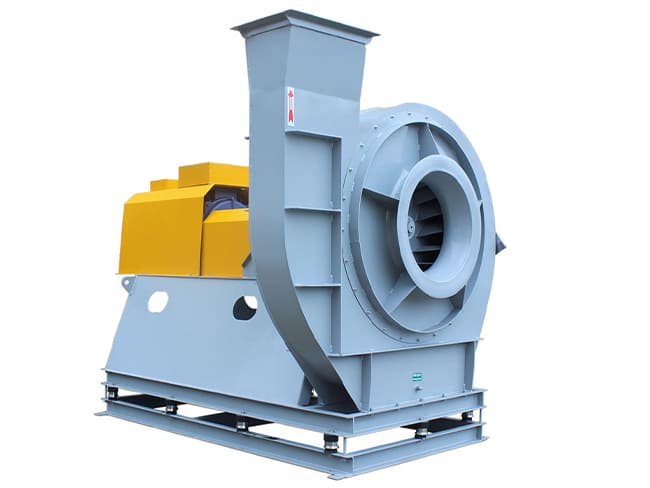
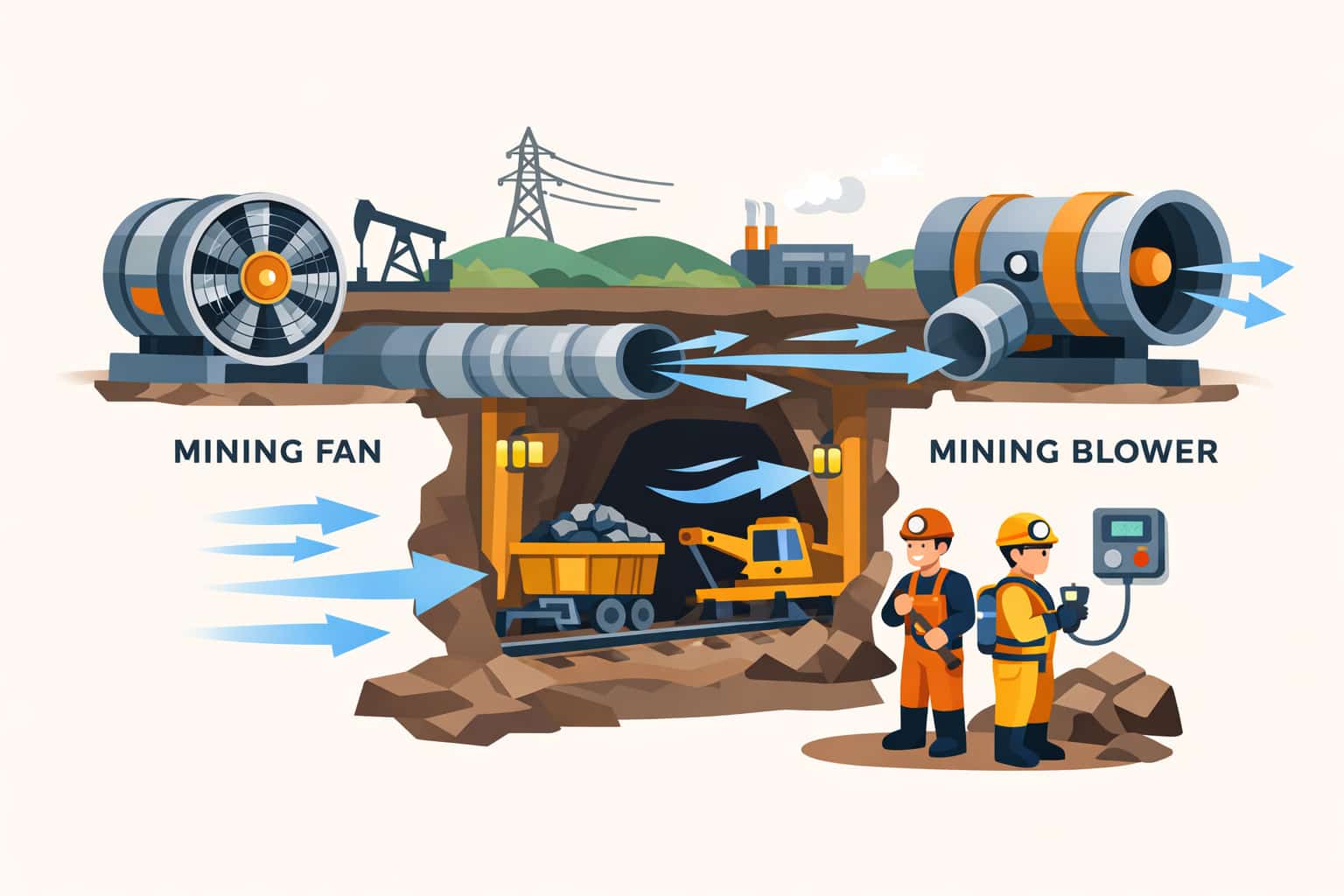
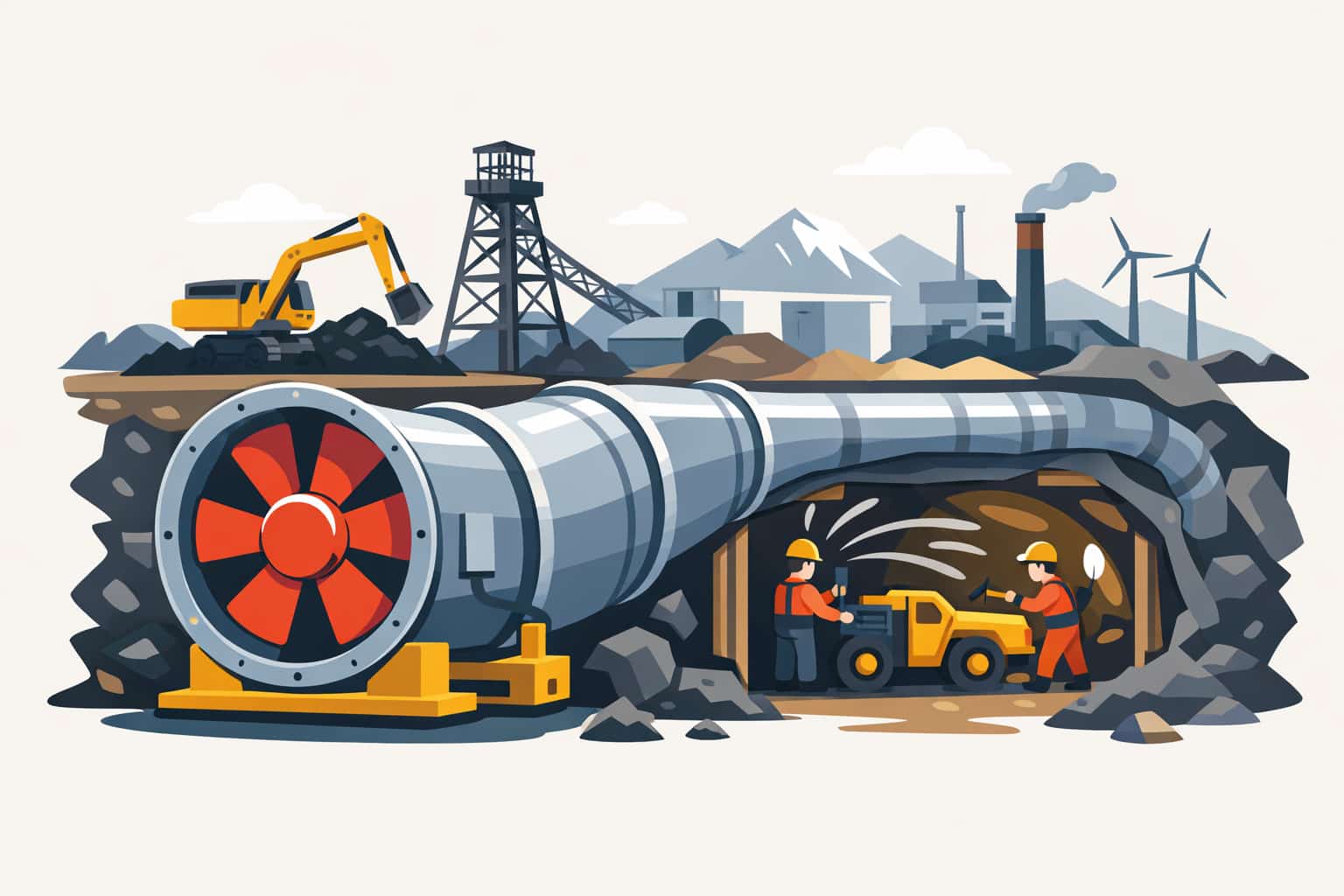
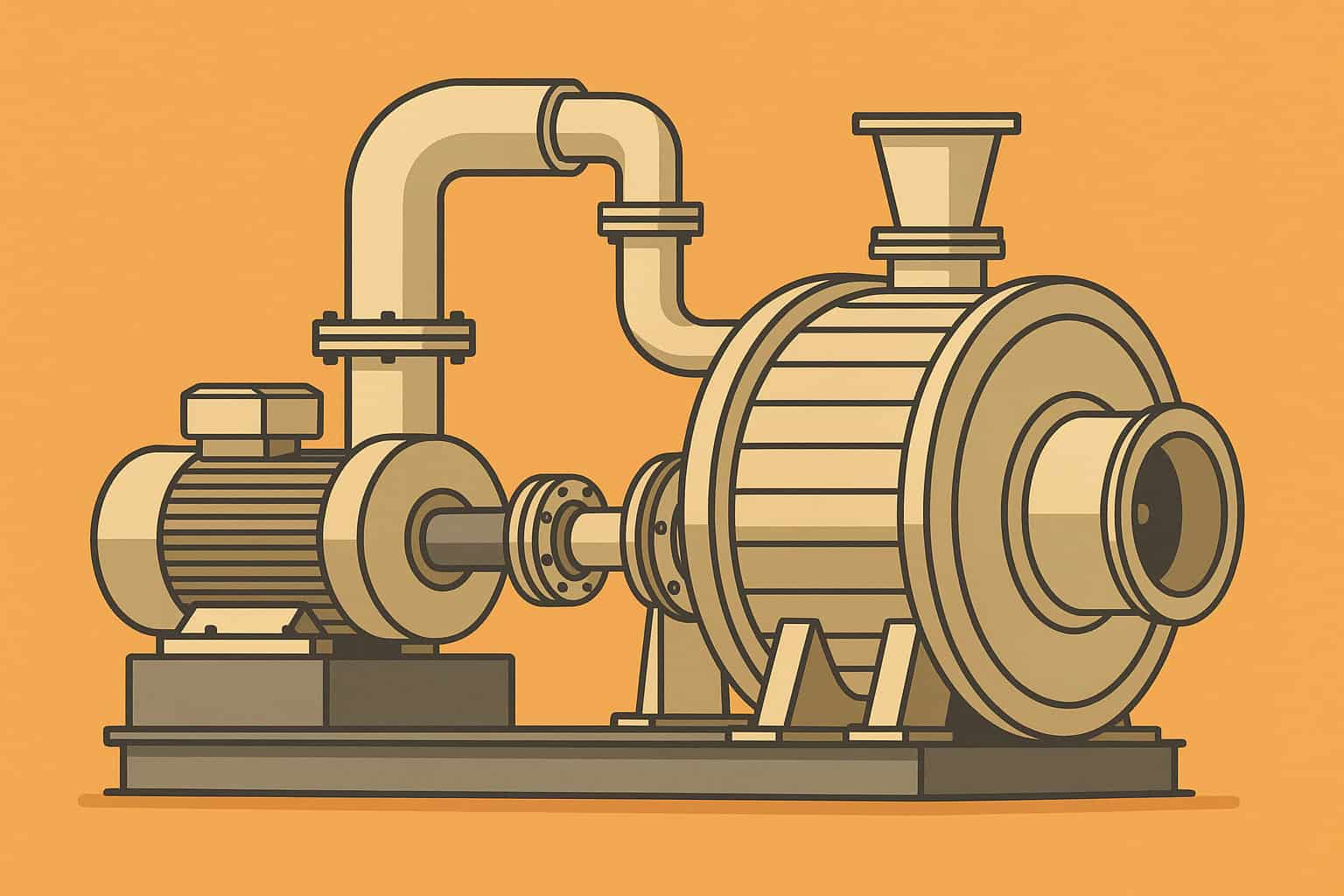
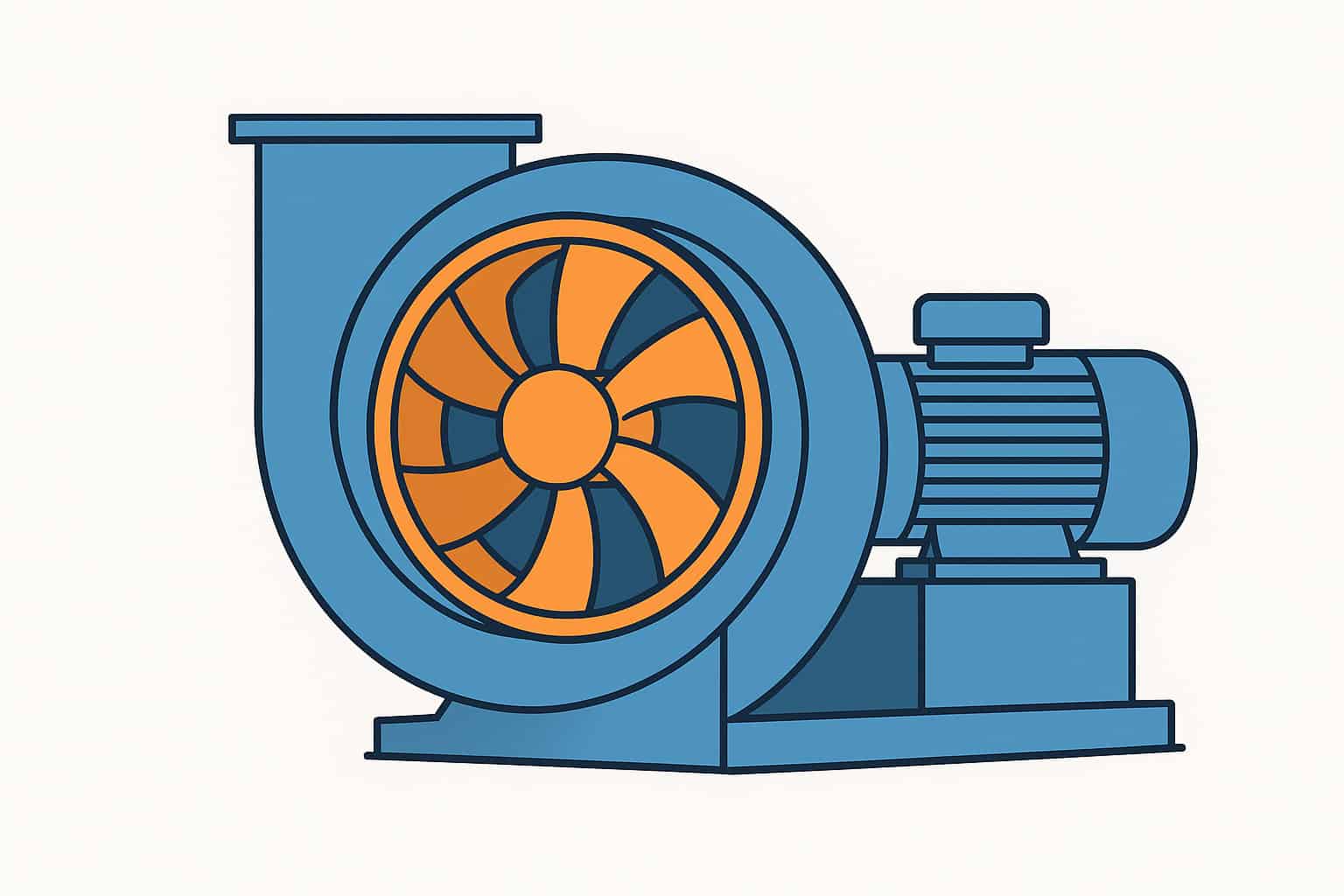
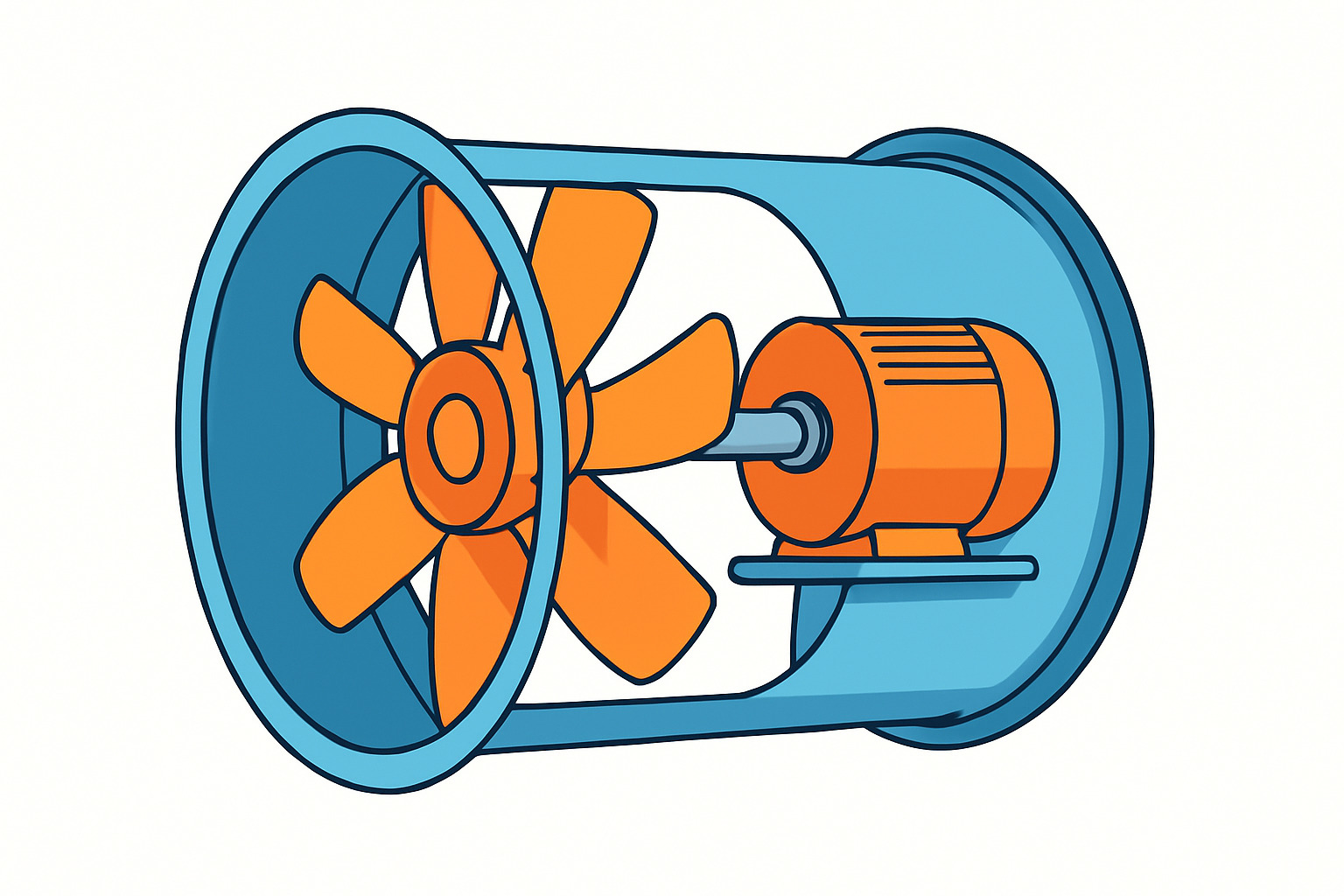
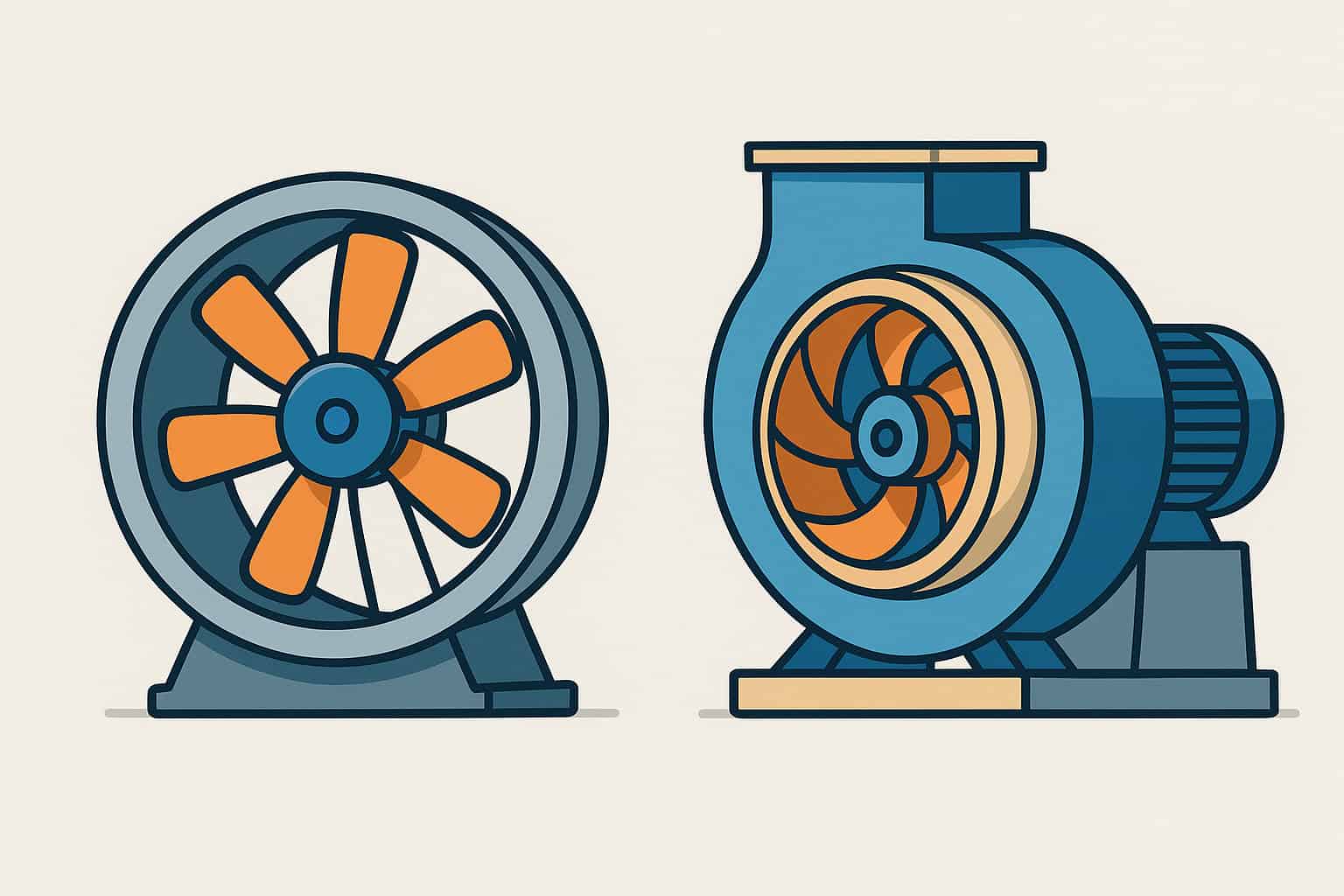
The main difference between an industrial fan and a regular fan lies in how they are designed, built and used. A regular fan, such as a household pedestal or desk fan, is made for comfort cooling in clean environments and light-duty service. An industrial or mining fan is engineered to move much larger volumes of air, often at higher pressures, for long hours in hot, dusty and sometimes hazardous conditions.
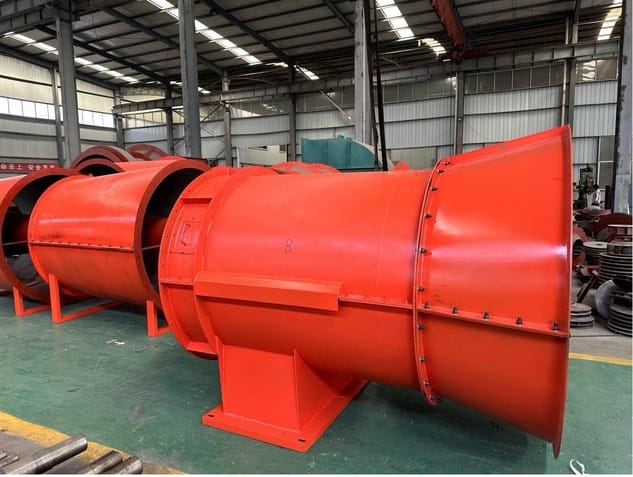
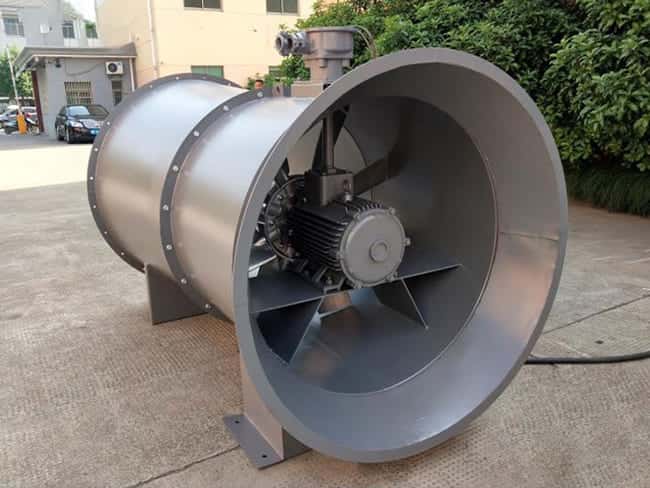
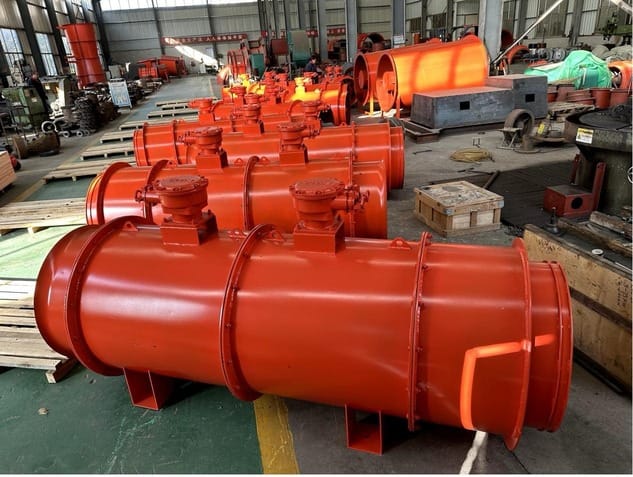
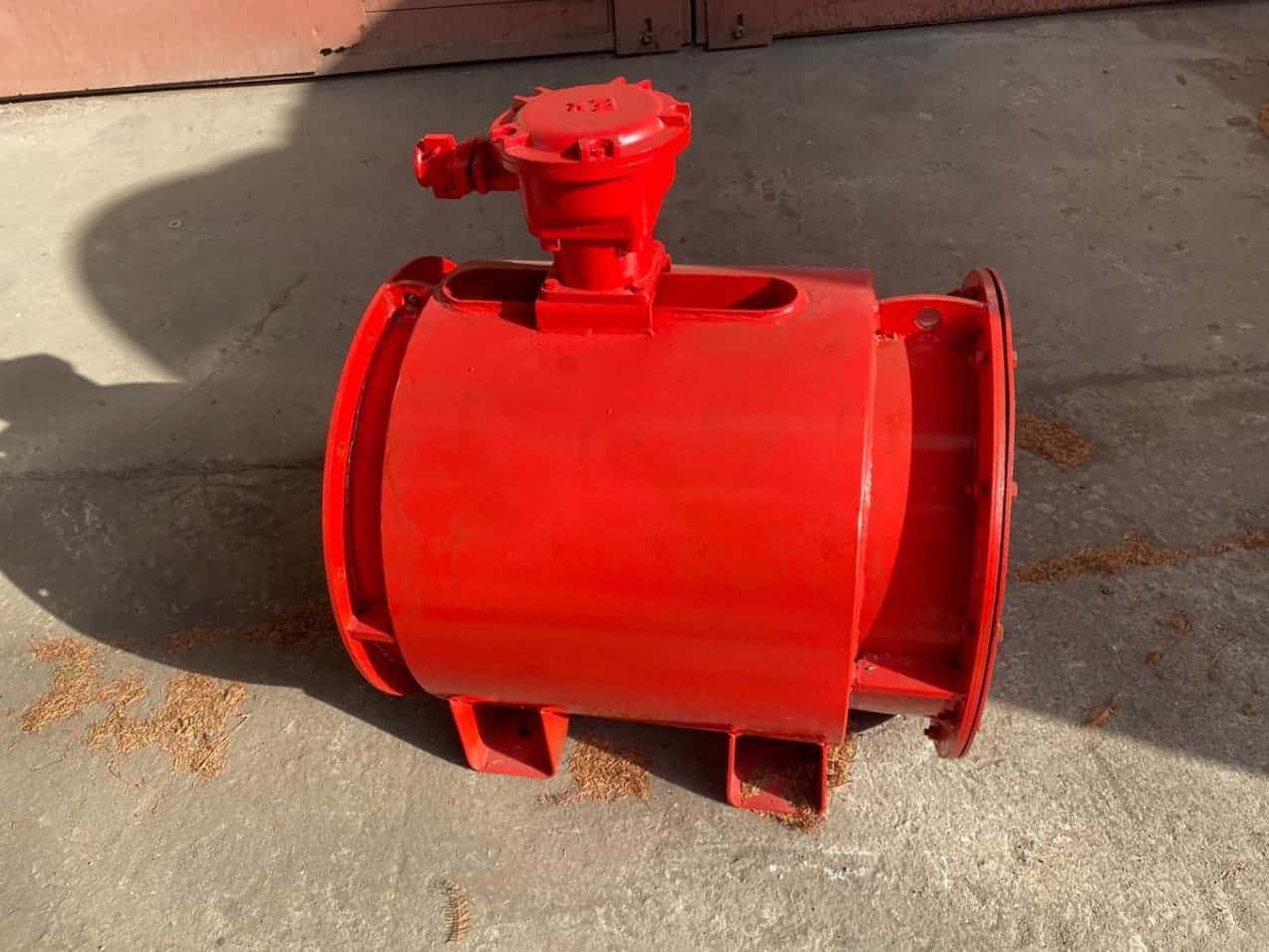
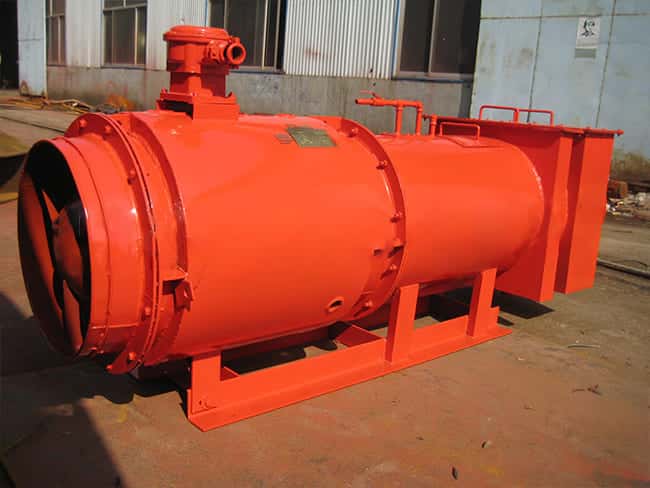
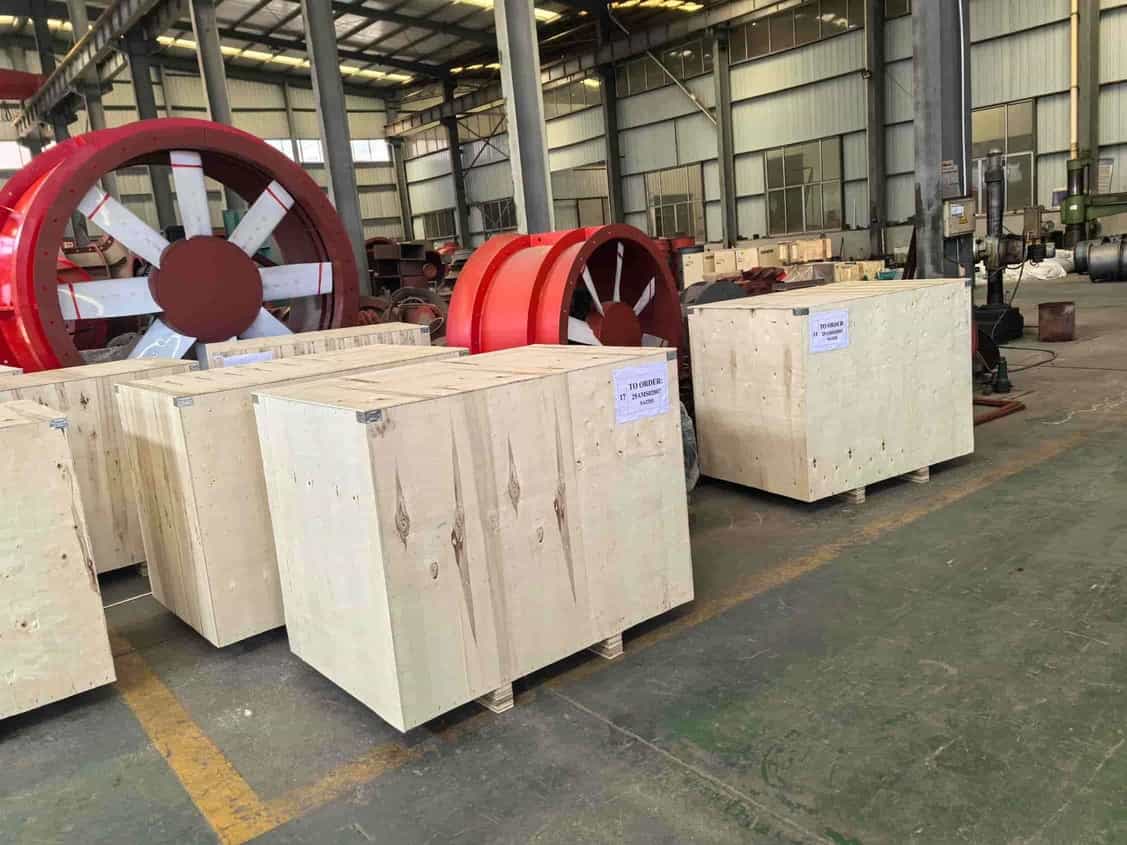
Construction and strength are the first obvious differences. Industrial fans use heavy-gauge steel or aluminium casings, robust welds, thick impeller blades and strong shafts designed to handle continuous loads, vibration and possible shock. Regular fans are typically built from lighter plastics and thin metal parts to reduce cost and weight. In a harsh industrial or underground mining environment, a domestic-style fan would quickly deform or fail.
Power and performance also differ. Industrial fans are selected using performance curves and sized to meet specific airflow and pressure requirements in ducts, process equipment or mine workings. They may be driven by large electric motors, sometimes from tens to hundreds of kilowatts, and are designed to run many hours per day. Regular fans are intended mainly to move air locally around people; they operate at low pressure and relatively low power, with little consideration for duct resistance or formal ventilation calculations.
Another difference is duty cycle and reliability. Industrial and mining fans are designed for continuous or near-continuous service, often 24-7. Bearings, motors and cooling arrangements are sized for long life under constant load. Regular fans are usually designed for intermittent use in homes or small offices; their motors and bearings may not tolerate extreme temperatures, dust or continuous heavy loading.
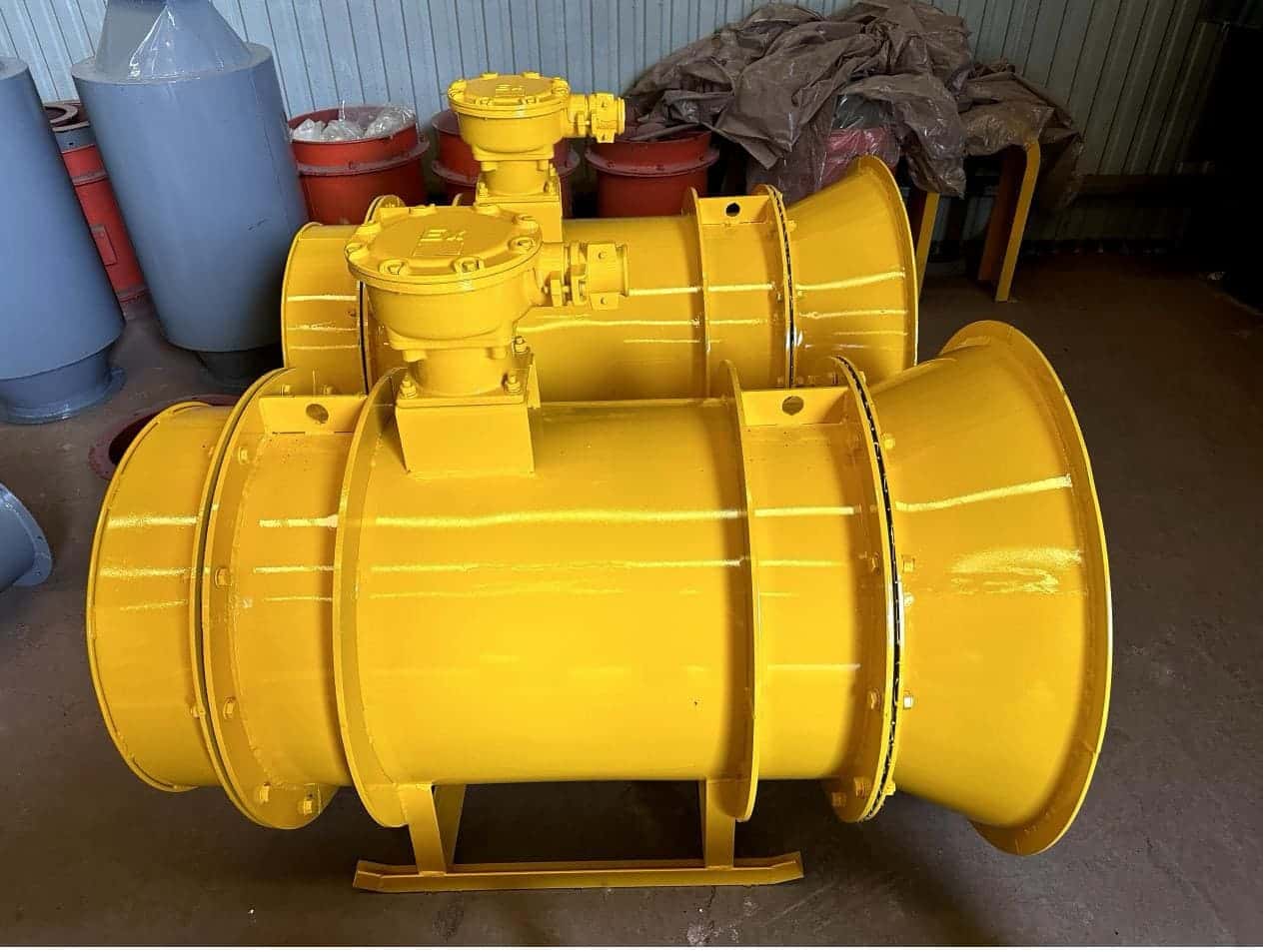
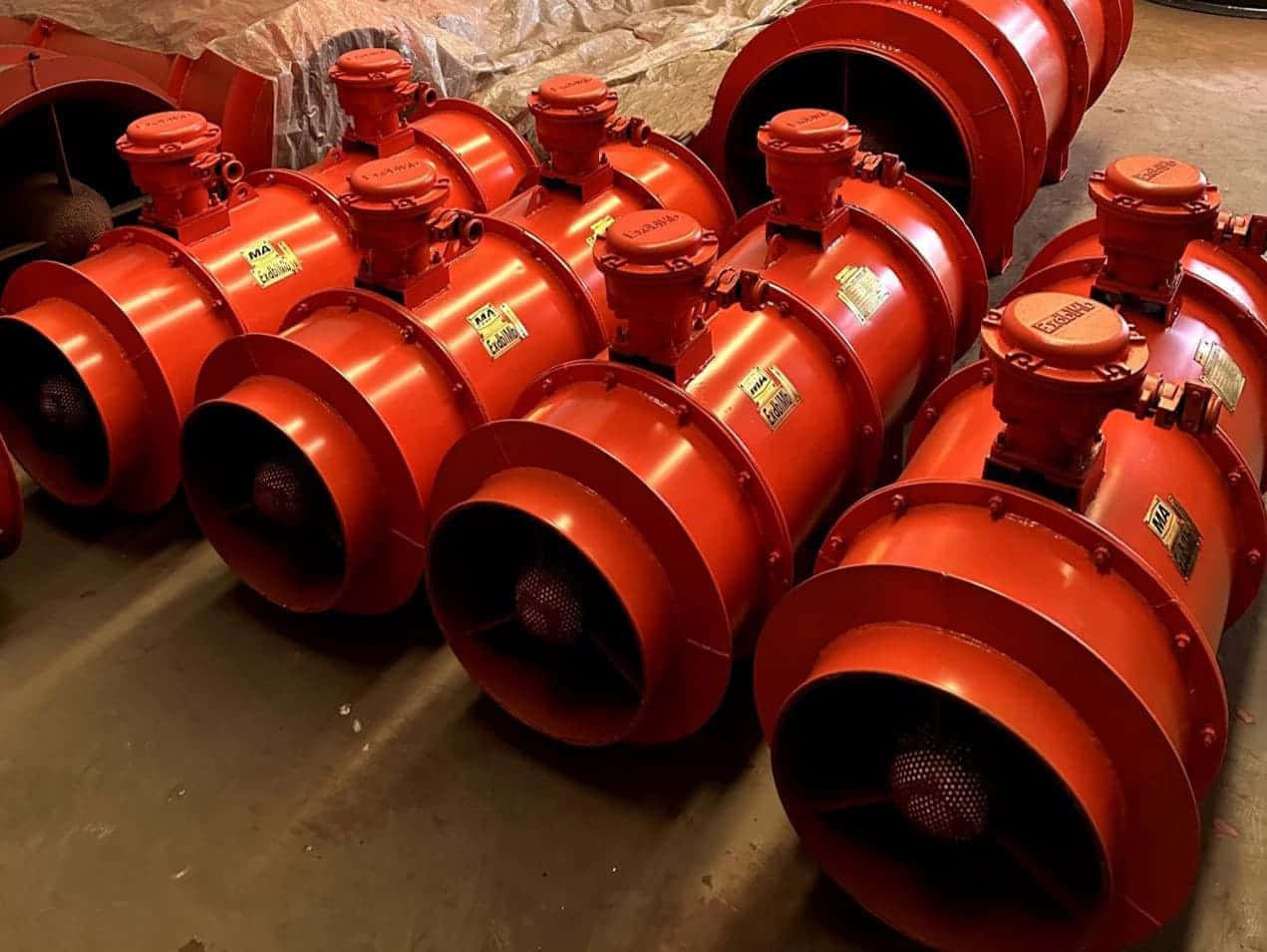
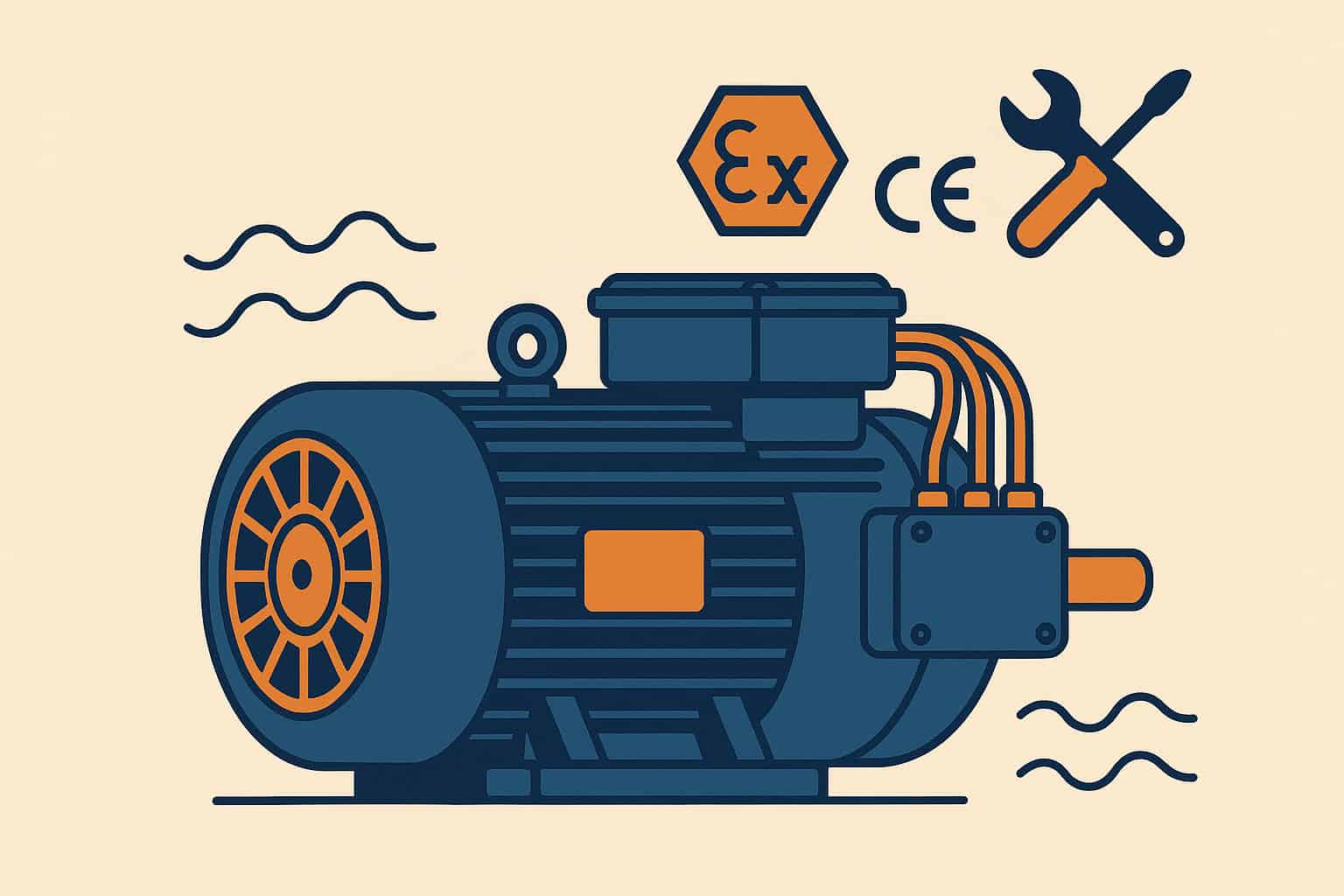
Safety and compliance requirements are much stricter for industrial fans. Depending on the application, industrial fans may need explosion-proof or ATEX certification, spark-resistant construction, high-temperature ratings, corrosion-resistant materials or IP-rated enclosures. Guards, anchors and emergency stop devices are engineered to meet safety standards. Regular fans may have simple finger guards and basic electrical protection, but are not built for flammable atmospheres or critical life-safety ventilation duties.
Finally, industrial fans are integrated into engineered ventilation systems with calculations for air quantity, pressure, energy consumption and noise control. Regular fans are typically standalone products chosen for comfort rather than system-level performance. In short, industrial and mining fans are heavy-duty, engineered machines for demanding environments, while regular fans are light-duty devices for personal comfort and general room air movement.