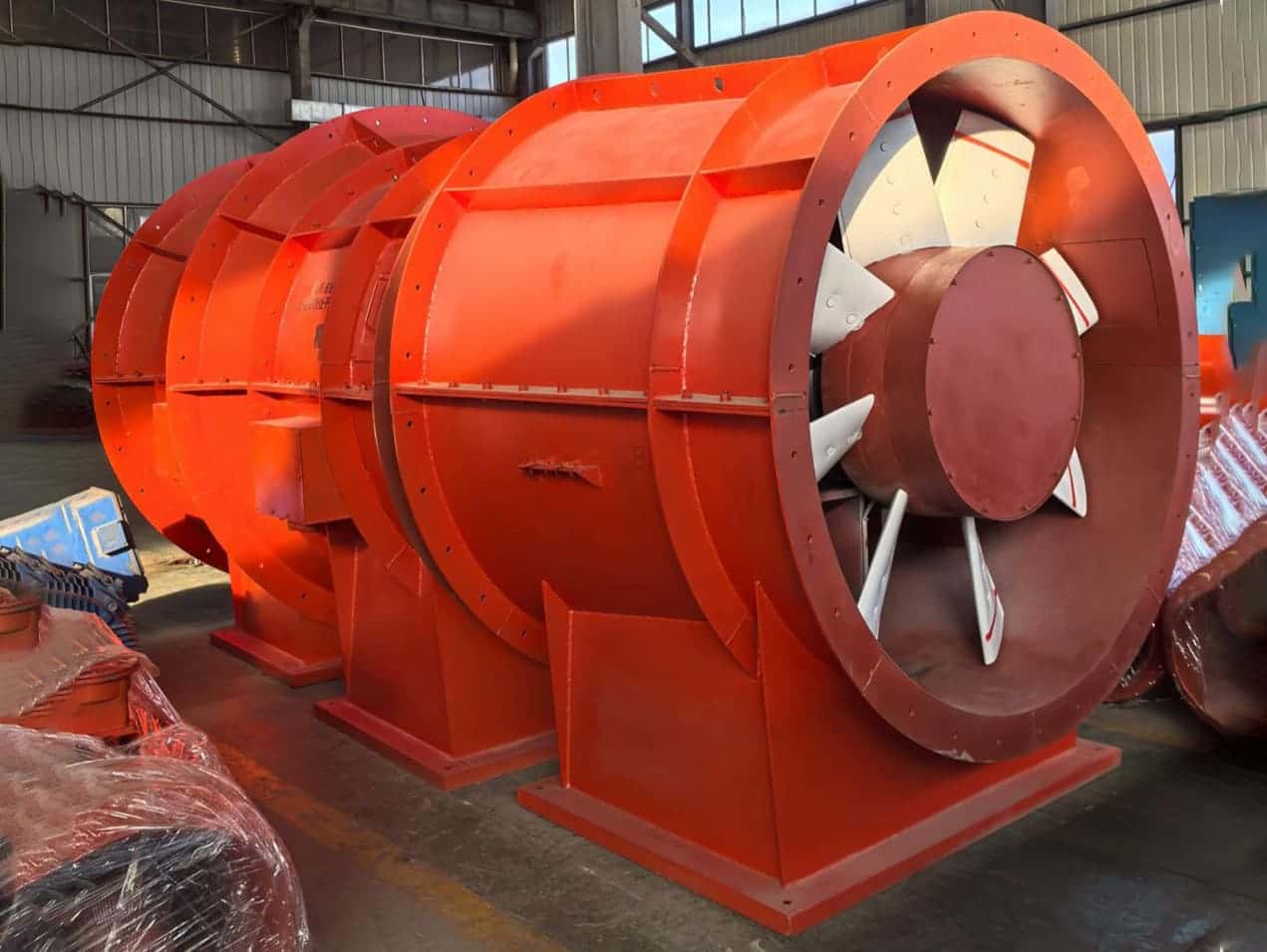
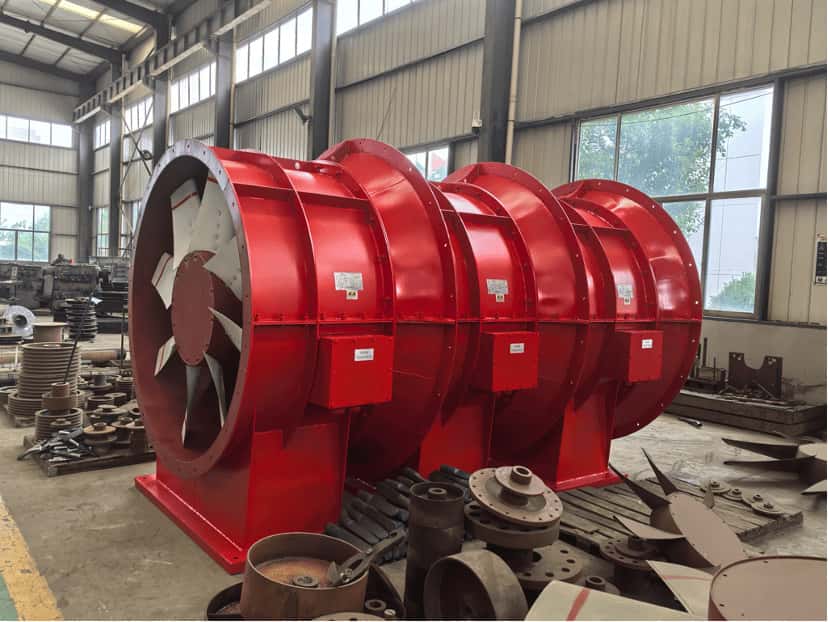
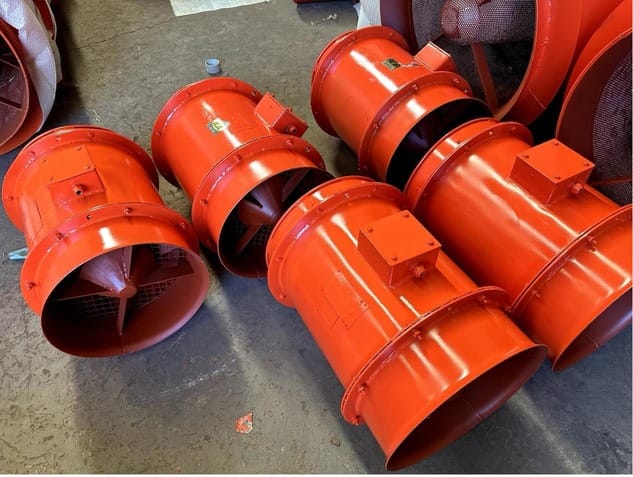
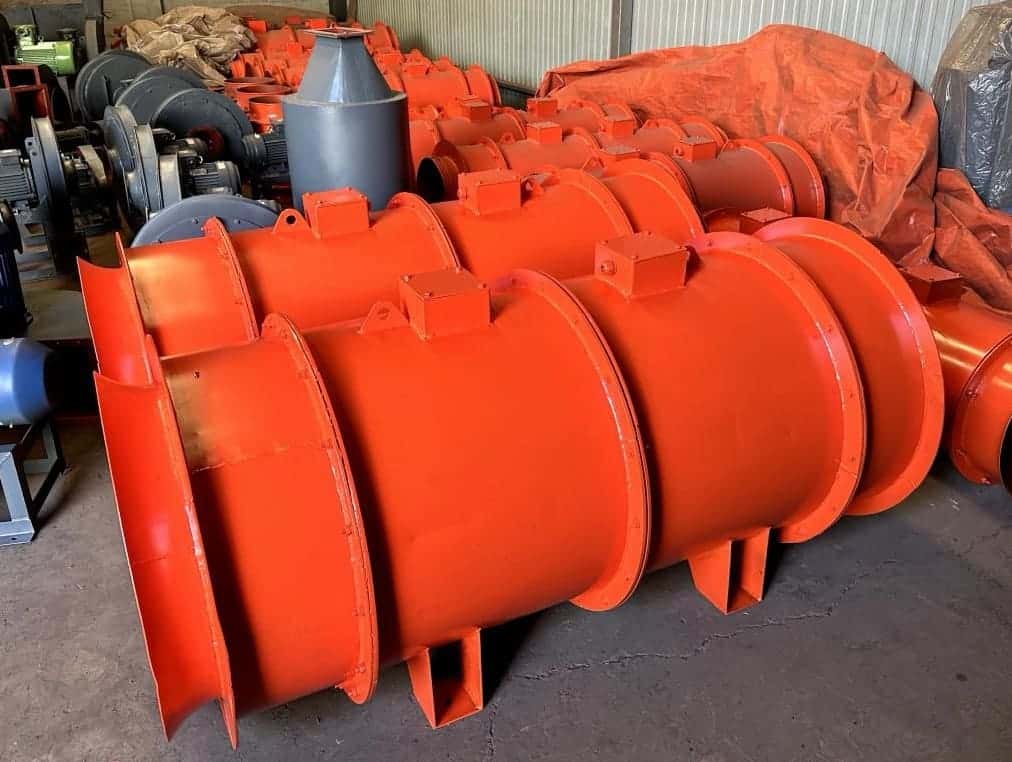
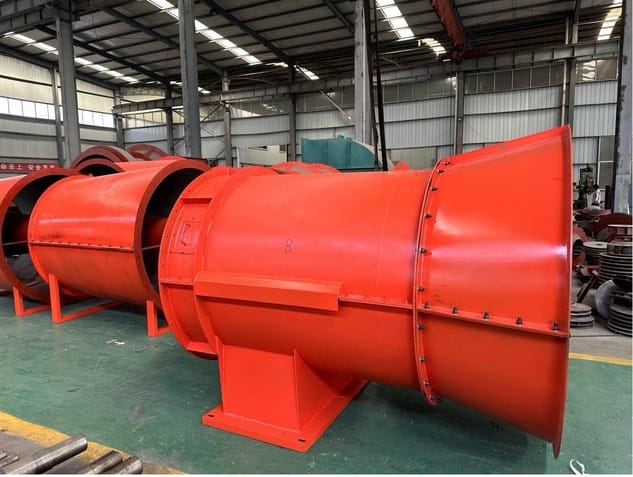
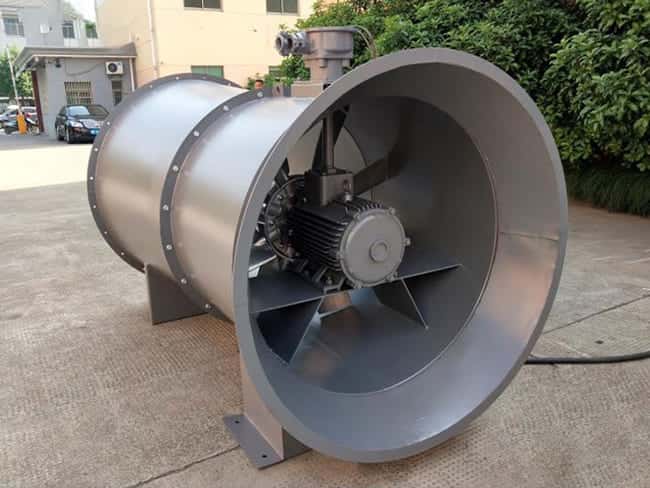
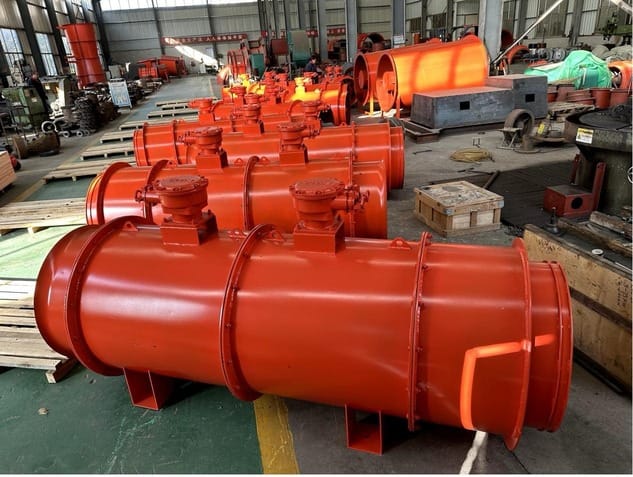
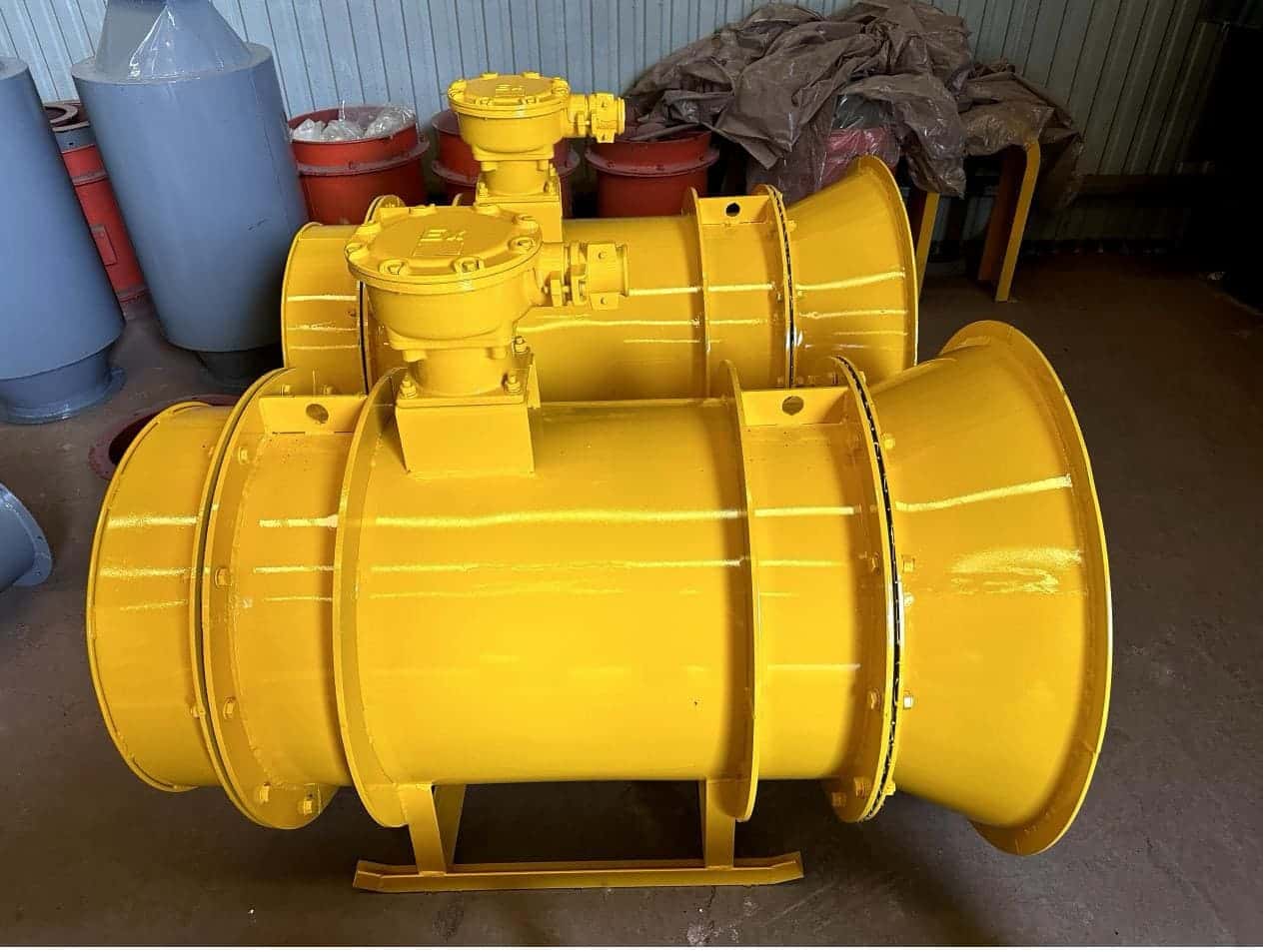
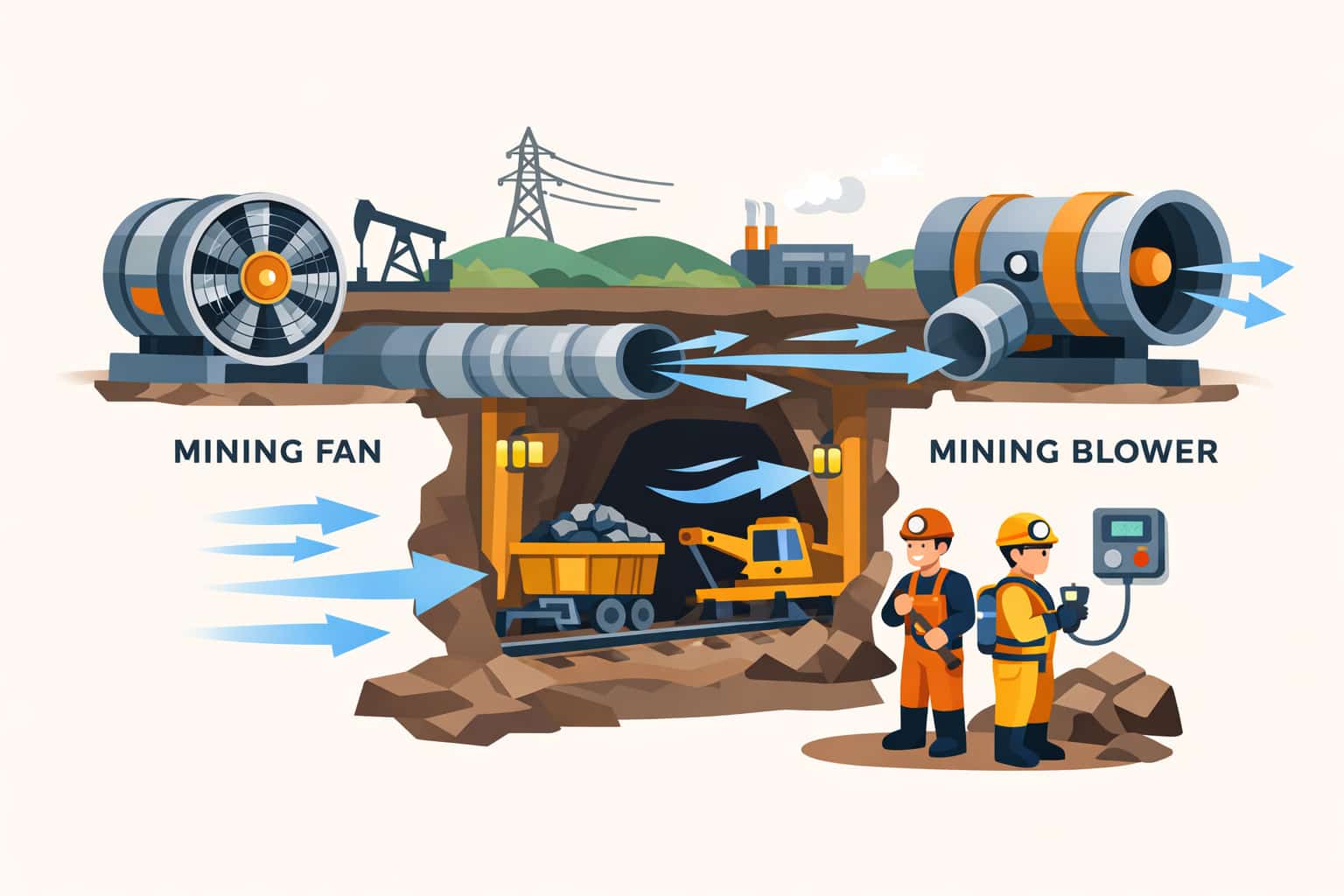
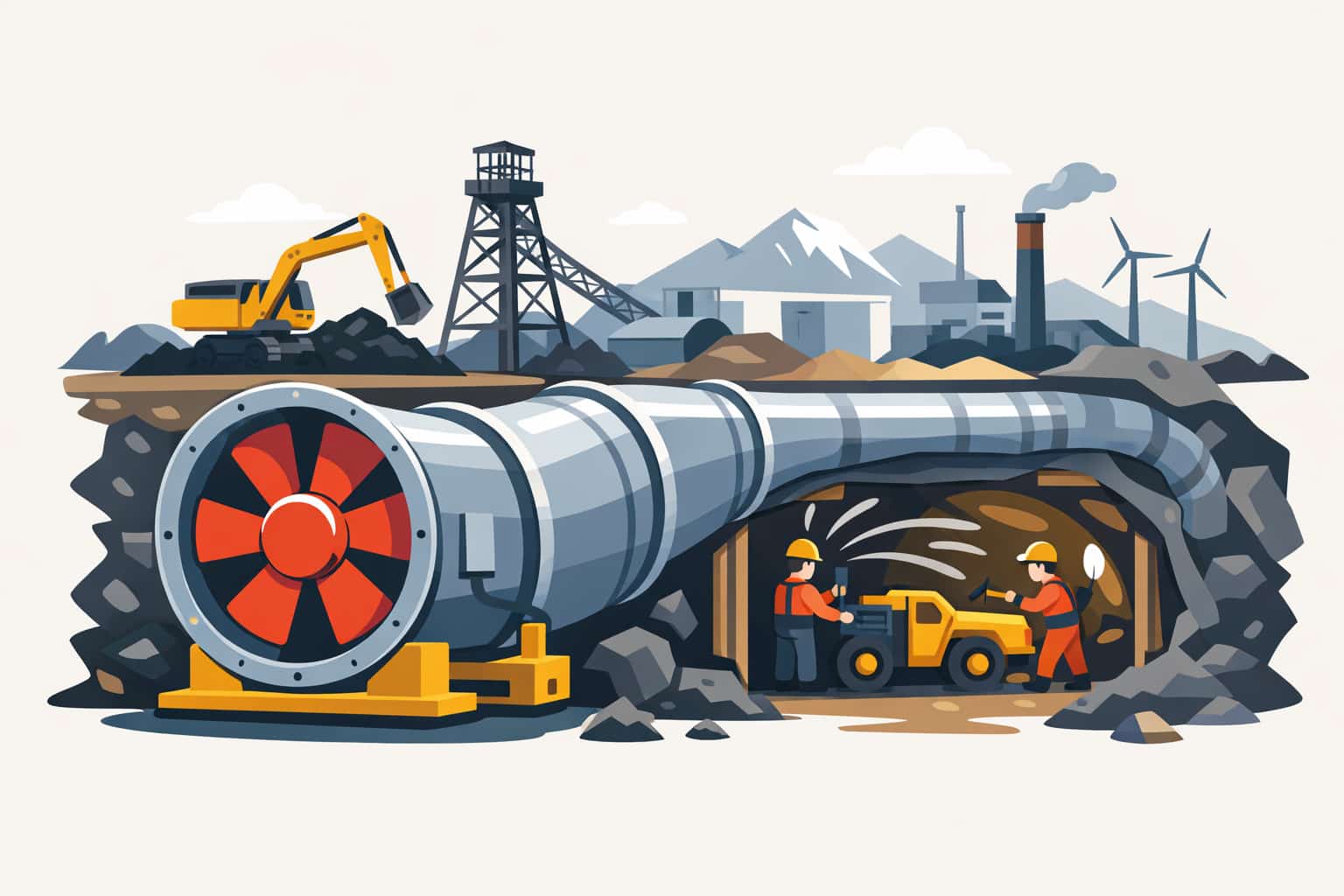

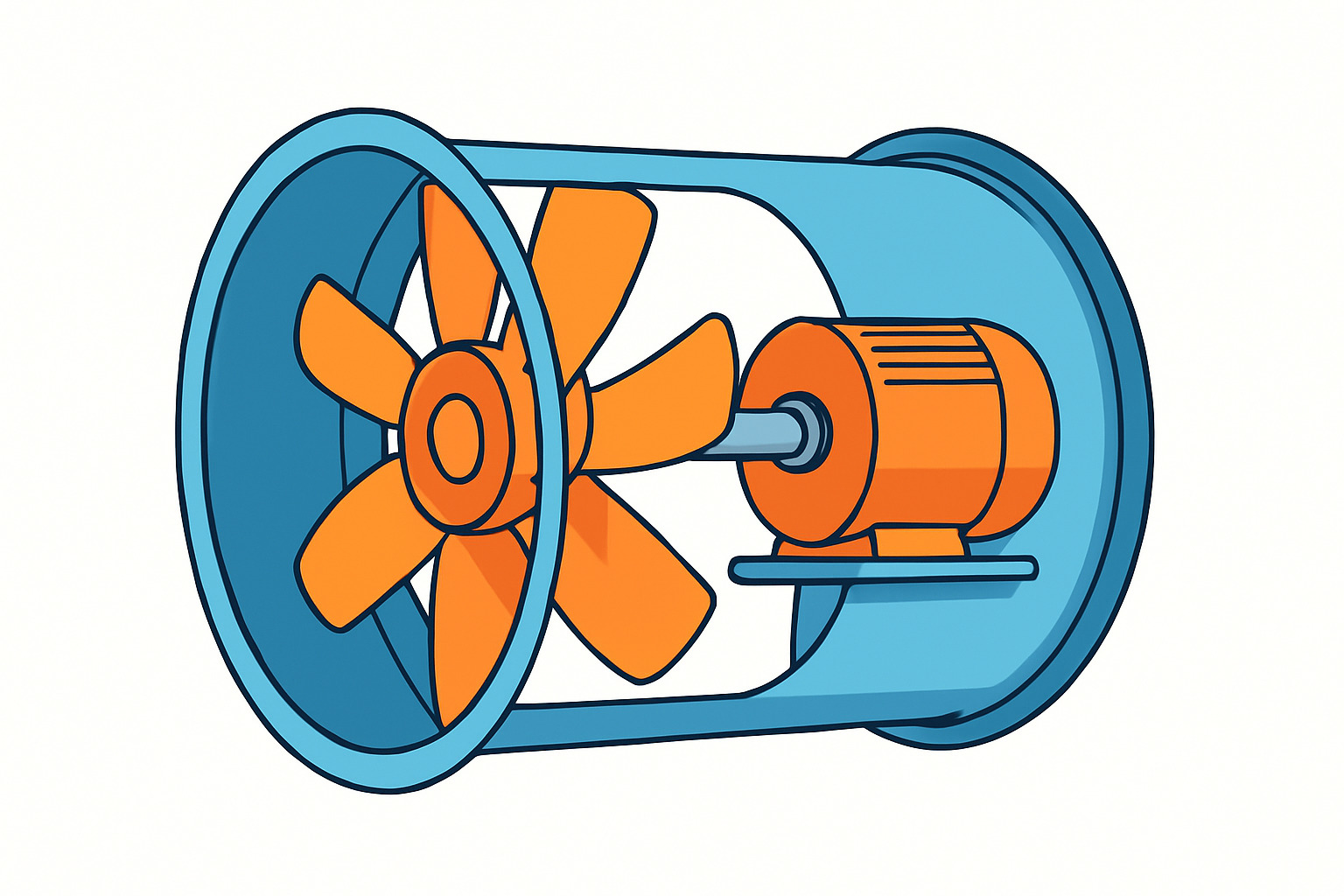
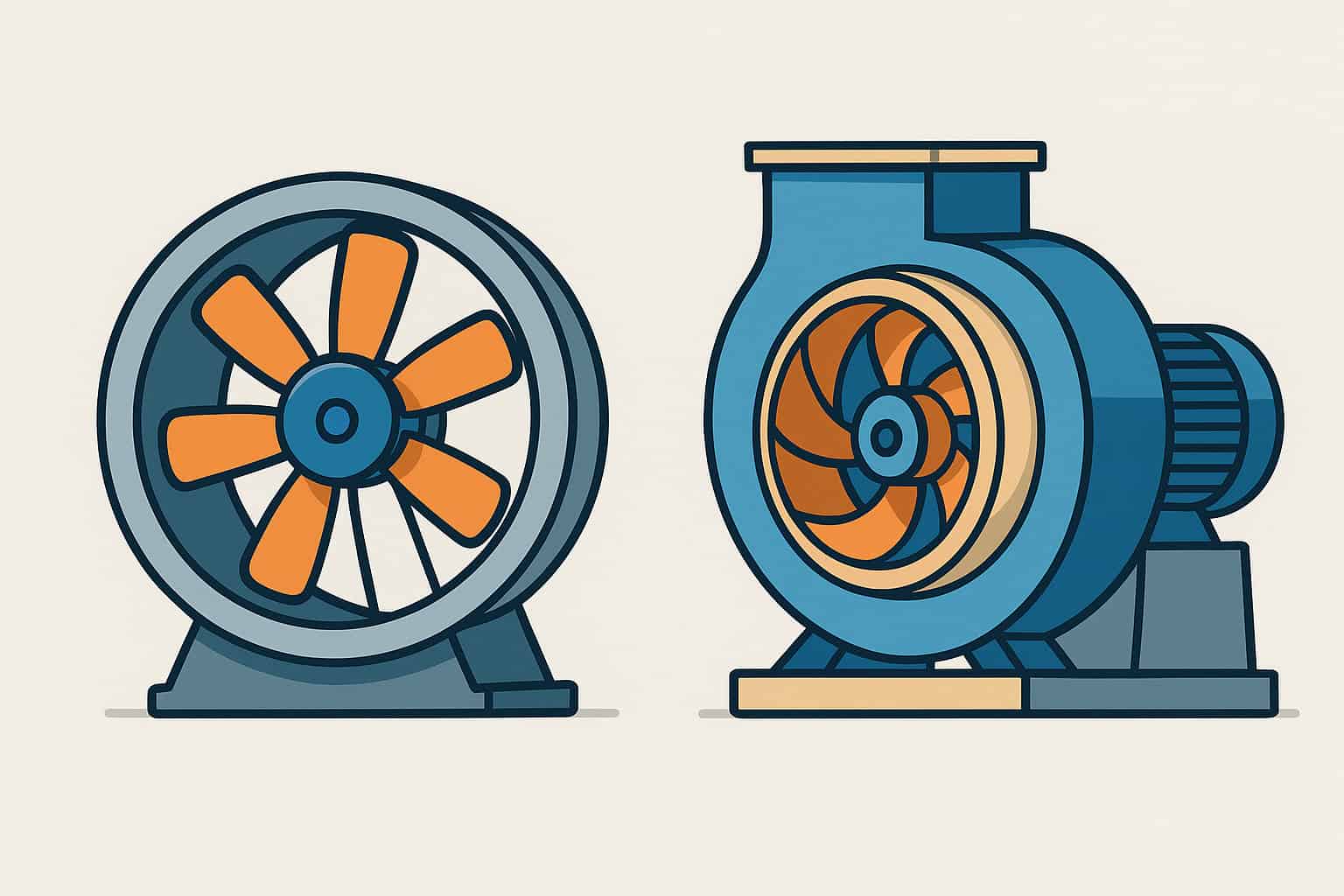
The main difference between an auxiliary fan and a booster fan is their role in the ventilation system and where they are installed. An auxiliary fan is used for local ventilation of individual headings, stopes or rooms, usually working with ducts. A booster fan is installed in a main intake or return airway to increase pressure and airflow in an entire branch of the mine or tunnel ventilation network.
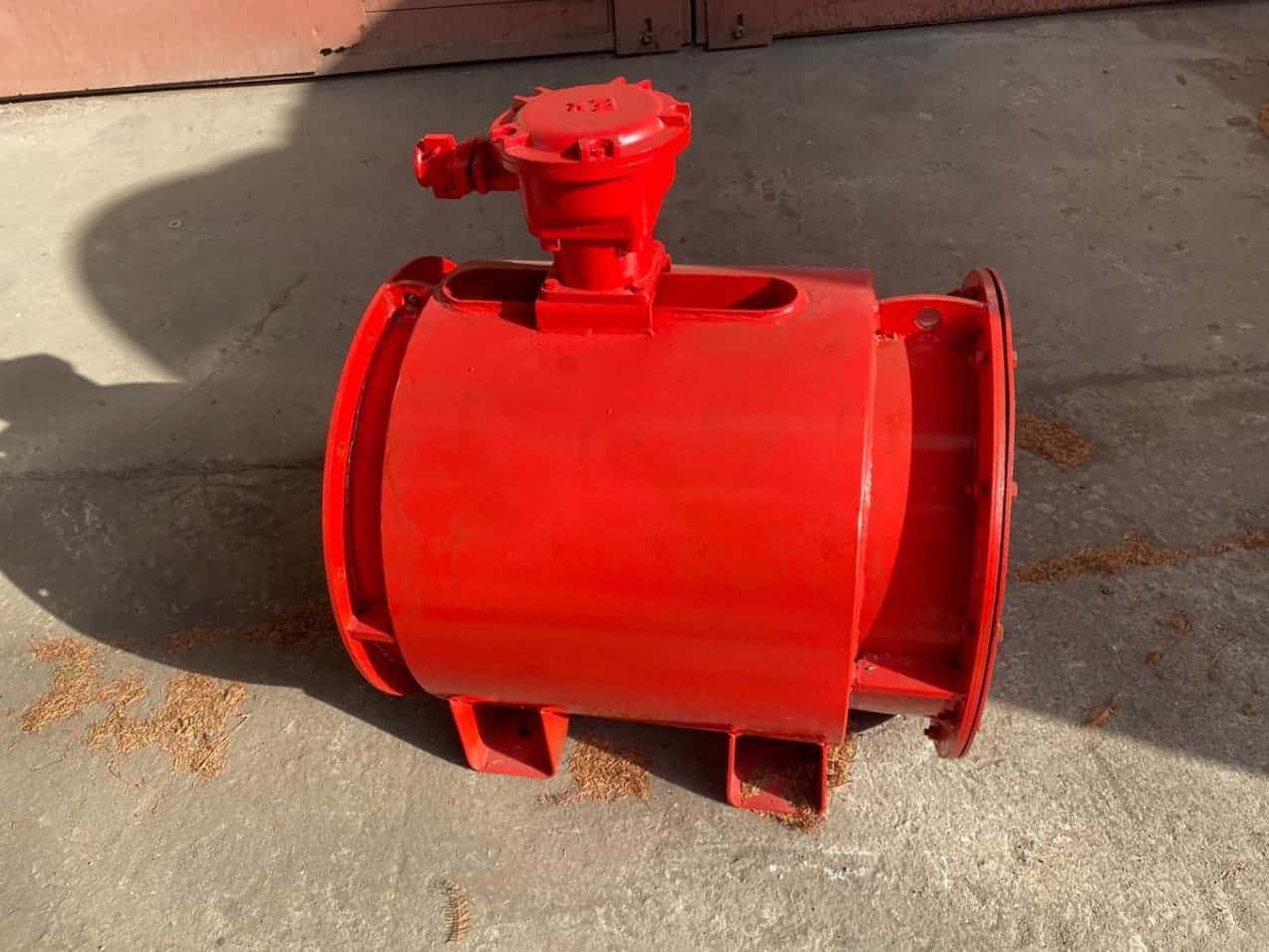
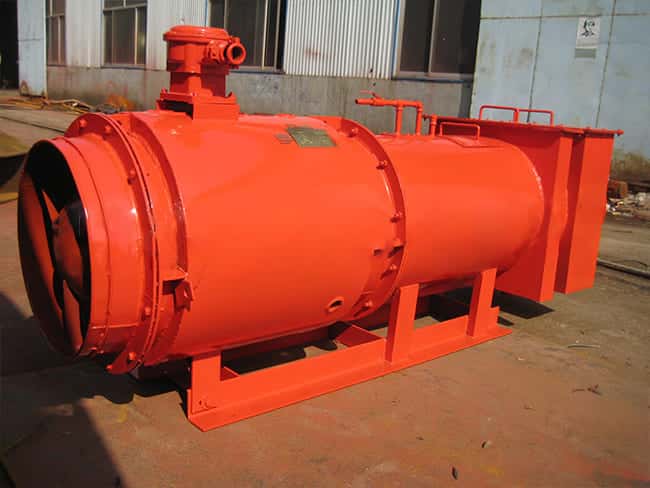
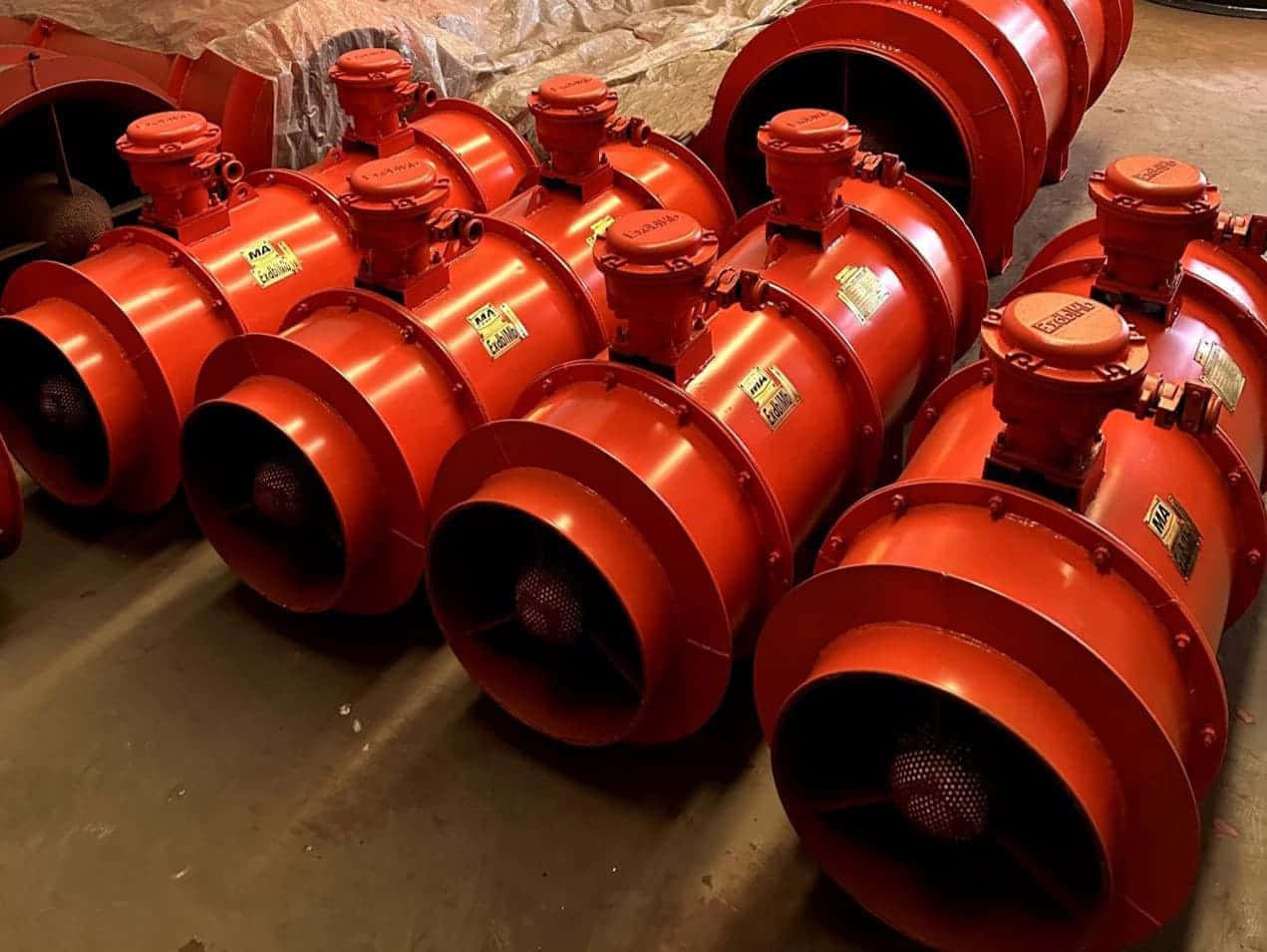
Auxiliary fans are typically smaller axial fans placed close to the work area. In underground mining they sit at the entrance to a development drive or crosscut and connect to flexible or steel ducts that carry air to the face. Their purpose is to provide localised air delivery or exhaust where the primary airflow from main fans cannot reach, removing fumes, dust and heat in blind workings. Auxiliary fans are moved frequently as development advances and are considered part of the secondary or auxiliary ventilation system.
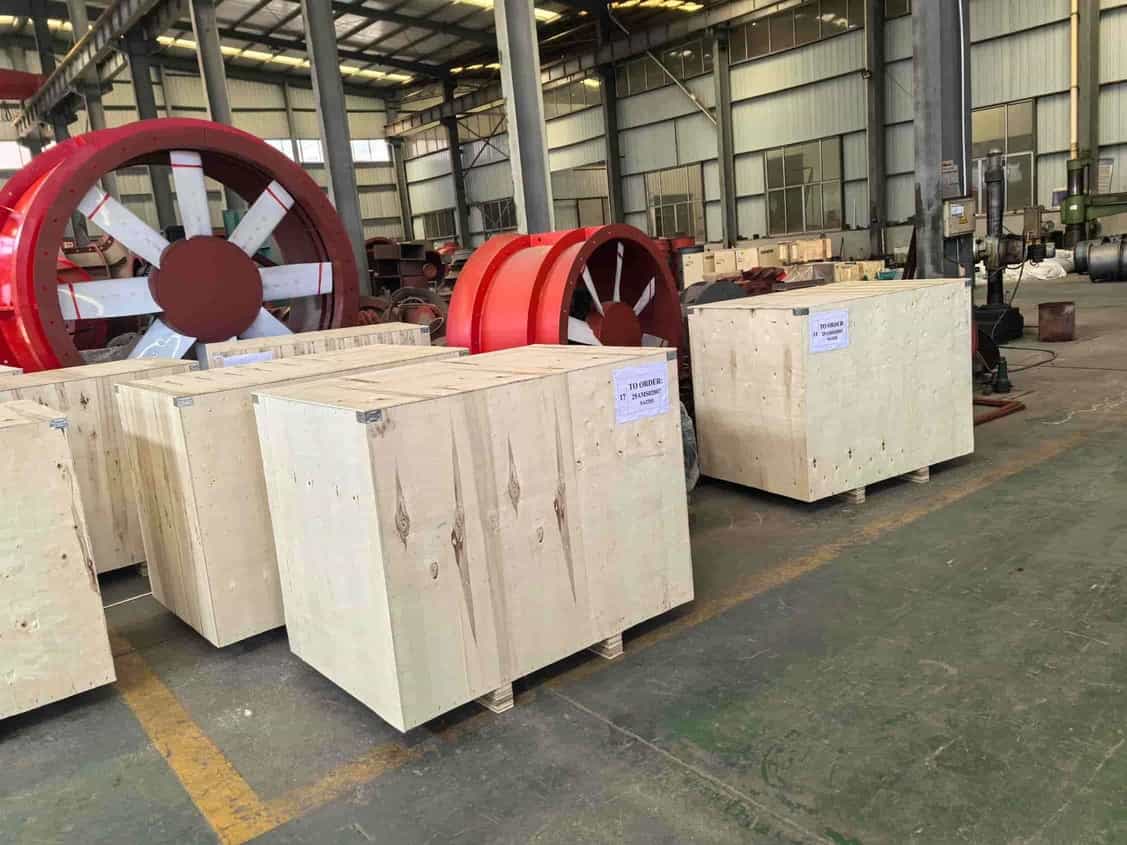
Booster fans, by contrast, are larger units installed in series with the airflow in a main intake or return airway. Their job is to increase pressure and flow in an entire branch of the ventilation network, often to supply deep levels or distant districts where resistance is high. A booster fan works together with the main surface fans and significantly changes the pressure distribution in the network, so its design requires detailed ventilation modelling to avoid recirculation and unstable flows.
From a design perspective, auxiliary fans are selected mainly for air quantity, portability and duct compatibility. They must be easy to relocate, simple to operate and suitable for dusty conditions. Booster fans, on the other hand, are engineered as permanent or semi permanent stations with chambers, foundations, isolation doors, silencers, and integrated power and control systems. They are often monitored and controlled from surface along with the main fans.
Regulatory treatment can also differ. In some gassy coal mines, booster fans are restricted or prohibited because they can create complex airflow patterns, whereas auxiliary fans used with ducts in headings are more widely accepted under strict conditions. Both types of fan must meet explosion proof or flameproof standards where required.
In summary, an auxiliary fan is a mobile, duct-connected fan used for local ventilation at faces and headings, while a booster fan is a larger, fixed installation in a main airway to reinforce airflow to whole districts. Both are important tools in mining and tunnel ventilation, but they serve very different functions in the overall system.