
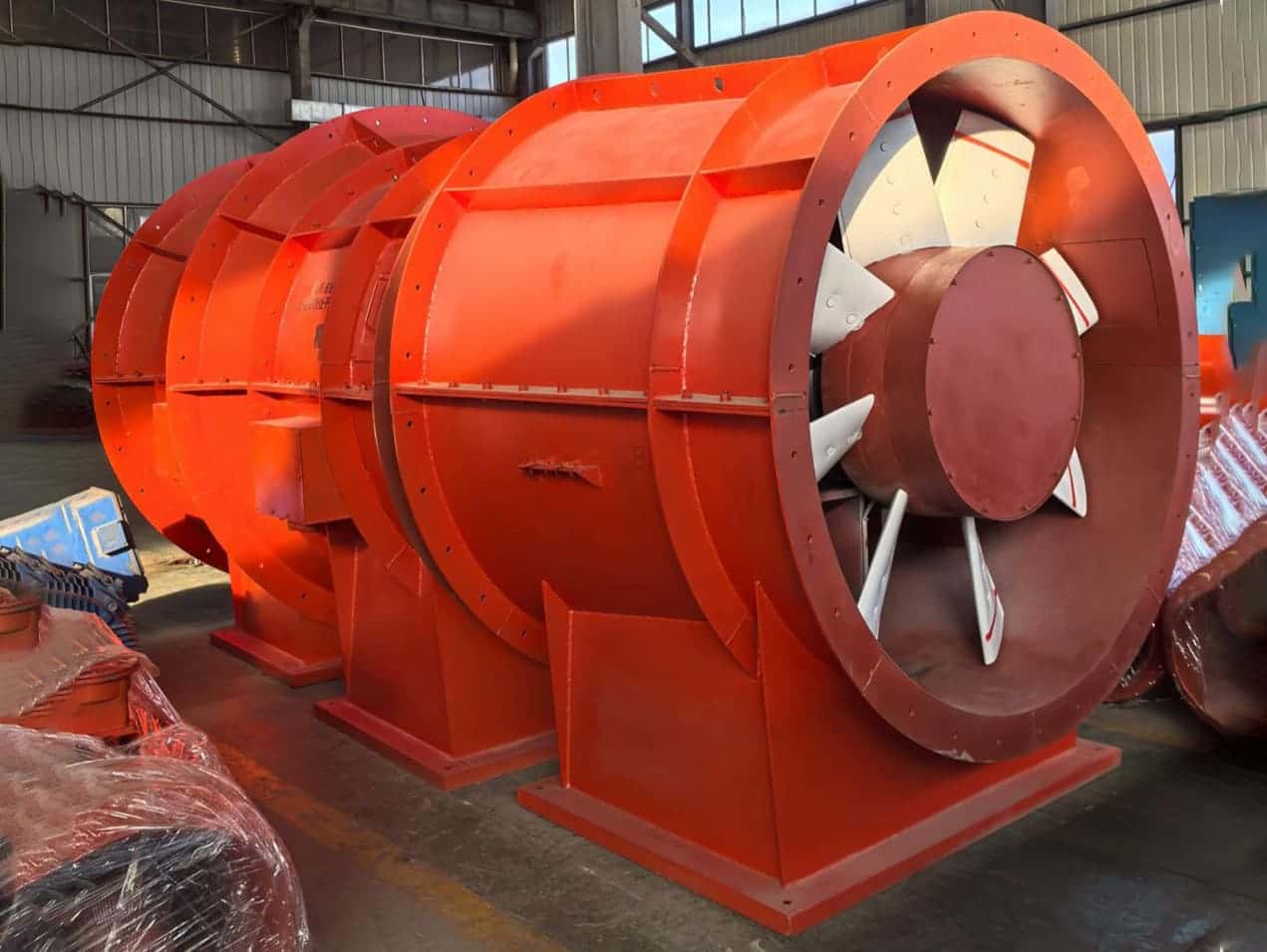
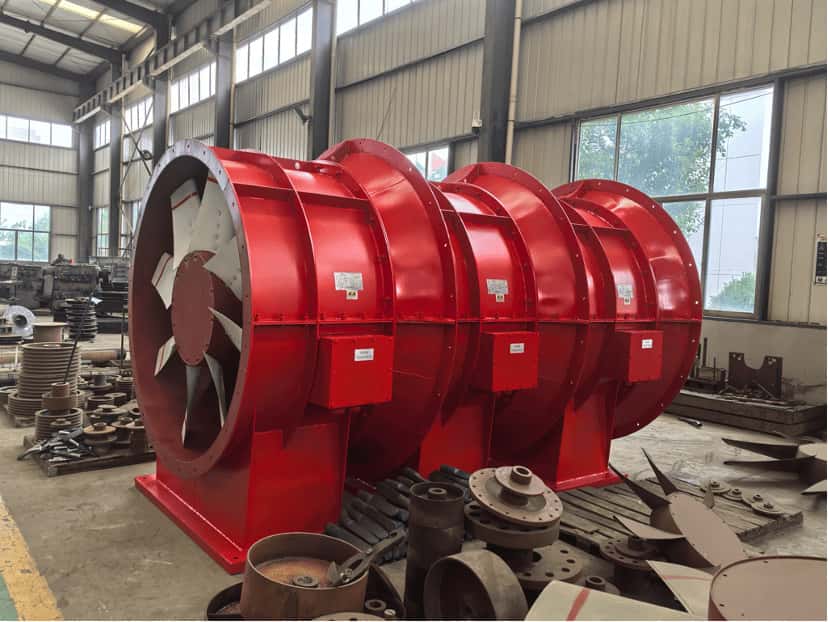
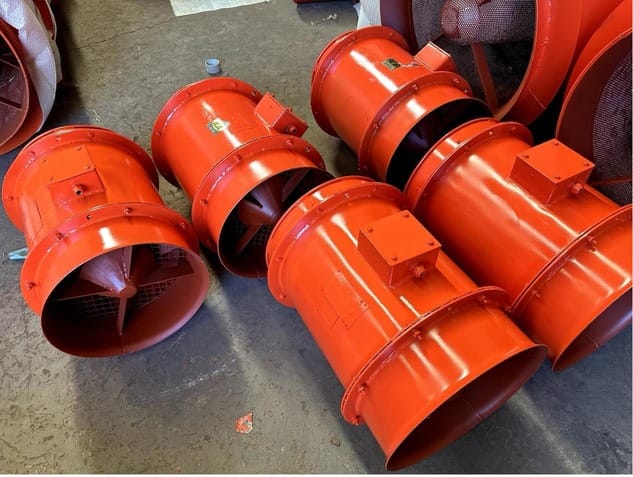
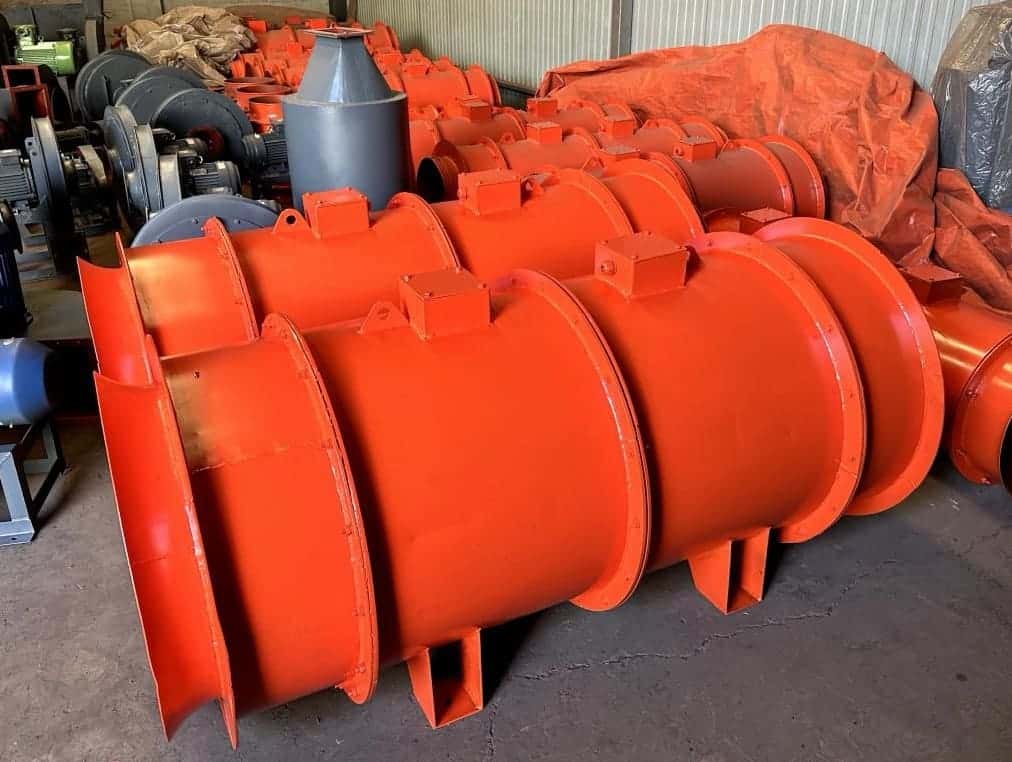
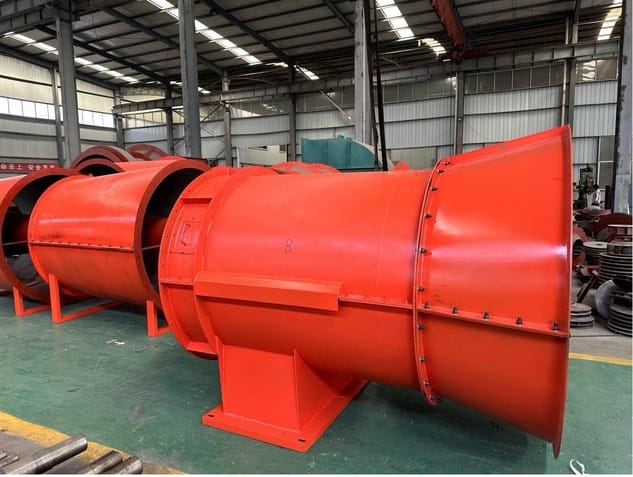
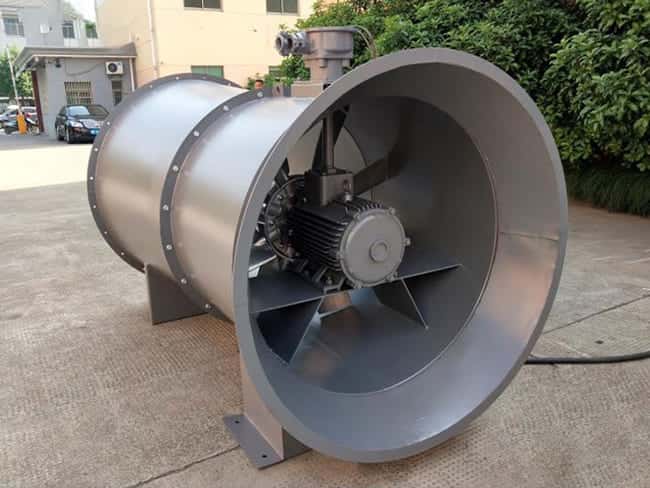
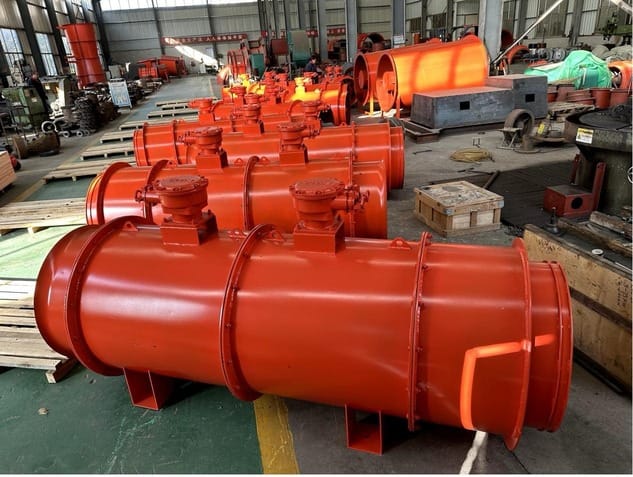
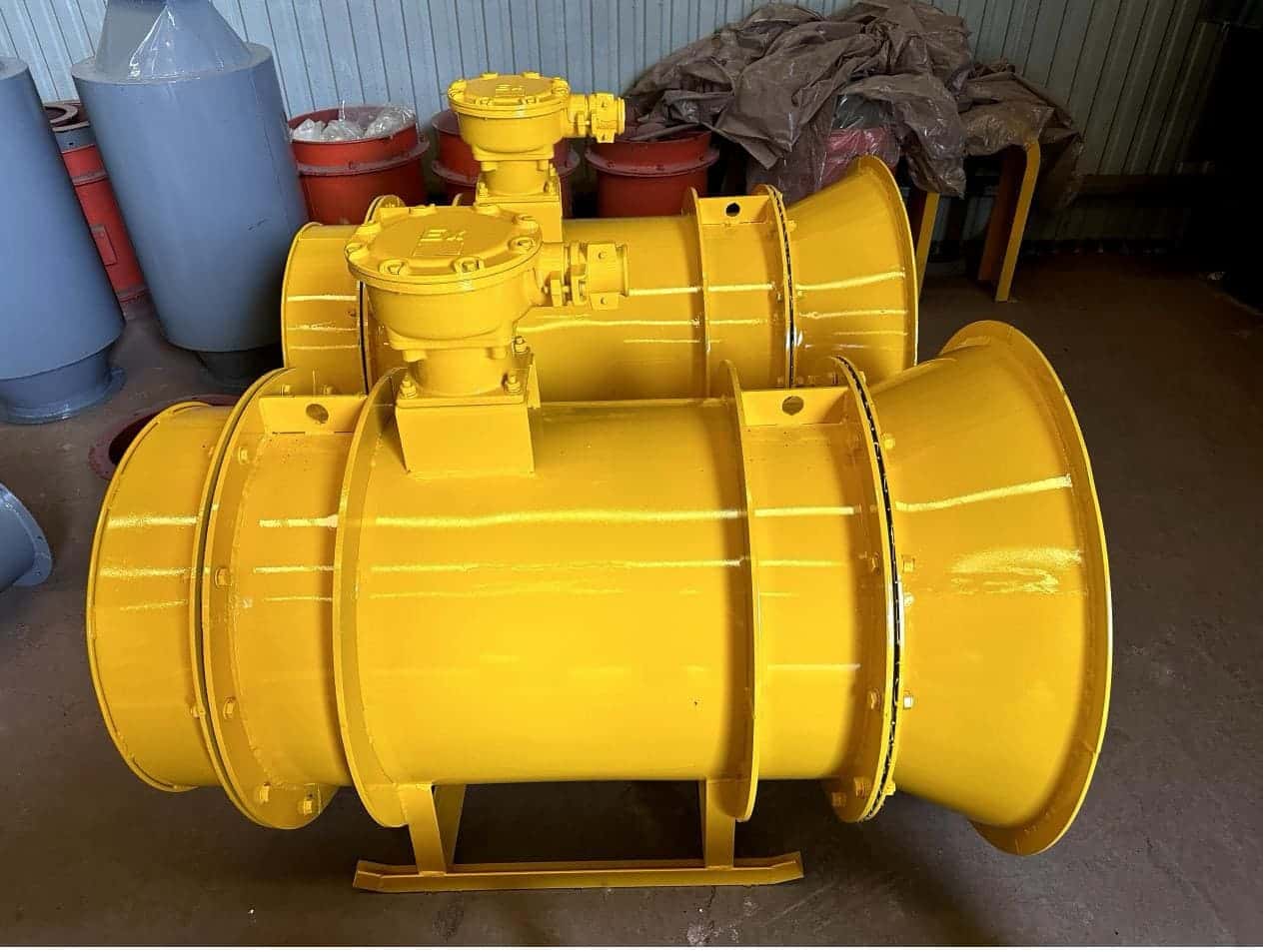
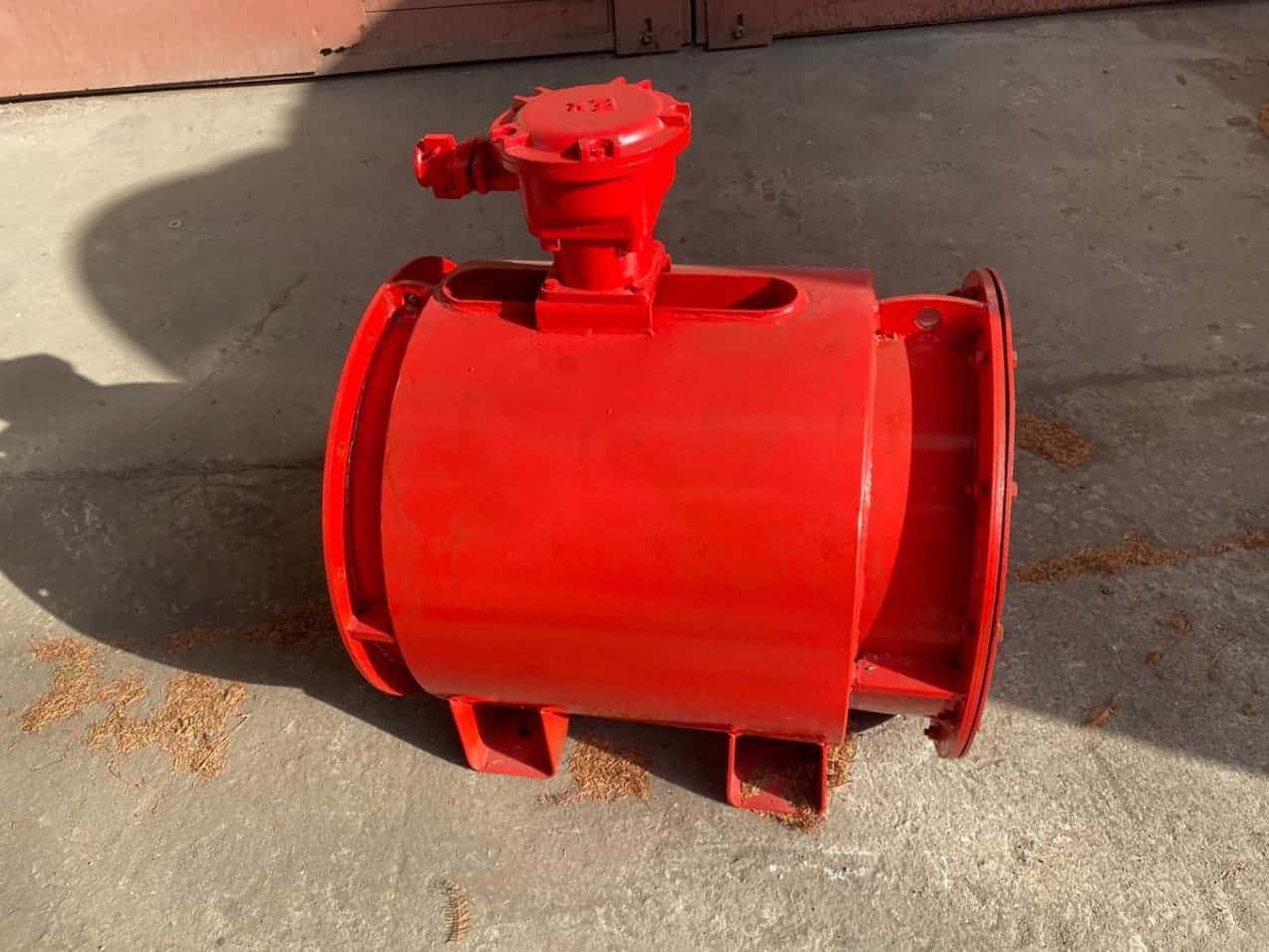
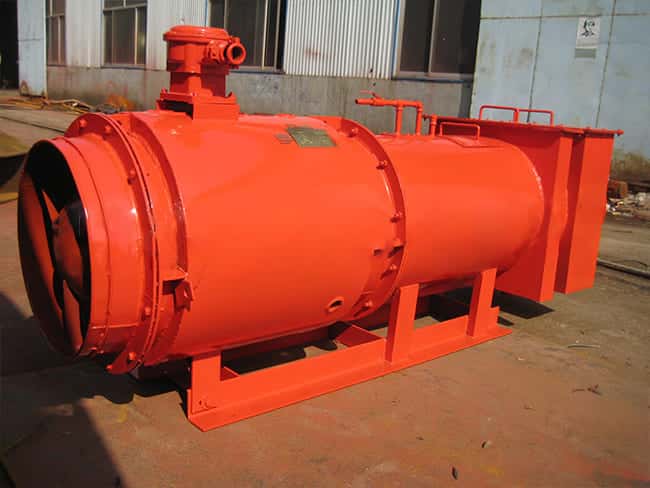
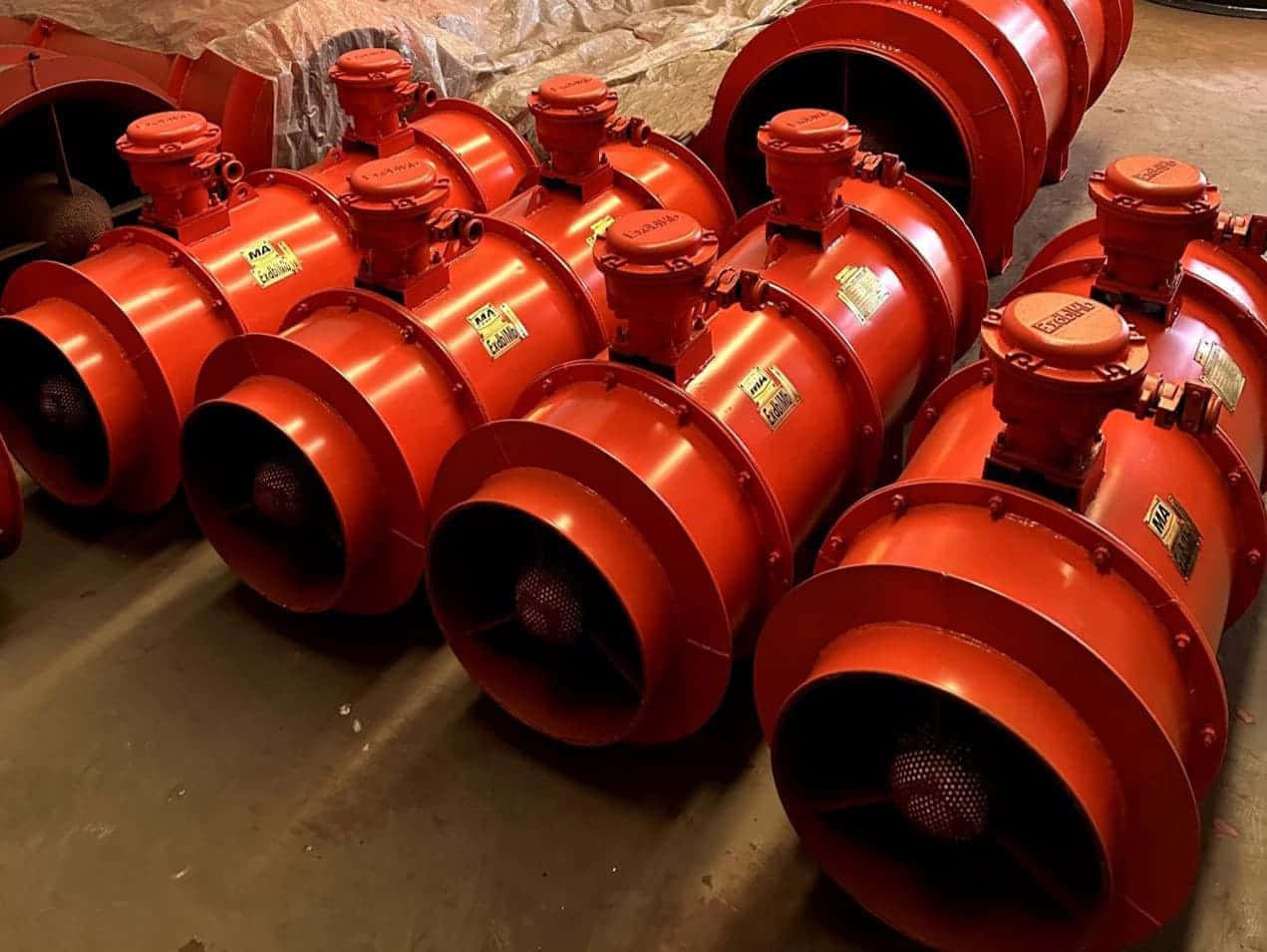
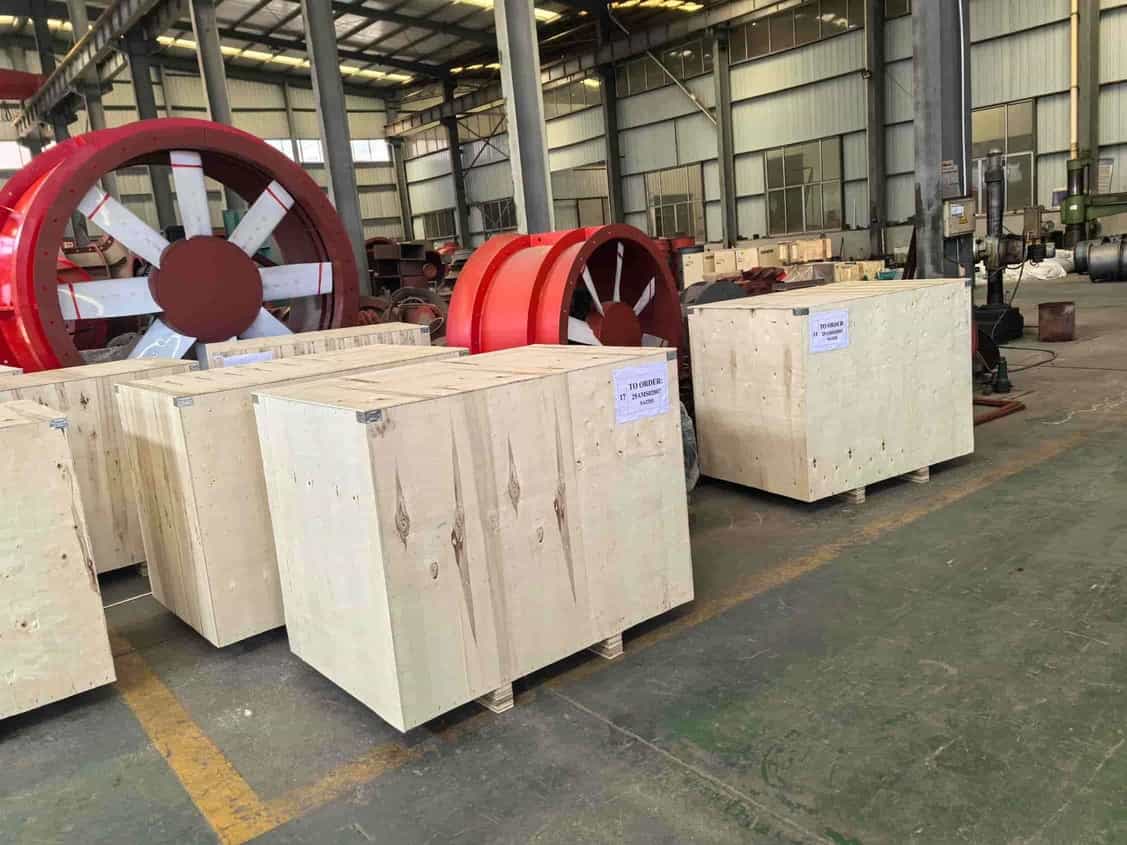
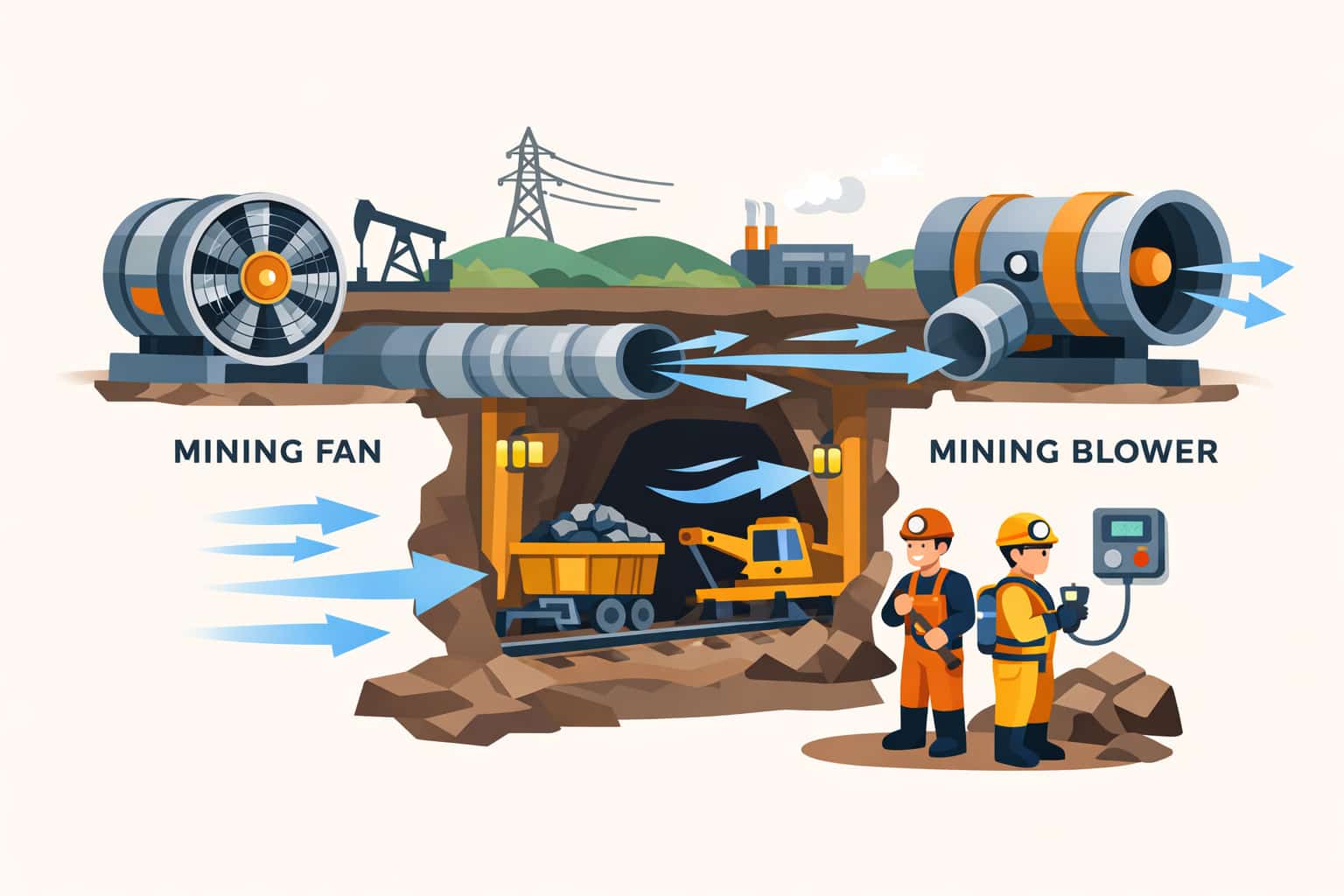



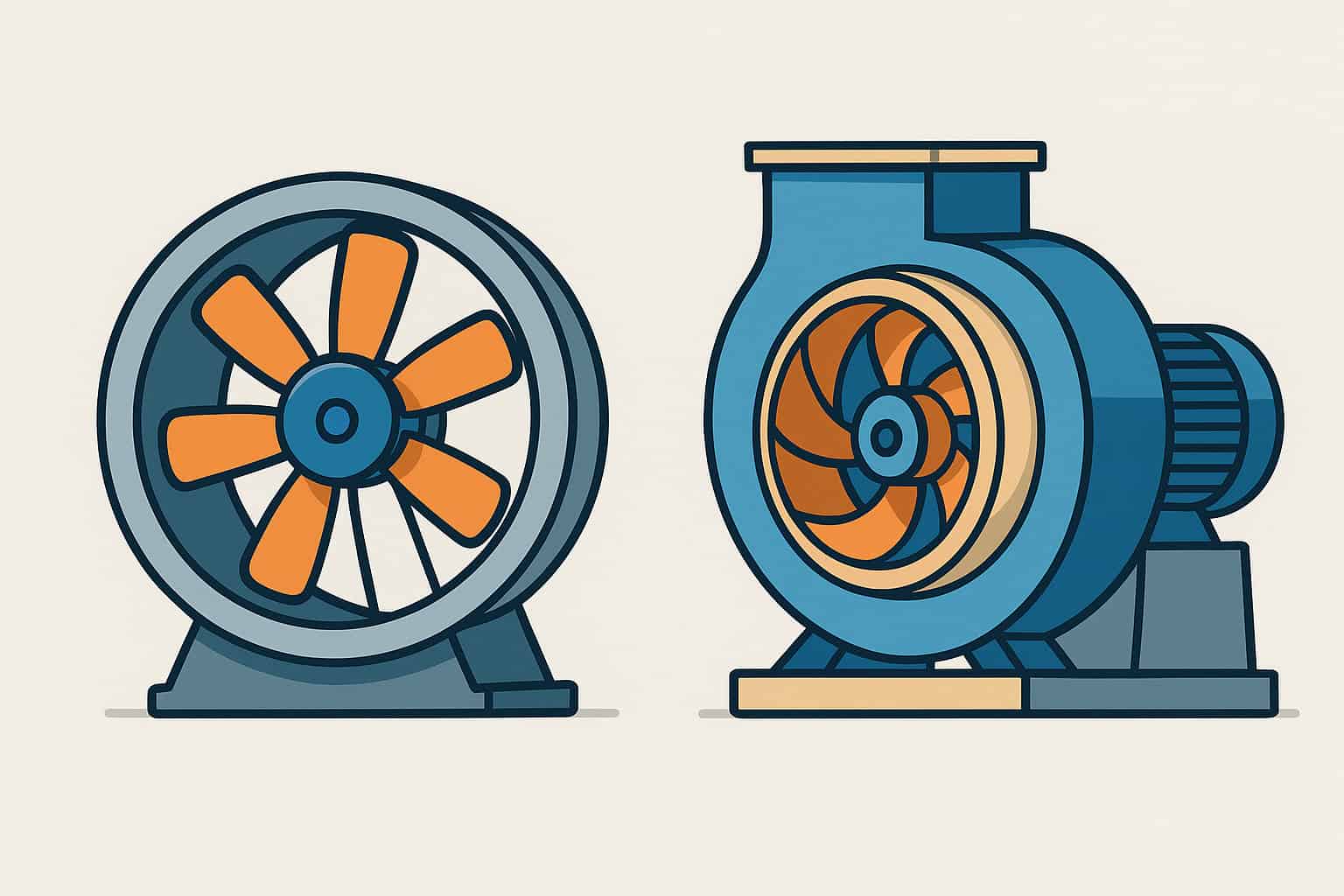
The main difference between axial and mixed flow fans lies in the way air moves through the impeller and the resulting pressure and efficiency characteristics. An axial fan moves air predominantly parallel to the shaft, like a propeller, while a mixed flow fan combines axial and radial flow components, discharging air at an angle between pure axial and pure radial. This difference in flow pattern leads to different performance ranges and typical uses in mining and industrial ventilation systems.
In an axial fan, air enters the impeller along the axis, passes through the rotating blades and exits in essentially the same direction. Axial fans are very effective for high volume, low to medium pressure duties, such as mine main fans, tunnel ventilation fans and large industrial supply or exhaust systems. Their cylindrical casings and straight-through airflow simplify installation inline with ducts, shafts and tunnels. When matched correctly to the system resistance, vane-axial and tube-axial fans offer high efficiency for these applications.
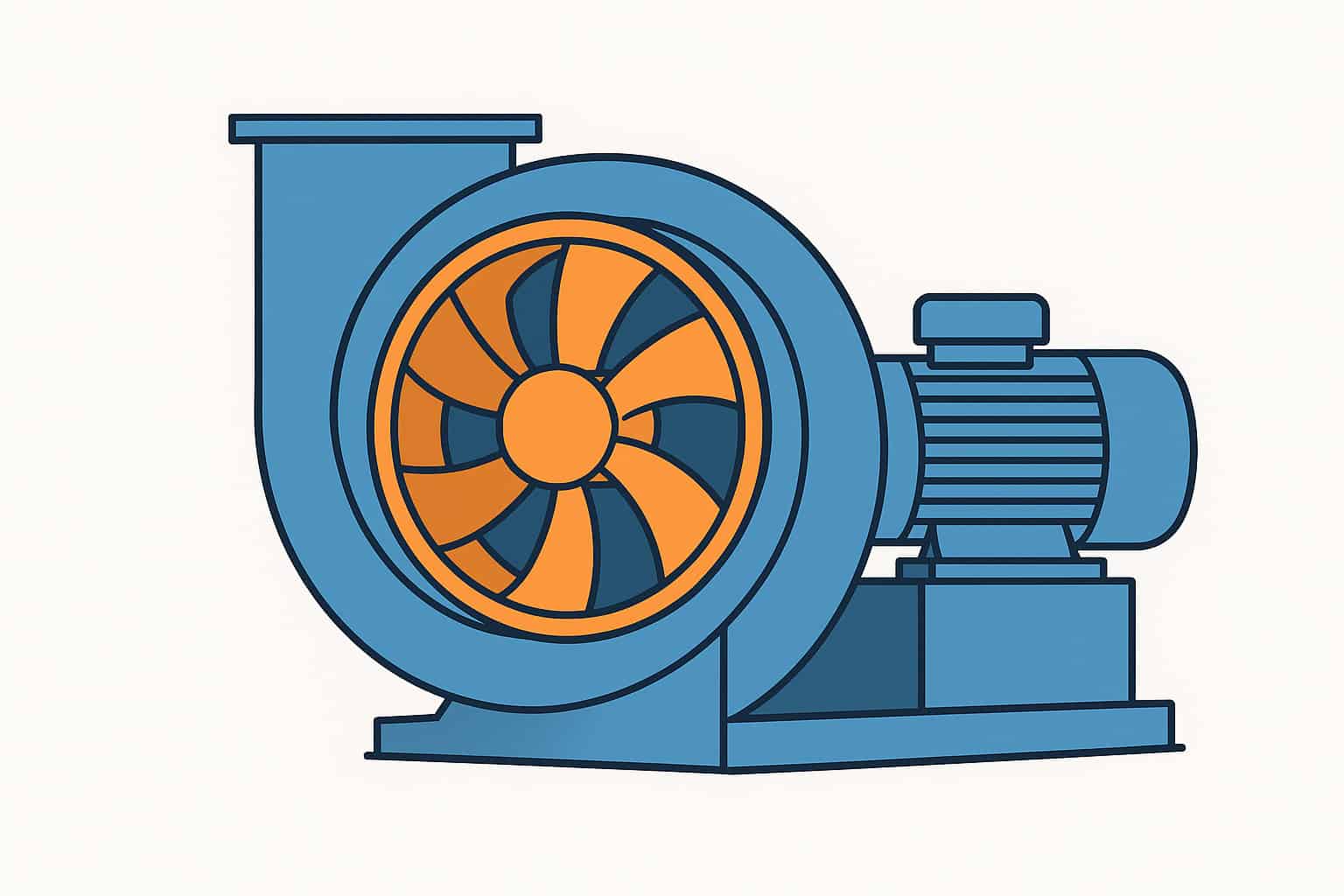
A mixed flow fan is designed so that the air path through the impeller is partly axial and partly radial. The blades and casing are shaped to turn the flow outward as it passes through the rotor, then back toward the fan axis at the outlet. This creates a flow direction and pressure capability between those of a pure axial fan and a centrifugal fan. As a result, mixed flow fans can deliver higher static pressure than axial fans of similar size, while often being more compact than equivalent centrifugal fans. They are useful where medium pressure and moderate duct system resistance must be handled in limited space.
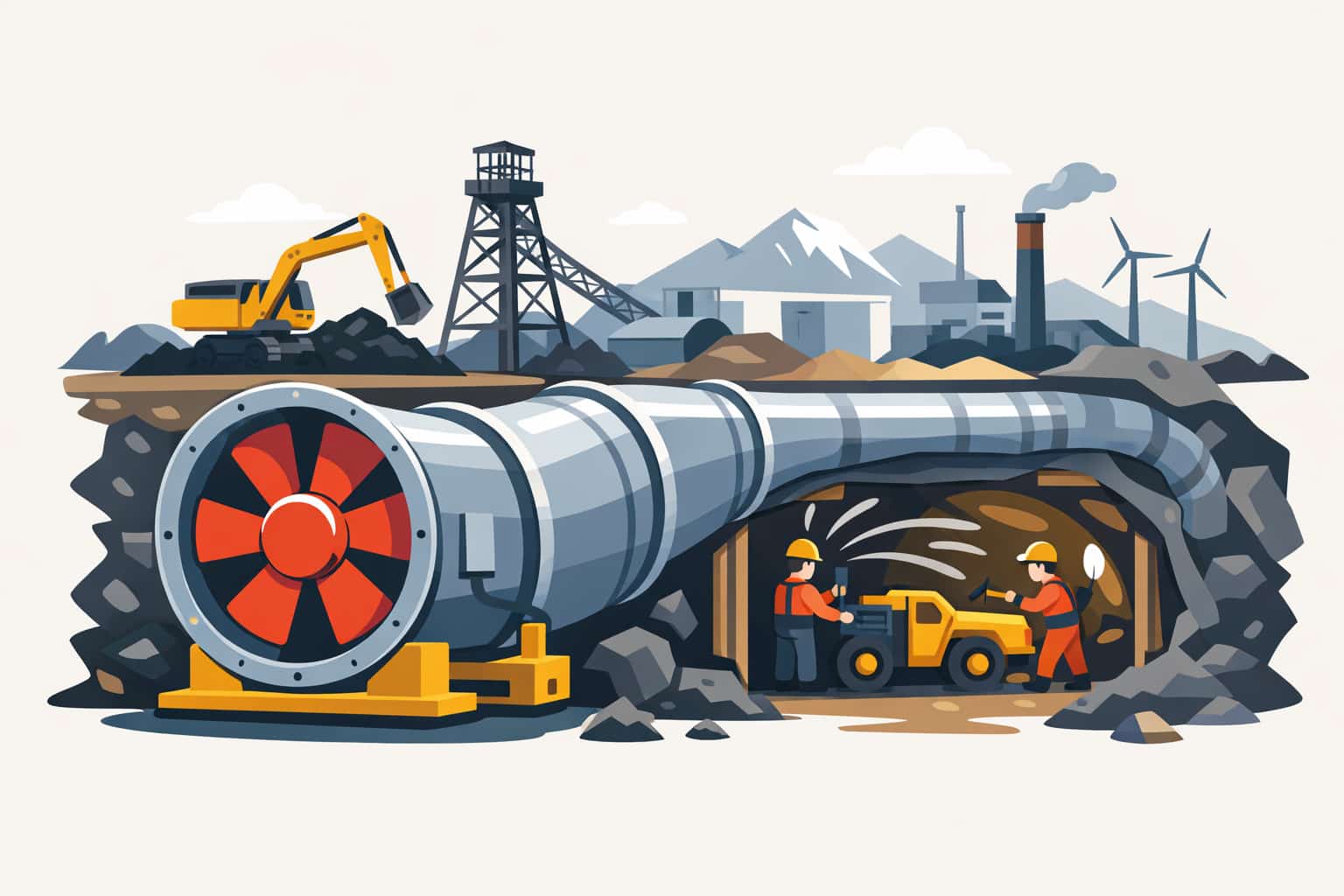
In mining and tunnelling, axial fans remain the dominant choice for main ventilation because they can be built in very large diameters and provide excellent efficiency at typical mine pressure ranges. Mixed flow fans are more commonly used in certain underground facilities, short tunnels, plant rooms or niche applications where space constraints and specific pressure requirements favour a hybrid solution. They may also be selected for noise or vibration reasons in some designs.
In industrial plants, axial fans are widely used for roof and wall ventilation and for low-resistance duct systems, while mixed flow fans are applied where moderate pressure, compact installation and stable performance are required, such as in some air handling units, car parks or service tunnels. Both types can be combined with silencers, variable speed drives and control systems to meet environmental and energy targets.
In summary, axial fans move air mainly parallel to the shaft and excel in high volume, low to medium pressure ventilation of tunnels, mines and large buildings. Mixed flow fans introduce a radial component to the flow, providing higher pressure in a more compact casing for medium pressure systems where axial or centrifugal fans alone are not ideal.
