
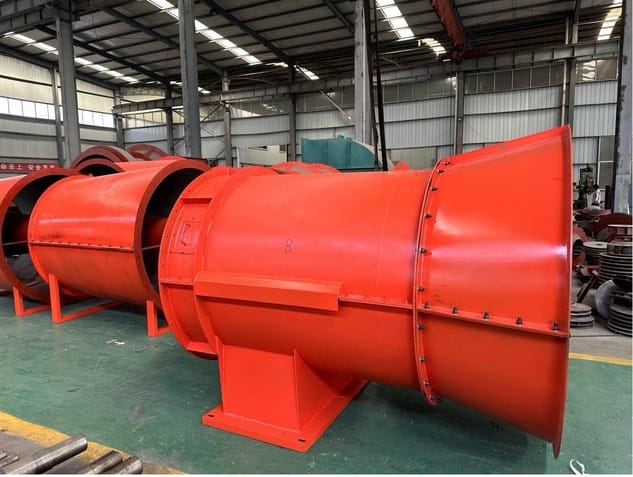
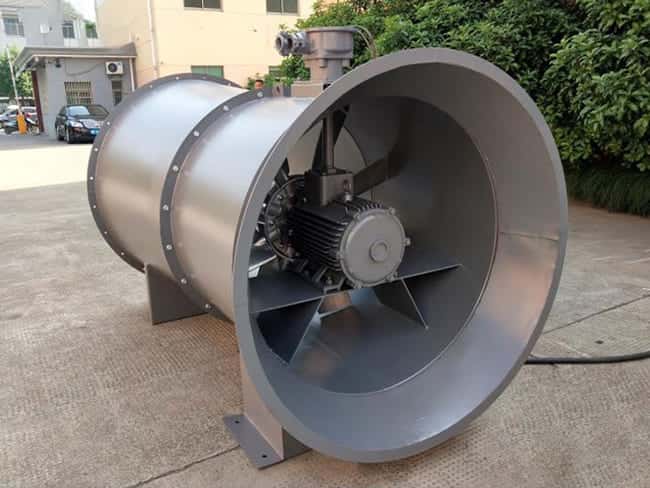
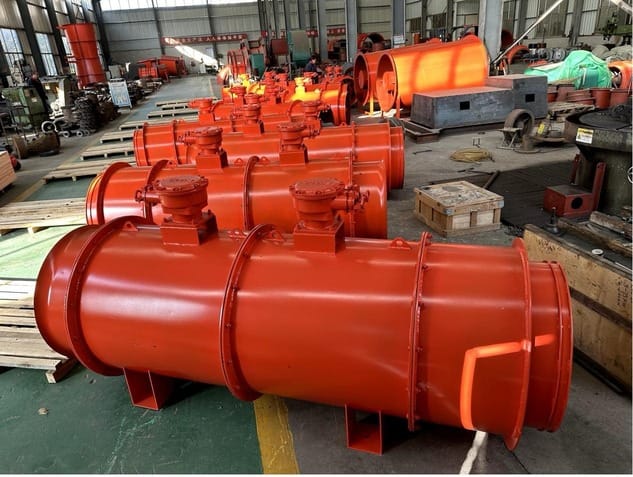
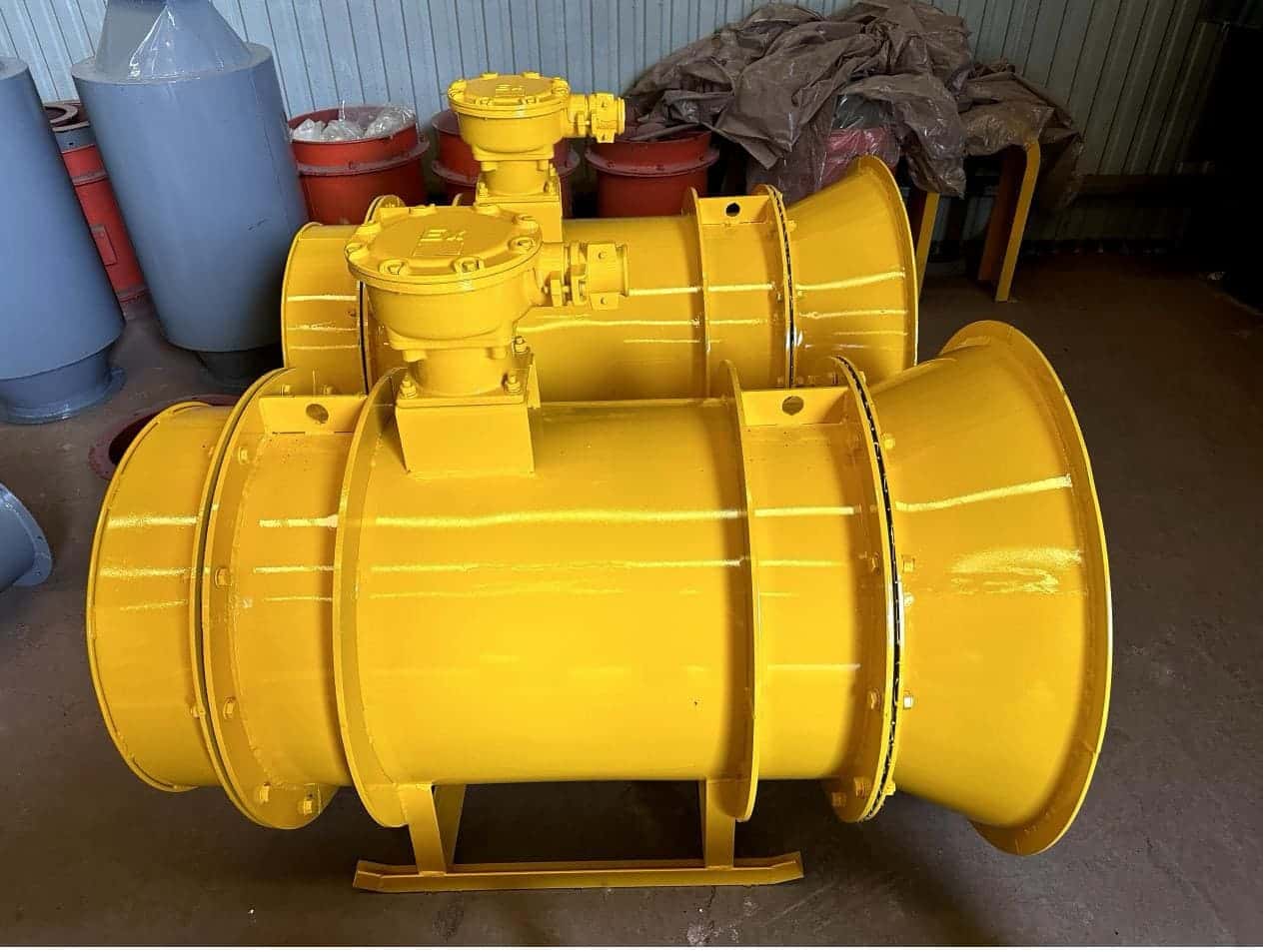


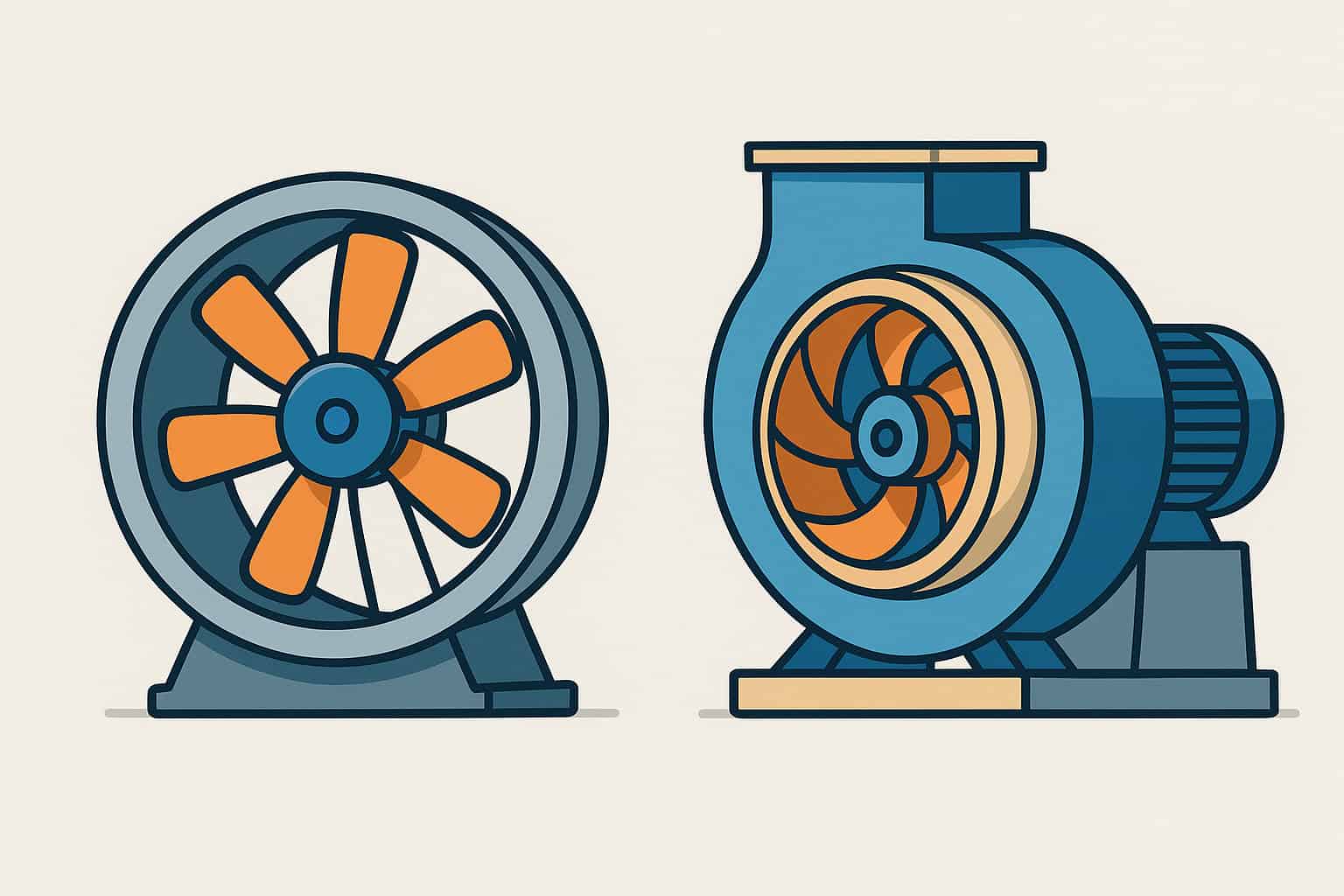
The key difference is that an axial fan is a specific fan type, while a “ventilation fan” is a general term for any fan used to move air for ventilation. In other words, an axial fan can be a ventilation fan, but not all ventilation fans are axial fans. Ventilation fans may also be centrifugal, mixed-flow or other specialised designs.
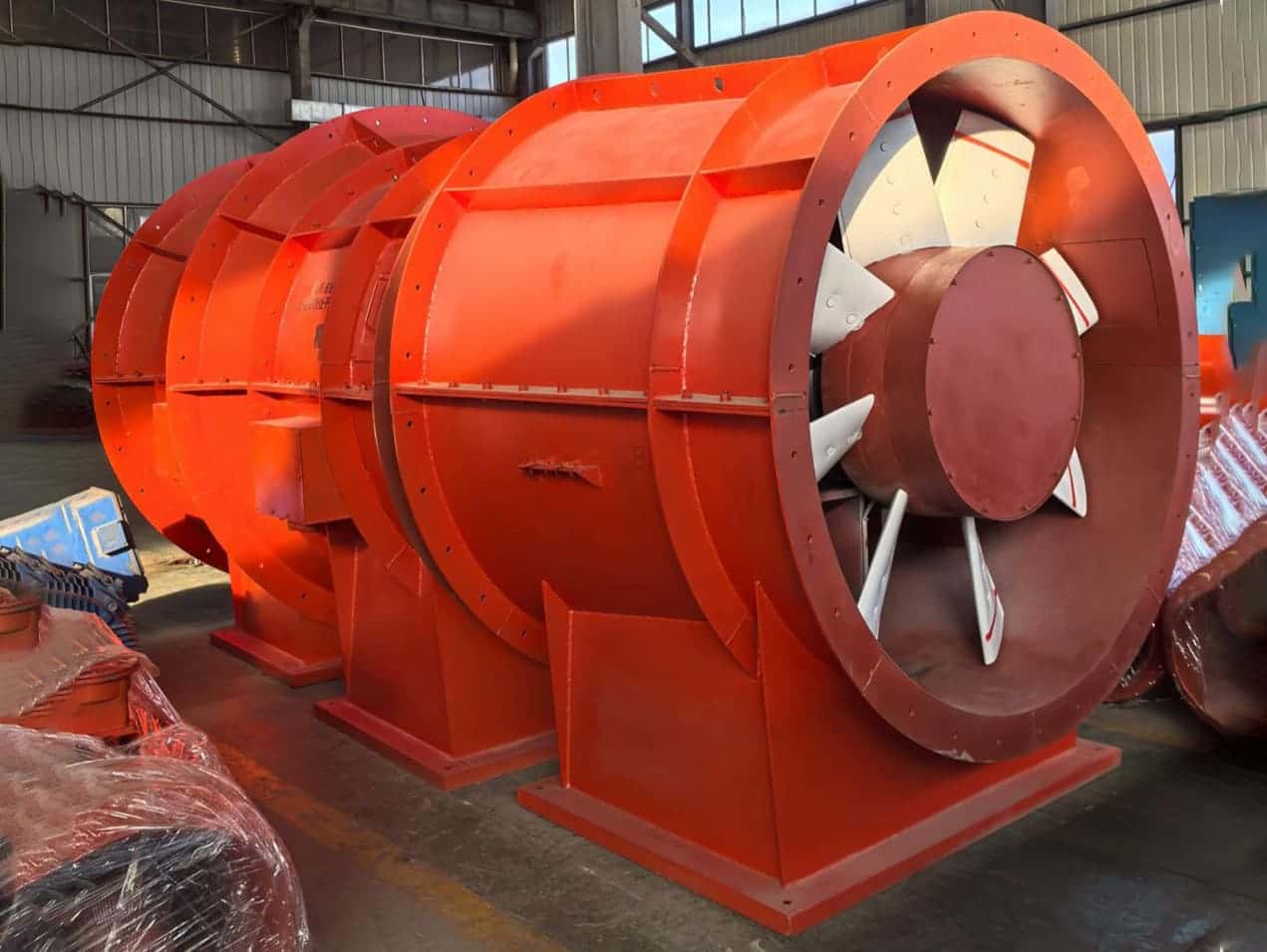
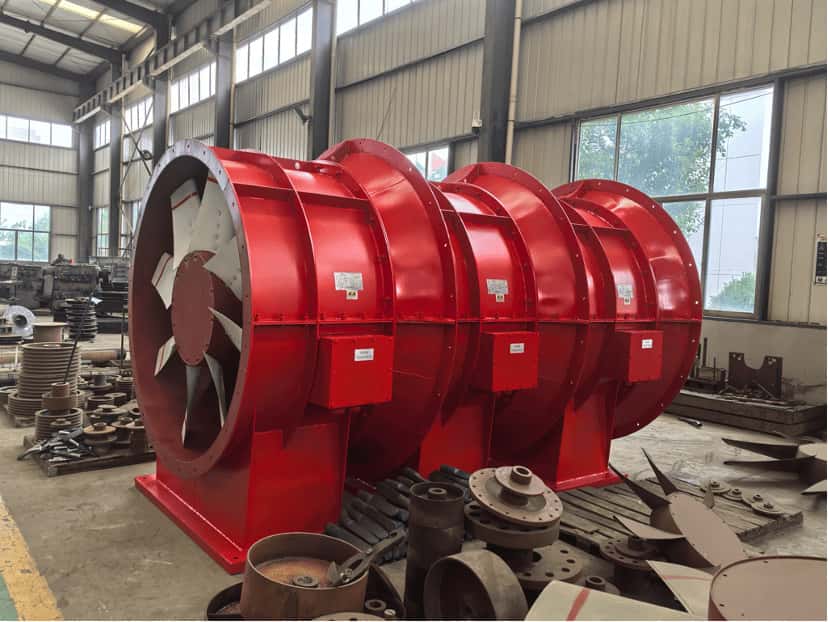
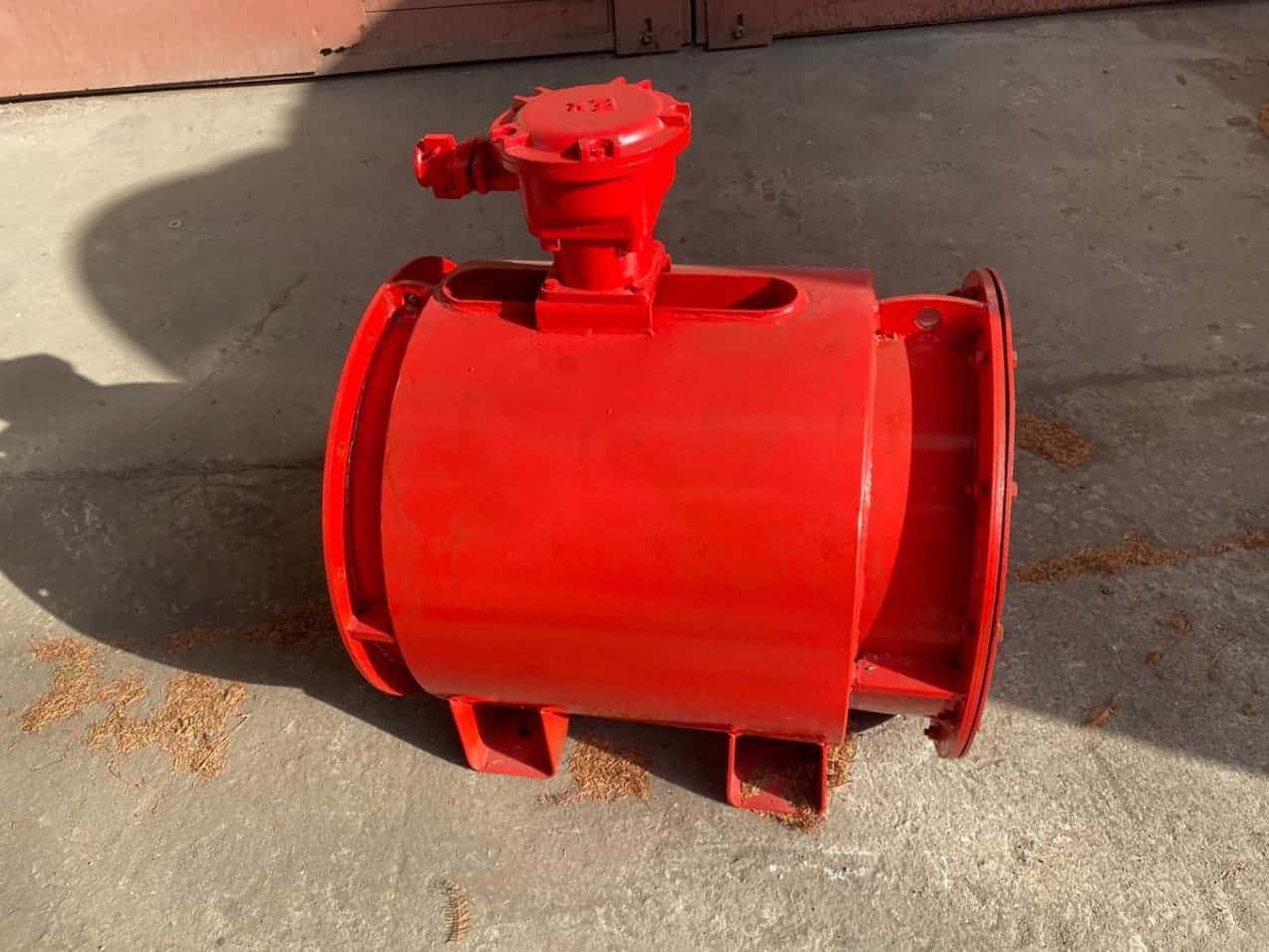
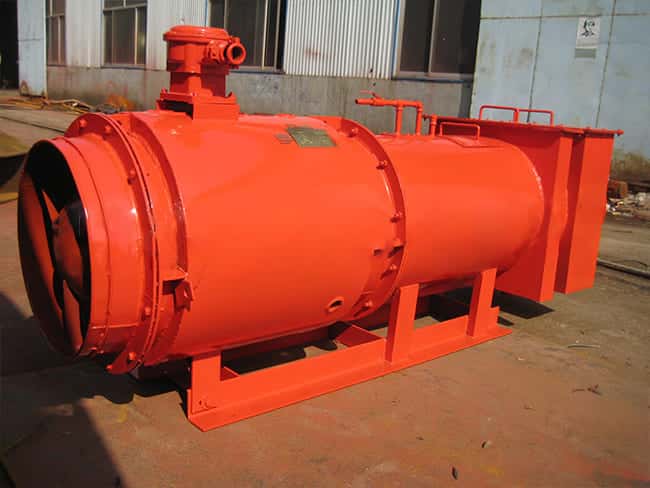
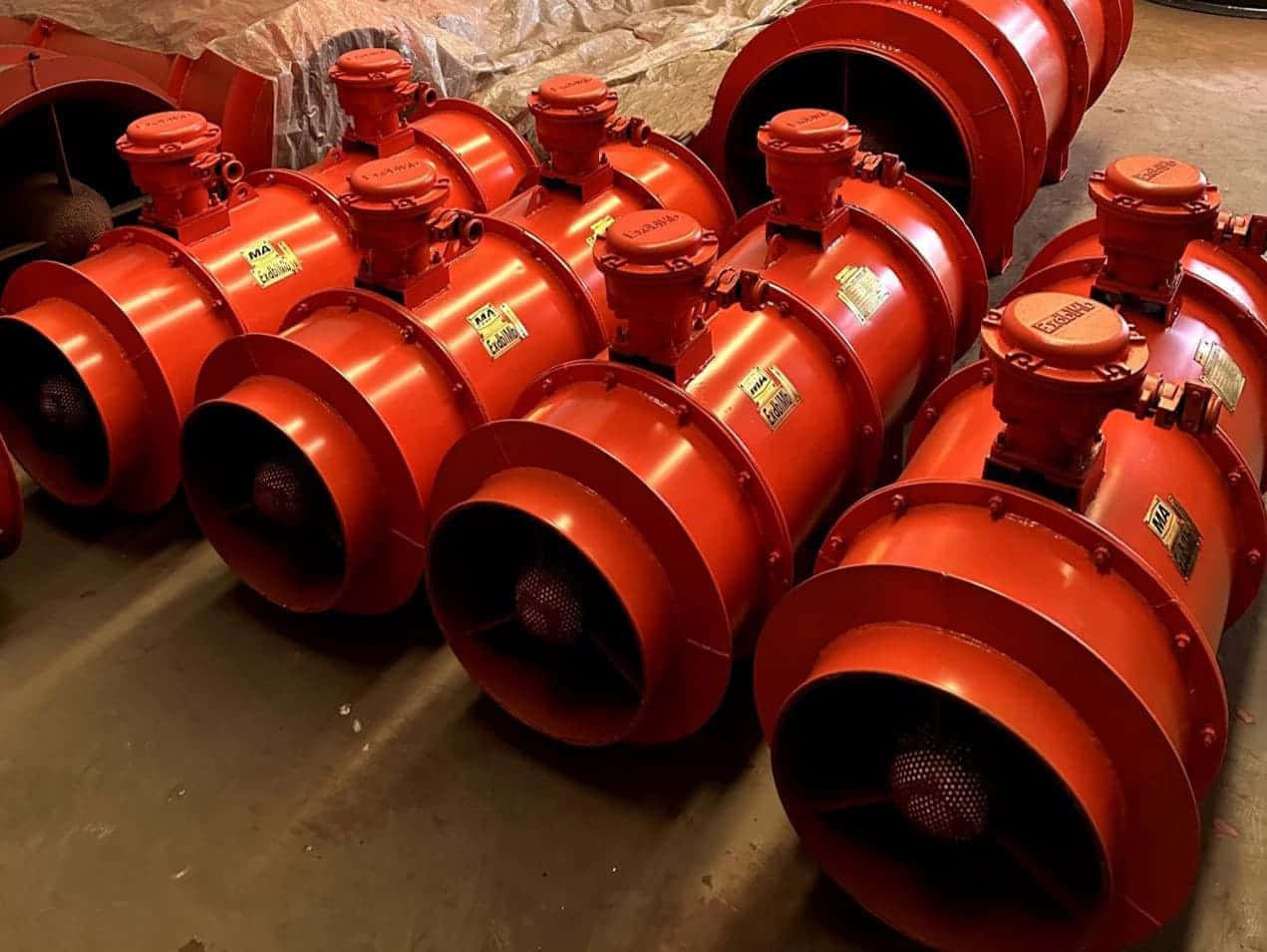
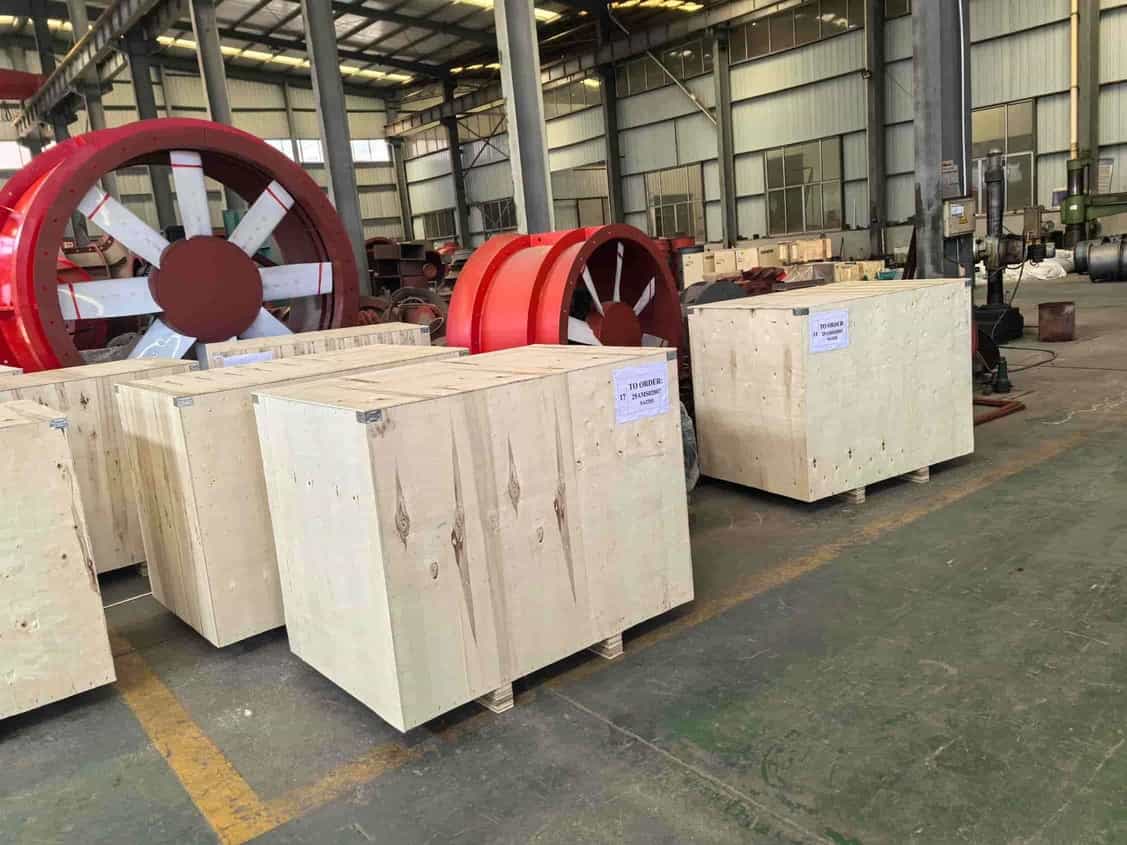
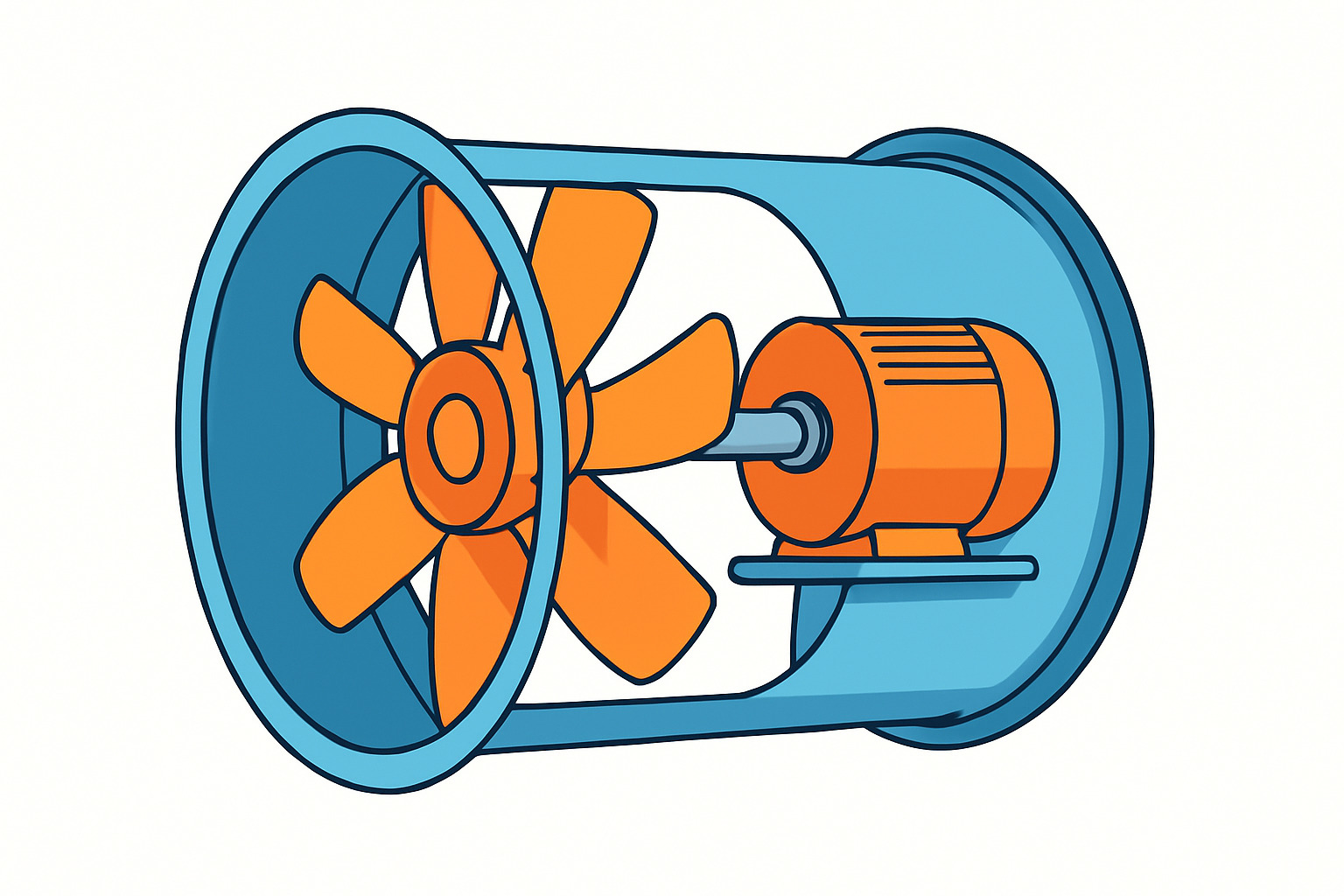
An axial fan moves air parallel to the shaft, like a propeller. Air enters and leaves in the same direction, straight through the fan. Axial fans are widely used in high-volume, low-pressure applications. Examples include tunnel fans, main mine fans in relatively low-resistance shafts, cooling tower fans, condenser fans, and large building supply or exhaust fans. They can be duct-mounted, wall-mounted or installed directly in tunnels and shafts.
A ventilation fan is any fan used to supply fresh air, remove stale air, or control temperature, humidity and contaminants in a space. This term covers many fan types:
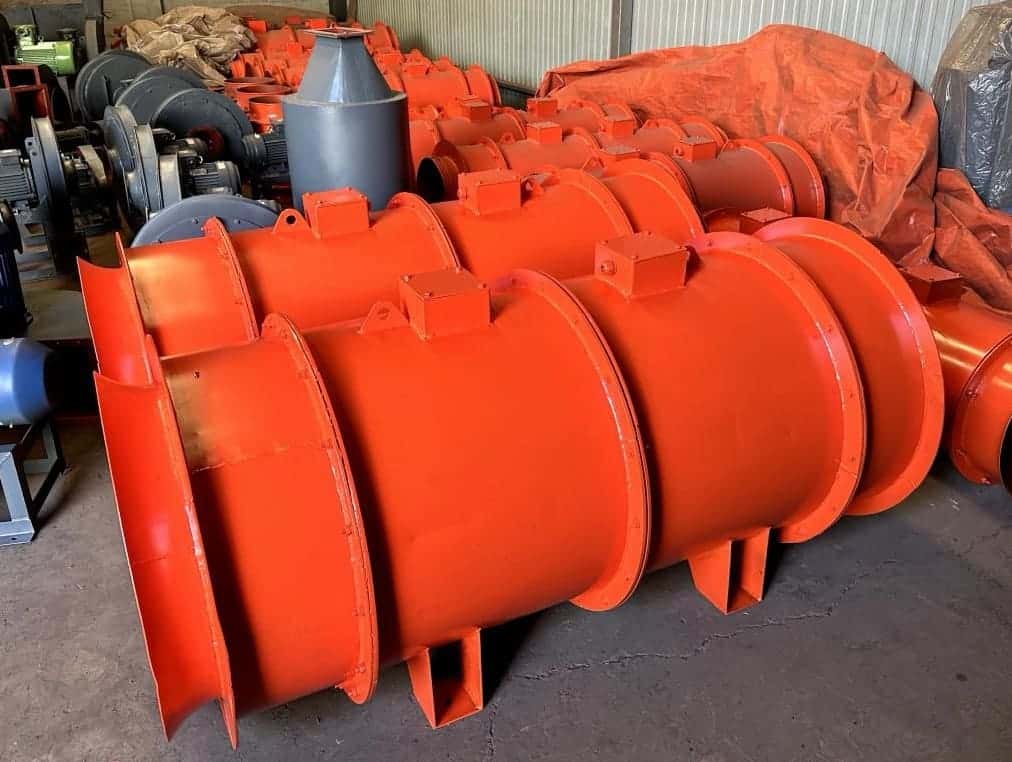
- Axial ventilation fans for tunnels, mines, warehouses and process areas.
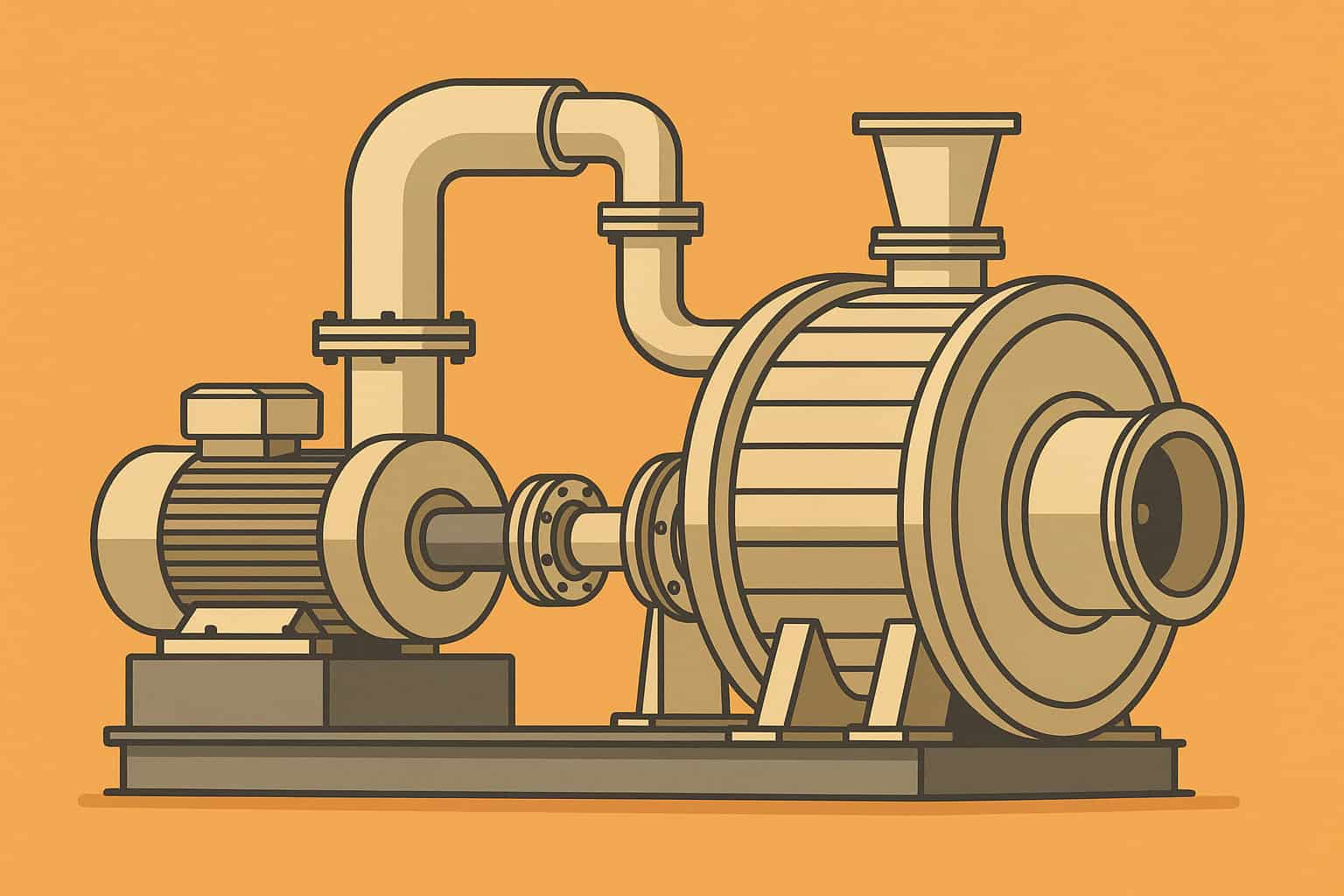
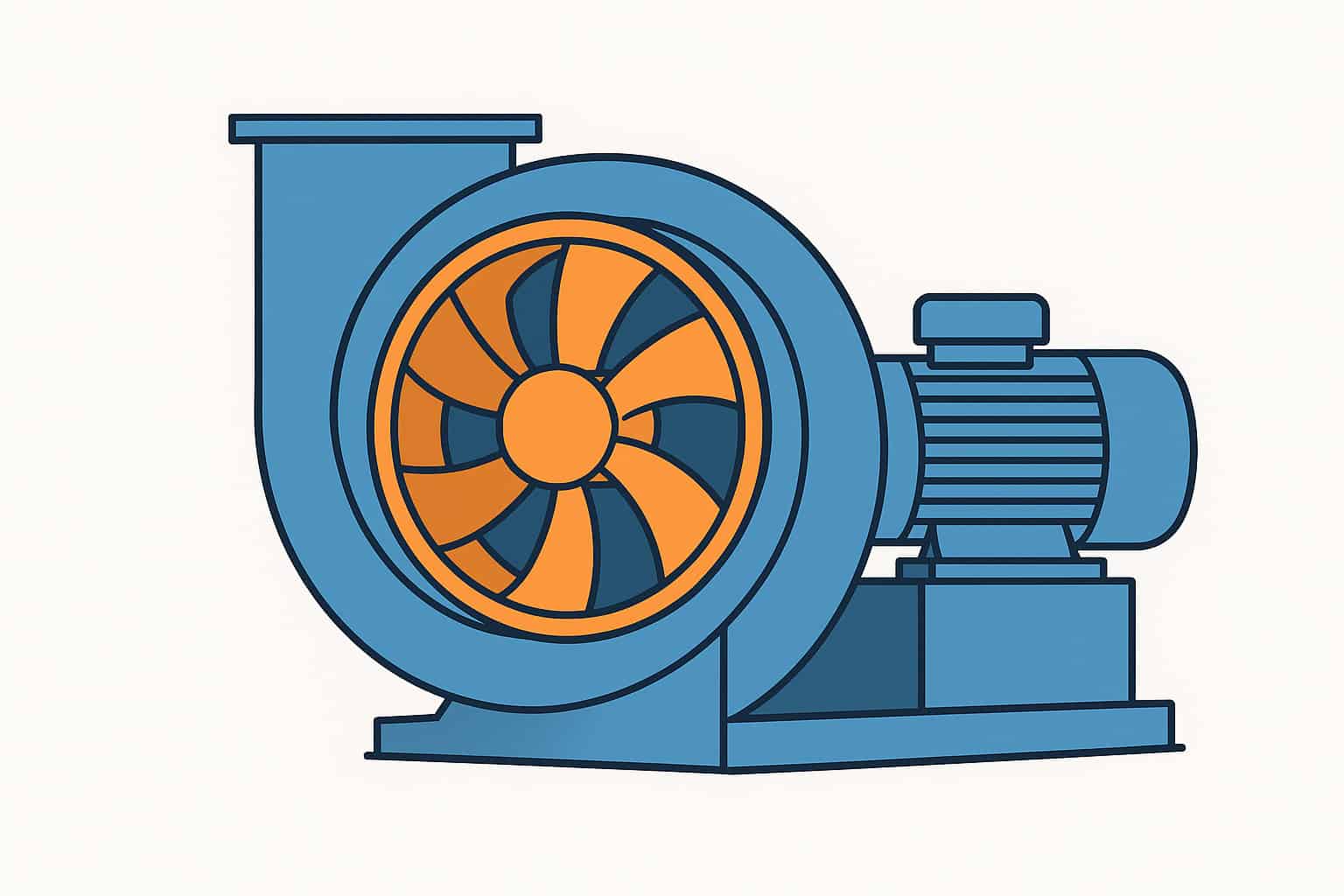
- Centrifugal ventilation fans (blowers) for dust collection, scrubbers, ducted HVAC systems, local exhaust and booster stations.
- Mixed-flow fans that combine axial and centrifugal features, often used in ducts when higher pressure is needed in a compact form.
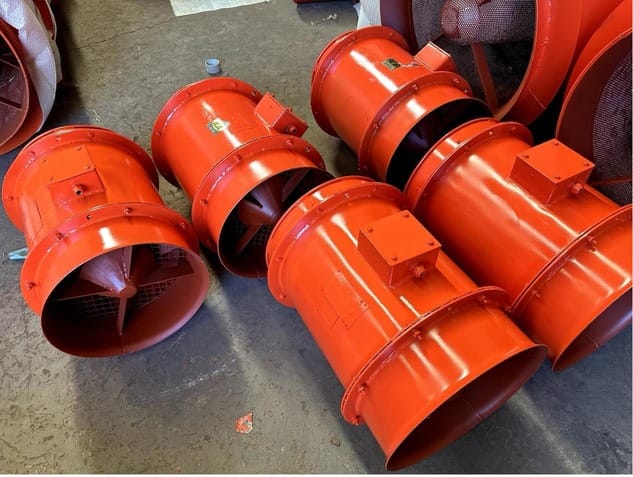
- Portable ventilation fans used on construction sites, confined spaces and temporary mining headings.
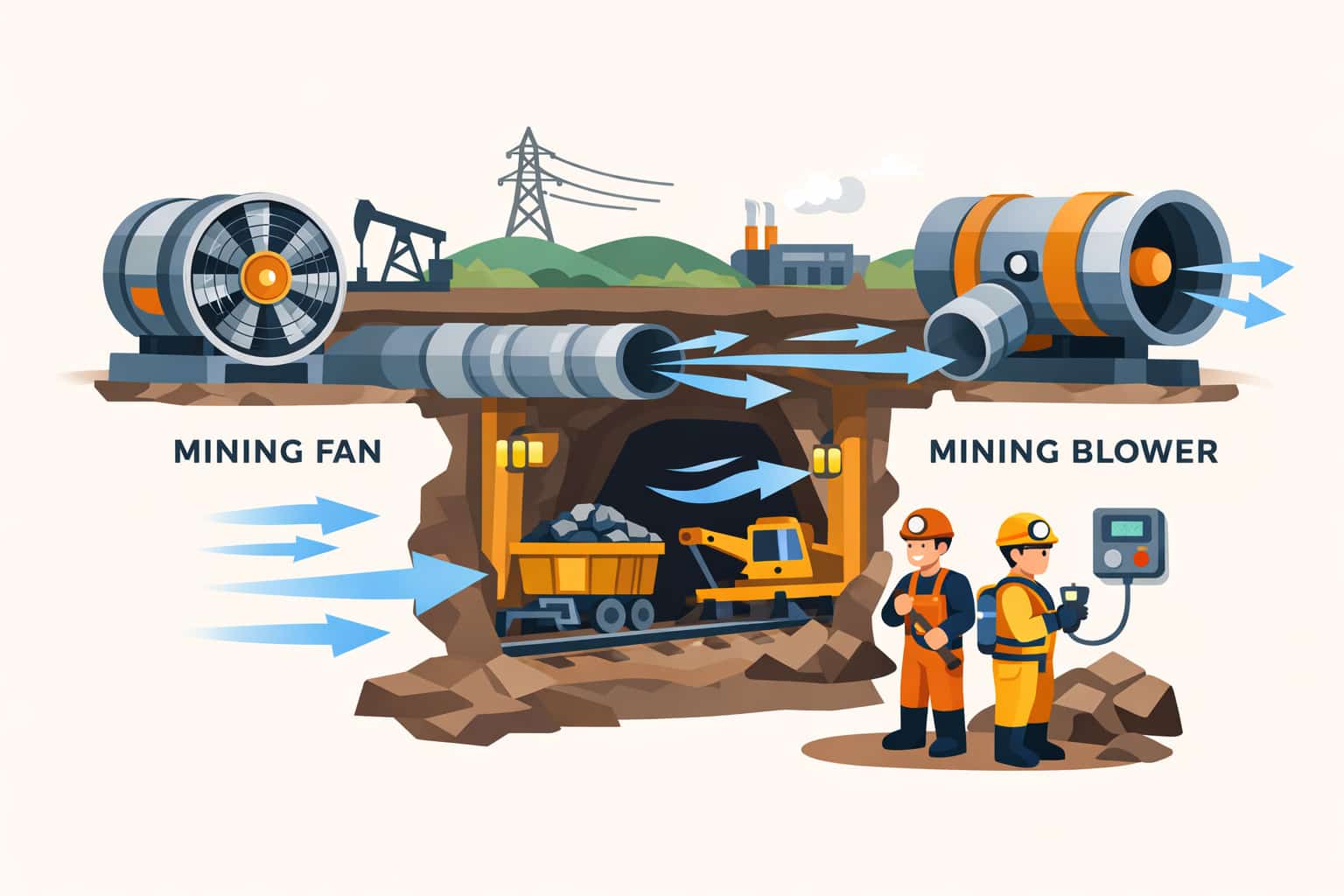
So when someone says “ventilation fan”, they might be referring to any of these designs. The exact type depends on the pressure, airflow and air-quality requirements. For example, an underground mine will use axial fans for main ventilation, centrifugal fans for dust collectors and auxiliary fans, and perhaps mixed-flow inline fans for specific headings.
From a practical standpoint, the difference matters when you select equipment. If a specification only says “ventilation fan” without naming the type, you still need to decide whether an axial, centrifugal or mixed-flow design is appropriate. This choice is based on system resistance, space, noise limits, dust loading and energy requirements. Simply buying any fan labelled “ventilation fan” without checking the type can easily result in poor performance.
In summary, an axial fan is one specific type of ventilation fan that moves air parallel to its shaft and is ideal for high-volume, low-pressure duties. A ventilation fan is a broad category that includes axial fans and other fan types used to provide fresh air and exhaust in industrial plants, buildings and mines.
