





Axial flow fans and propeller fans belong to the same general family, but they are not used in exactly the same way. Both move air in a direction roughly parallel to the shaft, yet their construction, pressure capability and typical applications are different. Understanding this difference is important when selecting ventilation equipment for industrial plants and mines.
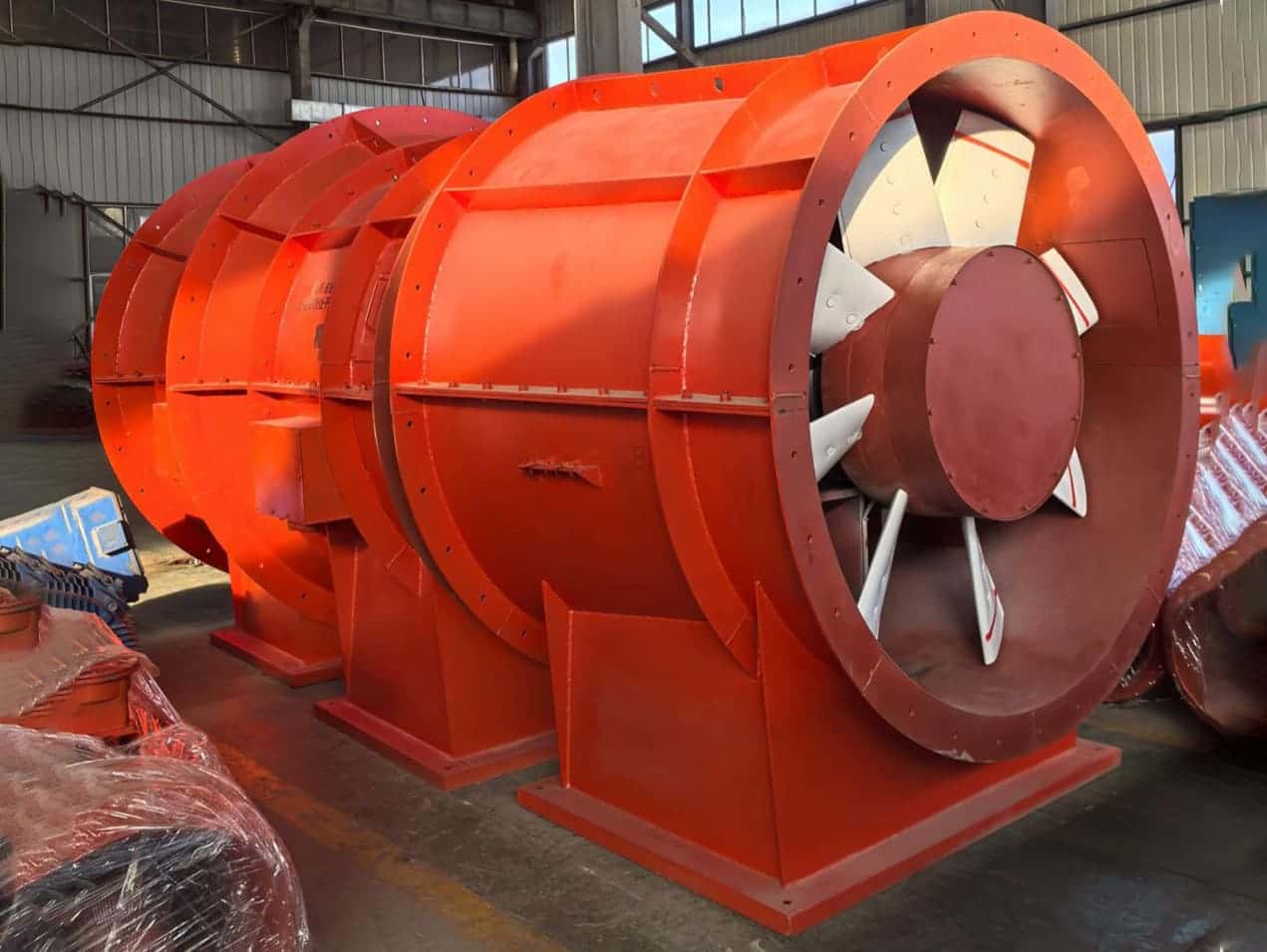
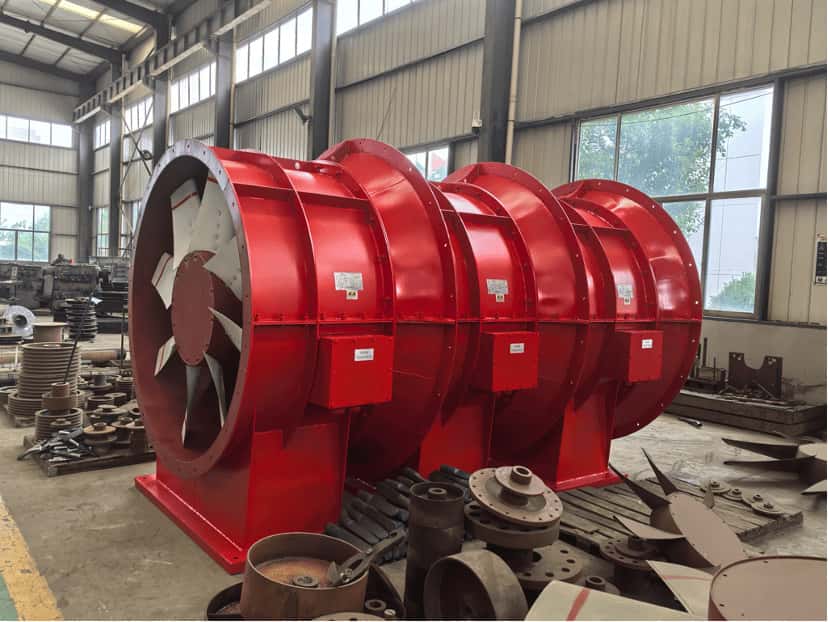
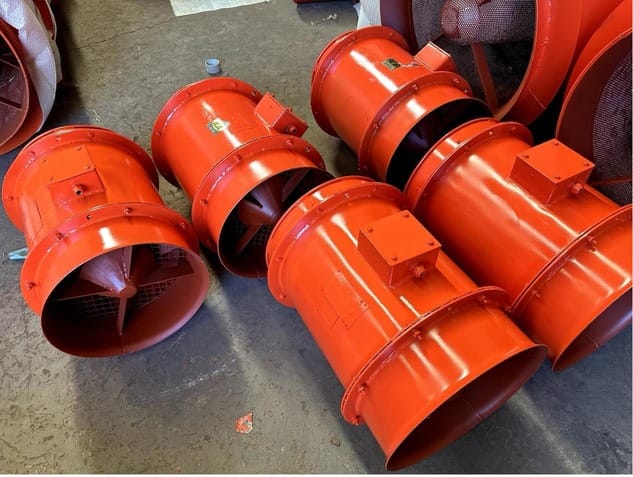
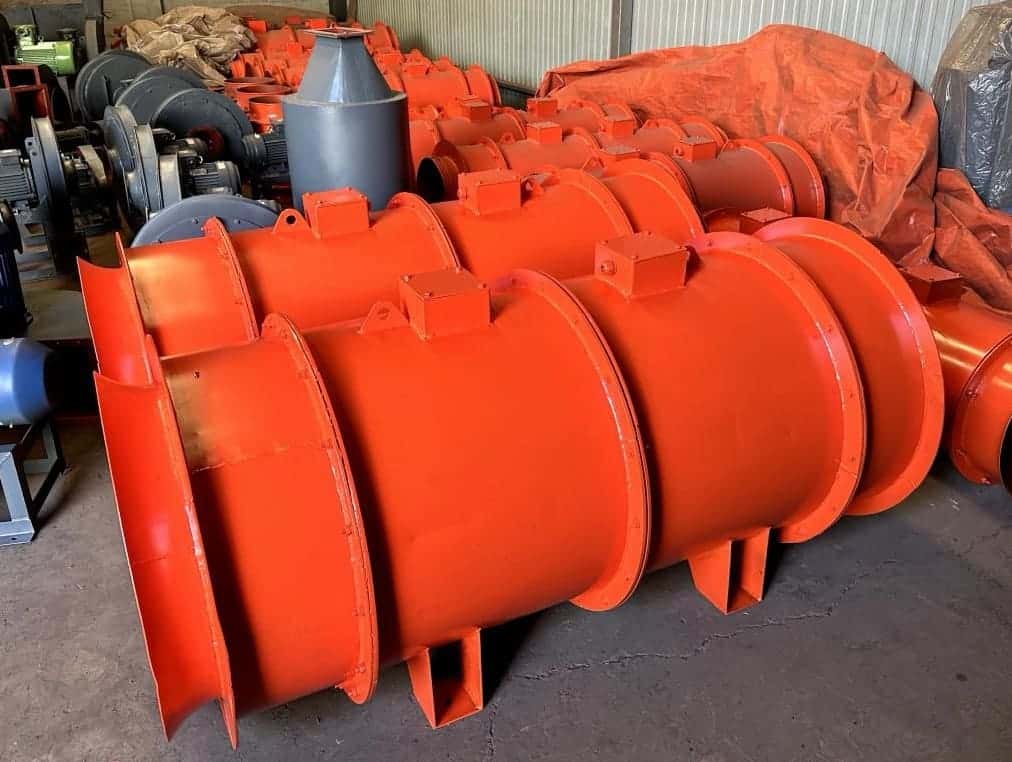
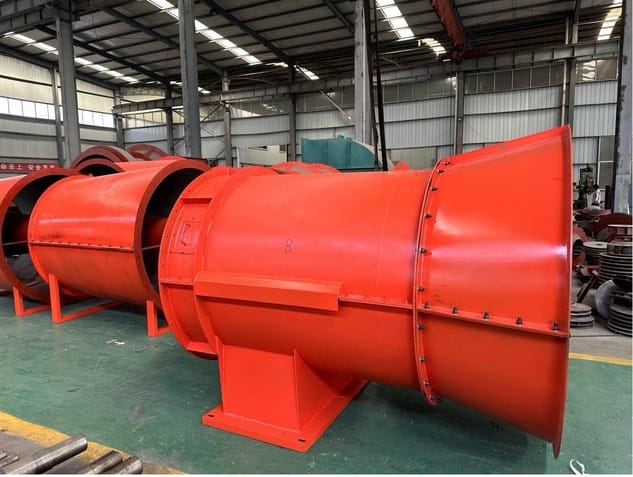
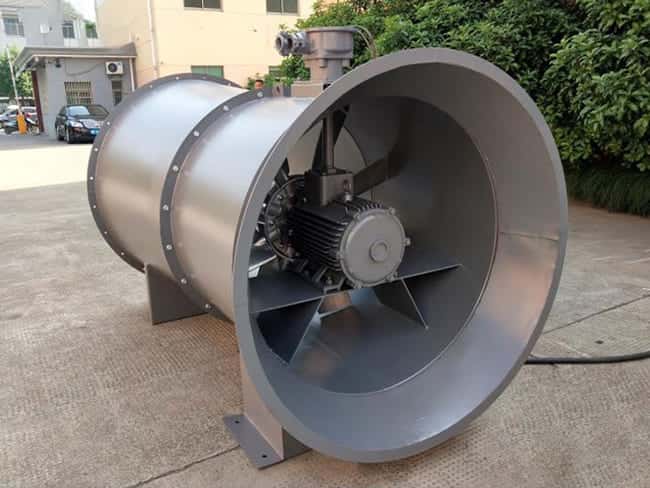
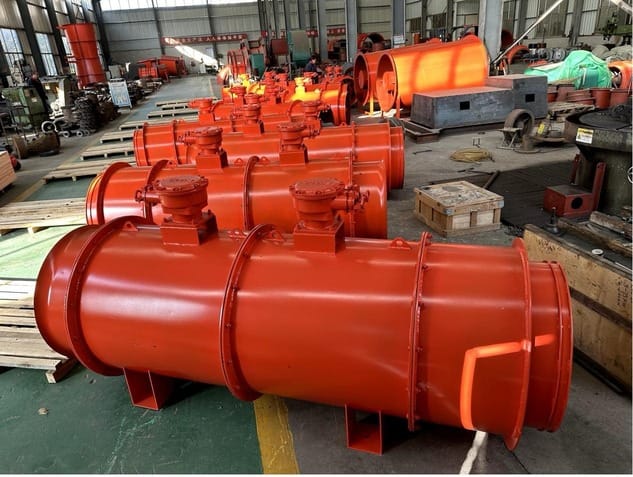
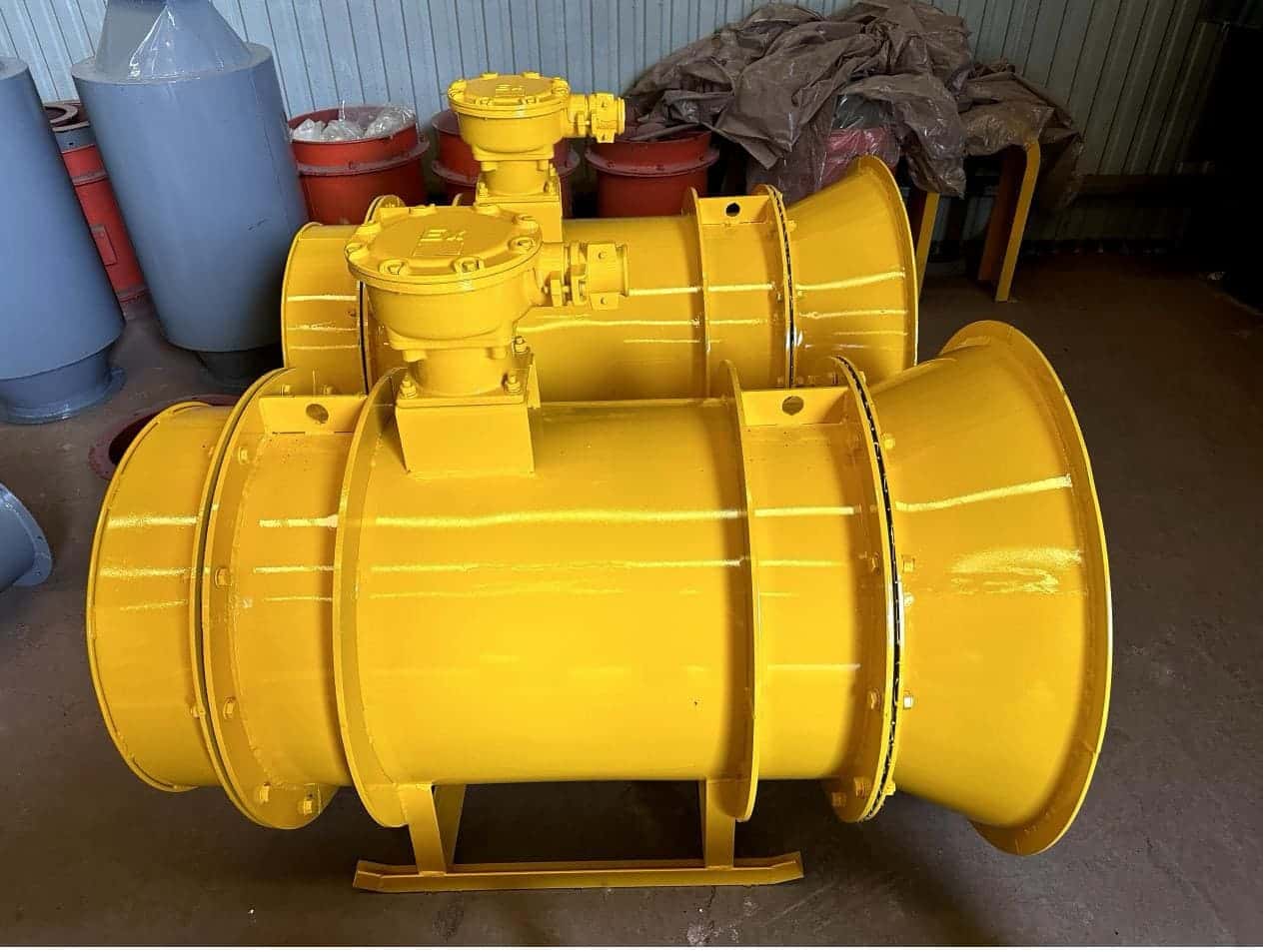
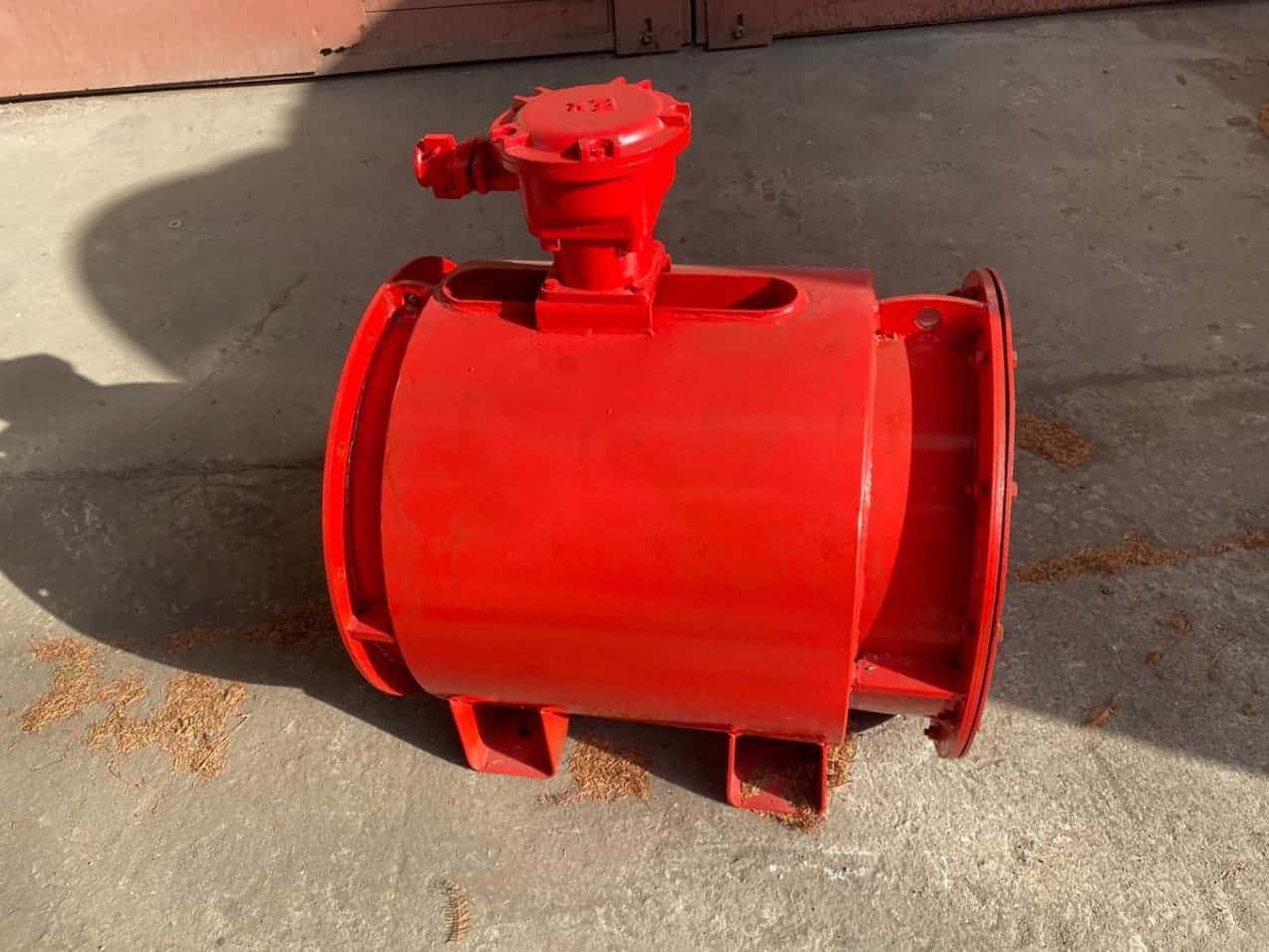
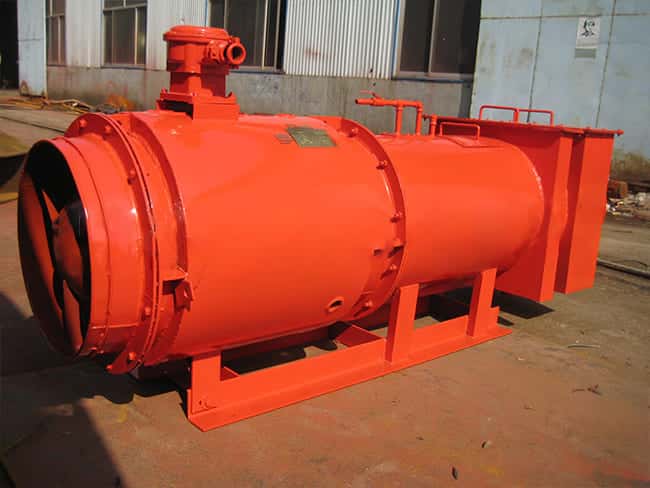
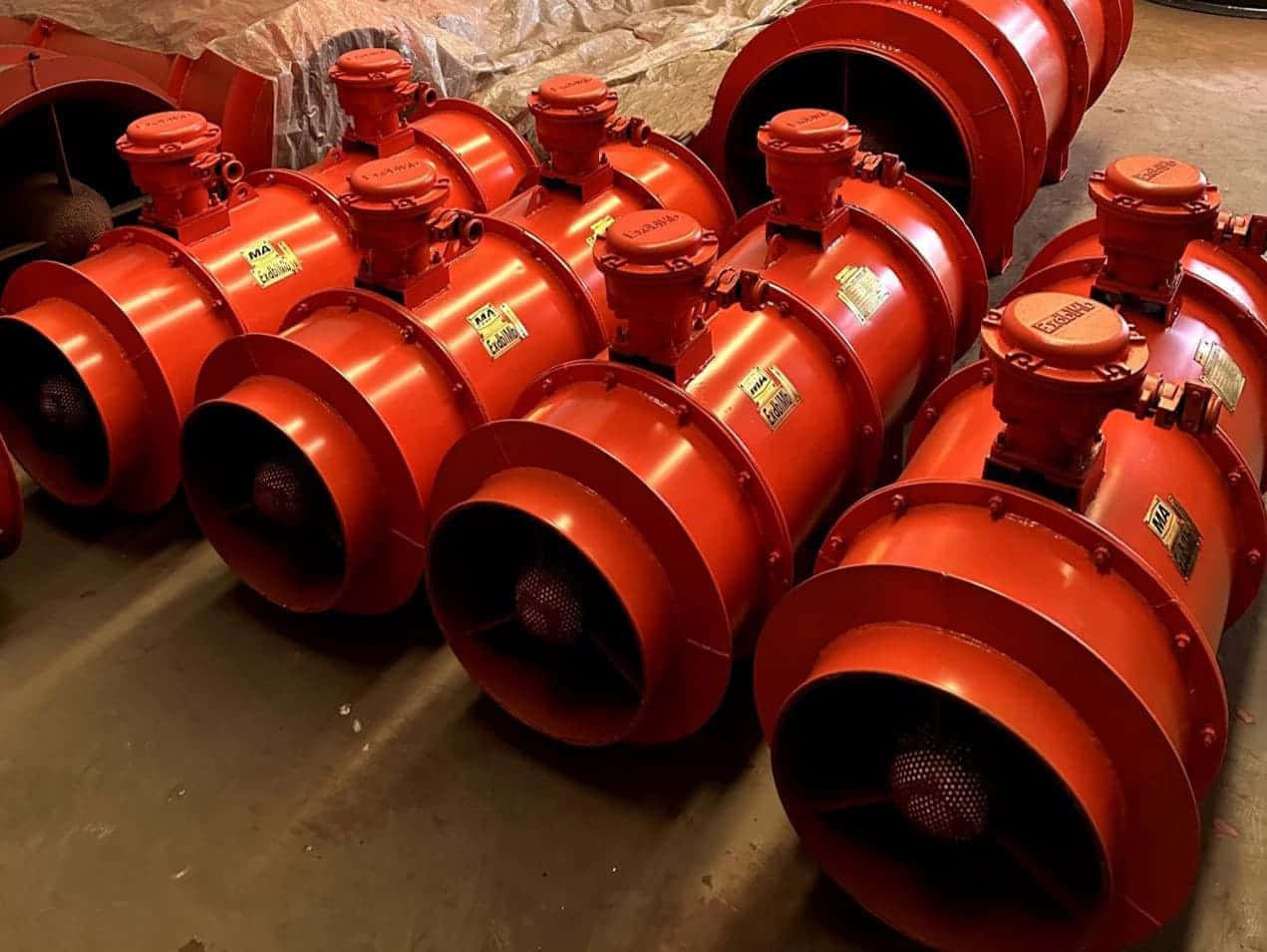
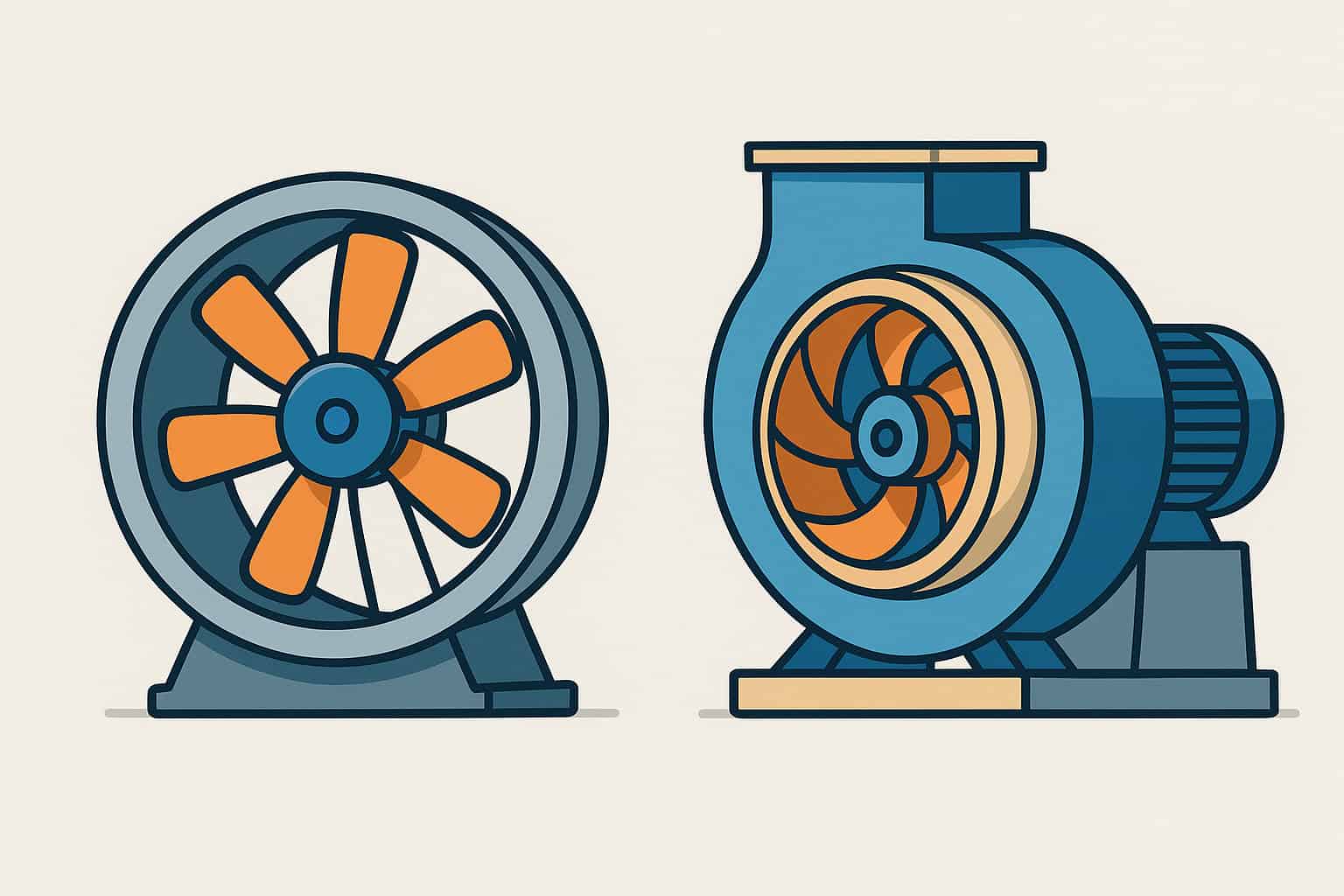
An axial flow fan normally has a cylindrical casing or is installed inside a duct. The blades are shaped like airfoils and are designed to develop both airflow and useful pressure. Many axial flow fans also include inlet cones, guide vanes or diffusers to improve efficiency and control. Because of this construction, axial fans can work against moderate duct resistance and are widely used as main and auxiliary ventilation fans in tunnels and underground mines, as well as for supply and exhaust in industrial buildings.
A propeller fan, in contrast, is usually a bare rotor mounted in an open frame or simple ring, often without a deep housing or sophisticated inlet and outlet elements. It is designed to move large volumes of air at very low static pressure. Common examples are wall-mounted exhaust propeller fans, agricultural ventilators and simple air circulators in factories or warehouses. They are excellent at exchanging air with the outdoors through short openings, but they are not suited to push air through long ducts or complex ventilation networks.
Because propeller fans work with almost no external resistance, their pressure capability is small. If you try to use them in a ducted system with filters, bends and dampers, the pressure drops quickly and airflow collapses. Axial flow fans, on the other hand, are designed with sufficient pressure margin to overcome system losses and maintain a stable operating point on the fan curve. This is why main mine fans, booster fans and many process ventilation fans are axial rather than simple propeller types.
The two designs also differ in efficiency, noise and control options. Ducted axial fans with proper inlet and outlet geometry typically achieve higher efficiencies and can be equipped with variable-pitch blades or variable-frequency drives for precise airflow control. Propeller fans are simpler and cheaper, but their performance is more sensitive to installation conditions, and control is often limited to on/off or simple speed steps.
In summary, both axial flow fans and propeller fans move air along the axis of rotation, but axial fans are engineered for ducted, higher-pressure industrial and mining ventilation, while propeller fans are open, low-pressure air movers for simple exhaust and circulation duties.