




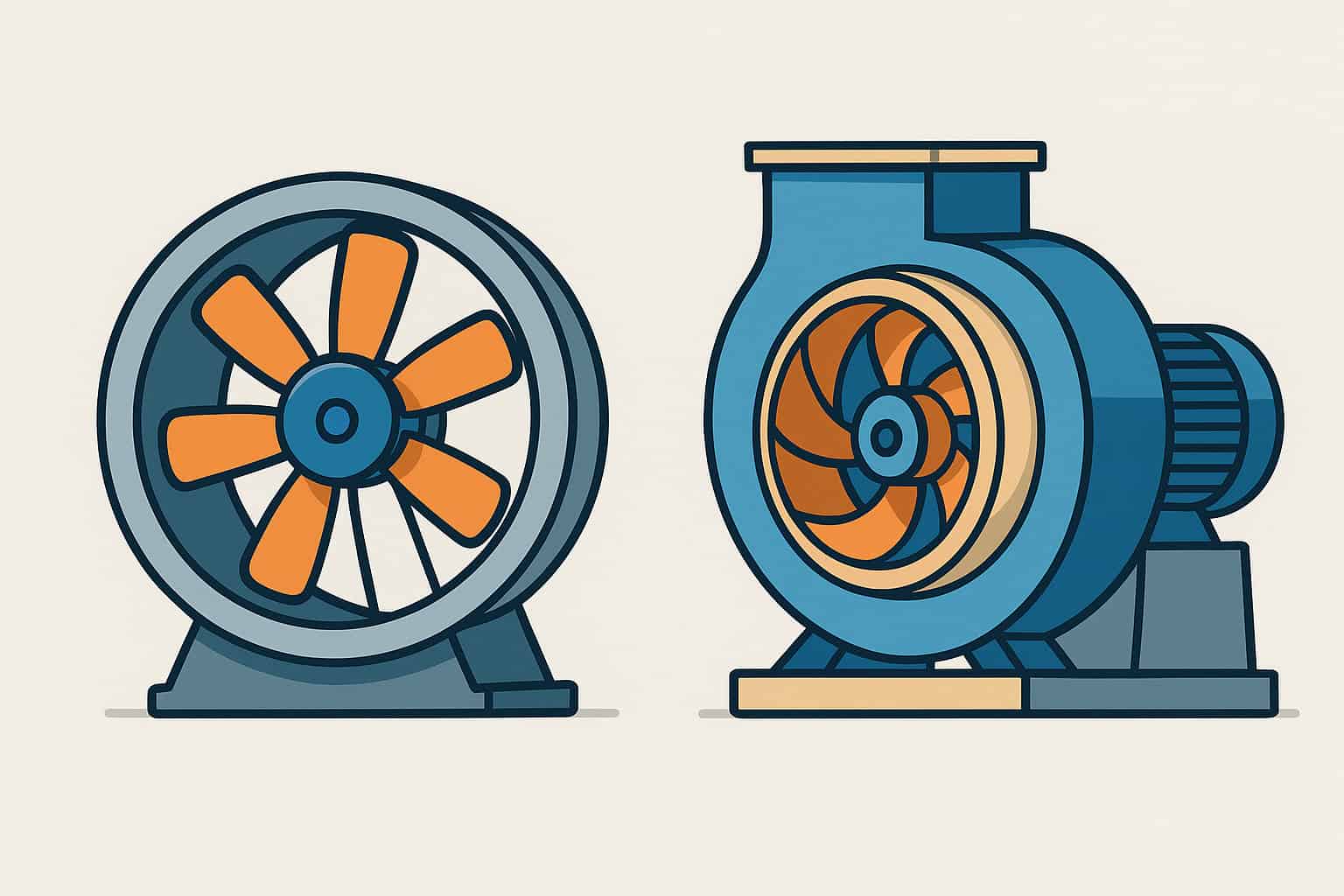
The difference between an EC fan and an axial fan is that one term describes the motor technology and the other describes the aerodynamic type of the fan. An EC fan is a fan driven by an electronically commutated (brushless DC) motor with built-in electronics. An axial fan is a fan that moves air parallel to the shaft, like a propeller. These categories overlap: you can have EC axial fans, EC centrifugal fans and also traditional AC-motor axial fans.
An EC fan uses a high-efficiency brushless DC motor and an integrated electronic controller. The controller converts AC mains power to DC and electronically commutates the motor windings. This allows smooth speed control, high efficiency and precise torque control. EC fans are popular in HVAC units, data centres and some modern industrial ventilation systems because they can be controlled by simple signals (for example, 0–10 V or Modbus) and can automatically adjust speed to match demand, saving energy.
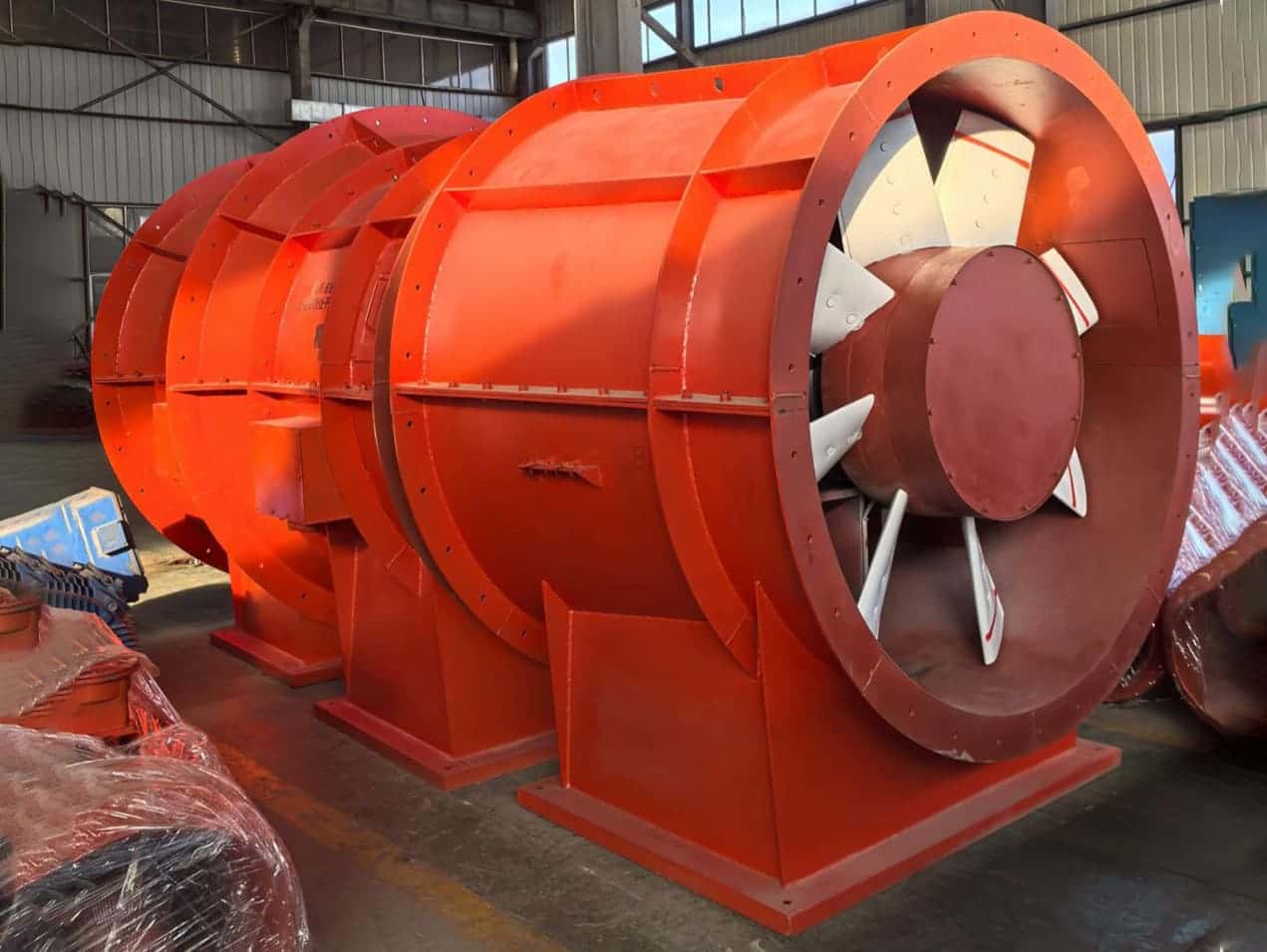
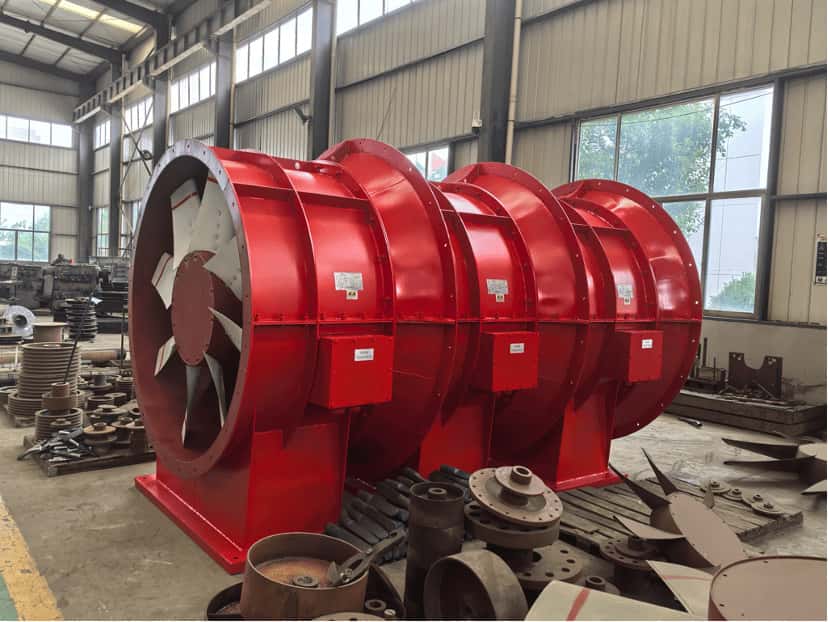
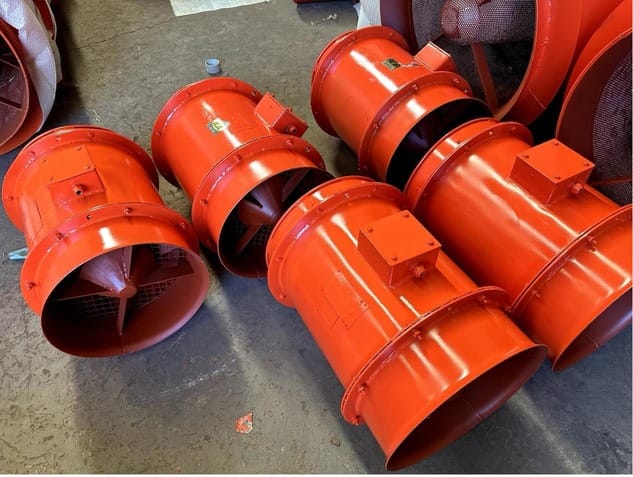
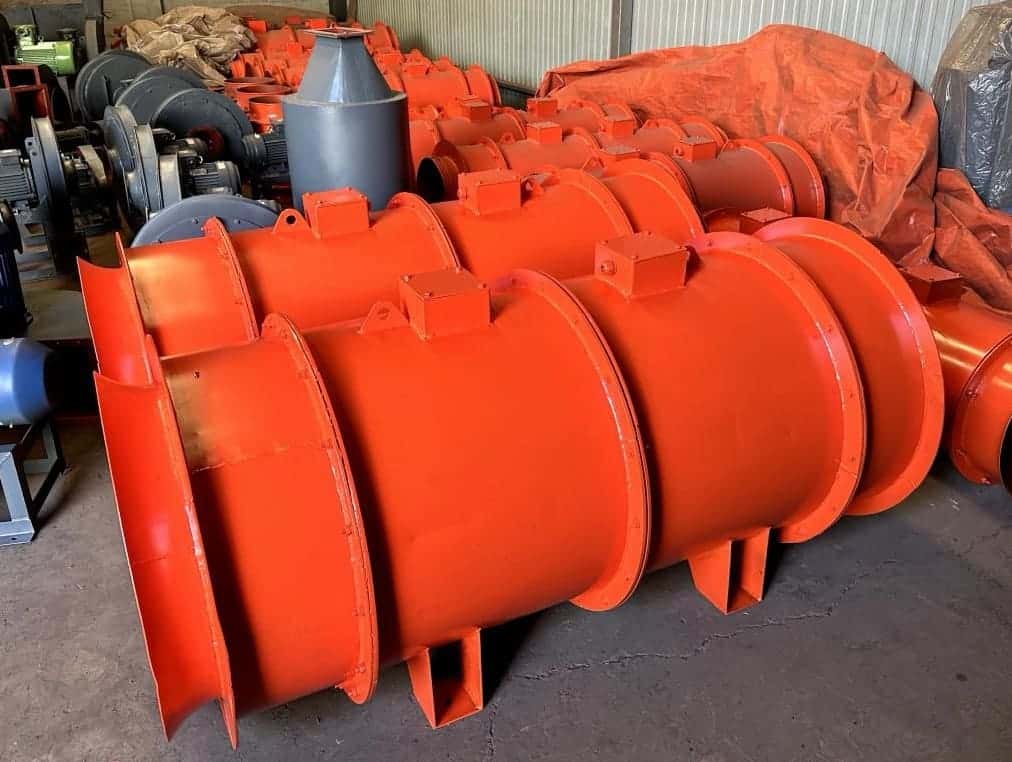
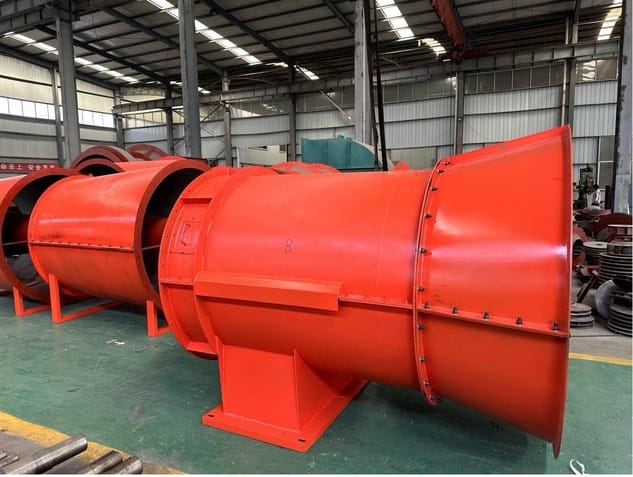
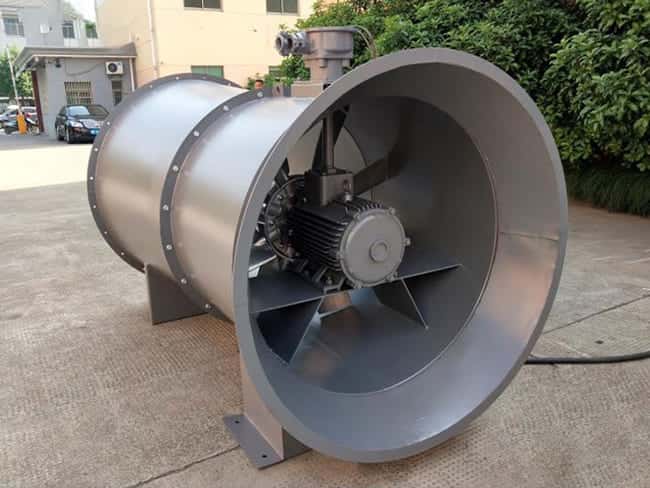
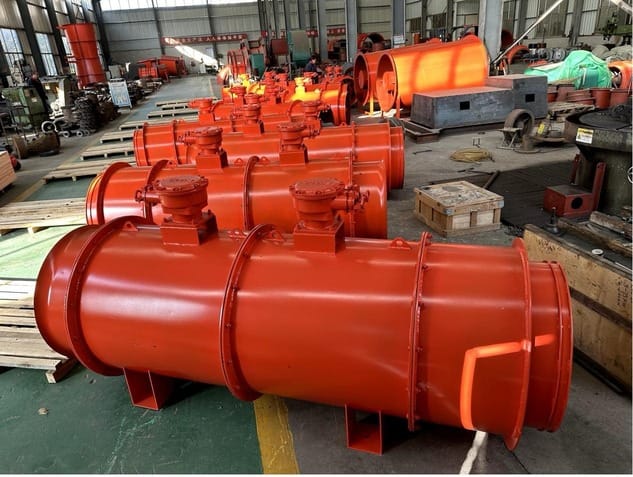
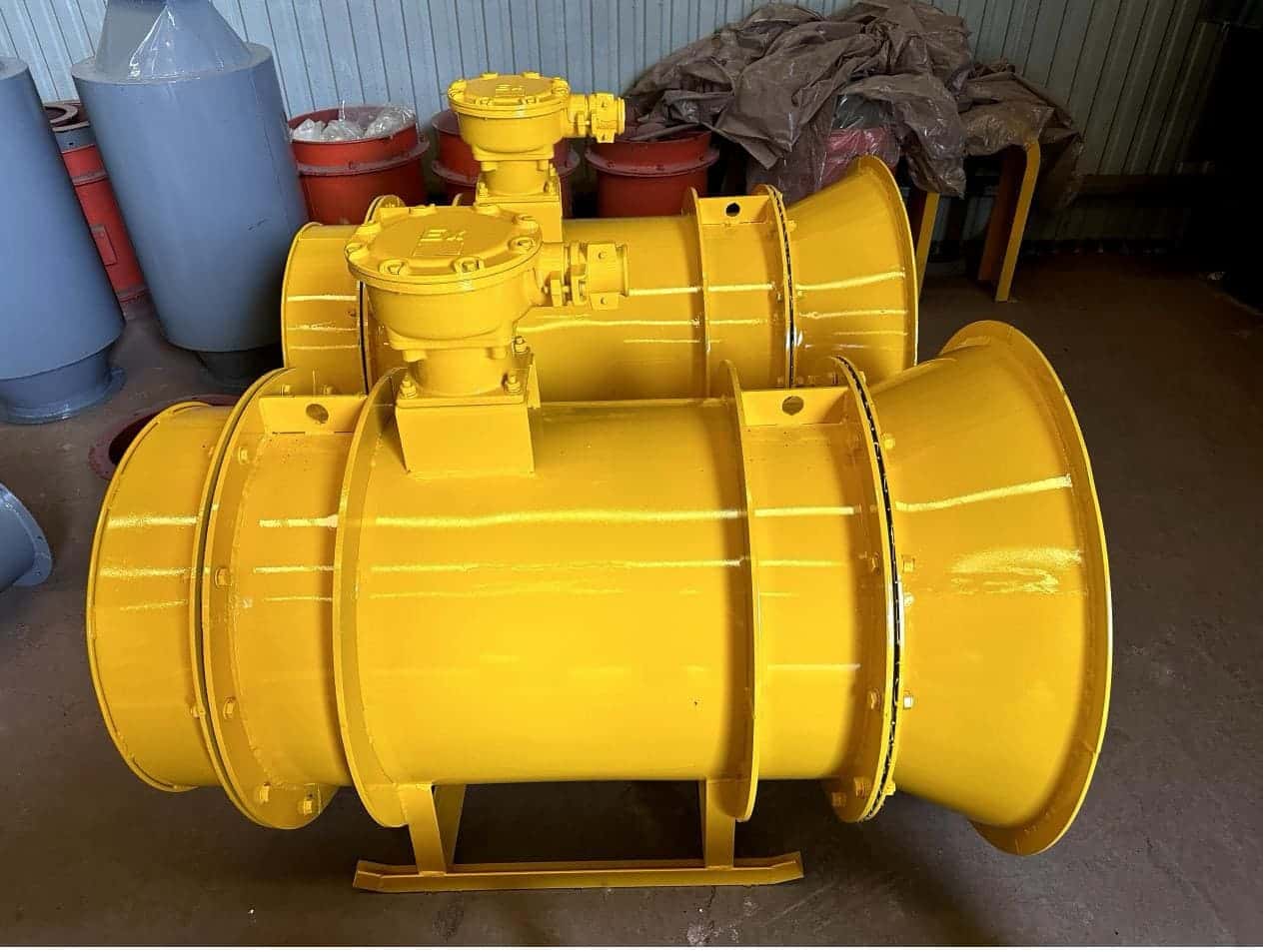
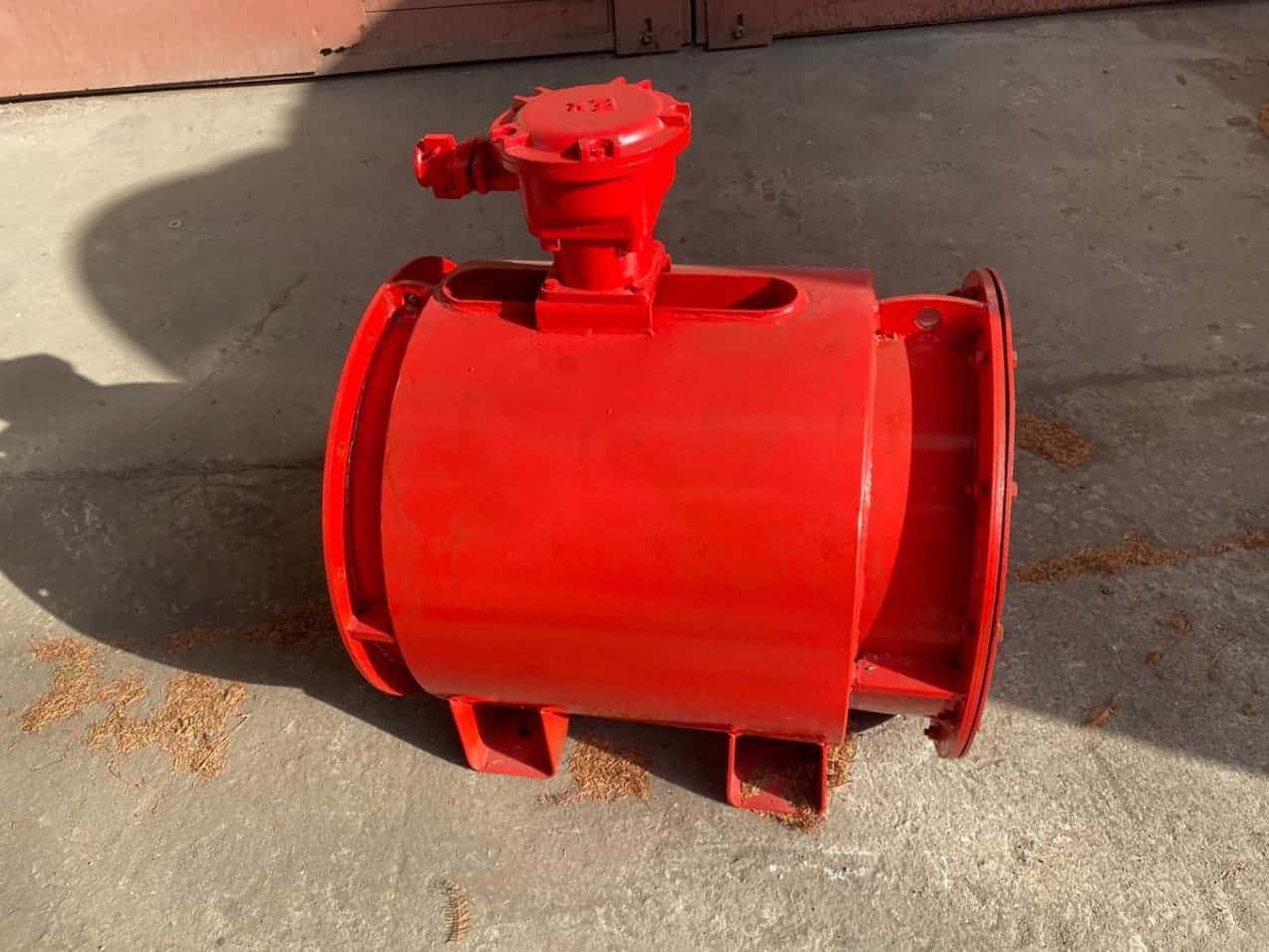
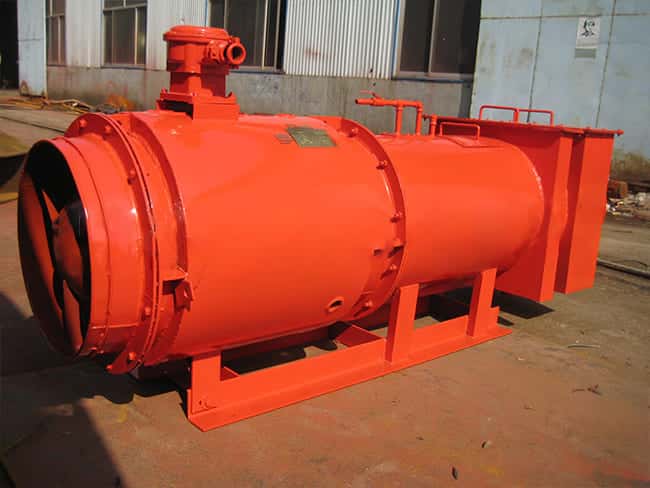
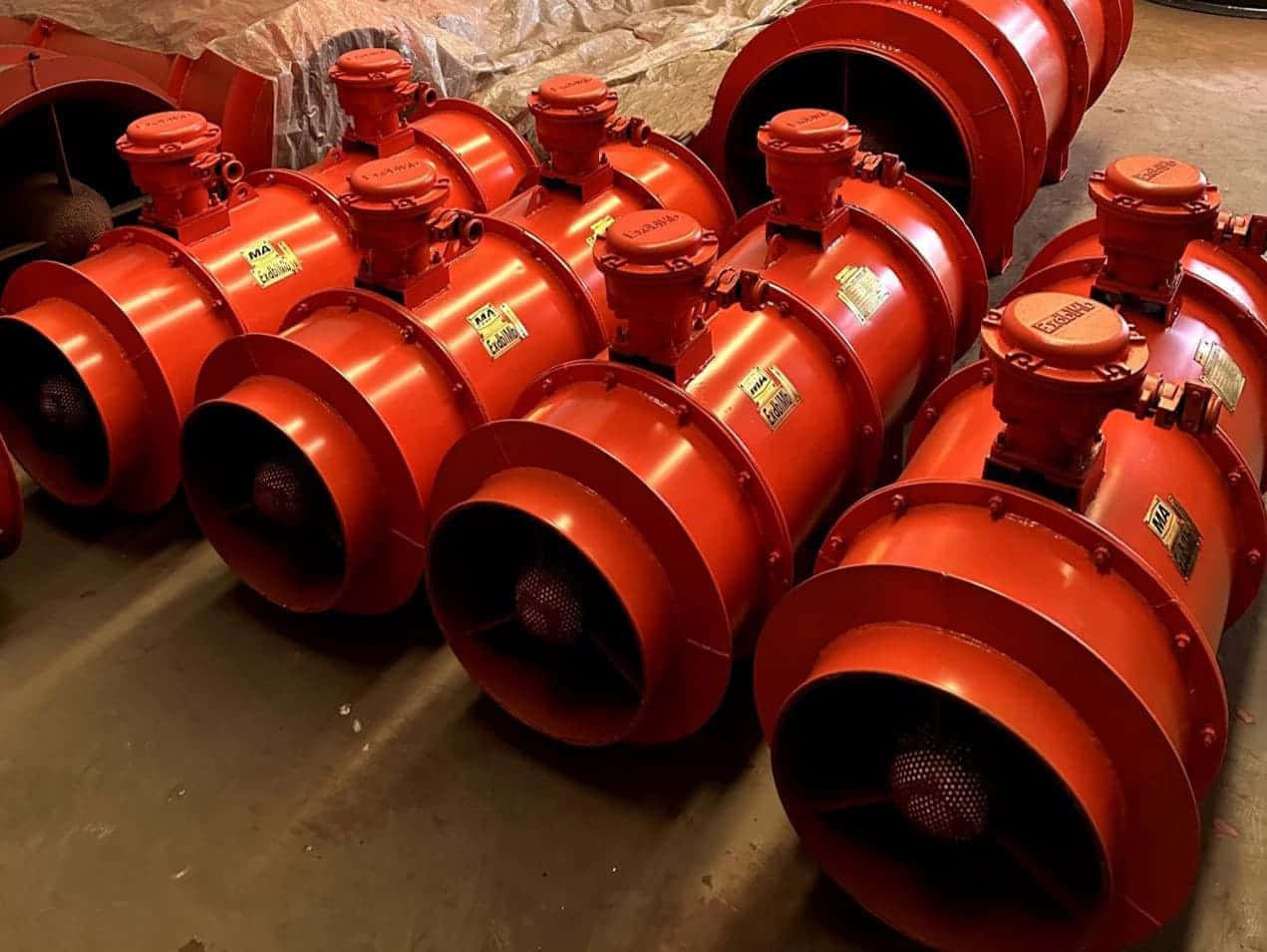
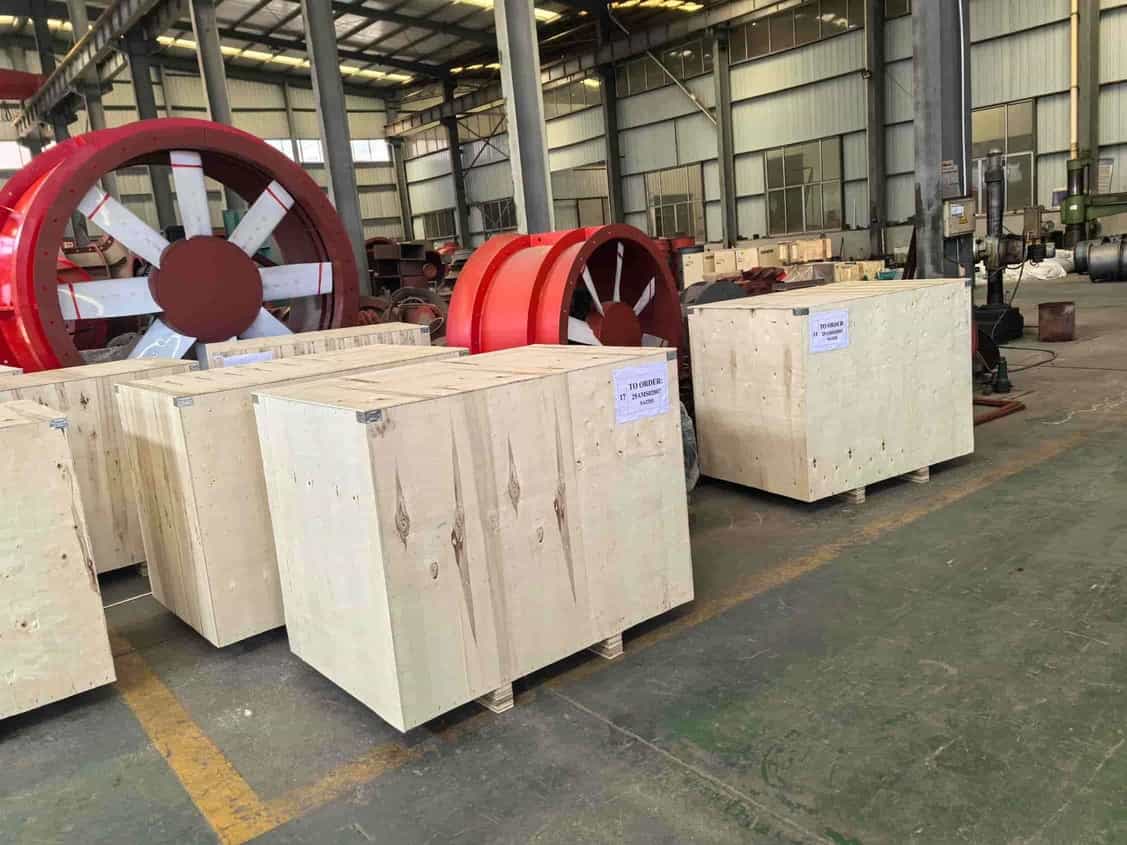
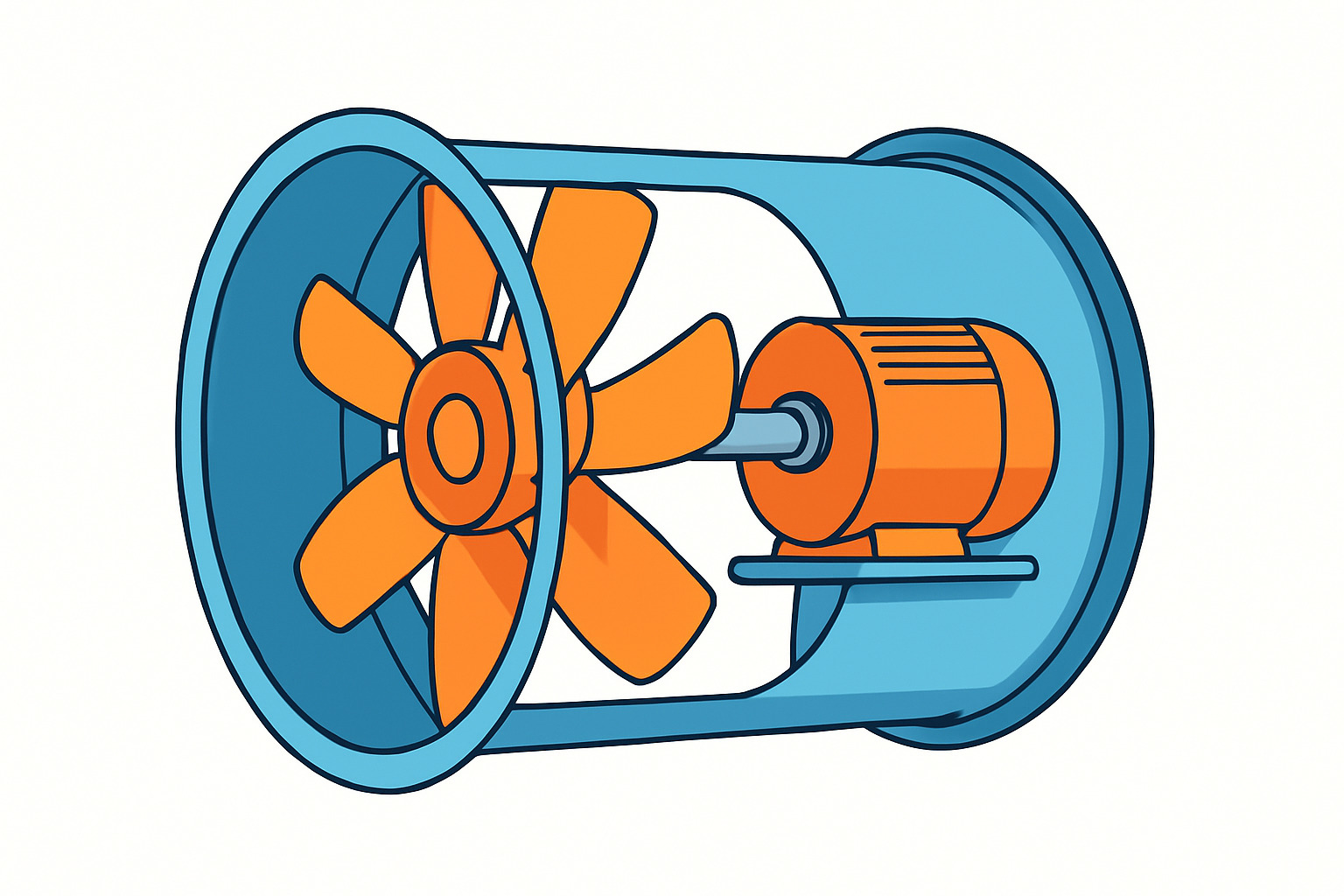
An axial fan is defined by the way air flows through it. The blades are shaped to push air in the same direction as the shaft. Axial fans are used wherever high airflow at low to medium static pressure is required, such as main mine ventilation fans, tunnel fans, auxiliary duct fans and large industrial exhaust fans. They can be built with different motors: standard AC induction motors, permanent-magnet motors or EC motors.
So when someone compares an EC fan with an axial fan, they are really mixing two different classification systems. A more accurate comparison would be EC axial fan vs AC axial fan, or EC centrifugal fan vs belt-driven centrifugal fan. In those comparisons, the aerodynamic behaviour is similar, but the EC version usually offers higher motor efficiency, integrated speed control, less wiring and often lower overall energy consumption—especially in variable-flow applications.
In industrial and mining ventilation, large main fans and booster fans are still often driven by conventional AC motors and external variable-speed drives, because of their high power and rugged requirements. However, EC technology is increasingly used in smaller axial and centrifugal fans for plant ventilation, control rooms and auxiliary systems where precise control and energy savings are important.
In summary, an EC fan is defined by its electronically commutated motor and controls, while an axial fan is defined by airflow direction. These concepts are compatible, and many modern axial fans are built as EC fans to combine efficient aerodynamics with efficient motor technology.