
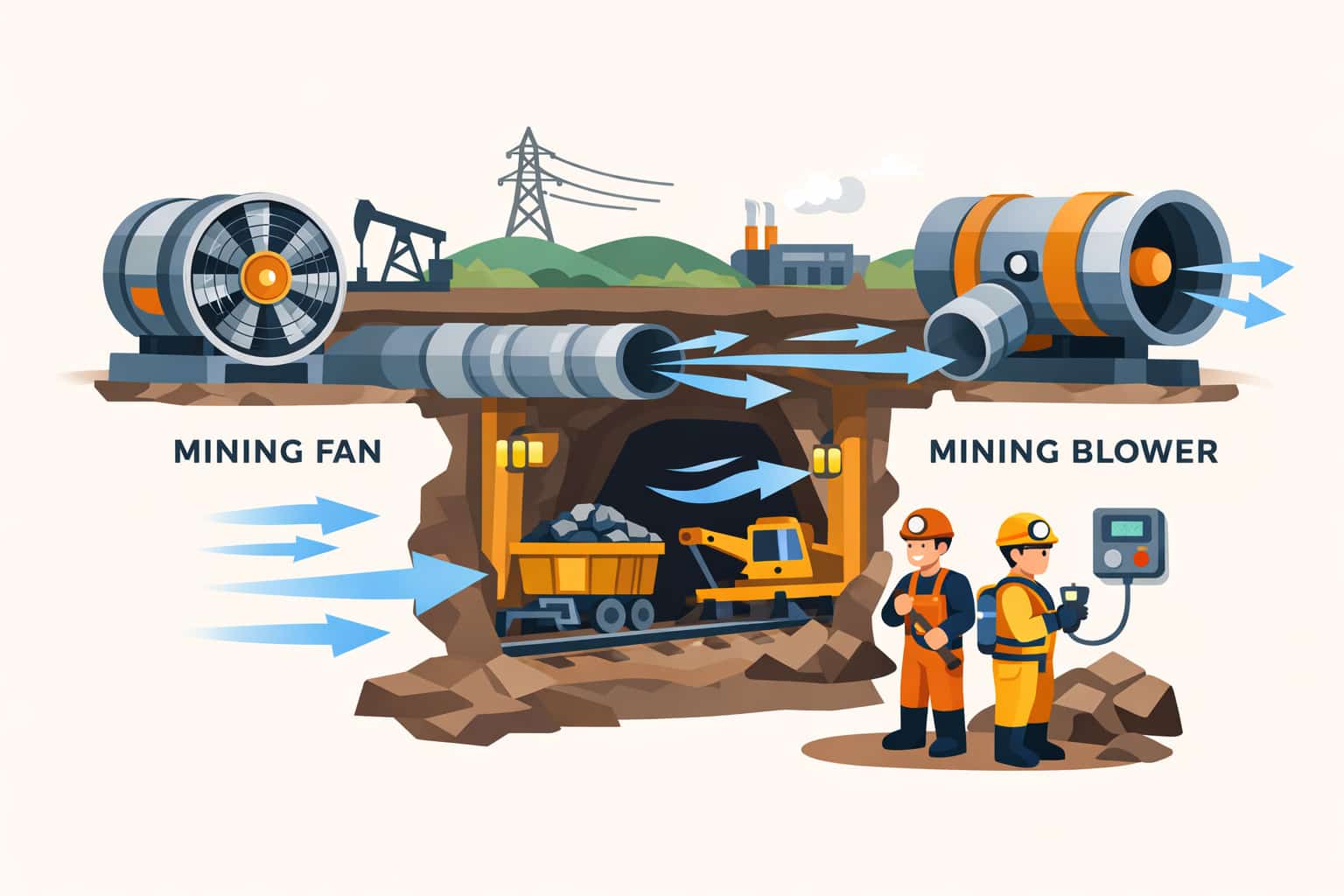
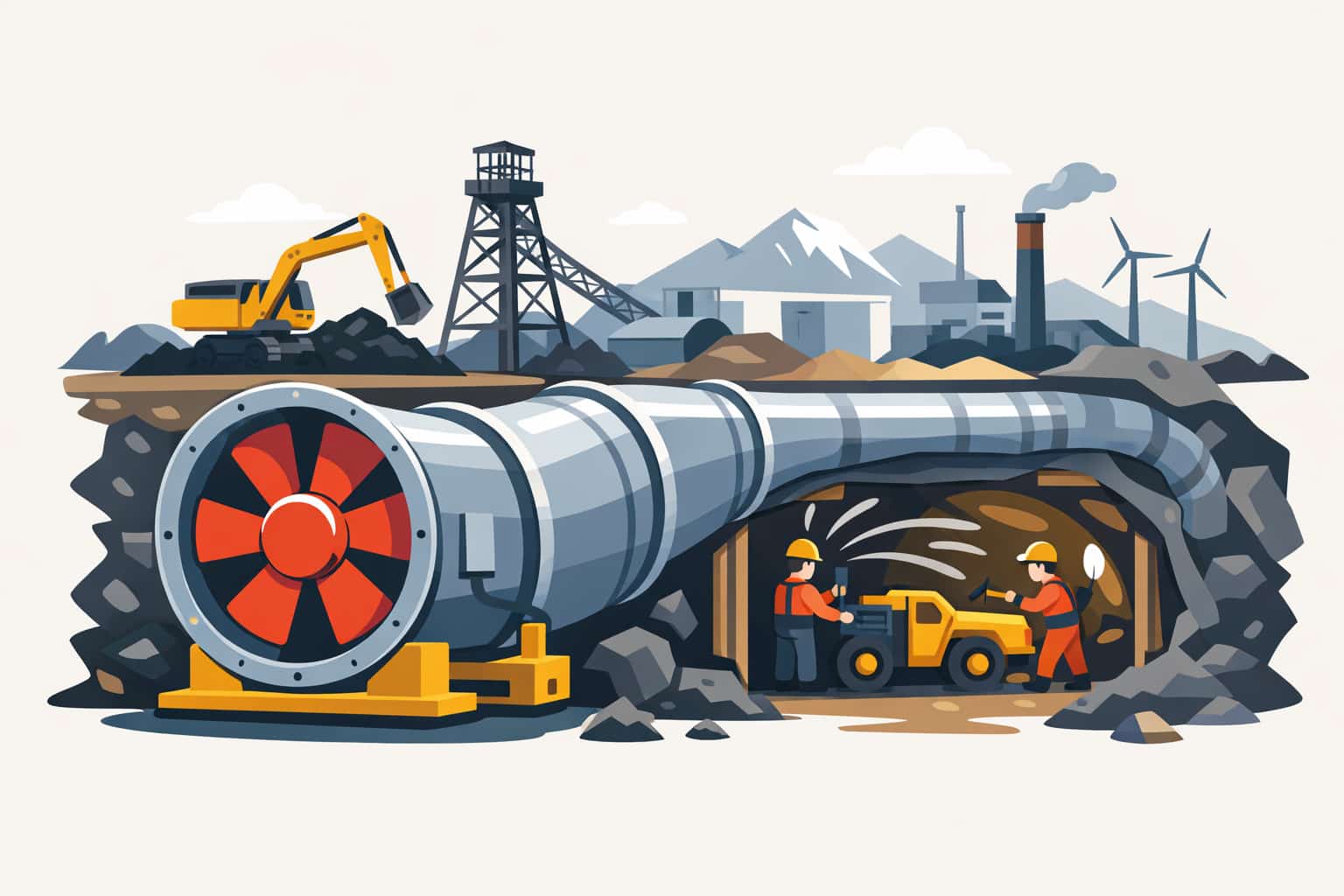
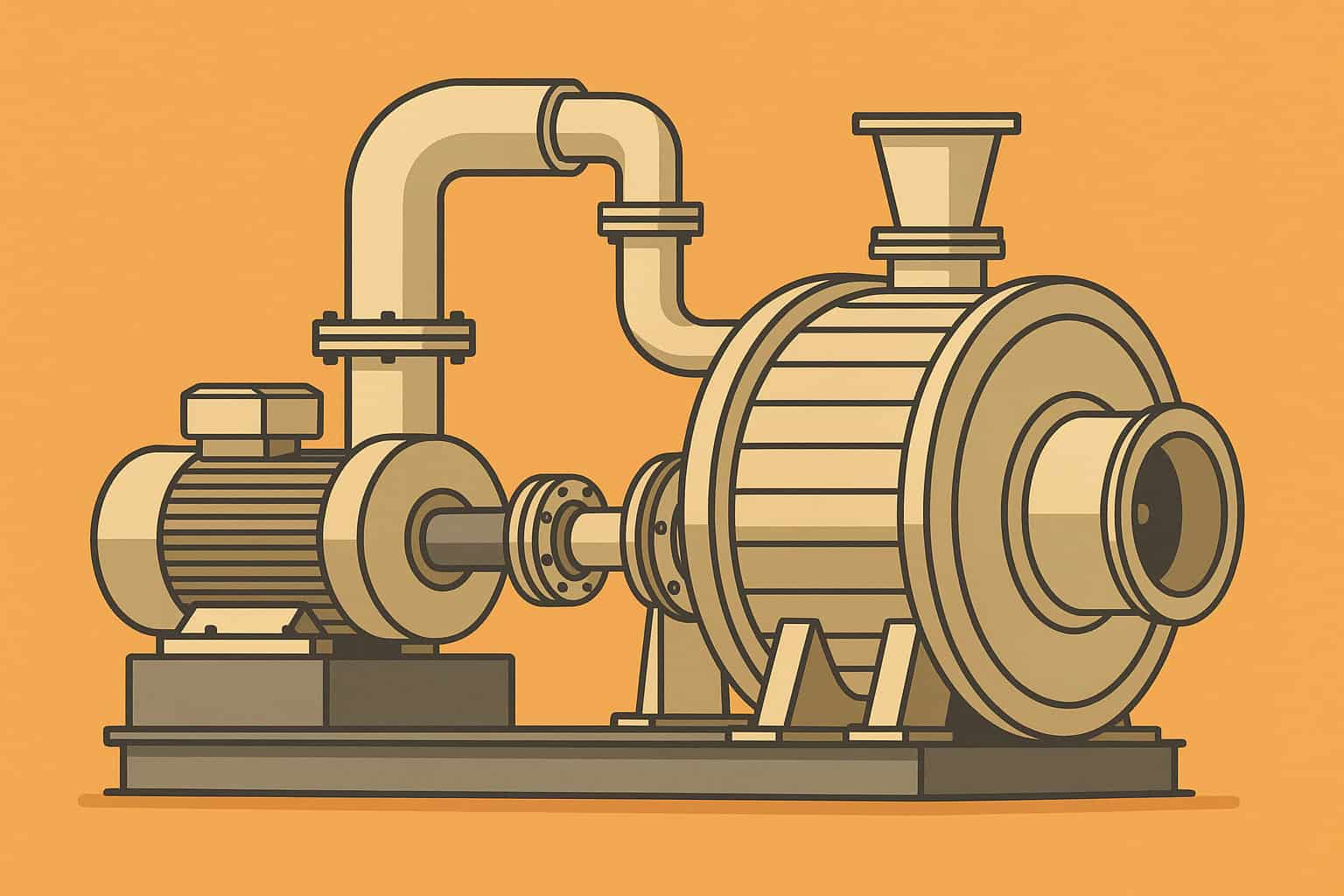

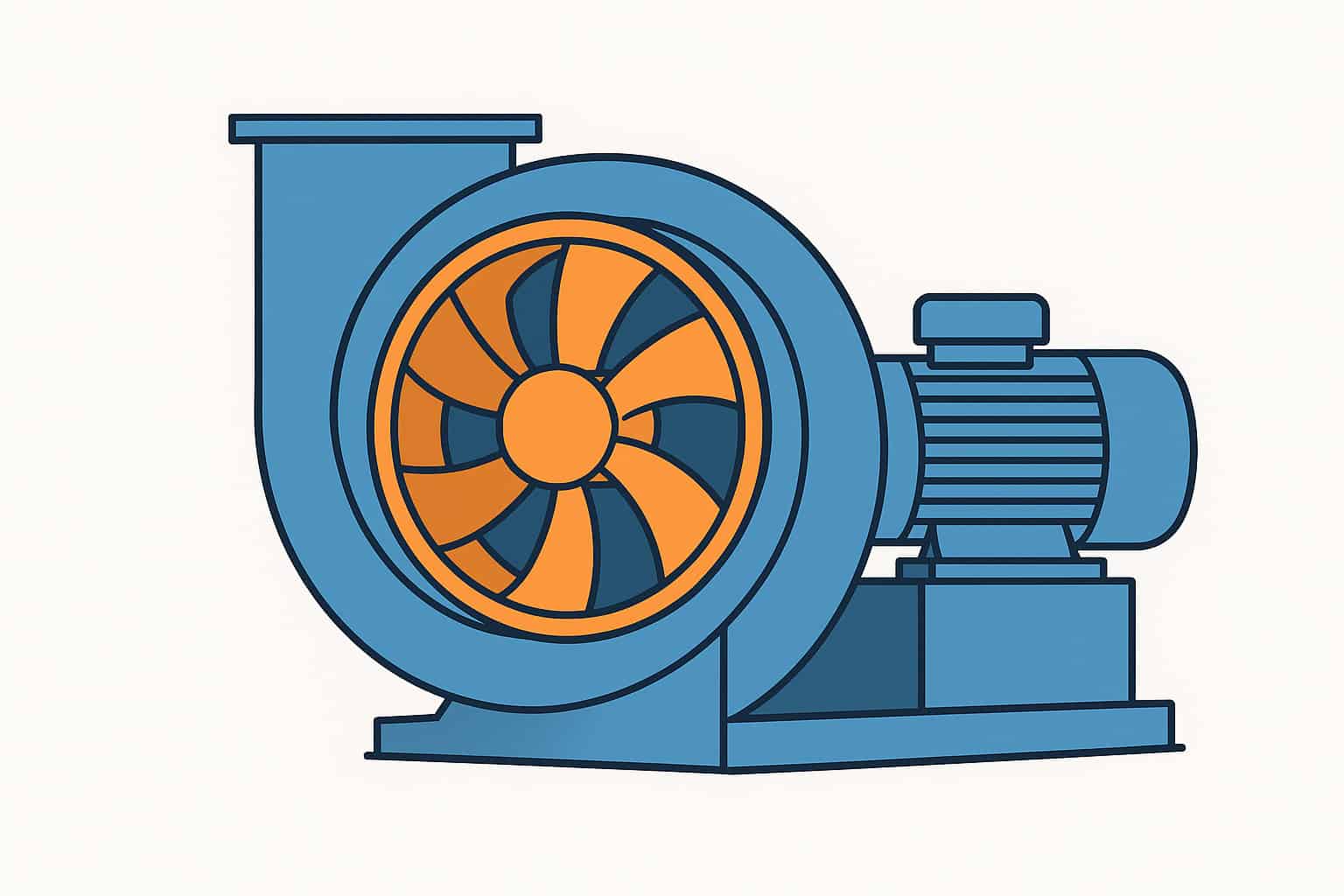
Fan pressure and airflow describe two different, but closely linked, aspects of fan performance. Airflow tells you how much air the fan moves, while pressure tells you how hard the fan pushes that air through ducts, equipment or mine airways. Confusing the two can lead to poor fan selection and weak ventilation.
Airflow is a volume rate, usually expressed as CFM (cubic feet per minute) or m3/h. It answers the question: “How much air passes through this point each minute?” In industrial buildings, airflow determines how quickly heat, fumes and dust are diluted; in mines, it determines whether enough fresh air reaches each heading and working area.
Fan pressure, by contrast, is measured in Pascals (Pa) or inches of water gauge and represents the energy per unit volume that the fan adds to the air. It answers the question: “How much force is available to overcome resistance in ducts, filters, dampers, mine roadways and other components?” Even a high-airflow fan will move very little air if the system resistance is too high for its available pressure.
In practice, engineers use fan curves that plot airflow on the horizontal axis and pressure on the vertical axis. Each point on the curve shows how much pressure the fan can provide at a given airflow and speed. The ventilation system itself has a system curve showing how much pressure is required to push different airflows through the network. The actual operating point is where the fan curve and system curve intersect.
For industrial and mining ventilation, both quantities are critical. Designers first calculate the required airflow based on people, heat and contaminants, then estimate the required pressure based on duct lengths, fittings, filters and mine airway resistance. They then choose a fan that can provide the required airflow at the necessary pressure, with a safety margin.
In summary, airflow describes how much air a fan moves, while fan pressure describes how hard the fan pushes that air against system resistance. A good ventilation design must consider both, using fan and system curves to ensure reliable performance.