
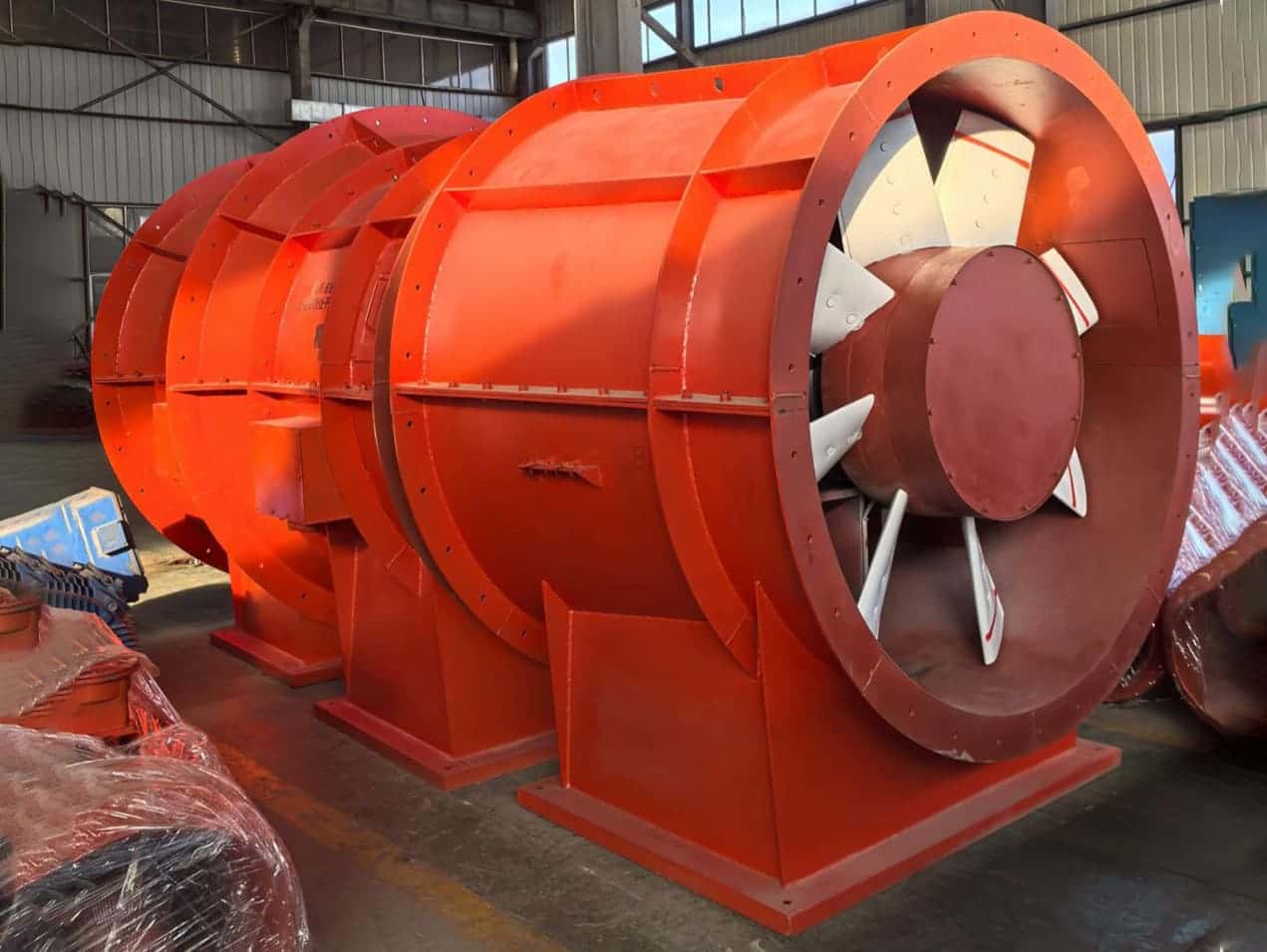
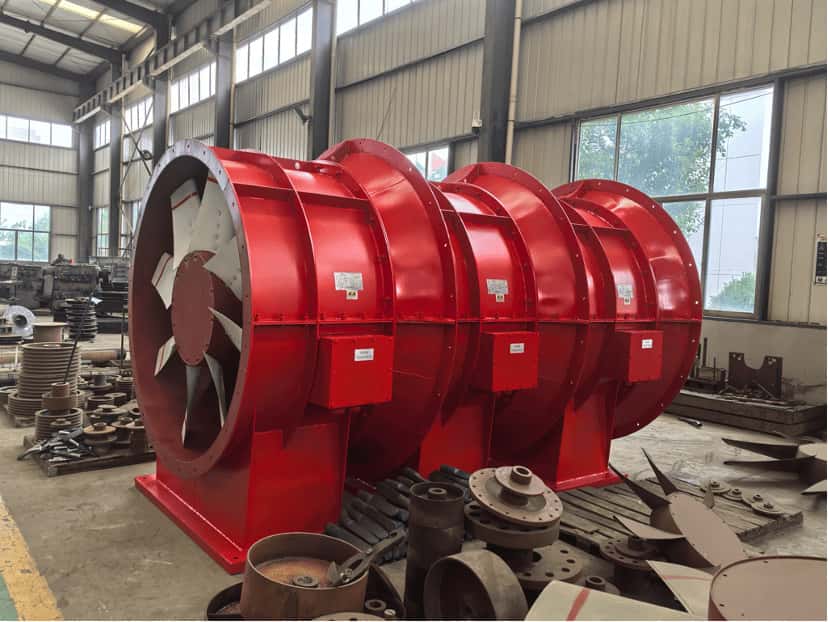
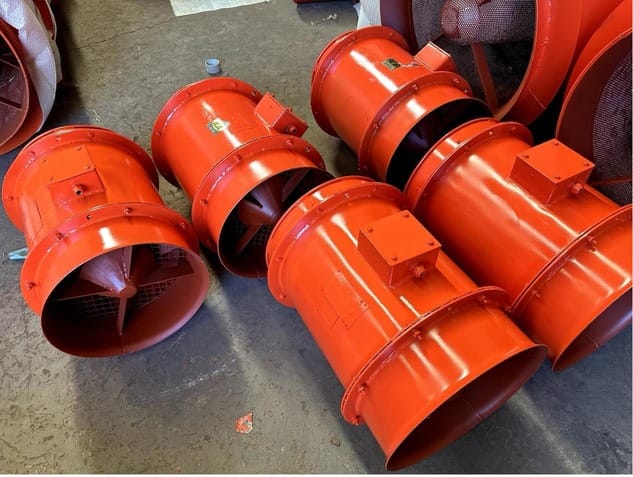
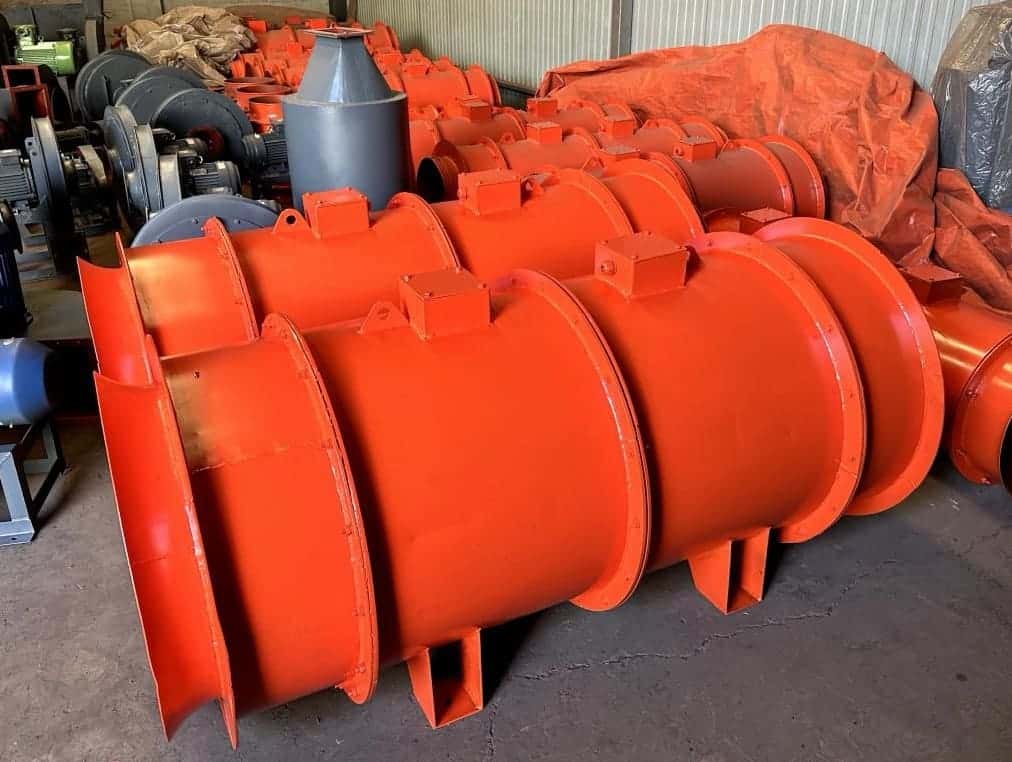
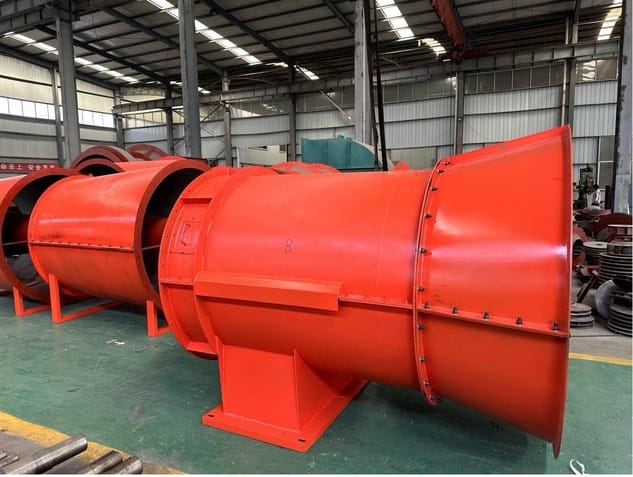
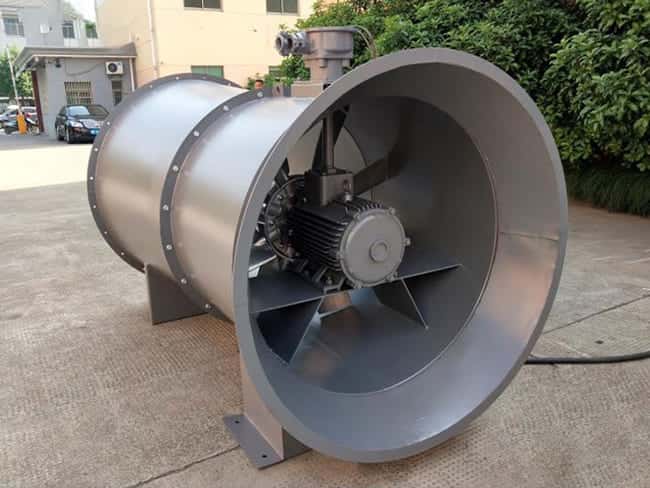
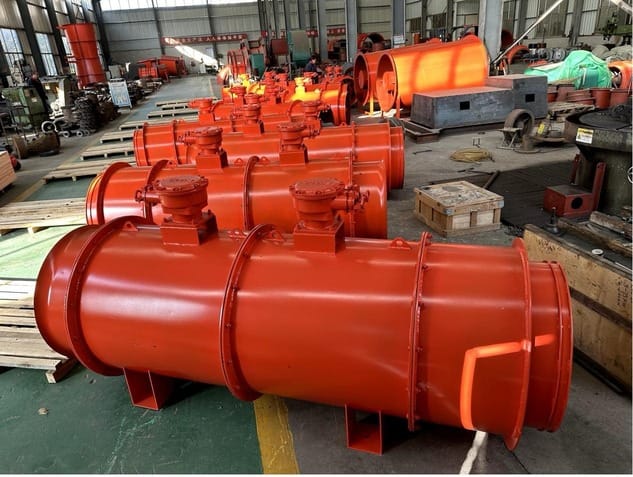
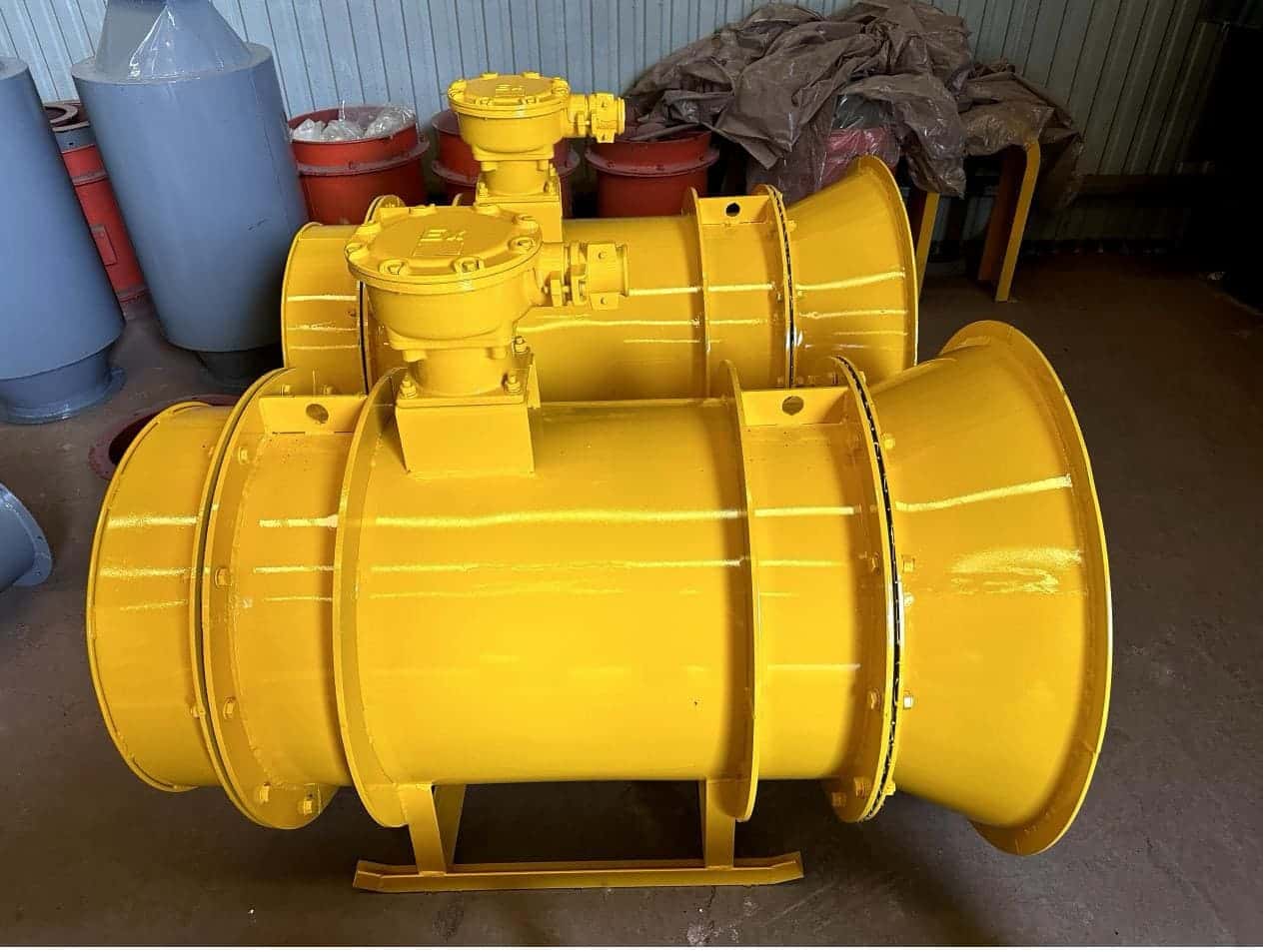
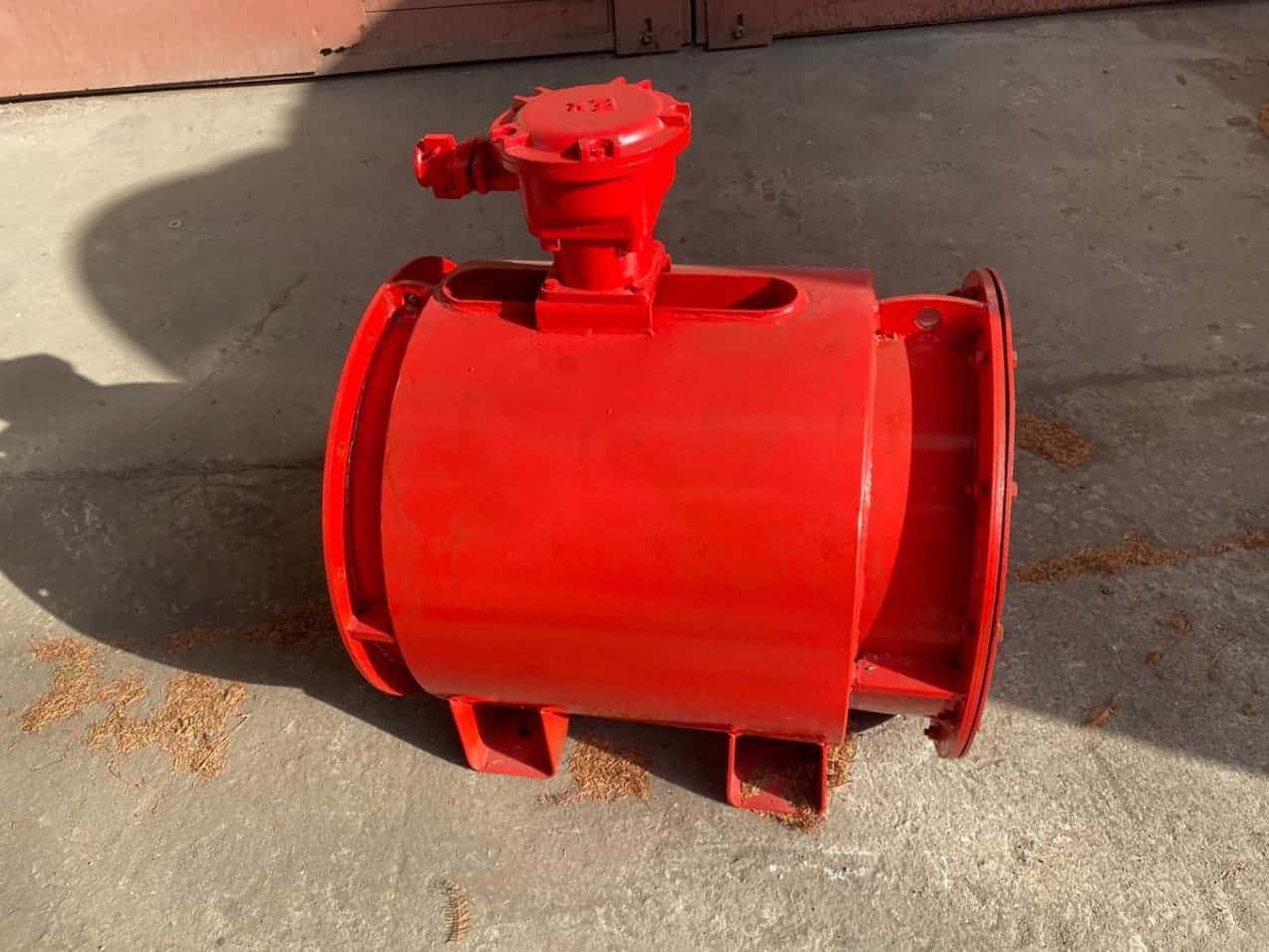
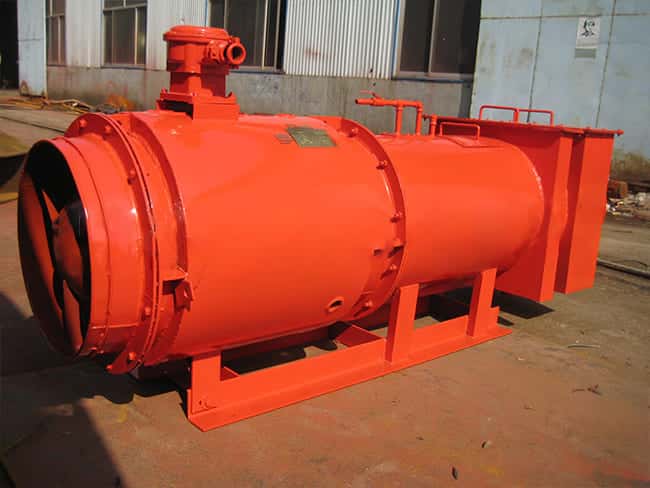
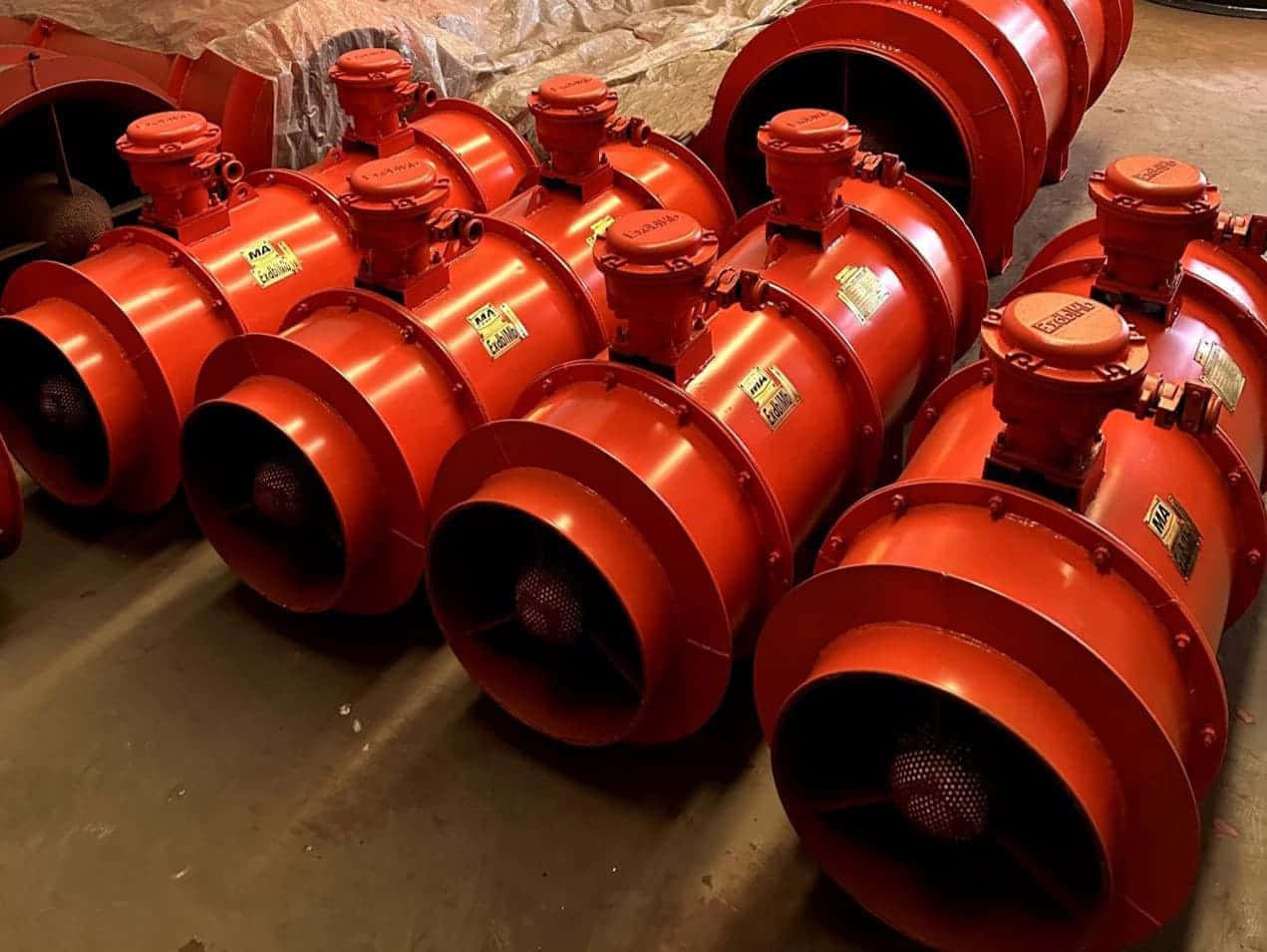
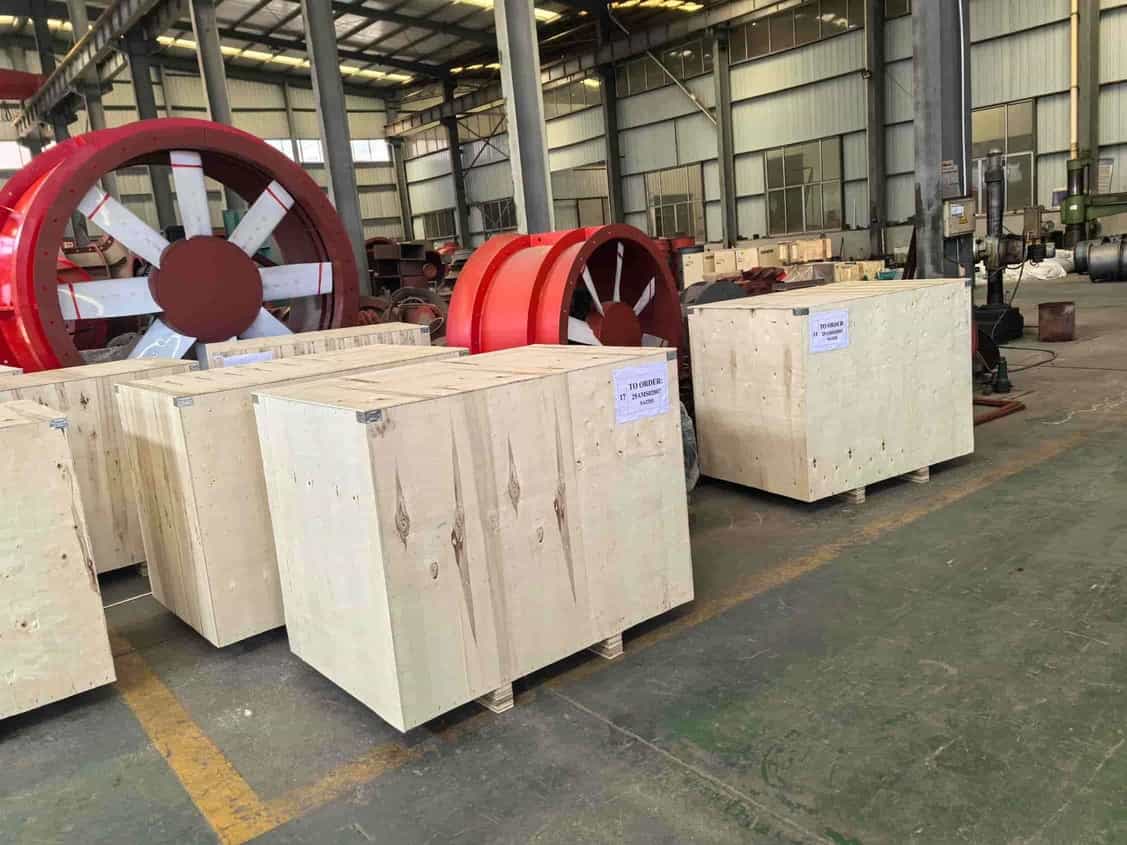
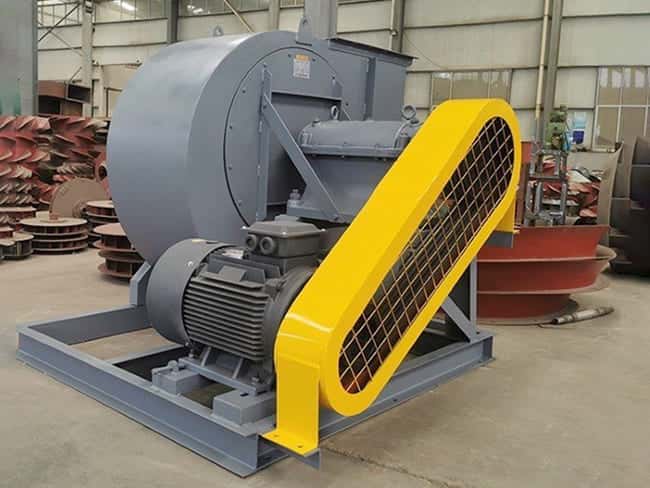
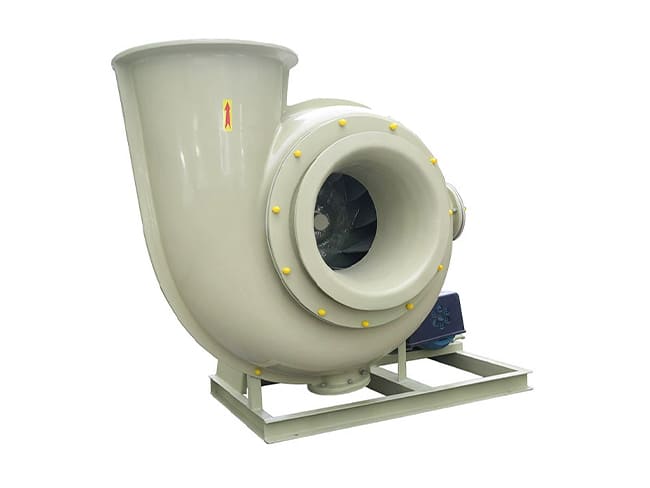
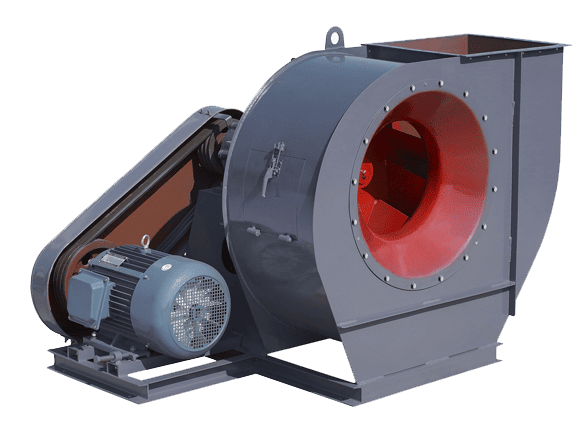
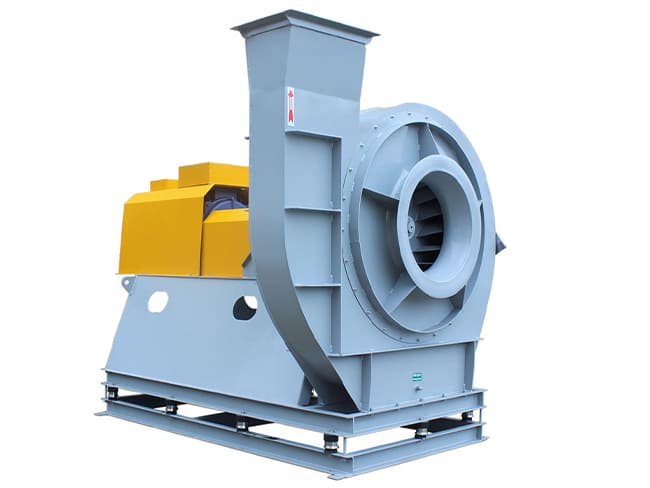
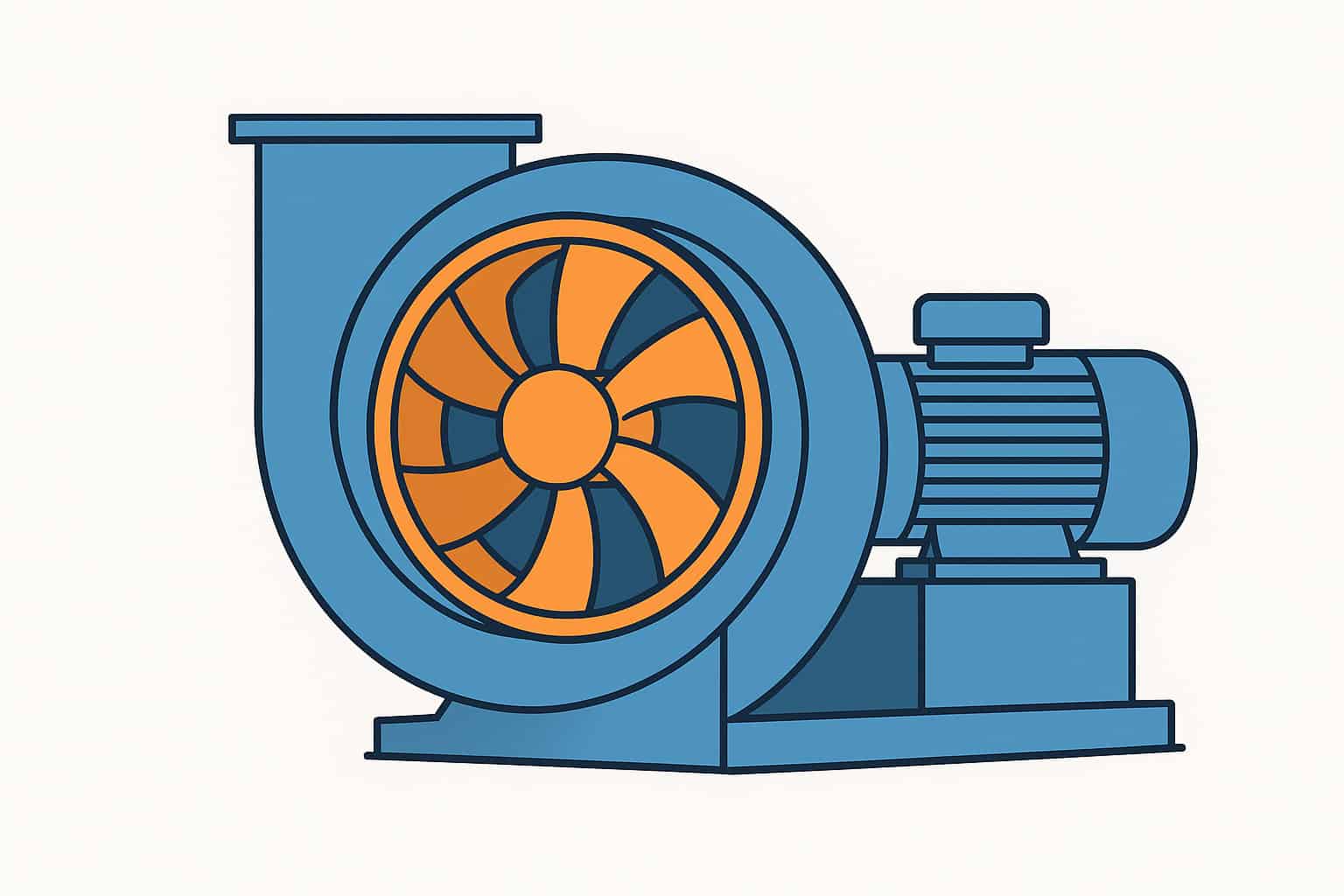
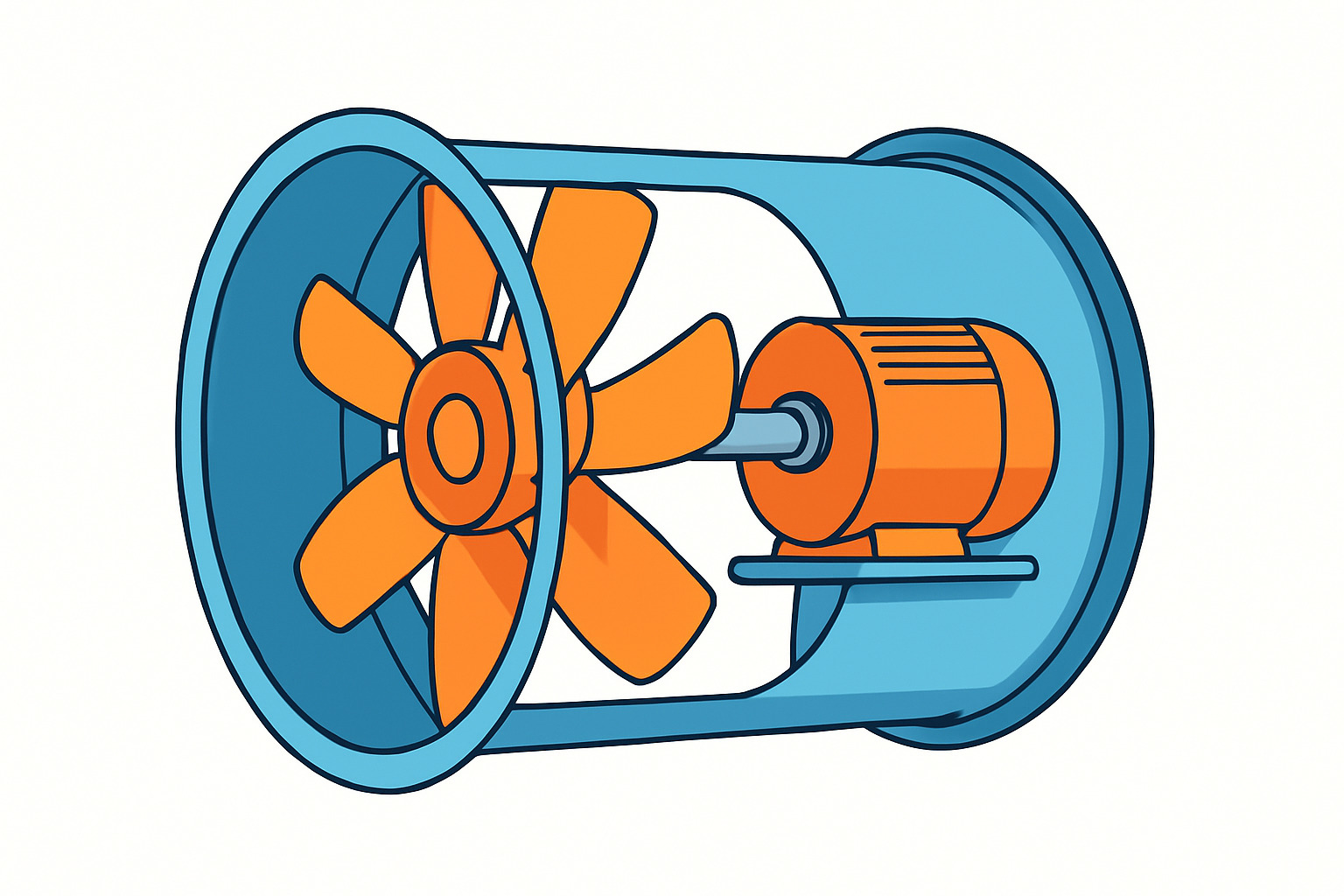
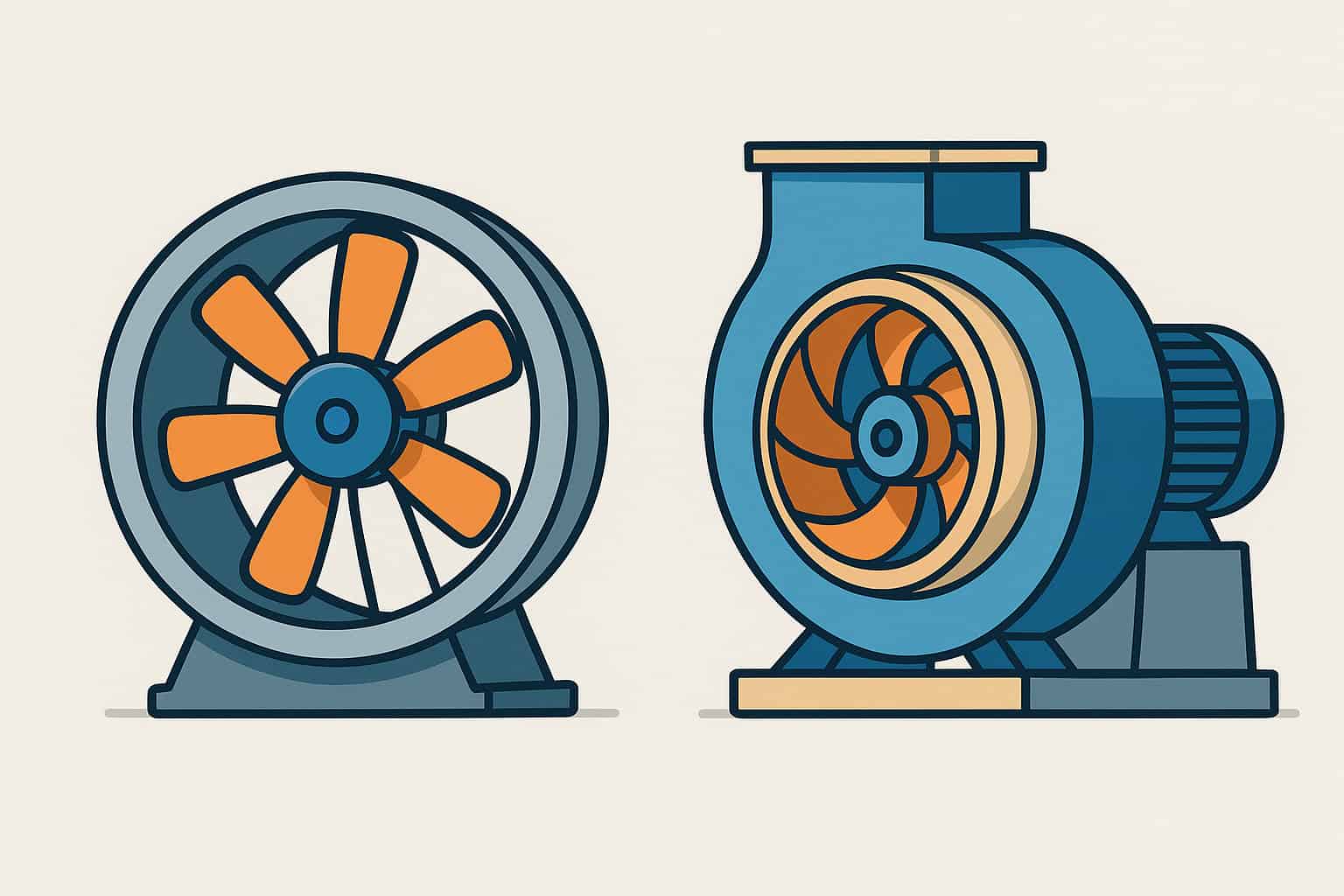
A booster fan is a secondary fan installed in a ventilation system to increase airflow and pressure in specific sections where the main fan alone is not sufficient. Its function is not to replace the main fan, but to support it by overcoming extra resistance in long ducts, remote branches or special process areas.
In a typical ducted system, the main fan is selected to move a certain volume of air against the average resistance of the network. However, some parts of the system may have higher pressure losses due to length, fittings, filters or equipment. As a result, those zones may receive less air than required for comfort, cooling or contaminant control. A booster fan placed in that section raises the local pressure and restores the designed airflow.
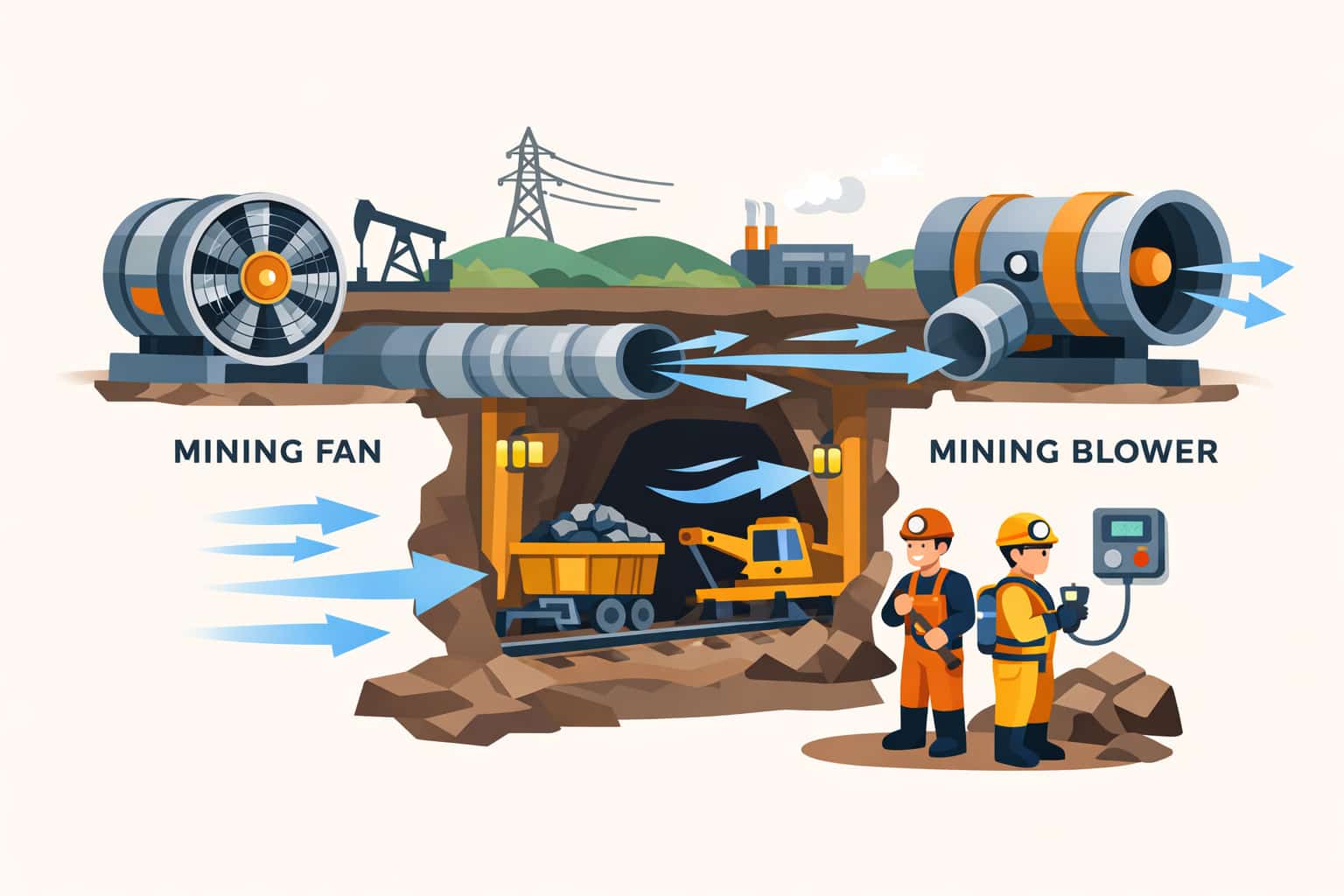
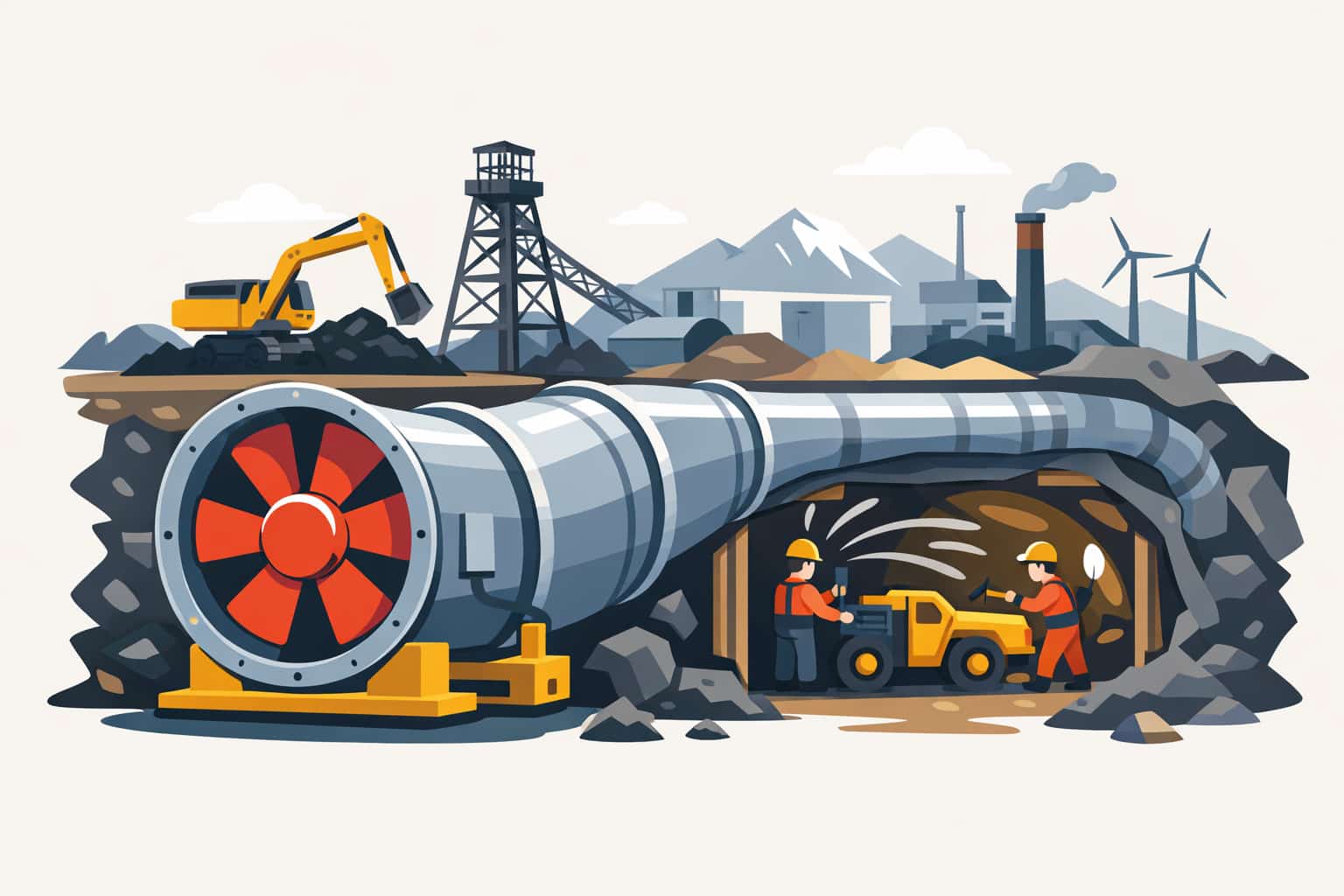
In underground mining, the function of booster fans is particularly important. Main mine fans create the overall flow through intake and return airways, but development headings, sublevels or remote production areas may still lack adequate ventilation due to distance and friction. Booster fans installed in these locations help push or pull air through long roadways and ducts so that gas concentrations, dust levels and temperatures stay within regulatory limits. They are a key part of auxiliary and development ventilation systems.
In industrial plants, booster fans are used in process and building ventilation where local conditions are demanding. Examples include long exhaust lines from ovens and dryers, remote dust collection branches, or long fresh air ducts feeding distant production halls. By adding a booster, engineers can avoid oversizing the main fan and can fine tune airflow to different zones more effectively.
To perform correctly, a booster fan must be properly matched to the system. Its pressure rise, speed and direction must complement the main fan. Incorrectly selected or placed boosters can cause unstable operation, noise or even reduce overall system performance. For this reason, booster fans are usually chosen with reference to system and fan curves, and their interaction with dampers and controls is carefully studied.
In summary, the function of a booster fan is to assist the main fan by increasing pressure and airflow in specific parts of a ventilation network. It allows engineers to deliver the required air where it is hardest to reach, in long ducts, remote mine headings and high resistance branches, without redesigning the entire system.