













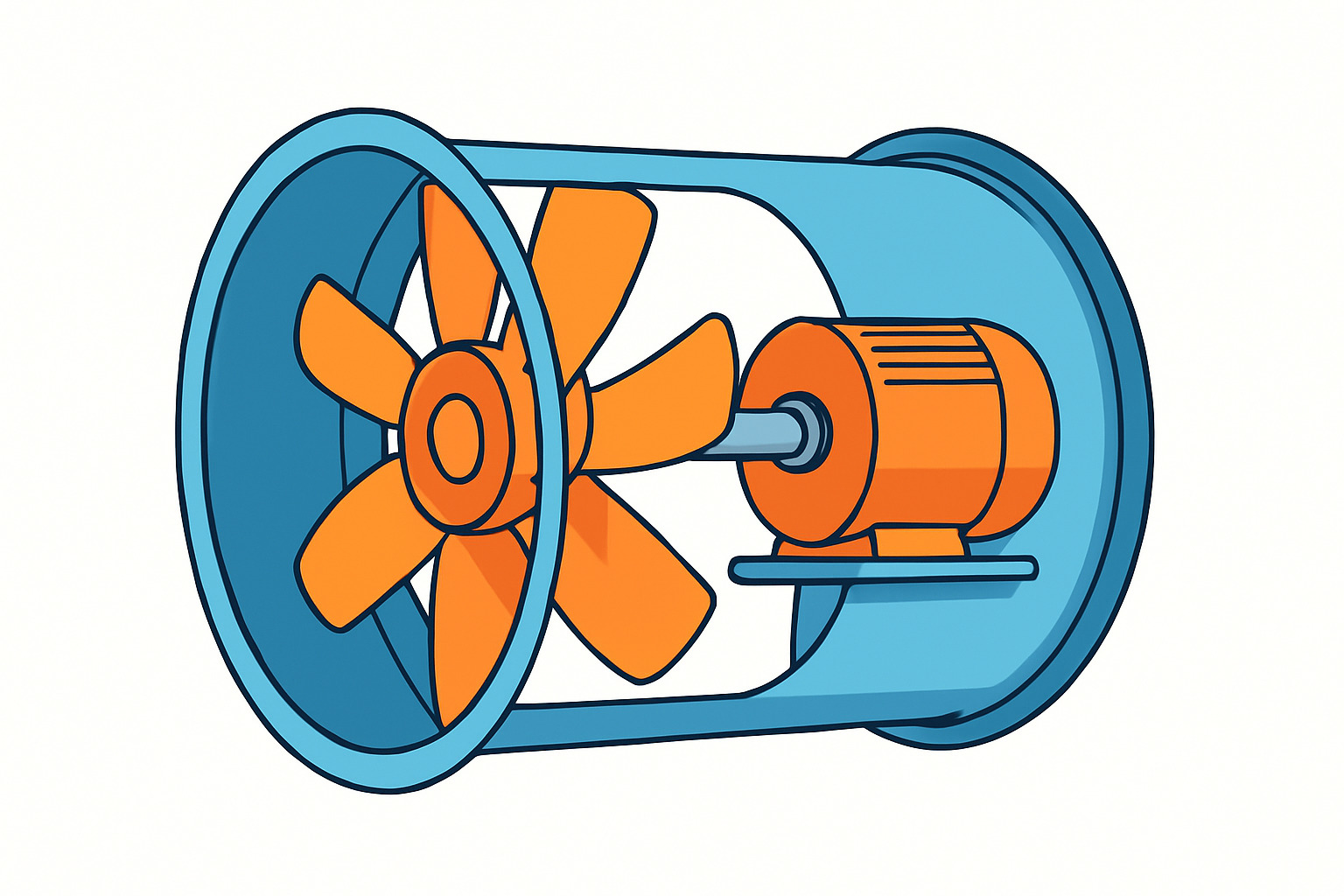
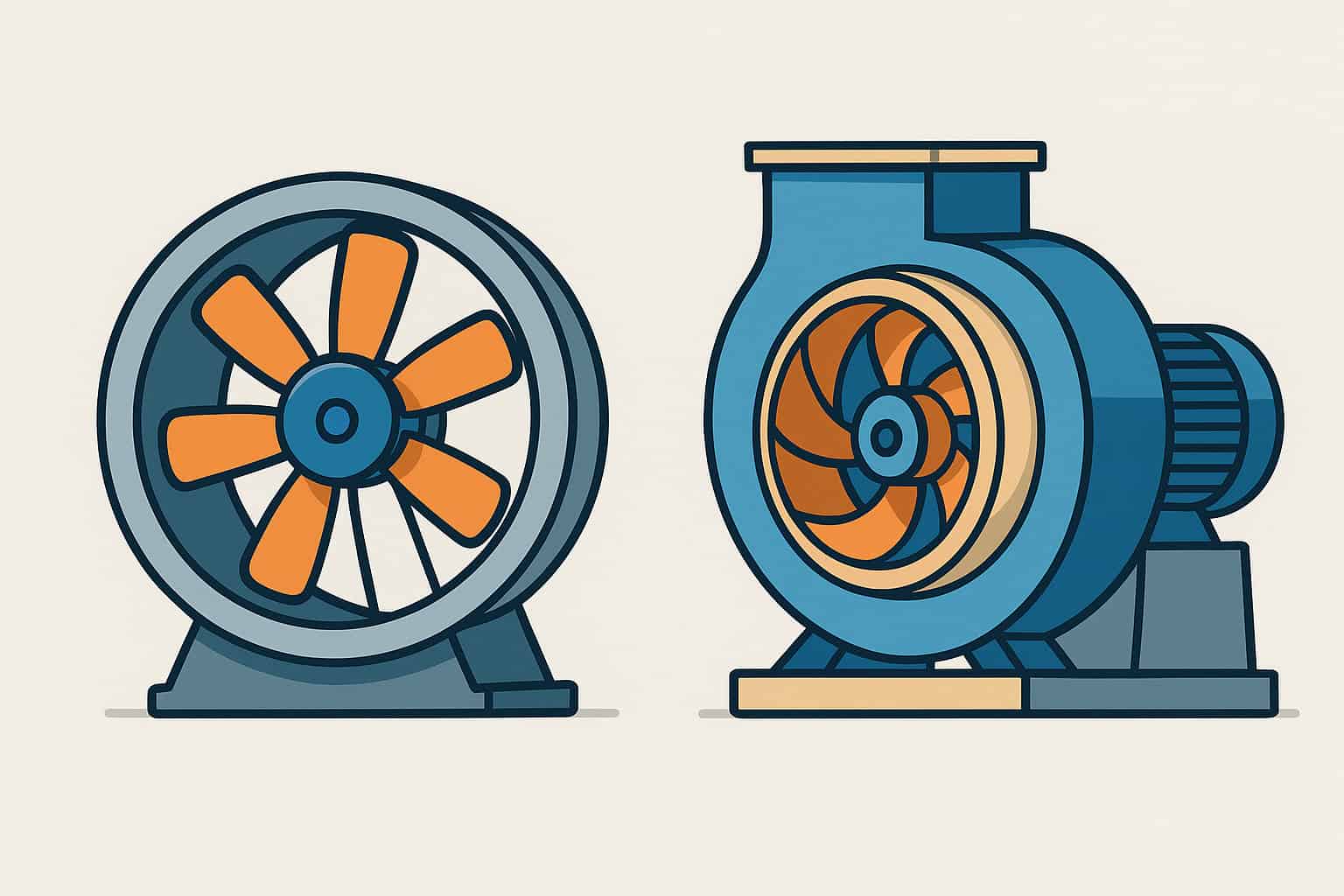
The primary function of an axial flow fan is to move large volumes of air in the same direction as the fan shaft. The blades act like a propeller, drawing air in from one side and pushing it out the other, creating high airflow at relatively low to medium pressure. This makes axial fans ideal for general ventilation, cooling and fresh air supply in many industries.
In buildings and industrial plants, axial flow fans are used to supply or exhaust air through walls, roofs and ducts. They remove hot air, fumes and humidity, and bring in cooler or cleaner outdoor air. Because they can move a lot of air for each kilowatt of power at modest pressure, they are especially efficient in applications where duct resistance is not extreme, such as warehouses, workshops, process halls and data centres.
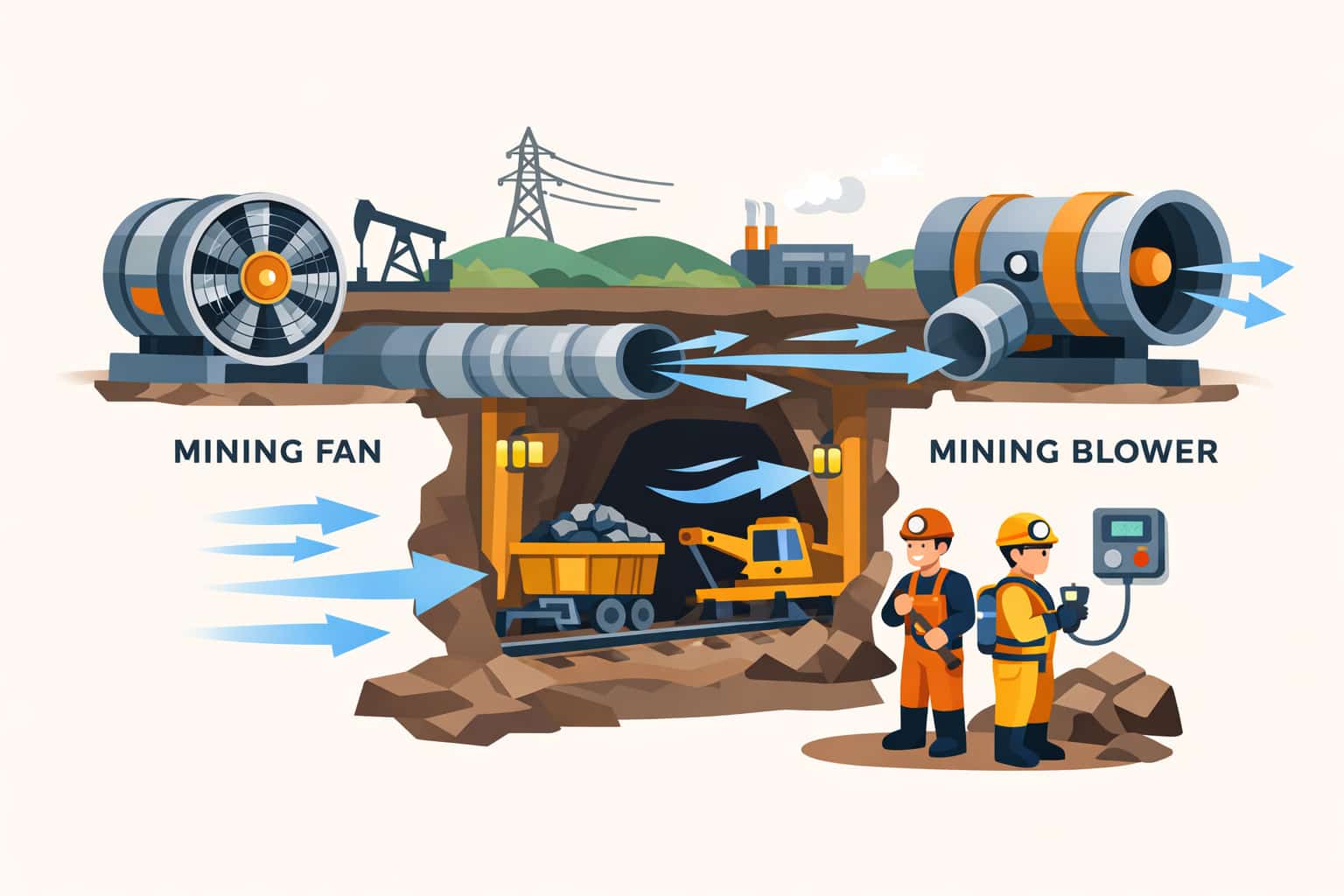
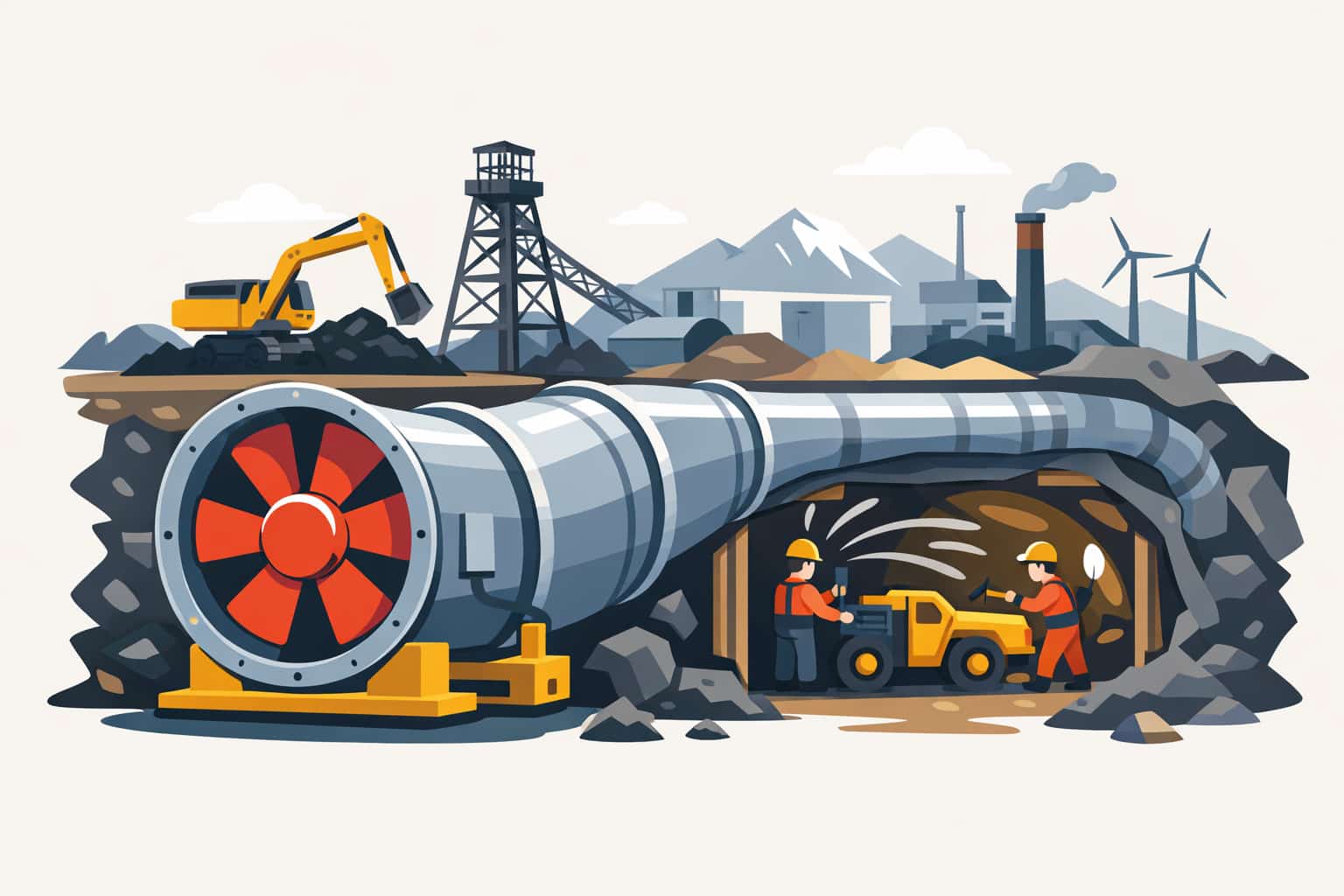
In mining and tunnelling, the function of axial flow fans is critical. Large vane-axial fans are commonly used as main mine fans, driving fresh air into intake airways and pulling return air out of the mine. Smaller tube-axial fans serve as auxiliary fans that work with flexible ducts to ventilate headings and development drives. In all these cases, the axial fan’s job is to provide the regulated airflow required by safety standards to dilute gases, control dust and maintain comfortable working conditions.
Axial flow fans also perform important roles in process cooling and equipment ventilation. They are mounted on radiators, condensers, cooling towers and air-cooled heat exchangers to remove heat from fluids or machinery. In these applications, their function is to maintain a sufficient air velocity across heat exchange surfaces so that equipment stays within safe temperature limits.
Another key function of axial fans is to control air distribution. By selecting appropriate blade angles, housing designs and speed control, engineers can adjust airflow and pressure to match the needs of each zone. Variable-frequency drives allow axial fans to respond to changing loads, such as variable production rates or fluctuating underground working areas, while still providing the required airflow with good energy efficiency.
In summary, the function of an axial flow fan is to deliver high-volume airflow along its axis for ventilation, cooling and air distribution. In factories, tunnels and mines, axial fans secure fresh air supply and remove contaminated air, forming the backbone of many mechanical ventilation systems.
