
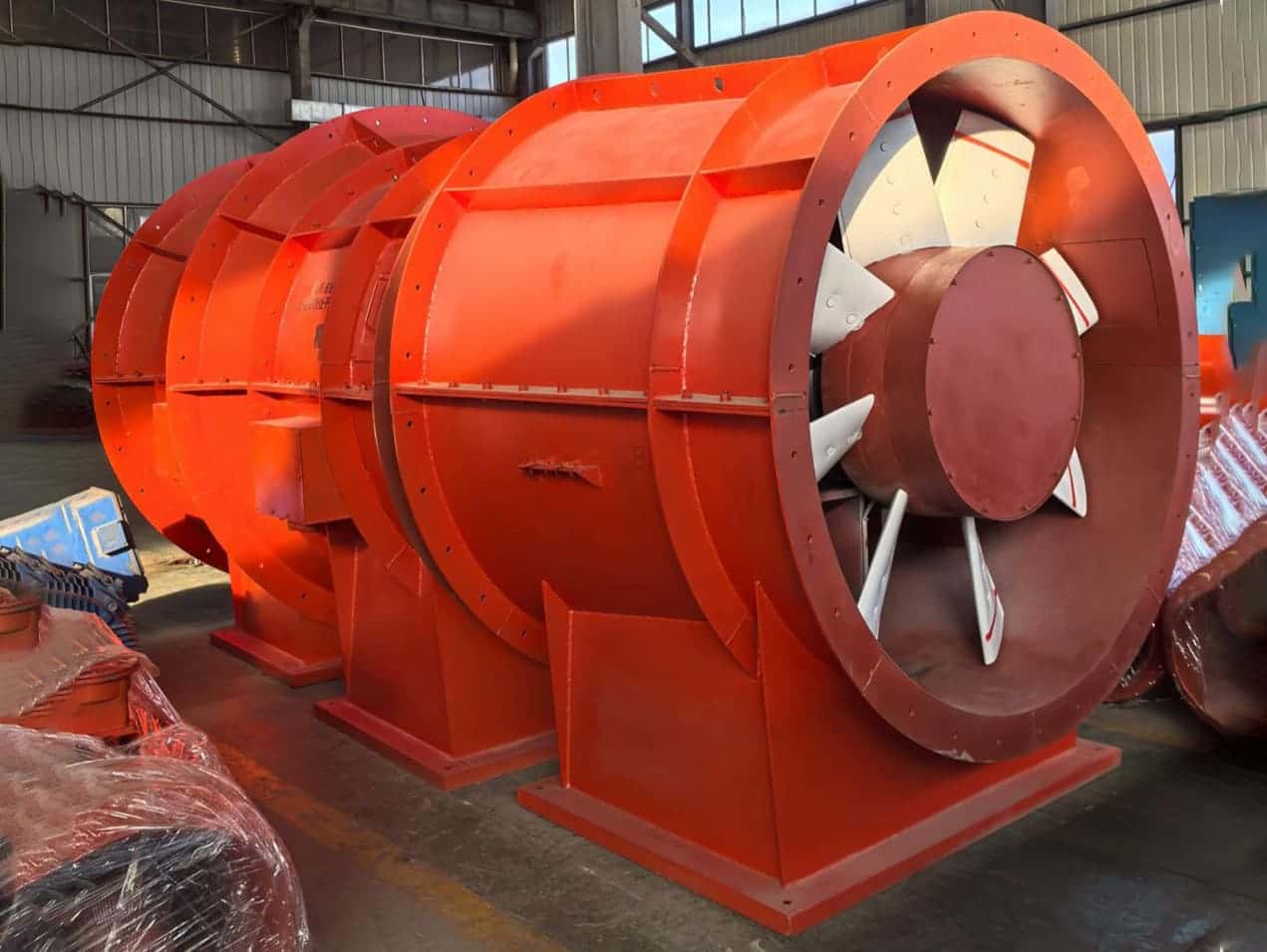
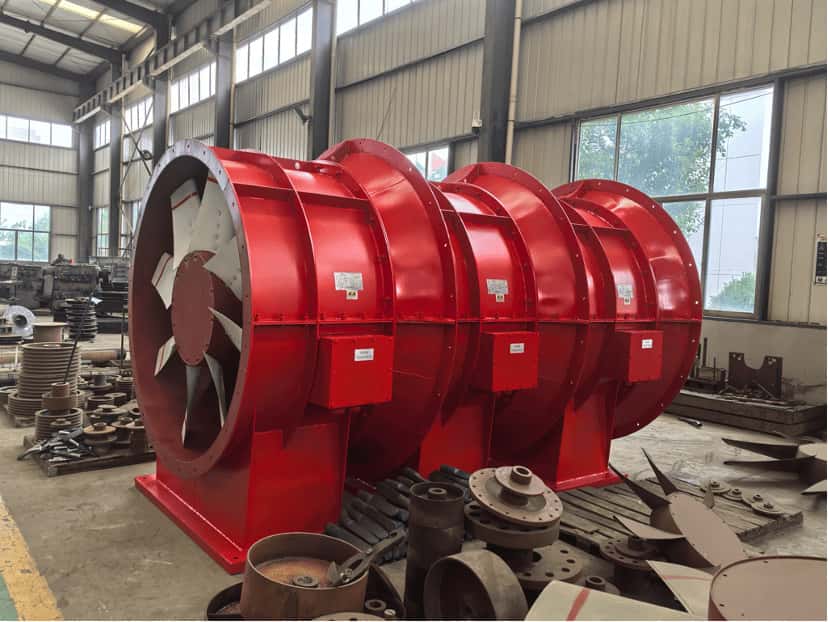
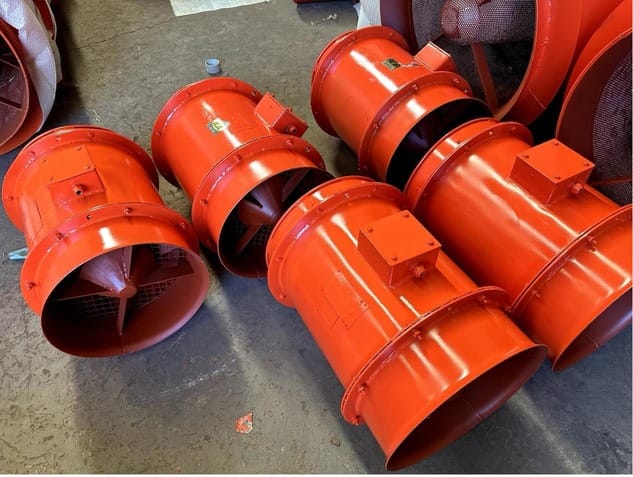
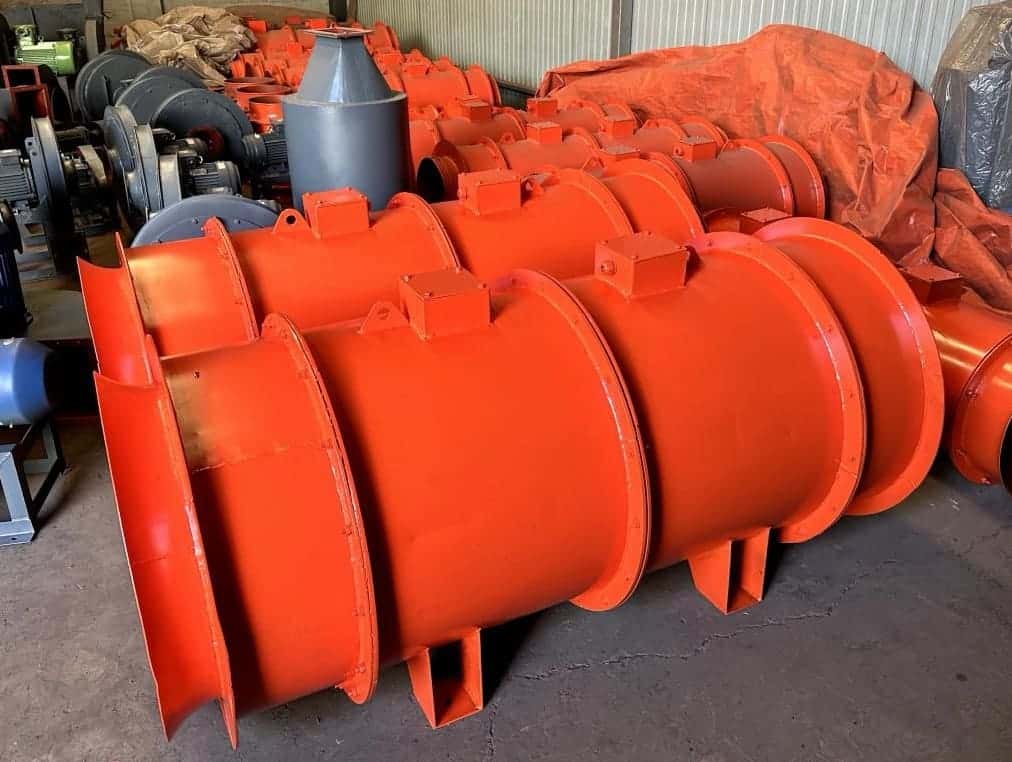
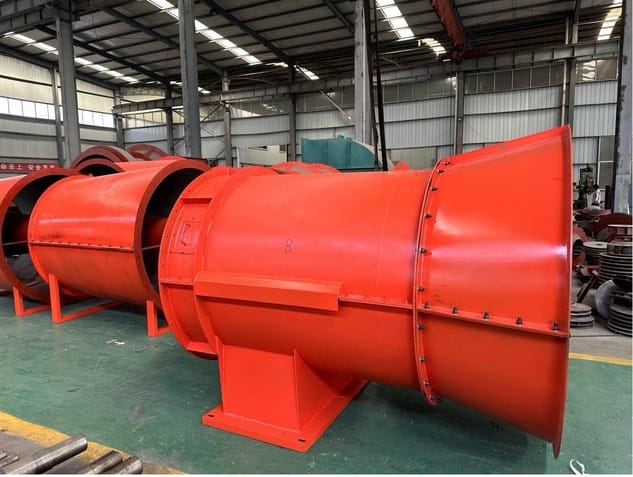
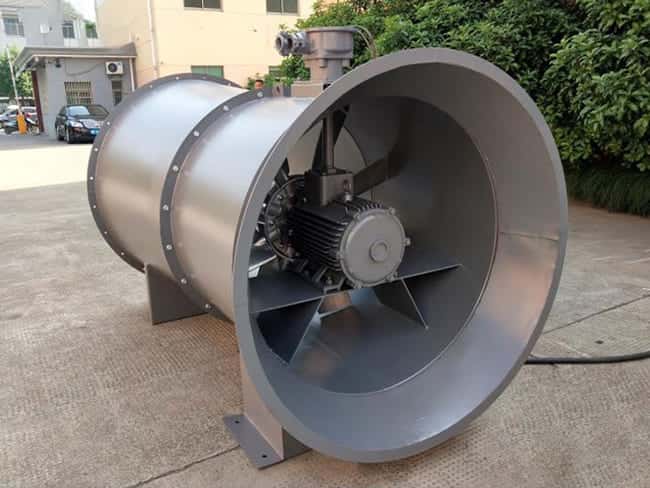
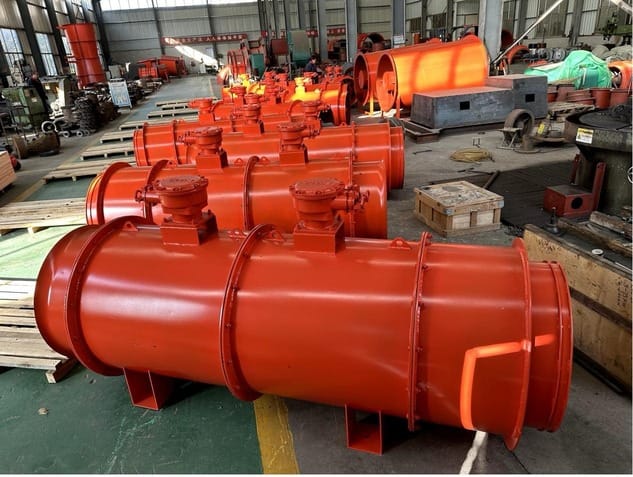
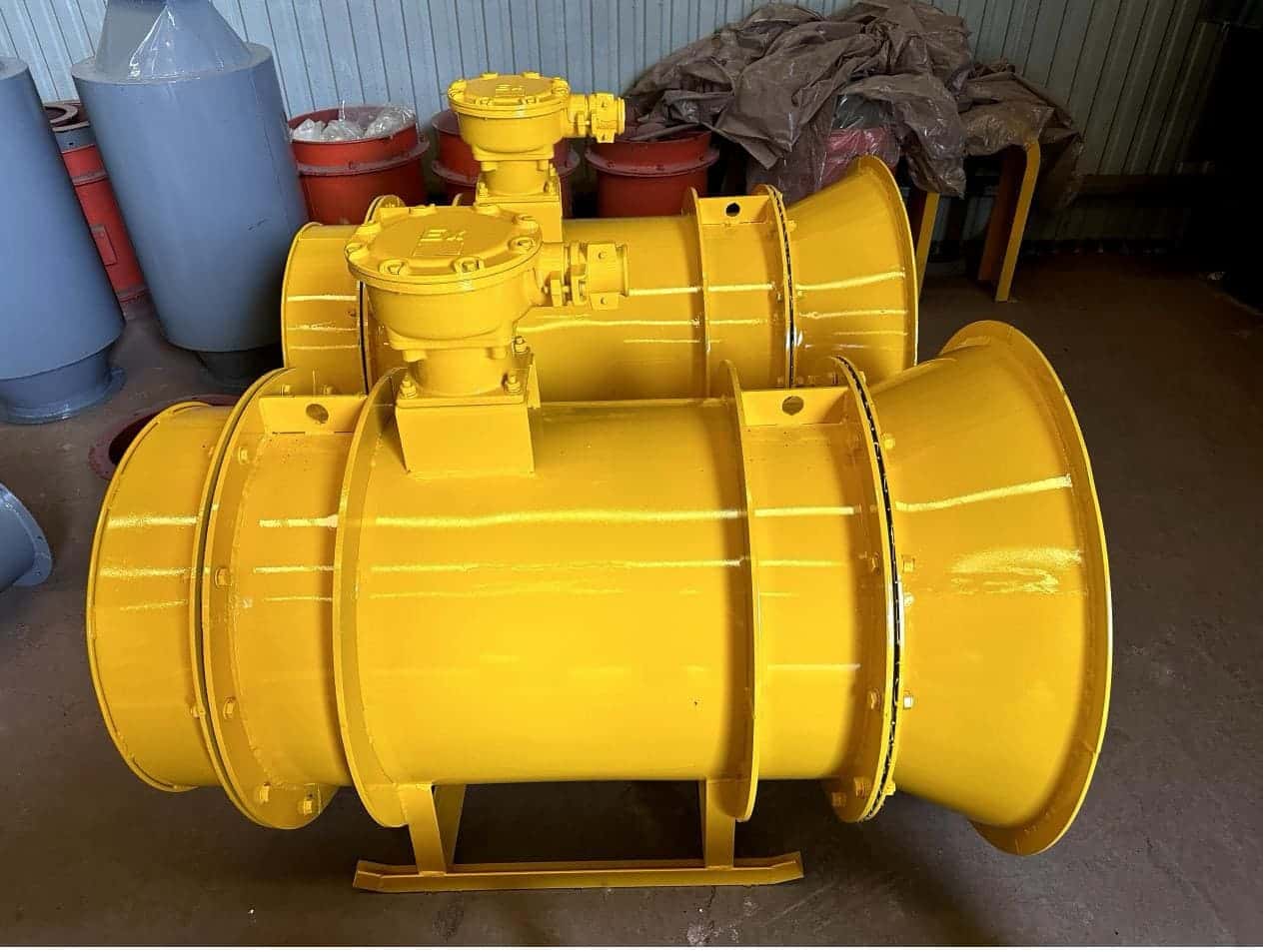
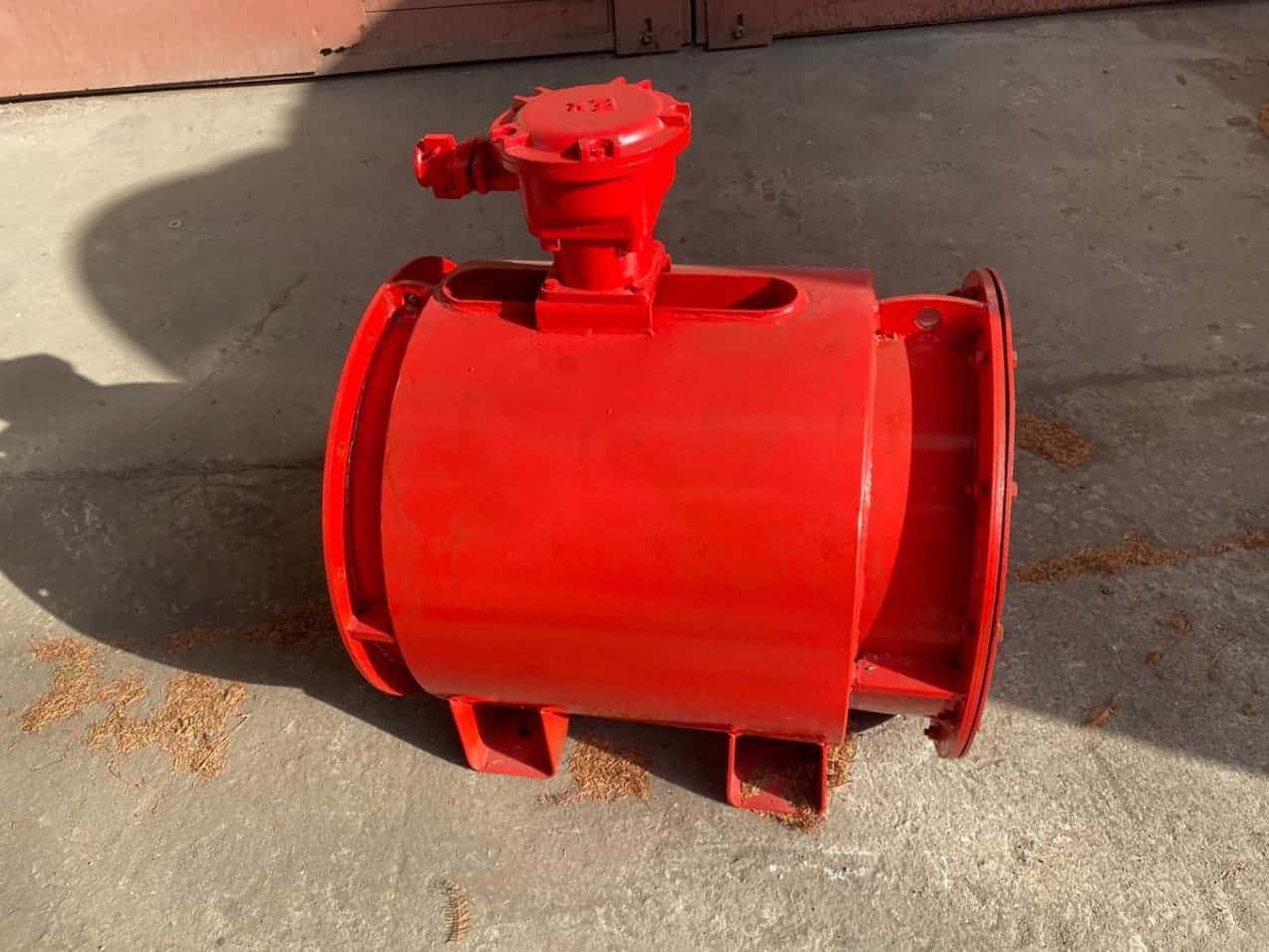
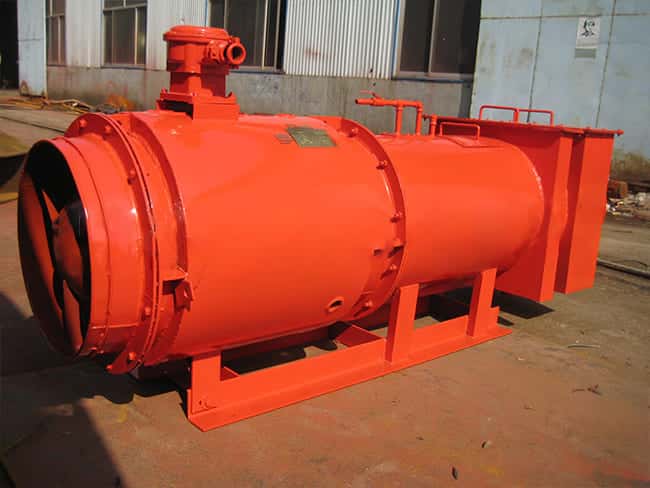
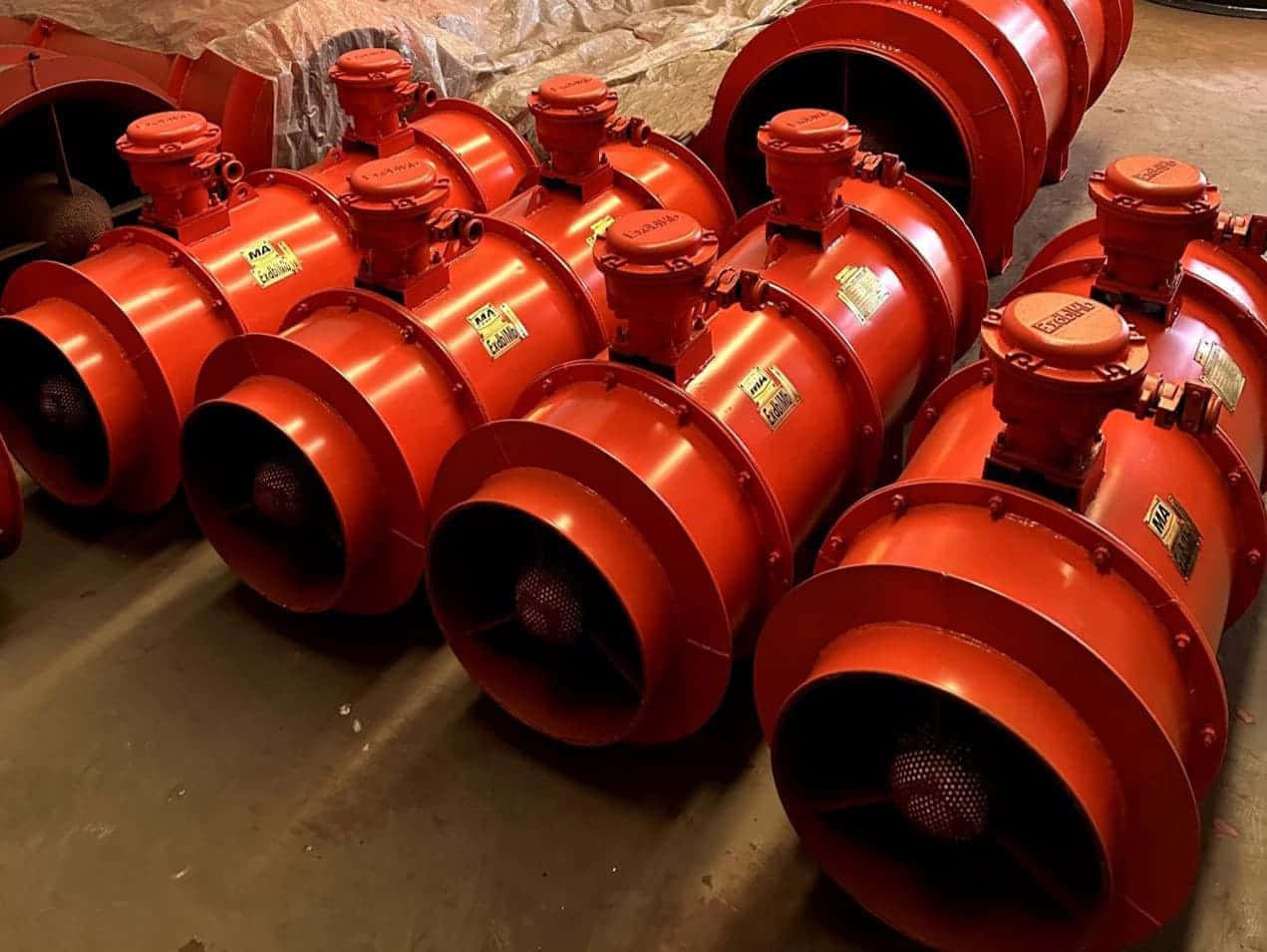
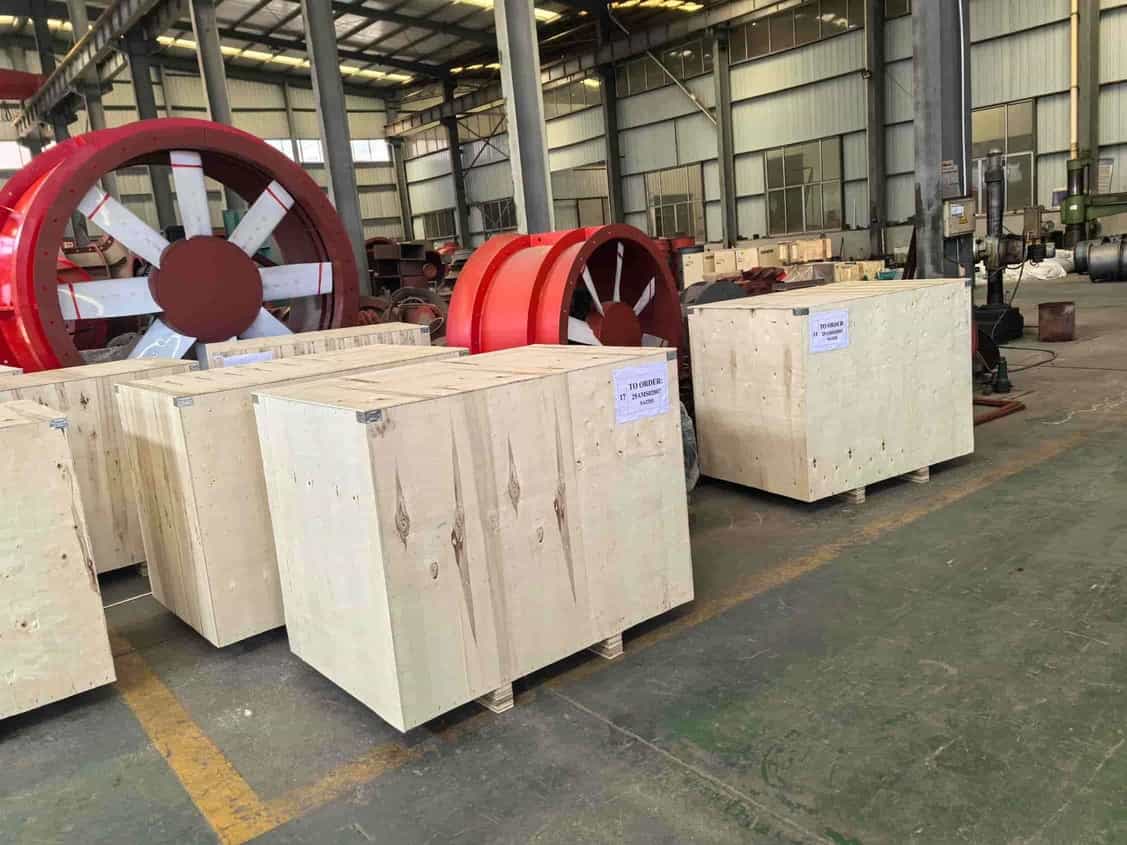
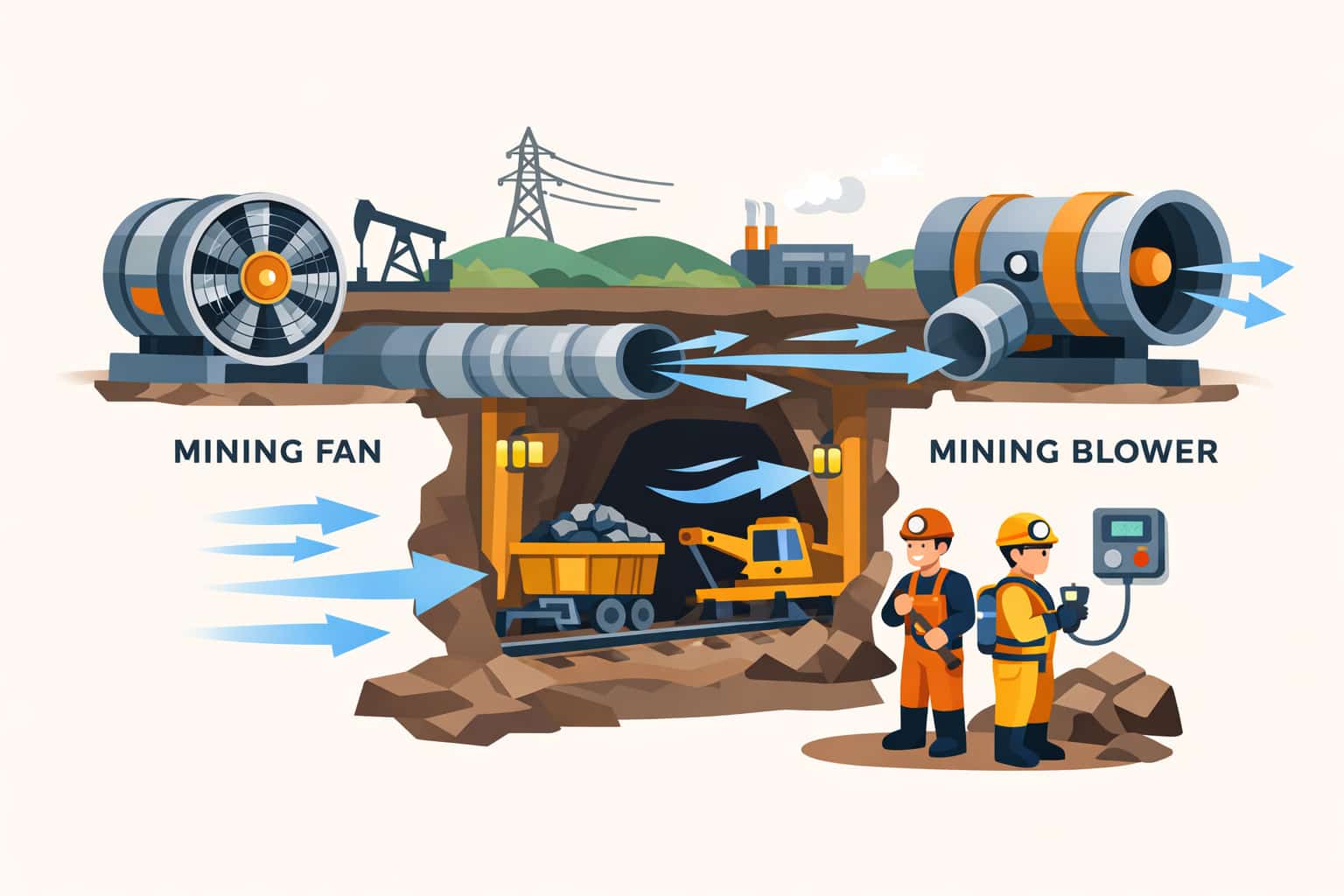
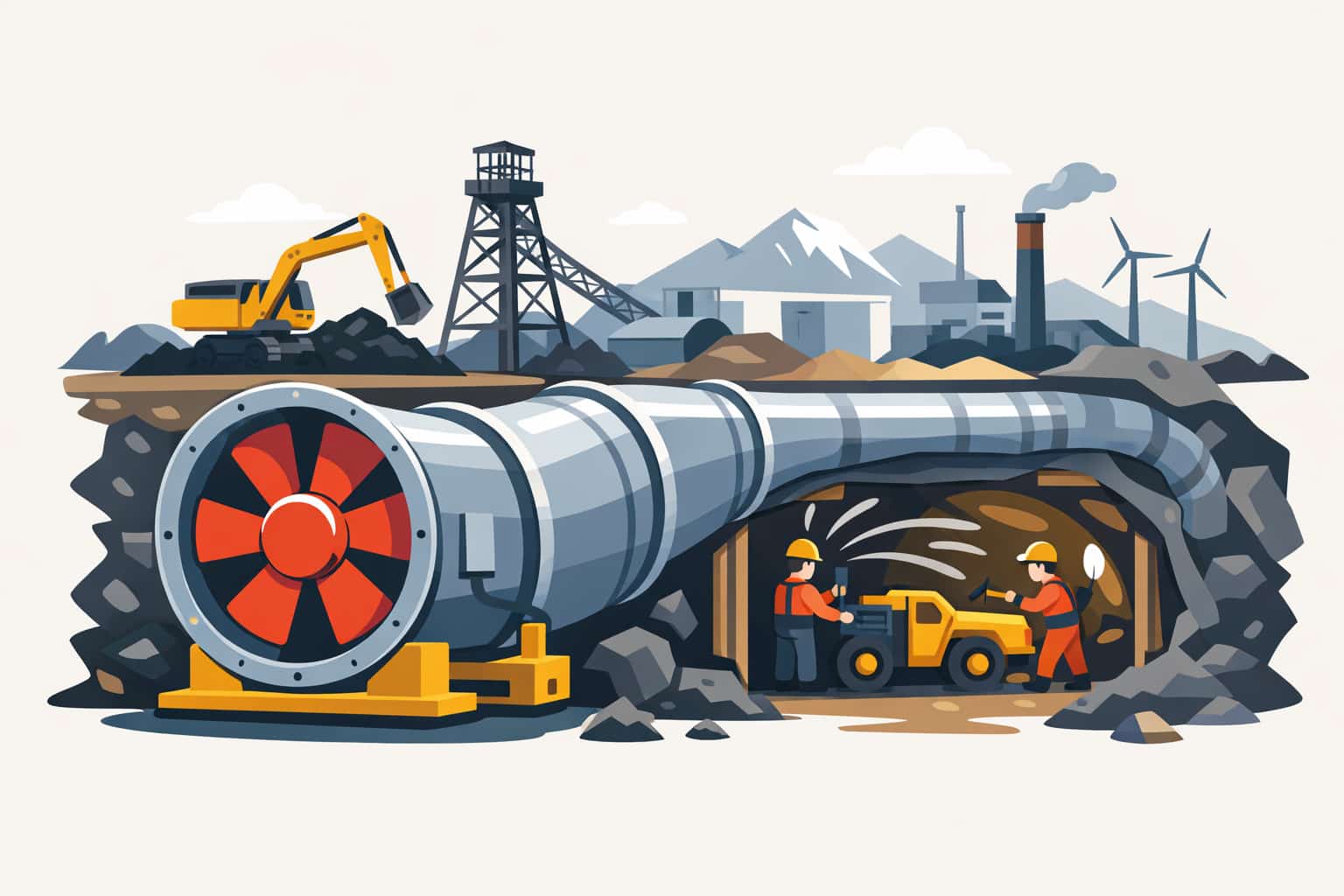
There is no single fixed value for the maximum pressure of an axial fan, because pressure capability depends on blade design, diameter, speed and the presence of inlet cones, diffusers and guide vanes. However, in practical mining and industrial ventilation, axial fans are used mainly for low to medium static pressures, while very high pressures are more often handled by centrifugal fans.
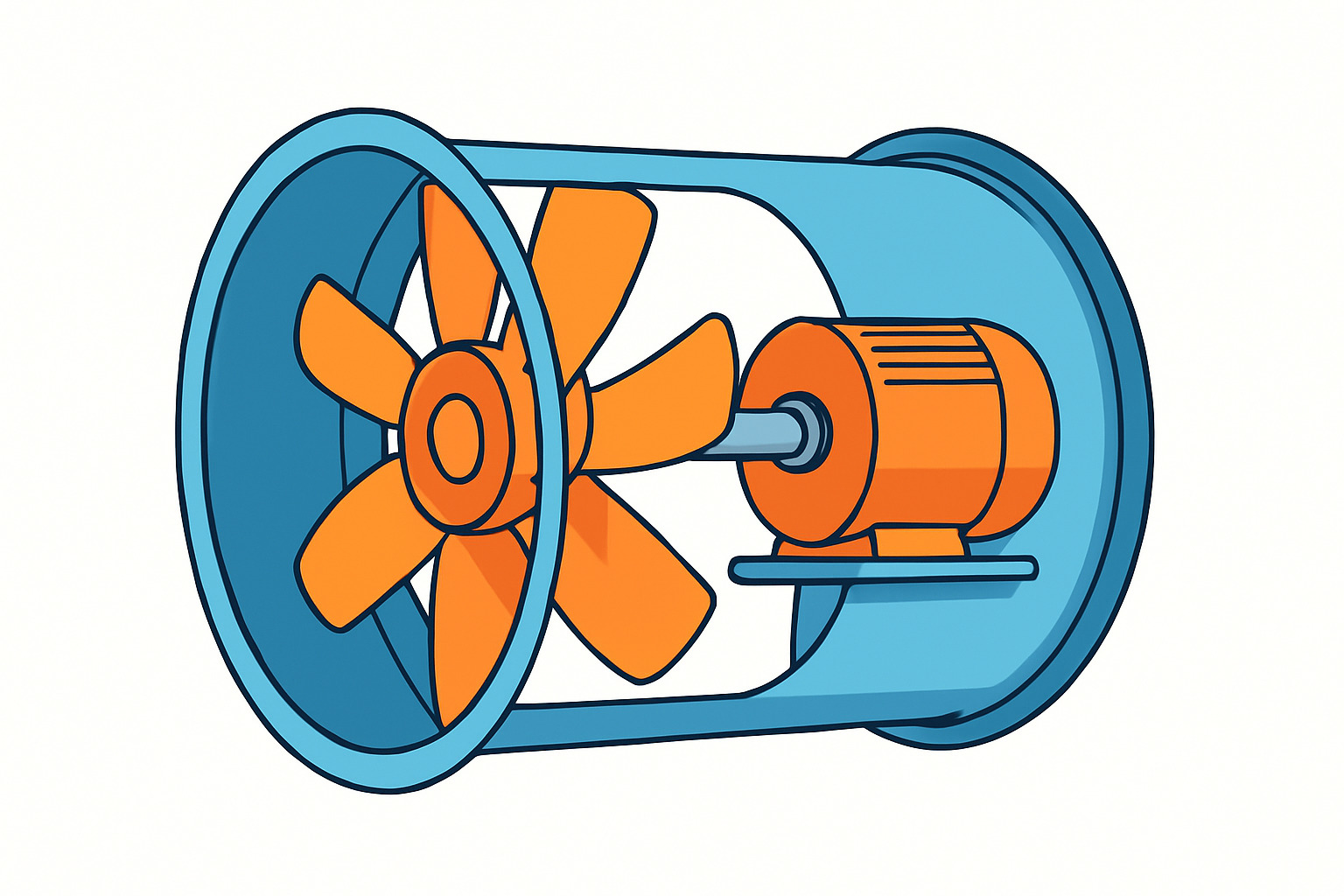
Standard propeller and tube-axial fans used for general building ventilation typically operate at relatively low static pressures, often in the range of a few hundred pascals. They are optimised for moving large air volumes against modest resistance, such as short ducts, louvers and grilles. When system resistance increases—for example, with long ducts, multiple bends or filters—the pressure capability of simple axial designs may not be sufficient.
Vane-axial fans, which add stationary guide vanes to straighten the flow and recover more static pressure, can achieve significantly higher pressures. In mining and tunnel ventilation, large vane-axial fans can generate several kilopascals of static pressure, enough to overcome friction in long shafts and airways. The exact maximum depends on the fan’s diameter, rotational speed, blade profile and allowable tip speed (which is limited by noise, stress and efficiency considerations).
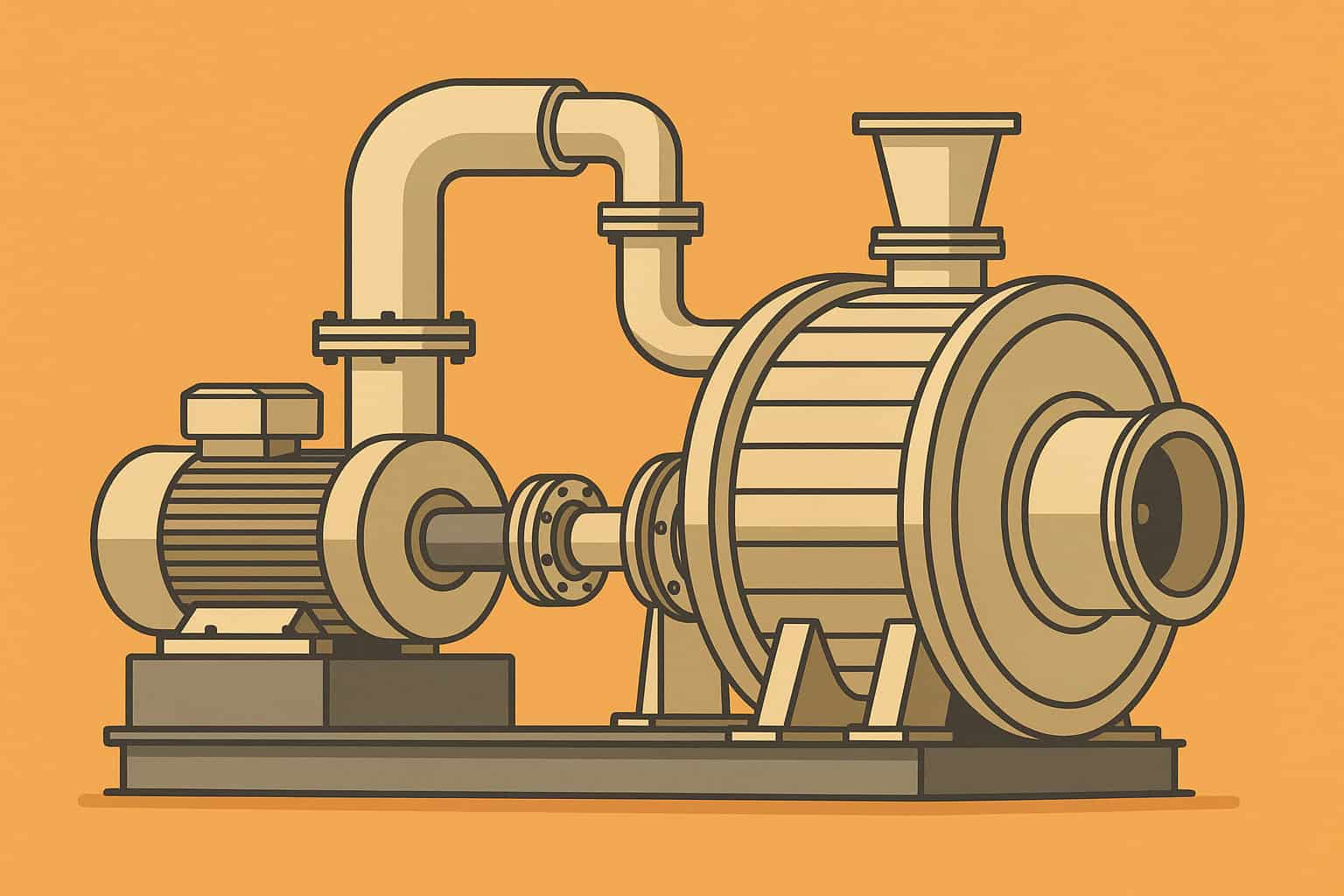
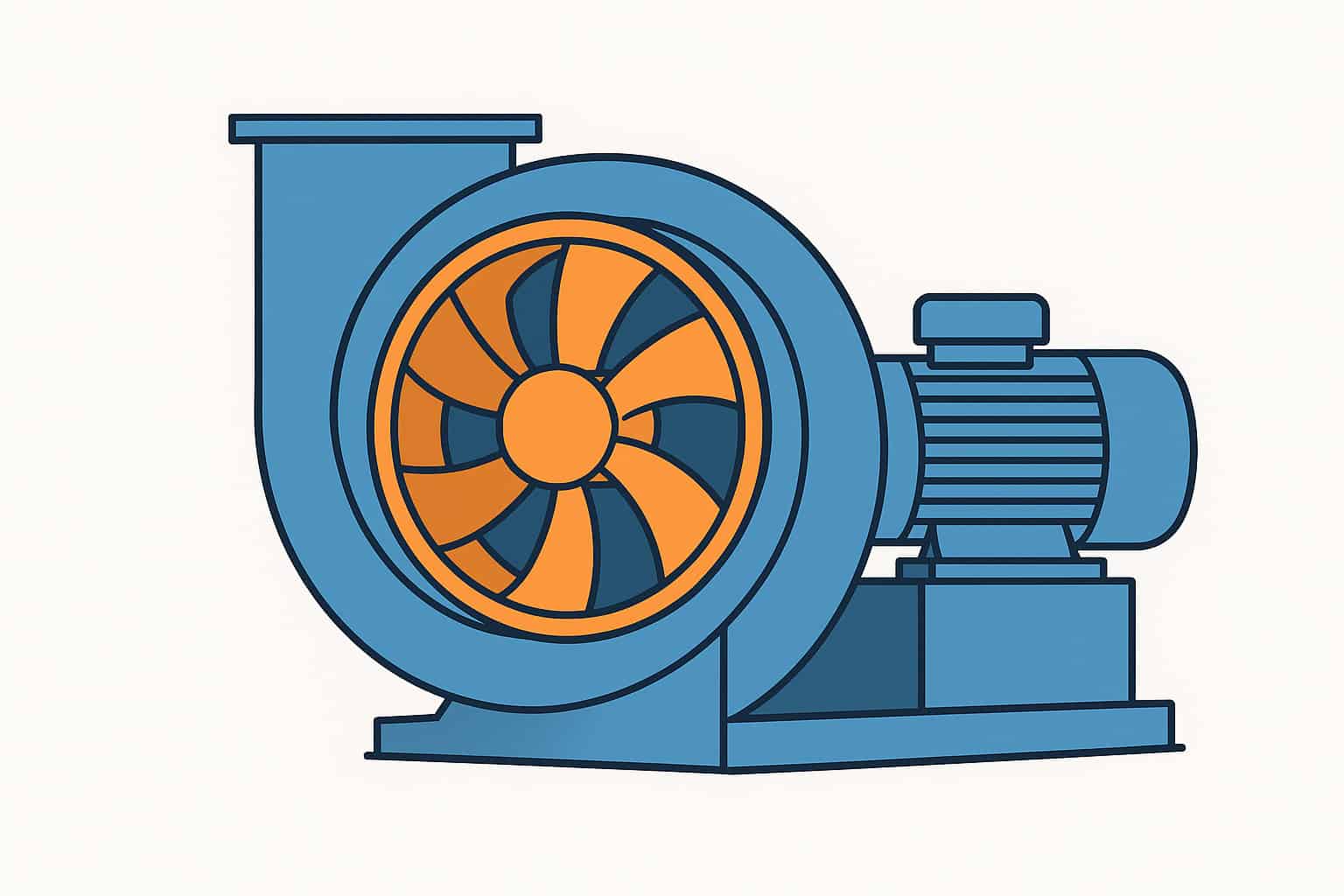
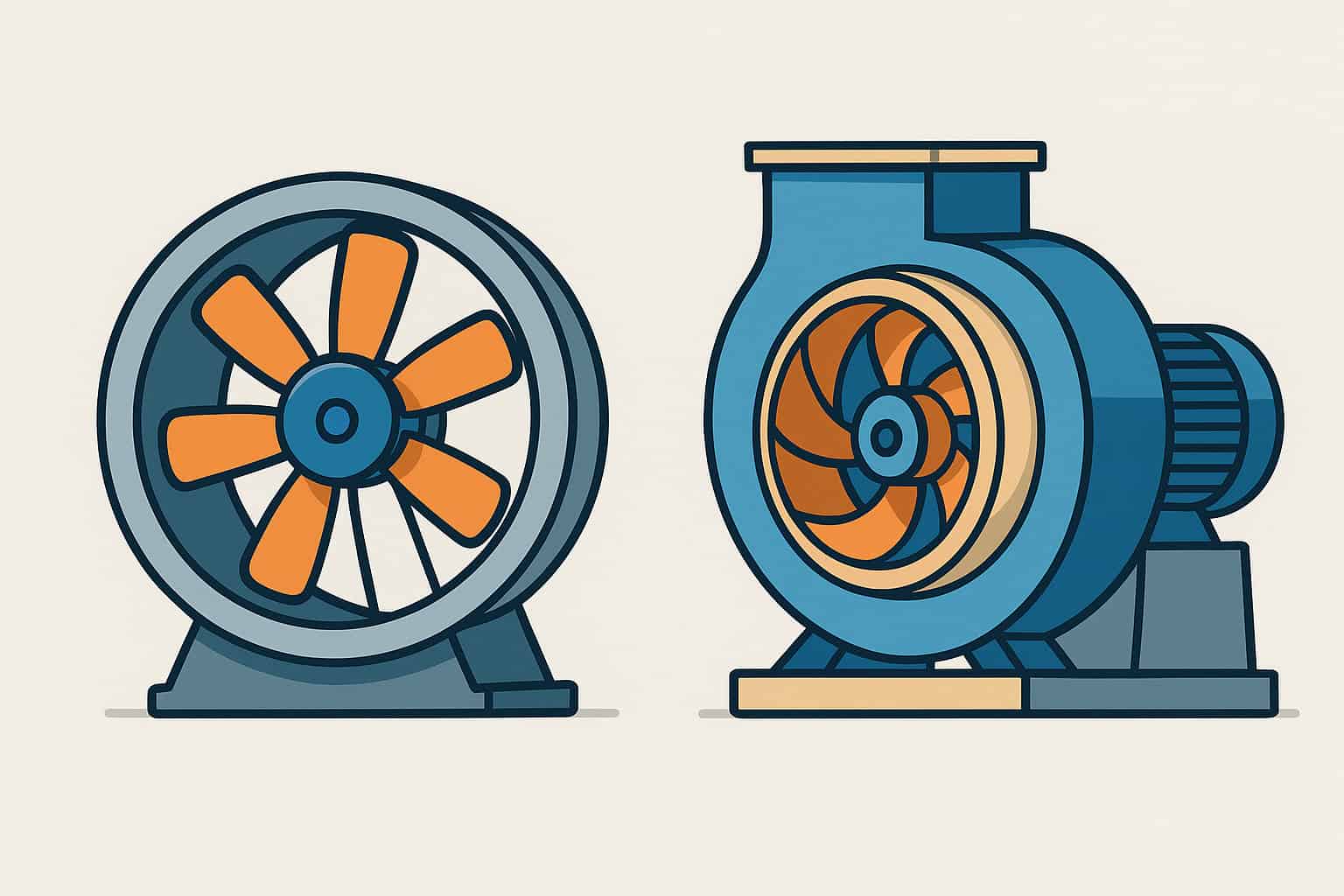
Despite these capabilities, axial fans are rarely used for very high-pressure duties where static pressures become extremely large and gas streams are highly restricted or heavily loaded with dust. In those cases, centrifugal fans are usually preferred because their radial discharge and volute casing are better suited to high pressure rises and difficult gas conditions. Trying to push an axial fan to extreme pressures would require very high speeds or very aggressive blade angles, which can cause noise, vibration and stall problems.
When selecting a fan for a mining or industrial ventilation system, engineers typically define the required airflow and system resistance, then review performance curves from manufacturers. These curves show the maximum usable pressure for each axial fan model before efficiency drops or instability appears. Operating the fan near, but not beyond, its stable pressure range ensures reliable performance and reasonable energy consumption.
In summary, the maximum pressure of an axial fan depends on its specific design, but axial ventilation fans are generally applied in low to medium pressure ranges, including many mine and tunnel duties. Extremely high pressures are usually achieved more reliably and efficiently with centrifugal fans designed for that purpose.