
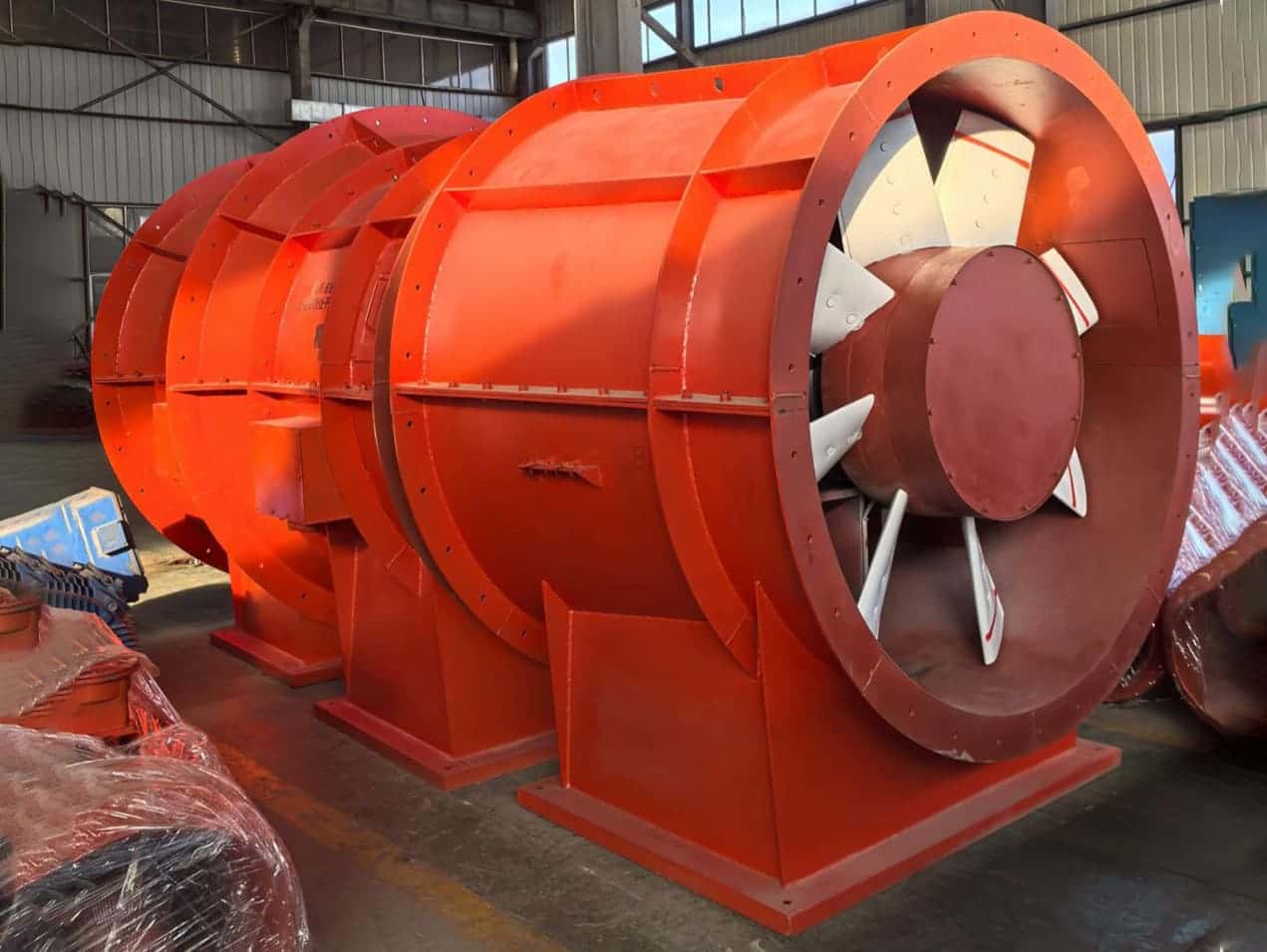
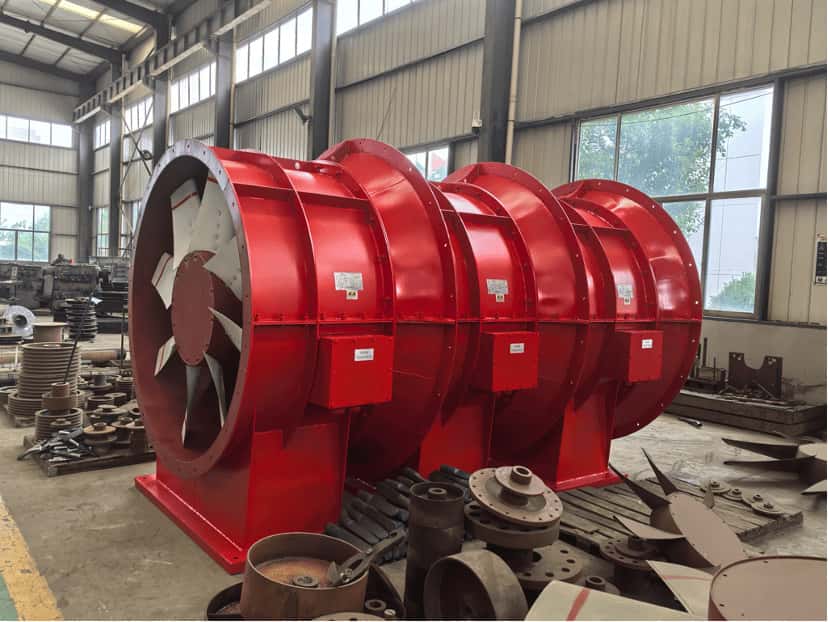
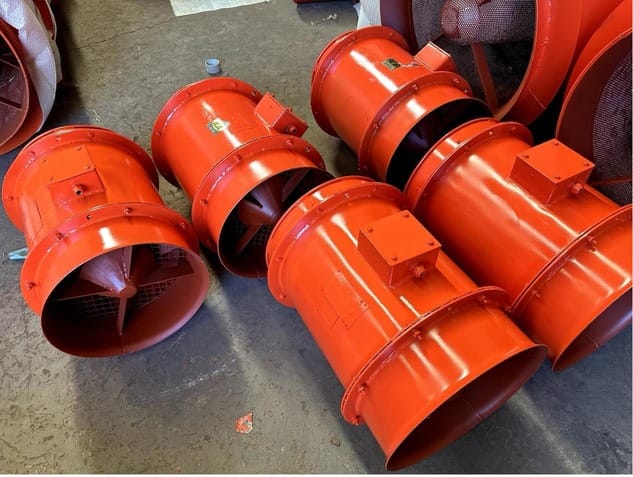
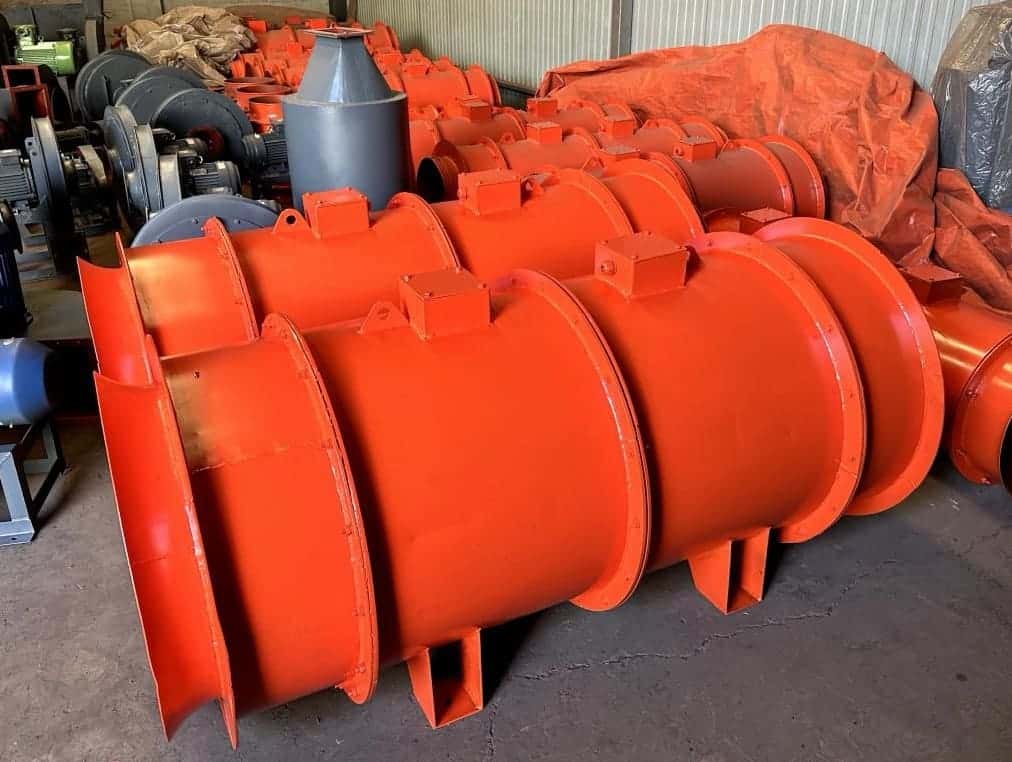
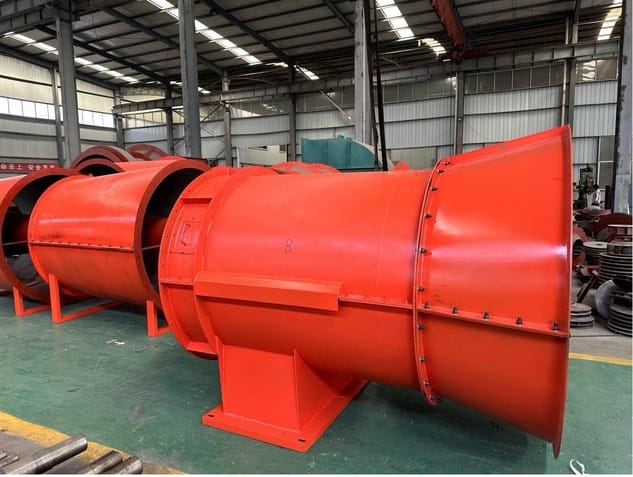
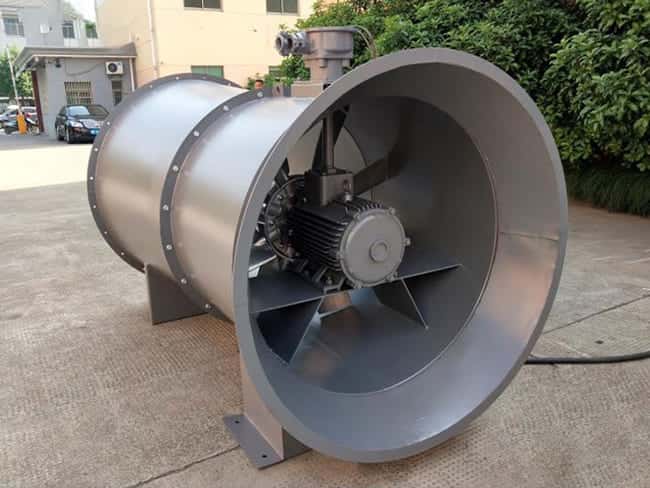
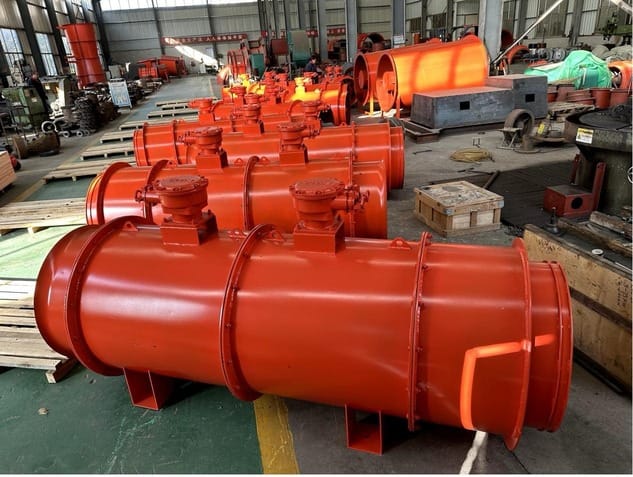
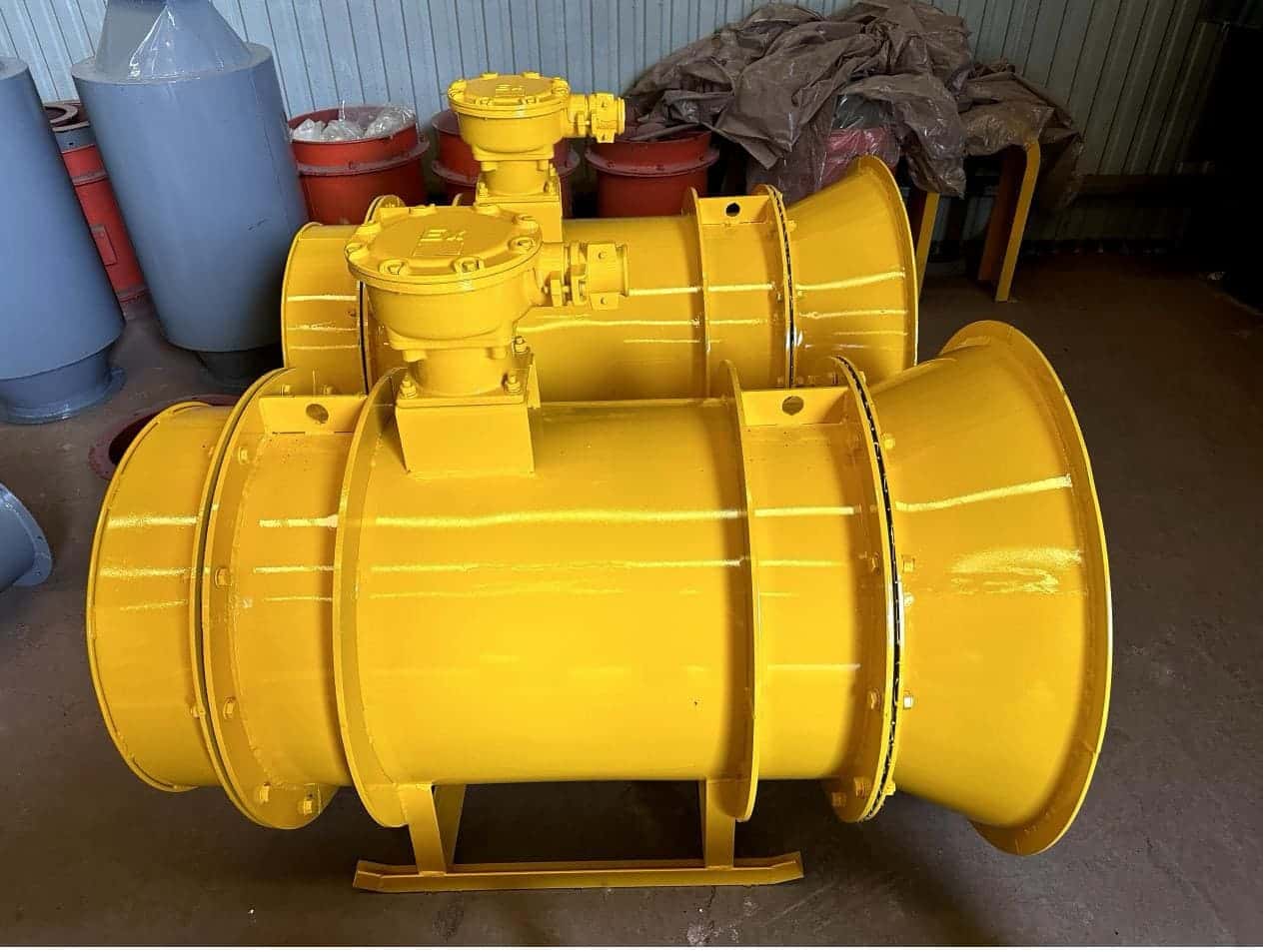
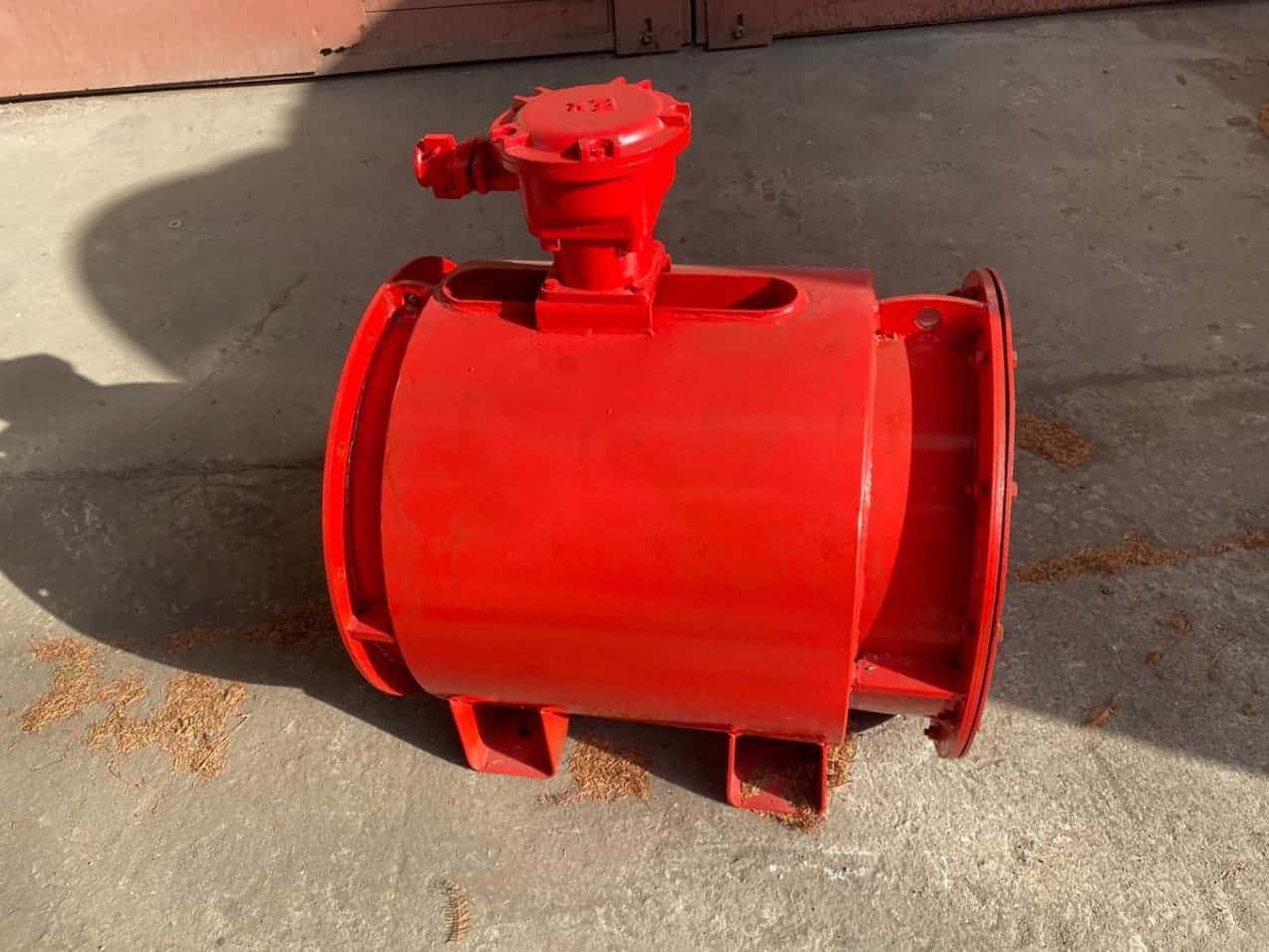
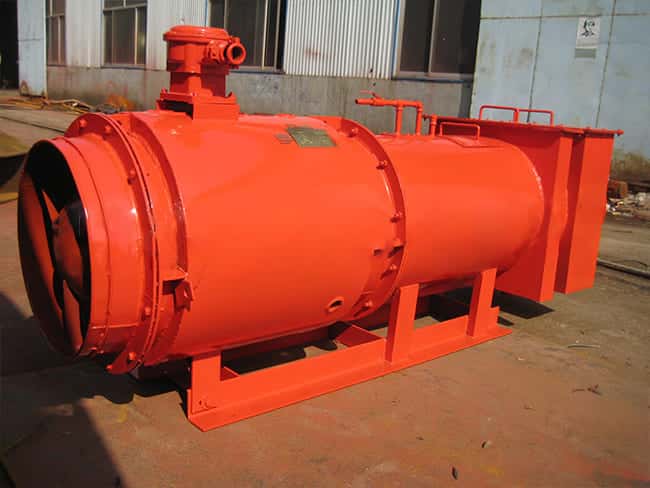
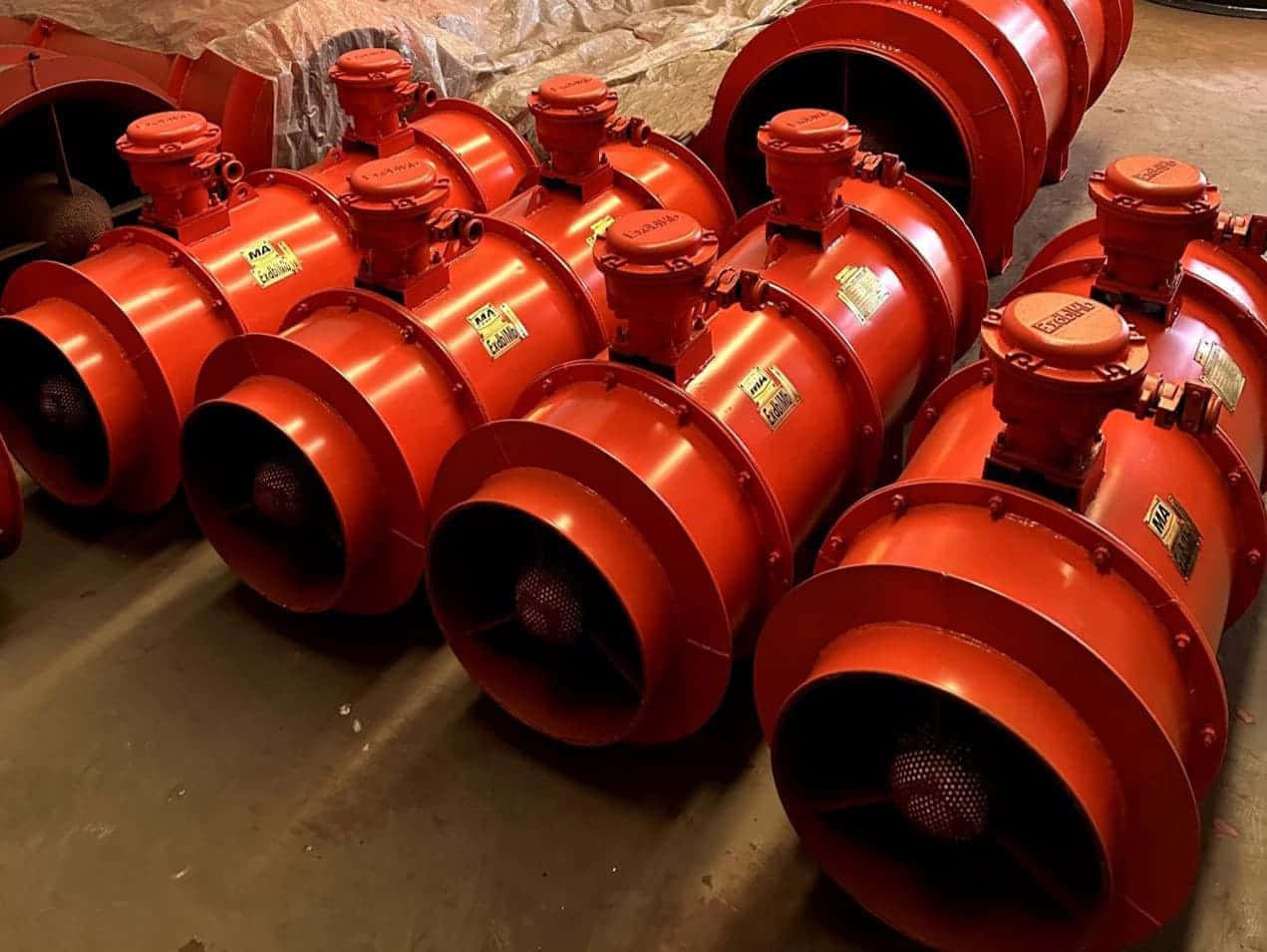
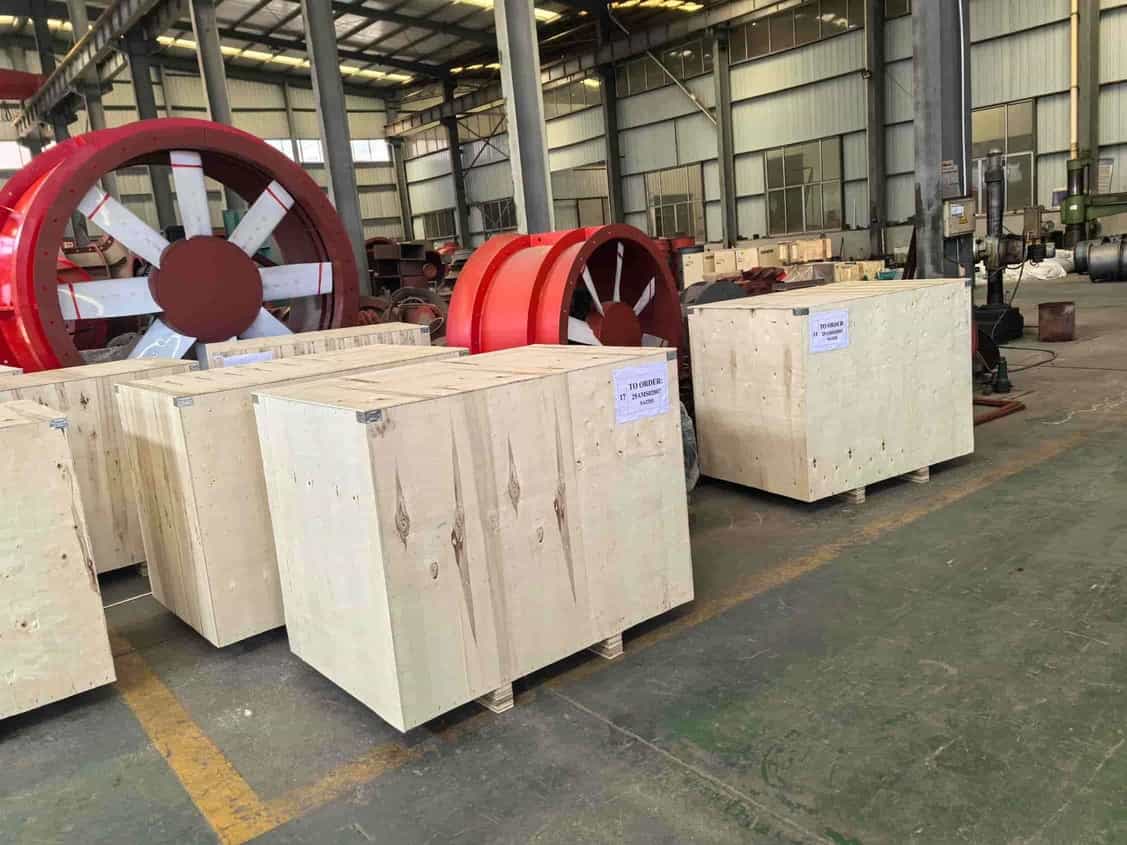
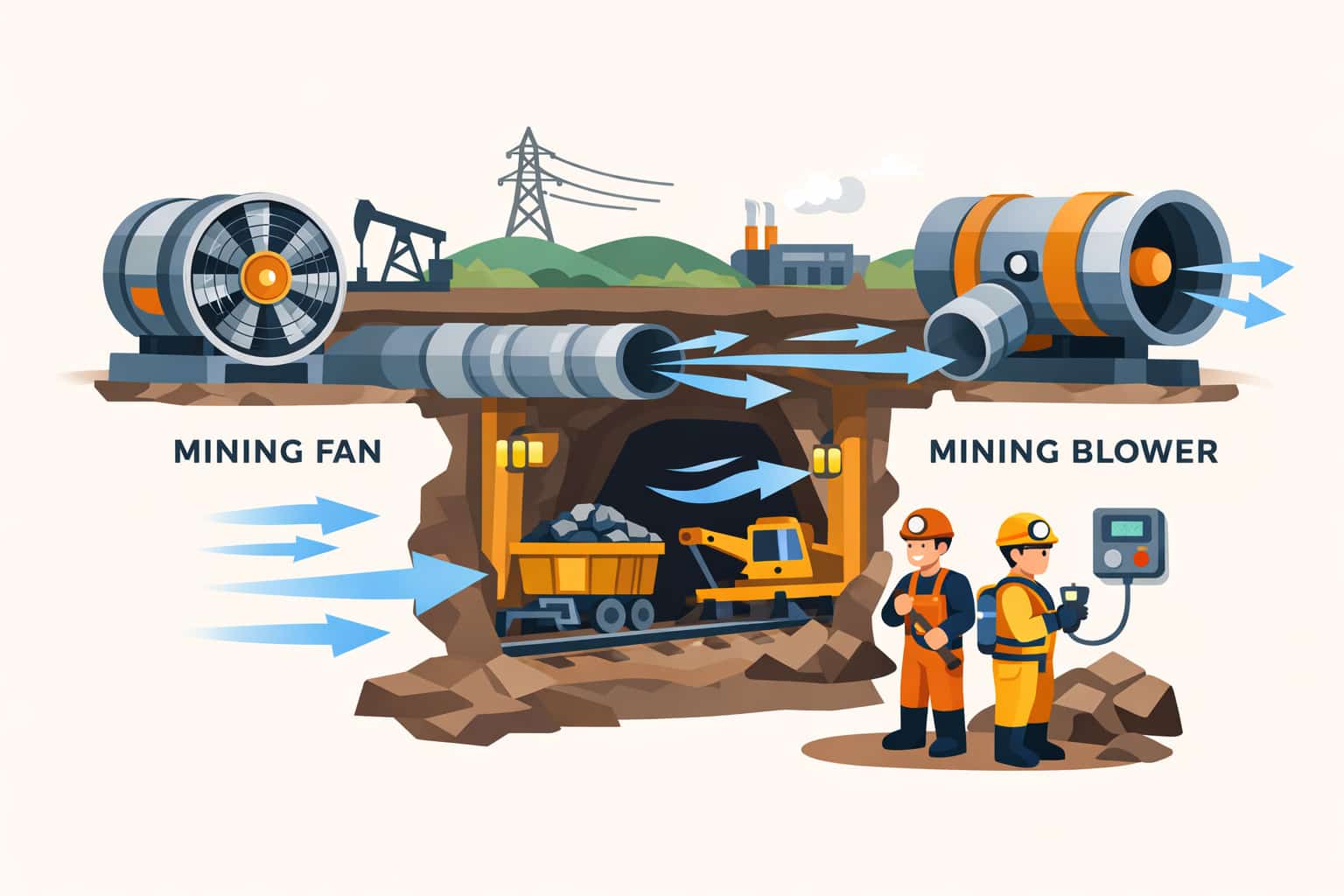
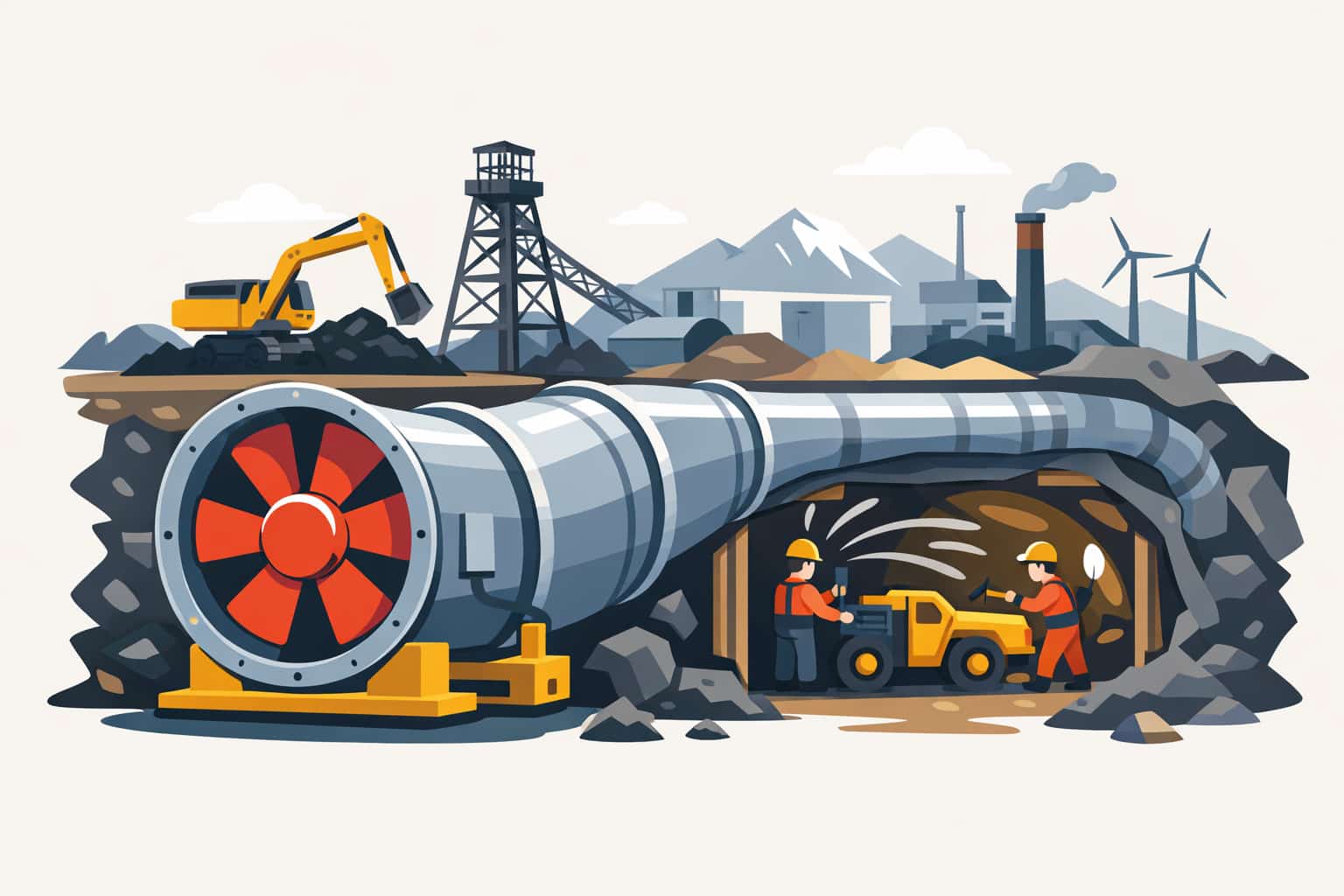
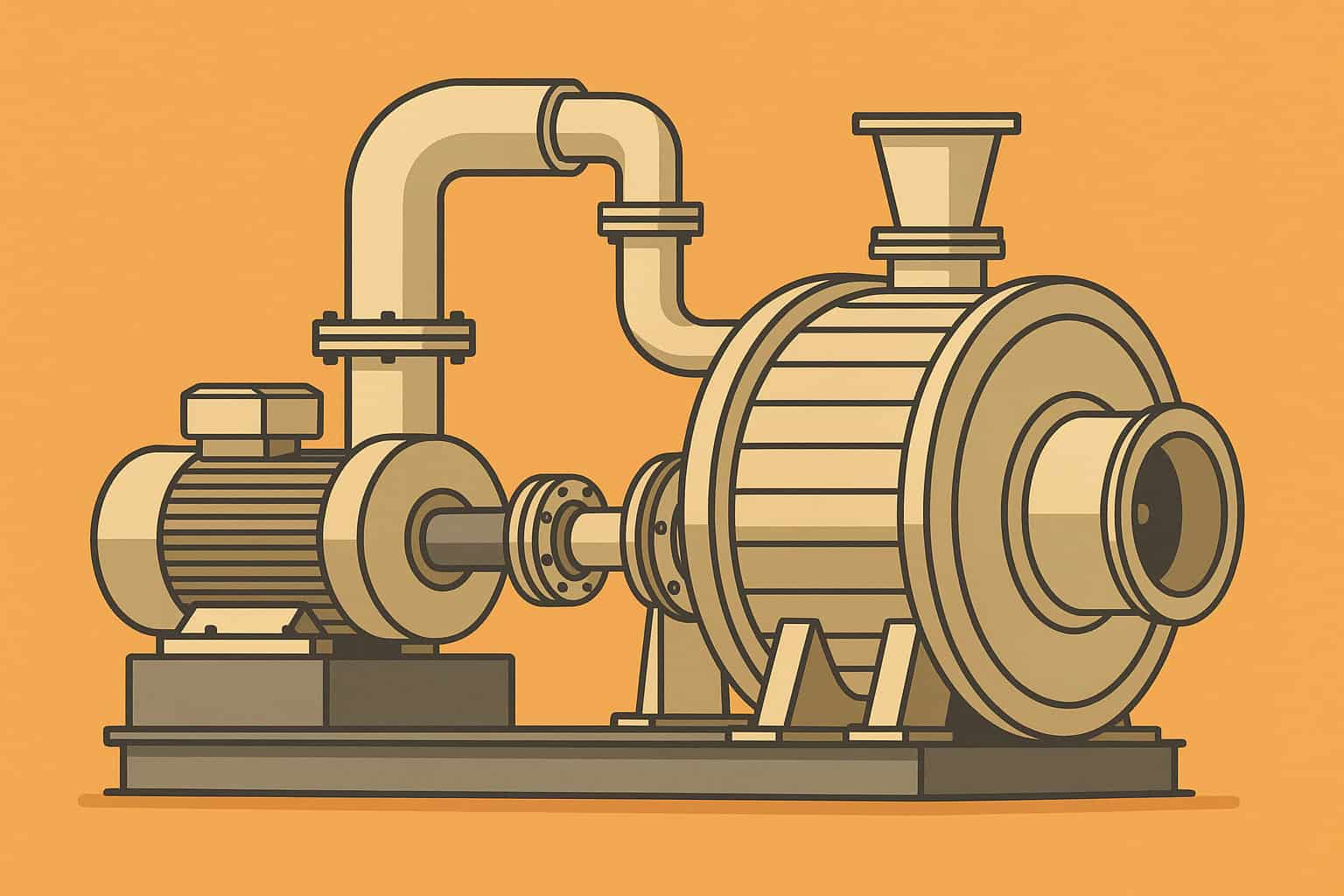
There is no single fixed price for an underground ventilation fan, because cost depends on many technical and commercial factors. When mining companies ask, “How much does an underground ventilation fan cost?”, what they are really asking is how much it costs to purchase a fan that meets their specific airflow, pressure, safety, and reliability requirements. A small auxiliary fan for a heading will have a very different price from a large main fan station for a deep mine.
The most important factor affecting price is the required duty point of the fan: airflow (volume) and static pressure. Higher flow and higher pressure generally require larger impellers, bigger casings, more powerful motors, and stronger foundations, all of which increase cost. A high-pressure centrifugal or axial fan designed to overcome long airways or complex duct systems will be more expensive than a low-pressure fan used in a short, simple circuit.
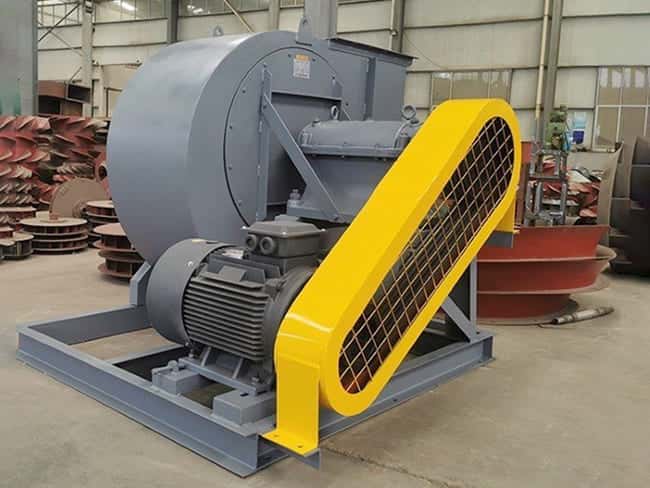
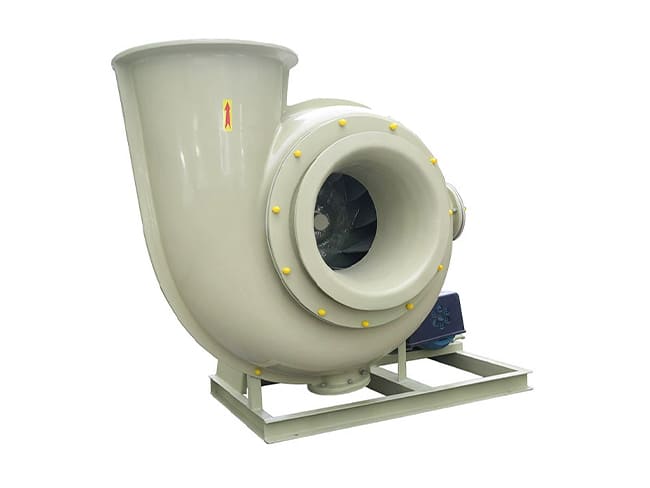
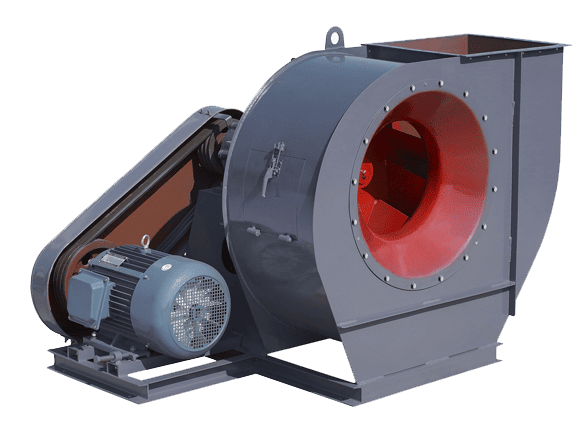
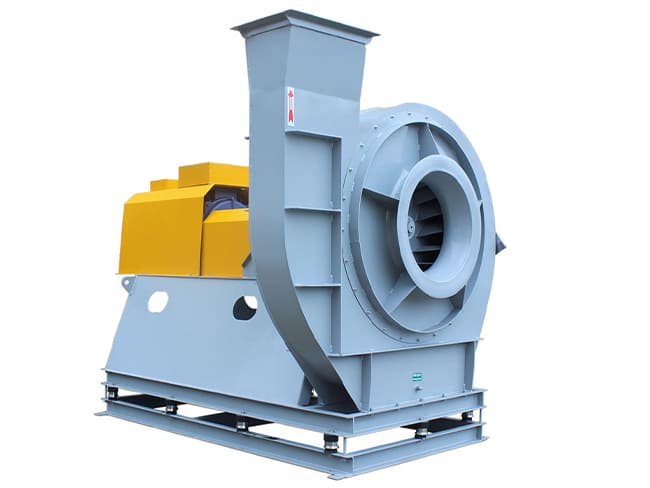
Fan design and construction also have a direct impact on price. Heavy-duty mining fans are typically built with robust, welded steel casings, carefully balanced impellers, and high-quality bearings suitable for continuous service. Extra design features such as adjustable-pitch blades on axial fans, double-inlet centrifugal designs, or aerodynamic silencers add value but also increase cost. In corrosive or abrasive environments, special coatings and wear-resistant materials may be required.
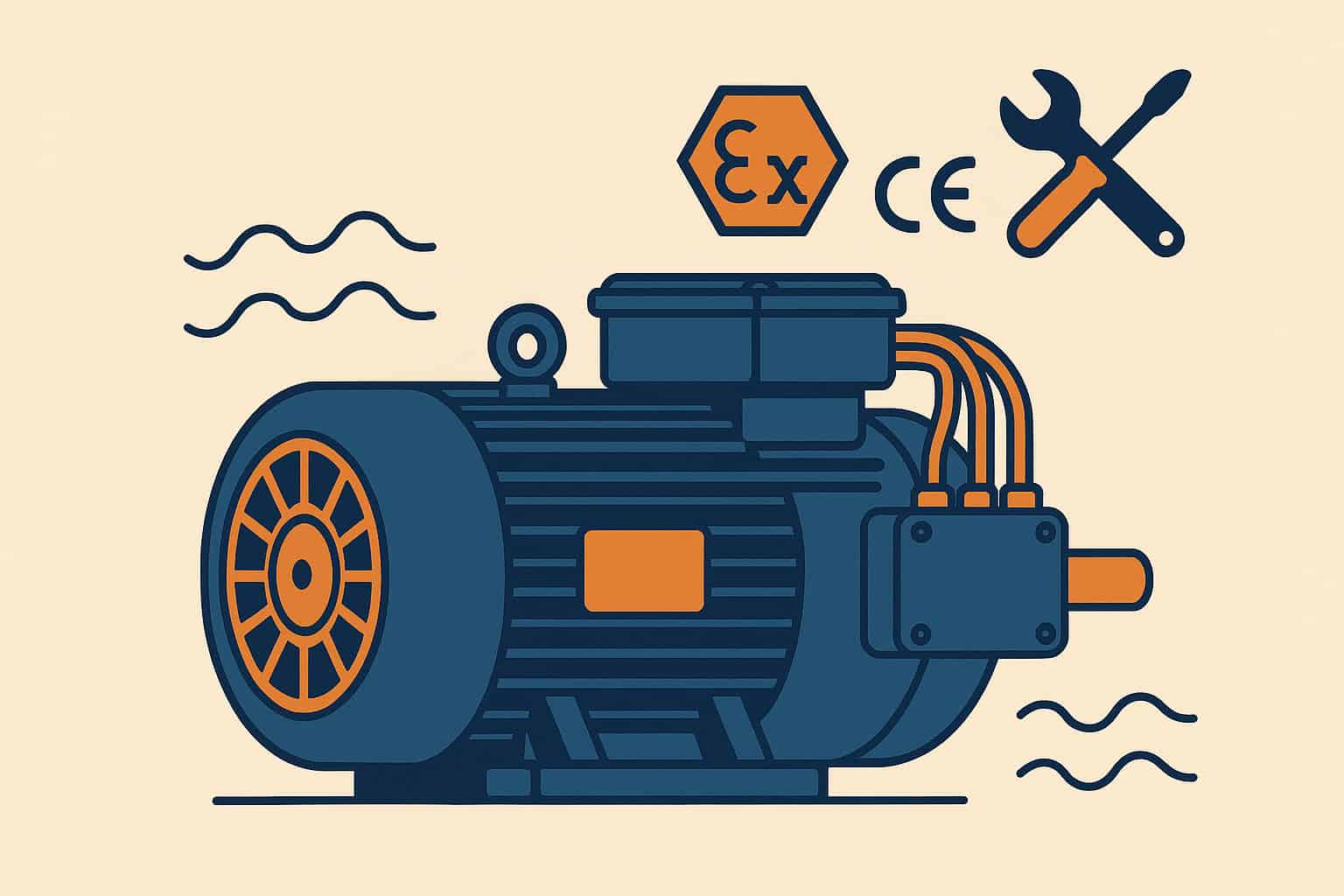
The motor and drive system represent another major portion of the investment. Motors must be sized for the required power at the chosen operating point, and mining applications often demand high starting torque, specific voltage and frequency ratings, and higher protection classes. If variable speed drives (VSDs) are specified to control airflow and save energy, these electronic drives and their associated control panels also add to the overall price of the ventilation package.
For underground and hazardous areas, additional safety certifications can influence cost. Explosion-proof or flameproof motors and enclosures, intrinsically safe controls, and compliance with regional standards all require specialized design and testing. Fans intended for coal mines or gassy metal mines may need more stringent approvals, which affects both lead time and price compared with standard industrial fans.
Beyond hardware, the total cost of a ventilation fan includes engineering, delivery, installation, and lifecycle support. Engineering services such as performance selection, noise control design, and integration into the mine’s ventilation plan add value by ensuring the fan will perform correctly. Transport to remote sites, underground installation, commissioning, and training all contribute to overall project cost. Over the long term, energy consumption, spare parts, and maintenance must also be considered, as a slightly higher purchase price for a more efficient, reliable fan may result in much lower lifetime cost.
In short, the price of an underground ventilation fan is not just a catalogue number. It is the result of airflow and pressure requirements, fan and motor design, safety standards, efficiency goals, and the scope of engineering and service support. When comparing quotations, mines should evaluate not only the initial price, but also performance, reliability, energy usage, and after-sales service to find the best value solution for their ventilation system.