
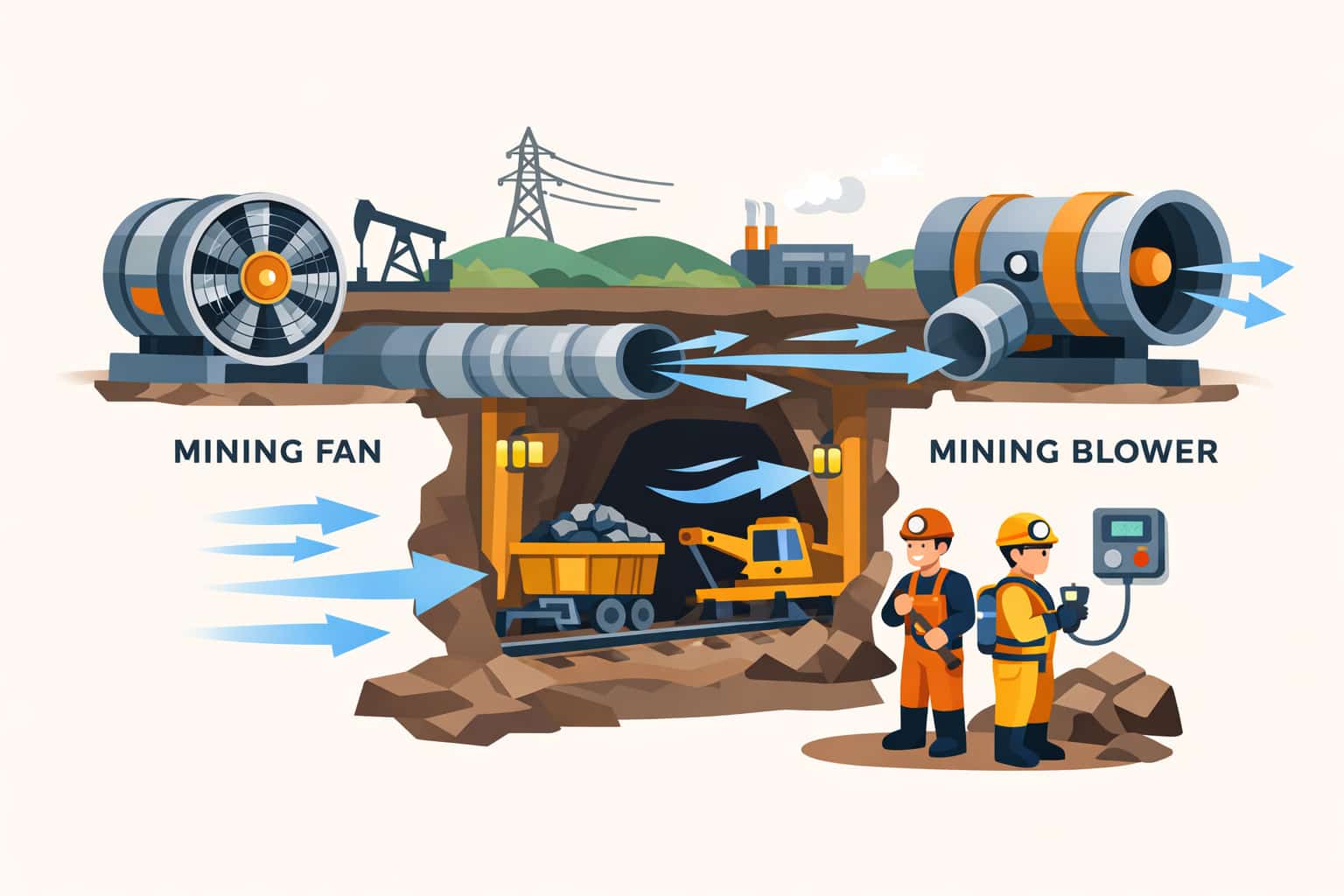
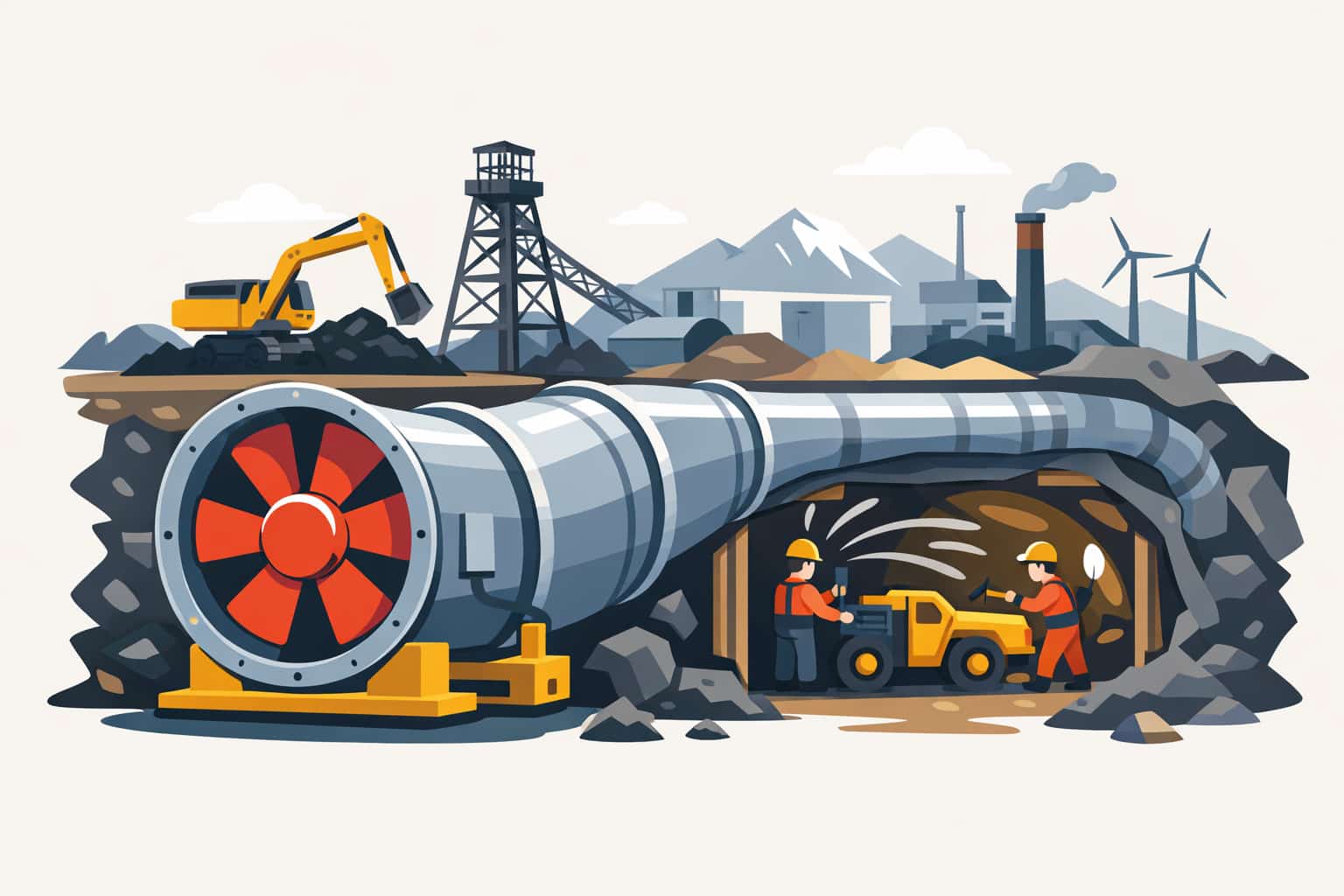
The primary goal of ventilation is to provide safe, healthy and comfortable air in occupied and process spaces. Ventilation achieves this by supplying fresh air, diluting or removing contaminants and controlling temperature and humidity. In industrial plants and mines, this goal is closely linked to legal safety requirements and production reliability.
First, ventilation ensures an adequate supply of oxygen and fresh air. People working in enclosed spaces consume oxygen and exhale carbon dioxide. Without sufficient outdoor air, CO2 levels rise, leading to drowsiness, reduced concentration and discomfort. In extreme cases, oxygen can fall to unsafe levels. Ventilation systems bring in enough fresh air to keep gas concentrations within healthy limits for workers and visitors.
Second, ventilation helps to control contaminants such as dust, fumes, vapours and combustion products. In factories and workshops, processes like welding, cutting, painting and mixing release hazardous substances into the air. In underground mines, diesel equipment and blasting generate gases and fine dust. The primary goal of the ventilation system in these environments is to dilute and remove contaminants so that their concentrations remain below occupational exposure limits and explosion thresholds.
Third, ventilation plays a major role in temperature and heat control. Equipment, lighting and human activity generate heat. If air is not circulated and replaced, temperatures can become uncomfortably high or even dangerous for workers and sensitive machinery. In mines, rock temperature at depth can be very high, so ventilation is essential to remove heat and maintain workable conditions at the face and along travelways.
Ventilation also influences humidity and condensation. Excess moisture can cause corrosion, damage electrical equipment, promote mould growth and make working conditions uncomfortable. Proper ventilation, sometimes combined with dehumidification or evaporative cooling, helps maintain humidity within acceptable ranges and protects structures and equipment.
In summary, the primary goal of ventilation is not just to move air for its own sake, but to create and maintain an environment where people can work safely and comfortably and where industrial and mining processes can operate reliably. Fresh air supply, contaminant control, heat removal and humidity management all contribute to this central objective.